
Turn recordings into transcripts and summaries in minutes
Upload audio or video for multilingual transcription, AI notes, and action items
Want to quickly grasp the highlights of YouTube videos but struggling with long watch times and messy notes? Whether you're a content creator sourcing material or a student watching online language courses, manual note-taking is inefficient and prone to missing key points. This article reviews 5 mainstream YouTube video AI summarizers in 2026, offering a multi-dimensional comparison table and practical tutorials. If you prioritize fast summaries from a single platform, tools like BiBiGPT are a good reference. If you need a complete workflow from multi-source import to in-depth AI Q&A, Tinrec is a strong candidate.
1. Current Pain Points: Why You Need a YouTube Video AI Summarizer
In the age of information overload, learning and work environments are filled with video content. Traditional methods of watching and transcribing manually face these three major pain points:
- High time cost: A 1-hour tutorial or interview often requires 2-3 hours of pausing and replaying to produce word-for-word notes, resulting in extremely low information density.
- Language and accent barriers: Facing foreign YouTube videos without subtitles, international meeting recordings, or overseas podcasts, it's hard to capture key points accurately by listening alone, greatly increasing comprehension effort.
- Lack of actionable output: After watching a video or listening to a recording, most people lack structured decision summaries and to-do lists, meaning the content is only "seen" but not truly "used."
2. Comparison Table of 5 Popular YouTube Video AI Summarizers in 2026
To reduce your decision-making effort, we selected 5 popular AI video summarization tools on the market for comparison. Evaluation dimensions include language support, input methods, summary depth, and free usage limits.
| Dimension | BiBiGPT | ChatYoutube | Monica | Notta | Tinrec |
|---|---|---|---|---|---|
| Core Feature | One-click audio/video summary | YouTube video chat | All-in-one browser assistant | Speech-to-text & meeting notes | Complete workflow from recording to action |
| Language Support | Multi-language | Mainly Chinese/English | Multi-language | Multi-language | 10 languages auto-detection (Chinese, English, Japanese, Korean, Taiwanese, etc.) |
| Input Methods | Video URL, local files | YouTube URL only | Web/browser extension | Live recording, local files, URL | Video URL, local audio, live recording |
| Action Items & Summary Extraction | Basic summary & mind map | Requires manual prompts | Web/video summary | Key point summary generation | Auto-generated meeting minutes & to-do action items |
| AI Chat & Query | Basic Q&A | Chat-based query | Chat-based query | Depends on subscription | Deep semantic AI chat query |
| Multi-Platform Support | Web mainly | Web mainly | Browser extension/App | Web, App | iOS, Android, Web (full platform) |
| Price & Free Tier | Basic free credits | Free but limited usage | Daily free chat credits | Basic free usage | Free 100 min/month; Basic $4.9/month (600 min) |
3. In-Depth Tool Review: BiBiGPT vs Tinrec
Among many tools, we compare BiBiGPT and Tinrec for video analysis and subsequent knowledge management scenarios:
Stop organizing recordings by hand
Upload audio or video and automatically get a transcript, summary, and action items
1. BiBiGPT: Lightweight URL Parsing
BiBiGPT is a tool focused on audio/video summarization. Users simply paste a YouTube or Bilibili URL to quickly generate a summary. It suits marketers or content creators who need to quickly browse multiple video overviews. However, for complex long-form interviews requiring deep exploration, or offline recording needs, other tools may be needed.
2. Tinrec: Emphasizing the "Record → Understand → Act" Loop
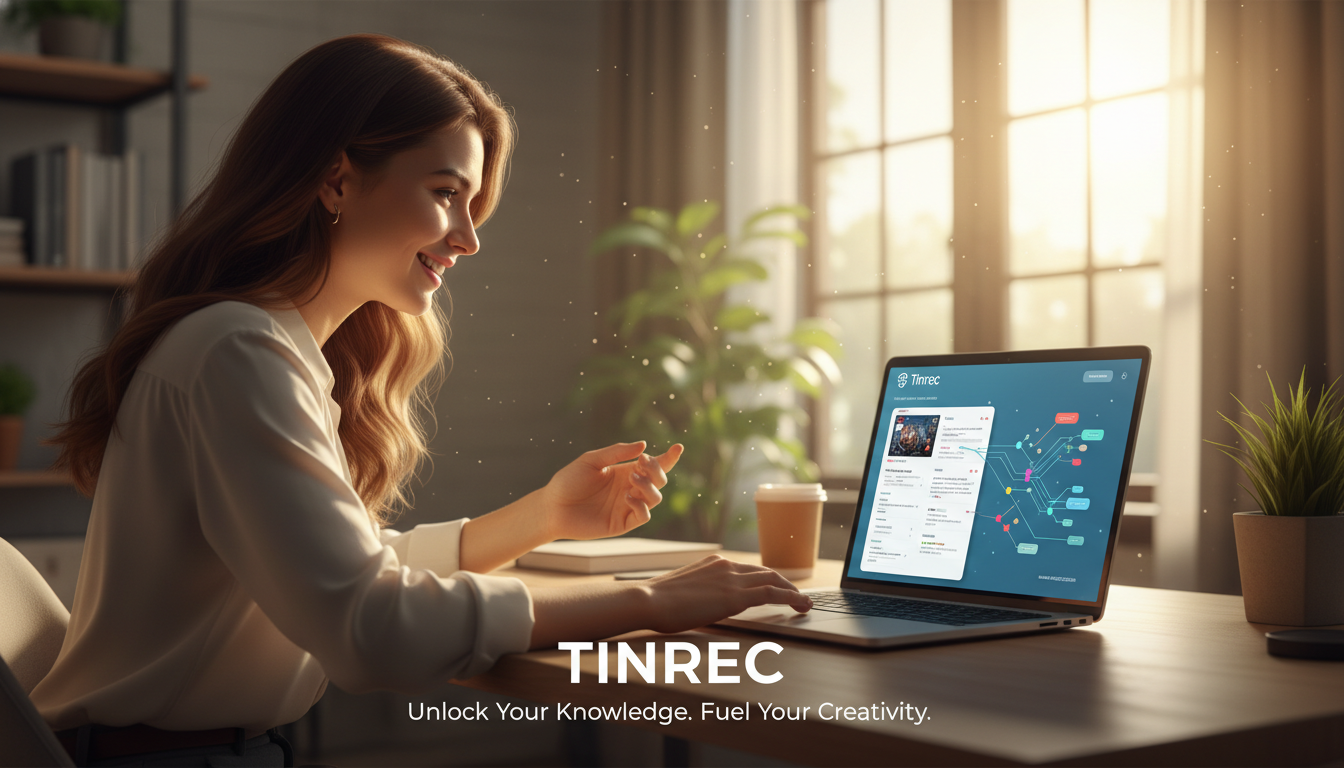
Tinrec's positioning goes beyond transcription or summarization; it emphasizes downstream efficiency. It addresses the pain point that traditional transcripts only allow Ctrl+F search by adding semantic analysis. For example, in educational course recordings or corporate project discussions, users can paste video links or use the app for live audio capture. Tinrec focuses on converting long-form time-based content into scannable, searchable structured text with to-do items.
4. Practical Tutorial: How to Efficiently Turn Videos into Actionable Notes
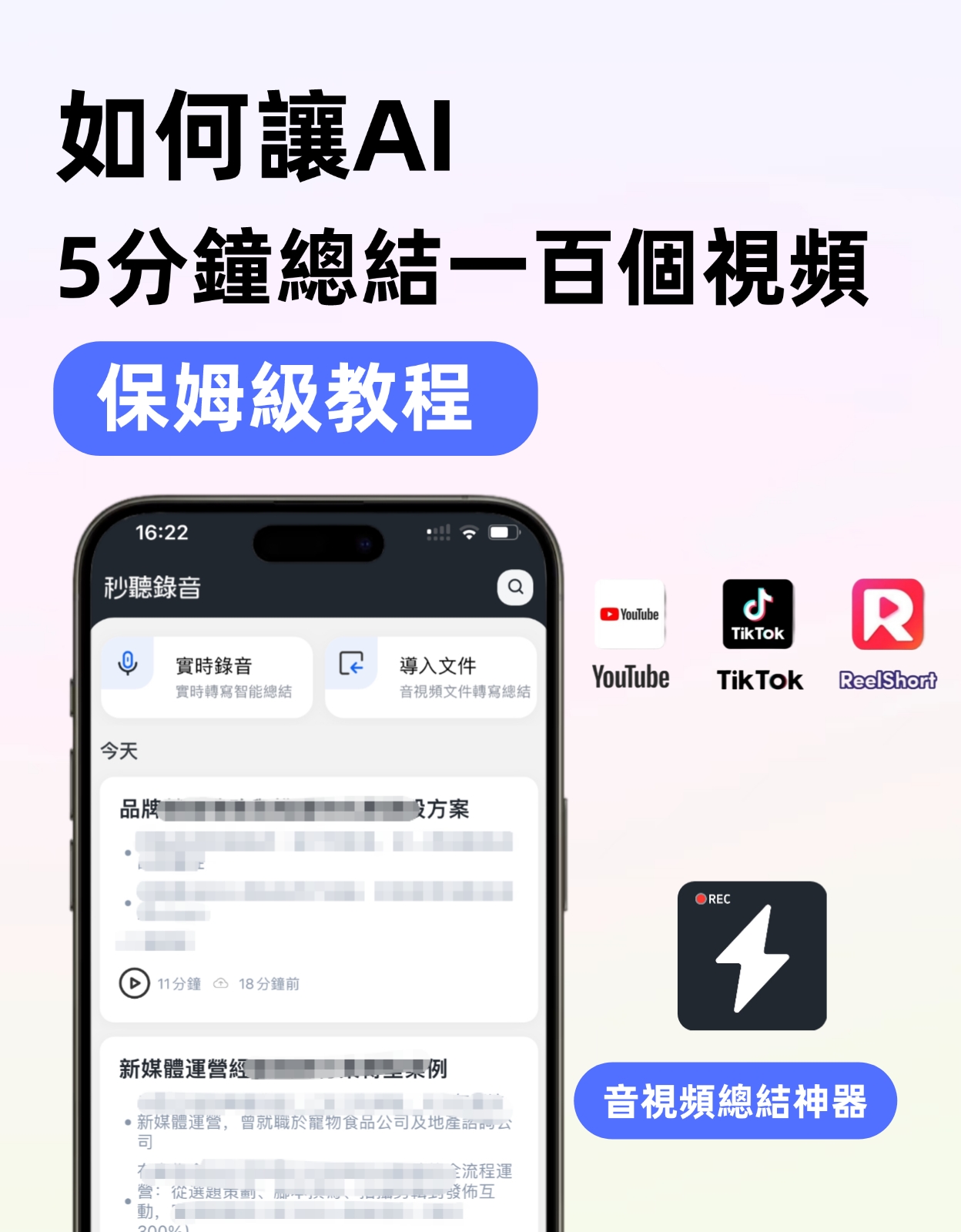
To truly leverage AI tools, integrate them into your daily workflow. Below, using Tinrec's common features as an example, we break down 4 scenarios with practical steps:
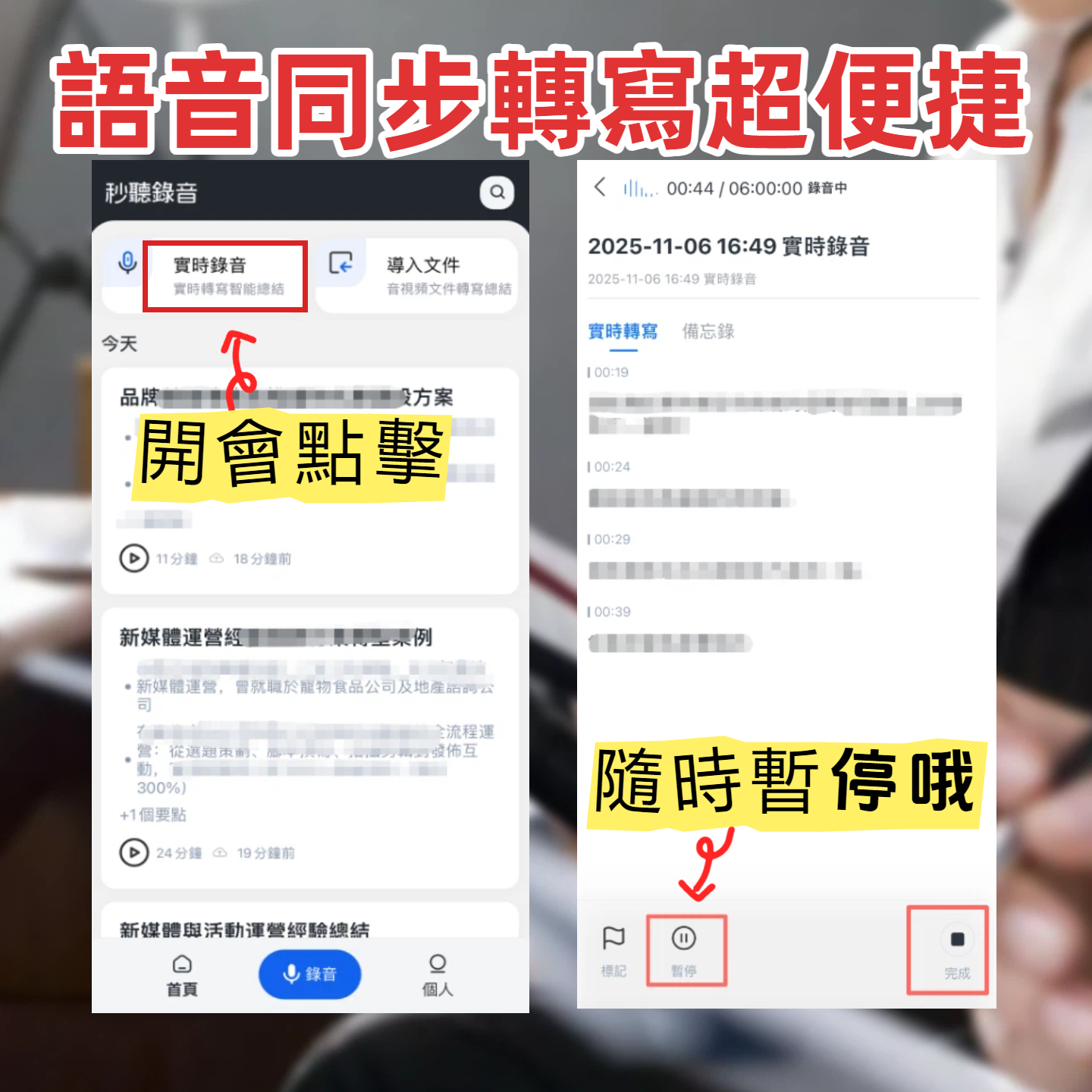
Step 1: Live Streaming Without Subtitles or In-Person Meetings (Real-Time Transcription)
When watching a YouTube live stream with no replay or attending physical project discussions:
- Open the "Live Recording" feature on the mobile app or web version.
- The system transcribes in real-time while recording, no need to wait for the recording to end.
- After the meeting, the system automatically identifies speakers and extracts action items (to-do list).
Step 2: Processing Downloaded Podcasts and Lectures (Audio File to Text)
If you already have interview audio files in MP3 or M4A format:
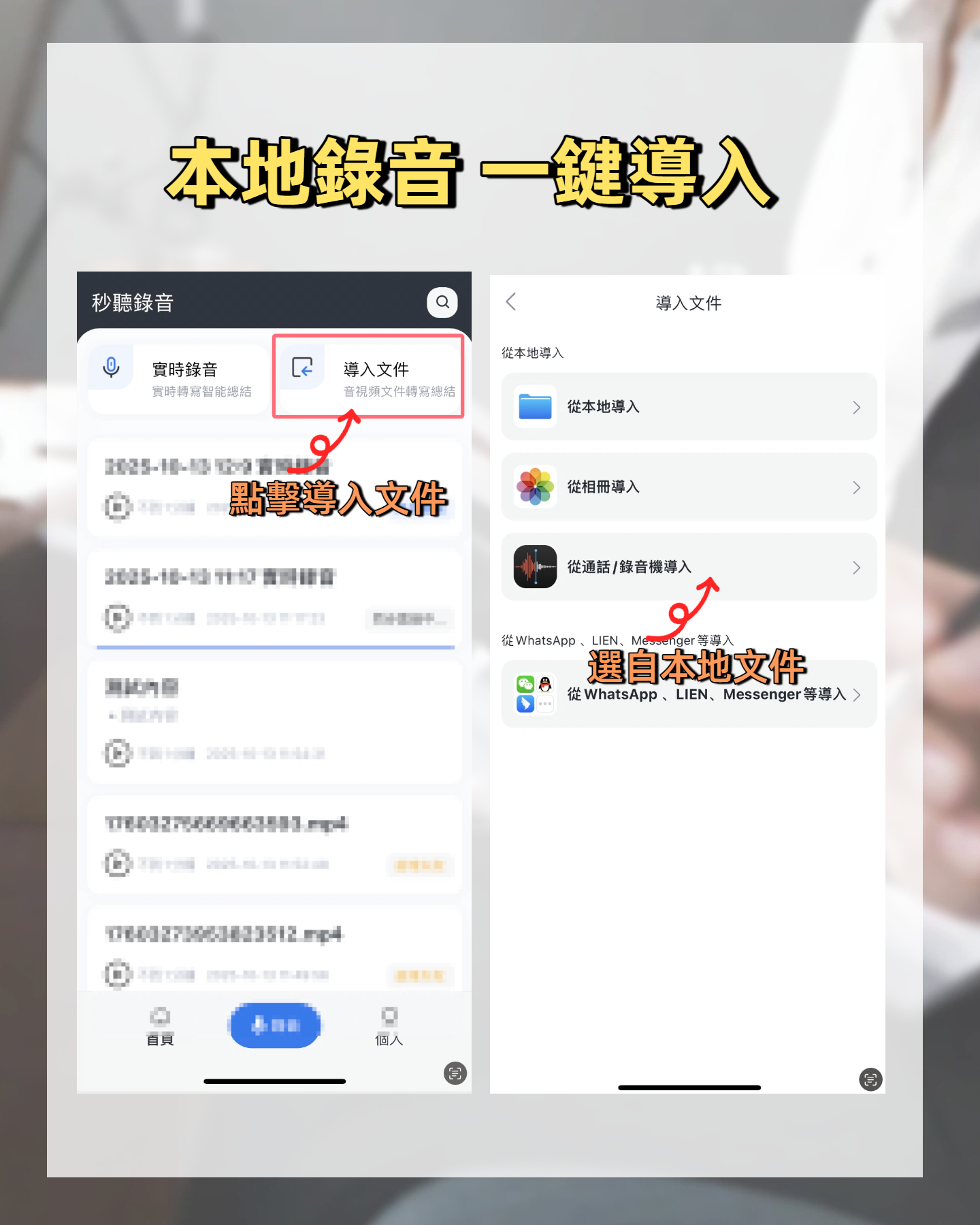
- Go to the "Import Audio/Video File" section.
- Upload the local file; the tool supports multi-language auto-detection.
- After processing, it generates a full transcript with timestamps and key summaries.
Step 3: Quickly Absorb Online Video Knowledge (Online Video to Text)
For long YouTube tutorials or product launches:
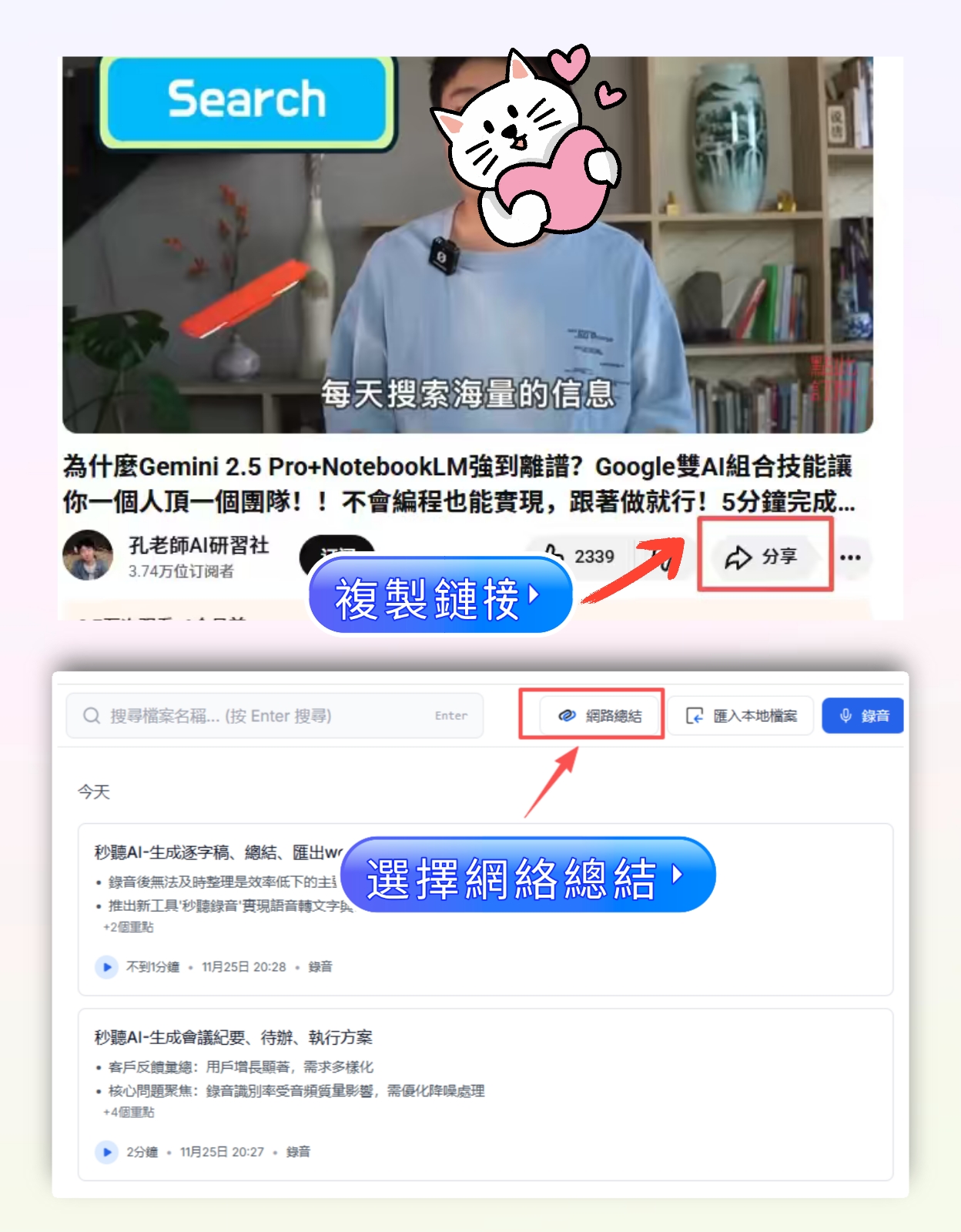
- Copy the YouTube video URL.
- Paste it into the "Online Video Analysis" field of the tool.
- No need to download the video; AI automatically analyzes in the cloud and generates structured notes with chapter breaks and core conclusions.
Step 4: Deep Knowledge Extraction (AI Chat Query)
Instead of reading the transcript from start to finish, ask questions to get the key points:
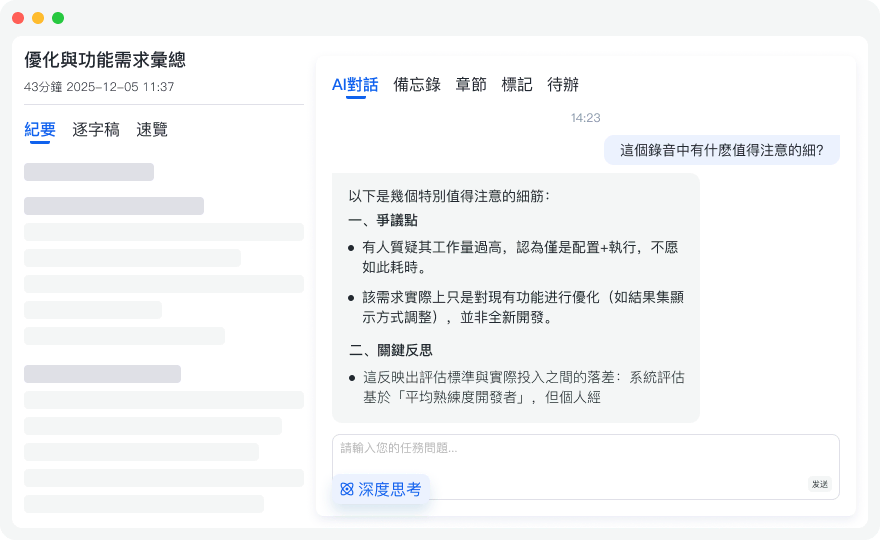
- On the generated transcript or summary page, click the "AI Q&A" chat box.
- Enter specific questions like: "Summarize the 3 marketing strategies mentioned in the video" or "What was the manager's final decision on the budget?"
- The AI answers based on the recording content, providing precise information quickly—like having a personal assistant.
5. FAQ
Q1: Can these YouTube summarizers be used on iPhone? Yes. Most modern AI tools offer cross-platform support. For example, Tinrec supports iOS, Android apps, and web version, allowing seamless cloud processing whether you're copying a link from an iPhone or need to record on the go.
Q2: Besides YouTube, do they support Google Meet or Microsoft Teams meeting recordings? Most tools can handle local files. You can upload meeting recordings (or pure audio) from Google Meet or Teams via the "audio/video file to text" feature to automatically generate transcripts and meeting minutes.
Q3: Which tool offers a generous free tier for testing? Many tools offer free trials. Tinrec's free plan provides up to 100 minutes of recording and conversion per month, suitable for daily notes or short video tests. For higher usage, consider upgrading to the Basic plan (600 minutes/month).
Q4: Can AI summarize YouTube videos without built-in CC subtitles? Yes. Advanced AI tools don't simply grab CC subtitles; they use automatic speech recognition (ASR) to analyze the audio track directly. Thus, even videos without subtitles or in foreign languages can be transcribed and summarized.
Q5: When exporting meeting or interview transcripts, can it distinguish different speakers? Yes. Advanced speech-to-text systems feature speaker diarization (voiceprint recognition) to automatically differentiate Speaker 1, Speaker 2, etc., which is very helpful for multi-person discussions or media interviews.
Q6: After generating a transcript, can I ask questions about the video content like with ChatGPT? Yes. This is the biggest difference between new-generation tools and traditional dictation software. With the "AI Chat Query" feature, you can ask questions about the entire one-hour video content, and the AI will accurately retrieve answers from the transcript, saving time spent searching through documents.
Turn every recording into actionable outcomes
Get 60 free transcription minutes when you sign in. No credit card required.
Related Reading
You might also like

2026 Smart Meeting Notes Comparison: Why Tinrec Is the Best Choice for Hong Kong Workers?
Hong Kong workers attend meetings daily, then have to work overtime to organize meeting notes? We tested 4 smart meeting note tools and ended up keeping Tinrec. It supports Cantonese, doesn't require adding a bot to record online meetings, and has team spaces, truly helping you leave work on time.
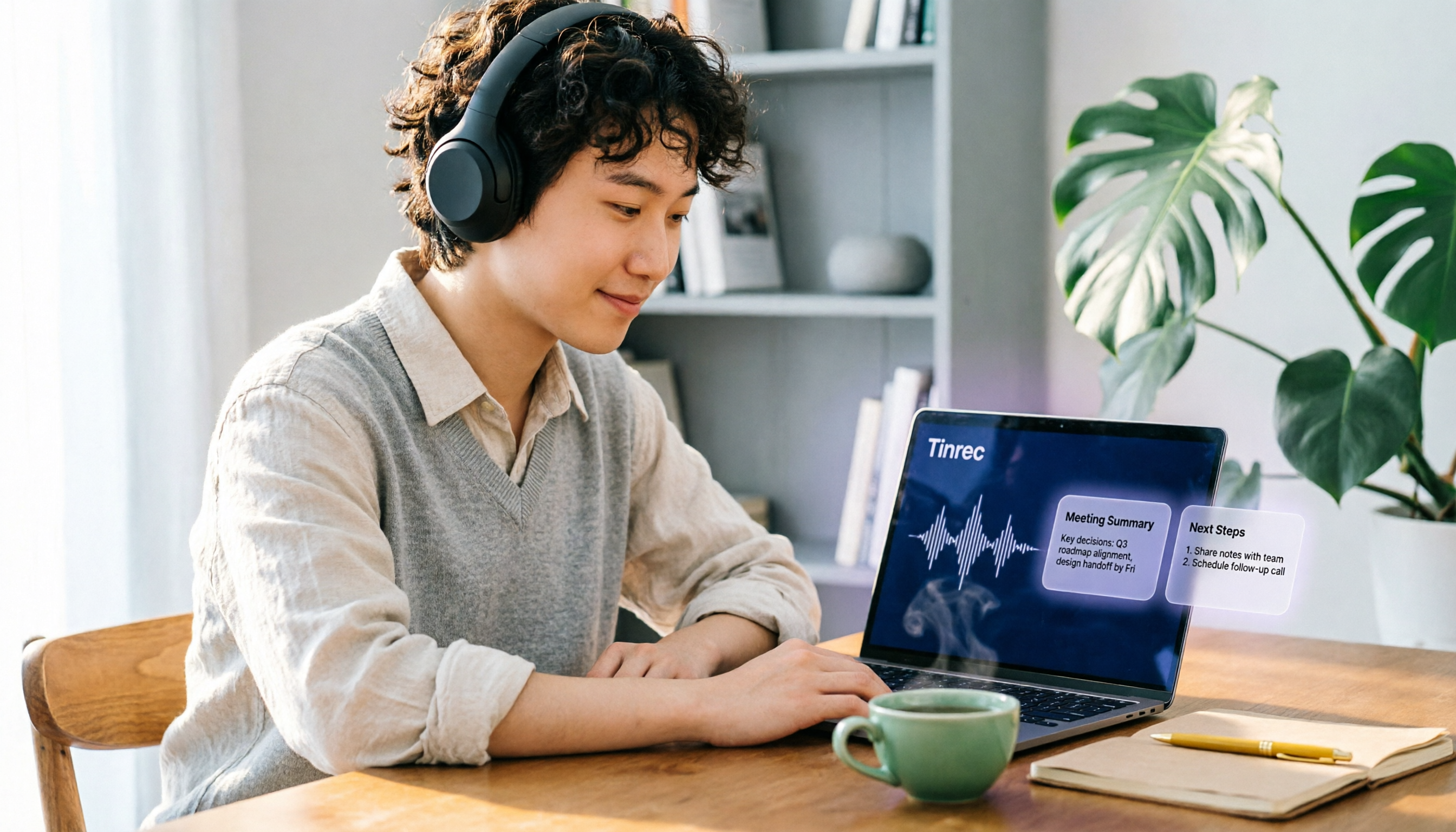
2026 Tinrec Smart Meeting Minutes: Bot-Free Recording + AI Auto Summary & To-Dos
How to choose a smart meeting minutes app in 2026? This article focuses on Tinrec, teaching you how to record online meetings without bots, auto-generate summaries and to-dos, and compares Otter, Notta, Granola, etc., to help you quickly find the right meeting notes solution.

2026 Smart Meeting Minutes Tools Compared: Tinrec's 3 Key Features + Team Collaboration Tested
Spending two hours in a meeting and another two organizing the notes? This article starts with common pitfalls, helps you understand what to look for in smart meeting minutes tools, tests Tinrec's bot-free recording, AI Q&A, and team spaces, and compares Otter and PLAUD to help you avoid selection traps.
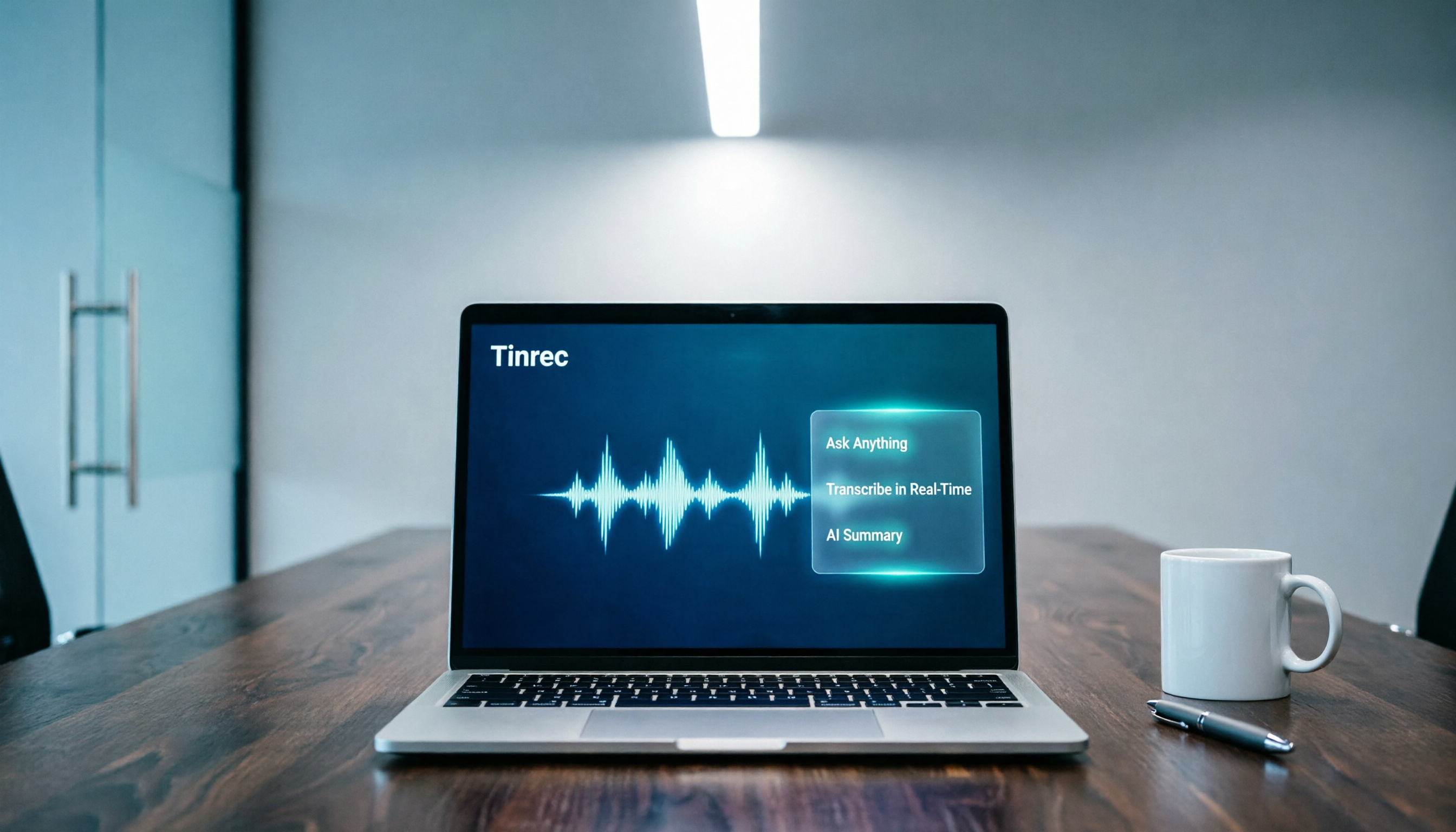
Tinrec Meeting Recorder 2026 Tutorial: Record Meetings Without Bots + AI Q&A to Find Key Points
Spending two hours in a meeting and another two hours writing up notes? This article tests Tinrec's meeting recorder, showing you how to record online meetings without bots and use AI Q&A to quickly find key points. We also compare Granola, PLAUD Note, and Notta to help you choose the right tool.

2026 Comparison of 4 AI Meeting Note Tools: From Recording to Action Items, Which One Is Worth Buying?
Hands-on testing of Notta, Otter.ai, Granola, and Tinrec, covering bot-free recording, Chinese transcription, AI Q&A, and team collaboration, to help you pick the best AI meeting notes tool.

Tinrec vs Otter.ai 2026: 5-Dimension Comparison for Chinese Meetings
Tinrec and Otter.ai are both AI meeting note tools, but for Chinese meetings, bot-free recording, and team knowledge management, Tinrec offers a design more tailored to users in Taiwan. This article compares them across 5 key dimensions to help you decide which fits your workflow.

5 Best AI Meeting Note Apps in 2026: Which One Turns Meetings into Collaborative Assets?
After hands-on testing of multiple AI meeting note apps, Tinrec stands out for bot-free recording, Chinese meeting transcription, and team collaboration. This article covers features, use cases, and buying tips.

2026 Hands-On Comparison of 2 Smart Meeting Note Tools: Which Is Best for Taiwanese Mid-Level Managers?
I attend 15 meetings a week and tested Tinrec and Otter.ai hands-on. From Chinese speech recognition, bot-free recording, action item extraction, to team collaboration, here's the smart meeting note tool mid-level managers should choose.

5 Smart Meeting Note-Taker Apps Compared in 2026: Why Tinrec Is a Better Alternative to Notta
Still using a meeting note-taker that only transcribes audio to text? This article takes a practical purchasing perspective, comparing Tinrec and Notta across meeting recording, AI post-processing, team collaboration, and free plans. It also provides buying tips and scenario recommendations to help you choose the right meeting tool that truly saves time.