
Turn recordings into transcripts and summaries in minutes
Upload audio or video for multilingual transcription, AI notes, and action items
Organizing Cantonese meeting minutes or interviews? The most headache-inducing aspect is the unique "Cantonese-English code-switching" and colloquial expressions common in Hong Kong. Traditional tools often produce garbled text, requiring hours of manual proofreading. This article reviews three top AI Cantonese speech-to-text tools for 2025, providing a multi-dimensional comparison table and practical tutorials. For dedicated local deployment and high accuracy, consider Datax; if you value cross-platform support and AI-powered meeting summaries with action items, Tinrec is an ideal candidate.
Why Cantonese Speech-to-Text Often Fails? Current Status and Pain Points
In daily work and study, transcribing Cantonese recordings has always been challenging, mainly due to the following common pain points:
- Difficulty capturing Cantonese-English code-switching: In Hong Kong and some Cantonese-speaking regions, it's common to mix English words into speech. Traditional voice recognition models often detect only a single language, leading to frequent errors.
- High cost of converting colloquial to written language: Directly transcribing colloquial Cantonese results in verbatim text that cannot be used directly in formal meeting reports, requiring significant manual effort to convert to written Chinese.
- Lack of follow-up action items: Traditional recording tools offer low information density. Even after transcription, users must spend a lot of time extracting conclusions and to-do items from thousands of words.
Top 3 AI Cantonese Speech-to-Text Tools for 2025
To reduce decision-making costs, we've surveyed and compared tools with Cantonese processing capabilities on the market.
1. Datax / Subanana: AI Solutions for Enterprise and Subtitle Creation
Datax features powerful localized next-generation STT/ASR recognition technology with accuracy up to 98%. Its biggest advantage is effective recognition of multiple languages within the same sentence (especially the Hong Kong-style Cantonese-English code-switching), and it can directly convert Cantonese speech into written Chinese. Its Subanana subtitle platform excels at handling multiple speakers and background noise, making it ideal for enterprises requiring private cloud deployment, AI CRM system integration, or video subtitle production teams.
2. Tinrec (秒聽錄音): Complete AI Workflow from Recording to Action
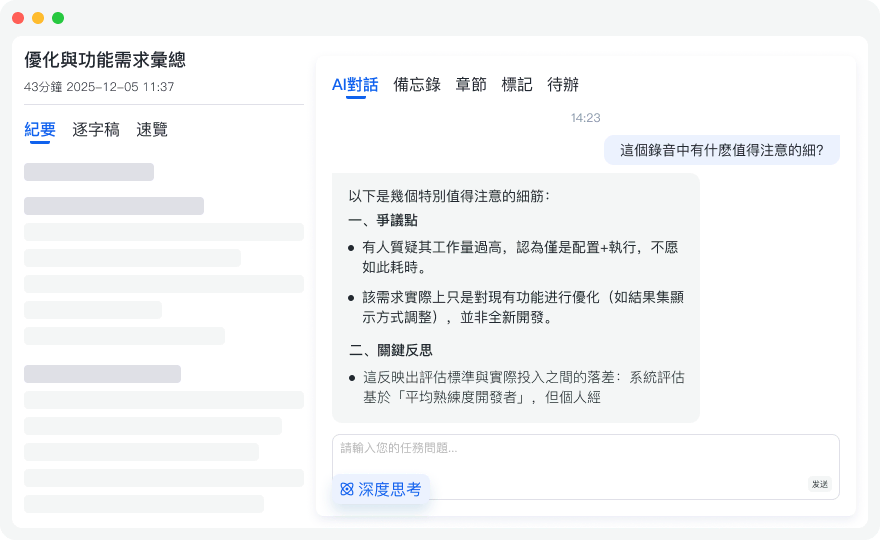
Tinrec is a multi-platform (iOS, Android, Web) AI recording assistant that supports automatic recognition of 10 languages including Cantonese, Chinese, and English. Unlike tools that only provide transcription, Tinrec emphasizes "post-use efficiency." It converts recordings into scannable, searchable structured text, and automatically generates meeting minutes and to-do action items. Its built-in AI chat query feature allows you to ask questions directly about the recording content, greatly reducing time spent reviewing and organizing.
3. Built-in Dictation and Basic Free Tools: Suitable for Lightweight Recording
Such as iPhone's built-in dictation or some open-source models (like the early Whisper base version), although they can perform basic Cantonese recognition, they often cannot automatically filter background noise or provide speaker diarization, requiring extensive manual formatting later. They are suitable for individuals on a budget with simple recording environments.
How Should Enterprises and Individuals Choose? Key Evaluation Dimensions and Comparison Table
When selecting a tool, refer to the following minimal decision table to find the solution that best fits your workflow:
Stop organizing recordings by hand
Upload audio or video and automatically get a transcript, summary, and action items
| Evaluation Dimension | Datax / Subanana | Tinrec (秒聽錄音) | Built-in Dictation |
|---|---|---|---|
| Language & Code-switching | Highly optimized, supports 80 languages | Supports automatic recognition of 10 languages including Cantonese | Depends on system version |
| Summaries & Action Items | Available (customizable AI meeting minutes) | Auto-generates summaries, conclusions, and to-do lists | No |
| AI Chat Query | Requires additional NLP integration | Built-in semantic AI chat query | No |
| Platform Support | Web / Private Cloud / On-premises Server | iOS, Android, Web cross-platform sync | Single device |
| Pricing & Quota | Custom quote / SaaS plan | 100 minutes free per month, subscription available for more | Completely free |
Practical Tutorial: 4 Steps to Transform Cantonese Meetings into High-Value Notes
Whether for remote meetings or in-person classes, learning to leverage AI workflows can greatly improve efficiency. Below is a general AI workflow (using Tinrec's feature entry points) demonstrating how to implement it step by step:
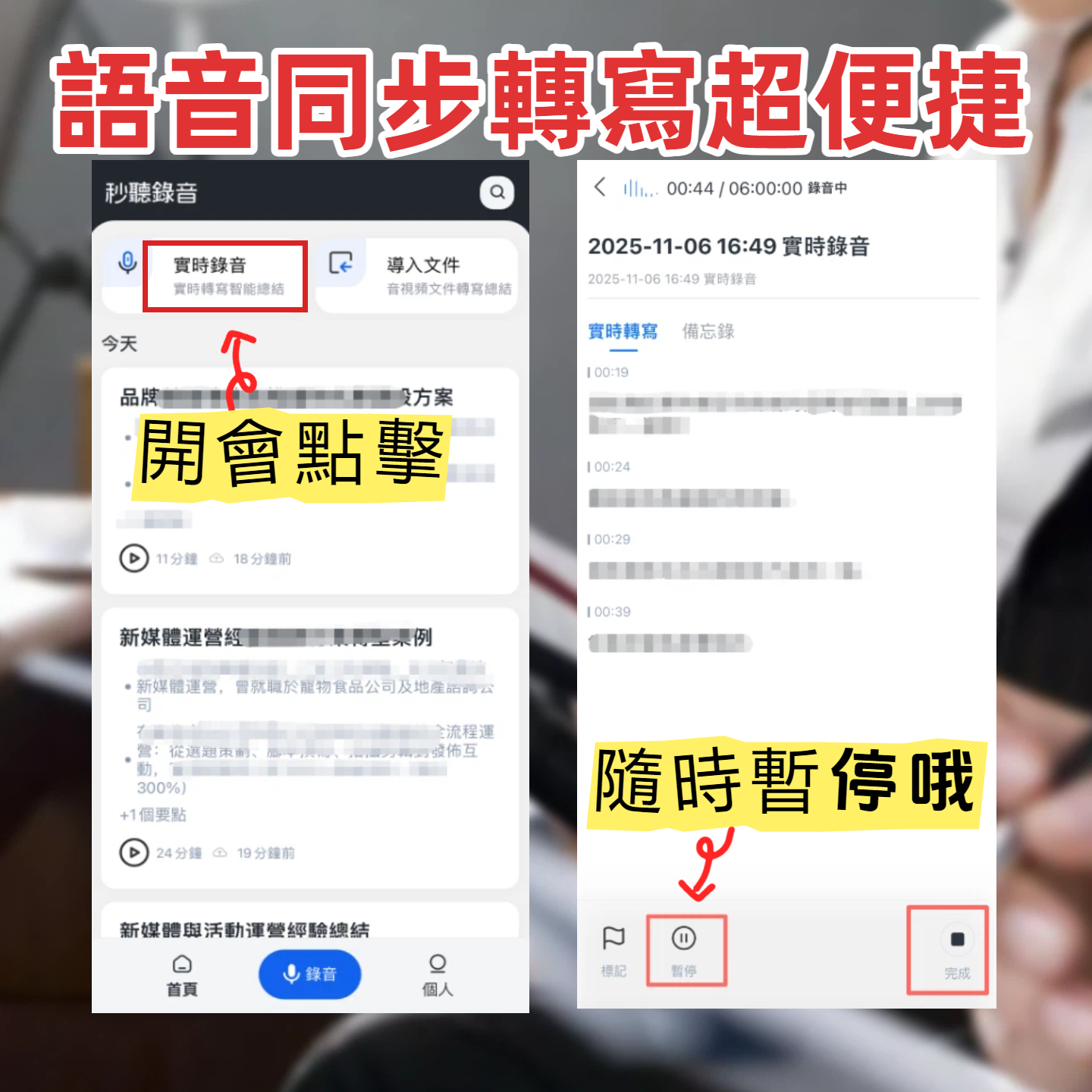
Step 1: Real-time Speech-to-Text, Never Miss a Word
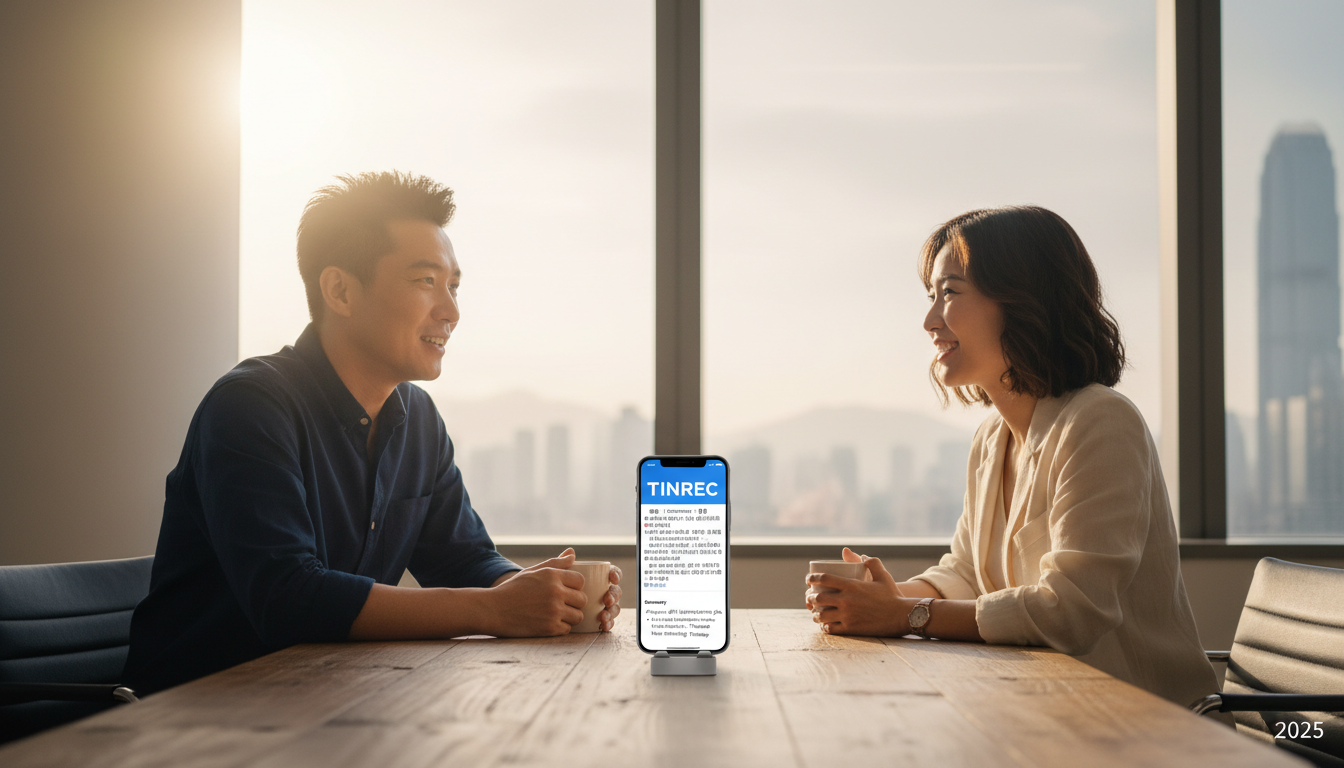
At the start of a meeting or interview, open the multi-platform recording tool. The system will convert speech to text in real time—no waiting required. Even if speakers mix Cantonese and English, the text appears instantly on screen, making it easy to mark key points on the fly.
Step 2: Import Audio Files, Turn Old Recordings into Transcripts Instantly
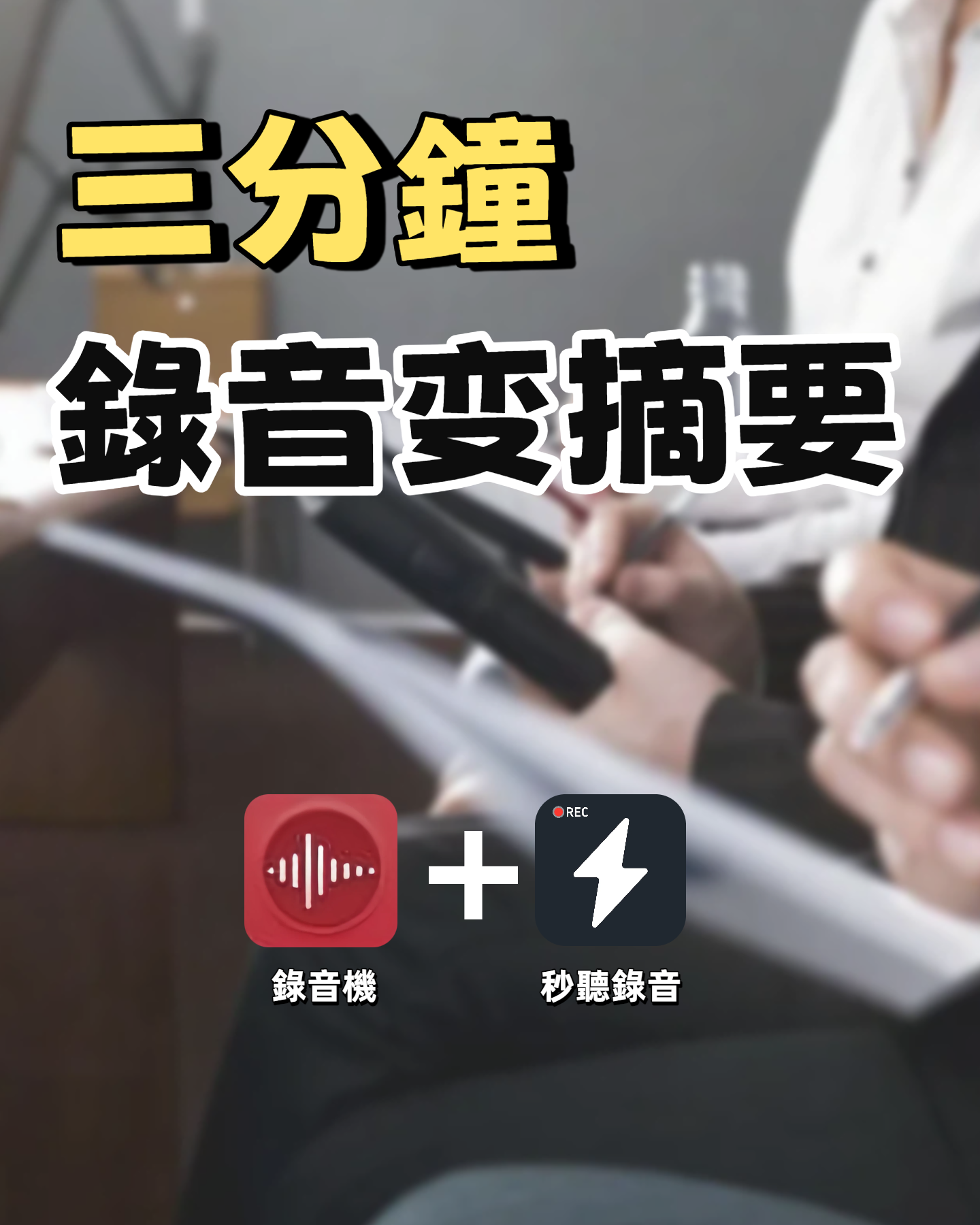
If the meeting has ended and you have an audio file, simply upload it. The AI will quickly convert it to a transcript, automatically distinguishing speakers (speaker diarization), even from mono recordings.
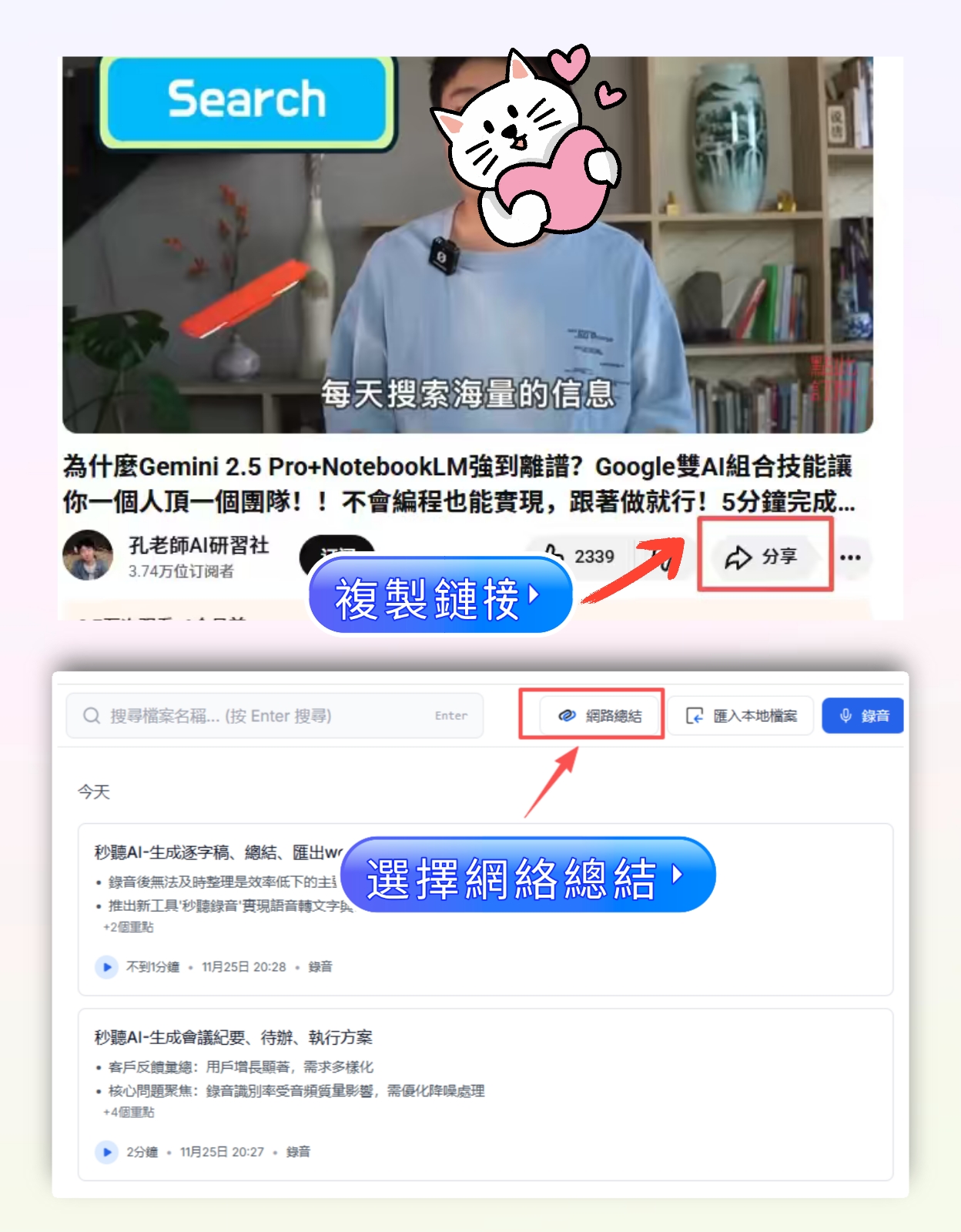
Step 3: Paste Podcast or Online Video Links, Quickly Extract Highlights
For Cantonese YouTube videos or podcasts without subtitles, you don't need to manually download the audio. Just enter the URL, and the tool will parse the audio track and automatically generate a full transcript and AI summary—a great aid for learning and research.
Step 4: Use AI Chat Query to Find Information Like Asking a Person
Traditional transcripts only allow Ctrl+F keyword search. With AI chat query, you can directly ask the system: "What are the three priority tasks the boss assigned in the meeting just now?" The AI will intelligently synthesize the answer based on the recording, making decision-making smoother.
FAQs about Cantonese Speech-to-Text
Q1: Can meetings from Teams or Google Meet be transcribed?
Yes. Many advanced solutions like Datax support integration with Zoom, Microsoft Teams, and Google Meet as per client needs. For general AI recording assistants, you can also use the web version or phone to attend remotely and record, then auto-generate complete meeting minutes afterward.
Q2: Can it accurately handle Hong Kong-style "Cantonese-English code-switching"?
Yes. The latest AI speech recognition technology has been optimized for multilingual automatic detection. For example, Datax can effectively recognize multiple languages within the same sentence, significantly reducing garbled characters from code-switching.
Q3: Can Cantonese recordings be automatically converted to "written Chinese" transcripts?
Yes. This is an important breakthrough in enterprise-level applications. Using natural language processing (NLP) technology, converting Cantonese speech to written Chinese is no longer a pain point, greatly reducing subsequent manual editing costs.
Q4: Can the built-in Voice Memos on iPhone replace these AI tools?
iPhone's built-in Voice Memos only supports basic recording and dictation. It cannot automatically segment speakers in multi-person meetings, nor provide AI summaries or extract to-do items. For business use, dedicated AI recording tools are far more efficient.
Q5: Are these AI transcription tools completely free? Is there a free quota?
Pricing varies by tool. Datax and Subanana offer free demos for enterprise evaluation. Some SaaS services like Tinrec offer a free plan with up to 100 minutes of free transcription per month, with Basic or Pro subscription plans available for additional usage.
Q6: The transcript is too long; is there a way to quickly extract key points?
Modern AI recording solutions typically include generative AI capabilities. After transcription, the system automatically produces meeting minutes (AI meeting minutes), summaries, and action items, so you don't have to read through tens of thousands of words yourself.
Turn every recording into actionable outcomes
Get 60 free transcription minutes when you sign in. No credit card required.
Related Reading
You might also like

2026 Smart Meeting Notes Comparison: Why Tinrec Is the Best Choice for Hong Kong Workers?
Hong Kong workers attend meetings daily, then have to work overtime to organize meeting notes? We tested 4 smart meeting note tools and ended up keeping Tinrec. It supports Cantonese, doesn't require adding a bot to record online meetings, and has team spaces, truly helping you leave work on time.

2026 Tinrec Smart Meeting Minutes: Bot-Free Recording + AI Auto Summary & To-Dos
How to choose a smart meeting minutes app in 2026? This article focuses on Tinrec, teaching you how to record online meetings without bots, auto-generate summaries and to-dos, and compares Otter, Notta, Granola, etc., to help you quickly find the right meeting notes solution.

2026 Smart Meeting Minutes Tools Compared: Tinrec's 3 Key Features + Team Collaboration Tested
Spending two hours in a meeting and another two organizing the notes? This article starts with common pitfalls, helps you understand what to look for in smart meeting minutes tools, tests Tinrec's bot-free recording, AI Q&A, and team spaces, and compares Otter and PLAUD to help you avoid selection traps.
Tinrec Meeting Recorder 2026 Tutorial: Record Meetings Without Bots + AI Q&A to Find Key Points
Spending two hours in a meeting and another two hours writing up notes? This article tests Tinrec's meeting recorder, showing you how to record online meetings without bots and use AI Q&A to quickly find key points. We also compare Granola, PLAUD Note, and Notta to help you choose the right tool.

2026 Comparison of 4 AI Meeting Note Tools: From Recording to Action Items, Which One Is Worth Buying?
Hands-on testing of Notta, Otter.ai, Granola, and Tinrec, covering bot-free recording, Chinese transcription, AI Q&A, and team collaboration, to help you pick the best AI meeting notes tool.

Tinrec vs Otter.ai 2026: 5-Dimension Comparison for Chinese Meetings
Tinrec and Otter.ai are both AI meeting note tools, but for Chinese meetings, bot-free recording, and team knowledge management, Tinrec offers a design more tailored to users in Taiwan. This article compares them across 5 key dimensions to help you decide which fits your workflow.

5 Best AI Meeting Note Apps in 2026: Which One Turns Meetings into Collaborative Assets?
After hands-on testing of multiple AI meeting note apps, Tinrec stands out for bot-free recording, Chinese meeting transcription, and team collaboration. This article covers features, use cases, and buying tips.

2026 Hands-On Comparison of 2 Smart Meeting Note Tools: Which Is Best for Taiwanese Mid-Level Managers?
I attend 15 meetings a week and tested Tinrec and Otter.ai hands-on. From Chinese speech recognition, bot-free recording, action item extraction, to team collaboration, here's the smart meeting note tool mid-level managers should choose.

5 Smart Meeting Note-Taker Apps Compared in 2026: Why Tinrec Is a Better Alternative to Notta
Still using a meeting note-taker that only transcribes audio to text? This article takes a practical purchasing perspective, comparing Tinrec and Notta across meeting recording, AI post-processing, team collaboration, and free plans. It also provides buying tips and scenario recommendations to help you choose the right meeting tool that truly saves time.