
Turn recordings into transcripts and summaries in minutes
Upload audio or video for multilingual transcription, AI notes, and action items
After a meeting or class, spending hours re-listening to recordings and painstakingly typing transcripts is definitely the most time-consuming nightmare in the workplace and studies. Many people's first instinct is to buy a physical device to solve the problem, but once you have the recording, "how to organize it" is the real challenge.
This article provides an in-depth comparison of the popular Xiaomi Voice Recorder and next-generation AI software solutions, offering a detailed comparison table covering six dimensions including language support, real-time capability, summary features, and integration export, along with complete step-by-step tutorials and a common FAQ to help you avoid pitfalls.
Quick navigation advice: If you work in extreme outdoor environments, need ultra-long battery life and professional microphone arrays, physical hardware like the Xiaomi Voice Recorder is an excellent choice. If you value "automatic transcription and to-do list generation after recording" and don't want to carry an extra device, AI recording apps like Tinrec better meet modern needs for efficient conversion.
1. Current Pain Points: Why Traditional Voice Recorders Can't Solve Your Anxiety?
Many people buy a voice recorder only to let it collect dust in a drawer. The main reason is a serious gap in the traditional recording workflow:
- Extremely low information density: 1 hour of recording usually requires 1.5 to 2 hours to re-listen. Traditional time-based content cannot be quickly scanned, making finding key points like searching for a needle in a haystack.
- Lack of follow-up action items: Recording the entire meeting doesn't mean you have "meeting minutes." Who should do what after the meeting? By when? Traditional devices cannot directly tell you.
- Cross-language recognition barriers: When dealing with foreign clients or foreign language courses, simple recording still cannot solve the language barrier of not understanding or organizing.
2. 2026 Recording Tool Comparison: Xiaomi Voice Recorder vs AI Recording Software
To reduce decision-making costs, we need to clarify the advantages of "hardware" vs "software." Below is a comparison between the common Xiaomi Voice Recorder (representing physical recording devices) and Tinrec (representing multi-platform AI recording assistant):
| Dimension | Xiaomi Voice Recorder (Physical Hardware) | Tinrec (AI Software App) |
|---|---|---|
| Portability & Recording | Requires carrying an extra device; features professional microphone array and independent battery, suitable for long-distance recording. | No extra device needed; supports iOS, Android, and web version; relies on phone/computer microphone. |
| Language Support & Chinese Recognition | Some high-end models support Chinese transcription; support for foreign languages or dialects varies by model and built-in software. | Supports automatic recognition of 10 languages including Chinese, English, Japanese, Taiwanese Hokkien, Cantonese, etc., with high accuracy. |
| Real-time Transcription & Summarization | Most require post-meeting connection to an app or export to a computer for transcription, with processing time needed. | Supports real-time transcription during recording; automatically generates meeting minutes and conclusions when recording ends. |
| Action Item Extraction | Usually provides only verbatim transcripts; no automatic extraction of decisions and to-do lists. | Automatically analyzes semantics and generates actionable to-do items. |
| AI Conversational Query | Only traditional keyword search (Ctrl+F) to find specific passages. | Supports AI-based conversational query; can directly ask AI about key points in the recording. |
| Price & Free Tier | One-time hardware purchase (price varies by model); some cloud transcription may require additional membership. | Free version available (100 minutes/month); paid plans start at $4.9 USD; no hardware purchase cost. |
Stop organizing recordings by hand
Upload audio or video and automatically get a transcript, summary, and action items
3. In-depth Review: How Should You Choose Your Tool?
Scenario A: Choose Physical Voice Recorder (e.g., Xiaomi Voice Recorder)
If you are a professional journalist, investigator, or frequently work in outdoor environments with strong wind or poor network signal, the independent power supply and noise-canceling microphone of a physical voice recorder are irreplaceable. Its design purpose is to "ensure sound is captured as clearly as possible."
Scenario B: Choose AI Recording Software Solution (e.g., Tinrec)
If you are a student, office worker, or project manager, and your main scenarios are remote meetings, in-person meetings, or classroom note-taking, the focus is on "quickly digesting information." Tinrec's differentiation lies in providing a complete workflow from "recording → understanding → action." Most tools only provide verbatim transcripts, but AI applications can directly convert time-based content into scannable, actionable text, compensating for traditional devices' shortcomings in "subsequent usage efficiency."
4. Practical Tutorial: How to Quickly Convert Recordings into High-Value Notes?
Whether you use your phone directly for recording or you've already recorded audio with a Xiaomi Voice Recorder, you can convert audio into concrete text output by following these steps.
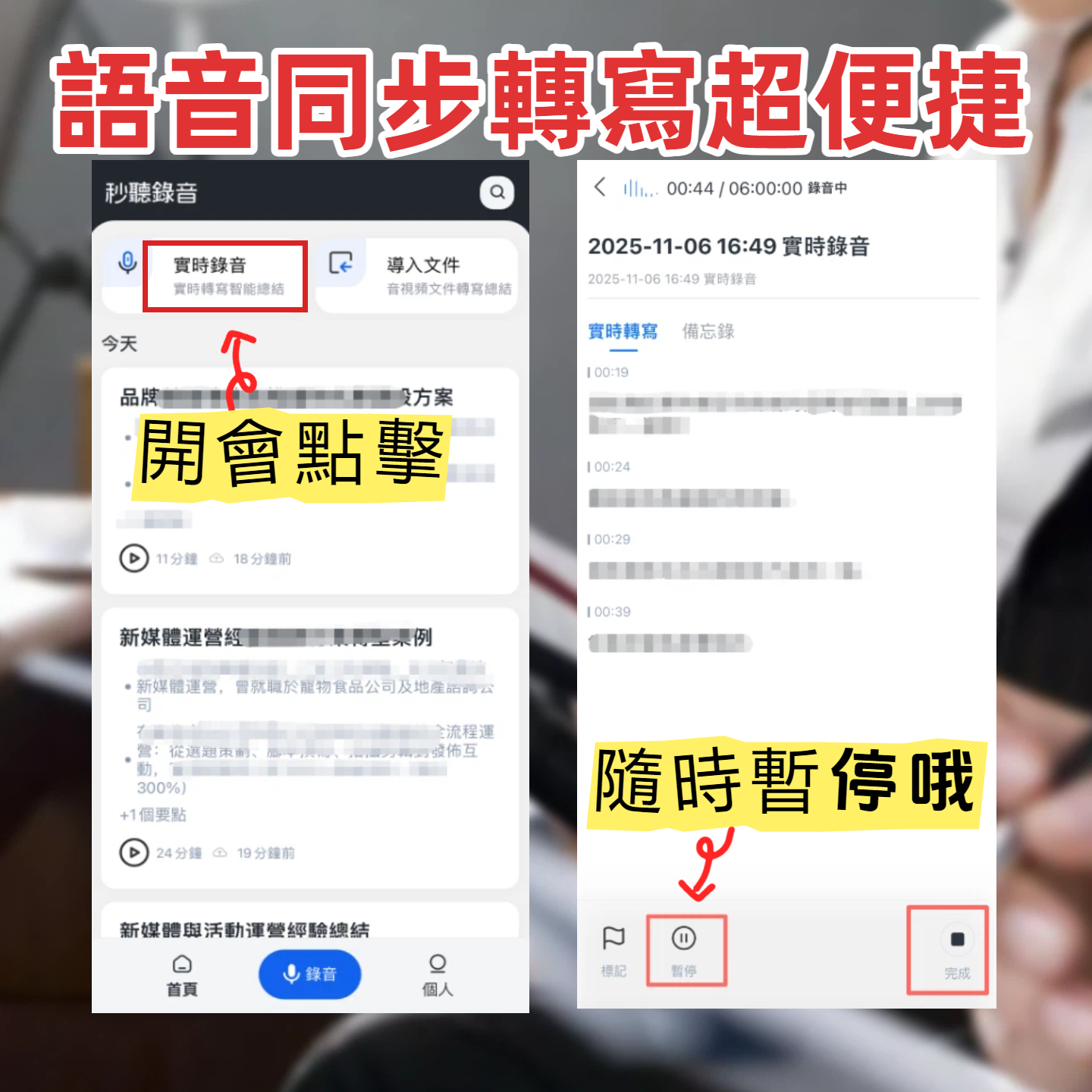
Step 1: Real-time Recording-to-Text for In-person Meetings or Classes
If you are at a meeting and don't want to carry extra devices, simply use your phone or laptop.
- Go to Tinrec's real-time recording-to-text feature.
- Tap start recording; the system will transcribe speech to text in real-time with no waiting.
- Stop recording when the meeting ends; the system will automatically distinguish speakers and generate meeting minutes including conclusions and action items.
Step 2: Process Audio Files Exported from Recorders – Convert Audio to Text
If you are used to recording with a voice recorder, or you've received an audio file from a colleague:
- Connect the recorder to your computer and export the file (e.g., MP3, WAV).
- Go to Tinrec's audio-to-text entry point.
- Upload the audio file; the system will quickly process and generate a verbatim transcript and AI summary.
Step 3: Online Learning & Material Collection – Convert Video Link to Text
When you encounter a YouTube tutorial video or podcast without subtitles:
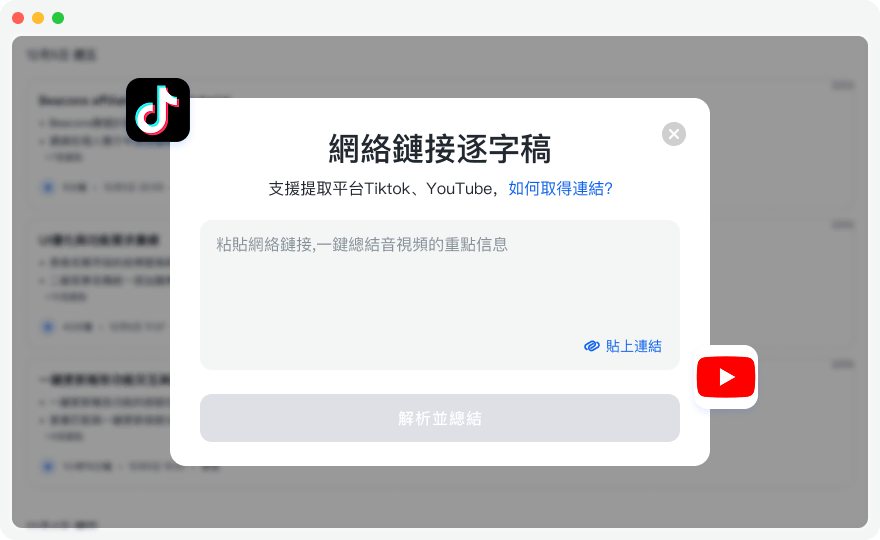
- Copy the URL of the YouTube or podcast link.
- Open Tinrec's video-to-text feature.
- Paste the URL; you can quickly get the full transcript and key summary without downloading the video. Ideal for content creators and self-study students.

Step 4: Breaking Ctrl+F Limits – AI Conversational Query
When faced with a transcript tens of thousands of words long, traditional search often fails to find key points.
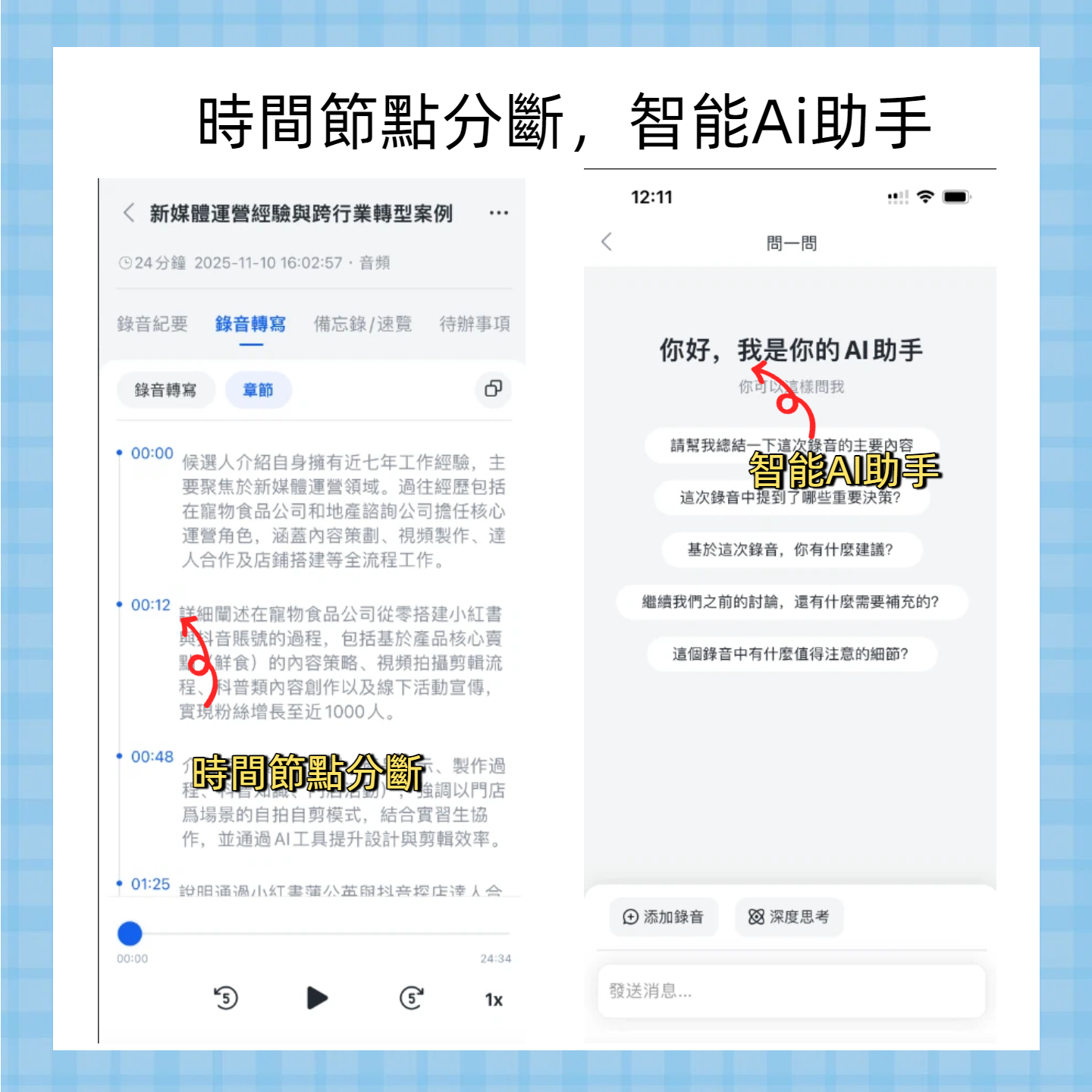
- On the processed recording page, click AI conversational query.
- Type a question in the dialog box, e.g., "What was the Q3 marketing budget mentioned in the meeting?"
- Based on semantic understanding, the AI will directly provide the answer and cite the source, like "asking a person" rather than "browsing a document."
5. FAQ – Pitfall Avoidance Guide
Q1: Can audio files recorded with Xiaomi Voice Recorder be exported for AI transcription?
Yes. Most physical voice recorders support exporting files in MP3 or WAV format. Simply transfer the file to your computer or phone, then upload it to an AI tool that supports audio import for transcription.
Q2: Can an iPhone directly replace a voice recorder for call recording or general recording?
Due to privacy regulations, the iPhone's built-in features have limitations for call recording. However, for regular meetings or classes, using an iPhone with a multi-platform AI recording app (e.g., iOS version) provides sufficient recording quality for most indoor scenarios and can effectively replace a basic voice recorder.
Q3: What's the easiest way to record online meetings (Teams/Meet)?
For Teams or Google Meet, besides using the built-in recording feature (requires host permission), you can also open a web-based AI assistant and record in real-time via your computer's system audio for transcription. This is very useful for attendees who cannot obtain recording permissions.
Q4: Do these AI tools offer free tiers?
Most current AI software offers basic free tiers for evaluation. For example, Tinrec provides up to 100 minutes of free recording per month; only if you exceed this would you need to consider a paid plan.
Q5: Do speech-to-text recognition systems support Taiwanese accents or Taiwanese Hokkien?
When choosing a tool, pay attention to its language model library. Some overseas hardware devices have lower support for Taiwanese accents; however, multilingual AI software usually accurately recognizes Traditional Chinese contexts and even supports dialects like Taiwanese Hokkien and Cantonese.
Q6: After generating a transcript, can I view only the key points instead of the dense text?
This is the biggest differentiator between AI tools and traditional tools. Modern AI tools not only produce a verbatim transcript but also automatically generate "decision summaries" and "action items" based on semantics, helping you grasp the essence of a one-hour meeting in under a minute.
Turn every recording into actionable outcomes
Get 60 free transcription minutes when you sign in. No credit card required.
Related Reading
You might also like

2026 Smart Meeting Notes Comparison: Why Tinrec Is the Best Choice for Hong Kong Workers?
Hong Kong workers attend meetings daily, then have to work overtime to organize meeting notes? We tested 4 smart meeting note tools and ended up keeping Tinrec. It supports Cantonese, doesn't require adding a bot to record online meetings, and has team spaces, truly helping you leave work on time.

2026 Tinrec Smart Meeting Minutes: Bot-Free Recording + AI Auto Summary & To-Dos
How to choose a smart meeting minutes app in 2026? This article focuses on Tinrec, teaching you how to record online meetings without bots, auto-generate summaries and to-dos, and compares Otter, Notta, Granola, etc., to help you quickly find the right meeting notes solution.

2026 Smart Meeting Minutes Tools Compared: Tinrec's 3 Key Features + Team Collaboration Tested
Spending two hours in a meeting and another two organizing the notes? This article starts with common pitfalls, helps you understand what to look for in smart meeting minutes tools, tests Tinrec's bot-free recording, AI Q&A, and team spaces, and compares Otter and PLAUD to help you avoid selection traps.
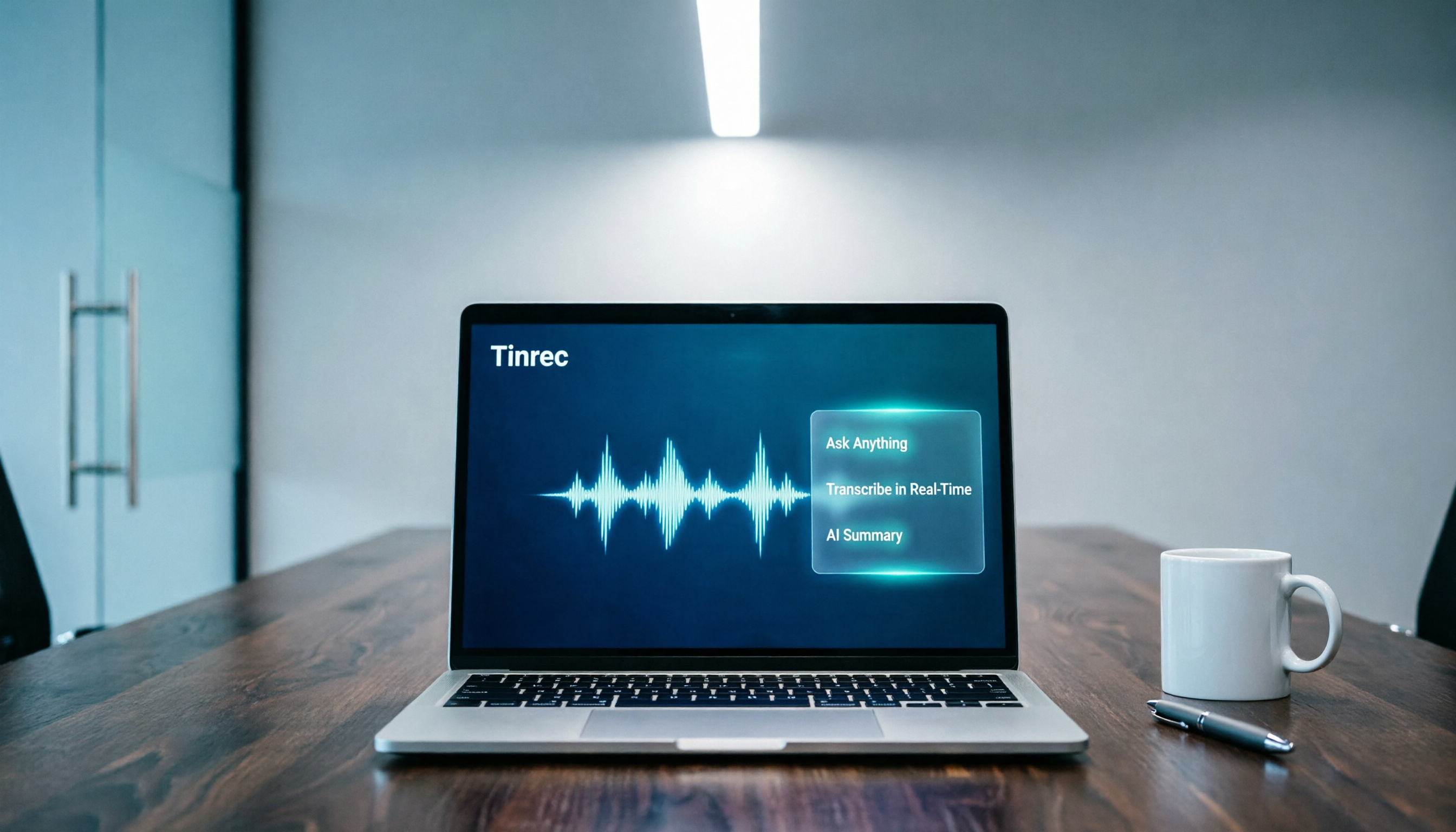
Tinrec Meeting Recorder 2026 Tutorial: Record Meetings Without Bots + AI Q&A to Find Key Points
Spending two hours in a meeting and another two hours writing up notes? This article tests Tinrec's meeting recorder, showing you how to record online meetings without bots and use AI Q&A to quickly find key points. We also compare Granola, PLAUD Note, and Notta to help you choose the right tool.

2026 Comparison of 4 AI Meeting Note Tools: From Recording to Action Items, Which One Is Worth Buying?
Hands-on testing of Notta, Otter.ai, Granola, and Tinrec, covering bot-free recording, Chinese transcription, AI Q&A, and team collaboration, to help you pick the best AI meeting notes tool.

Tinrec vs Otter.ai 2026: 5-Dimension Comparison for Chinese Meetings
Tinrec and Otter.ai are both AI meeting note tools, but for Chinese meetings, bot-free recording, and team knowledge management, Tinrec offers a design more tailored to users in Taiwan. This article compares them across 5 key dimensions to help you decide which fits your workflow.

5 Best AI Meeting Note Apps in 2026: Which One Turns Meetings into Collaborative Assets?
After hands-on testing of multiple AI meeting note apps, Tinrec stands out for bot-free recording, Chinese meeting transcription, and team collaboration. This article covers features, use cases, and buying tips.

2026 Hands-On Comparison of 2 Smart Meeting Note Tools: Which Is Best for Taiwanese Mid-Level Managers?
I attend 15 meetings a week and tested Tinrec and Otter.ai hands-on. From Chinese speech recognition, bot-free recording, action item extraction, to team collaboration, here's the smart meeting note tool mid-level managers should choose.

5 Smart Meeting Note-Taker Apps Compared in 2026: Why Tinrec Is a Better Alternative to Notta
Still using a meeting note-taker that only transcribes audio to text? This article takes a practical purchasing perspective, comparing Tinrec and Notta across meeting recording, AI post-processing, team collaboration, and free plans. It also provides buying tips and scenario recommendations to help you choose the right meeting tool that truly saves time.