
Turn recordings into transcripts and summaries in minutes
Upload audio or video for multilingual transcription, AI notes, and action items
What PTT Users Are Asking: How to Record LINE Calls? (Quick Answer)
"How do you record LINE calls on iPhone?" This is a monthly recurring topic on PTT's iOS and MobileComm boards. Due to system privacy restrictions, most apps on the market cannot directly record two-way audio. If you're looking for a solution, here's the most straightforward answer:
- Android Users: Some brands (e.g., Samsung, ASUS) have built-in call recording, or you can use third-party call recording apps as a workaround.
- iPhone Users: Due to iOS restrictions, the most stable way to avoid missing audio is using an external recording device (like MagSafe recording earphones) or putting the call on speaker and recording with another device.
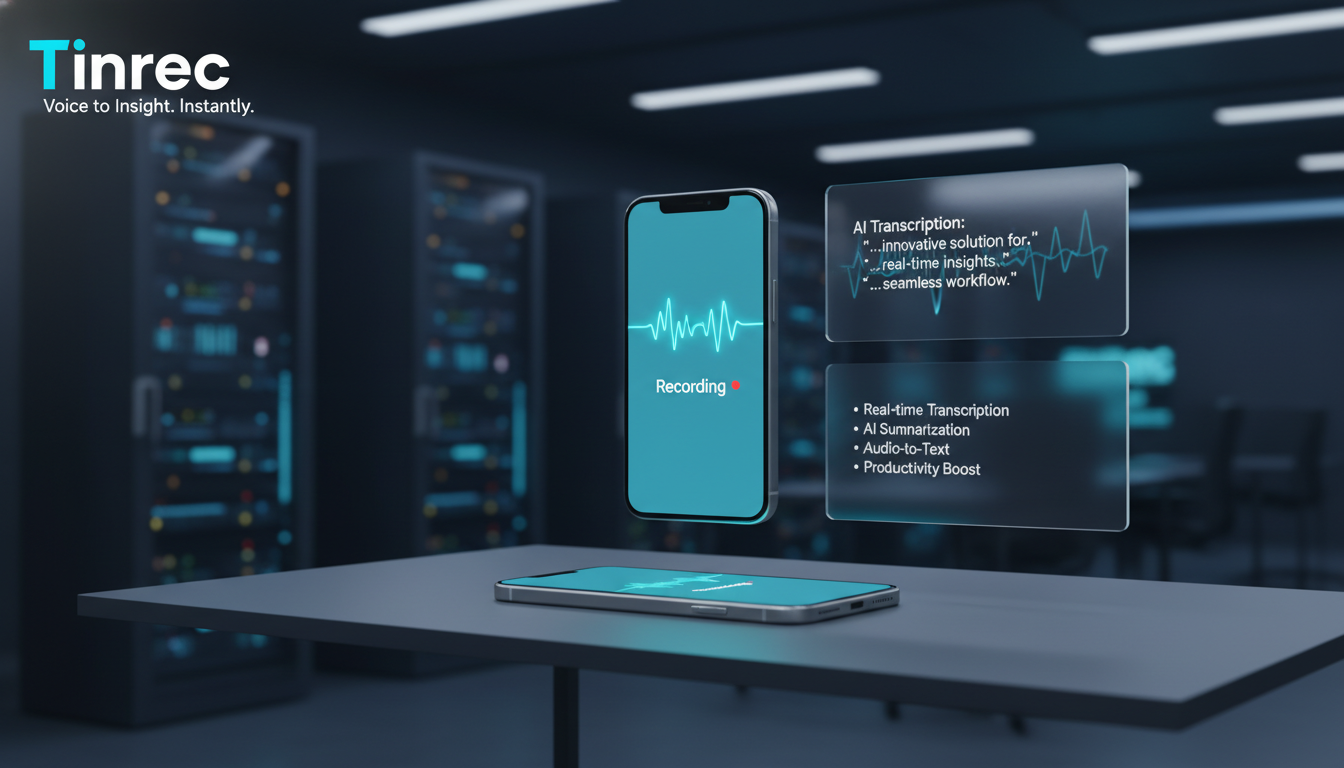
- Post-recording Organization Pain Point: Recording is only the first step; not having time to listen afterward is the real hassle. It is recommended to use an AI speech-to-text tool like Tinrec to directly convert a half-hour LINE voice call into a transcript and key summary, with timestamps and action items clearly visible.
Why Is Recording and Organizing LINE Calls So Hard? 3 Common Pain Points
Before discussing tools, let's review why regular workers and students feel frustrated when dealing with LINE voice calls:
- System-Level Privacy Restrictions (Especially on iPhone) Apple imposes strict API limitations for VoIP calls, causing many apps that claim to record to only capture "your own voice" or result in "complete silence."
- Listening and Note-Taking Simultaneously Leads to Missed Details When communicating with clients or managers via LINE, frequently switching to a notes app interrupts the conversation flow and may cause you to miss important quotes or delivery times.
- Post-Call Review Is Time-Consuming and Lacks Actionable Items After painstakingly recording a 40-minute call through makeshift methods (e.g., speaker recording), you have to spend 1.5 times the call duration listening and typing. Traditional audio files are not keyword searchable, leading to extremely low information utilization.
2026 Comparison Table of LINE Call Recording and Post-Processing Tools
For different needs (from "how to record" to "how to use"), we have compiled the four most mainstream solutions currently available for an objective comparison:
| Dimension | Android Built-in Call Recording | MagSafe Recording Device (Hardware) | Screen Recording (Built-in) | Tinrec (AI Transcription and Organization Tool) |
|---|---|---|---|---|
| Phase | Audio Capture | Audio Capture | Audio Capture | Transcription and Post-Processing |
| iOS Support | Not supported | Fully supported | Supported (but often no mic track) | Multi-platform (Web/iOS/Android) |
| Two-Way Recording | Supported | Supported | Depends on system version and luck | Supported (requires importing a file with two-way audio) |
| Speech-to-Text | None / requires third-party | Some hardware includes basic transcription | None | Supports automatic recognition of 10 languages |
| AI Summary/Action Items | None | None / requires separate export | None | Automatically generates meeting minutes and to-do items |
| AI Conversation Query | None | None | None | Supports semantic Q&A retrieval |
| Price/Free Tier | Free | Approx. $3,000–$5,000 | Free | Free tier: 100 minutes per month |
Stop organizing recordings by hand
Upload audio or video and automatically get a transcript, summary, and action items
From Recording to Decision: In-Depth Review of Tinrec AI Assistant
Once you successfully obtain a LINE call recording through the hardware or Android phone mentioned above, the subsequent organization is truly time-consuming. Tinrec's positioning is not to "bypass system restrictions to record," but to provide a complete workflow from "recording → understanding → acting."
1. Suitable Scenarios and Real-World Performance
In cross-border remote meetings, journalist interviews, or freelancer-client project discussions, Tinrec can automatically recognize 10 languages including Chinese, English, Japanese, and more. In real-world tests, even for LINE calls mixing Chinese and English, it produces coherent transcripts and automatically distinguishes speakers (who said what is crystal clear).

2. Core Difference: More Than Just Transcripts – It's a "Decision Summary"
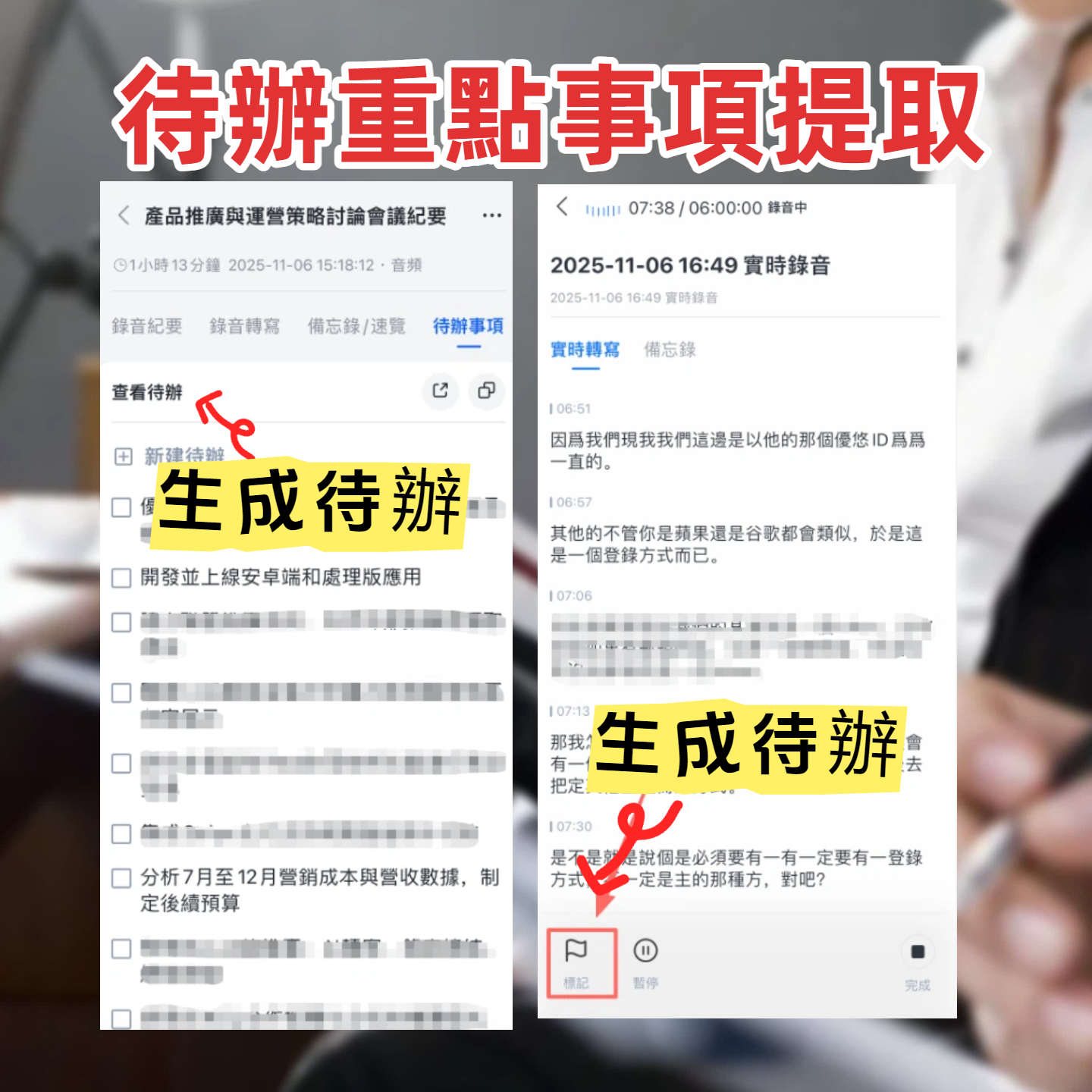
Most tools only produce a long string of text, but Tinrec automatically generates "meeting minutes," "conclusions," and "action items" alongside the transcript. This means that for a 30-minute lengthy call, you can skim the AI summary in just 1 minute and get straight to work.
3. Usage Boundaries and Limitations
It should be noted objectively that due to operating system limitations, the Tinrec web version or app cannot directly "capture internally" the two-way audio of LINE calls on iPhone. You must first obtain the audio file (e.g., mp3, m4a) through hardware, speakerphone, or other devices, and then upload it to Tinrec for processing.
Hands-On Tutorial: How to Process LINE Call Recordings and Quickly Generate Minutes?
The following steps demonstrate how to turn an acquired LINE call recording into high-value meeting notes.
Step 1: Obtain the Audio File
Use Android built-in recording, a voice recorder, or speakerphone recording to save the LINE call as an audio file on your phone or computer.
Step 2: Convert Audio File to Text
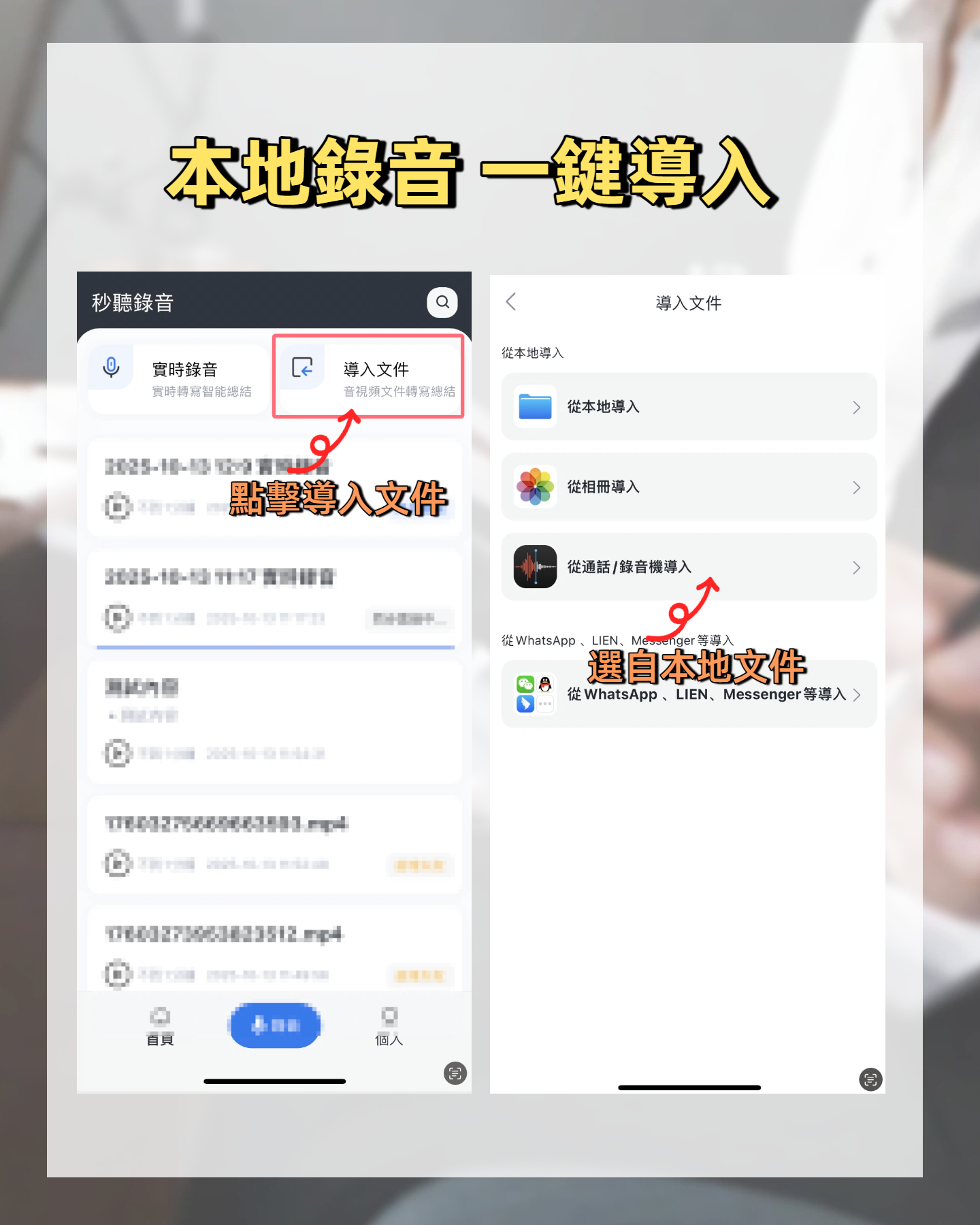
Go to the Tinrec platform, select the "Import audio/video file to transcript" feature, and upload the recording. The system processes very quickly, usually completing the conversion within a few minutes.
Step 3: Review Transcript and AI Summary
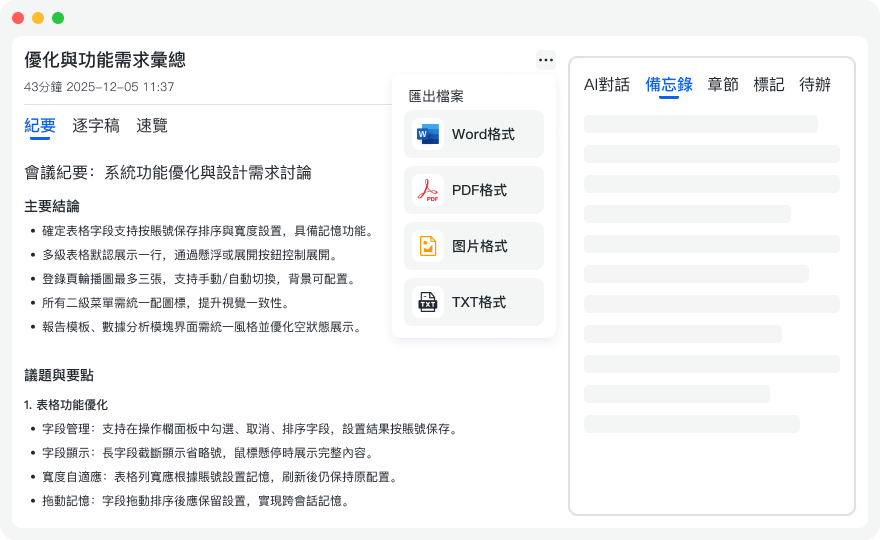
After conversion, the left side of the screen shows the timestamped transcript, while the right side automatically lists AI-extracted highlights and to-do list, helping you quickly grasp the overall call.
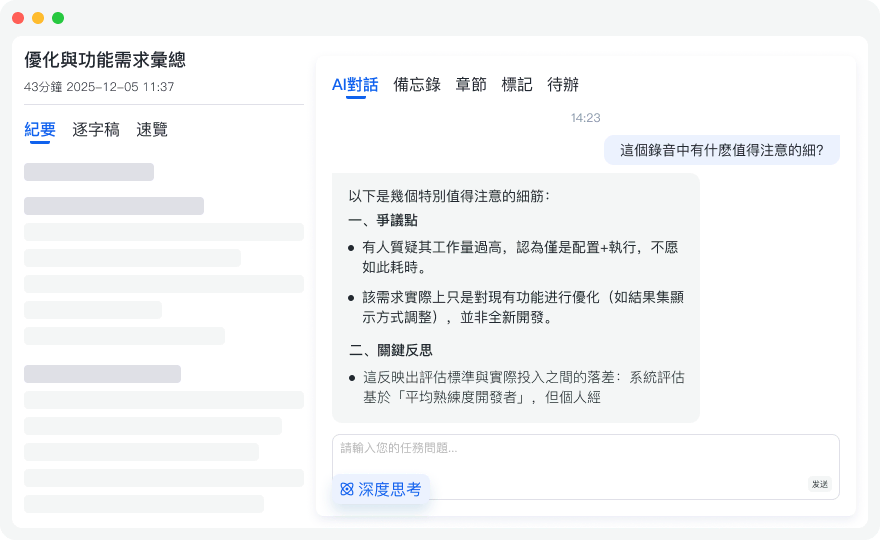
Step 4: Use AI Conversation Query (Advanced Feature)
If the call content is long (e.g., a one-hour project discussion), you can directly use the "AI conversation query" feature. In the dialog box, type: "What was the client's requirement regarding the budget just now?" The AI will search the recording content for the answer and reply, just like asking a secretary who attended the entire meeting.
Step 5: Export and Share in Multiple Formats
After confirming the content, you can export the meeting minutes to Word, TXT, or other common formats, and directly share them in team groups for record.

Frequently Asked Questions About LINE Call Recording and Transcripts (FAQ)
Q1: Is there truly a free and perfect LINE two-way call recording app for iPhone?
Currently, no. Due to Apple's privacy policy, apps on the App Store cannot directly intercept VoIP two-way audio. The most stable solution is to buy an external recording device or use another phone with speakerphone recording.
Q2: Do speech-to-text tools (like Tinrec) support direct recording?
For in-person meetings or when using speakerphone, Tinrec supports "real-time transcription" that outputs text as you record. But for LINE calls with earphones, it is still recommended to first generate an audio file and then use the "audio file to text" feature.
Q3: Do these transcription tools support languages commonly used in Taiwan?
Taking Tinrec as an example, it supports automatic recognition of 10 languages including Chinese, English, Japanese, etc., and can accurately recognize the Chinese-English mix common in Taiwan's work scenarios.
Q4: Can long audio files be processed? Any limits?
It usually depends on each platform's plan limits. Tinrec offers free users up to 100 minutes of processing per month, which is sufficient for personal users who occasionally need to record important calls; heavy users can also choose Basic or Pro versions.
Q5: Are there file format restrictions?
Common audio formats (e.g., mp3, wav, m4a) are supported by most AI transcription platforms. Additionally, some tools also support direct pasting of YouTube video links for parsing to text.
Q6: What is the accuracy of speech-to-text?
Accuracy highly depends on "recording quality." As long as both sides are clear with minimal background noise, current AI recognition accuracy can typically reach over 90%. It is recommended to keep the environment quiet during recording.
Summary: Don't Let Important Conversations Fade Away
In the digital work era, LINE calls are convenient, but the "difficulty of reference" remains a pain point. Instead of frantically taking notes during the call, it's better to leverage tech tools. It is recommended to first find a suitable recording method, then try a 10-minute meeting recording with an AI transcription and summary tool to experience the full efficiency boost from recording to action, before deciding whether to adopt it as a long-term workflow.
Turn every recording into actionable outcomes
Get 60 free transcription minutes when you sign in. No credit card required.
Related Reading
You might also like

Tinrec Meeting Data Access Permissions Guide 2026: Role Authorization + Seat Management
When meeting data is seen by other departments or disappears when members leave, the problem usually stems from unclear permissions. This article starts with common misconceptions, breaks down Tinrec's team space, roles, seats, and audit mechanisms, and teaches you how to set up meeting data access so you control who can view, use, and edit. It also covers 5 purchasing considerations and FAQs.

How to Assign Project Meeting Tasks in 2026: 5 Steps from Meeting to Action Items
How do you assign project meeting tasks in 2026? This article compares Tinrec and PLAUD Note across five dimensions: meeting recording methods, action item extraction, post-meeting follow-up, export workflows, and cost, helping you determine which approach ensures tasks are truly assigned and progress is trackable.

2026 Cross-Departmental Meeting Collaboration Tools Compared: Which Saves More Time with Chinese Transcripts and Post-Meeting Action Items?
Cross-departmental project meetings often end with everyone interpreting things differently. This article starts with common pitfalls and outlines 4 key factors for choosing a cross-departmental meeting collaboration tool. It compares Tinrec, Granola, Notta, and Otter.ai in real tests, focusing on Chinese transcripts, post-meeting action items, and team knowledge retention, plus a guide to avoid pitfalls and selection advice.

Best Project Meeting Action Item Follow-Up Tools in 2026: We Tested 2, and This One Is Best for Chinese-Speaking Teams
The real breakdown in project meetings often happens after the meeting, not during it—specifically, in following up with action item owners. This article starts with common follow-up pitfalls, compares Tinrec and Otter.ai across 6 dimensions including action item extraction, Chinese-language meetings, team seats, and post-meeting deliverables, and summarizes pricing and FAQs to help you decide which tool better fits your project team.

Tinrec vs Notta 2026: 5-Dimension Comparison — Which Meeting Notes Tool Is Better for SMBs?
SMBs dread meetings that end without decisions, and post-meeting recording cleanup is time-consuming. This guide reviews 6 meeting notes tools — Tinrec, Otter, Notta, Fireflies, Granola, and TurboScribe — comparing Chinese language support, bot-free recording, AI Q&A, team collaboration, and pricing to help you find the best fit for your SMB.

2026 Comparison of 4 Meeting Knowledge Asset Tools: Which One Turns Meetings into Searchable Team Assets?
Meetings end and data scatters? This article uses 5 dimensions—capture method, audio retention, post-meeting output, team governance, and Chinese language experience—to compare Tinrec, Notta, Granola, and Otter.ai. It breaks down how to choose and avoid pitfalls for team meeting knowledge assets, and explains the difference between roles and seats.

2026 Team Meeting Transcription Tools Compared: Tinrec vs Otter.ai — Which Is Better for Chinese-Speaking Teams?
Choosing between Tinrec and Otter.ai for team meeting notes in 2026? This hands-on comparison focuses on Chinese-language meeting scenarios common in Taiwan-based teams, evaluating five dimensions: Chinese transcription, bot-free recording, post-meeting AI organization, team data ownership, and trial barriers. We break down each tool's unique strengths and ideal users to help you find the best meeting transcription tool for your team.

How to Manage Team Meeting Data in 2026: 5 Steps from Recording to Team Knowledge Base
Team meeting data often ends up scattered across personal computers and chat logs. This article uses Tinrec and PLAUD Note as examples to compare team meeting data management tools across 5 dimensions: meeting capture methods, team spaces and governance, AI post-meeting organization, cross-platform flexibility, and pricing. It also includes FAQs to help you find the right meeting notes and knowledge retention solution for your team.

How to Take Multi-Person Meeting Notes in 2026: 5 Steps from Recording to AI Summary
The pain point of multi-person meeting notes is never typing speed—it's the lack of manpower to organize afterward. This article addresses three common misconceptions, breaks down the core capabilities a multi-person meeting notes tool should have, a 5-step implementation process, purchasing checkpoints, and FAQs. It uses Tinrec as an example to demonstrate the complete workflow from recording, transcription, to AI summaries and action items.