
Turn recordings into transcripts and summaries in minutes
Upload audio or video for multilingual transcription, AI notes, and action items
Due to privacy protection regulations, Apple's native system has never supported call recording, which frustrates many iPhone users who need to preserve important business calls and client interview records. This article will break down the most practical solutions for 2026, including traditional third-party call recording tools and AI voice assistants that can automatically transcribe recordings.
We will provide a detailed tool comparison table, step-by-step guides, and an FAQ for meeting scenarios.
Quick navigation advice: If you need traditional carrier-grade hidden recording, consider third-party call tools like TapeACall; if you often use speakerphone or have subsequent needs for meeting minutes, transcripts, and multilingual recognition, an AI-powered hub like Tinrec with summary and query features can be your central solution.
Why Is iPhone Call Recording So Difficult? Common Ways to Get Around Apple's Restrictions
Due to strict privacy laws in some countries, iOS does not have a built-in two-way call recording feature. When you try to open Voice Memos or screen recording during a call, the system automatically cuts off the microphone. Current solutions mainly fall into three categories:
- Three-way calling technology: Use the carrier's three-way calling feature to connect the call to a recording server for side-recording.
- VoIP calls: Use communication software (e.g., Skype, some specialized apps) that don't rely on traditional cellular networks for recording.
- Speakerphone with external device/AI software: Put the iPhone on speaker and use another device, or use an AI recording app on the same device with an independent audio channel to record and convert to text directly.
Top 4 iPhone Call Recording and Transcription Apps for 2026
1. TapeACall
TapeACall is a veteran iPhone call recording tool that relies on the carrier's "three-way calling" feature. During a call, you need to merge the call by adding the system's dedicated number to start recording. Pros: clear voice of the other party. Cons: cumbersome steps, and you need to confirm if your carrier plan supports three-way calling.
2. Rev Call Recorder
Rev also works via three-way calling. Its standout feature is built-in high-quality voice-to-text service (additional fee). For users who frequently have English business calls, Rev's human or AI transcription accuracy is good, but Chinese support is currently limited.
3. ACR Call Recorder
ACR offers an intuitive interface and supports recording multiple VoIP calls. Besides basic recording and archiving, it allows uploading recordings to cloud drives for backup. Suitable for light users who only need to "keep audio files" without advanced text processing.

4. Tinrec
Tinrec is a multi-platform AI recording assistant focused on the complete workflow of "record → understand → act." Unlike simple recording tools, it solves the problems of low information density and high cost of replaying traditional recordings. It supports iOS, Android, and web versions, with powerful automatic recognition of 10 languages including Chinese, Taiwanese, and English. After obtaining audio (or recording via speakerphone), it automatically generates transcripts, meeting minutes, and action items, and offers AI-powered semantic query functionality.
Core Evaluation: Comparison Table of iPhone Recording and AI Transcription Tools
When choosing a tool, consider your "subsequent use." Here is a comparison of key dimensions:
Stop organizing recordings by hand
Upload audio or video and automatically get a transcript, summary, and action items
| Dimension | TapeACall | Rev Call Recorder | ACR Call Recorder | Tinrec |
|---|---|---|---|---|
| Main Recording Method | Three-way call merge | Three-way call merge | VoIP / System built-in | Speakerphone real-time recording / File import analysis |
| Multilingual Support | None (recording only) | Primarily English | None (recording only) | Supports 10 languages including Chinese, English, Japanese, Taiwanese |
| AI Summary & Action Items | None | Additional fee required | None | Automatic meeting minutes and action items |
| AI Conversational Query | None | None | None | Yes (semantic Q&A) |
| Export & Integration | MP3 audio | Audio / Transcript | Audio file | Multi-format transcripts / Summary graphic export |
| Pricing & Free Tier | Paid subscription | Call free, transcription paid | Basic free version available | Up to 100 minutes free per month, premium plans from $4.9 |
Step-by-Step Guide: How to Efficiently Record Calls and Extract Key Information
If you want to get meeting notes right after a call instead of spending hours replaying audio, follow these steps using Tinrec to turn voice from different scenarios into high-value text assets:
1. Real-Time Voice-to-Text Recording (Ideal for Speakerphone and In-Person Meetings)
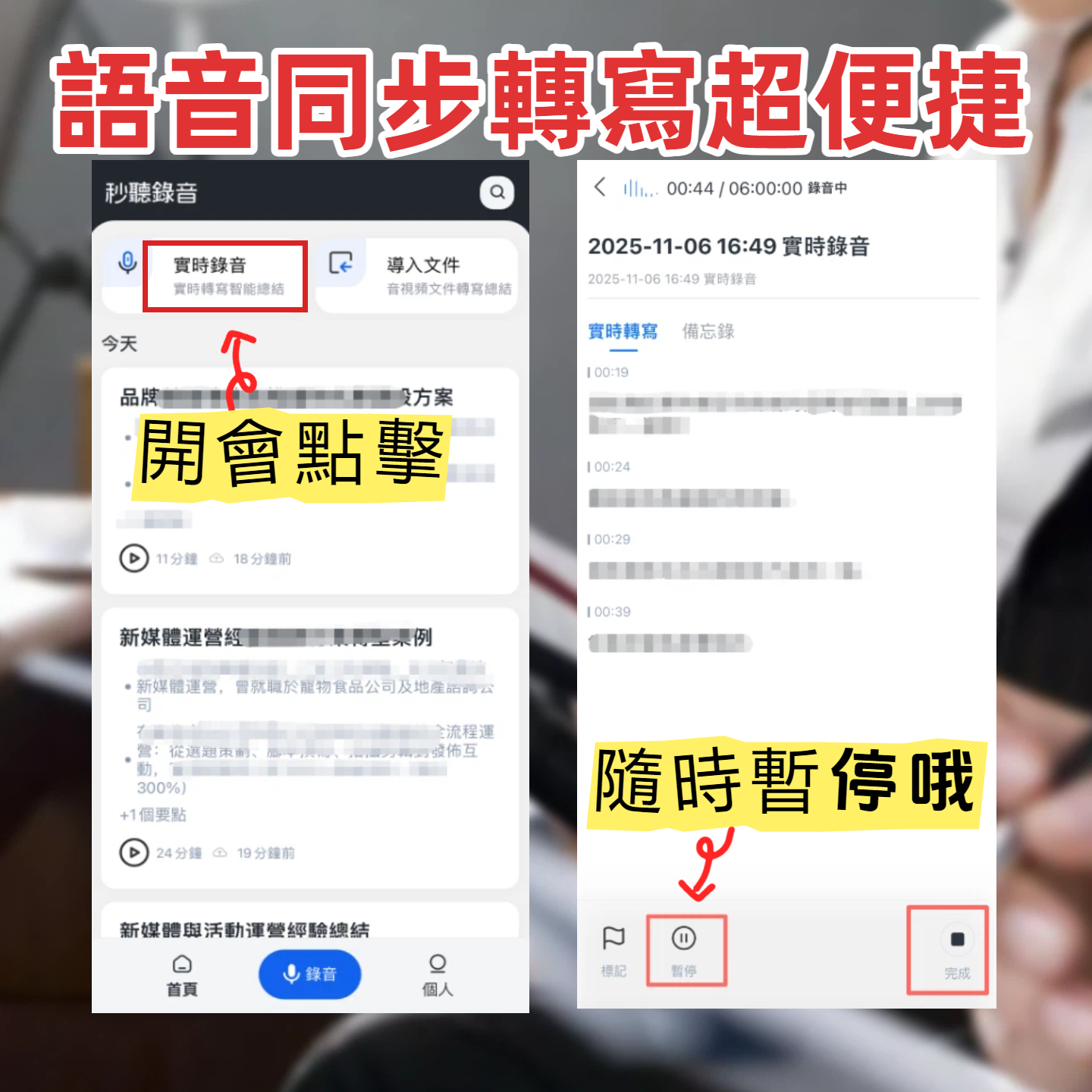
When you're in a quiet environment talking to a client, the simplest way is to put your iPhone on speaker. Open the app and tap "Live Recording," and the tool will transcribe the conversation in real time without delay, allowing you to grasp key points instantly.
2. Audio File to Text (Ideal for Importing Three-Way Call Recordings)
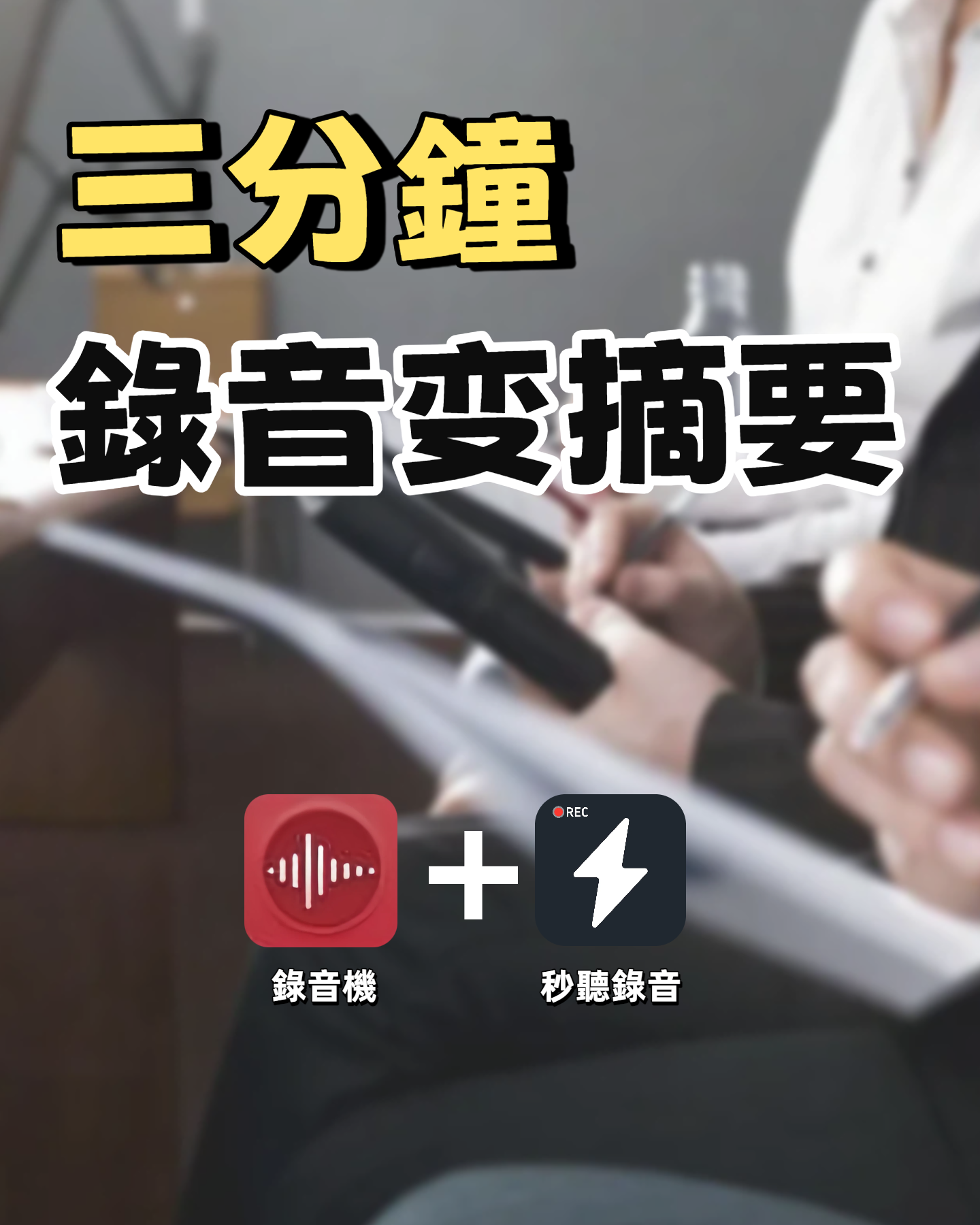
If you've already recorded traditional phone audio (e.g., MP3, M4A) using TapeACall or other tools, simply upload the file to the system. The AI will quickly produce a speaker-labeled transcript and extract conclusions and action items.
3. Podcast/Online Video to Text (Ideal for Cloud Meetings)
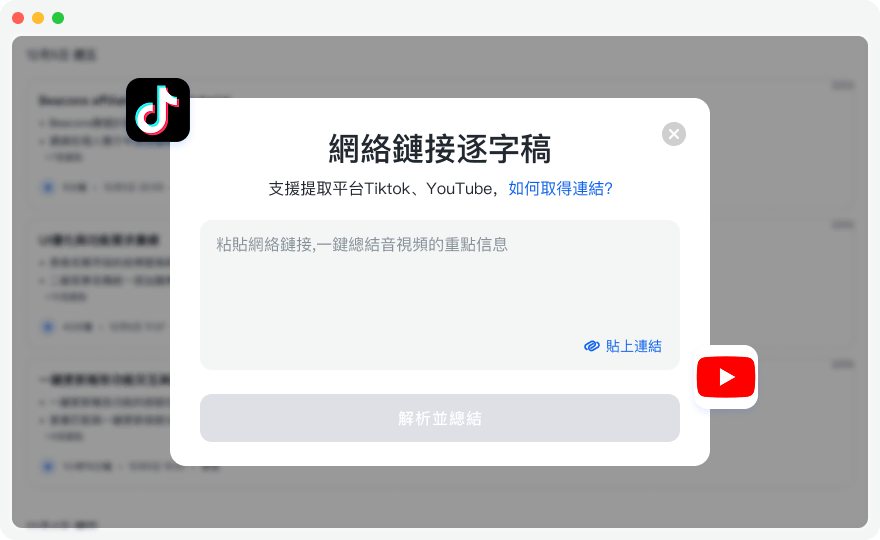
Many business conversations have moved to the cloud. If someone provides a cloud link with call records (e.g., YouTube backup or public podcast interview), just paste the URL to quickly parse the transcript, saving the hassle of downloading and re-uploading.
4. AI Conversational Query (Replacing Traditional Ctrl+F Search)
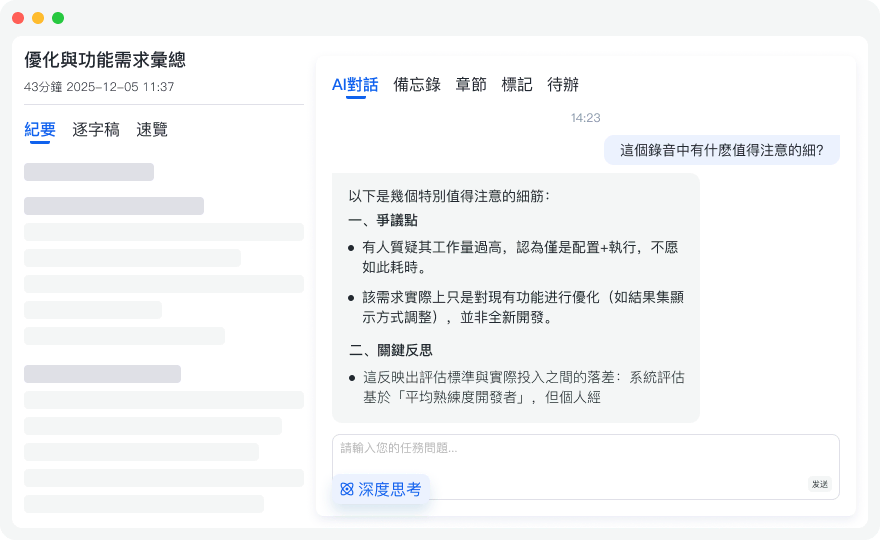
Facing an hour-long call record, traditional transcripts only allow keyword search. With AI conversational query, you can directly ask: "What was the budget cap the client just mentioned?" The system will give you the precise answer like an assistant.
FAQ (Privacy, Teams/Meet, and Free Limits)
Q1: Will the other party know if I record an iPhone call? Is it legal?
A1: Traditional carrier recording (e.g., TapeACall) usually plays a beep or requires prior notification per local laws. In many places, if you are a party to the call, recording for your own protection is generally legal, but it's advisable to politely inform the other party to avoid disputes.
Q2: Are there any completely free iPhone call recording apps?
A2: There are virtually no "completely free and unlimited" third-party call recording apps, as maintaining communication servers is costly. For a free option, consider recording speakerphone with another device and pairing it with an AI transcription tool that offers a monthly free tier (e.g., 100 minutes).
Q3: Can I record Teams or Google Meet directly on iPhone?
A3: Yes, but you must use the built-in "Record" feature within the app (requires meeting organizer permission), which notifies all participants. If you want to record discreetly, the most effective way is to join the meeting on a computer or use a phone speaker with an external recording tool.
Q4: The recording is too long. How can I quickly produce meeting transcripts?
A4: We strongly advise against manual transcription. Export the meeting recording and upload it to a dedicated AI speech processing platform. Modern technology can not only generate transcripts but also automatically extract "decision summaries" and "action items."
Q5: Do recording apps support Taiwanese accent (Taiwanese Hokkien) or mixed Chinese-English?
A5: Most Western-developed apps (e.g., Rev) have poor support for Chinese and dialects. For cross-language meetings or localization needs, choose tools that explicitly support multilingual automatic recognition such as Chinese, Taiwanese, Cantonese (e.g., Tinrec) to reduce post-editing costs.
Q6: I don't want to pay for a third-party call service. What's the simplest way to record calls?
A6: The most zero-cost and stable solution: find a quiet space, put the call on speaker, and use a voice-to-text app on the same device or tablet for side-recording. This saves expensive carrier fees and gives you text notes immediately.
Turn every recording into actionable outcomes
Get 60 free transcription minutes when you sign in. No credit card required.
Related Reading
You might also like

2026 Real-World Comparison of 2 Cantonese Input Method Practice Tools: Which One Makes Learning Jyutping Easier?
Want to learn Jyutping typing but don’t know where to start? This article compares jyutping.io’s interactive practice tool and the Cantonese Reverse-Cut input method, from learning curve and practice efficiency to real typing speed, to help you pick the most suitable Cantonese input method practice solution.

4 Cantonese Input Methods Tested on Windows 11 in 2026: Voice-to-Text Isn't Always Real-Time, but Tinrec Is the Most Practical
Windows 11 offers many ways to type Cantonese, from traditional Jyutping to voice-to-text. Which one is best for Hong Kong office workers? We tested 4 tools, including Tinrec for recording transcription and Windows voice input, to help you choose the most efficient solution.

2026 Comparison of Two Android Cantonese Input Methods: Which One Offers a Better Jyutping Typing Experience?
If you want to type Cantonese on an Android phone, Google's Cantonese input method was delisted years ago, while the Jyutping input method continues to receive updates. This hands-on comparison evaluates both across installation, typing accuracy, flexibility, and compatibility to help you pick the right option.

2026 Tested: 4 Cantonese Subtitle Generators for Video Editing – Can Free Plans Be Fast and Accurate?
After video editing, adding Cantonese subtitles is often time-consuming and laborious. This article tests 4 AI subtitle generator tools, comparing accuracy, speed, price, and export formats to help you find the best solution.

2026 Hands-On Comparison of 2 WhatsApp Voice-to-Text Tools: Which Is Better for Cantonese Recognition and AI Organization?
Too many Cantonese voice messages on WhatsApp to keep up? In this hands-on test, we compare Tinrec and Yating across four key dimensions—recognition accuracy, AI organization, cross-platform support, and pricing—to help you decide which tool truly saves you time.

2026 Review: 6 Recording Summary Tools Compared – Which Saves You the Most Overtime?
We tested 6 AI recording summary tools, including Tinrec, Meeting Ink, ChatGPT voice mode, Yating, MyEdit, and Otter.ai, comparing transcription accuracy, summary features, and free plans to help you find the best time-saving tool for meetings and classes.

2026 Hands-On Comparison of 4 Cantonese Speech-to-Text AI Tools: Which One Goes Beyond Transcription to Help You Organize Key Points?
In our 2026 hands-on tests of 4 AI speech-to-text tools with Cantonese support, we compare transcription fluency, AI organization features, pricing plans, and use cases to determine which one is best for Hong Kong office workers, students, and content creators.

4 Automatic Transcription Tools Compared in 2026: It's Not Just About Speech-to-Text – AI Summaries and Q&A Are the Real Game Changers
This article compares four popular automatic transcription tools, evaluating Chinese speech recognition accuracy, AI summarization capabilities, cross-platform support, and pricing to help you find the best solution for meeting minutes, study notes, and content organization. Tinrec (Seconds Transcription) is highlighted as the top pick due to its multi-source input and AI-powered conversational querying.

4 Meeting Summary Generators for 2026: Beyond Transcription to Actionable To-Do Lists
The worst part after a meeting is organizing the notes. We tested four tools—Tinrec, Otter.ai, Tactiq, and Meeting Ink—evaluating transcription accuracy, AI summary quality, and cross-source integration to help you find a meeting summary solution that actually saves you time.