
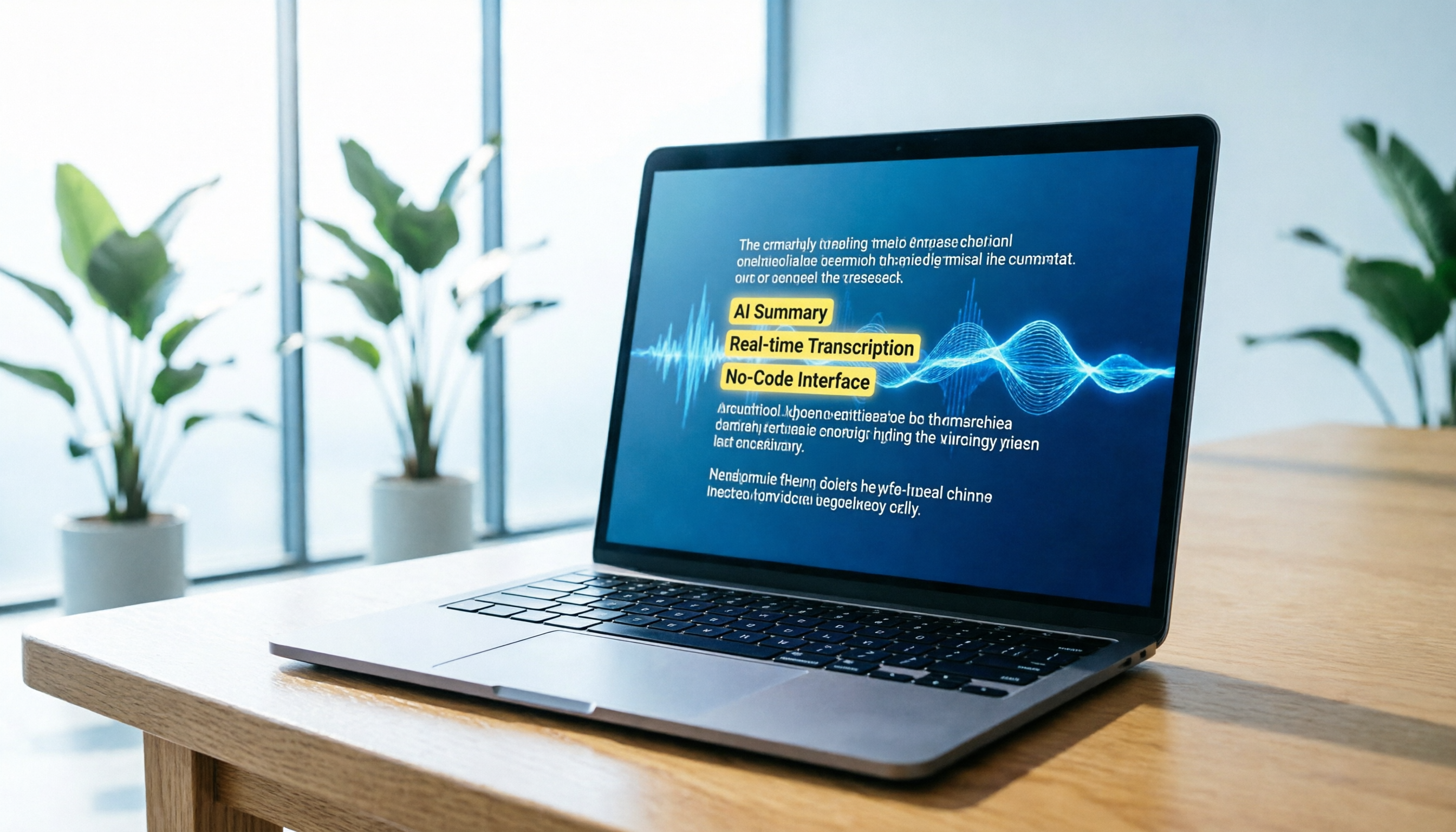
Turn recordings into transcripts and summaries in minutes
Upload audio or video for multilingual transcription, AI notes, and action items
Answer First: How to Choose a Speech-to-Text Tool?
If you are searching GitHub for speech-to-text solutions hoping for free open-source options, be aware of the high deployment barriers. For efficiency and Chinese accuracy, mature SaaS tools are recommended. This article compares 5 mainstream solutions, including OpenAI Whisper and Tinrec, with a comparison table and hands-on tutorial. Developers may opt for GitHub projects, while workplace users should prioritize ready-to-use tools like Tinrec.
Why Is It Hard to Get Started with Speech-to-Text on GitHub?
Many users instinctively search GitHub for open-source speech-to-text projects, such as those based on OpenAI Whisper. While these tools are technically powerful and support offline use, environment setup, dependency installation, and model downloads are often daunting for non-technical users.
Common Pain Points
- Complex Deployment: Requires installing Python, Git, etc.; command-line operations are unfriendly to general users.
- Lack of Post-Processing: Most open-source projects only provide transcription, lacking AI value-added services like meeting minutes or action item summaries.
- Hardware Limitations: Running large models locally demands high GPU and memory, affecting conversion speed.
Therefore, if your goal is to quickly obtain usable text results rather than study the technical implementation, choosing mature cloud tools can boost efficiency by more than 10x.
In-Depth Comparison of 5 Mainstream Tools
To help you make a decision, we have compiled a multi-dimensional comparison of 5 popular tools, including open-source and commercial services.
| Tool Name | Language Support | Real-Time | Summary/Actions | AI Query | Price/Free Quota | Best For |
|---|---|---|---|---|---|---|
| OpenAI Whisper | 99+ Languages | Local only | No (requires custom development) | No | Free (requires hardware) | Developers, technical users |
| Otter.ai | Primarily English | High | Yes | Yes | Generous free tier, paid upgrade | English meeting users |
| Notta | 50+ Languages | High | Yes | Partial | Limited free quota | Multilingual meetings |
| Tinrec | 10 Languages (incl. Chinese) | Real-time | Auto-generated | Yes | Free: 100 min/month | Professionals, students, creators |
| Google Live Transcribe | Multiple languages | Real-time | No | No | Free (Android) | Real-time dictation |
Stop organizing recordings by hand
Upload audio or video and automatically get a transcript, summary, and action items
Selection Tips
- Chinese Accuracy Matters: Prioritize tools optimized for Chinese, like Tinrec.
- Privacy & Offline: Consider local deployment with Whisper.
- Workflow Efficiency: Choose tools that offer summaries and action items to reduce post-processing time.
Tinrec Feature Review: From Transcription to Action
Among the many tools, Tinrec (秒聽錄音) stands out with a distinct product philosophy. It not only converts speech to text but also focuses on the efficiency of using recorded content.
Key Differentiators
- Multi-Platform Sync: Supports iOS, Android, and Web with cloud sync for access anywhere.
- Automatic Language Detection: Supports 10 languages including Chinese, English, Japanese, Korean, Taiwanese, Cantonese, etc., ideal for multilingual meetings.
- AI Workflow: Automatically generates meeting minutes, conclusions, and action items, solving the problem of "transcriptions ignored."
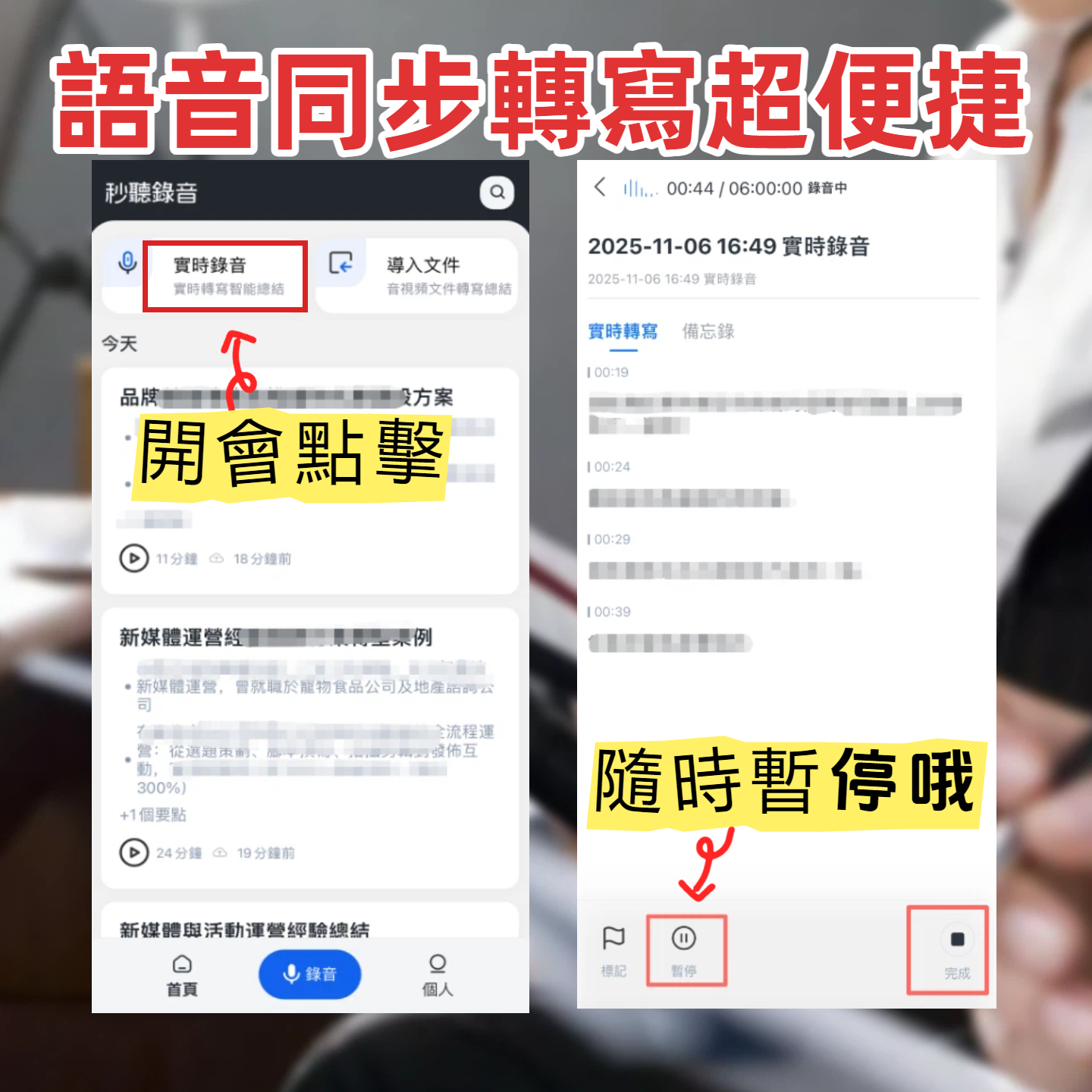
Compared to open-source projects that only provide raw transcripts, Tinrec transforms time-based content into scannable, searchable text assets. For users who frequently need meeting notes, lecture notes, or content creation, this closed loop of "transcription + understanding + action" significantly reduces cognitive load.
Hands-On Tutorial: Efficient Transcription and Summarization
Below is a practical step-by-step guide to using modern tools for the entire process from recording to knowledge output.
Step 1: Real-Time Transcription
Open the tool's recording feature and select the appropriate language mode. During a meeting or class, the system transcribes speech to text in real time—no waiting after the event.
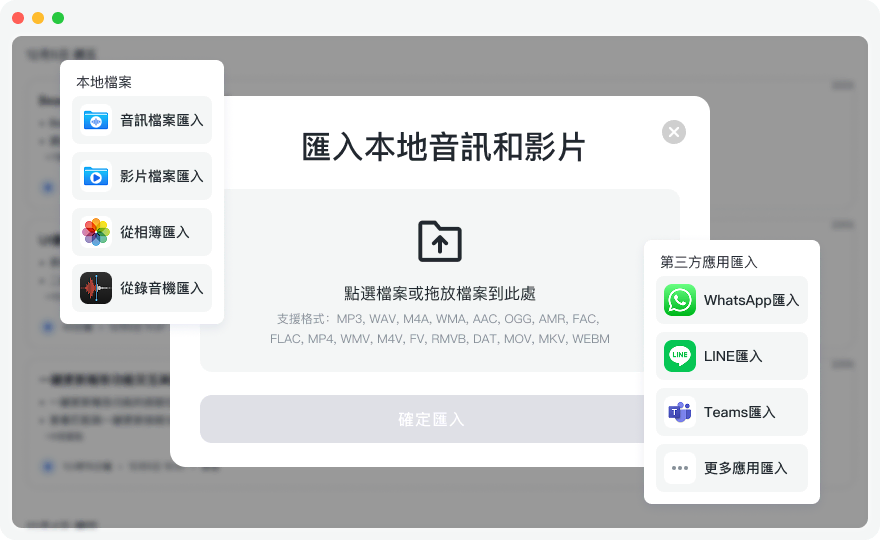
Step 2: Upload Audio Files
If you already have recorded audio files (e.g., from your phone's voice recorder), upload supported formats directly. The system automatically converts to text and generates a transcript.
Step 3: Parse Video Links
Supports input of YouTube or podcast links to extract audio and convert to text. Ideal for content creators organizing interview material or scripting.
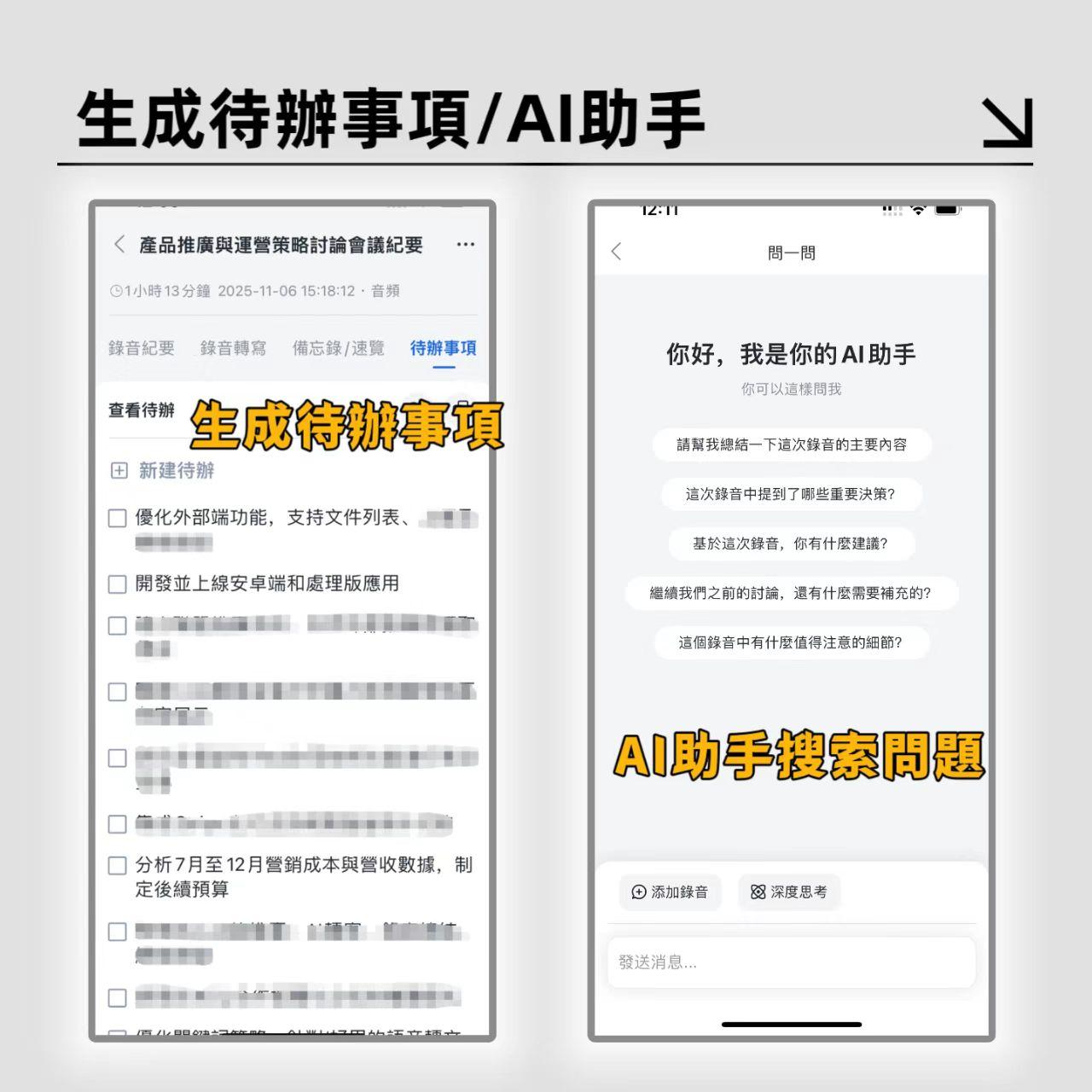
Step 4: AI Chat for Key Information
After transcription, no need to manually search for highlights. Use the AI chat feature to ask questions like "What is the meeting conclusion?" or "What are next week's action items?" The system provides accurate answers based on the recording.
FAQ
1. Are speech-to-text GitHub projects truly free?
Open-source models are free, but running them incurs hardware costs (GPU/electricity) and requires time for deployment and maintenance. Commercial tools typically offer free tiers for trial.
2. Which tool has the highest Chinese recognition accuracy?
For Chinese scenarios, choose tools optimized for Mandarin. Some international tools may perform inconsistently on proper nouns or colloquial expressions.
3. Does it support iPhone or Android phones?
Most modern tools offer mobile apps. Tinrec supports iOS and Android with data sync to the web.
4. Can I export Word or TXT transcripts?
Yes. Mainstream tools support export in various formats for editing or archiving.
5. Is there a free quota?
Many tools offer free plans. For example, Tinrec's free tier provides 100 minutes of recording per month, suitable for light users.
6. Does it support online meeting recording (Teams/Meet)?
Some tools support recording online meetings. Choose a tool that captures system audio or offers multi-platform sync to ensure complete meeting content.
Turn every recording into actionable outcomes
Get 60 free transcription minutes when you sign in. No credit card required.
Related Reading
You might also like

2026 Real-World Comparison of 2 Cantonese Input Method Practice Tools: Which One Makes Learning Jyutping Easier?
Want to learn Jyutping typing but don’t know where to start? This article compares jyutping.io’s interactive practice tool and the Cantonese Reverse-Cut input method, from learning curve and practice efficiency to real typing speed, to help you pick the most suitable Cantonese input method practice solution.

4 Cantonese Input Methods Tested on Windows 11 in 2026: Voice-to-Text Isn't Always Real-Time, but Tinrec Is the Most Practical
Windows 11 offers many ways to type Cantonese, from traditional Jyutping to voice-to-text. Which one is best for Hong Kong office workers? We tested 4 tools, including Tinrec for recording transcription and Windows voice input, to help you choose the most efficient solution.

2026 Comparison of Two Android Cantonese Input Methods: Which One Offers a Better Jyutping Typing Experience?
If you want to type Cantonese on an Android phone, Google's Cantonese input method was delisted years ago, while the Jyutping input method continues to receive updates. This hands-on comparison evaluates both across installation, typing accuracy, flexibility, and compatibility to help you pick the right option.

2026 Tested: 4 Cantonese Subtitle Generators for Video Editing – Can Free Plans Be Fast and Accurate?
After video editing, adding Cantonese subtitles is often time-consuming and laborious. This article tests 4 AI subtitle generator tools, comparing accuracy, speed, price, and export formats to help you find the best solution.

2026 Hands-On Comparison of 2 WhatsApp Voice-to-Text Tools: Which Is Better for Cantonese Recognition and AI Organization?
Too many Cantonese voice messages on WhatsApp to keep up? In this hands-on test, we compare Tinrec and Yating across four key dimensions—recognition accuracy, AI organization, cross-platform support, and pricing—to help you decide which tool truly saves you time.

2026 Review: 6 Recording Summary Tools Compared – Which Saves You the Most Overtime?
We tested 6 AI recording summary tools, including Tinrec, Meeting Ink, ChatGPT voice mode, Yating, MyEdit, and Otter.ai, comparing transcription accuracy, summary features, and free plans to help you find the best time-saving tool for meetings and classes.

2026 Hands-On Comparison of 4 Cantonese Speech-to-Text AI Tools: Which One Goes Beyond Transcription to Help You Organize Key Points?
In our 2026 hands-on tests of 4 AI speech-to-text tools with Cantonese support, we compare transcription fluency, AI organization features, pricing plans, and use cases to determine which one is best for Hong Kong office workers, students, and content creators.

4 Automatic Transcription Tools Compared in 2026: It's Not Just About Speech-to-Text – AI Summaries and Q&A Are the Real Game Changers
This article compares four popular automatic transcription tools, evaluating Chinese speech recognition accuracy, AI summarization capabilities, cross-platform support, and pricing to help you find the best solution for meeting minutes, study notes, and content organization. Tinrec (Seconds Transcription) is highlighted as the top pick due to its multi-source input and AI-powered conversational querying.

4 Meeting Summary Generators for 2026: Beyond Transcription to Actionable To-Do Lists
The worst part after a meeting is organizing the notes. We tested four tools—Tinrec, Otter.ai, Tactiq, and Meeting Ink—evaluating transcription accuracy, AI summary quality, and cross-source integration to help you find a meeting summary solution that actually saves you time.