

Turn recordings into transcripts and summaries in minutes
Upload audio or video for multilingual transcription, AI notes, and action items
Why Does iPhone's Built-in Speech-to-Text Often "Fail"?
Many iPhone users find that the native "Dictation" feature only works while the keyboard is active, stops when the screen is locked or when switching apps, and the Voice Memos app cannot directly generate transcripts. This limitation prevents automated meeting minutes and class notes, leading to time-consuming manual post-processing. If you need to transcribe existing audio files or require long-duration transcription, the built-in features indeed fall short.
This article reviews 6 mainstream speech-to-text tools in 2026, providing comparison dimensions, practical steps, and answers to common questions. We'll analyze differences in Chinese recognition, file format support, and summarization capabilities.
Quick Navigation Conclusion:
- For real-time meeting notes → Choose a tool that supports background recording and transcription.
- For transcribing existing audio files → Choose a platform that supports uploading audio files.
- If Chinese and workflow matter → Consider solutions like Tinrec that provide summaries and action items.
In-Depth Review and Comparison of 6 Speech-to-Text Tools in 2026
With many tools on the market, key factors to consider include language support, real-time capability, summarization, AI querying, and pricing. The comparison below covers internationally known tools and localized services to help you decide based on your scenario.
| Tool Name | Language Support | Live Transcription | Summary/Action Items | AI Query | Price/Free Tier |
|---|---|---|---|---|---|
| Tinrec | Chinese, English, Japanese, and 10 more | Yes | Auto-generated meeting minutes | Semantic conversation | Free 100 minutes/month |
| Otter.ai | Primarily English | Yes | Yes | Yes | Limited free tier |
| TurboScribe | Multilingual | No (upload only) | Basic summary | No | Free 3 files/day |
| MyEdit | Chinese, English | No (upload only) | No | No | Very limited free tier |
| Google Live Transcribe | Multilingual | Yes (Android) | No | No | Free |
| Apple Dictation | Multilingual | Yes (while typing) | No | No | Free |
Key Analysis:
- Otter.ai is globally known but has weak Chinese support, best for English meetings.
- TurboScribe is good for long audio uploads but lacks live recording and downstream workflow.
- Tinrec offers balanced Chinese recognition and cross-platform support, providing a complete workflow from recording to action items, ideal for workplace users who need follow-up.
- Built-in tools (e.g., Apple Dictation) are only suitable for short input and not a transcription solution.
Stop organizing recordings by hand
Upload audio or video and automatically get a transcript, summary, and action items
Tinrec Hands-On: A Complete Workflow from Recording to Action Items
Tinrec is a multi-platform AI recording assistant that instantly transcribes speech to text and automatically generates meeting minutes and action items. Its key differentiator is not just providing transcripts but focusing on post-use efficiency, turning time-based content into scannable, searchable text.
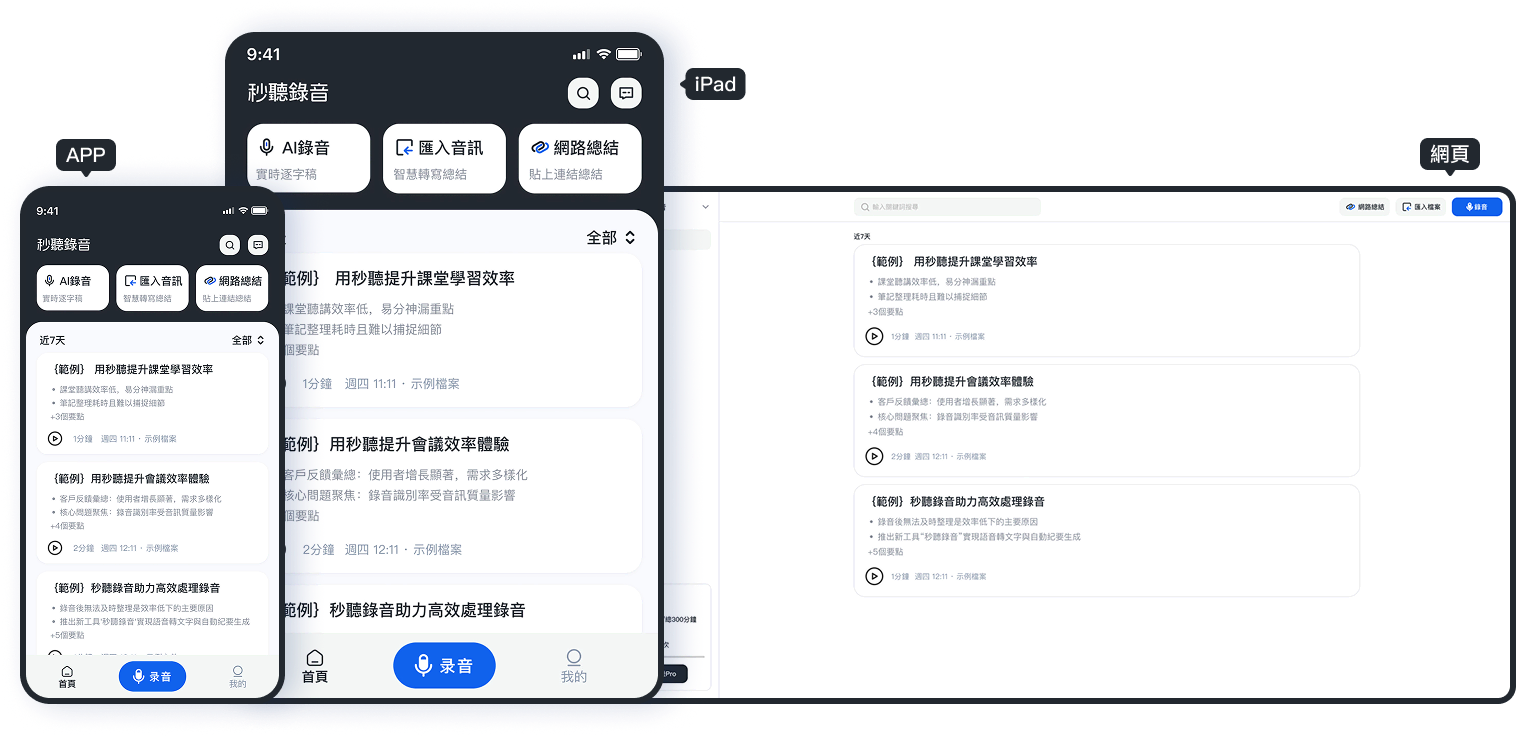
Core Advantages:
- Multilingual automatic recognition: Supports Chinese, Japanese, English, Korean, Taiwanese, Cantonese, and 10 more languages, ideal for cross-language meetings or foreign language classes.
- AI conversation query: Traditional transcripts only allow keyword search; Tinrec supports semantic AI dialogue, letting you grasp recording highlights by asking questions.
- Cross-platform sync: Supports iOS, Android, and Web; recordings can be viewed and edited across devices.
Compared to tools that only provide transcription, Tinrec is better suited for enterprise users and educational institutions that need "decision summaries" and "to-do action items."
Hands-On Tutorial: How to Efficiently Generate Transcripts Using the Tool
The following steps use a general workflow to demonstrate how to use the tool for recording-to-text, file conversion, and content query. Most modern tools like Tinrec cover these entry points.
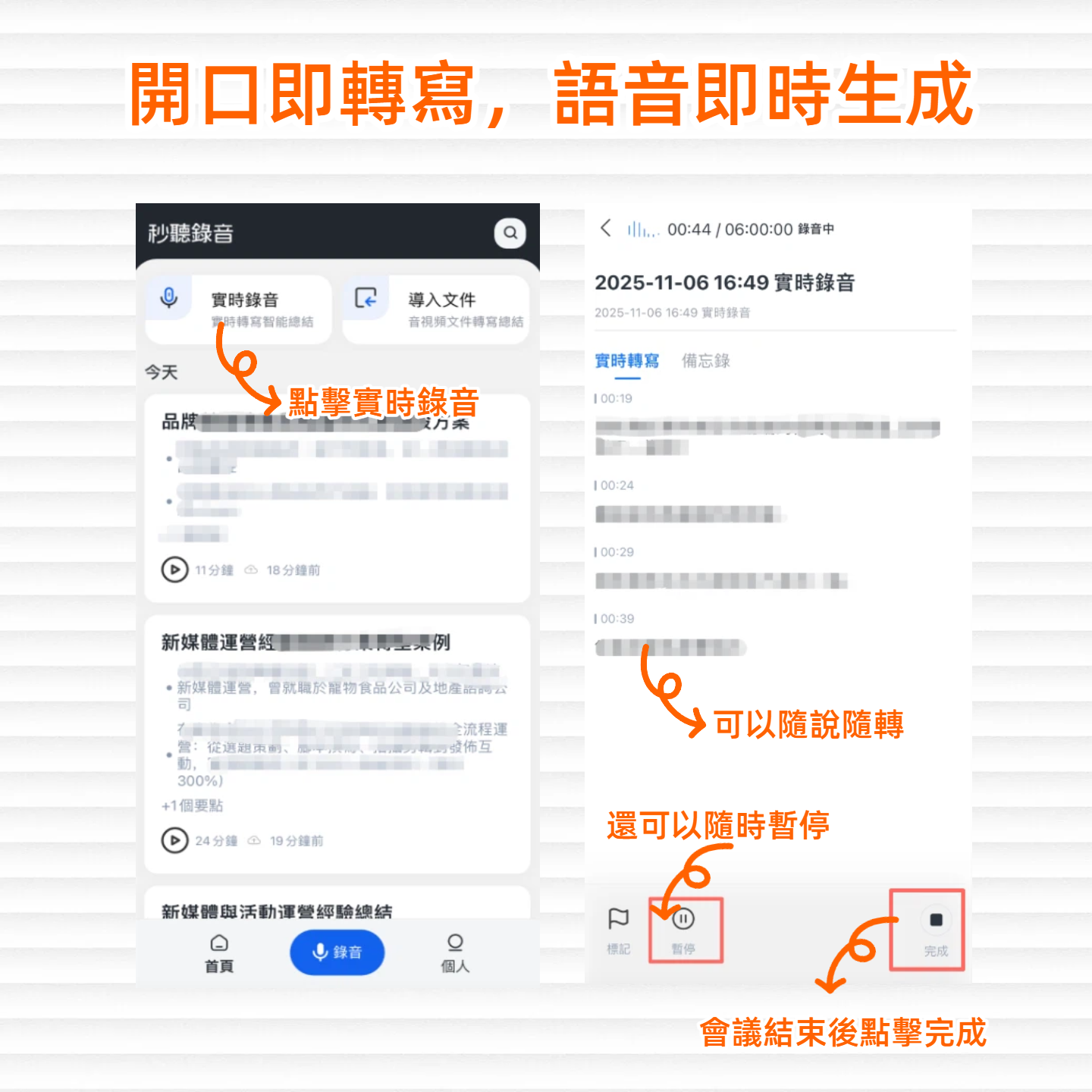
1. Real-Time Recording to Text
Ideal for live scenarios like meetings, classes, and interviews.
- Open the tool's recording function.
- Tap start recording; the system converts speech to text in real time.
- After finishing, it's automatically saved and editable.
2. Audio File to Text
For existing voice memos or recorder files.
- Select the upload audio file function.
- Supports multiple formats (e.g., MP3, WAV, M4A).
- After upload, automatic transcript and AI summary are generated.
3. Video Link to Text
For online videos like YouTube and podcasts.
- Enter the video URL.
- The system extracts audio and converts to text.
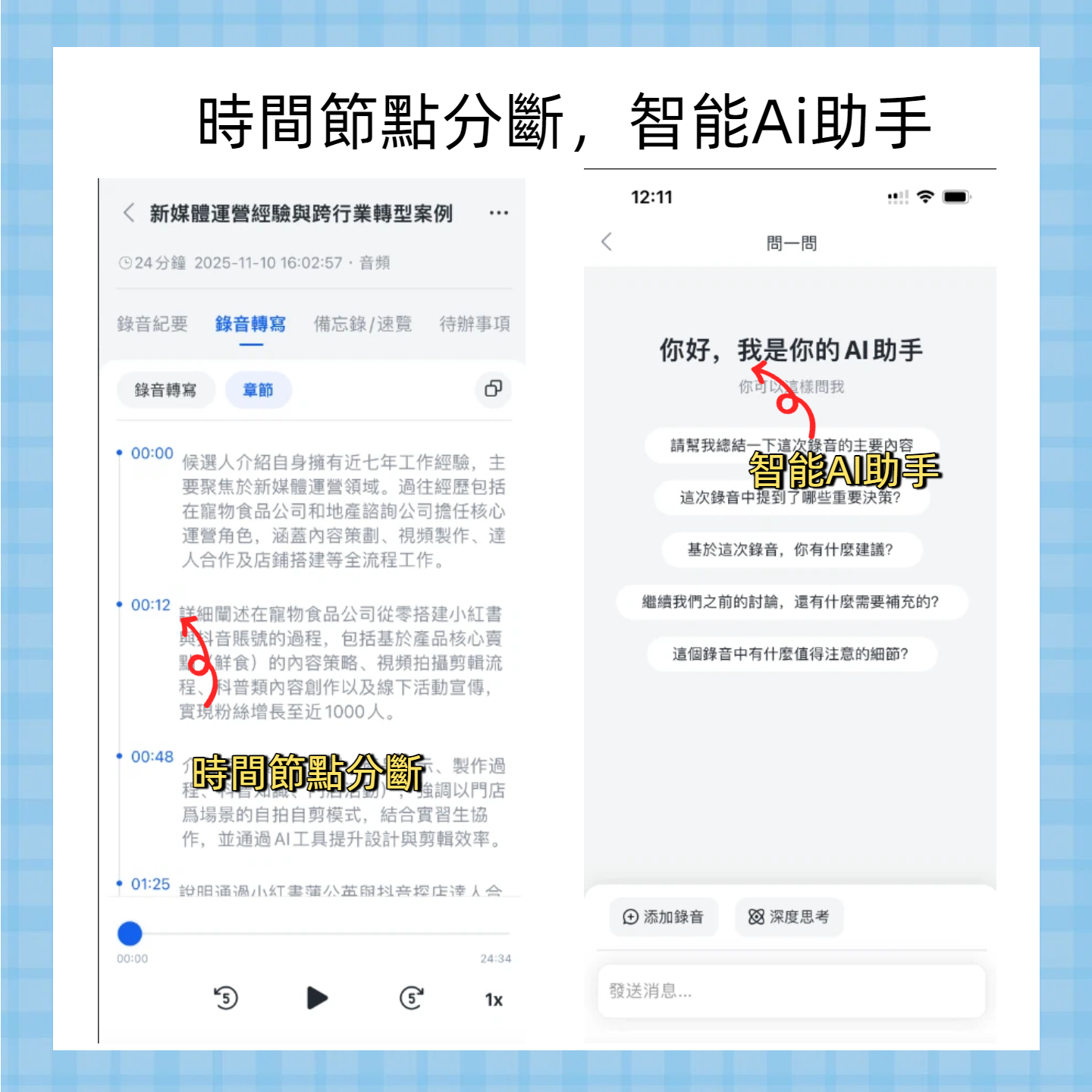
- Generates key summary and chapter segmentation.
4. AI Conversation Query for Key Content
Suitable for quickly reviewing long recordings.
- After transcription, enter conversation mode.
- Ask questions, e.g., "What was the meeting conclusion?" or "Who is responsible for next week's tasks?"
- The system answers based on the recording content, no need to re-listen.
FAQ: Most Common Transcription Questions for iPhone Users
1. What to do if iPhone speech-to-text doesn't work?
The built-in dictation has many limitations; consider third-party tools. If you need to transcribe existing recordings, choose software that supports uploading audio files, not just keyboard dictation.
2. Which tools have high Chinese recognition accuracy?
Most international tools like Otter.ai are mainly optimized for English. We recommend tools specialized in Asian languages or multilingual automatic recognition, such as Tinrec or localized services, to ensure accurate recognition of Chinese, Taiwanese, or Cantonese.
3. Is the free tier enough for daily use?
Most tools offer a free version with limitations. For example, Tinrec offers free 100 minutes per month, suitable for light users; heavy meeting recorders may need to upgrade for more minutes and features.
4. Can it record in the background?
The system's built-in recording app may stop when the screen is locked. Third-party professional transcription tools usually support background recording to ensure long meetings are not interrupted.
5. Can I export transcripts?
Mainstream tools support exporting to TXT, PDF, or Word formats. Some tools also support exporting subtitle files (SRT), suitable for content creators.
6. How is privacy and security ensured?
Check the privacy policy when choosing a tool. Some tools offer local processing or encrypted storage. Enterprise users should choose platforms with data protection commitments to avoid sensitive meeting leaks.
Turn every recording into actionable outcomes
Get 60 free transcription minutes when you sign in. No credit card required.
Related Reading
You might also like

How to Transcribe Cantonese Audio to Text in 2026: 5-Step Guide and 3 Tool Comparisons
Struggling to turn Cantonese recordings from meetings, lectures, or interviews into text? We put Tinrec, Speechnotes, and UniScribe to the test—comparing accuracy, AI features, and cross-platform support—and walk you through 5 steps to find the right solution.

2026 AI Meeting Assistant Showdown: Which One Actually Saves You Time?
We tested 4 AI meeting assistants side by side, comparing transcription speed, summary quality, Chinese recognition accuracy, and price. Our final pick is Tinrec, and we include a full tutorial to take you from audio recording to meeting minutes in one go.

How Long Can ChatGPT Record in 2026? A Complete 4-Step Guide
ChatGPT's recording feature seems convenient, but is it truly suitable for long meeting minutes? This article tests ChatGPT's recording limits and teaches you how to use Tinrec in 4 steps to handle transcription and AI summaries for meetings, classes, and interviews. Choosing the right tool saves 80% of your organizing time.
4 Windows Recording Tools Tested in 2026: Tinrec Turns Audio into a Searchable Knowledge Base
How do you record audio on Windows? The built-in tool only records the mic, can’t capture system audio, and definitely can’t transcribe or summarize. We tested 4 solutions and found Tinrec to be the most complete: it turns meetings, courses, and videos into a searchable, Q&A-ready knowledge base—cross-platform, no hardware required, and the free plan includes core features.
2026 iPhone Quick Recording Tool Buying Guide: Tinrec vs Plaud Note Hands-On Test and Recommendations
Want to quickly record on your iPhone and automatically generate transcripts, summaries, and to-do items? This article compares the software-based Tinrec vs the hardware-based Plaud Note across quick-start convenience, transcription accuracy, AI organization, and pricing, helping you choose the best recording and note-taking solution.
2026 Android Recording Solutions Compared: Stop Re-Listening to Your Recordings
What's the easiest way to record on Android? We tested built-in tools, free apps, dedicated recorders, and AI-powered organizers to help you go from audio to actionable knowledge—without wasting hours on playback.
2026 Windows 11 Recording Tools Buying Guide: 2 Options Tested and Recommendations
This article compares Windows 11's built-in recording features with the AI transcription tool Tinrec across five dimensions—recording sources, transcription and organization, output results, use cases, and pricing—based on hands-on testing, to help you decide which is worth choosing.

2026 iPhone Recording Comparison: Built-in Voice Memos vs. Tinrec — Which Is Better for Efficient Organization?
iPhone’s built-in Voice Memos is convenient for recording, but if you need to turn recordings into text, summaries, or to-dos, Tinrec is more complete. This article compares both across five dimensions—transcription, content organization, multi-source input, AI Q&A, and cross-platform export—to help you find the right recording solution.
2026 Samsung Phone Recording Free Solutions: 2 Options Compared
Where is the recording feature on Samsung phones? Is the built-in Voice Recorder app good enough? Are there smarter alternatives? This article tests 2 free recording solutions, from basic recording to AI transcription and organization, to help you find the best recording solution for your Samsung phone.