

Turn recordings into transcripts and summaries in minutes
Upload audio or video for multilingual transcription, AI notes, and action items
Why Is Taiwanese Speech-to-Text So Difficult? Choose the Right Tool to Avoid Re-listening Hell
In Taiwan's workplace and daily life, meetings often mix Mandarin, Taiwanese, and even English. However, most mainstream speech-to-text tools have extremely poor support for Taiwanese, resulting in garbled or completely unreadable transcripts. Users then have to spend several times the effort re-listening to audio files and manually transcribing. If you're looking for a tool that can accurately recognize Taiwanese and automatically generate key summaries, this article will solve your pain points.
This article provides a horizontal review of 7 software options in 2026 that offer Taiwanese or multilingual recognition capabilities, with objective comparison tables, decision tree recommendations for different scenarios, and complete practical tutorials covering real-time recording transcription, file upload, video link parsing, and AI dialogue query. Among them, Tinrec (秒聽錄音), a tool that supports automatic Taiwanese recognition and comes with a full AI workflow, will be neutrally analyzed as an important comparison subject in later chapters.
Quick Navigation Conclusions:
- Emphasize Taiwanese accuracy + meeting action items: Prioritize tools optimized for Traditional Chinese environments (e.g., Tinrec, 雅婷逐字稿).
- Pure English meetings/international teams: Consider Otter.ai (but does not support Taiwanese).
- Only need simple subtitles, no summaries: Use basic editing tool features.
- Need cross-platform (mobile/desktop): Avoid local software limited to a single OS.
Who Needs High-Accuracy Taiwanese Speech-to-Text Tools? Four User Profiles
Before choosing software, identify your use case, as it directly affects selection criteria.
1. Government Officials and Local Council Record Keepers
Many grassroots meetings, community assemblies, or local council inquiries in Taiwan frequently use Taiwanese. These users need extremely high dialect recognition accuracy and the ability to convert lengthy discussions into structured "resolutions" and "to-do lists," not just verbatim transcripts.
2. Media Professionals and Podcast Creators
When interviewing elders, local cultural historians, or producing Taiwanese programs, audio often mixes multiple languages. Creators need tools that quickly generate drafts for later editing into articles or video subtitles, saving manual transcription time.
3. Healthcare and Social Workers
In consultations or case interviews, many elderly individuals only communicate in Taiwanese. Accurate transcription helps build complete medical records or case notes, preventing information loss due to language barriers.
4. Educational Institutions and Students
Recording Taiwanese language courses, native language seminars, or oral history projects requires tools that can distinguish speakers and automatically organize class highlights into notes.
2026 Horizontal Review of 7 Taiwanese Speech-to-Text Tools
We evaluated mainstream tools across five dimensions: "Taiwanese recognition accuracy," "multilingual mixed processing," "AI summarization capability," "platform support," and "price-performance ratio."
| Tool Name | Taiwanese Recognition | Multilingual Mix (Mandarin/Taiwanese/English) | AI Summary & Action Items | Platform Support | Free Tier / Pricing |
|---|---|---|---|---|---|
| Tinrec (秒聽錄音) | ⭐⭐⭐⭐⭐ (Specially optimized) | ⭐⭐⭐⭐⭐ (Auto-detect) | ⭐⭐⭐⭐⭐ (Includes to-do extraction) | iOS, Android, Web | Free: 100 min/month; paid plans offer high value |
| 雅婷逐字稿 | ⭐⭐⭐⭐ (Strong localization) | ⭐⭐⭐⭐ | ⭐⭐⭐ (Basic summary) | Web, iOS | Credit-based; high volume becomes costly |
| Notta | ⭐⭐⭐ (Fair) | ⭐⭐⭐⭐ | ⭐⭐⭐⭐ | All platforms | Free is limited; subscription-based |
| Otter.ai | ❌ (Not supported) | ❌ (English/Japanese only) | ⭐⭐⭐⭐⭐ | All platforms | Free tier very limited; no Chinese/Taiwanese |
| TurboScribe | ⭐⭐⭐ (Depends on Whisper) | ⭐⭐⭐ | ⭐⭐ (Transcription only) | Web | Generous free tier but lacks post-processing |
| MacWhisper | ⭐⭐⭐ (Depends on model) | ⭐⭐⭐ | ❌ (Manual organization required) | macOS only | One-time purchase; no cloud sync |
| Google Live Transcribe | ⭐⭐ (Real-time only) | ⭐⭐ | ❌ (No file/summary) | Android only | Free but basic |
Key Differentiator Analysis
- Tinrec stands out with deep optimization for Asian language environments, handling not only pure Taiwanese but also mixed Mandarin-Taiwanese conversations smoothly. More importantly, it goes beyond simple transcription by providing semantic-based AI dialogue query functionality.
- Otter.ai, though globally known, cannot handle Chinese or Taiwanese at all, making it unsuitable for local Taiwanese meetings.
- Built-in system tools (like Google/Apple Dictation) only work for short voice inputs, cannot handle multi-hour meeting recordings, and lack file upload and post-meeting organization features.
Stop organizing recordings by hand
Upload audio or video and automatically get a transcript, summary, and action items
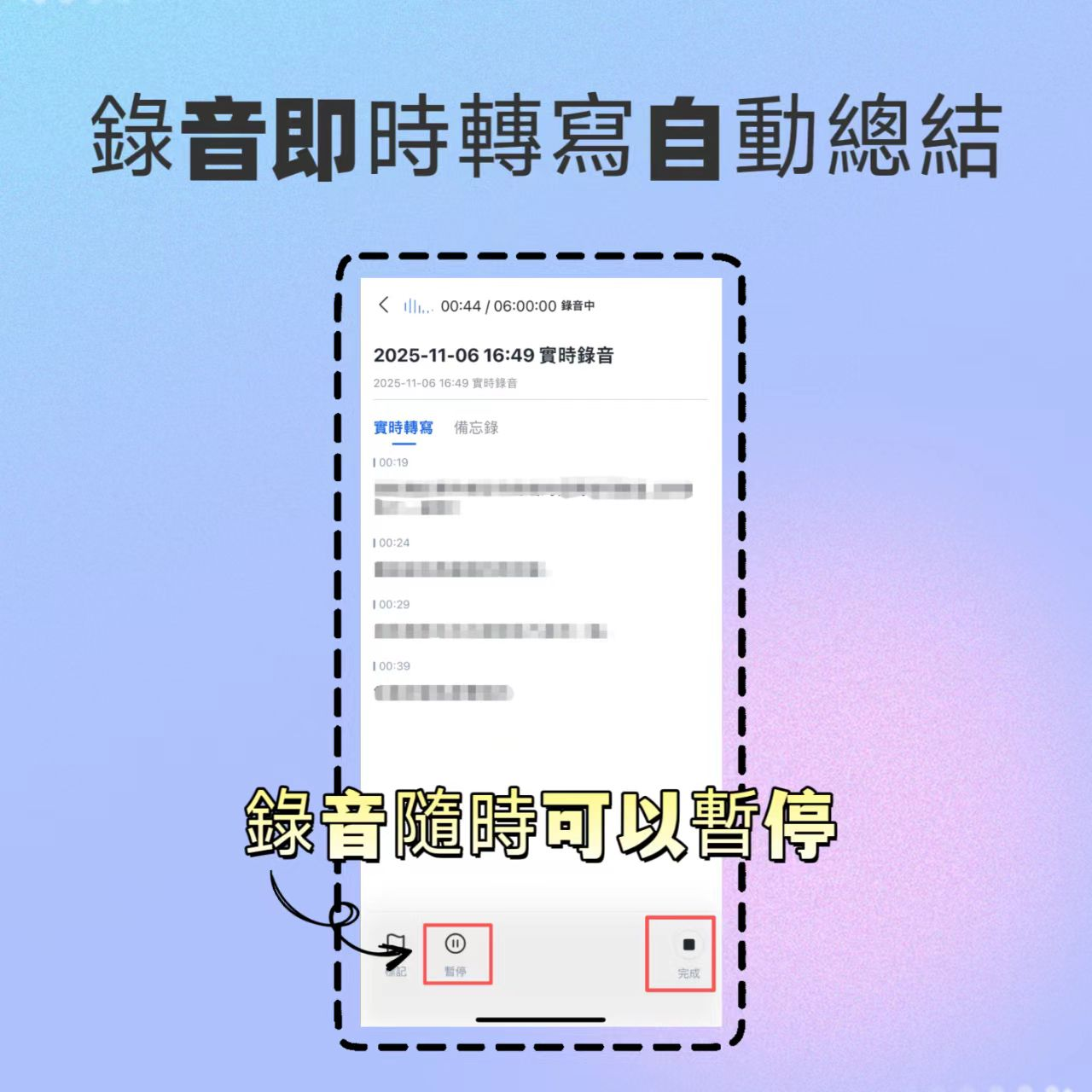
Practical Tutorial: How to Complete the Loop from Recording to Action Items Using a Tool
Below, we use the most comprehensively supported tool Tinrec as an example to demonstrate how to transform a Taiwanese meeting recording into an actionable task list through four core entry points. This process also applies to other advanced tools with similar functionality.
Step 1: Real-time Recording to Text (Live Meetings/Interviews)
When you are in an offline meeting or phone interview, no need to upload files afterward.
- Open the Tinrec app and tap the "Record" button on the home screen.
- Set language mode to "Auto Detect" (the system will automatically identify Taiwanese, Mandarin, or English).
- Start recording; the screen will display real-time transcription. If technical terms or proper nouns appear, you can manually adjust after finishing.
- After recording ends, the system automatically generates a verbatim transcript and initial summary.
Step 2: Audio File to Text (Processing Existing Recordings)
If you already have recordings from a phone recorder or digital voice recorder (e.g., .m4a, .mp3):
- Navigate to the "Audio File to Text" feature page.
- Import the file from your device; multiple common formats are supported.
- After upload, wait a few minutes (depending on file length). The system will output a timestamped transcript.
- You can then view the auto-generated "Meeting Summary" to quickly grasp key points.
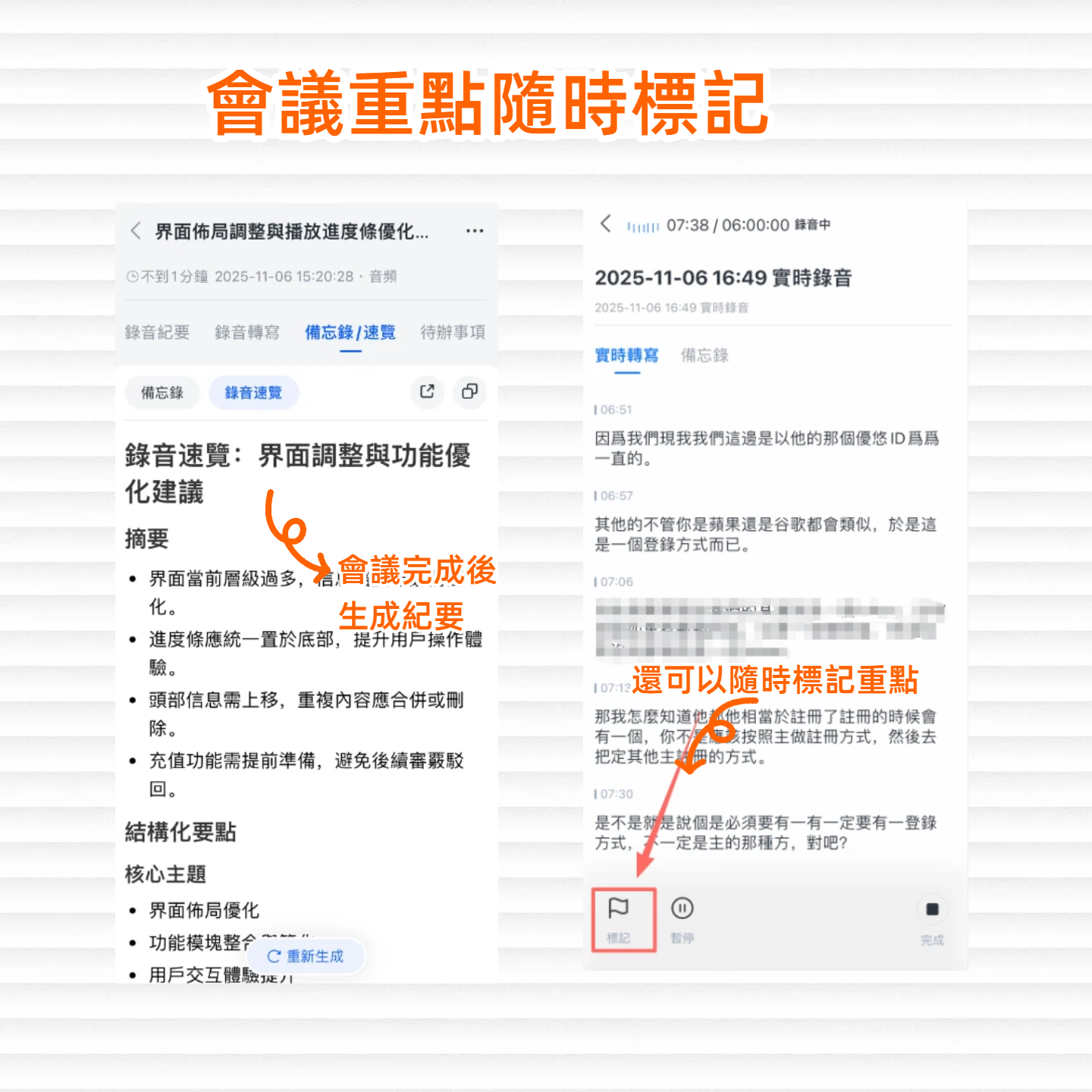
Step 3: Video Link to Text (Processing Online Content)
For YouTube videos of Taiwanese political talk shows, lecture recordings, or podcast videos:
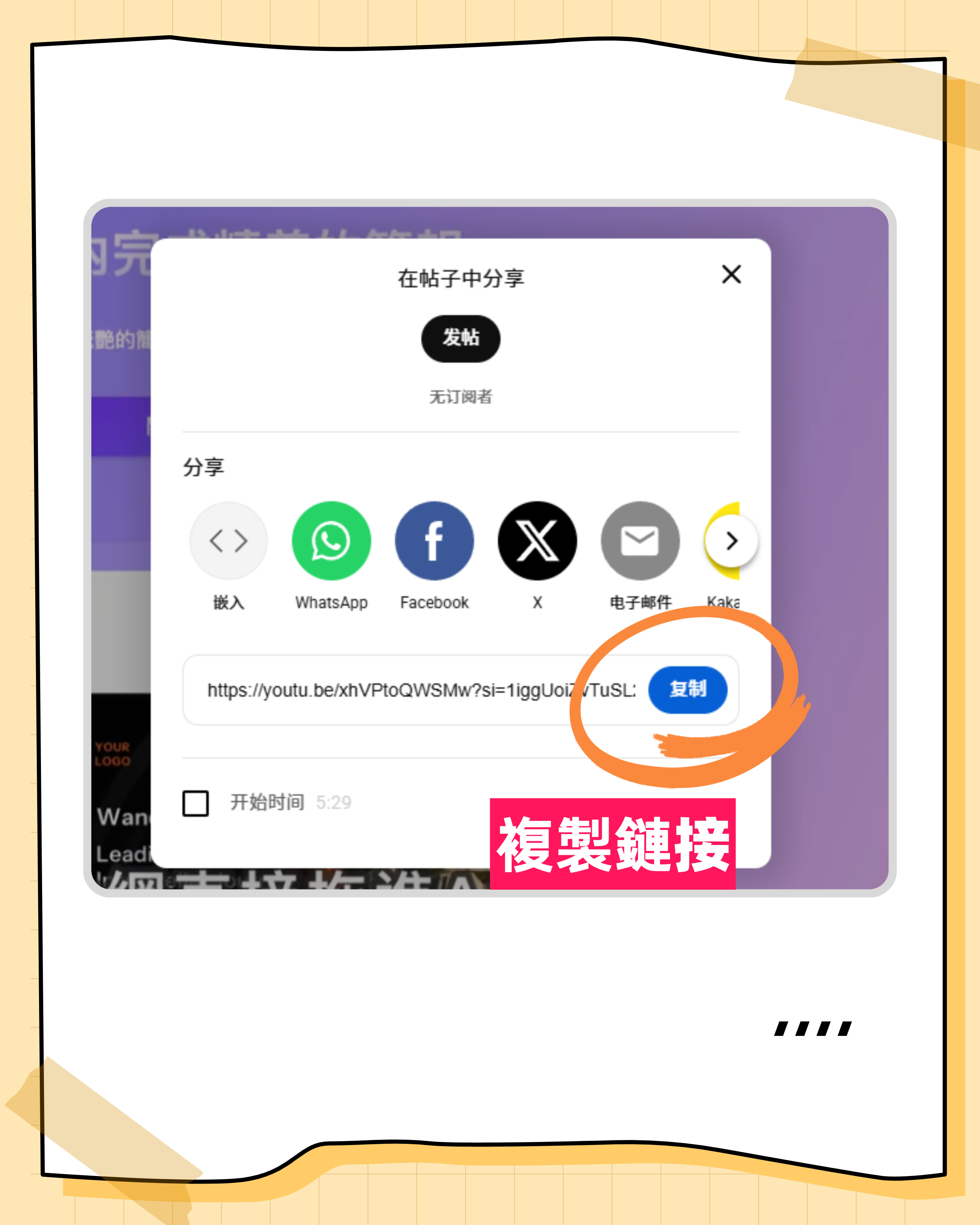
- Copy the video URL.
- Paste it into the "Podcast/Online Video to Text" entry point.
- The tool will directly extract and transcribe the audio track without needing to download the video file, saving storage and processing time.
- Ideal for content creators quickly capturing video material or writing summaries.
Step 4: AI Dialogue Query (The Key Differentiator from Traditional Tools)
This is the biggest difference from traditional transcription tools. Instead of using Ctrl+F to painstakingly search keywords in a one-hour Taiwanese meeting transcript, you can:
- Open the "AI Dialogue" feature on the generated report page.
- Ask natural language questions directly, for example: "What was decided regarding the Lunar New Year holiday schedule?" or "What conclusions did Manager Wang mention about the budget issue?"
- The AI will answer accurately based on the recording content and cite the original passage.
- Finally, check the automatically extracted "To-Do List" to ensure no action items are missing.
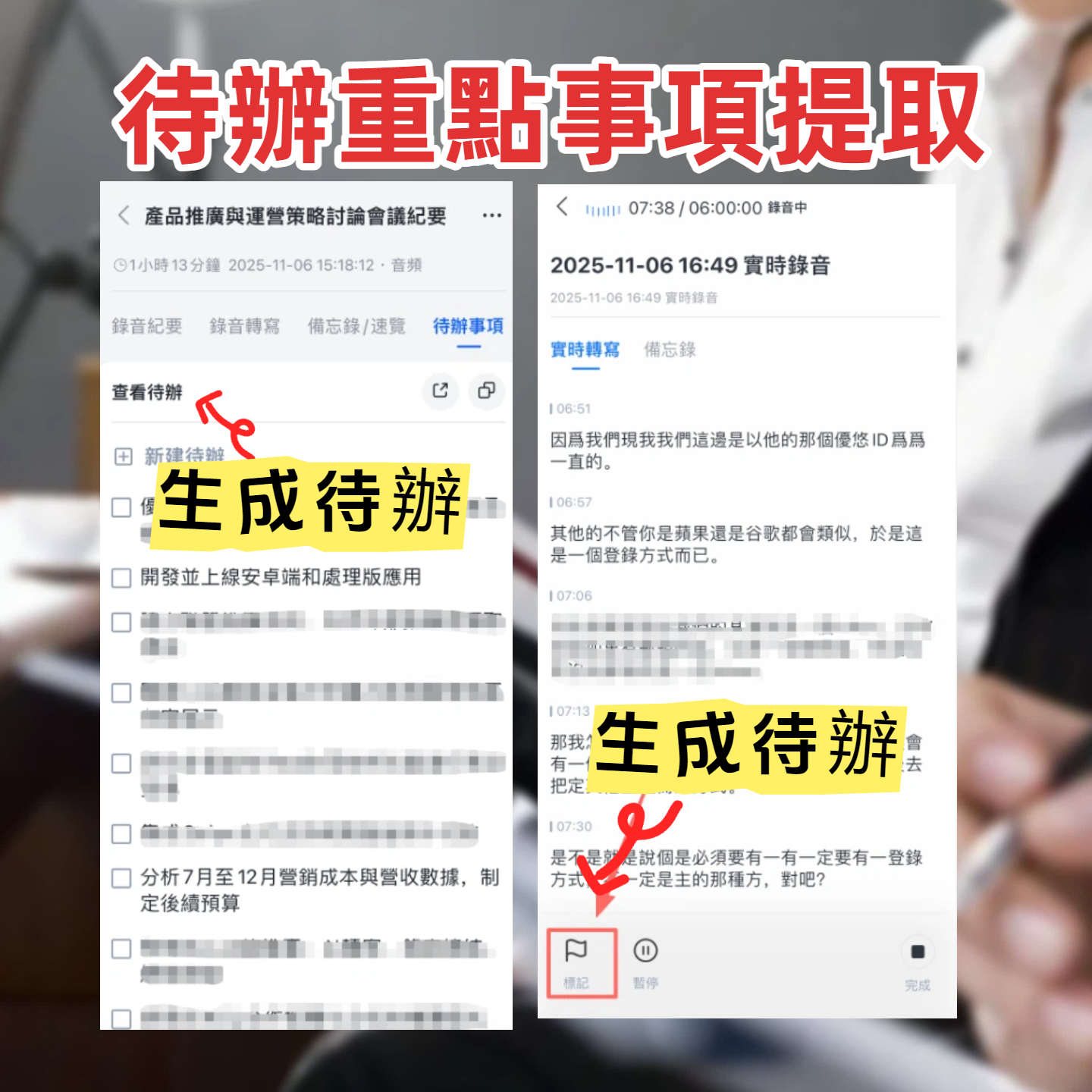
Decision Tree: Choose the Best Tool Based on Your Needs
Faced with many options, follow this logic for quick filtering:
Is your primary language Taiwanese or a mix of Mandarin/Taiwanese/English?
- Yes → Go to question 2.
- No (pure English) → Consider Otter.ai or Fireflies.ai.
Do you need automatic meeting summary generation and action items?
- Yes, high automation needed → Tinrec is the top choice because it is designed for "understanding and action" and has excellent Taiwanese support.
- Yes, but prefer traditional verbatim editor → Consider 雅婷逐字稿, whose editing interface suits some experienced users.
- No, only plain text needed → TurboScribe or MacWhisper may be more economical.
Do you need to use it on a mobile device (iOS/Android)?
- Yes → Exclude MacWhisper (Mac only) and Google Live Transcribe (Android only, no cloud management).
- No → Choose web-based tools.
Final Recommendation: For most Taiwanese users, especially those dealing with Taiwanese recognition and meeting efficiency, Tinrec offers the best balance. It not only solves the technical barrier of "not understanding Taiwanese" but also addresses the management pain point of "finishing listening but not knowing what to do" through AI dialogue and action item extraction. If you only need occasional short transcriptions on a tight budget, try the free tiers of various tools; however, if you handle formal meetings frequently, investing in a tool with a complete workflow will significantly reduce time costs.
Frequently Asked Questions (Q&A)
Q1: Which software has the highest accuracy for mixed Mandarin-Taiwanese speech?
Currently, tools optimized for Taiwan's local language environment perform best. Tinrec and 雅婷逐字稿 stand out in this regard, switching between contexts more accurately. International tools like Otter.ai cannot handle this situation at all.
Q2: Is there a completely free Taiwanese speech-to-text tool?
Most high-accuracy commercial tools use a "free trial + paid subscription" model. For example, Tinrec offers a free version with 100 minutes of recording per month, sufficient for light users to test and use. Fully free, unlimited high-quality tools are extremely rare and usually come with low accuracy or privacy risks.
Q3: Can iPhone users use Taiwanese speech-to-text features?
Yes. Mainstream tools like Tinrec and Notta provide iOS apps that support real-time recording and transcription directly on iPhone, as well as file upload via the app. The built-in dictation feature is available but cannot save files or generate summaries.
Q4: Do these tools support recording online meetings from Teams or Google Meet?
Some tools support browser extensions or virtual audio devices to capture system audio. Tinrec supports transcription by uploading recorded meeting audio files or video links; for real-time meetings, it is recommended to use the mobile app placed near the speaker or use solutions with cloud bot capabilities (depending on specific tool updates).
Q5: What formats can the transcribed text be exported to?
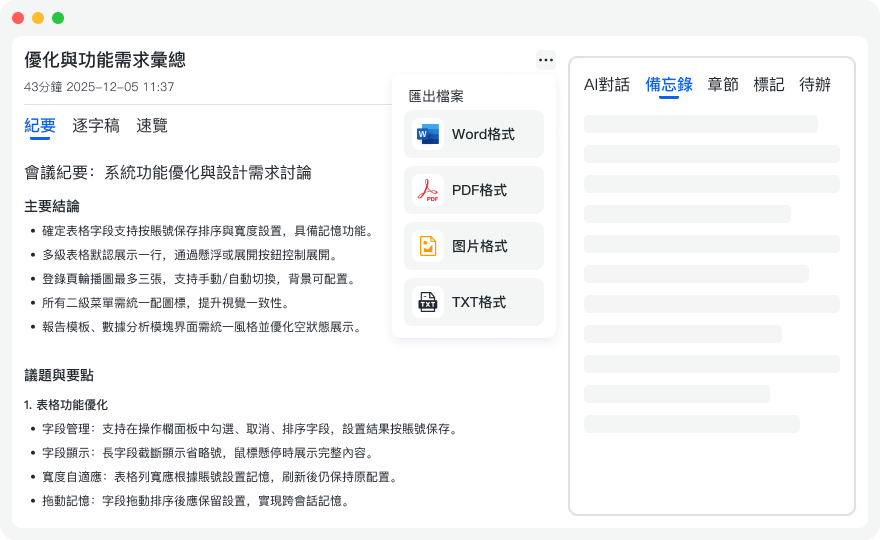
Mainstream tools usually support TXT, DOCX (Word), PDF, and SRT (subtitle file). Tinrec additionally allows exporting the organized meeting summary and to-do items directly, making it easy to integrate with project management software.
Q6: Can Taiwanese still be accurately recognized if the audio quality is poor (noise, echo)?
Any tool is limited by audio source quality. Although Tinrec and other advanced tools include some noise reduction and enhancement algorithms, it is recommended to record in a quiet environment or use an external microphone for best recognition results. For extremely unclear recordings, manual correction may be required.
Turn every recording into actionable outcomes
Get 60 free transcription minutes when you sign in. No credit card required.
Related Reading
You might also like

How to Choose AI Meeting Recording Tools in 2026: 5 Steps to Find the Best Transcription Tool
Still typing meeting notes manually? This article tests 5 AI voice-to-text tools, including Tinrec, Otter.ai, Notta, SeaMeet, Notion AI, and Google's free options. We compare features, pricing, and use cases to help you pick the right meeting assistant.

How to Turn Recordings into Meeting Notes in 2026? 2 Steps from Audio to AI Summary
Tired of struggling with meeting notes? We tested two AI tools, Tinrec and Otter.ai, comparing input sources, Chinese transcription quality, AI features, and pricing plans. Use these 4 key dimensions to choose the right tool and turn recordings into structured meeting summaries with one click.
2026 AI Recording Tool Buying Guide: 6 Tools Tested and Recommended
Drowning in back-to-back meetings and still listening to recordings to write meeting minutes? We tested 6 AI recording tools—including Tinrec, Otter.ai, and Notta—to find the most time-saving solution. Say goodbye to overtime.

2026 Phone Recording App Test: Is Samsung’s Built-in Recorder Enough? Tinrec Turns Audio into a Knowledge Base
Samsung phones include a built-in voice recorder, but for long meetings, courses, or interviews, a raw audio file isn’t enough. This article tests 4 recording apps, from free to paid, to see which one can truly turn recordings into a searchable, queryable, and organized mobile knowledge base.
Can iPhone Record Calls While Talking in 2025? 3 Steps to Enable the Built-in Feature and a Better Recording Solution
iPhone finally has call recording, but with many limitations. This article shows you how to use the built-in iOS 18.1 feature for recording, and compares several tools through hands-on tests. We recommend Tinrec (Miao Ting Lu Yin) as a stronger alternative: no hardware required, supports Cantonese, AI auto-organizes conversations, helping you save overtime hours.

How to Transcribe Cantonese Audio to Text in 2026: 5-Step Guide and 3 Tool Comparisons
Struggling to turn Cantonese recordings from meetings, lectures, or interviews into text? We put Tinrec, Speechnotes, and UniScribe to the test—comparing accuracy, AI features, and cross-platform support—and walk you through 5 steps to find the right solution.

2026 AI Meeting Assistant Showdown: Which One Actually Saves You Time?
We tested 4 AI meeting assistants side by side, comparing transcription speed, summary quality, Chinese recognition accuracy, and price. Our final pick is Tinrec, and we include a full tutorial to take you from audio recording to meeting minutes in one go.
How Long Can ChatGPT Record in 2026? A Complete 4-Step Guide
ChatGPT's recording feature seems convenient, but is it truly suitable for long meeting minutes? This article tests ChatGPT's recording limits and teaches you how to use Tinrec in 4 steps to handle transcription and AI summaries for meetings, classes, and interviews. Choosing the right tool saves 80% of your organizing time.
4 Windows Recording Tools Tested in 2026: Tinrec Turns Audio into a Searchable Knowledge Base
How do you record audio on Windows? The built-in tool only records the mic, can’t capture system audio, and definitely can’t transcribe or summarize. We tested 4 solutions and found Tinrec to be the most complete: it turns meetings, courses, and videos into a searchable, Q&A-ready knowledge base—cross-platform, no hardware required, and the free plan includes core features.