
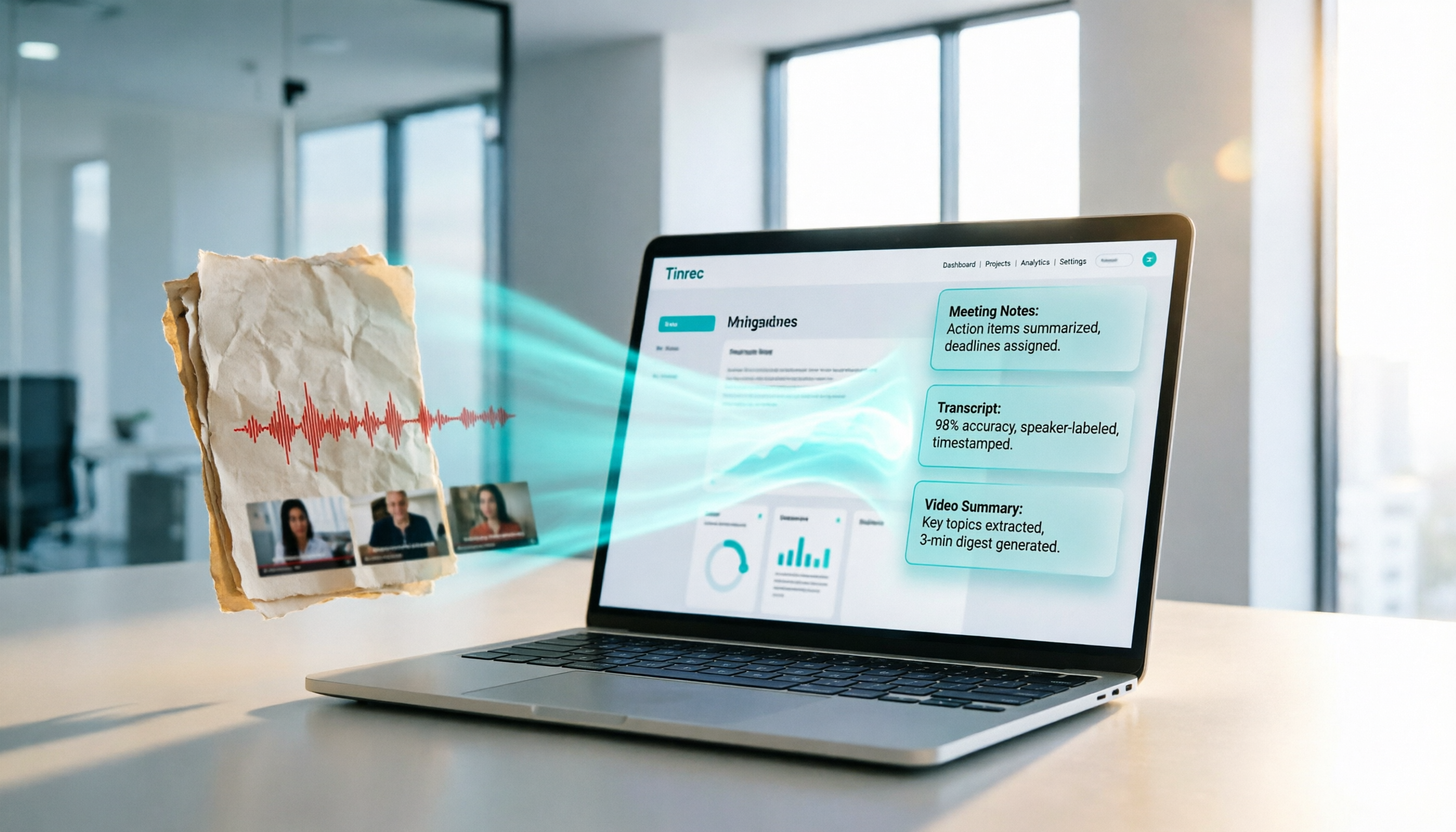
Turn recordings into transcripts and summaries in minutes
Upload audio or video for multilingual transcription, AI notes, and action items
Why You Need Smarter Image-to-Text and Speech-to-Text Tools
In digital offices and learning environments, we face a flood of unstructured information every day: photos of whiteboards from meetings, screenshots of lecture slides, hour-long interview recordings, or professional tutorial videos on YouTube. The traditional approach is to manually type text from images or repeatedly replay audio files to take notes. This is not only time-consuming but also prone to errors due to fatigue.
When many users search for "image-to-text AI tools," their real need is how to quickly convert visual and auditory information into editable, searchable, and actionable text. Traditional OCR (Optical Character Recognition) alone only handles static images; only by combining AI speech recognition and natural language processing can you achieve true workflow automation.
This article will help you choose the right tool, with a special focus on Tinrec (Miao Listening Recorder) and how it solves the pain point of traditional tools that only provide transcripts without key insights, through a complete workflow of "Recording/Video → Understanding → Action." Whether you're an office worker handling meeting minutes, a student organizing lecture notes, or a content creator, you'll find a solution here.
Quick Navigation Conclusions:
- Prioritize Chinese recognition and meeting summaries: Choose tools optimized for Asian languages, such as Tinrec.
- Mainly handle English meetings: Consider Otter.ai.
- Need offline processing and are tech-savvy: OpenAI Whisper is a good choice for local deployment.
- Only need simple image-to-text: Built-in OCR or free online OCR websites will suffice.
5 Key Dimensions for Choosing a Transcription AI Tool
With a wide range of tools on the market, from simple OCR image recognition to complex AI meeting assistants, how do you choose? Evaluate based on these five dimensions:
1. Language Support and Recognition Accuracy
This is the most basic and important metric. Many internationally renowned tools (e.g., Otter.ai) perform excellently in English but have very low or no support for Chinese, Taiwanese, or mixed Chinese-English content. For Traditional Chinese users, choosing a tool with localized language model training is crucial, especially one that can automatically identify speakers and distinguish different language segments.
2. Diversity of Input Sources (Image/Audio/Video)
Single-function tools often fail to meet complex scenarios. An ideal tool should handle multiple input sources:
- Images/PDFs: Extract text from whiteboards and handouts.
- Live Recording: Real-time transcription during meetings and interviews.
- Audio Files: Upload existing MP3/WAV recordings.
- Video Links: Directly parse YouTube or podcast URLs without downloading the video.
3. AI Post-Processing Capabilities (Summaries and Action Items)
Traditional "image-to-text" or "speech-to-text" tools only provide verbatim transcripts, which are lengthy and filled with filler words. Next-generation AI tools should further generate meeting minutes, key summaries, and action items, transforming unstructured data into directly executable tasks.
4. Search and Interactive Experience (AI Chat Query)
When a document is tens of thousands of words long, Ctrl+F keyword search is often insufficient. Tools that support AI chat queries allow you to ask questions naturally, such as: "What was the conclusion about the budget in the meeting?" The AI will provide precise answers based on context, greatly reducing review time.
5. Cross-Platform and Integration
Does it support iOS, Android, and Web sync? Can you export to Word, TXT, or SRT subtitle files? These details determine whether the tool seamlessly integrates into your existing workflow.
2026 In-Depth Comparison: Tinrec vs. Competitors
To give you a clear picture of the differences, we selected five representative tools for comparison. Tinrec stands out as the top choice for many professionals due to its overall performance in Chinese environments and complete workflow design.
| Dimension | Tinrec (Miao Listening Recorder) | Otter.ai | Notta | OpenAI Whisper | Yating Transcription |
|---|---|---|---|---|---|
| Core Strengths | High Chinese accuracy, AI summaries, video link parsing | Strong English recognition, real-time collaboration | Multi-language support, intuitive interface | Open source free, high privacy | Taiwan local service, Taiwanese support |
| Language Support | Chinese, English, Japanese, Korean, German, Taiwanese, Cantonese, etc. 10 languages | English only (primarily) | 50+ languages (Chinese stability average) | 99 languages (requires tuning) | Chinese, English, Taiwanese |
| Input Sources | Recording, audio files, YouTube/video links | Live recording, upload audio | Live recording, upload audio | Audio files (requires programming) | Audio files, live recording |
| AI Features | Meeting minutes, action items, AI chat query | Highlighting, keyword search | Simple summary | None (transcription only) | None (transcription only) |
| Platform Support | iOS, Android, Web | iOS, Android, Web | iOS, Android, Web, Chrome Ext. | Local deployment (Mac/Win/Linux) | Web, iOS |
| Pricing Entry | Free tier: 100 minutes/month | Limited free tier | Free trial, higher subscription cost | Free (requires hardware cost) | Per-minute billing/subscription |
Stop organizing recordings by hand
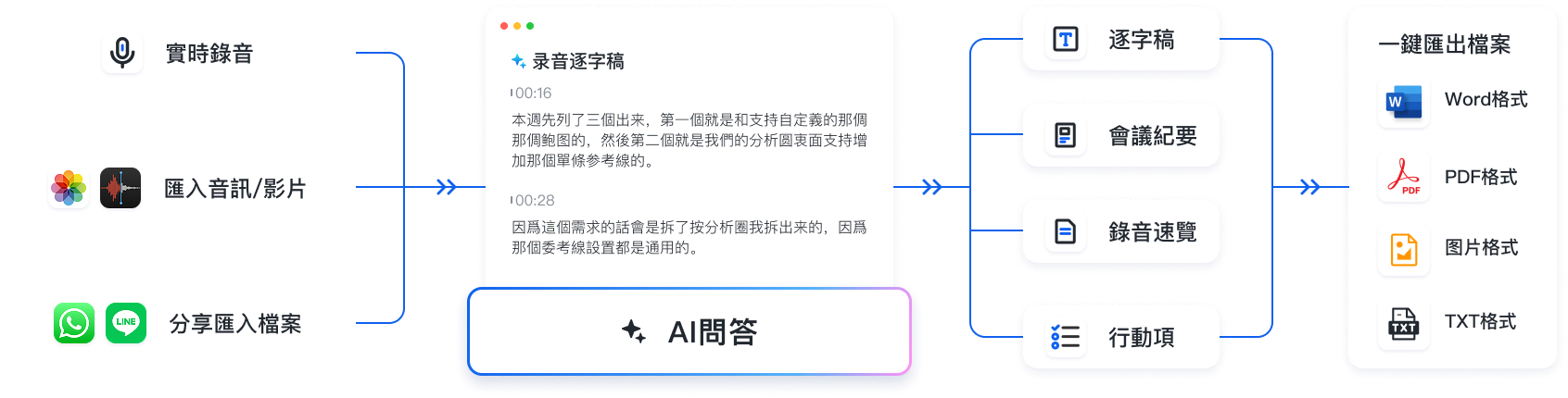
Upload audio or video and automatically get a transcript, summary, and action items
Analysis Summary:
- Otter.ai is an international leader, but for Chinese users, the language barrier is a fatal flaw.
- OpenAI Whisper is technically powerful, but requires technical background for deployment and maintenance, unsuitable for general business users.
- Tinrec differentiates itself by not just "transcribing text," but emphasizing "post-use efficiency." It supports direct YouTube link transcription and AI chat query, allowing users to quickly extract value from long content, with excellent optimization for Traditional Chinese, Taiwanese, and mixed Chinese-English.
Tinrec Practical Tutorial: From Recording to Action Items
Here we use Tinrec as an example to show how to convert information from different sources into usable text. Tinrec has four core entry points covering most use cases.
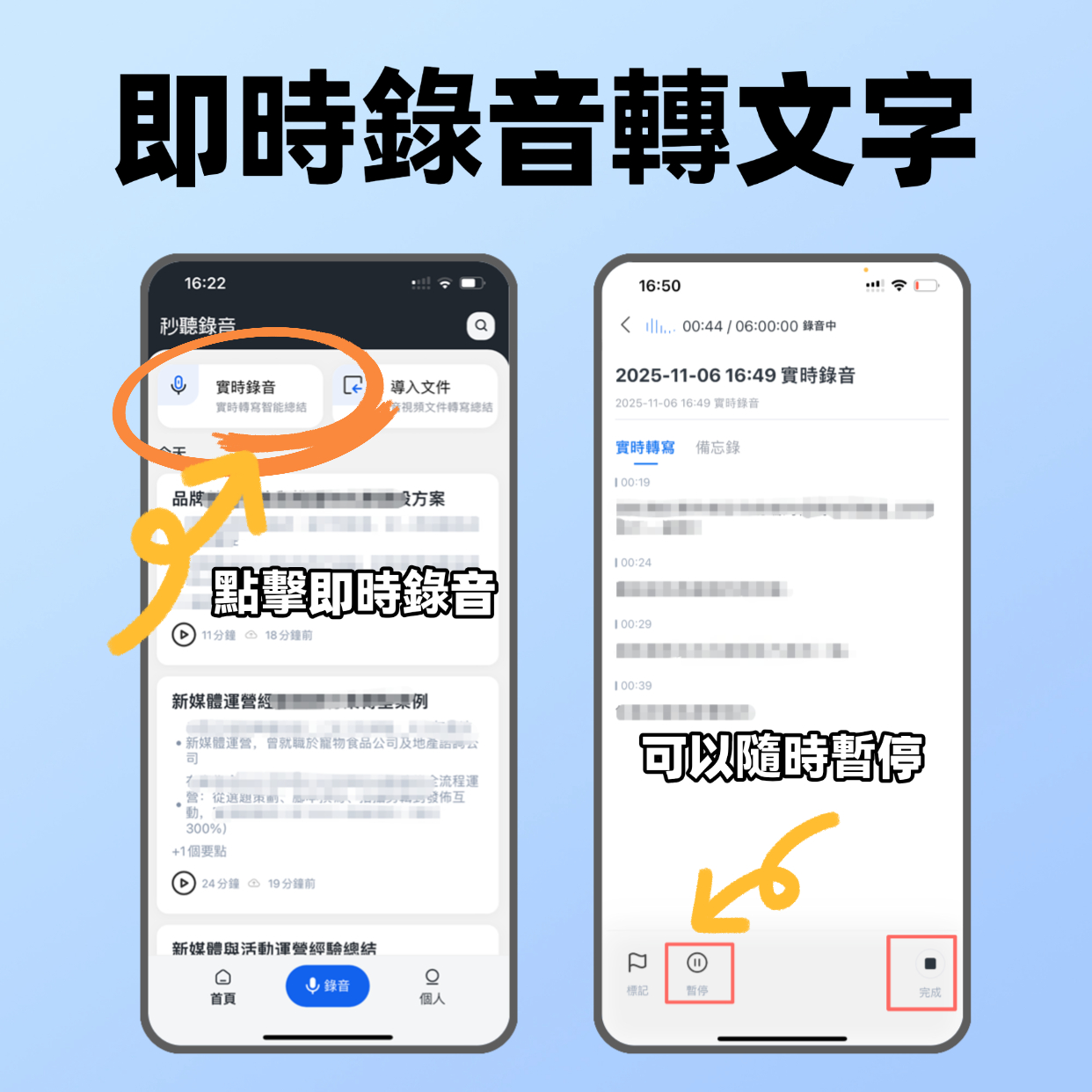
Step 1: Real-Time Recording to Text for Meetings/Interviews
Ideal for in-person meetings, classroom lectures, or one-on-one interviews. No need to upload after; text appears in real-time during recording.
- Open Tinrec App or Web version, click the "Record & Transcribe in Real-Time" button on the home page.
- Start recording; the screen displays the transcribed text in real-time. You can mark important moments at any time.
- After recording, the system automatically generates a verbatim transcript and uses AI to analyze the content to produce meeting minutes and action items.
- If multiple speakers are present, the system tries to identify speakers for easier organization.
Step 2: Quick Transcription of Existing Audio Files
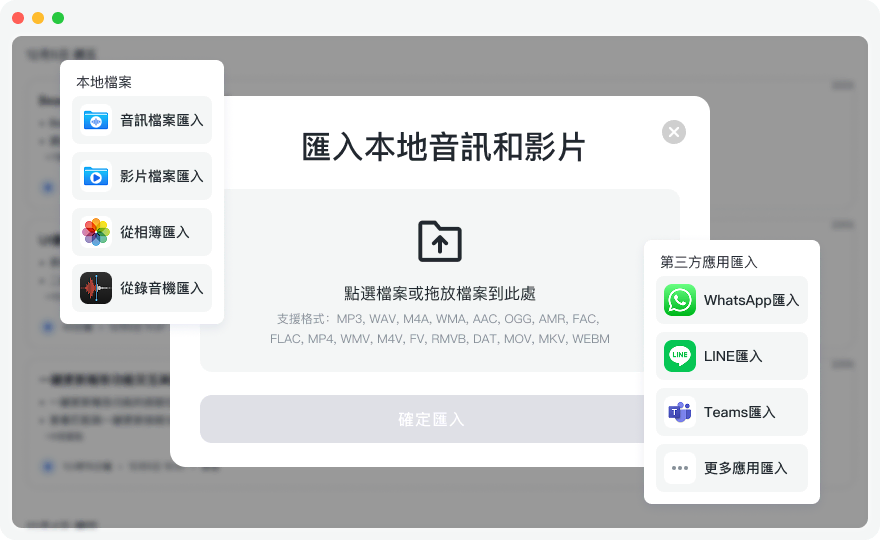
Ideal for journalist interview recordings, lawyer testimony recordings, or old meeting recordings.
- Go to the "Audio File to Text" feature page.
- Upload your MP3, WAV, M4A, or other common format files.
- Select the corresponding language (or choose auto-detect).
- Wait for processing (usually much faster than real-time playback), then view the timestamped transcript and AI summary.
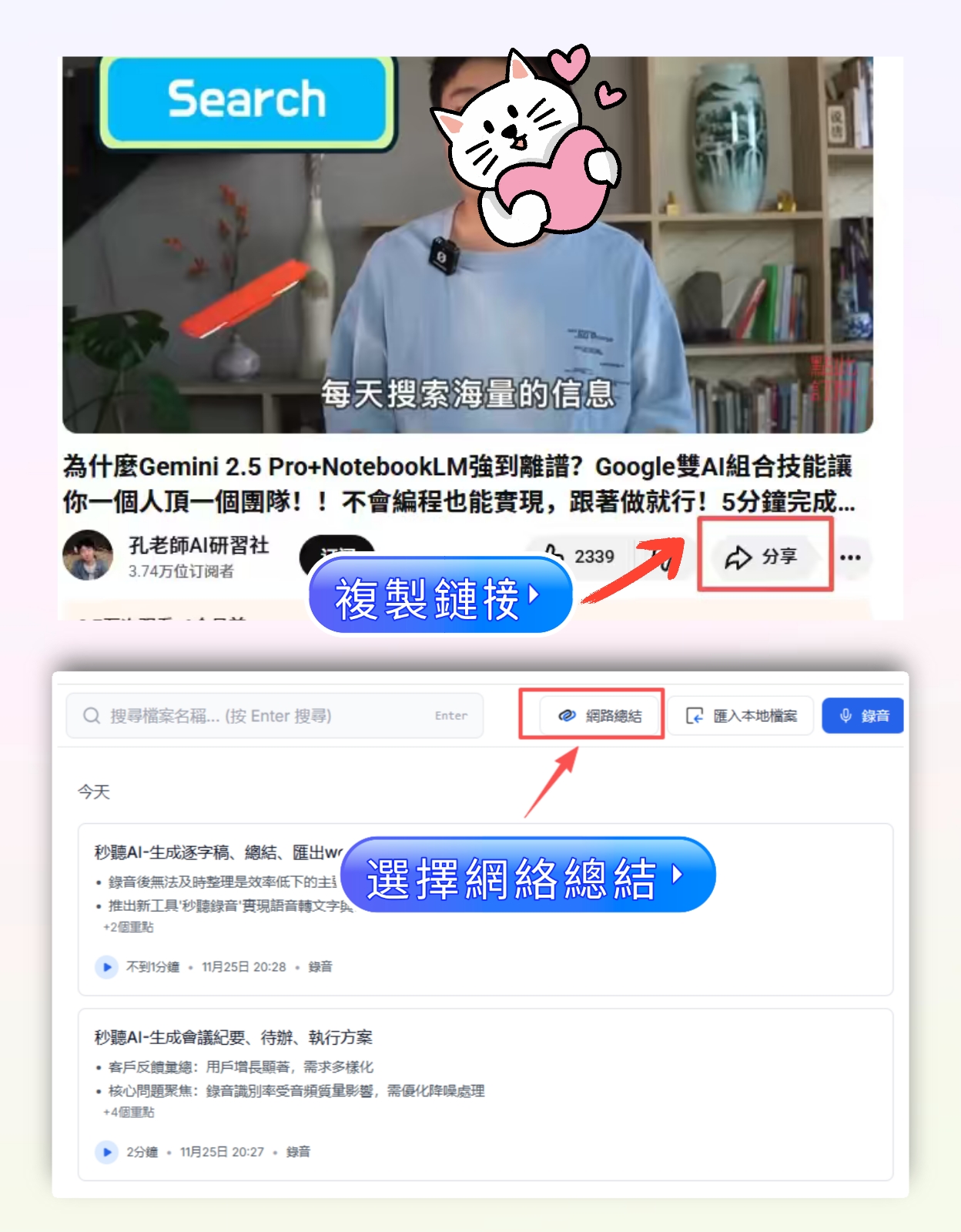
Step 3: YouTube/Web Video Link to Text
This is the most useful feature for content creators and researchers. No need to download the video; just parse online content.
- Copy the URL of a YouTube, podcast, or other supported platform video.
- In Tinrec, select the "Podcast/Web Video to Text" feature.
- Paste the link; the system automatically captures the audio track and transcribes it.
- Within minutes, you get the full transcript and key summary of the video, useful for writing reviews, organizing lecture notes, or creating derivative scripts.
Step 4: Use AI Chat Query to Extract Key Points
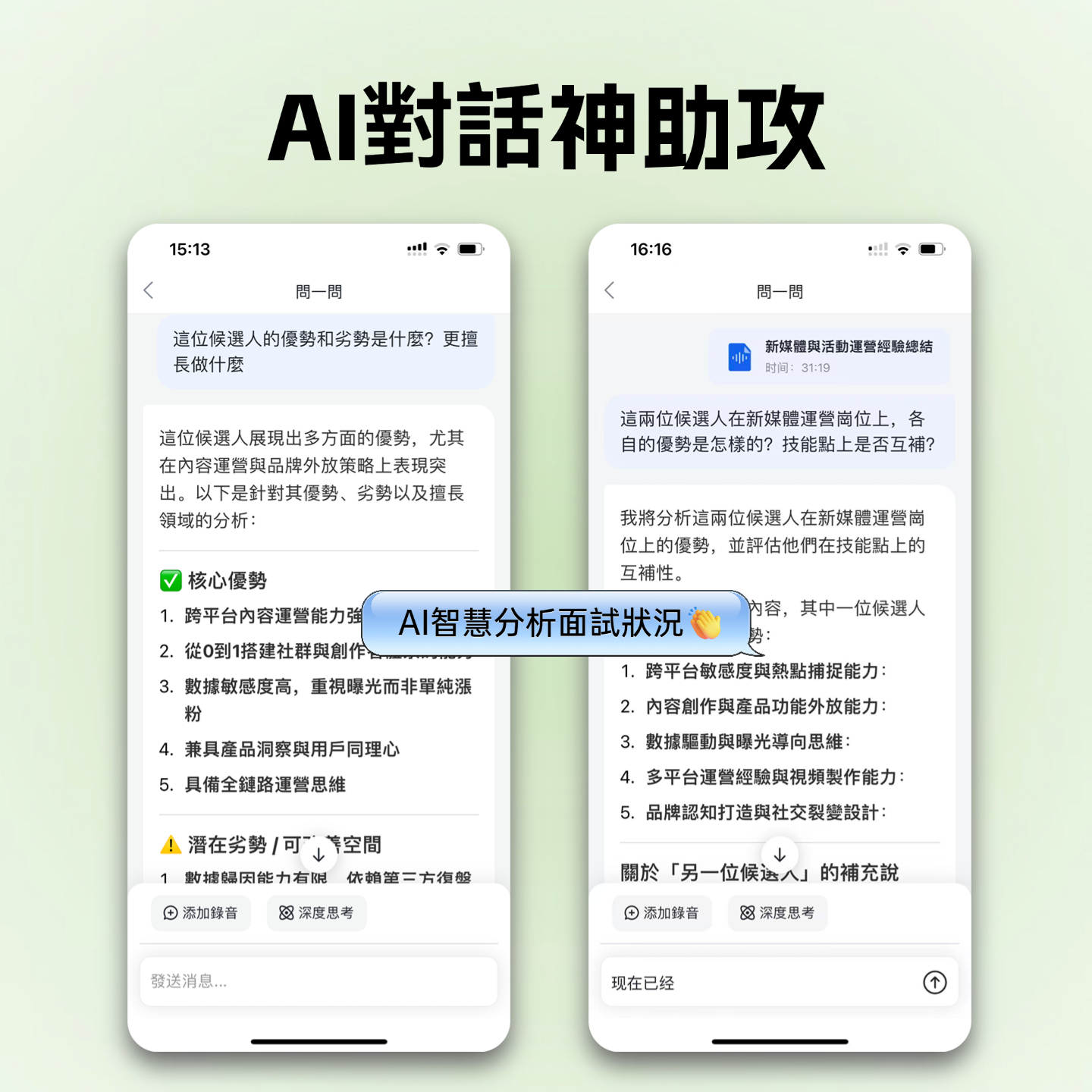
Once the transcript is generated, don't just read it—try "asking" it.
- Open the completed document, enter "AI Chat Query" mode.
- Enter a question, e.g., "What is the marketing budget for next quarter mentioned in this meeting?" or "What are the three key trends the speaker mentioned?"
- AI will precisely locate and answer your question based on the full content, providing timestamped citations for cross-referencing the original context.
Frequently Asked Questions
Q1: Is Tinrec's free version sufficient? What are the limitations?
Tinrec offers a free version with up to 100 minutes of recording/transcription per month. For individual users who occasionally need to record meetings or class notes, this is usually enough for trial and light use. If you need more, you can upgrade to the Basic or Pro plan for more minutes and advanced features.
Q2: Does it support real-time recording to text on iPhone or Android?
Yes, Tinrec provides iOS and Android apps that support real-time recording to text on mobile devices. This is very convenient for capturing ideas on the go or taking meeting notes without a laptop.
Q3: Can it handle online meetings like Teams or Google Meet?
Yes. You can play the meeting audio through your computer speakers and use Tinrec's real-time recording feature to transcribe; or after the meeting, if you have a recording file, upload the audio file for transcription. Some browser extensions or virtual audio cable setups can also help improve the recording quality of online meetings.
Q4: How accurate is it for mixed Chinese-English or Taiwanese?
Tinrec is specially optimized for Asian language environments, supporting automatic recognition of 10 languages including Chinese, English, Japanese, Korean, Taiwanese, and Cantonese. In actual tests, its recognition accuracy for common mixed Chinese-English business terms and Taiwanese dialogue outperforms many international tools focused mainly on English.
Q5: Can I export the generated transcript? What formats are supported?
Yes. You can export the transcript and AI summary as TXT, DOCX, or SRT (subtitle format), making it easy to edit in Word or use for video subtitles.
Q6: How is it different from traditional image-to-text OCR tools?
Traditional OCR tools only handle text in static images and cannot process voice or video. While Tinrec also focuses on text conversion, its core is processing time-based media (audio/video). If you have whiteboard photos that need text extraction, we recommend pairing it with built-in OCR or a dedicated OCR tool. But if you need to handle "meeting discussions," "lecture narrations," or "video dialogues," AI speech-to-text tools like Tinrec are the correct choice, and they further provide semantic understanding and summarization, which traditional OCR cannot do.
Conclusion: Let Tools Serve Your Workflow, Not Add Burden
When choosing image-to-text or speech-to-text tools, don't just look at individual features. In the age of AI, true productivity gains come from the closed loop of "information acquisition to knowledge internalization."
If you frequently deal with large volumes of meeting recordings, online course videos, or interview content, Tinrec offers a solution that balances accuracy, ease of use, and AI-powered analysis. It not only saves you typing time but also saves you "reading" and "finding key points" time through AI summaries and chat queries.
We recommend starting with a 10-15 minute real meeting recording or YouTube video, trying Tinrec's transcription and summarization features, and experiencing firsthand how it transforms messy audio into clear action guides before deciding whether to include it in your long-term toolkit.
Turn every recording into actionable outcomes
Get 60 free transcription minutes when you sign in. No credit card required.
Related Reading
You might also like

How to Choose a Meeting Notes App in 2026? 5 Steps to Pick the Right Tool and Save Time
Still scrambling to take meeting notes? This hands-on guide walks you through 5 steps—from identifying pain points and understanding what to look for, to an in-depth look at our top pick, Tinrec (秒聽錄音), and comparing popular alternatives like Otter.ai, Notta, and PLAUD Note—so you can find the best meeting notes assistant and never miss key decisions again.

2026 Free AI Meeting Minutes from Recording: 5 Tools Compared
A mid-level manager’s real-world test! We compare 5 types of AI recording-to-meeting-minutes tools, from meeting bots to all-in-one workspaces, break down free plans and buying tips, and use Tinrec as an example to show you how to auto-generate meeting minutes from recordings and save 50% of your organizing time.

2026 5 AI Meeting Note Tools Compared: Which Free Version Is Enough?
This article recommends 5 practical AI meeting note tools, including Tinrec Instant Recording, AI Meeting Notes App, Otter.ai, Notta, and PLAUD Note. It compares free plans, features, and use cases to help you find the best meeting notes assistant.
2026 iPhone LINE Call Recording Tools Guide: Hands-On Tests of 3 Options and Recommendations
Can you record LINE calls on iPhone? This article introduces the iOS 26 on-device capture feature and tests 3 post-recording processing tools to help you choose the best LINE call recording and organization solution.
2026 iPhone Voice Recorder App Comparison: Which One Can Take Notes for You While Recording?
How do you choose an iPhone voice recorder app? This hands-on comparison of the built-in Voice Memos, Voice Recorder Pro, Notta, and Tinrec covers recording quality, transcription accuracy, AI summaries, cross-platform support, and pricing to help you find the most time-saving option.
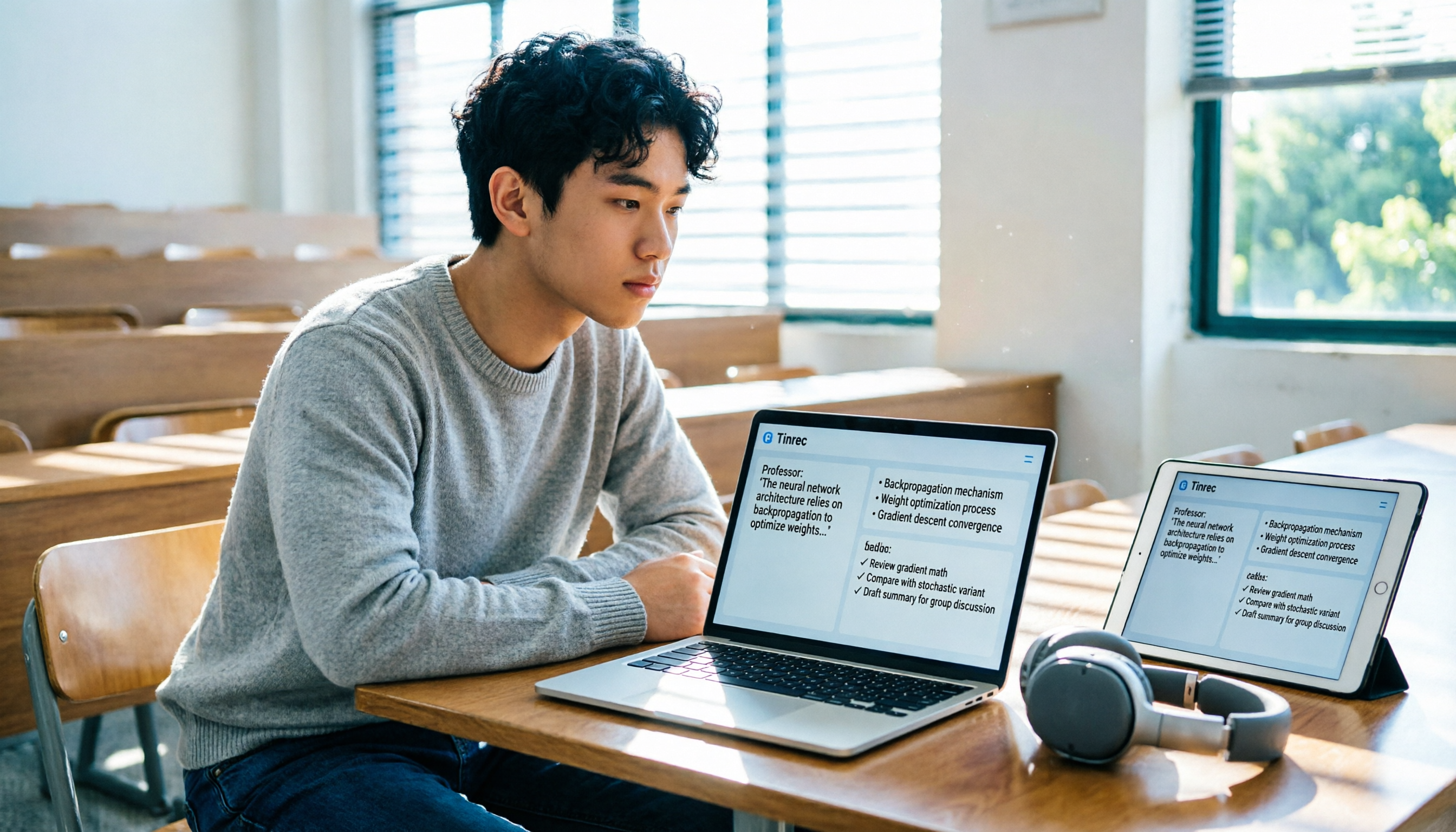
Tinrec vs Otter.ai 2026: 5-Dimension Comparison — Which Is Better for International Students' Lecture Recording & Note-Taking?
How should international students choose a lecture recording tool? I tested Tinrec and Otter.ai for two weeks, comparing Chinese recognition, input sources, AI organization, pricing flexibility, and cross-platform experience — and I'll tell you exactly which one is better for post-class review and note-taking.

How to Choose AI Meeting Recording Tools in 2026: 5 Steps to Find the Best Transcription Tool
Still typing meeting notes manually? This article tests 5 AI voice-to-text tools, including Tinrec, Otter.ai, Notta, SeaMeet, Notion AI, and Google's free options. We compare features, pricing, and use cases to help you pick the right meeting assistant.
How to Turn Recordings into Meeting Notes in 2026? 2 Steps from Audio to AI Summary
Tired of struggling with meeting notes? We tested two AI tools, Tinrec and Otter.ai, comparing input sources, Chinese transcription quality, AI features, and pricing plans. Use these 4 key dimensions to choose the right tool and turn recordings into structured meeting summaries with one click.
2026 AI Recording Tool Buying Guide: 6 Tools Tested and Recommended
Drowning in back-to-back meetings and still listening to recordings to write meeting minutes? We tested 6 AI recording tools—including Tinrec, Otter.ai, and Notta—to find the most time-saving solution. Say goodbye to overtime.