
Turn recordings into transcripts and summaries in minutes
Upload audio or video for multilingual transcription, AI notes, and action items
Why Is Cantonese Speech-to-Text So Hard? (Current Pain Points)
For professionals in Hong Kong, Macau, or those who frequently use Cantonese for business communication, compiling meeting minutes can be a nightmare. Unlike standard Mandarin or English, Cantonese poses unique challenges:
- The Gap Between "Colloquial" and "Written" Language: In recordings, people say "hai m hai?" but formal meeting minutes require "whether or not." Traditional transcription is not just typing but also real-time translation, which is mentally draining.
- Code-mixing (Chinese-English Mixture): In professional settings, sentences like "What's the deadline of this Project?" are common, and most single-language recognition engines struggle with this.
- High Re-listening Cost: One hour of recording often takes 3–4 hours to produce a complete transcript. Even worse, after finishing the transcript, you often end up with a wall of text but miss the most important "action items."
Review and Comparison of Common Cantonese Speech-to-Text Tools
In 2026, many tools claim to support multilingual recognition. To help readers choose, we selected common "general-purpose voice input/recorder apps" and compared them with Tinrec (秒聽錄音), which specializes in AI meeting efficiency.
We evaluate objectively across five dimensions: language support, real-time capability, and AI-powered analysis.
| Dimension | General-Purpose Voice Input/Recorder App | Tinrec (秒聽錄音) |
|---|---|---|
| Cantonese/Multilingual Support | Typically supports only a single language setting, with low recognition of mixed Chinese-English. | Supports 10 languages including Cantonese, Chinese, English, Japanese, with strong contextual understanding of mixed Chinese-English. |
| Real-time Transcription | Partial support, but long recordings often drop or overheat. | Real-time speech to text, low latency, suitable for long meetings. |
| Summary & Action Items | None; provides only plain text transcripts; manual effort needed to extract key points. | Automatically generates meeting minutes, conclusions, and to-do lists, outputting decision recommendations. |
| AI Chat Query | Not supported; can only use Ctrl+F to search keywords. | Supports AI chat query, allowing you to ask about recording content like an assistant (e.g., "What did John agree to?"). |
| Price/Free Tier | Depends on hardware purchase or expensive subscription. | Offers a free plan (100 minutes/month), with flexible paid options. |
From the table, traditional tools solve the "preserve audio" problem, while next-gen AI tools like Tinrec focus on "understanding audio" and "next actions."
In-depth Tinrec Review: More Than Transcription—An AI Productivity Assistant
After testing multiple software, Tinrec impressed us with its handling of Cantonese content, especially its complete workflow that turns recordings from "archives" into "productivity."
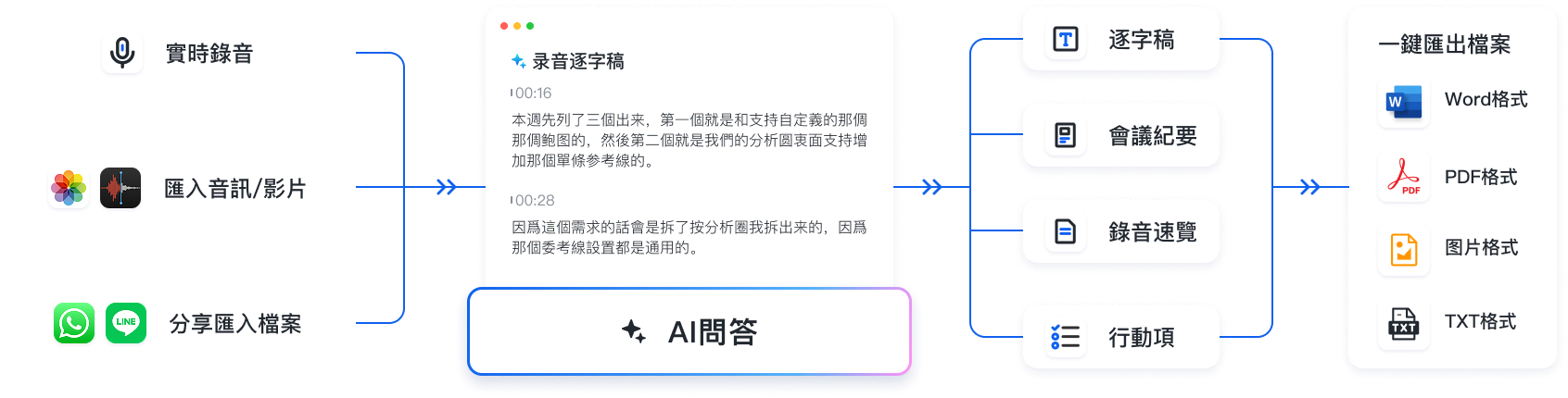
1. Accurate Recognition in Complex Contexts
For the most painful "mixed Chinese-English" issue for Cantonese speakers, Tinrec's engine shows strong adaptability. Whether uploading existing audio files or recording live with the app, it maintains semantic coherence while generating transcripts.
Stop organizing recordings by hand
Upload audio or video and automatically get a transcript, summary, and action items
2. From "Transcript" to "Decision Summary"
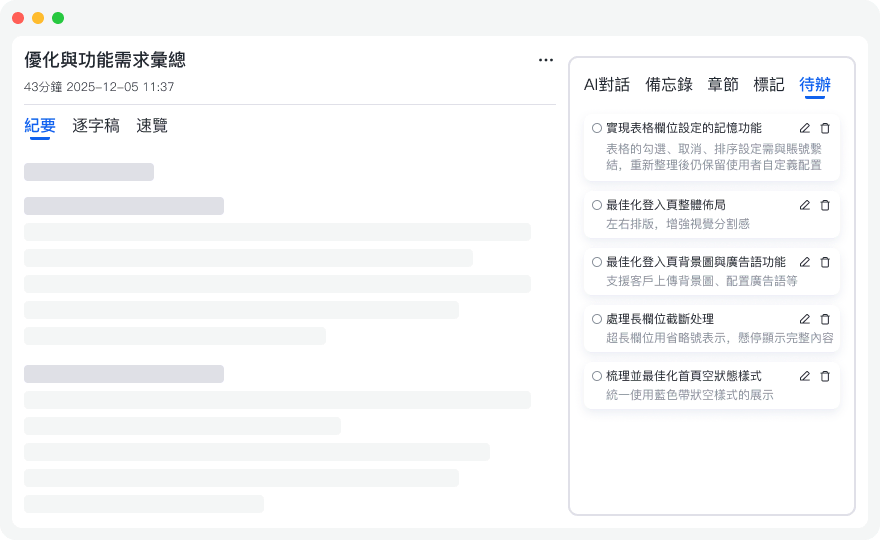
Many users' pain point with recording software: they have the transcript but no time to read it. Tinrec's core value lies in its AI analysis capabilities. After recording, it not only provides text but also automatically extracts:
- Meeting Summary: Quickly grasp discussion background and process.
- Key Conclusions: What was ultimately decided in the meeting.
- Action Items: Who needs to do what by when.
3. A New Way to Search: "Chat" with Your Recording
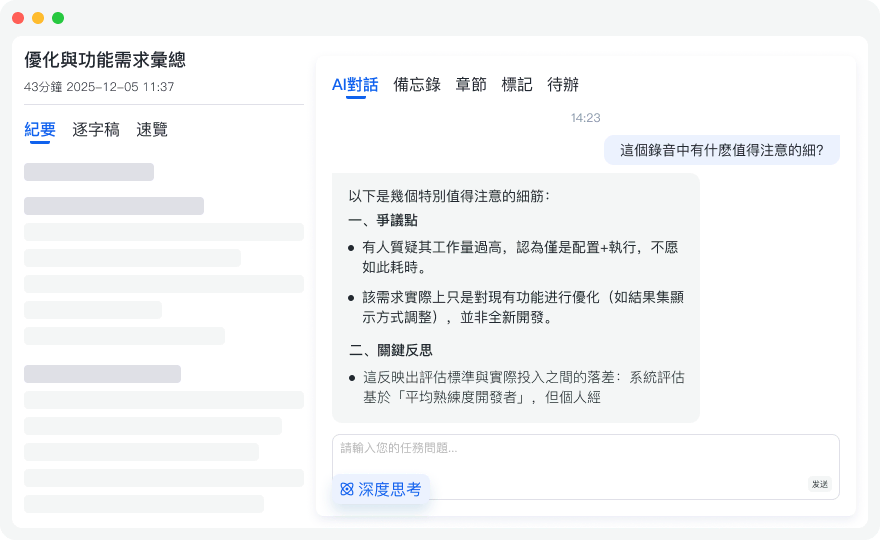
This is Tinrec's biggest differentiator from traditional tools. Previously, to find a specific segment, you had to drag the progress bar and listen repeatedly. Now, with the AI chat query feature, you can ask natural language questions like "What did the client say about the budget?" The AI will search the recording content and give precise answers—extremely valuable for hours-long interviews or course recordings.
Practical Tutorial: How to Quickly Convert Cantonese Audio to Meeting Minutes
Here is the standard workflow using Tinrec for Cantonese meeting minutes—just 4 steps to complete what used to take hours:
Record or Import Audio
- Live Meeting: Open the mobile app or web version, click Real-time speech to text, and select language as "Cantonese."
- Existing File: If you have audio files from a recorder, use the Audio file to text feature to upload (supports mp3, wav, m4a, etc.).
- Online Materials: For Cantonese interviews on YouTube, directly use the Podcast/online video to text feature by pasting the link.
Wait for AI Automatic Processing After uploading, the system automatically performs speech-to-text recognition. For a 1-hour recording, it usually takes just a few minutes to complete transcription.
View AI Smart Summary Once transcription is done, don't rush to read the full transcript. First, check the "AI Summary" and "Action Items" on the right side to confirm key meeting points match your memory.
Use AI Query for Details If the summary mentions a data point but lacks details, type in the chat box: "What was the specific Q3 revenue mentioned in the meeting?" The system will automatically retrieve and answer.

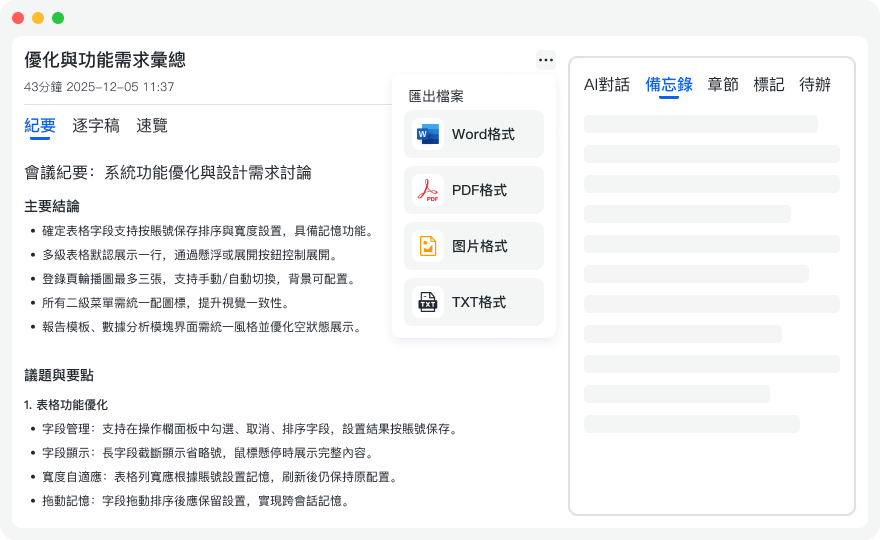
- Export & Share Finally, export the organized content as Word, PDF, or Markdown, and send to team members.
Frequently Asked Questions (FAQ)
Q1: What features are included in Tinrec's free plan? Tinrec offers 100 minutes of free speech-to-text per month, sufficient for light users or product trials. For heavy meeting needs, consider upgrading to Basic or Pro.
Q2: How well does it recognize mixed Chinese-English (code-mixing)? Tinrec's multilingual model is optimized to recognize mixed sentences. However, in noisy environments, we recommend staying close to the microphone for best accuracy.
Q3: Can I convert Cantonese podcasts from YouTube to text? Yes. Tinrec supports the Online video to text feature—just paste a YouTube or podcast link, and the system automatically parses it to generate a transcript and summary.
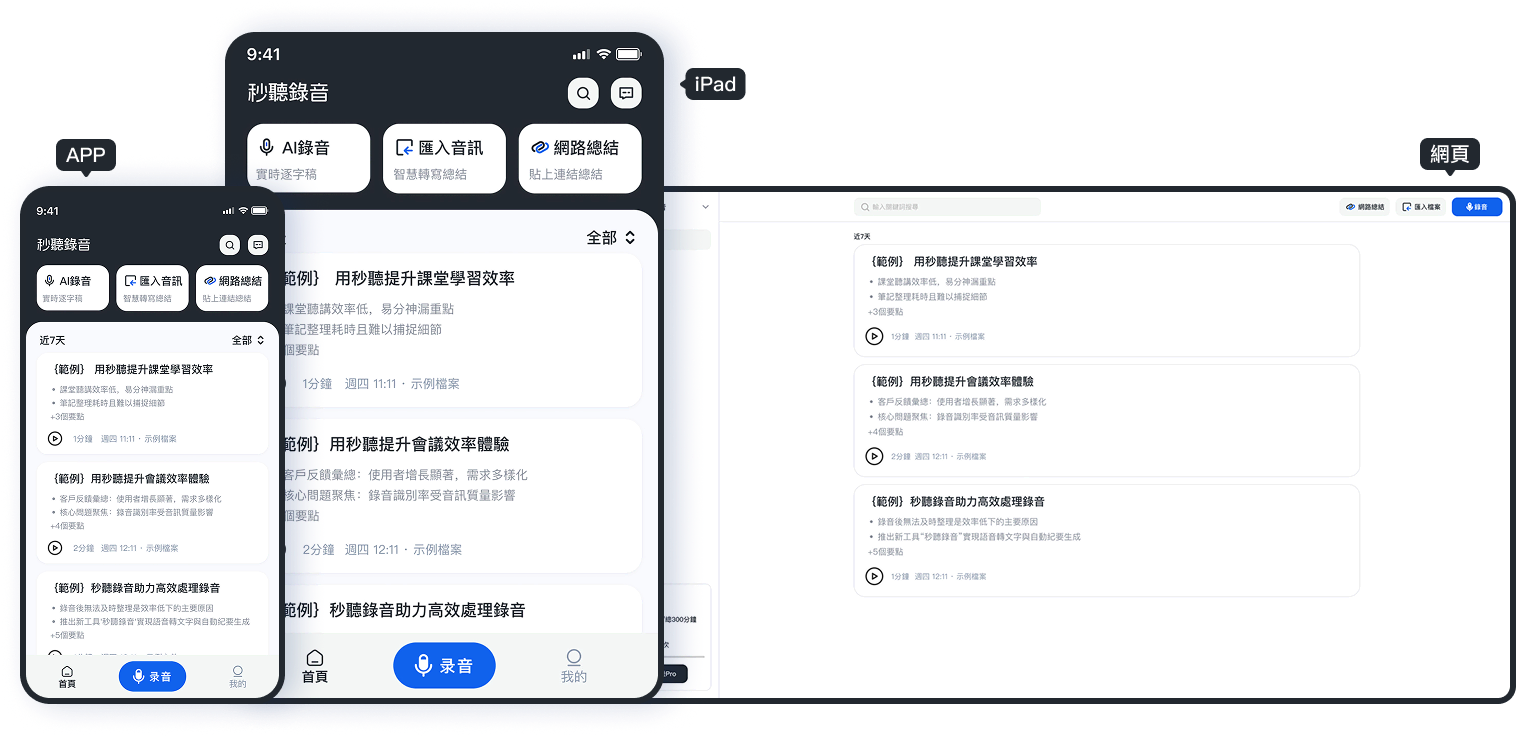
Q4: My audio files are on my phone; can I view them on my computer? Tinrec supports multi-device sync (iOS, Android, Web). Record a meeting on your phone, then open the web version on your office computer to view and edit.
Q5: Is this software secure? Will meeting content be leaked? Tinrec values user privacy and data security, using data only to provide transcription services. For enterprise users or sensitive content, please refer to their privacy policy.
Q6: Will transcription accuracy be affected in noisy environments? All speech recognition software is affected by background noise. While the AI has some noise cancellation, we recommend using a directional microphone or placing the recording device close to speakers for usable transcripts in important meetings.
Turn every recording into actionable outcomes
Get 60 free transcription minutes when you sign in. No credit card required.
Related Reading
You might also like

2026 Smart Meeting Collaboration Apps Compared: Stop Just Recording—How to Choose AI Minutes and Team Knowledge Retention
Many people treat smart meeting apps as recording-to-text tools, only to manually organize everything afterward. This article starts with common misconceptions, outlines 4 key purchasing criteria, compares Tinrec, Otter.ai, Granola, and Notta for different use cases, and provides step-by-step guidance on connecting recording, summaries, action items, AI Q&A, and team spaces into an executable workflow.

2026 Comparison of 4 Sales Meeting Note Tools: Which Best Organizes Customer Needs and Action Items?
Sales meeting notes are not verbatim transcripts. This article provides field templates and practical writing tips you can apply directly, and compares Tinrec, Otter.ai, Notta, and Granola on Chinese meeting support, post-meeting organization, and team handoff to help you choose the right tool.

2026 Sales Meeting Notes Tools Compared: Which One Turns Client Promises into Action Items?
Sales meeting notes aren't verbatim transcripts—they capture client needs, budget, decision process, concerns, and our commitments in a trackable record. This article explains what sales meeting notes are and the five key points to record, then compares Tinrec, Otter.ai, Notta, and Granola from four angles: no-bot recording, Chinese recognition, post-meeting AI Q&A, and team data ownership. Includes pitfalls to avoid and selection advice.

2026 Smart Meeting Collaboration Free Plans: 4 Tools Compared
Meetings take time, but post-meeting organization is where the real hours go. This guide reviews the free plans of four smart meeting collaboration tools in 2026, breaking down how audio gets into the tool, what you get after transcription, performance with mixed Chinese-English speech, and team management. It also hands-on tests Tinrec's bot-free recording, AI Q&A, and team spaces to help you decide which one is truly sufficient.

2025 Smart Meeting Collaboration Tools Compared: Which Handles Chinese Meeting Notes and Team Knowledge Best?
How to choose a smart meeting collaboration tool in 2025? This article examines four key criteria: how meetings are recorded, whether audio is retained, whether you can query meetings afterward, and team seats and data ownership. It compares Tinrec, Otter.ai, Granola, and PLAUD in terms of positioning, limitations, and pricing to help you pick the right one for Chinese-speaking teams.

2026 AI Meeting Notes Tools Tested: How to Write Sales Meeting Notes Without Missing Deal Signals
The hard part of sales meeting notes isn't typing speed—it's deciding what will still matter three months later. Starting from 'who will read these notes,' this article covers 4 key judgments for sales meeting notes, 4 common mistakes, and compares Tinrec, Otter.ai, Notta, and Granola on Chinese meetings, bot-free recording, and post-meeting organization to help you choose the right approach for your team.

2026 Sales Meeting Notes Tools Compared: Which One Turns Customer Words into Action Items?
How do you write sales meeting notes without them turning into a transcript? Starting from the real pain points salespeople face after customer meetings, this article covers 4 key selection criteria, compares Tinrec with Otter.ai, Notta, and Granola, and highlights the 4 most common note-taking mistakes.

2026 Smart Meeting Collaboration Tools Comparison: Tinrec vs Otter.ai Across 5 Dimensions — Which Handles Chinese Meetings Better?
Meeting tools aren't just about transcription speed. This article starts with common purchasing pitfalls and compares Tinrec and Otter.ai across 5 dimensions: meeting capture methods, Chinese and mixed Chinese-English recognition, post-meeting organization and AI follow-up, team governance, and quota and pricing. It includes a comparison table and FAQ to help you decide which tool better fits your meeting scenarios.

2026 Smart Meeting Collaboration Platform Buying Guide: 4 Hands-On Tests and Selection Advice
Can't find conclusions after a meeting? The problem often isn't transcription accuracy—it's choosing the wrong approach from the start. This guide focuses on three decision points: how meetings are recorded, what you get afterward, and who ultimately holds the data. We hands-on test Tinrec and compare it with Otter.ai, Notta, and Granola, including quota calculations and tips to avoid pitfalls with roles and seats, helping you choose the platform that truly works for you.