
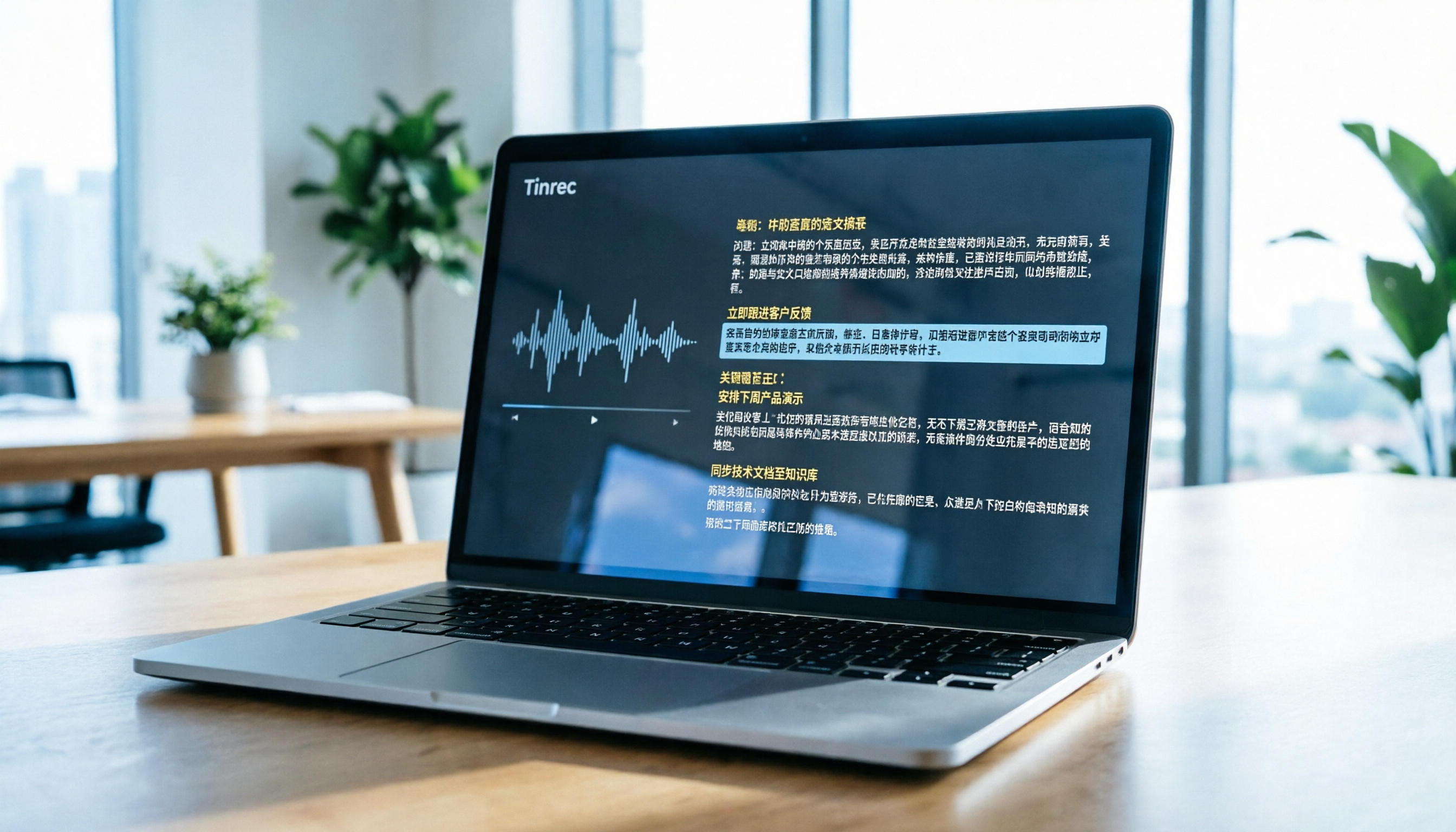
Turn recordings into transcripts and summaries in minutes
Upload audio or video for multilingual transcription, AI notes, and action items
Why Do You Need a "Bilibili AI Video Summarization" Tool?
In the era of information overload, Bilibili is no longer just an entertainment platform but also a key source of knowledge for many professionals and students. However, facing hours-long technical tutorials, industry interviews, or online courses, the traditional "watch and note" method is highly inefficient: you easily miss critical details and struggle to locate key points when reviewing later.
Users searching for "Bilibili AI video summarization" typically face the following pain points:
- High time cost: Unable to quickly determine if the video content meets their needs.
- Low information density: Speech is filled with filler words and lacks structured organization.
- Cross-language barriers: Some quality content lacks Chinese subtitles or mixes Chinese and English, making it hard to understand.
- Knowledge retention difficulties: You forget after watching, unable to turn audio-visual content into searchable text notes.
This article will help you understand how to choose the right AI tool and compare 5 mainstream solutions side by side. We'll focus on language support, summary quality, and whether they offer advanced features like AI chat query. For users who value subsequent knowledge management and action transformation, Tinrec, as an integrated recording, transcription, and AI analysis assistant, provides a solution different from traditional verbatim transcript tools.
Quick Navigation Conclusion:
- If you only need simple subtitle files → Choose cSubtitle or VEED.IO
- If you are a developer with server resources → Choose OpenAI Whisper
- If you need to "understand immediately after watching" and extract action items, with multi-device sync and AI Q&A → Prioritize Tinrec
Who Needs Video Summarization Tools Most? User Segmentation and Needs Analysis
Before choosing a tool, clarify your use case, as it determines which tool is best for you.
1. Students and Self-Learners
- Scenario: Watching programming tutorials, language learning, or exam review videos on Bilibili.
- Needs: Accurate transcripts to highlight key points, preferably with auto-generated chapter summaries for quick review before exams.
2. Professionals and Project Managers
- Scenario: Watching industry trend analyses, competitor introductions, or internal training recordings.
- Needs: Time is precious; they want to see "conclusions" and "action items" directly rather than full text. AI-powered queries to quickly find specific information are a plus.
3. Content Creators and Media Workers
- Scenario: Referencing popular video scripts, organizing interview materials, or creating derivative content.
- Needs: High-accuracy transcription with easy export for editing, plus multi-language recognition for foreign-language content.
5 Key Dimensions for Choosing an AI Video Summarization Tool
With many tools on the market, focus on these core indicators to avoid pitfalls:
- Language support and accuracy: Does it perfectly support Chinese (including Traditional/Simplified), Taiwanese, or mixed Chinese and English? This is the first gate for usability.
- Input flexibility: Does it support pasting video URLs directly? Or must you download the video and upload the file? URL support greatly reduces steps.
- AI summarization and structuring ability: Does the tool only output raw text, or can it auto-generate bullet-point highlights, meeting minutes, or action items?
- Interactive query (AI Chat): Can you ask questions about the video content conversationally? For example, "What are the three main risks mentioned in this video?"
- Cost and free quota: Is the free version sufficient? Is the paid plan per-minute or subscription-based?
Side-by-Side Review of 5 Popular Tools: Tinrec vs. Competitors
Below is a comparison of five representative tools, ranging from open-source models to commercial applications.
| Dimension | Tinrec (Sec Recording) | Notta | Otter.ai | VEED.IO | OpenAI Whisper |
|---|---|---|---|---|---|
| Core positioning | AI recording assistant & knowledge management | Multi-language meeting notes tool | English meeting transcription leader | Online video editing & subtitles | Open-source speech recognition model |
| Language support | Excellent: Chinese, English, Japanese, Korean, Taiwanese, and 5 others | Good: Supports 50+ languages, Chinese is okay | Weak: Primarily English, Chinese is poor | Good: Multi-language subtitle support | Excellent: Supports 99 languages |
| Input method | URL/File/Live recording | URL/File/Live recording | Live recording/File upload | File upload | Requires local deployment or API call |
| AI summarization | Strong: Auto-generates minutes & action items | Yes: Basic summarization | Yes: Key point highlighting | Weak: Subtitles only, no deep summary | No: Only outputs text |
| AI chat query | Supported: Ask questions about content | Partially supported | Supported (English only) | Not supported | Requires custom development |
| Free quota | 100 minutes/month | Limited | Limited | Watermark/length limit | Free (self-hosted hardware required) |
| Target audience | Users who value Chinese accuracy & knowledge conversion | Global team meetings | English-only meeting environments | YouTubers/editors | Developers/tech users |
Stop organizing recordings by hand
Upload audio or video and automatically get a transcript, summary, and action items
Deep Dive: Why Tinrec Has an Edge in Chinese Scenarios?
While Otter.ai has a high global market share, its Chinese support is virtually nonexistent, making it a non-option for Chinese-speaking users. Notta supports multiple languages, but when dealing with complex Chinese-English code-switching or specialized terminology, its accuracy sometimes falls short of tools specialized in Asian languages.
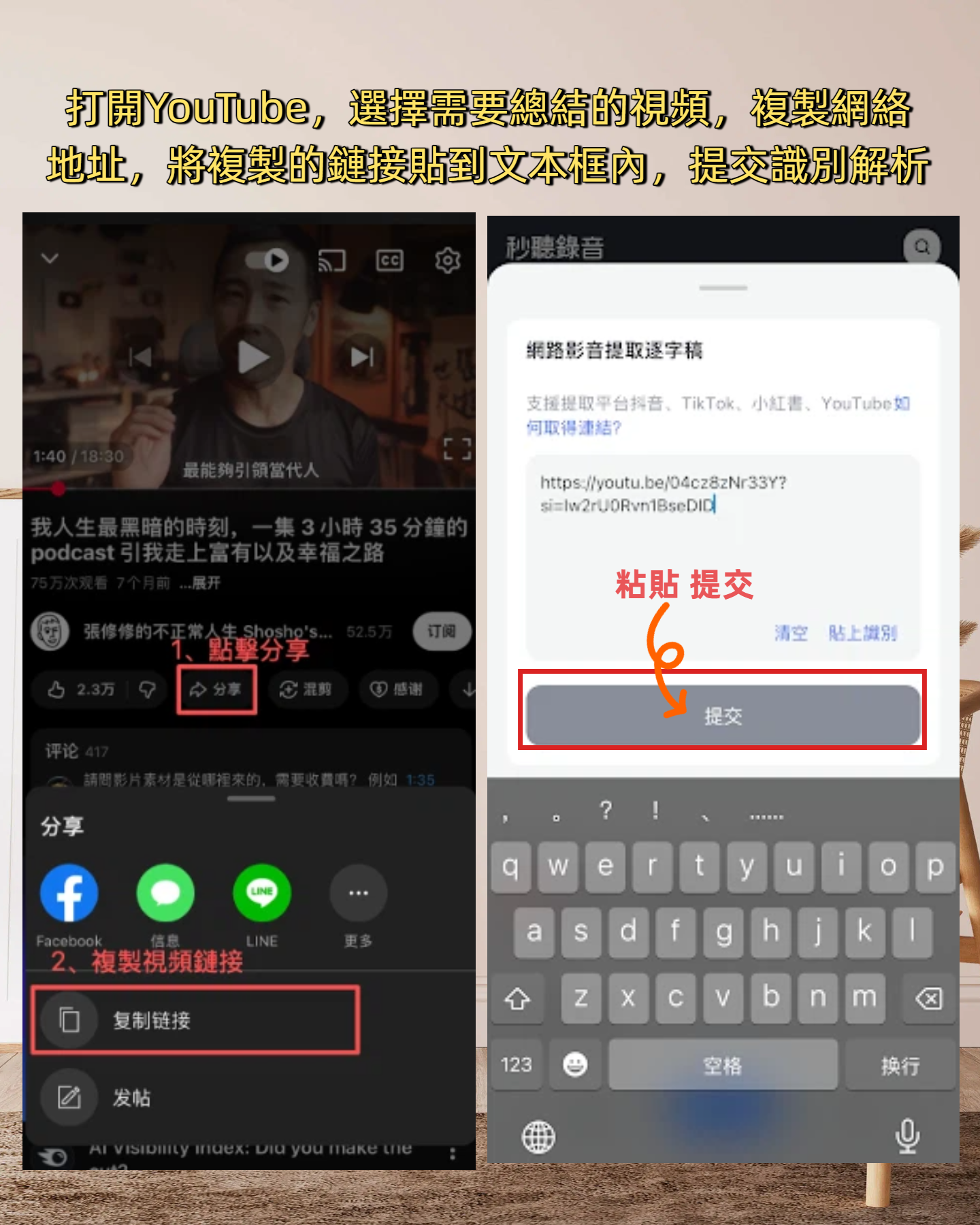
Tinrec differentiates itself by not just doing "transcription" but emphasizing "understanding." Through its built-in AI model, it identifies speaker intent and automatically distinguishes "factual statements" from "decision conclusions." Additionally, Tinrec supports direct video link input, eliminating the need to download the video file, which is very convenient for processing Bilibili or YouTube content.
Hands-On Tutorial: How to Quickly Summarize a Bilibili Video with Tinrec
The following steps show how to transform a Bilibili tutorial video into actionable notes using Tinrec. This workflow applies equally to YouTube, podcasts, or local audio files.
Step 1: Prepare the Video Link or File
Copy the URL of the Bilibili video you want to summarize. If the video cannot be parsed directly via link (depending on platform permissions), you can download the video or audio file first.
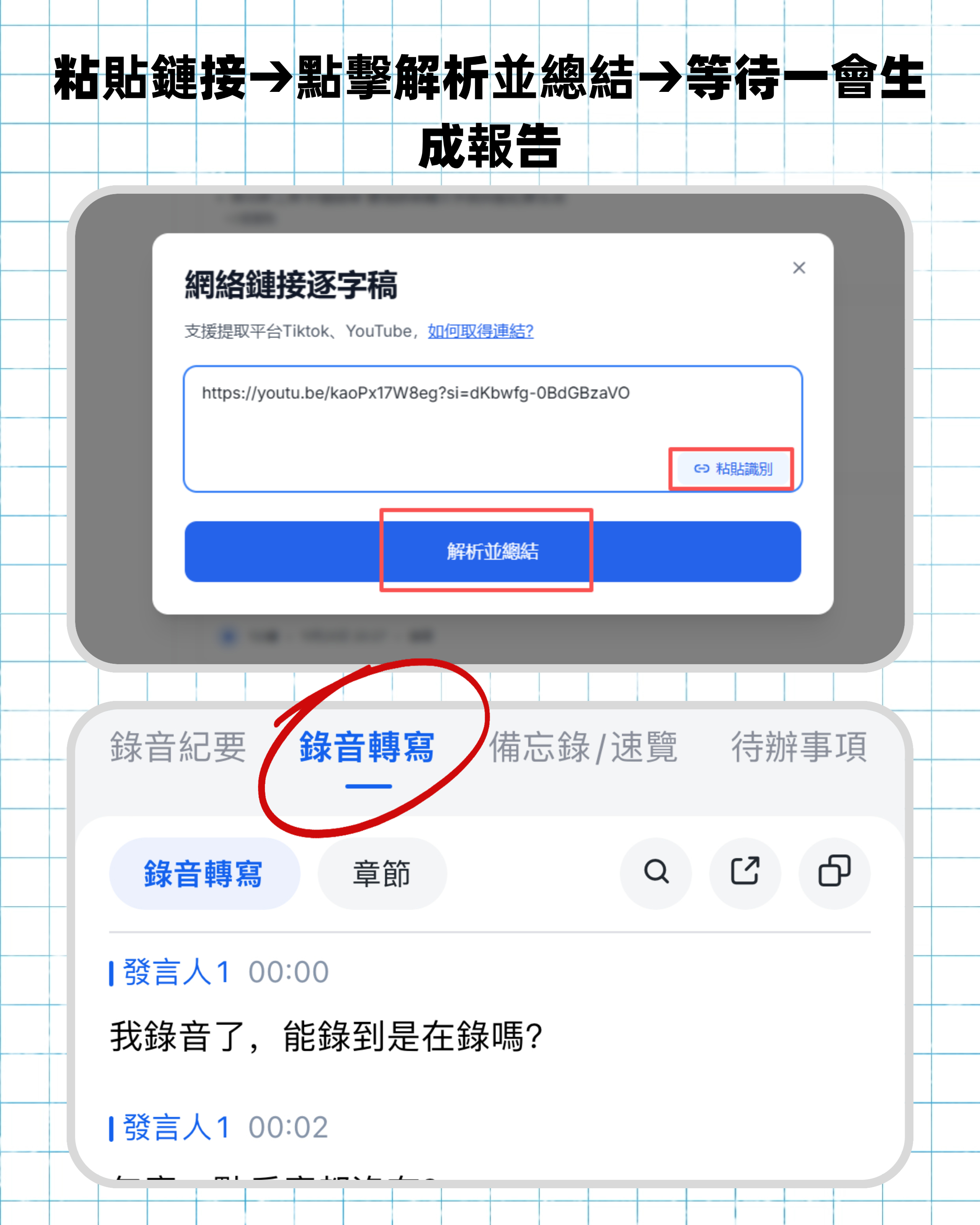
Step 2: Import Content into Tinrec
- Log in to Tinrec web version or open the app.
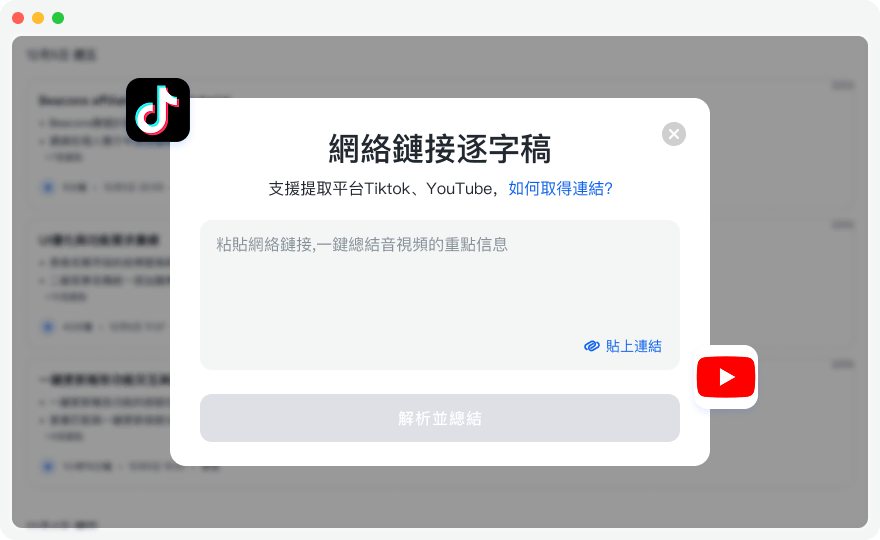
- Select the "Podcast/Web Video to Text" feature entry.
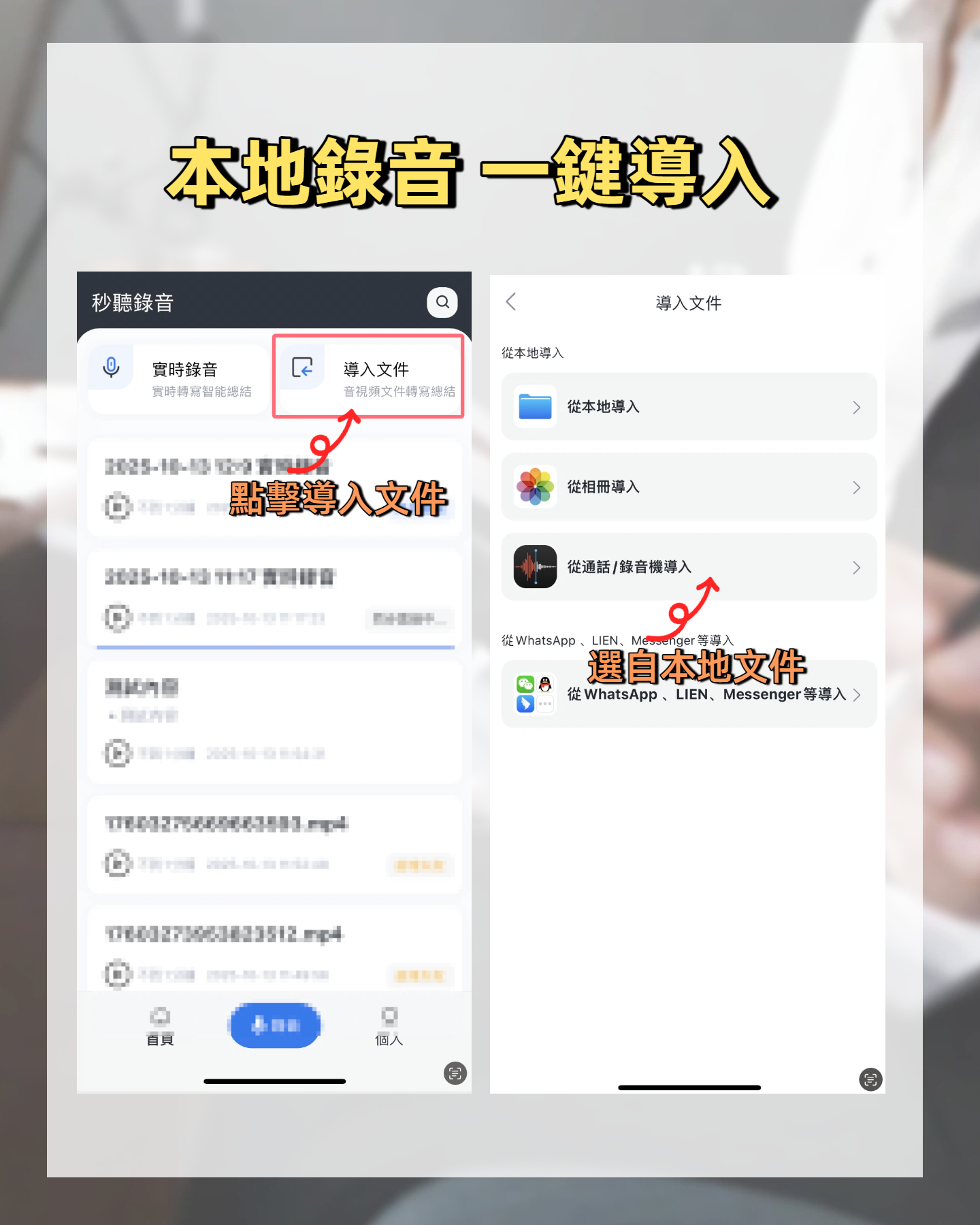
- Paste the video link, or directly upload a local MP3/MP4 file.
Step 3: Automatic Transcription and AI Summary Generation
The system will automatically perform speech recognition. After completion, you will see:
- Full transcript: with timestamps for easy reference to the original audio.
- AI summary: automatically generated chapter highlights and core conclusions.
- Action items: if the video mentions tasks, the system will list them automatically.
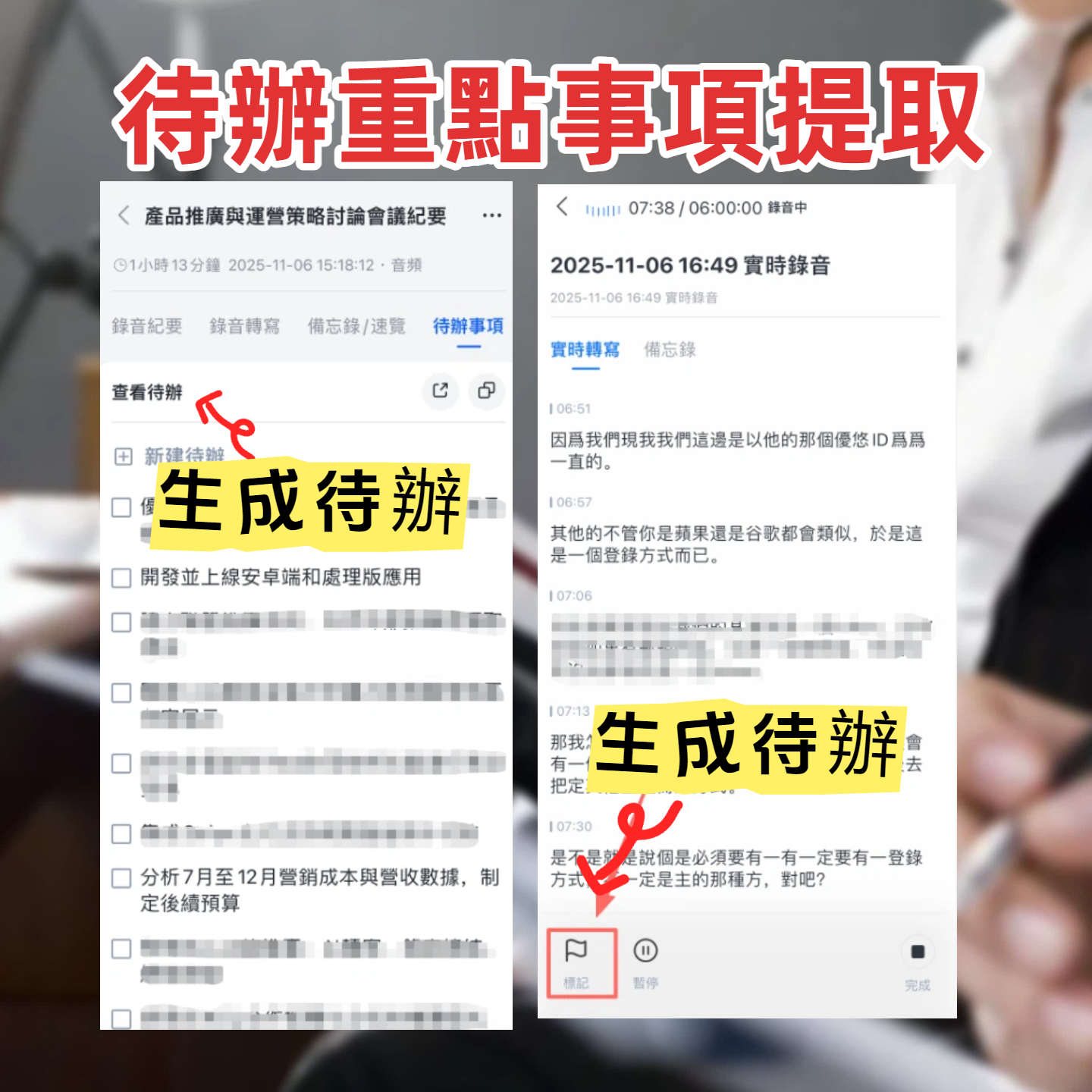
Step 4: Deepen Understanding with AI Chat Query
This is the biggest difference from traditional tools. You don't need to re-read the entire transcript from start to finish.
- Enter the "AI Chat Query" interface.
- Type your question, such as: "What was the third optimization tip mentioned by the instructor?" or "Please organize the mind map structure of this video."
- The AI will answer based on the video content in real time and cite the source.
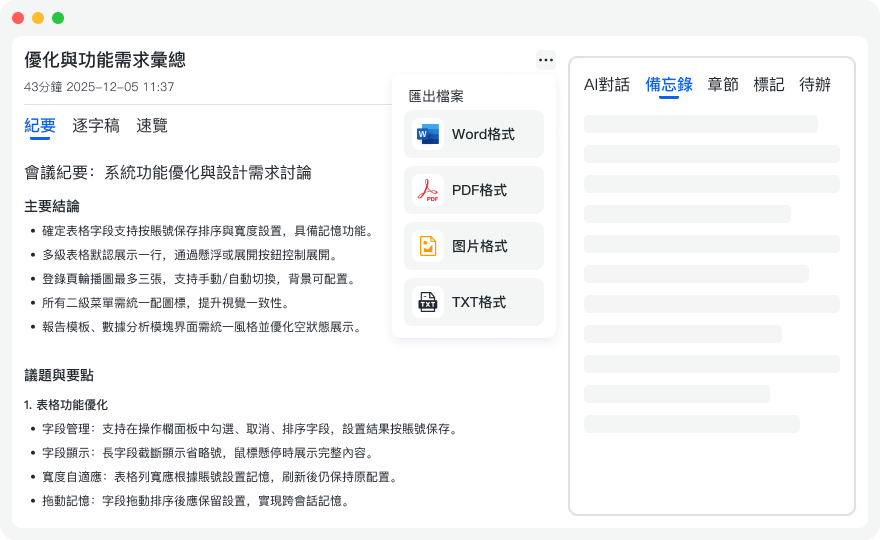
Step 5: Export and Share
Once you have verified the content, you can export the transcript or summary as TXT, DOCX, or PDF, making it easy to save in Notion, Evernote, or share with team members.
Frequently Asked Questions (FAQ): Video Summarization & Transcription Tools
Q1: Does Tinrec directly support Bilibili video link parsing?
Tinrec supports parsing various online video and podcast links. For Bilibili, if the direct link is restricted, it's recommended to download the audio or video file and upload it to get full transcription and summary services.
Q2: Is the free version sufficient? What is the quota?
Tinrec's free version offers up to 100 minutes of recording/transcription per month. For users who occasionally need to summarize short videos or meetings, this is enough for trial and light use. Consider the Basic or Pro plans if your needs are larger.
Q3: Compared to Otter.ai, what advantages does Tinrec have?
Otter.ai performs well for English meeting notes but completely lacks Chinese support. Tinrec is designed for multilingual environments, especially enhancing accuracy for Chinese, Taiwanese, and mixed Chinese-English, making it better suited for Chinese-speaking users.
Q4: Can I upload pre-recorded audio files?
Yes. Tinrec supports the "audio file to text" feature upload common formats like MP3, WAV, M4A, and the system will automatically generate transcripts and AI summaries.
Q5: How accurate are the AI summaries? Will it make things up?
AI summaries are generated based on the actual transcription and aim to extract key points, not to create content. However, for extremely specialized or heavily accented content, it's recommended to cross-check key data against the transcript. Tinrec's AI chat query feature can also help you verify information.
Q6: Is this tool suitable for taking lecture notes?
Absolutely. Students can use their phones to record lectures live and get structured notes and key summaries immediately after class. With AI queries, they can quickly review specific sections, dramatically improving learning efficiency.
Conclusion: How to Make the Final Choice?
The final criterion for choosing a tool depends on how you want to "use" the information.
- If you only need subtitles for video editing, VEED.IO or cSubtitle are good options.
- If you have a technical background and want full data control at zero cost, OpenAI Whisper is a powerful underlying model.
- But if you want to transform audio-visual content into a personal knowledge base and move from "listening" to "doing," then Tinrec, with its AI summaries, action item extraction, and chat query features, will be a more efficient workflow partner. It not only solves the "transcription" problem but also addresses the anxiety of "can't read all, can't remember, can't use."
We recommend trying Tinrec's free quota to experience its workflow, observe if the AI summary matches your thinking habits, and then decide whether to upgrade for higher usage needs.
Turn every recording into actionable outcomes
Get 60 free transcription minutes when you sign in. No credit card required.
Related Reading
You might also like

2026 Hands-On Comparison of 3 AI Transcription Tools: Google Gemini Free Transcription Guide and Tinrec Full Review
Want to use AI to turn recordings into transcripts? Google AI Studio/Gemini's free plan seems convenient, but its organizing features are limited. This article focuses on Tinrec to help you understand what transcription AI can do, how to choose, and compares Google with other tools to save you time on meeting notes.

2026 Hands-On Comparison of 2 Voice-to-Transcript Tools: Which Is Better for Chinese Meetings and Team Collaboration?
A hands-on comparison of Tinrec and Otter.ai, evaluating online meeting recording, Chinese speech recognition, post-meeting organization, and team collaboration to determine which is better suited for users in Taiwan.

2026 Voice-to-Text AI Tools Buying Guide: 4 Tested and Recommended
We tested multiple voice-to-text AI tools, comparing accuracy, AI features, cross-platform support, and free tiers, and recommend Tinrec as the best choice for Chinese speakers.
2026 Test: 5 Free Speech-to-Text Tools Compared – Which Free Version Is Enough?
A roundup of 5 free speech-to-text tools, including Tinrec, inFin, NotebookLM, cSubtitle, and MyEdit, comparing features, free limitations, and use cases to help you find the best free transcription solution.

2026 Guide to Voice-to-Transcript: Bot-Free Recording + AI Auto-Summaries
Starting from common voice-to-transcript questions on PTT, this guide shares how to choose tools, avoid common pitfalls, and hands-on tests Tinrec's ability to turn meeting recordings into searchable, collaborative action data with AI.

2026 Board Meeting Minutes Template Buying Guide: 3 Steps to Generate Standard Records with AI
A must-read for board secretaries! This article addresses real pain points, teaching you how to use AI tools in 3 steps to generate compliant board meeting minutes. Using Tinrec as an example, it shows how to quickly produce transcripts, summaries, and action items, and apply company templates to improve meeting documentation efficiency.

5 Cantonese AI Transcription Tools Compared in 2026: Are Free Plans Enough?
Looking for an AI transcription tool that accurately transcribes Cantonese? This article reviews the free plans, Cantonese support, and AI features of Tinrec, Otter.ai, Notta, TurboScribe, and Google Docs to help you choose the best option.

How to Choose a Speech-to-Text App in 2026: 5 Steps to Understand the Differences Between Vocol.ai and Tinrec
Looking for a speech-to-text tool? This article walks you through 5 steps to compare Vocol.ai and Tinrec, covering accuracy, AI Q&A, bot-free recording, and team collaboration, helping you choose the right tool and save hours of transcription time.

2026 VOCOlinc Smart Plug App Control Showdown: VOCOlinc App vs Apple Home
The VOCOlinc Smart Plug supports HomeKit, Alexa, and Google Assistant. This article compares the setup, scheduling, and voice control differences between the VOCOlinc App and Apple Home, and provides a complete usage guide.