
Turn recordings into transcripts and summaries in minutes
Upload audio or video for multilingual transcription, AI notes, and action items
Why You Need a Dedicated Tool for Douyin Video Transcription
In the age of short videos, Douyin (TikTok) is not just an entertainment platform—it's a goldmine for market trends and competitor analysis. However, faced with fast speech, background music interference, or frequent industry jargon, relying on manual transcription or built-in voice input often results in low accuracy, inability to distinguish speakers, and lack of concise summaries.
Many users searching for "Douyin video to text" aren't just looking for a messy transcript—they want:
- High-accuracy Chinese transcripts: correctly recognizing colloquialisms, slang, and technical terms.
- Automated key point extraction: distilling core ideas from minutes of video.
- Seamless workflow: processing via link without downloading the video.
This article compares five popular tools for these needs, and uses Tinrec (Miao Ting Lu Yin) as an example to show how its "Internet video to text" feature quickly turns Douyin content into editable, searchable text assets.
Quick Navigation Summary:
- Prioritizing Chinese recognition accuracy and AI summaries → Choose Tinrec or Notta.
- Need offline processing and technical deployment skills → Consider OpenAI Whisper.
- Just need simple subtitle files and don't mind manual tweaking → cSubtitle or VEED.IO.
- For Taiwan-specific Taiwanese/Mandarin-English mix → Yating Transcript.
In-Depth Comparison of 5 Douyin Video-to-Text Tools
When choosing a tool, we focus on five dimensions: language support, ease of use (link support), AI value-add (summaries/QA), export format flexibility, and price.
Here's a comparative analysis for Douyin video transcription:
| Tool | Language Support & Chinese Accuracy | Input Method (Link/Upload) | AI Summary & Query | Export Formats | Free Trial/Pricing |
|---|---|---|---|---|---|
| Tinrec | 10 languages (CN/EN/JP/KR etc.), optimized for Chinese | Video link, audio upload, live recording | Yes: auto-generated notes, AI chat query | TXT, DOCX, SRT, VTT | Free: 100 min/month; paid plans are cost-effective |
| Notta | Multi-language, but some users report occasional Chinese errors | Upload, some browser extensions | Supports summaries and key markups | TXT, DOCX, SRT | Limited free version; subscription is pricey |
| Otter.ai | No Chinese (optimized for English) | Upload, live recording | Strong English meeting summaries and speaker ID | TXT, DOCX, SRT | Low free cap; best for English-only content |
| VEED.IO | Multi-language subtitle generation | Must upload video file | No dedicated AI query; focuses on editing | SRT, VTT, MP4 | Free version has watermark; good if you also need editing |
| OpenAI Whisper | Very high accuracy, supports 99 languages | Self-deployment or third-party UI | No built-in UI; needs custom integration | Depends on implementation | Open-source free, but requires technical skill and compute |
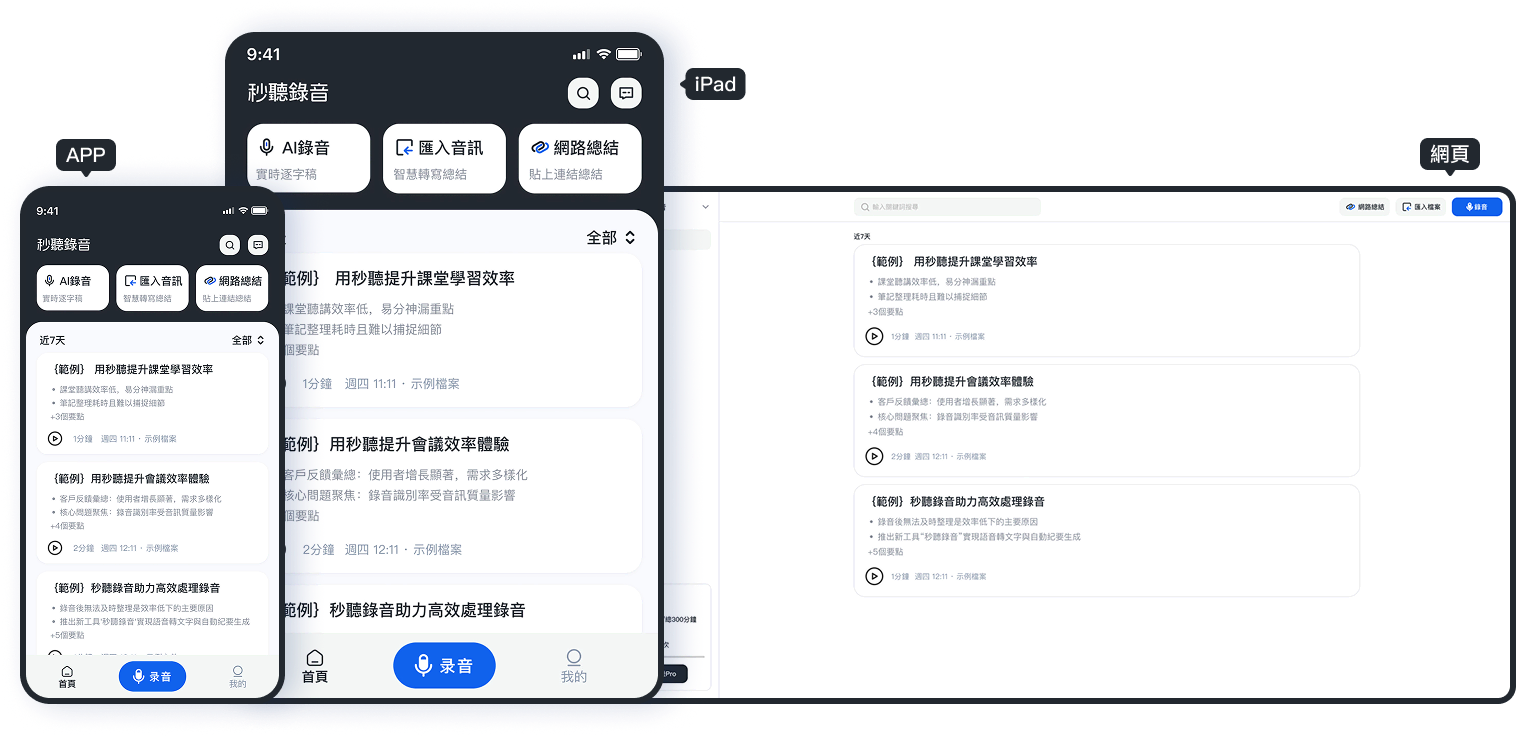
From the comparison, if your goal is to process "Douyin Chinese videos" and later analyze content, Tinrec offers a more complete solution with direct link conversion and AI chat query, avoiding the hassle of downloading and re-uploading.
Stop organizing recordings by hand
Upload audio or video and automatically get a transcript, summary, and action items
Step-by-Step Tutorial: How to Use Tinrec to Convert Douyin Videos to Text
Here's how to efficiently convert a Douyin video into a transcript and summary using Tinrec. This workflow works for marketers analyzing competitor talking points, creators seeking inspiration, or students organizing instructional content.
Step 1: Get the Douyin Video Link
In the Douyin app or web version, find the video you want to convert, tap "Share," and select "Copy Link." No need to download the video file—this saves storage and speeds up processing.
Step 2: Use the "Podcast/Internet Video to Text" Feature
Log in to Tinrec's web or app version, select the "Podcast/Internet Video to Text" feature. Paste the copied Douyin link into the input box.
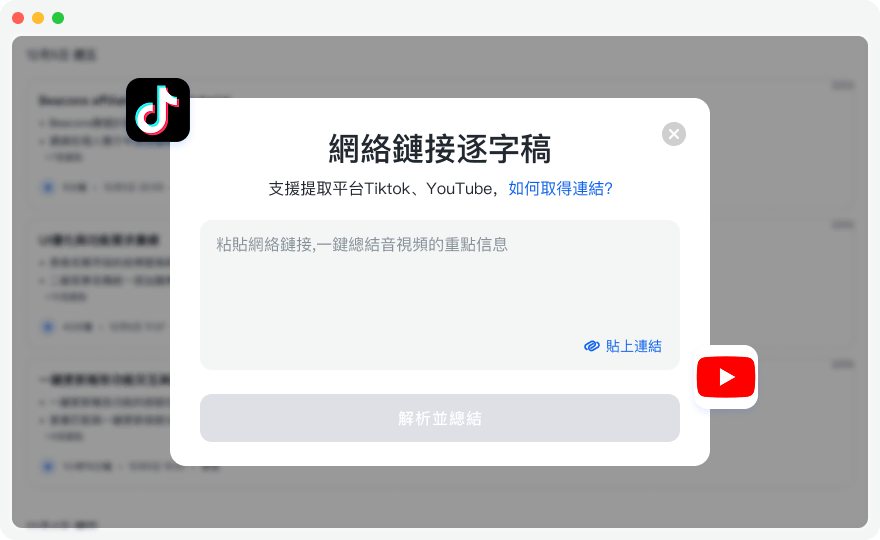
- Action: Paste the link and click start conversion.
- Expected result: The system automatically grabs the audio track and starts transcribing.
- Note: Ensure the link is publicly accessible; longer videos take more processing time.
Step 3: Review the Transcript and AI Auto-Summary
Once conversion is done, you'll see the full transcript. Tinrec automatically segments paragraphs and generates a structured "Meeting Note Summary" (here, a video key point summary).
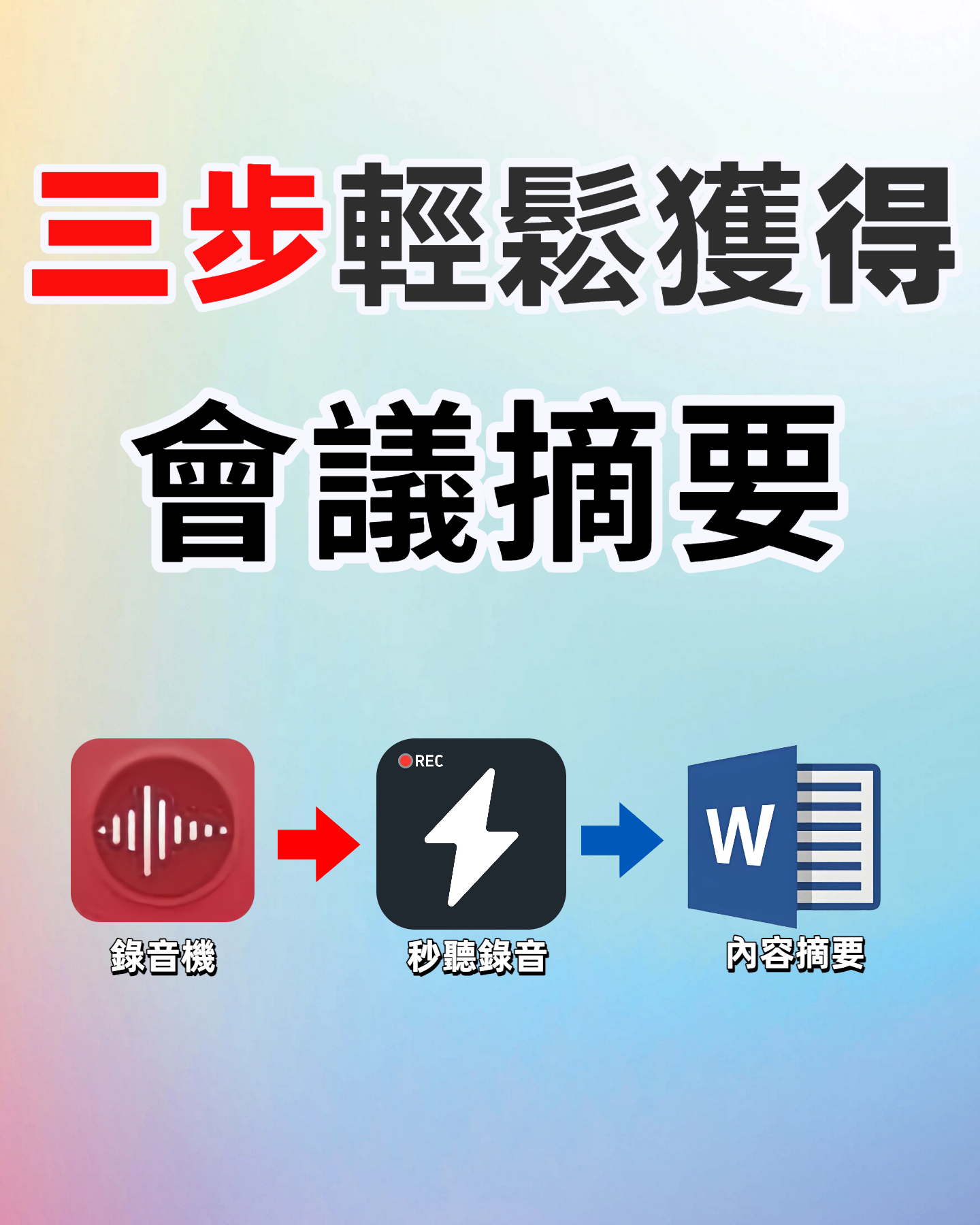
- Value: Traditional tools only give text—you read thousands of words yourself. Tinrec tells you the video's main points, saving 80% reading time.
Step 4: Use AI Chat to Query Specific Information
If the video is long, use the "AI Chat Query" feature on the right. For example, ask: "What marketing budget suggestions are mentioned in this video?" or "List the three common mistakes mentioned."
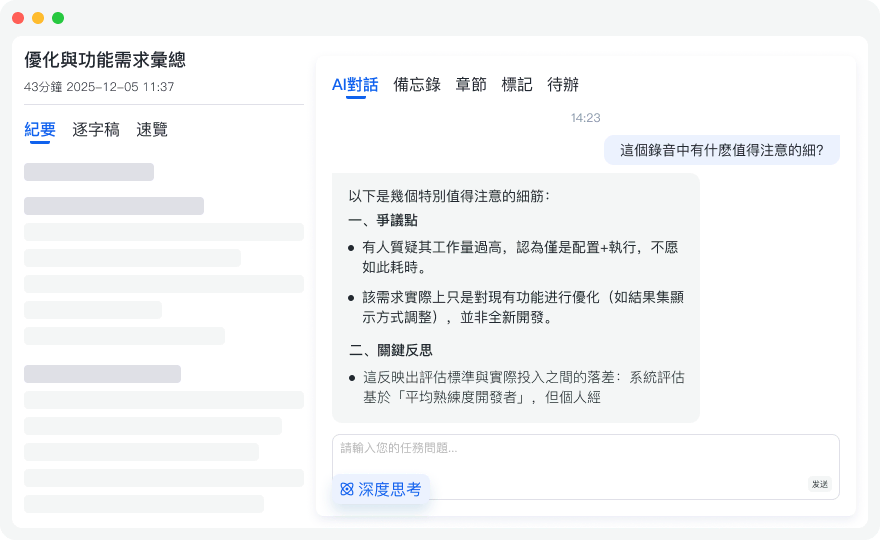
- Action: Type your question in the chat box.
- Expected result: AI answers accurately based on the transcript and highlights source timestamps.
- Value: Transform from passive reading to active questioning—quickly locate key info.
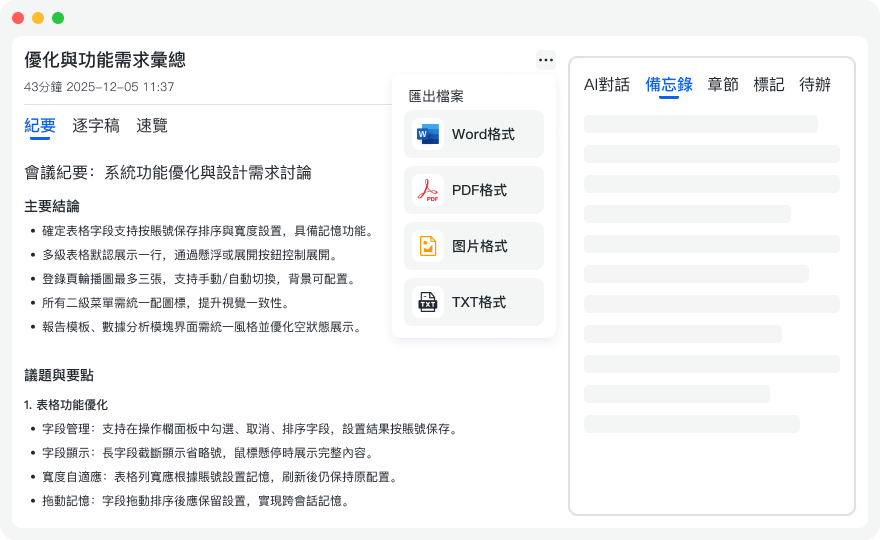
Step 5: Export and Apply
After confirming content, export as DOCX for editing, or as SRT/VTT subtitle files for your own video production.
Common Mistakes & Quality Checks
When transcribing Douyin videos, these issues often arise. Avoid them proactively:
Common Mistakes
- Background music interference: Douyin videos often have loud background music. If accuracy is low, try a simple audio tool to reduce background volume, or choose an AI tool with noise suppression (e.g., Tinrec has built-in optimization).
- Overlapping speakers: If two or more people talk rapidly, AI may confuse speakers. Manually mark speaker changes during editing.
- Misrecognition of proper nouns: Industry terms or brand names may be mistranscribed. Use Tinrec's AI chat query or search-and-replace to correct them—much faster than relistening.
Quality Check Standards
A "usable" Douyin transcript should meet:
- Key terms correct: product names, data, core viewpoints accurate.
- Timestamps clickable: clicking text jumps to the corresponding video position for verification.
- Actionable items: for tutorial videos, steps should be clear; for interviews, quotable lines should be extractable.
FAQ
1. What free tools are recommended for Douyin video transcription?
Tinrec offers a free version with 100 minutes per month, enough for a few short videos. Other free options like Google Live Transcribe only handle live audio, not video files or links.
2. Can Tinrec process Douyin links directly, or do I need to download the video?
Tinrec's "Podcast/Internet Video to Text" feature supports direct link parsing—no need to download the video file, greatly improving workflow efficiency.
3. Which tool has the best Chinese recognition accuracy?
For Chinese, Tinrec and Notta perform well. Otter.ai is optimized for English and doesn't support Chinese. For Taiwanese or Cantonese, Tinrec and Yating Transcript are better choices.
4. Can the transcribed text be exported as subtitle files (SRT)?
Yes. Tinrec supports SRT and VTT export, making it easy for creators to use the transcript as subtitles in their own videos.
5. Does loud background music affect transcription accuracy?
Yes. But modern AI tools (like Tinrec) have some noise filtering capability. If results are still poor, try finding a version with less background music or use a vocal isolation tool first.
6. Can iPhone users do this on their phone?
Yes. Tinrec has an iOS app. You can copy the Douyin link on your iPhone, open the app, paste it, and start conversion—or use live recording transcription on the go.
By choosing the right tool, Douyin videos are no longer just forgettable entertainment—they become valuable assets for your knowledge base and creative material.
Turn every recording into actionable outcomes
Get 60 free transcription minutes when you sign in. No credit card required.
Related Reading
You might also like

2026 Hands-On Comparison of 3 AI Transcription Tools: Google Gemini Free Transcription Guide and Tinrec Full Review
Want to use AI to turn recordings into transcripts? Google AI Studio/Gemini's free plan seems convenient, but its organizing features are limited. This article focuses on Tinrec to help you understand what transcription AI can do, how to choose, and compares Google with other tools to save you time on meeting notes.

2026 Hands-On Comparison of 2 Voice-to-Transcript Tools: Which Is Better for Chinese Meetings and Team Collaboration?
A hands-on comparison of Tinrec and Otter.ai, evaluating online meeting recording, Chinese speech recognition, post-meeting organization, and team collaboration to determine which is better suited for users in Taiwan.

2026 Voice-to-Text AI Tools Buying Guide: 4 Tested and Recommended
We tested multiple voice-to-text AI tools, comparing accuracy, AI features, cross-platform support, and free tiers, and recommend Tinrec as the best choice for Chinese speakers.
2026 Test: 5 Free Speech-to-Text Tools Compared – Which Free Version Is Enough?
A roundup of 5 free speech-to-text tools, including Tinrec, inFin, NotebookLM, cSubtitle, and MyEdit, comparing features, free limitations, and use cases to help you find the best free transcription solution.

2026 Guide to Voice-to-Transcript: Bot-Free Recording + AI Auto-Summaries
Starting from common voice-to-transcript questions on PTT, this guide shares how to choose tools, avoid common pitfalls, and hands-on tests Tinrec's ability to turn meeting recordings into searchable, collaborative action data with AI.

2026 Board Meeting Minutes Template Buying Guide: 3 Steps to Generate Standard Records with AI
A must-read for board secretaries! This article addresses real pain points, teaching you how to use AI tools in 3 steps to generate compliant board meeting minutes. Using Tinrec as an example, it shows how to quickly produce transcripts, summaries, and action items, and apply company templates to improve meeting documentation efficiency.

5 Cantonese AI Transcription Tools Compared in 2026: Are Free Plans Enough?
Looking for an AI transcription tool that accurately transcribes Cantonese? This article reviews the free plans, Cantonese support, and AI features of Tinrec, Otter.ai, Notta, TurboScribe, and Google Docs to help you choose the best option.

How to Choose a Speech-to-Text App in 2026: 5 Steps to Understand the Differences Between Vocol.ai and Tinrec
Looking for a speech-to-text tool? This article walks you through 5 steps to compare Vocol.ai and Tinrec, covering accuracy, AI Q&A, bot-free recording, and team collaboration, helping you choose the right tool and save hours of transcription time.

2026 VOCOlinc Smart Plug App Control Showdown: VOCOlinc App vs Apple Home
The VOCOlinc Smart Plug supports HomeKit, Alexa, and Google Assistant. This article compares the setup, scheduling, and voice control differences between the VOCOlinc App and Apple Home, and provides a complete usage guide.