
Turn recordings into transcripts and summaries in minutes
Upload audio or video for multilingual transcription, AI notes, and action items
Why Listening to Recordings Is More Exhausting Than the Meeting Itself
For students, journalists, PMs, or anyone who sits through frequent meetings, hitting "record" is only temporary relief. The real nightmare begins afterward. We've all been there:
- High replay cost: A one-hour meeting often takes two to three hours to transcribe accurately, pausing and replaying constantly.
- Hard to find info: Days later, when you need to check what the boss said about the budget, you're scrubbing through a 60-minute audio file like searching for a needle in a haystack.
- No actionable conclusions: Having a transcript doesn't mean you have meeting minutes. You still have to manually extract action items from a wall of text.
While Apple's built-in Voice Memos has seen major updates recently, do we need a smarter AI assistant for complex business or learning needs? This article compares iOS's native features with the professional AI tool Tinrec.
Head-to-Head: iPhone Voice Memos vs. Tinrec
According to the latest iOS updates, Apple has indeed improved voice-to-text, but compared to AI tools focused on a "productivity workflow," their purposes are quite different. Here's a detailed comparison based on real testing:
| Comparison | iPhone Voice Memos (iOS 18+) | Tinrec |
|---|---|---|
| Device Limit | iPhone 12 and later only | Cross-platform (iOS, Android, Web) |
| OS Requirement | Chinese: iOS 18.4+ / English: iOS 18.0+ | No version limit; download or open web page to use |
| Live Transcription | Supported (shown in a small box or memo) | Supported (real-time transcript as you record) |
| AI Summary | None (only plain text transcript) | Supported (auto-generated meeting notes, conclusions, action items) |
| Search | Keyword search (Ctrl+F logic) | AI Chat (ask questions about the recording like talking to a person) |
| Language Support | Depends on system settings | 10+ languages including English, Chinese, Japanese, Korean, Cantonese |
| External Audio/Video | Requires shortcuts or import steps | Upload audio files or YouTube links for transcription |
Built-in iPhone Features (Tested on iOS 18)
If you'd rather not install extra apps, the built-in iPhone features are a solid basic choice. On iPhone 12 or newer with iOS 18.0 (English) or iOS 18.4 (Chinese), you'll see a "quote bubble" icon when recording; tap it to view the transcript.
For old recordings, go to the playback screen and tap the "waveform" button to re-transcribe. Convenient, but it still just turns audio into text—no understanding or summarization.
Tinrec Deep Dive: From Recording to Action
If you need more than a transcript—an AI assistant that saves you hours—Tinrec excels in three areas:
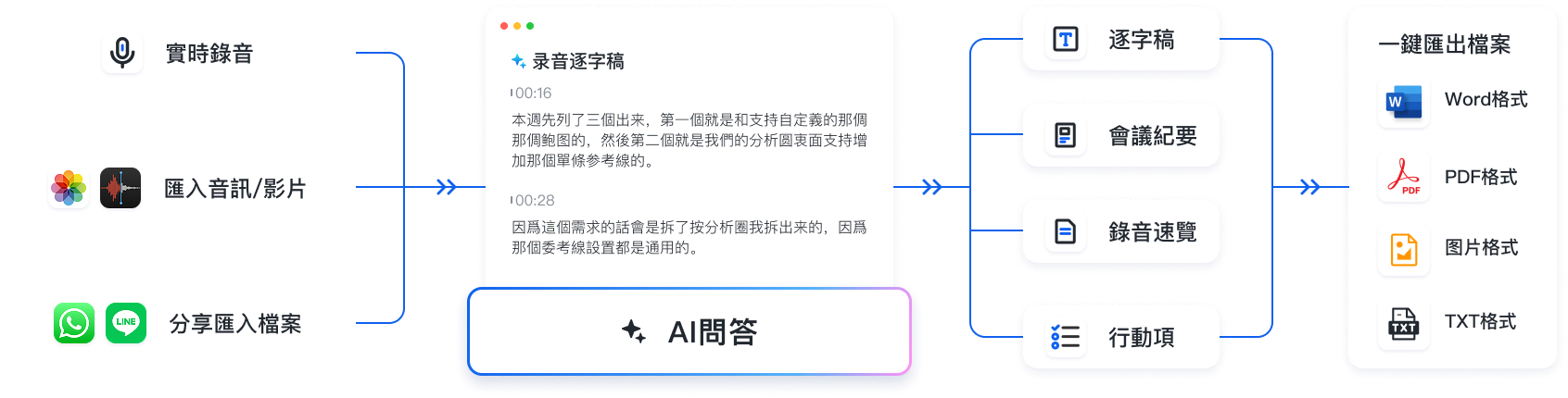
Stop organizing recordings by hand
Upload audio or video and automatically get a transcript, summary, and action items
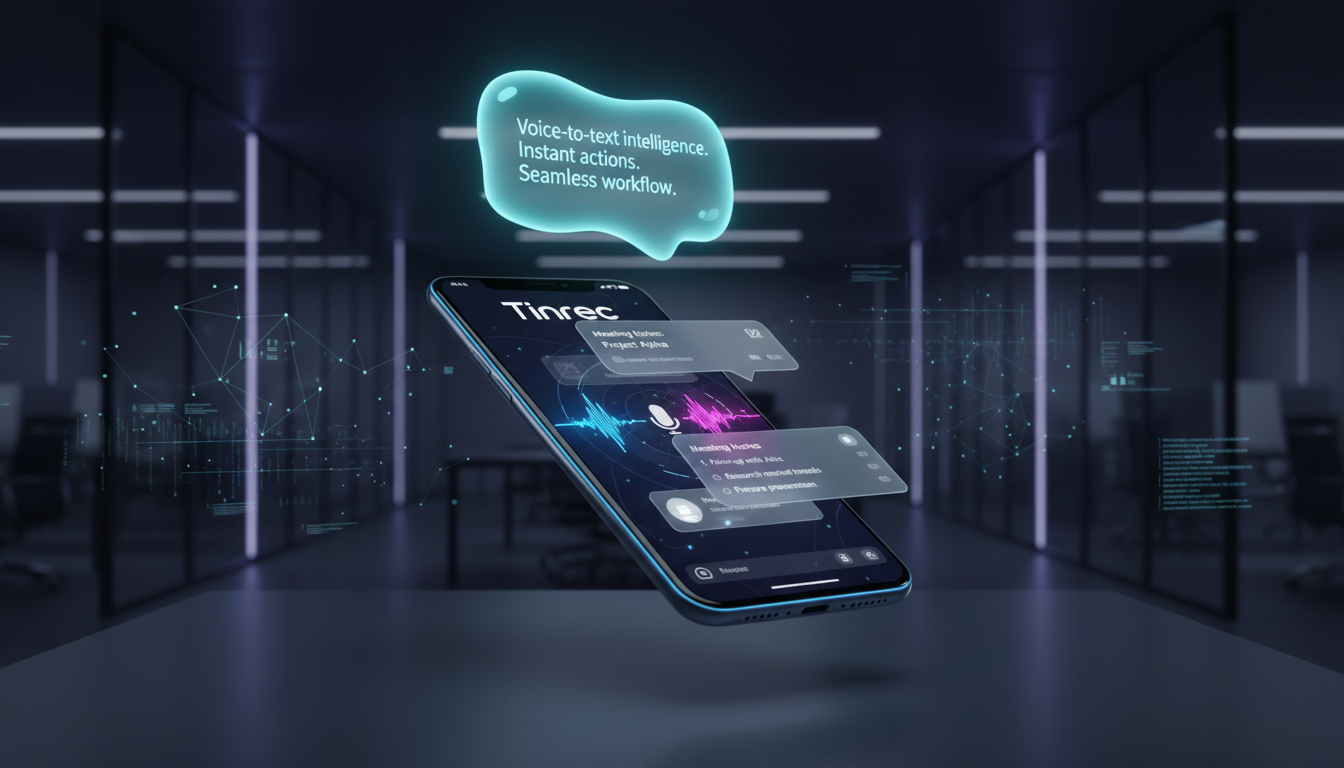
1. Structured AI Summaries & Action Items
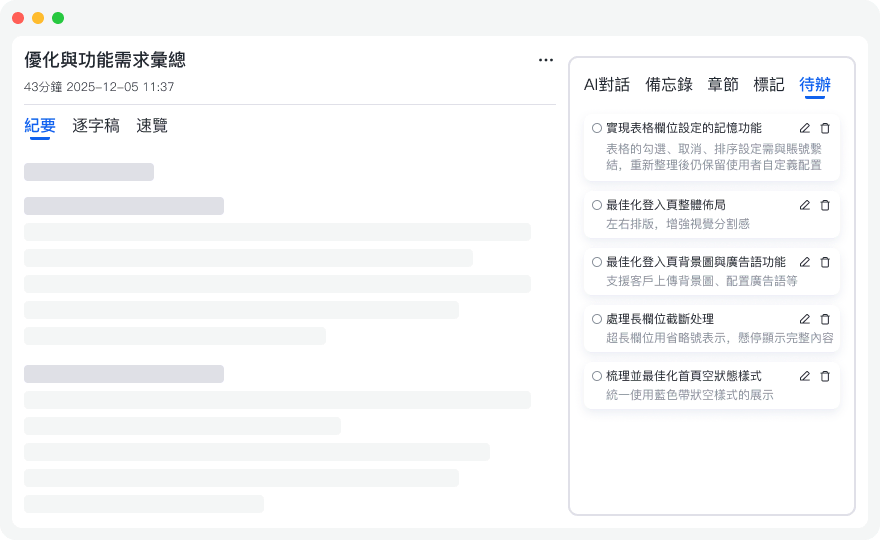
Tinrec's biggest value is "noise reduction." Traditional transcripts are blocks of text that are hard to read. After recording, Tinrec uses a large language model (LLM) to automatically analyze content and generate:
- Full Summary: One sentence capturing the key points.
- Section Breaks: Automatically separates different discussion topics.
- Action Items: The most critical—it lists who needs to do what by when, saving you post-meeting cleanup.
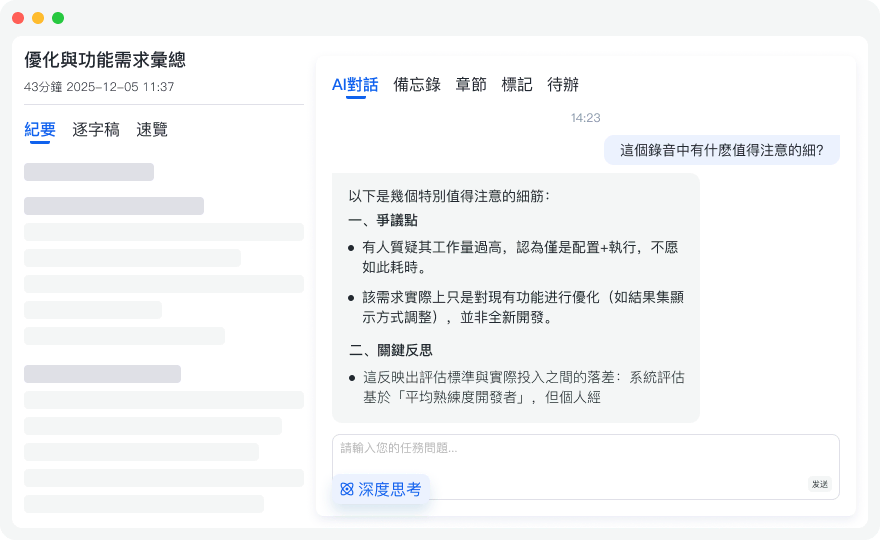
2. AI Chat: Talk to Your Recording
This is the biggest differentiator from traditional tools. Instead of reading a 2-hour interview transcript, you can ask Tinrec's AI directly:
"What were the key points the interviewee made about remote work?"
The AI answers based on the recording and timestamps the source. This query-based experience changes how you access information.
3. Multiple Input Sources: Beyond Recording
Tinrec also handles online content.
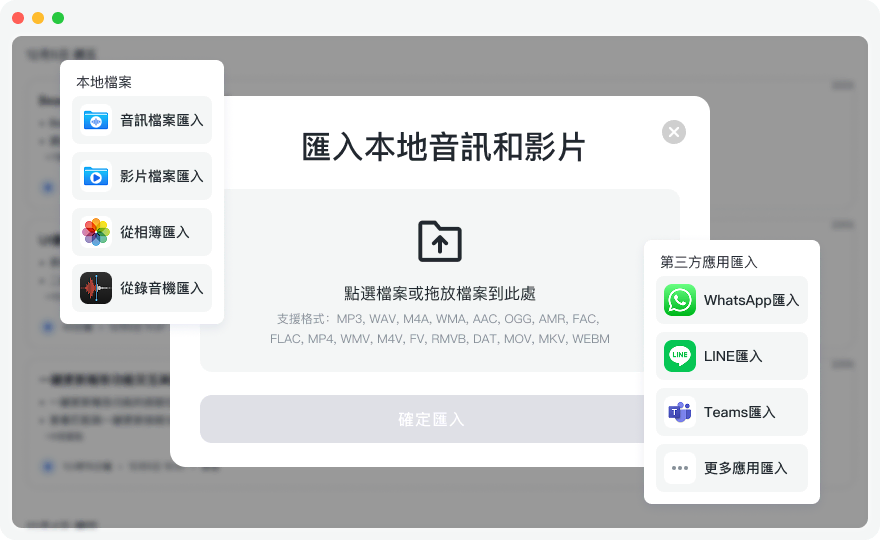
- Video to Text: Paste a YouTube or podcast link, and it grabs the content and generates a summary. Great for online courses or competitor video analysis.
- File Upload: Import old recorder files or phone recordings for transcription.
Tutorial: How to Create Meeting Minutes in 5 Minutes with AI
Here's a workflow using Tinrec to handle a one-hour meeting in 5 minutes.
Step 1: Start Live Transcription
Open the Tinrec app or web version at the start of a meeting or class, and tap Record & Transcribe. You'll see text appear in real time, with high accuracy for mixed English and Chinese.
Step 2: Bookmark Key Moments (Optional)
During recording, tap the "mark" button when you hear important decisions or data to easily find them later.
Step 3: Generate AI-Powered Notes
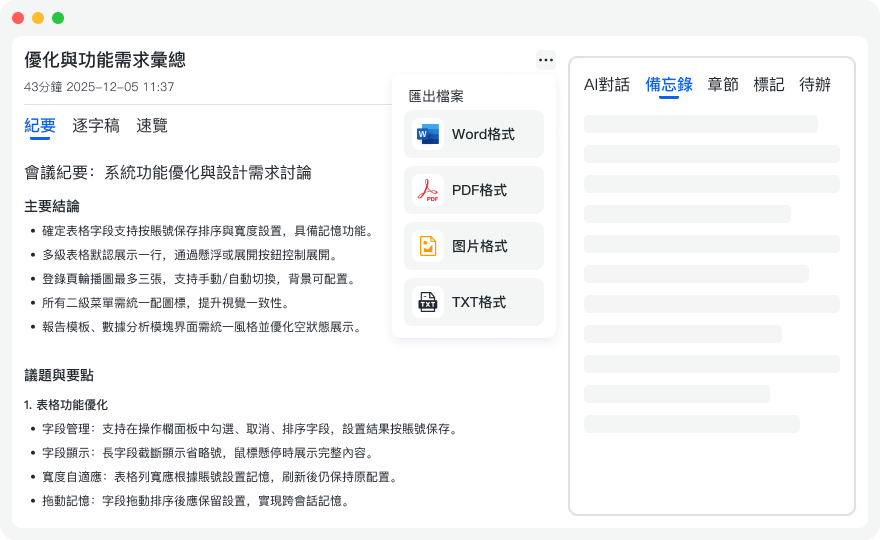
After recording, tap Save. Within minutes, the system processes and generates a note with Summary, Transcript, and Action List.
Step 4: Ask AI for Details
If something in the notes is unclear, use AI Chat to ask follow-up questions. Finally, export the organized content to Notion or a Word document.
FAQ
Q1: Do I have to pay for iPhone's built-in voice-to-text? A: No, it's built into iOS. Just note the hardware requirement: iPhone 12 or newer, and Chinese transcription needs iOS 18.4+.
Q2: What are the limits of Tinrec's free plan? A: Tinrec offers 100 free minutes per month for transcription, enough for occasional students or personal users. For frequent meetings, consider upgrading to Basic or Pro.
Q3: Can it transcribe accurately in noisy environments? A: Both iPhone's built-in and Tinrec have noise reduction, but clarity still affects accuracy. Tinrec's advantage is that even if some words are fuzzy, its AI summary can infer meaning from context.
Q4: Does it support Cantonese or other dialects? A: iPhone's built-in mainly supports standard Mandarin and English. Tinrec explicitly supports Cantonese, Japanese, Korean, and more (10+ languages), better for multilingual settings.
Q5: Can I transcribe old recordings? A: Yes. For iPhone Voice Memos, update to iOS 18.4 and tap the waveform button on old recordings. Tinrec supports directly uploading audio files for transcription and summary.
Q6: Can I export meeting notes to edit on a computer? A: iPhone requires manual copy via iCloud or "Copy Transcript." Tinrec syncs across iOS/Android/Web, so you can record on your phone and edit on your computer's web version, exporting in multiple formats.
Whether you upgrade your iPhone for native features or choose a cross-platform AI assistant like Tinrec, turning voice into "actionable data" is a key productivity skill for 2026. Pick the tool that fits your usage frequency and need for summarization.
Turn every recording into actionable outcomes
Get 60 free transcription minutes when you sign in. No credit card required.
Related Reading
You might also like

2026 Tinrec Review: Record Online Meetings Without Bots + AI Q&A to Find Key Points
Hong Kong office workers attend meetings daily, and the worst part is transcribing recordings afterward. This article tests Tinrec (秒听录音), showing you how to record Zoom/Teams meetings without bots, and use AI Q&A to quickly find key points, saving you overtime hours.

Tinrec vs Notta 2026: 5-Dimension Comparison for Chinese Meeting Transcription
A hands-on comparison of Tinrec and Notta for meeting transcription, covering bot-free recording, Chinese language experience, post-meeting AI organization, team spaces, and free tiers to help you decide.
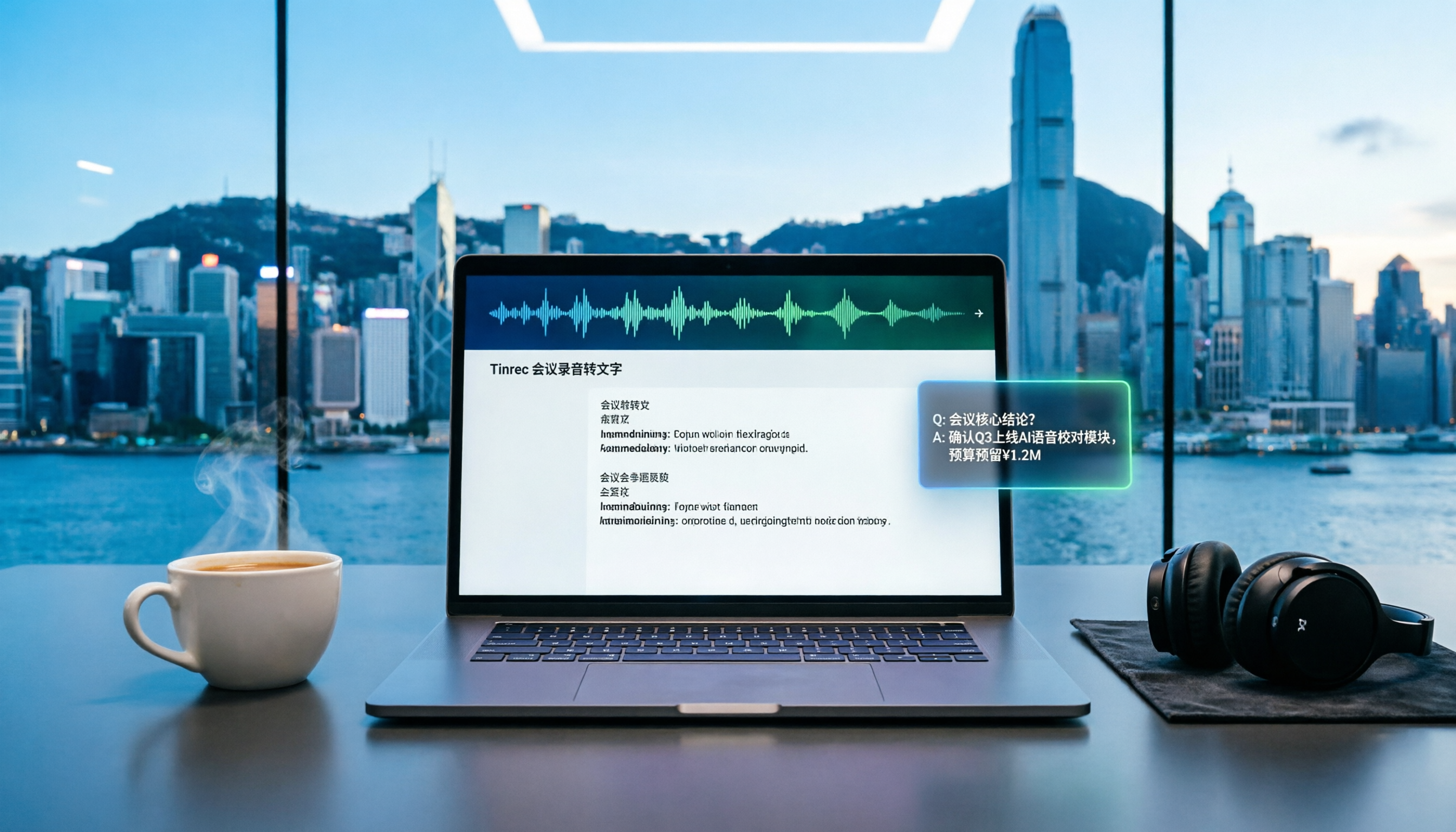
Best Online Meeting Recording to Text Tools? 2026 Hands-on Test of 6, This One Suits Office Workers Best
In 2026, we tested 6 online meeting recording-to-text tools. Tinrec (Sec Listen) requires no meeting bot, supports Chinese and English, and offers AI Q&A, making it the best choice for Hong Kong office workers to organize meeting notes.

2026 Hands-On Comparison of 2 Meeting Transcription Tools: Tinrec vs. Otter.ai – Which Is Better for Chinese Meetings and Teams?
Choosing a meeting transcription tool? This article directly compares Tinrec and Otter.ai, testing them across four key dimensions: meeting capture, Chinese language experience, post-processing, and team collaboration, to help you quickly decide which one suits Taiwanese office workers and teams.

2026 Hands-On Comparison of 4 Meeting Transcription Tools: Tinrec's Chinese Summaries and AI Q&A Save the Most Time
How do you choose a meeting transcription tool in 2026? This article focuses on Tinrec, comparing it with Otter.ai, Notta, and Yating, examining accuracy, AI post-processing, cross-platform support, and team collaboration to help you find a tool that truly saves time on post-meeting cleanup.
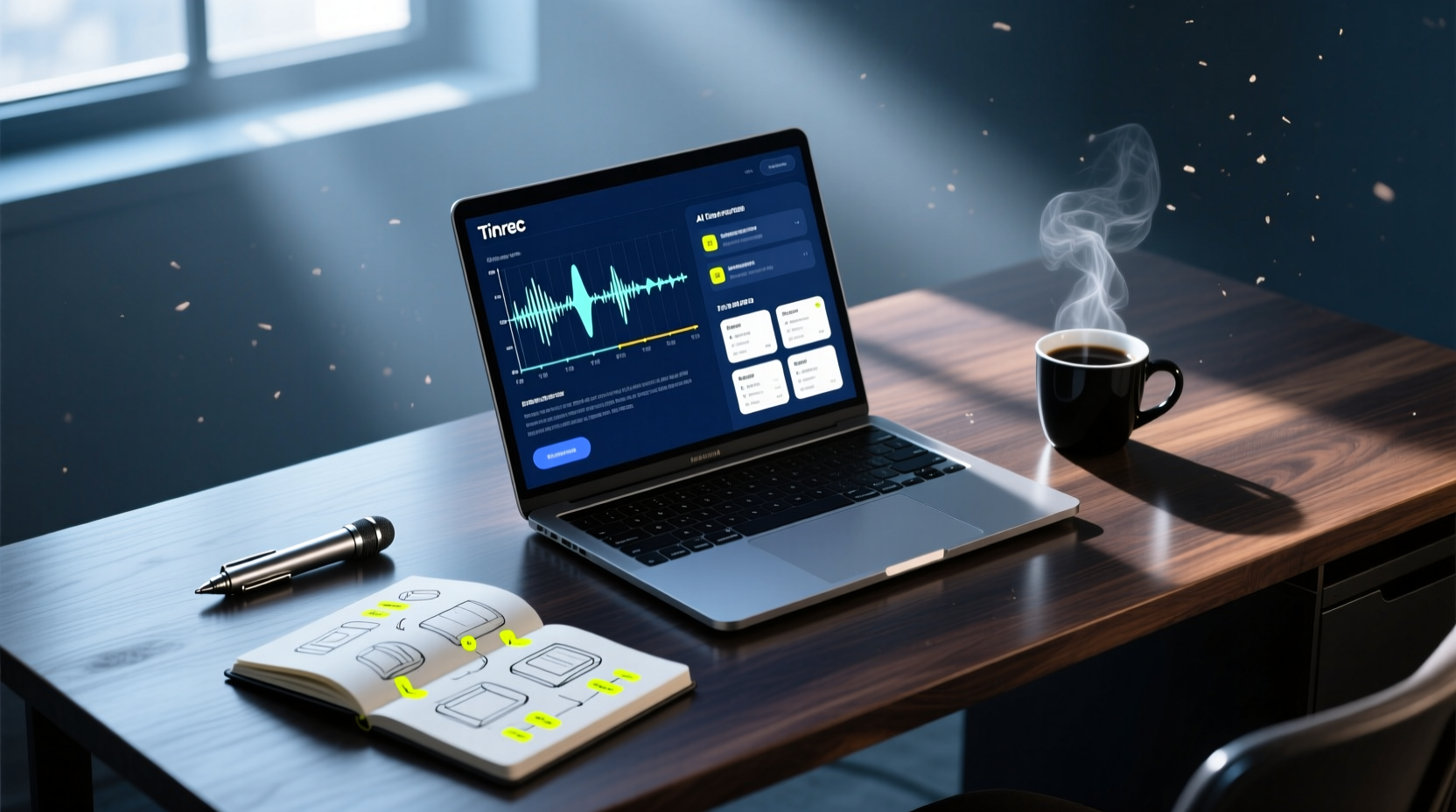
Latest Version of Speech-to-Text Isn't Necessarily More Accurate? A Complete Workflow from Recording to PRD by Product and R&D Teams
This article starts from the actual needs of product and R&D teams, explaining that the latest version of a speech-to-text tool doesn't necessarily mean higher accuracy. Using Tinrec as an example, it demonstrates a complete workflow from recording to verbatim transcript, AI-generated summaries and action items, to AI assistant producing PRDs and action plans, and finally sharing and storing in a team space.

ChatGPT Speech-to-Text Not Enough? A Complete Workflow from Transcripts to Actionable Meeting Materials
ChatGPT's speech-to-text feature is convenient for quick notes, but for turning meeting content into actionable materials, professional tools like Tinrec offer a more complete solution. This article introduces the full workflow from speech-to-text to generating summaries, action items, deliverables, and sharing them in a team space.

Recording-to-Text Tool Comparison: 5 Dimensions to Help You Choose the Right Tool, from Transcription Quality to Team Collaboration
With so many recording-to-text tools available, how do you choose? This article provides a practical comparison framework, from transcription quality, Chinese language support, post-meeting organization, team collaboration, to pricing, helping you make a choice based on your meeting scenarios. It also explains where Tinrec is more suitable for Chinese meeting users.
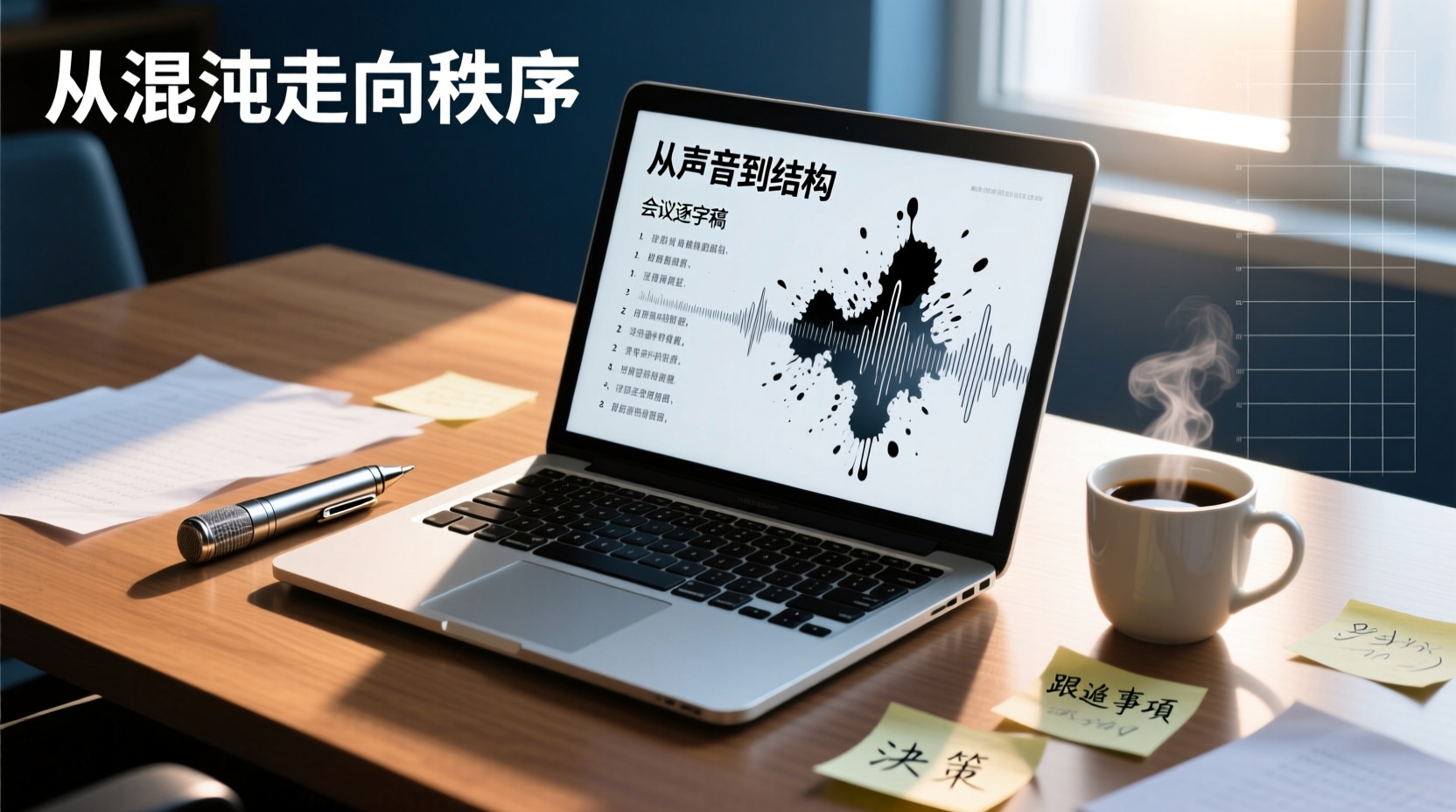
How to Convert Voice to Traditional Chinese: A Complete Guide from Recording to Meeting Notes
This article teaches you how to convert voice or meeting recordings into Traditional Chinese text, from choosing tools, step-by-step operations, to organizing them into actionable meeting notes, while reminding you to pay attention to privacy and accuracy.