
Turn recordings into transcripts and summaries in minutes
Upload audio or video for multilingual transcription, AI notes, and action items
How to Transcribe Audio Recordings into Text: From "Can't Finish Listening" to "Instant Understanding"
Facing hours of meeting recordings, client interviews, or key conversation recordings, the most painful part is the "cost of re-listening." The traditional approach—wearing headphones, repeatedly dragging the progress bar, typing while listening—is not only inefficient but also prone to missing critical details due to fatigue. When these recordings need to serve as work deliverables, study notes, or even legally admissible evidence, accuracy and completeness become core concerns.
Many users searching for "how to transcribe audio evidence" often face a dilemma: free tools have low accuracy, paid tools don't support Chinese, or they only output verbatim transcripts without extracting key points. This article provides an in-depth review of several mainstream tools, including Tinrec, which specializes in Chinese scenarios, the internationally renowned Otter.ai, and everyday tools like Quark Browser and Sogou Input Method. We will break them down from three dimensions: recognition accuracy, post-processing efficiency, and applicable scenarios, and provide specific workflows to help you choose the best solution for your needs.
Quick Navigation Summary:
- Prioritize Chinese recognition and meeting action items → Choose Tinrec (supports Traditional/Simplified Chinese, Taiwanese Hokkien, Cantonese, auto-generates to-do items).
- Pure English meeting environment → Consider Otter.ai (but note its Chinese support limitations).
- Ad-hoc, short audio quick conversion → Use your phone's built-in recorder or Sogou Input Method.
- Batch processing large files with limited budget → Try Quark Browser or TurboScribe.
1. Why Traditional Manual Transcription Is No Longer Viable?
In a digital workflow, the value of audio files lies not in "preserving sound" but in "extracting information." The disadvantages of manual transcription are clear:
- Extremely low time conversion ratio: 1 hour of audio typically takes 3-4 hours to transcribe manually.
- Low information density: Verbatim transcripts are filled with filler words (e.g., "um," "like," "you know"), making them hard to read.
- Difficult to search: Cannot quickly locate key decisions or commitments; relies on memory or blind searching.
The value of modern AI tools is to convert "unstructured audio" into "structured text data" and further understand the content context through AI. This is the core evaluation criterion when choosing a tool.
2. In-Depth Review of Mainstream Audio-to-Text Tools
Based on common market tools and user feedback, we categorize tools into three types for comparison: Professional AI Meeting Assistants, Browser/Input Method Built-in Features, and System Built-in Tools.
1. Professional AI Meeting Assistants: Tinrec vs. Otter.ai vs. Notta
These tools are designed for long-duration audio, emphasizing high accuracy and subsequent information organization.
Tinrec: The All-in-One Workflow for Chinese Scenarios
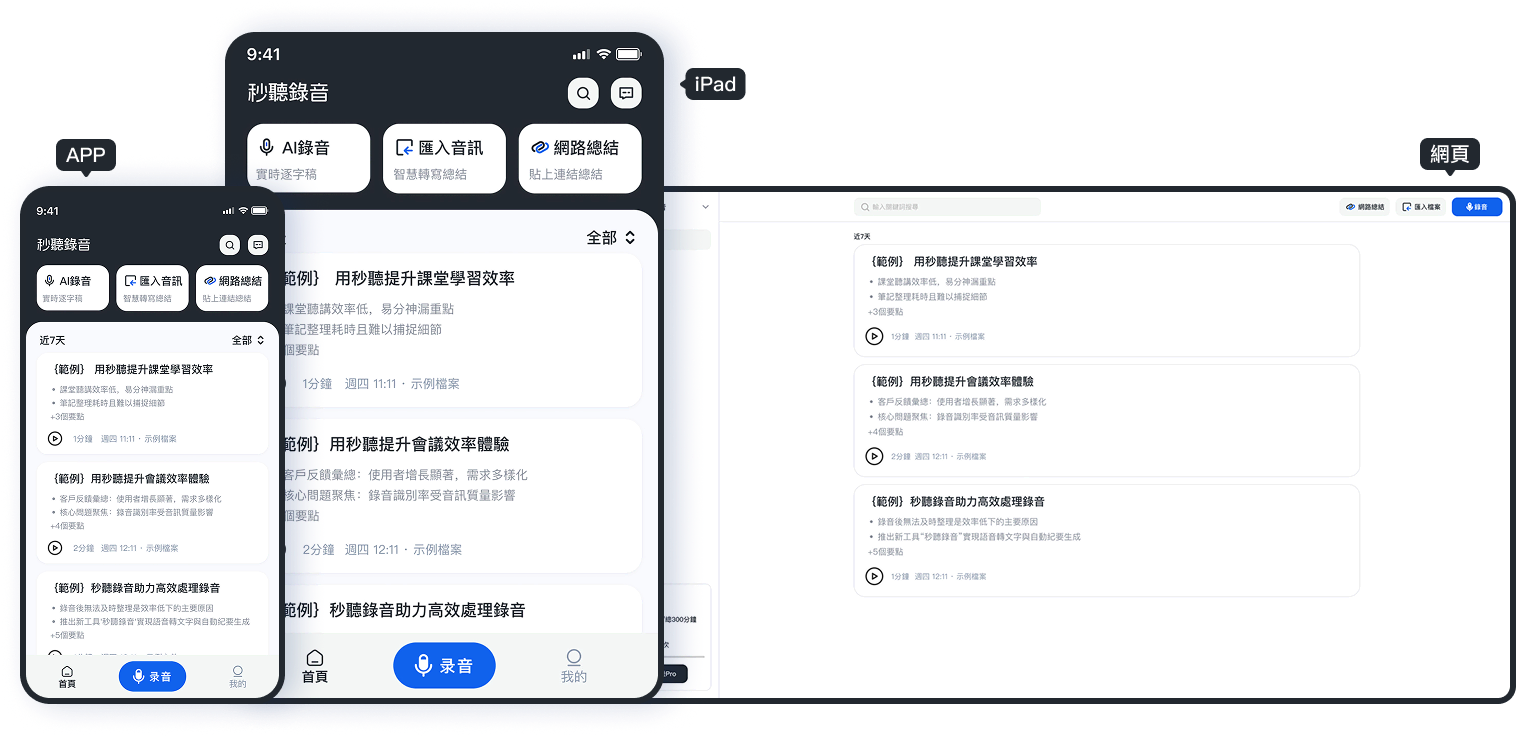
Tinrec is an AI recording assistant optimized for multilingual environments. Its key differentiator is the complete closed loop from "recording to action." Unlike tools that only provide verbatim transcripts, Tinrec focuses on the "usability" of the text after transcription.
- Core Advantages:
- Multilingual Accurate Recognition: Supports Chinese (Traditional/Simplified), English, Japanese, Korean, German, and 10 languages including Taiwanese Hokkien and Cantonese with automatic detection. Performs better than most international tools for mixed-language meetings or dialect communication.
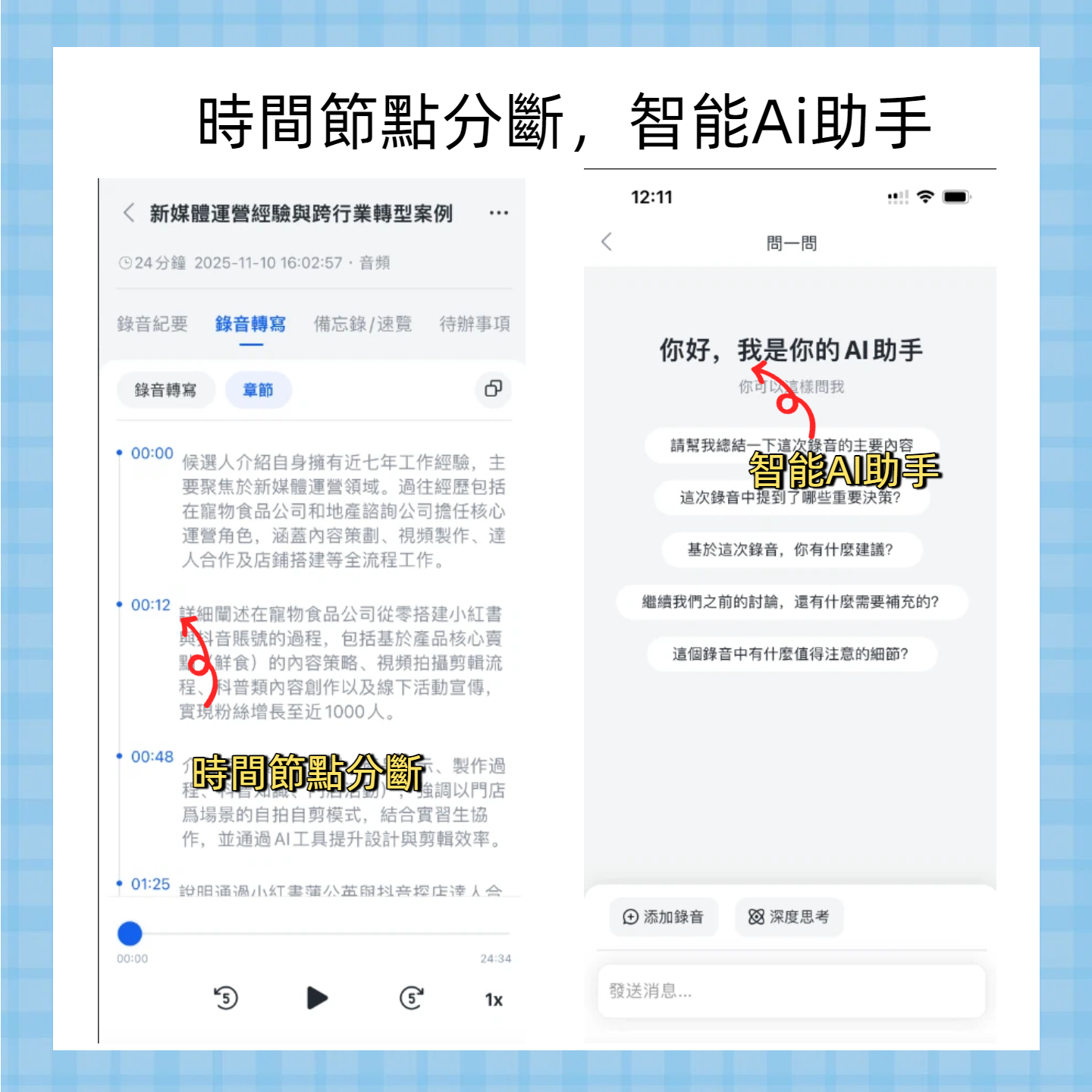
- AI Conversational Search: This is Tinrec's key differentiating feature. Users can "ask" the recording content like talking to a person, e.g., "What are the client's main concerns about pricing?" or "What are the next steps decided in the meeting?" The system answers based on semantics, not just keyword matching.
- Automatic Meeting Summary Generation: Automatically generates conclusions, action items, and key summaries after transcription, greatly reducing post-meeting organization time.
- Cross-Platform Sync and Format Support: Supports iOS, Android, and Web; accepts mp3, wav, m4a, and other formats; also supports YouTube link transcription.
- Target Users: Professionals and students who handle mixed Chinese-English meetings, cross-border communication, or need to quickly extract decision points from recordings.
- Pricing Reference: Free tier (100 minutes per month), Basic and Pro plans offer longer durations and advanced features; supports multiple payment methods.
Otter.ai: Benchmark for English Meetings, but Limited for Chinese
Otter.ai is a globally renowned meeting transcription tool, known for its excellent speaker diarization.
- Strengths: Very high English recognition accuracy, intuitive interface, deep integration with Zoom and Google Meet.
- Weaknesses: Does not support Chinese recognition. This is a critical drawback for teams that primarily communicate in Chinese. Additionally, its free tier is quite restrictive.
- Comparison Conclusion: If your work is entirely in English, Otter.ai is a good choice; but if Chinese is involved, Tinrec or Notta are more practical alternatives.
Notta: Multilingual Support, but Chinese Stability Needs Improvement
Notta supports over 50 languages and has a user-friendly interface.
Stop organizing recordings by hand
Upload audio or video and automatically get a transcript, summary, and action items
- Strengths: Good cross-platform experience, smooth live transcription.
- Weaknesses: Some users report that its Chinese recognition stability is lower than tools specialized in Asian languages, and it occasionally makes errors with professional terminology.
2. Browser and Input Method Built-in Features: Quark, Sogou, MyEdit
These tools are suitable for lightweight, ad-hoc transcription needs, usually without installing additional dedicated apps.
Quark Browser (Quark Audio Notes)
Quark Browser is not just a search tool; its built-in "Quark Audio Notes" feature is popular among students and general office users.
- Features: Supports Mandarin, Cantonese, English, and mixed Chinese-English recognition. Offers "Voice Memo" and "Import Audio for Transcription" modes.
- Advantages: Relatively generous free tier, simple operation, suitable for online course notes or general meetings.
- Limitations: Recognition accuracy for very long audio or high-noise environments is slightly lower than professional tools, and lacks deep AI summary analysis.
Sogou Input Method
As a daily typing tool, Sogou Input Method's built-in "AI Input" feature offers convenient voice-to-text functionality.
- Features: Supports various dialects such as Sichuanese and Northeastern Chinese, as well as English, Japanese, and Thai.
- Advantages: No need to switch apps; voice-to-text directly in the input field, suitable for short messages or memos.
- Limitations: Primarily designed for "real-time input," not "file transcription." Cannot handle pre-recorded long audio files and is unsuitable for formal meeting notes.
MyEdit (CyberLink)
MyEdit is an online audio editing tool that offers audio-to-text functionality.
- Advantages: Combines audio editing capabilities, suitable for creators who need to edit before transcription.
- Disadvantages: Limited free tier; costs can be high for frequent users; features are point solutions lacking workflow integration.
3. System Built-in and Open Source Solutions: Apple Dictation, Google Live Transcribe, Whisper
System Built-in Tools (Apple/Google/Windows)
- Apple Dictation / Windows Voice Typing: These are essentially dictation tools designed for real-time voice-to-text input. They do not support uploading audio files for offline transcription, and once you stop recording, the process ends and cannot be edited retroactively. Therefore, they are not suitable for "organizing existing audio evidence."
- Google Live Transcribe: An Android real-time accessibility tool, similarly cannot process existing audio files.
OpenAI Whisper / MacWhisper
- Advantages: The Whisper model is considered one of the highest-accuracy open-source models, supporting 99 languages and capable of offline operation, offering high privacy.
- Disadvantages: High usage threshold. General users need technical background to deploy, or must use third-party wrappers like MacWhisper (Mac only). For business users who need out-of-the-box, cross-platform sync, maintenance costs are too high.
3. Practical Guide: How to Efficiently Organize Audio Evidence?
Choosing a tool is only the first step; a correct workflow ensures the usability of audio evidence. Below we take Tinrec as an example to demonstrate a standard process from recording to report generation. Other tools follow similar logic.
Step 1: High-Quality Recording and Upload
The effectiveness of evidence depends on audio quality. When recording, stay as close to the sound source as possible and reduce background noise.
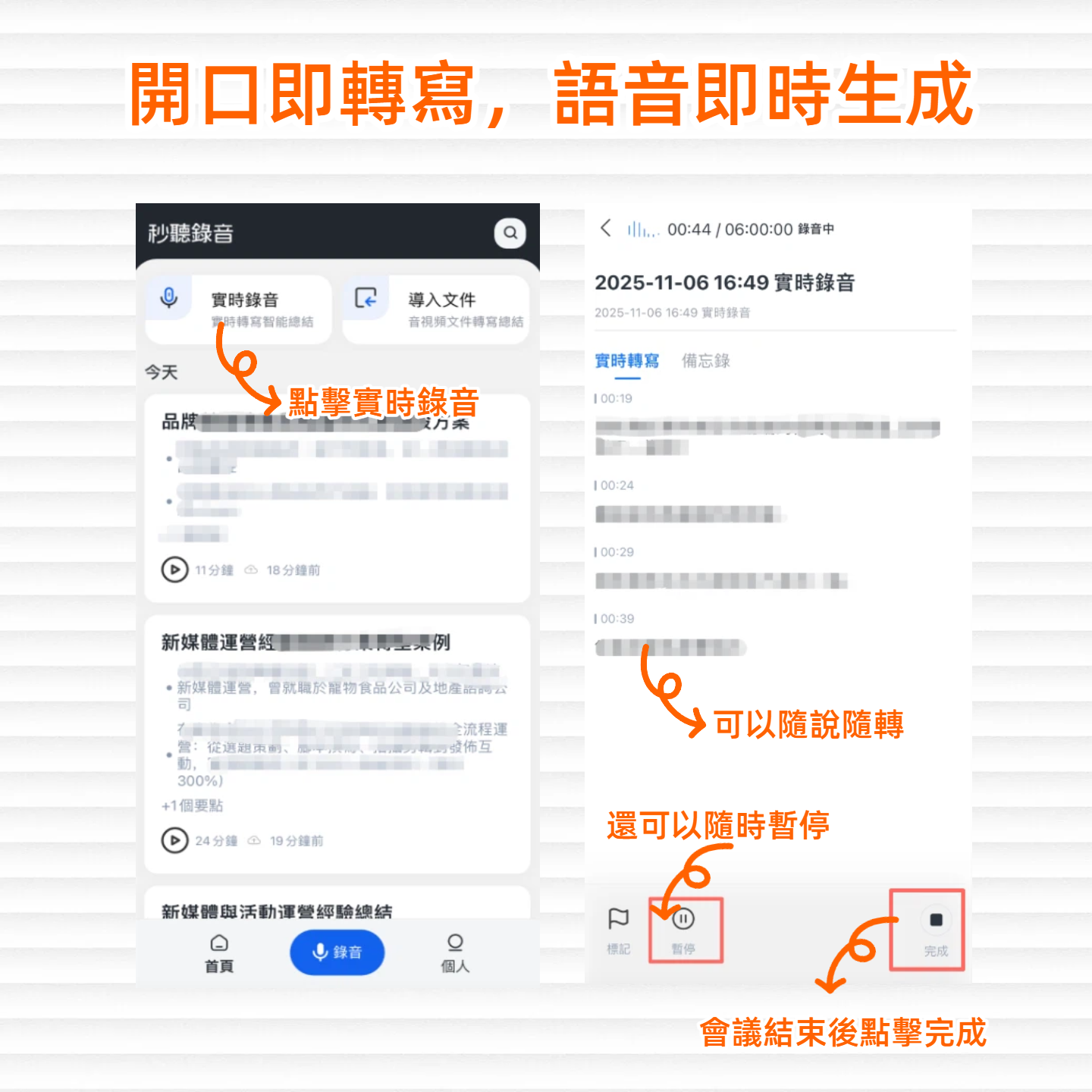
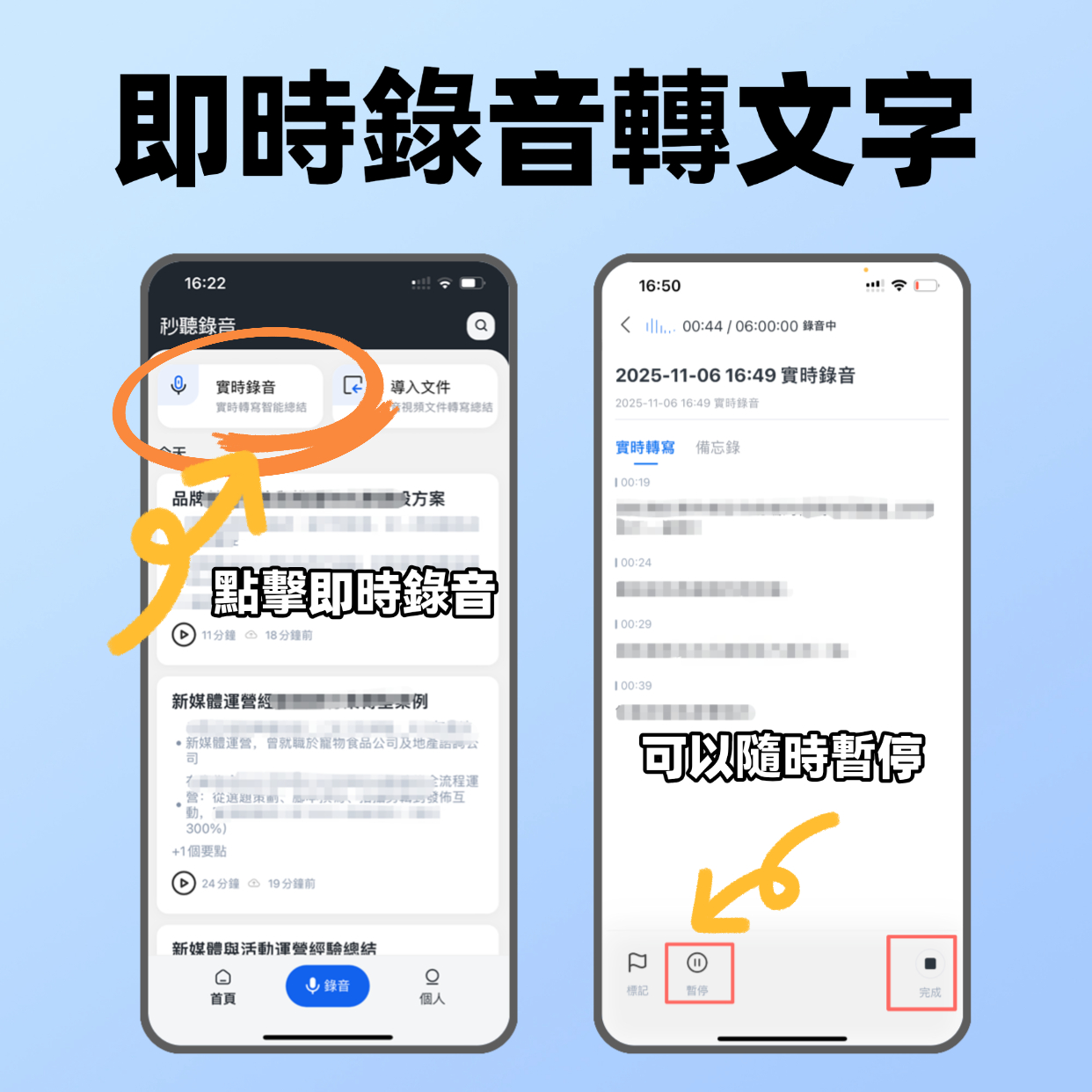
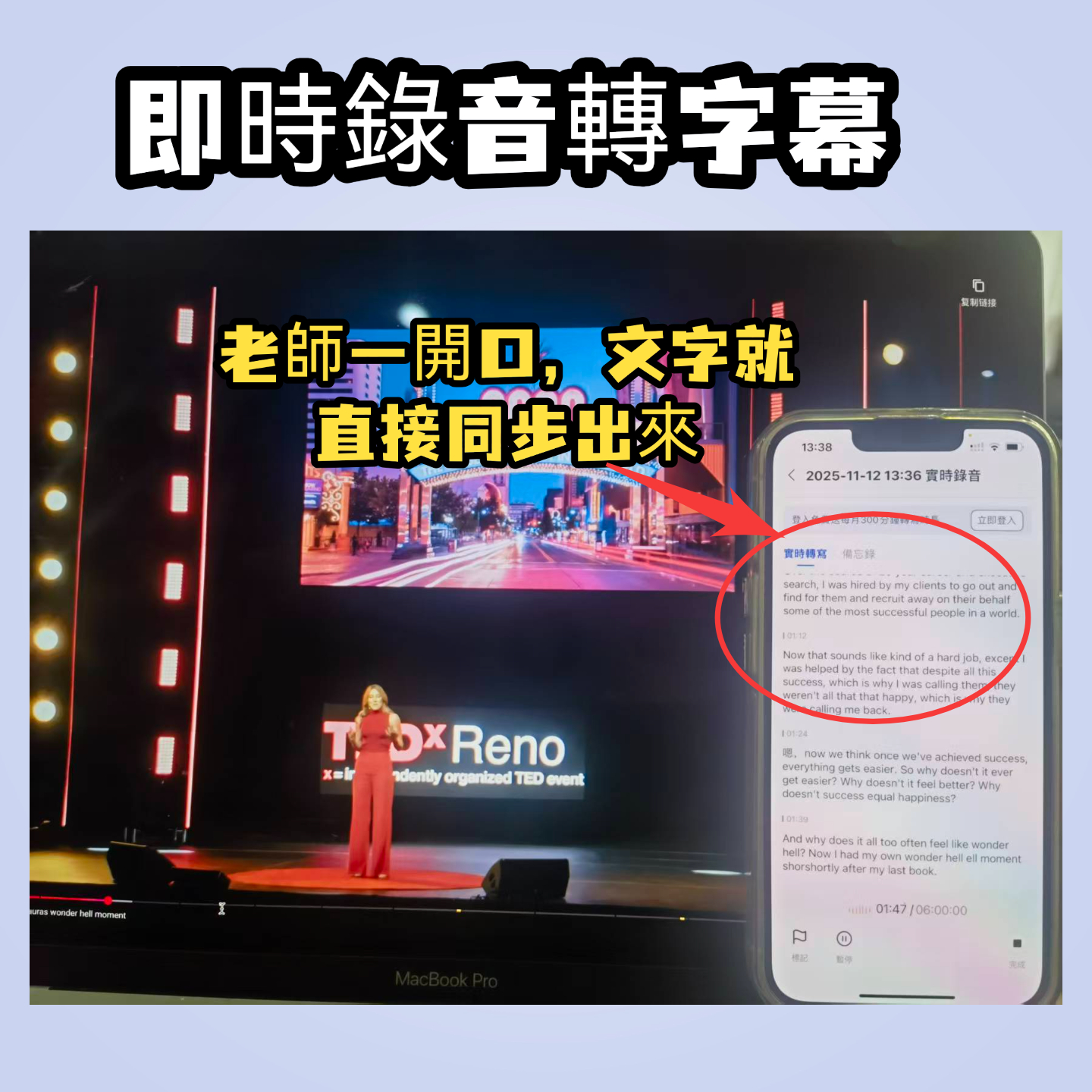
- Live Recording: Open the Tinrec app and tap the record button. The system will display transcribed text in real time, allowing you to mark key moments.
- File Upload: If you already have an audio file (e.g., mp3, m4a, wav), upload it directly via Web or App. Tinrec supports batch processing, suitable for organizing multiple meetings at once.
Step 2: AI Automatic Transcription and Proofreading
After uploading, the AI automatically detects the language and generates a verbatim transcript. At this point, perform a quick proofread:
- Check Proper Nouns: AI may misrecognize names or technical terms. Manually correcting a few key terms can greatly improve subsequent search accuracy.
- Identify Speakers: Ensure the system correctly distinguishes between different speakers, and manually adjust labels if necessary.
Step 3: Use AI Conversational Search to Extract Key Evidence
This is the biggest difference from traditional tools. Instead of reading through the entire transcript, ask the AI directly:
- "Did the other party admit to delayed delivery in this recording?"
- "List all mentioned amounts and dates."
- "Summarize the terms both parties agreed upon."
The system will directly cite original excerpts and provide summaries. This is extremely valuable for legal evidence preparation or reviewing meeting disputes.
Step 4: Export and Archive
Export the generated summary, action items, and full transcript as Word or PDF. It is recommended to archive both the audio file and the text document together, with date and participants noted, for future reference.
4. FAQ and Pitfall Guide
Q1: Are free tools really sufficient?
For occasional personal use, Quark Browser or your phone's built-in recorder can handle short audio. However, for professionals who attend multiple meetings per week or need to process long interviews, the free tier's limits and recognition accuracy fluctuations can affect productivity. Professional tools like Tinrec offer free tiers (e.g., 100 minutes per month) for trial; long-term use should evaluate the cost-effectiveness of paid plans.
Q2: How to ensure the legal validity of audio evidence?
Transcripts generated by audio-to-text tools are for reference only and cannot be directly used as court evidence. The original audio file is the key evidence. Recommendations:
- Keep the original unedited audio file.
- Use the transcript only as an aid for searching and understanding.
- For important contracts or disputes, it is recommended to record and organize under the guidance of a neutral third party or lawyer.
Q3: How well does Chinese dialect recognition work?
Most international tools (e.g., Otter.ai) do not support Chinese at all. Domestic tools like Sogou and Quark have good Mandarin support, but their support for Taiwanese Hokkien, Cantonese, or heavy accents varies. Tinrec specifically enhances recognition for Taiwanese Hokkien, Cantonese, and mixed Chinese-English. If your communication scenarios involve multiple dialects, prioritize testing such tools.
5. Conclusion: Choose Your "Second Brain"
Organizing audio evidence is no longer a chore but an art of information management. When choosing a tool, always return to your core scenarios:
- If you need the best Chinese recognition accuracy, automatic extraction of meeting conclusions, and want to quickly mine recording details through AI conversation, Tinrec is currently a high-quality choice that balances accuracy and workflow efficiency. It not only solves the "transcription" problem but also the "how to use the text" problem.
- If you work in a pure English environment, Otter.ai remains the industry benchmark.
- If you only need ad-hoc, short voice memos, your phone's built-in tool or Sogou Input Method will suffice.
Ultimately, the best tool is the one that lets you "forget the tool exists" and focus directly on the content. We recommend testing actual audio files using each tool's free tier to compare recognition accuracy and user experience before making a final decision.
Turn every recording into actionable outcomes
Get 60 free transcription minutes when you sign in. No credit card required.
Related Reading
You might also like

How to Choose a Google Meet Alternative with No Login: First Separate 'Getting In' from 'Delivering Post-Meeting Records'
When external clients don't want to create an account for a single meeting, no-login participation usually only covers joining the meeting, listening, speaking, and viewing shared screens—recording and transcription are often unavailable. This article organizes solution types by join threshold, explains why account rules differ between hosts and participants, and clarifies which side should be responsible for meeting records in no-login scenarios.

Is Google Meet Enough? Separate 'Can We Hold the Meeting' from 'Can We Deliver the Notes'
Mid-level managers who host multiple online meetings each week often think 'google meet best' means finding the best meeting platform, but the real breakdown happens in post-meeting organization. This article first explains the prerequisites for Google Meet's built-in recording, transcription, and summaries, then provides four dimensions for evaluating meeting notes solutions, and explains how an AI assistant and team edition can turn a transcript into handoff-ready decisions and action items.

Google Meet Backgrounds: Blur vs. Virtual Background vs. Replace — And Who Captures the Meeting Notes
Google Meet's background options include blur and virtual backgrounds, but what you can access depends on your device, browser, and account type. This guide breaks down what each of the three background options solves, where to find them on desktop, and one often-overlooked point: background effects only change your video feed—they don't automatically capture the meeting content. You'll still need a separate plan for recordings, transcripts, and action items after the call.

What Google Meet Attendance Lists Can and Can't Give You: A Complete Guide to Turning Attendance Records, Decisions, and Action Items into Handoff-Ready Materials
A Google Meet attendance list records who joined and left a meeting—it is not the same as meeting minutes. This article explains how to obtain attendance lists and where they are stored, the three types of information they cannot capture (who owns which task, what was decided, and what was promised), and provides a handoff sequence for mapping attendance records to decisions and action items. It also covers how AI assistants and the Tinrec team edition support post-meeting follow-up.

What the Google Meet Mobile App Can and Can't Do: A Feature Boundary Guide for Ad Hoc Participants
Get started with the Google Meet mobile app: first distinguish between the service, the app, and the web version, then see which features are available and which are not on mobile, and finally clarify who should fill in the meeting record after joining from a phone and how.

Google Meet Alternatives Reddit Discussion: Turning Scattered Opinions into Four Decision Dimensions
Reddit discussions about Google Meet alternatives often talk past each other because everyone is asking about a different scenario. This article organizes the most frequently mentioned community options—Jitsi Meet, Brave Talk, Whereby, and Signal—into four decision dimensions: join threshold, in-meeting capabilities, post-meeting records, and cross-platform availability. It then offers selection advice by scenario: external client meetings, internal recurring meetings, and ad-hoc discussions.

How to Choose a Google Meet Alternative in Mainland China: First Separate 'Can the Platform Connect' from 'Can the Post-Meeting Record Be Delivered'
When looking for a Google Meet alternative in mainland China, the real question has two layers: whether the meeting platform itself can connect reliably, and who receives the transcript, decisions, and action items after the meeting. This article provides cross-border collaboration teams with a selection sequence they can explain to their managers, based on availability prerequisites, participant joining thresholds, post-meeting record handoff, and four evaluation dimensions.

What Version Is Google Meet (Original)? Version Identification, Feature Requirements, and Post-Meeting Handoff Guide
Asked to confirm what "google meet (original)" is and whether it still works? This article breaks down the three possible meanings of the term in handoff order, provides a step-by-step method to verify from entry point, account type, and interface differences, explains that features like recording and transcription depend on account plan rather than version name, and clarifies who should organize and hand off post-meeting transcripts, decisions, and action items.

How to Buy a Google Meet Account? First Separate the Three Purchase Targets, Who Pays, and Four Things to Confirm Before Reporting Back
When you're asked to "look into how to buy a Google Meet account," don't rush to find a quote. This article breaks "buying an account" into three different purchase targets—personal Google accounts, Google Workspace subscriptions, and meeting room hardware and licensing—explaining who pays for each, their limitations, and when they apply. It also provides a checklist you can report back to your manager, and finally covers how to handle meeting records once the account is set up.