
Turn recordings into transcripts and summaries in minutes
Upload audio or video for multilingual transcription, AI notes, and action items
"I just jotted down the last sentence, but I missed the next key point from my manager," "A 1-hour meeting recording took me 3 hours to transcribe manually," "Client interviews with dialect came out as gibberish." These scenarios are all too familiar for professionals, students, and content creators. The need for speech-to-text is everywhere, but traditional voice recorders only solve the "listening" problem, not the "recording" and "organizing" pain point.
With so many tools on the market, should you go with the veteran iFLYREC, the integrated Lark, or emerging AI tools? This article evaluates transcription accuracy, real-time capability, AI summarization, pricing, and collaboration to give you a rundown of 6 mainstream tools, along with a detailed comparison table and hands-on guide.
Quick Decision Guide:
- Team collaboration & free quota priority: Go with Lark Minutes (Lark) for strong ecosystem integration.
- Hardware pairing & high privacy: Consider iFLYREC, though pricier, it's a tech veteran.
- AI decision summaries & flexible queries: Try Tinrec (Seconds Recording), focused on a complete workflow from recording to action.
- Personal lightweight & free: Doubao or the Recording to Text Assistant mini-program for urgent needs.
1. Why You Need "AI Speech-to-Text" Instead of Traditional Recording
Traditional audio files are "information-dense" formats. To find a key point, you have to drag the progress bar repeatedly, with high replay costs. New-generation AI speech-to-text tools (ASR + LLM) solve three core issues:
- Visual Search: Convert audio to text, Ctrl+F to find key points.
- Semantic Understanding: Beyond transcripts, AI automatically identifies speakers, extracts summaries, and action items.
- Breaking Language Barriers: For cross-border meetings or foreign language classes, real-time translation greatly lowers comprehension barriers.
2. In-Depth Reviews of Mainstream Speech-to-Text Tools in 2026
Based on market popularity and features, here are 6 tools selected for analysis.
1. Lark Minutes (Lark): All-Rounder for Team Collaboration
Lark, ByteDance's office suite, has a highly acclaimed "Minutes" feature. Its biggest advantage is accuracy and collaboration.
- Core Strengths: Supports 19 languages, with high recognition for specialized terms like "chip architecture" and "financial compliance." The standout is collaboration: transcripts can be annotated and commented on by multiple people simultaneously, like Google Docs, and exported as task lists with one click.
- Pricing: Free tier offers 300 minutes per month, which is generous for small teams or individuals.
- Best For: Company meetings, cross-department collaboration, meeting minutes requiring multi-person editing.
2. Tinrec (Seconds Recording): Smart Assistant from Recording to Action
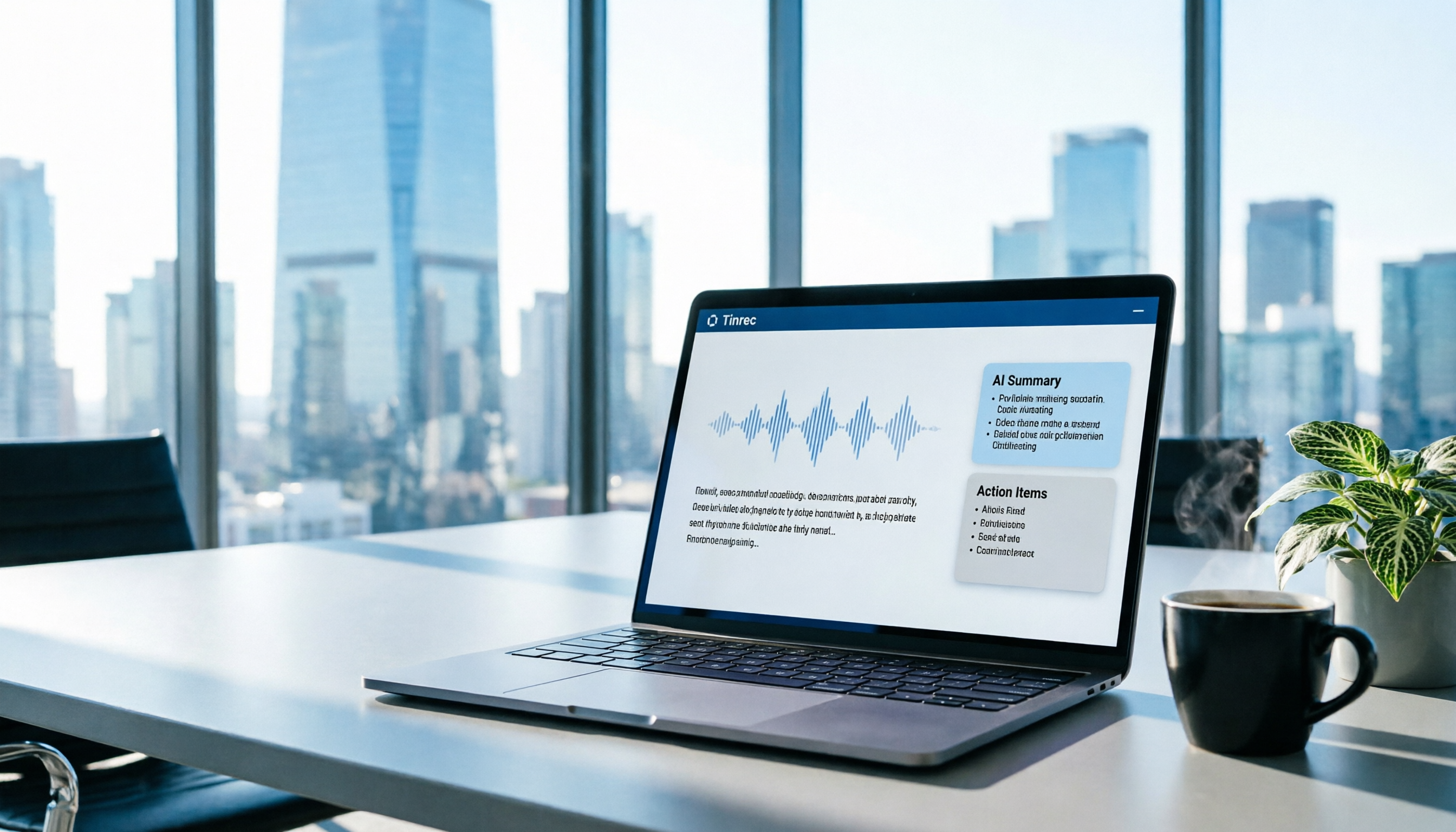
Tinrec positions itself as more than a transcription tool—it's a personal "AI meeting secretary." It emphasizes "information utilization" after recording, solving the problem of traditional tools giving only transcripts without conclusions.
- Core Strengths:
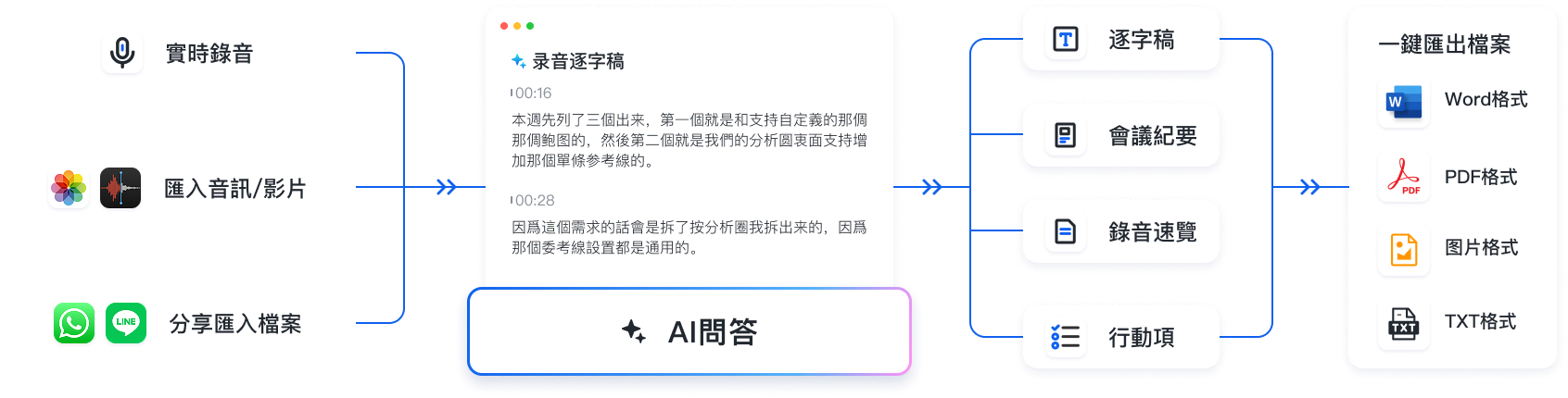
- Complete Workflow: Supports real-time transcription while recording, automatically generates meeting summaries and action items.
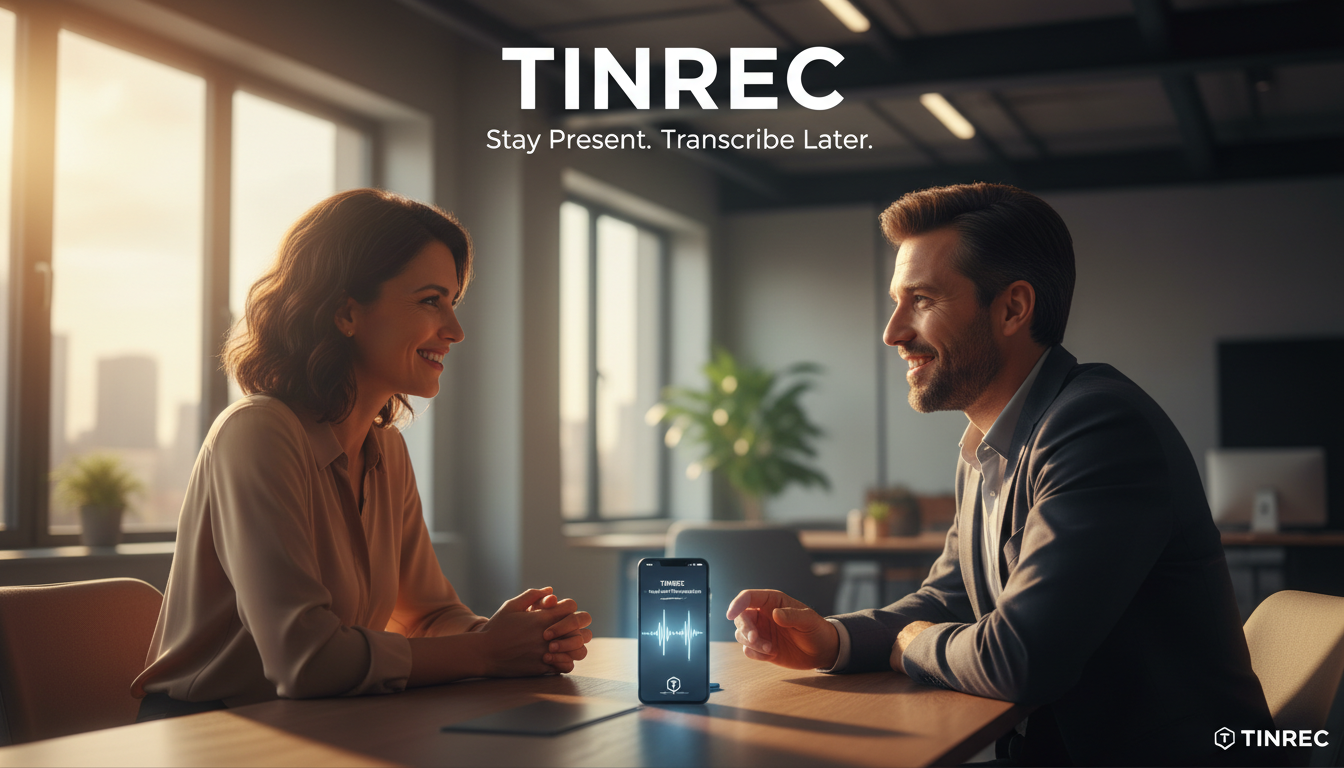
- AI Conversational Query: This is its key differentiator. For a 2-hour recording, you don't need to read it all; just ask AI: "What was the conclusion about the budget in this meeting?" It answers based on the recording.
- Multi-Platform: Covers iOS, Android, and web, plus supports YouTube link parsing.
- Best For: Project managers needing quick meeting conclusions, students organizing lecture notes, and content creators.
3. iFLYREC: Professional Veteran Tech
iFLYTEK is a veteran in Chinese speech recognition, performing reliably in hardware and specific scenarios.
- Core Strengths: Extremely high accuracy for Mandarin Chinese, dialect recognition (Cantonese, Sichuanese, etc.) outperforms most competitors. It also offers dedicated AI recorder hardware, ideal for scenarios requiring high data privacy and offline transcription.
- Weaknesses: High pricing. Enterprise plans are expensive (500 hours ~ nearly $40,000/year). Personal users get only 2 hours free, then need VIP. Collaboration features are weaker, more one-way output.
- Best For: Government agencies, lawyers, journalists who need high accuracy and hardware reliance.
4. NetEase SIGHT: Subtitle Tool for Video Creators
If you're a YouTuber or video creator, this tool might be your first choice.
Stop organizing recordings by hand
Upload audio or video and automatically get a transcript, summary, and action items
- Core Strengths: Focuses on "subtitle creation." After transcription, it automatically generates SRT subtitle files with timestamps, and supports online proofreading of subtitle-sync with video, saving the hassle of aligning in editing software.
- Pricing/Limitations: Offers 2 hours free daily. However, it doesn't support real-time transcription; only file upload, and transcription speed is slow.
- Best For: Subtitle creation for self-media, video translation.
5. Tencent Meeting / DingTalk Flash Note: Ecosystem-Bound Meeting Records
These are native features of meeting software. The biggest advantage is no app switching.
- Core Strengths: Record and transcribe during meetings; text appears in real-time in a sidebar. Tencent Meeting suits ad-hoc remote communication; DingTalk Flash Note fits enterprises deep in the DingTalk ecosystem, allowing notes to be pushed directly to groups.
- Weaknesses: Limited to meetings within that software; handling offline recordings or external audio files is more closed or requires extra payment.
6. Doubao: Personal Lightweight Free Choice
ByteDance's AI product, focused on free and ease of use.
- Core Strengths: Currently completely free, no ads. Supports real-time recording and file import, great for students or occasional transcription needs.
- Weaknesses: Basic features; lacks professional export formats (only plain text), no mind maps or complex collaboration; specialized term recognition weaker than Lark.
3. Comparison Table: 6 Tools Specs and Features
To help you decide quickly, here's a core dimension comparison:
| Dimension | Tinrec (Seconds Recording) | Lark Minutes (Lark) | iFLYREC | NetEase SIGHT | Tencent Meeting | Doubao |
|---|---|---|---|---|---|---|
| Core Positioning | AI recording notes & action assistant | Team collaboration & meeting library | Professional transcription & translation | Video subtitle creation | Online meeting records | Personal lightweight assistant |
| Real-Time Transcription | ✅ Supported (App/Web) | ✅ Supported | ✅ Supported | ❌ Not supported | ✅ (during meetings only) | ✅ Supported |
| AI Summary/Action Items | ✅ Strong (incl. AI chat query) | ✅ Strong (structured notes) | ✅ (requires payment/membership) | ❌ None | ✅ (basic summary) | ✅ (basic summary) |
| Language Support | 10 languages (CN/EN/JP/KR/TW/Cantonese, etc.) | 19 languages | CN/EN + multiple dialects | 8 languages | CN/EN | CN/EN/Mandarin variants |
| Import/Integration | Audio, video, YouTube links | Audio/video, meeting recordings | Audio/video | Audio/video (size limit) | Meeting recordings only | Audio |
| Price/Free Quota | 100 min/month free (upgradable) | Free 300 min/month | New users: 2 hours free, then paid | 2 hours daily free | Free limited time, advanced requires membership | Currently fully free |
4. Hands-On Tutorial: How to Turn Recordings into Actionable Files with AI Tools
Many users only use basic features after downloading. Here, using Tinrec as an example, we'll show a streamlined "recording → notes" workflow:
Step 1: Start Real-Time Recording (During Meeting/Class)
At the start of a meeting, open the app or web version. For iOS users, this solves the issue of iPhone call recording limitations (use speakerphone mode). Tinrec generates transcripts in real-time while recording, allowing you to mark key points anytime. 👉 Feature link: Real-time recording to text
Step 2: Import Existing Files (Organize Old Data)
If you have files from a voice recorder or MP3s from lectures, just upload them. The system automatically identifies speakers, turning chaotic conversations into dialogue-style text. 👉 Feature link: Audio file to text
Step 3: Parse Online Material (Learning/Competitor Analysis)
This is a hidden efficiency feature. When you need to organize YouTube tutorials or competitor interviews, paste the link and the tool directly extracts the audio track and converts it to text, saving download time. 👉 Feature link: Podcast/online video to text
Step 4: Use AI Chat to Query Key Points (Review & Decision-Making)
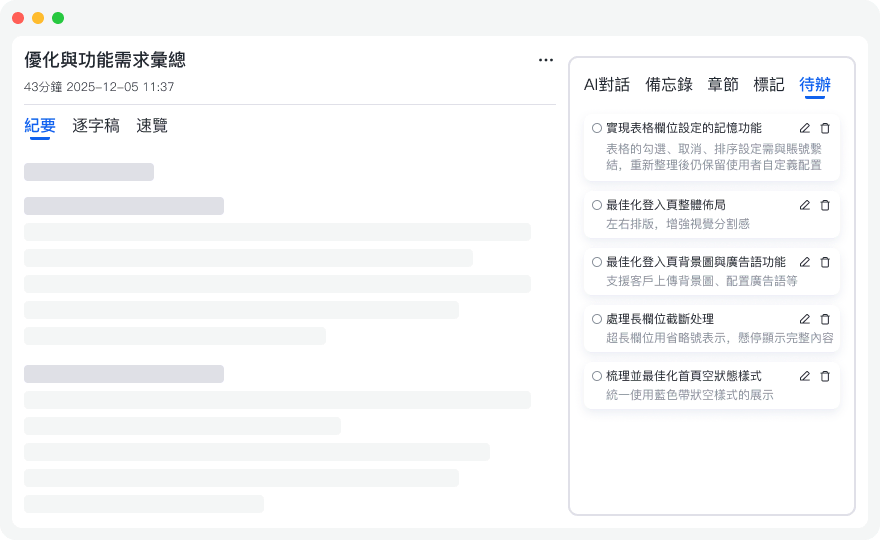
This is the biggest difference from traditional tools. After transcription, don't read from start to finish. Simply type in the right-side AI dialog: "List the three conclusions of this meeting" or "Organize the mentioned action items into a table." 👉 Feature link: AI chat query
5. Frequently Asked Questions (FAQ)
Q1: Are there limits when recording on iPhone? Due to iOS privacy restrictions, direct system call recording within apps is not supported. However, you can use Tinrec or Lark's app to record during "live meetings" or "speakerphone calls" with great results.
Q2: How accurate is dialect or mixed Chinese-English recognition? Lark Minutes and iFLYREC perform best on dialects and specialized terms (e.g., semiconductor jargon). Tinrec supports Taiwanese, Cantonese, and many other languages, and handles mixed Chinese-English in business meetings well. It's recommended to set the primary language in settings first.
Q3: Can the transcribed text be used directly, or does it need manual proofreading? Current AI technology (e.g., Whisper or proprietary models) generally achieves over 95% accuracy. However, personal names, place names, or extremely niche terms may still have errors. It's best to use "AI summaries" to capture key points; use the transcript as a reference. No need to proofread every word for maximum efficiency.
Q4: What happens when the free quota runs out? If you're a heavy user (over 2 hours daily), consider a paid plan. For example, Tinrec Basic at $4.9/month gives 600 minutes, which is extremely cost-effective compared to manual transcription services costing hundreds per hour. Lark's Pro plan is suitable for enterprise bulk purchases.
Q5: Is there a risk of data leakage? Tools from major companies (Lark, Tencent, iFLYTEK) have enterprise-grade security certifications. Emerging tools like Tinrec typically use encrypted transmission. For highly classified content, consider hardware recorders that support offline deployment (e.g., iFLYTEK S8 offline version).
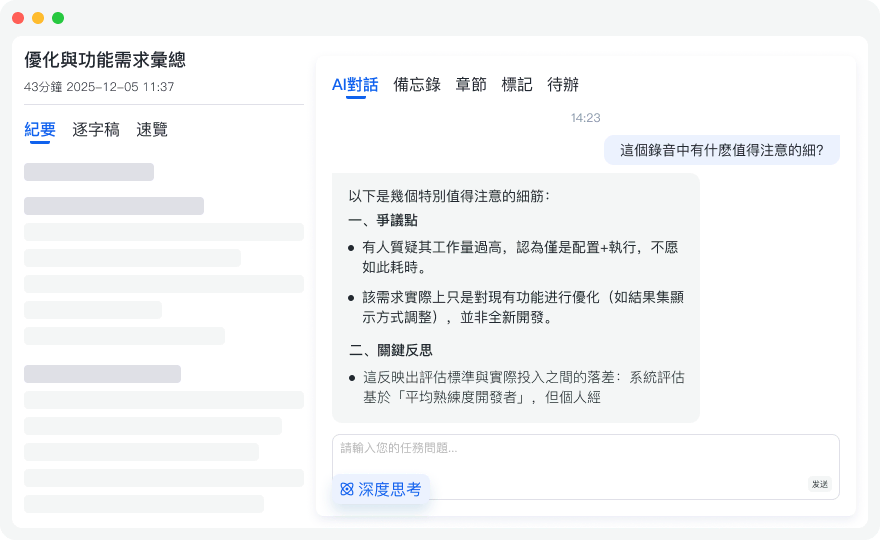
Q6: What export formats are available? Most tools support TXT and Word. If you need subtitles, choose NetEase SIGHT or a tool that supports SRT export. Tinrec supports exporting to PDF, Word, TXT, and more for easy editing.
Turn every recording into actionable outcomes
Get 60 free transcription minutes when you sign in. No credit card required.
Related Reading
You might also like

How to Transcribe Meeting Recordings in 2026: A 5-Step Hands-On Guide
Meeting transcription shouldn't stop at a verbatim transcript. Using Tinrec as an example, this article shares a 5-step method I tested: from recording, transcription, summarization, to-do items, to team knowledge sharing, turning meetings into searchable, trackable, and actionable data.

3 Meeting Transcription Tools Tested in 2026: Which Is Better for Bot-Free Recording and Chinese Summaries?
We tested Tinrec, Otter.ai, and Notta for meeting transcription, comparing bot-free recording, Chinese transcripts, AI summaries, and team collaboration to help you choose the best meeting notes solution.
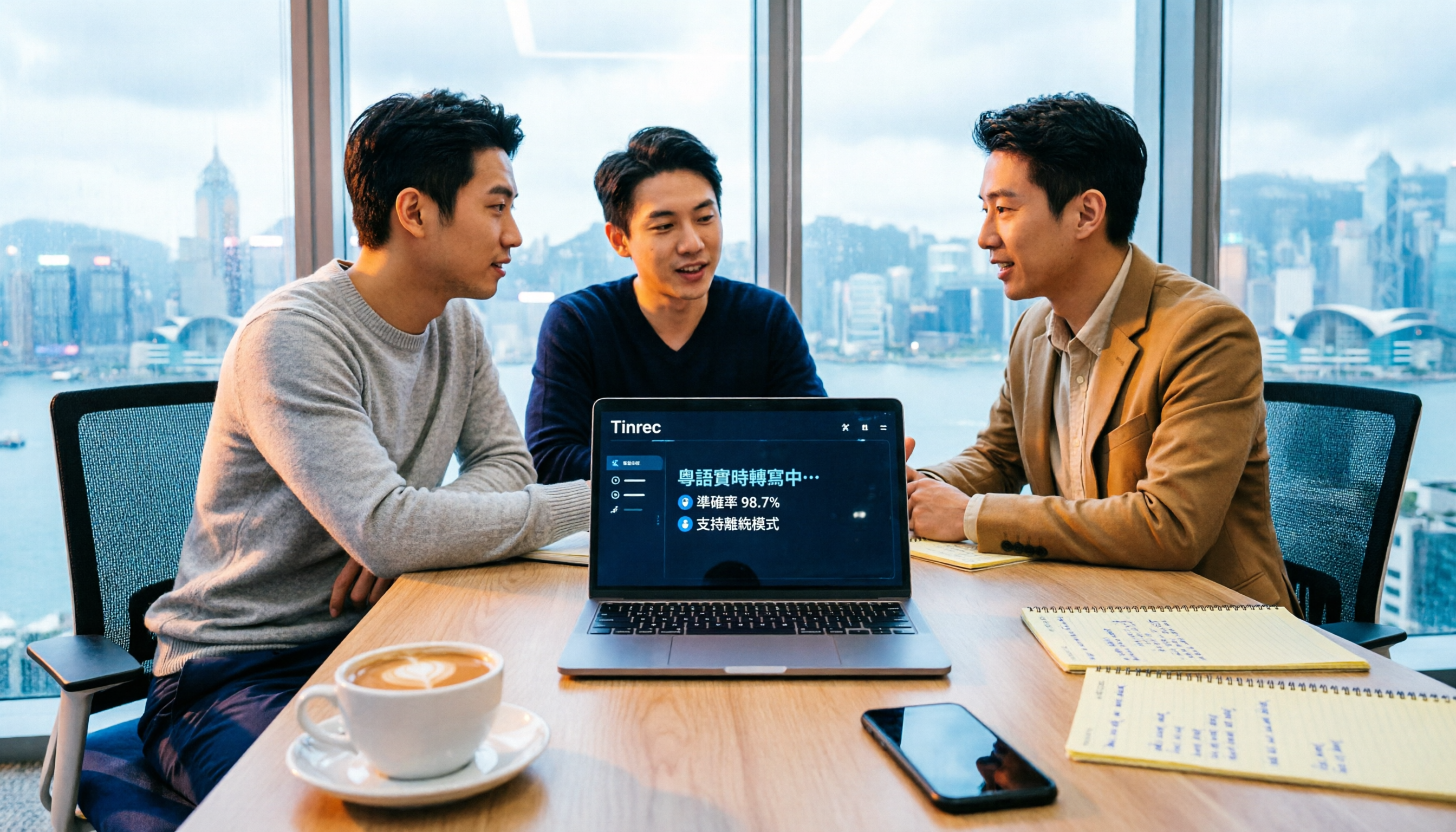
Best Meeting Recording Transcription Apps in 2026: Tinrec vs Otter Tested—This One Handles Cantonese Meetings Better
Tired of staying late to transcribe meeting recordings? This article compares Tinrec and Otter.ai in real Hong Kong workplace scenarios, covering Cantonese recognition, bot-free recording, post-meeting organization, and team management, to help you decide which app is worth installing.

How to Choose AI Meeting Transcription Tools in 2026: A 5-Step Guide to Avoid Pitfalls
Spending two hours in a meeting and another two transcribing it? We tested Tinrec, Otter.ai, Notta, PLAUD Note, and more to bring you a 5-step guide to picking the right AI meeting transcription tool—without getting burned.

5 Best Meeting Recording to Text Tools in 2026: Why Tinrec Is the Top Choice for Students
A senior student tests multiple meeting recording-to-text tools for lectures, group discussions, and interviews, explaining why Tinrec stands out for Chinese recognition, AI summarization, and team collaboration.

2026 Tested: 4 Meeting Transcription Tools Compared – Why Tinrec Is the Top Choice for Chinese Meetings
We tested 4 meeting transcription tools, comparing Chinese accuracy, bot-free recording, AI Q&A, and team collaboration to help you find the best meeting notes solution.

How to Convert Meeting Recordings to Transcripts in 2026: No Bot Recording + AI Summaries
A senior student shares how to use Tinrec to turn meeting recordings into transcripts: from recording sources, bot-free recording to AI summaries, to-dos, and export, saving you hours of manual transcription.

2026 Guide: Tinrec Meeting Transcription Without Bots + AI Auto-Organization
Tired of manual meeting transcription? Tinrec lets you record online meetings without bots, auto-generates transcripts, summaries, and action items, and supports team collaboration. See how to use it to save time.
2026 Tinrec Meeting Transcription: No-Bot Recording + AI Summaries & Action Items in One Go
Stop spending three hours relistening to meeting recordings. This article shows you how to use Tinrec's bot-free meeting transcription to generate verbatim transcripts, AI summaries, and action items, and compares different meeting transcription methods.