
Turn recordings into transcripts and summaries in minutes
Upload audio or video for multilingual transcription, AI notes, and action items
Still staying late to transcribe meeting recordings manually? Facing a one-hour interview or meeting audio, manual transcription is not only time-consuming but also easy to miss key details. Many users, when searching for a solution, first think of the globally renowned Otter.ai, but then quickly ask: "Can Otter.ai transcribe Chinese?"
In fact, while Otter.ai excels in English transcription, its support for Chinese is far from ideal. If your work involves a lot of Chinese meetings, class notes, or Traditional/Simplified Chinese content, blindly choosing an international brand may lead to "low transcription accuracy" or "inability to recognize."
This article will delve into Otter.ai's language limitations and, based on real use cases, comparatively review 10 mainstream voice-to-text tools including Tinrec, Notta, and GitMind. We will compare them from three dimensions: "Chinese recognition capability," "AI summary features," and "price threshold," and provide specific recommendations to help you choose the most suitable tool based on your needs (e.g., student notes, journalist interviews, corporate meetings).
Quick Navigation Summary:
- Priority for Chinese accuracy and real-time transcription: Consider Tinrec or Notta first.
- Need visual organization and mind maps: Choose GitMind.
- Content creators/YouTubers: Descript is the top choice for editing and subtitle generation.
- Limited budget/light use: Google Voice Typing or SpeechTexter for simple needs.
- Pursuing ultimate accuracy with sufficient budget: Rev's human proofreading service is unmatched.
Why Otter.ai Is Not the First Choice for Chinese Users?
Otter.ai has long been considered a benchmark for meeting transcription tools. Its strengths lie in powerful English speech recognition, real-time speaker identification, and deep integration with Zoom and Google Meet. However, for Chinese users, it has obvious shortcomings:
- Limited Chinese support: Otter.ai is primarily optimized for English environments. Although it has recently tried to expand to multiple languages, its recognition accuracy for Chinese (especially in cases with accents, professional jargon, or mixed languages) is significantly lower than for English, often producing incorrect sentence breaks or word confusion.
- Free tier limitations: The free version only offers 600 minutes of transcription per month, which can be tight for frequent users.
- Lack of localization optimization: Compared to tools designed for Asian markets, Otter's handling of Traditional Chinese punctuation and modal particles is rather awkward.
Therefore, if your core need is "high-accuracy Chinese transcription," it's wiser to look at other tools specialized in multilingual or Asian markets.
How to Choose a Suitable Voice-to-Text Tool?
Before introducing specific tools, we suggest confirming the following three evaluation dimensions, which can help you filter out 80% of unsuitable options:
- Language and accent support: Does it support Traditional/Simplified Chinese? How well does it recognize Taiwanese, Cantonese, or code-switching between Chinese and English?
- Workflow integration: Does it only provide a transcript, or can it automatically generate "meeting minutes" and "action items"? Does it support AI conversation queries, allowing you to ask questions about the recording as if talking to a person?
- Platform and price: Does it require cross-device sync (iOS/Android/Web)? Does the free tier meet your monthly needs?
Hands-on Review of 10 Voice-to-Text Tools
Below, based on different user groups and use cases, we present 10 tools worth considering.
1. Tinrec (Secs录): From Recording to Action - A Complete Workflow
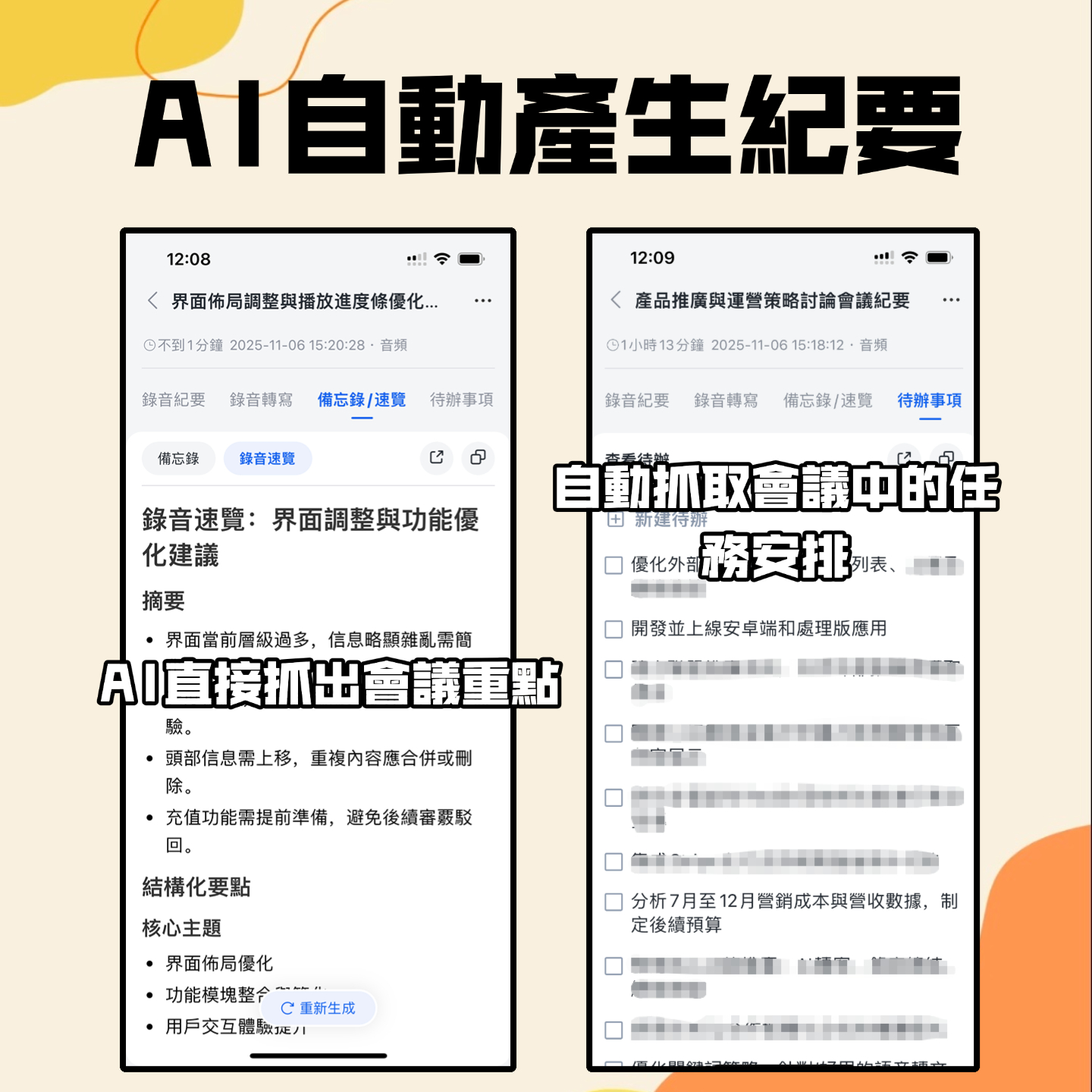
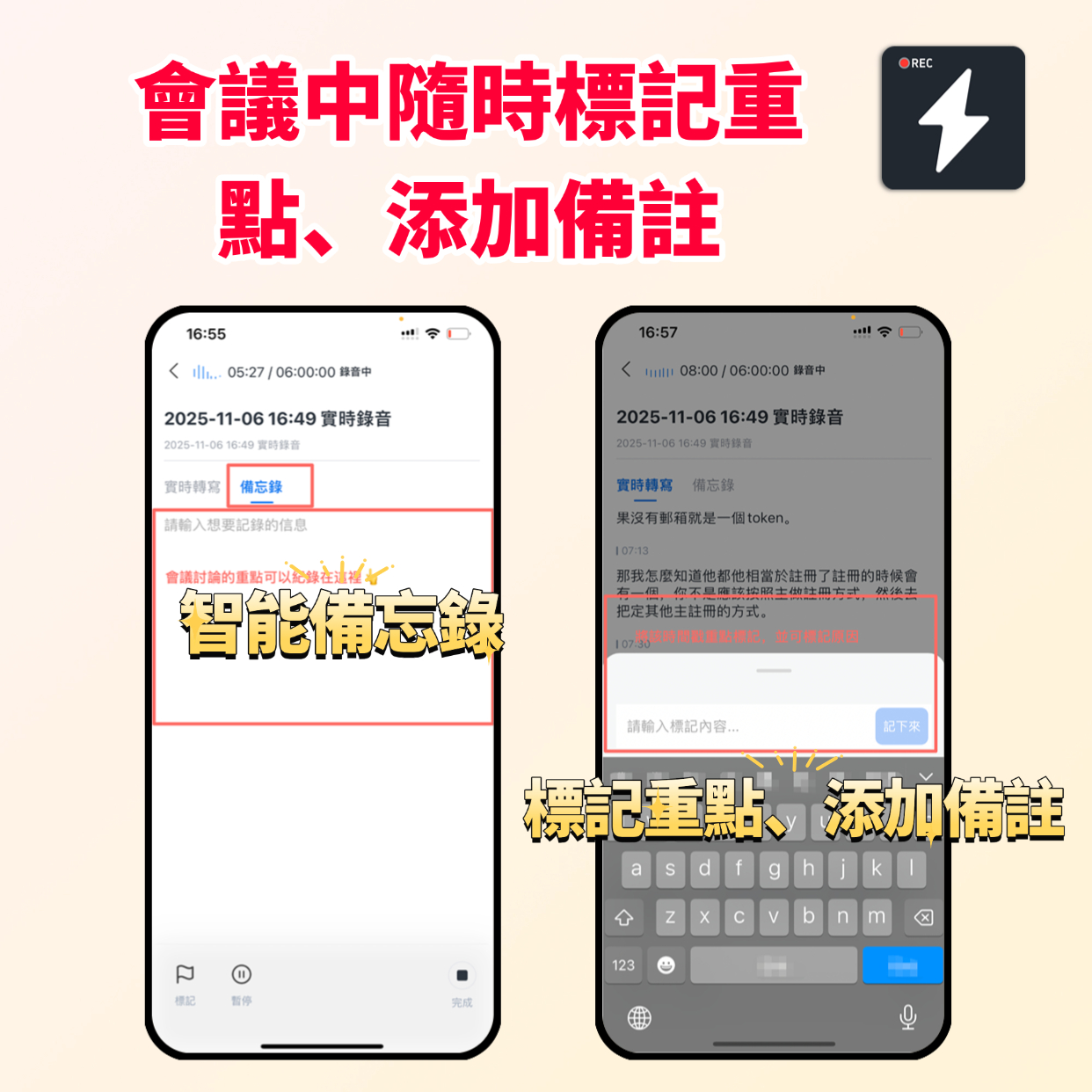
Tinrec is an AI recording assistant designed to improve information processing efficiency. Unlike traditional tools that only provide "transcripts," Tinrec emphasizes the "Record → Understand → Act" loop.
- Core advantages:
- High-precision Chinese recognition: Supports automatic recognition of 10 languages including Chinese, Japanese, English, Korean, German, Taiwanese, and Cantonese, specifically optimized for Asian language environments.
- AI conversation query: This is a significant differentiator. Traditional tools only allow Ctrl+F keyword search, while Tinrec lets users have intelligent conversations based on recording content. For example, you can ask: "What was the conclusion about the budget in the meeting just now?" The system will directly extract the relevant section and provide a summarized answer, rather than dumping unrelated keyword sentences.
- Automatic action item generation: After recording, AI automatically organizes meeting minutes, conclusions, and to-do items (Action Items), greatly reducing post-meeting sorting time.
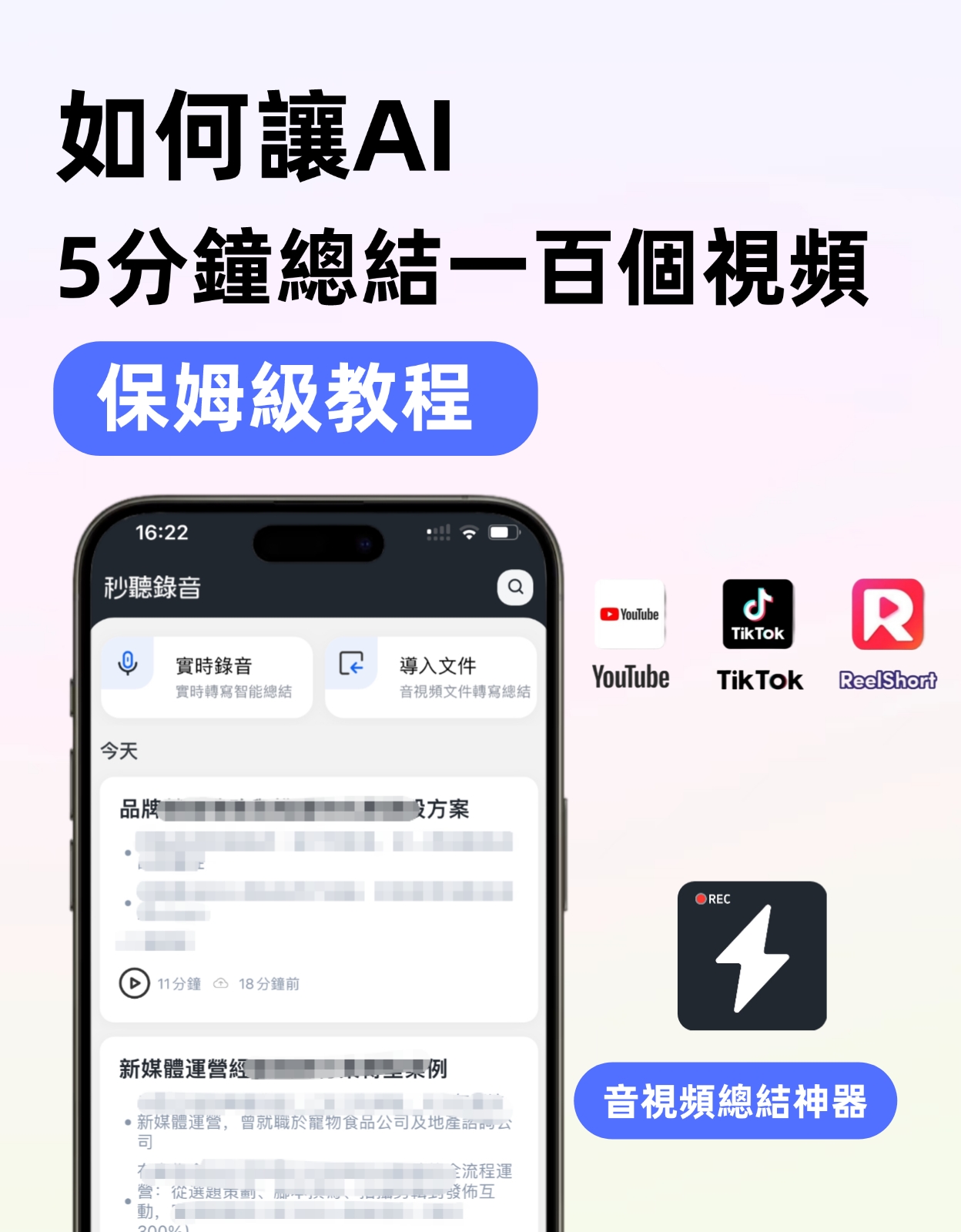
- Multiple input sources: Besides real-time recording, it supports uploading audio files, or even inputting YouTube or podcast links to convert to text and generate summaries.
Stop organizing recordings by hand
Upload audio or video and automatically get a transcript, summary, and action items
- Use cases: Remote meeting records, cross-language business negotiations, podcast content sorting, online course notes.
- Price: Free tier (100 minutes/month), Basic $4.9/month, Pro $8.25/month. High cost-effectiveness, suitable for frequent use by professionals and students.
2. Notta: Top Choice for Multilingual Beginners
Notta is a popular multilingual transcription tool known for its intuitive interface and multi-platform support.
- Pros: Supports 50+ languages including Chinese, English, Japanese. Offers real-time transcription and basic meeting summary features. App experience is smooth, ideal for beginners.
- Cons: Some users report that Chinese transcription accuracy in noisy environments is slightly lower than Tinrec or professional paid tools; free version has certain limitations.
- Use cases: Daily notes, international student class records, simple communication in cross-border teams.
3. GitMind: Visual Tool for Voice-to-Mind Maps
If you are a "visual thinker," GitMind offers unique value. It not only converts speech to text but also structures the content into mind maps.
- Pros: Automatically generates mind maps from audio-to-text, helping clarify logical relationships; supports team collaboration and cloud storage; offers multiple templates.
- Cons: Learning curve slightly higher than general note-taking tools; free version has many limits; advanced features require payment.
- Use cases: Project planning, brainstorming meetings, complex course note organization.
4. Descript: Editing Tool for Content Creators
Descript breaks traditional audio editing logic—it lets you edit audio like editing a document.
- Pros: Deleting text deletes the corresponding audio segment, greatly simplifying podcast and video editing; automatic subtitle generation with high accuracy; supports multi-user collaboration.
- Cons: Main strength is editing rather than pure transcription; higher price; too feature-heavy for plain note-taking users.
- Use cases: Podcast production, YouTube subtitle generation, content creators.
5. Otter.ai: Classic Choice for English Meetings
- Pros: Extremely high English recognition rate; deep integration with Zoom/Teams; powerful real-time speaker identification.
- Cons: Poor Chinese support; not recommended as primary Chinese transcription tool; free tier limited.
- Use cases: All-English meetings, foreign client interviews, English learners.
6. Trint: Professional Tool for News Media
- Pros: High accuracy, especially optimized for professional terminology; supports multi-user collaboration and advanced editing; suitable for high-quality interview audio.
- Cons: Expensive (starting at $48/month); mainly for enterprises or professional media organizations.
- Use cases: Journalist interview sorting, professional document processing, large team projects.
7. Sonix: Automated Translation and Multilingual Expert
- Pros: Supports automatic translation, ideal for scenarios needing Chinese transcription translated into other languages; robust cloud collaboration features.
- Cons: Billed per hour, cost increases with audio length; free trial has many restrictions.
- Use cases: Cross-border company meetings, multilingual academic research, professional document archiving.
8. Rev: Accuracy Ceiling with Human Proofreading
- Pros: Offers "AI + human" proofreading service with accuracy close to 100%; fast turnaround (about 12 hours).
- Cons: Extremely expensive (starting at $1.25 per minute); not real-time, requires waiting for human processing.
- Use cases: Legal litigation records, publication-grade transcripts, scenarios demanding ultimate accuracy.
9. Happy Scribe: Simple and Easy European Star
- Pros: Clean, intuitive interface; supports multiple export formats (SRT, TXT, PDF); suitable for small businesses or individual users.
- Cons: Accuracy drops in high background noise or strong accents; free version has time limits.
- Use cases: Daily notes, small team meetings, multilingual short audio transcription.
10. Google Voice Typing / SpeechTexter: Free Lightweight Solutions
- Pros: Completely free; no additional software required (Google built-in); supports many languages.
- Cons: Basic features, no editing, summary, or management capabilities; relies on internet connection; cannot handle long audio uploads.
- Use cases: Temporary idea capture, short dictated letters, zero-budget light users.
Frequently Asked Questions (FAQ)
Q1: How to improve voice-to-text accuracy? Regardless of the tool, audio quality is key. Use an external microphone or record in a quiet environment. If using a phone, get as close to the sound source as possible. Also, choosing a tool optimized for that language (e.g., Tinrec or Notta for Chinese, not Otter) can significantly improve results.
Q2: What is the biggest difference between free and paid tools? Free tools usually limit transcription duration, language variety, or lack AI-assisted features (like summaries, speaker identification). Paid tools offer higher accuracy, data security, team collaboration, and more efficient post-processing (like AI queries, action item extraction).
Q3: How to choose between Tinrec and Otter.ai? If your meetings or content are primarily in English and you deeply use Zoom/Google Meet, Otter.ai is a good choice. However, if your scenarios involve Chinese, Taiwanese, or Cantonese, or you need to quickly extract "action items" from recordings and retrieve content via AI conversation, Tinrec offers a more complete and localized experience.
Summary: Choose the Right Tool to Make Voice an Asset
The core value of voice-to-text tools is not "converting voice to text" but "reducing the cost of information acquisition." From Otter.ai's English strength to Notta's multilingual balance, to Tinrec's emphasis on "AI conversation queries" and "action item extraction," each tool has its specific niche.
For Chinese users, the first step to abandoning "manual transcription" is to choose a partner that truly understands your language and helps you organize key points. Start with a free trial, observe which tool best fits into your workflow, and achieve a real efficiency leap.
Turn every recording into actionable outcomes
Get 60 free transcription minutes when you sign in. No credit card required.
Related Reading
You might also like

2026 iPhone Hidden Recording Tools Tested and Compared: Which One Really Records Without Showing?
Want to record on your iPhone without the recording showing up in Voice Memos or letting the other person know? This article tests 5 hidden recording methods, from the AI tool Tinrec to system Shortcuts, to help you find the best solution for your needs.

2026 Real-World Test: 3 Live Transcription Tools Compared – AI Q&A Saves the Most Effort
Still manually sorting through meeting recordings or video subtitles? This hands-on test compares 3 real-time transcription tools—Tinrec, Otter.ai, and Notta—looking at accuracy, AI features, and pricing to help you find the best speech-to-text solution.
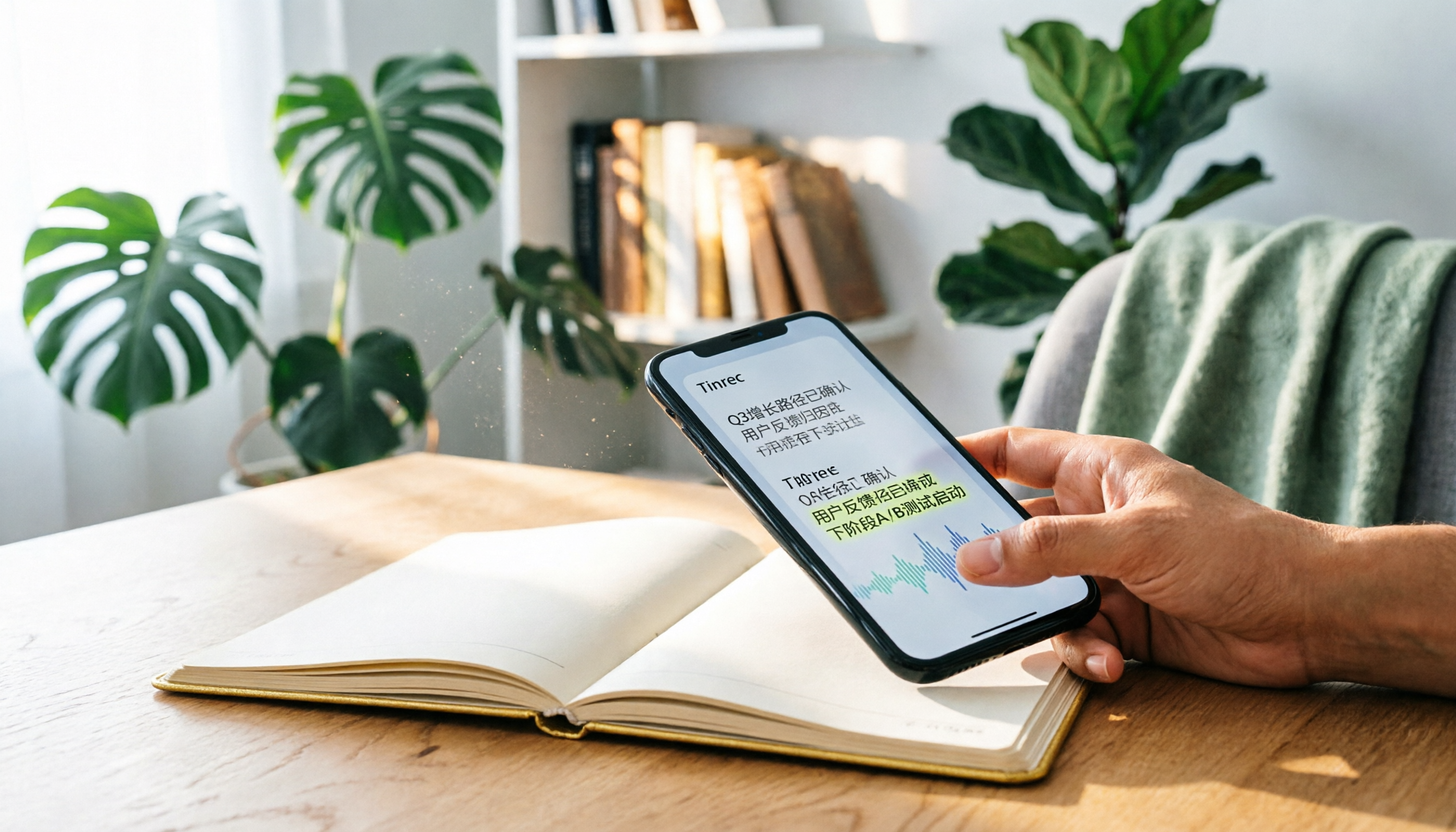
3 Best Voice-to-Text Apps in 2026: A Real-World Comparison Beyond iPhone's Live Voicemail
iPhone's Live Voicemail can only transcribe voice messages, leaving meetings, lectures, and interviews in need of dedicated tools. This article puts Tinrec, Notta, and Otter.ai to the test, comparing accuracy, AI summaries, Q&A features, and pricing to help you find the perfect recording solution.
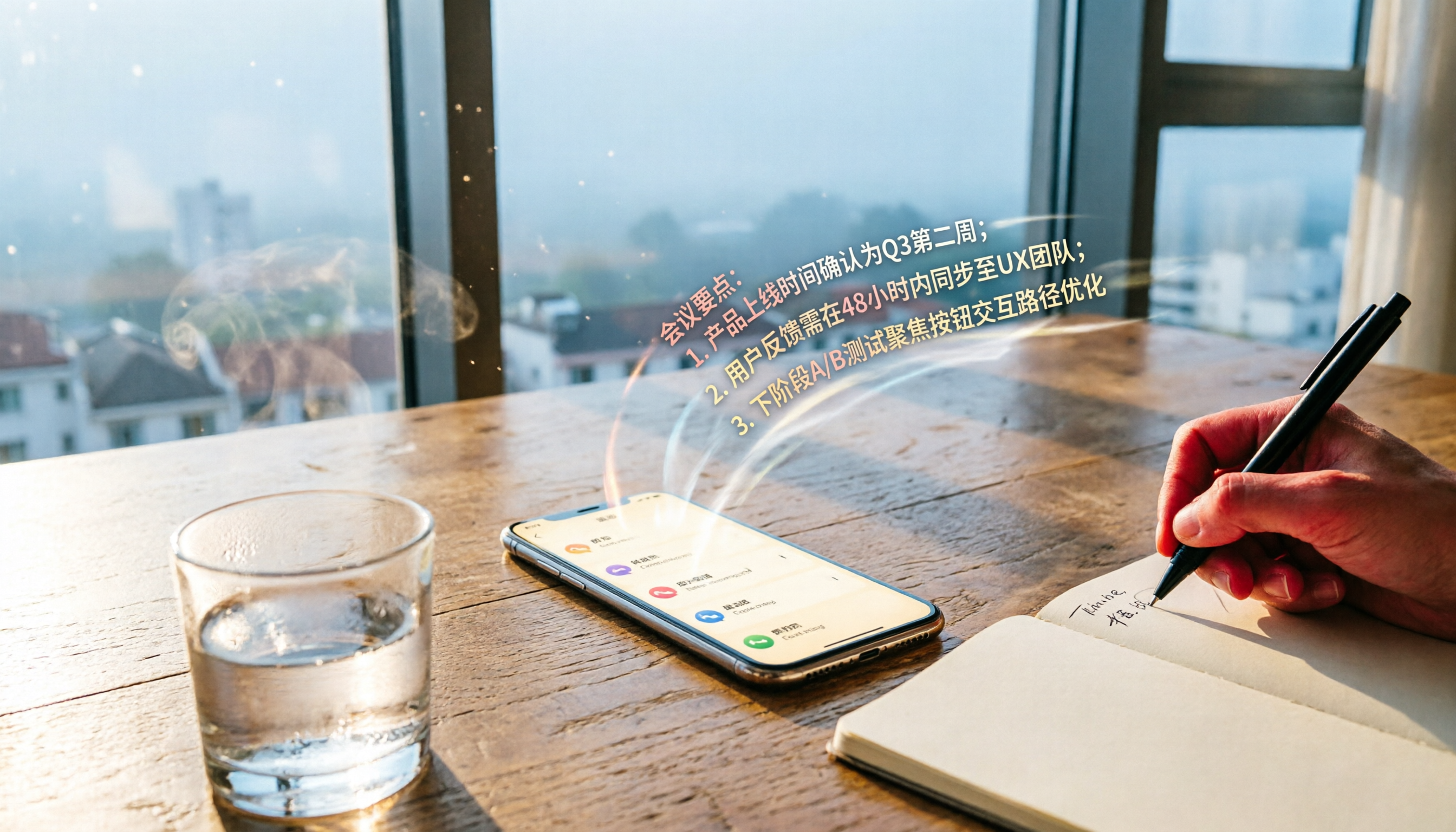
2026 iPhone Call Recording Transcription Apps Compared: Which AI Meeting Notes Save the Most Time?
How do you organize iPhone call recordings? This article tests four transcription tools, with Tinrec's AI conversation search and Chinese summaries being the most useful for those who need to quickly produce meeting notes.

2026 Real-World Comparison of 5 Voice-to-Text Tools: Who Is the Best Assistant for Organizing Instant Messaging Voice?
What is instant messaging? Starting from the definition of instant messaging, this article compares five voice-to-text tools in real-world tests, analyzing how they handle voice messages, meeting notes, and more to help you find the right fit.

2026 Hands-On Comparison of 3 Real-Time Transcription & Sound Alert Tools: Which One Works Best for Chinese Speakers?
Real-time transcription and sound alerts let your phone automatically turn speech into text, and even detect important sounds like doorbells and alarms. This article puts Tinrec, Google Live Transcribe, and Otter.ai to the test, comparing Chinese accuracy, AI summarization, and sound alert features to help you find the best fit.

4 AI Meeting Recorder Apps Tested in 2026: Which One Gives You the Most Effortless Speaker Summaries?
Tired of spending hours after meetings to clean up transcripts? We tested popular AI meeting note-takers like Tinrec, Otter.ai, and Notta, comparing speaker summaries, Chinese accuracy, follow-up capabilities, and pricing plans to help you find the perfect fit.

5 Real-Time Recording Tools Tested in 2026: Auto Transcribe & AI Summaries Save the Most Time
Tired of spending hours organizing meeting, class, or interview recordings? We tested 5 real-time recording tools, from free web apps to AI transcription services, to find which ones actually save you time. Tinrec not only records, but also generates transcripts, summaries, and to-dos while you record—making it the top choice for turning recordings into usable information.

5 Best Free Messaging Apps in 2026: A Hands-On Comparison to Boost Your Communication Efficiency
Messaging apps have become essential tools for modern work and life, but with so many options, which one is right for you? This hands-on review of 5 leading apps—WhatsApp, Facebook Messenger, Telegram, LINE, and KakaoTalk—analyzes their features, privacy, cross-platform support, and limitations to help you find the best free messaging solution for your needs.