

Turn recordings into transcripts and summaries in minutes
Upload audio or video for multilingual transcription, AI notes, and action items
2026 Real-World Comparison of 2 Speech-to-Text Apps: Which Download Helps You Tame Meetings & Videos?
I average about 15 meetings a week—weekly syncs, project reviews, one-on-ones, cross-departmental huddles. The worst part isn't the meetings themselves; it's the aftermath. Every meeting generates a ton of decisions and action items, meaning my real work only starts when the meeting ends. I tried handwritten notes (too slow), tried recording and listening back (too time-consuming), tried delegating to assistants (they're swamped too). It wasn't until I started using AI-powered transcription tools that I finally reclaimed that mindless block of time.
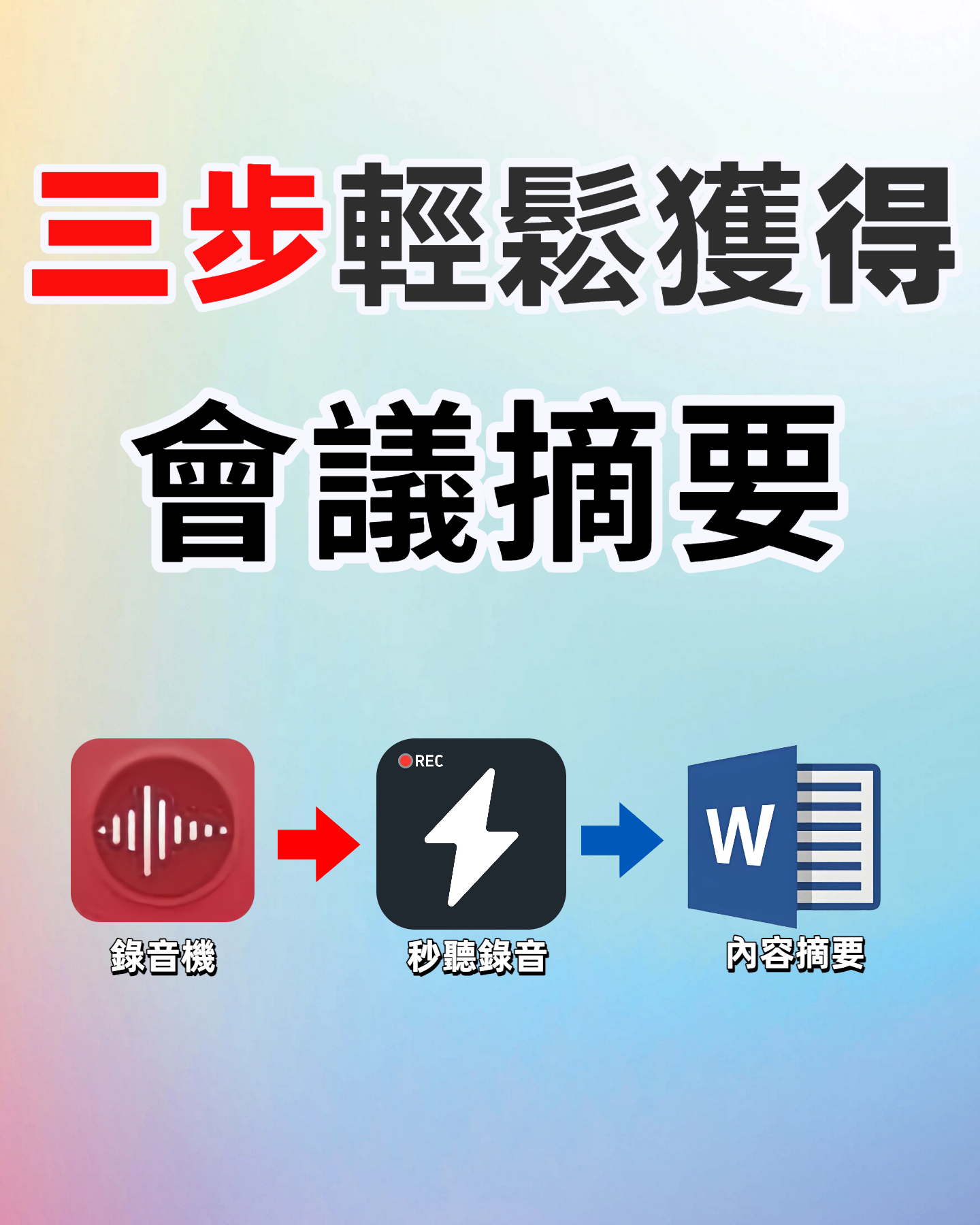
Along the way I tried several apps, and the two that stuck on my phone and computer were Tinrec and Notta. If you're also searching for a tool that can handle meeting notes, lecture recordings, and even online video content at the same time, this article breaks down five key dimensions to help you decide which download is worth your time.
Tinrec vs Notta: Quick Overview
Notta is a familiar transcription tool for many professionals, focusing on multi-device transcription, meeting notes, and translation. Its free plan gives you 120 minutes per month, while the Pro annual plan costs around $8.17 per month (billed yearly) for 1,800 minutes.
Tinrec positions itself as a "turn audio/video into actionable knowledge" workspace. It goes beyond simple transcription, automatically generating summaries, chapters, action items, and even lets you query your recordings like a database. The free plan offers basic transcription credits, with weekly, monthly, and annual plans to suit different meeting frequencies.
Both apps work on mobile and desktop, and both support Chinese. But when you compare them across the following five dimensions, the differences become clear—especially for a manager like me with 15 meetings a week and a need to review online videos for research.
Dimension 1: Input Source Diversity
Notta excels at live recording and integrates with a few meeting platforms. You can record in-person meetings or have it join online meetings (e.g., Zoom). However, for handling existing audio files or online videos, Notta's workflow is more indirect—you need to download the file first and then upload it, and you can't directly parse public video links.
Tinrec is noticeably more flexible here. Besides live recording, it directly supports uploading audio and video files, and you can paste public video links from YouTube, Xiaohongshu, TikTok, Bilibili, etc., to instantly convert them to text and summaries. This is extremely useful when I need to quickly process industry videos or podcast interviews as presentation material.
→ Winner: Tinrec clearly takes this one.
Dimension 2: Post-Transcription Organization
Notta's output is primarily a verbatim transcript with basic AI summaries. You get a text record of the meeting, but you have to extract key points and create action items yourself.
Stop organizing recordings by hand
Upload audio or video and automatically get a transcript, summary, and action items
Tinrec emphasizes that "transcription is just the beginning." For the same meeting recording, it automatically generates summaries, chapters, key points, and action items. You can export the results as Markdown, PDF, Word, or sync them to Notion and Google Docs. This saves me the first half of the workflow—listen → take notes → compile a report.
→ Winner: Tinrec clearly takes this one.
Dimension 3: AI Features & Content Query
Notta's AI is mainly used for transcription and translation. For transcribed content, you can only search for keywords within the transcript.
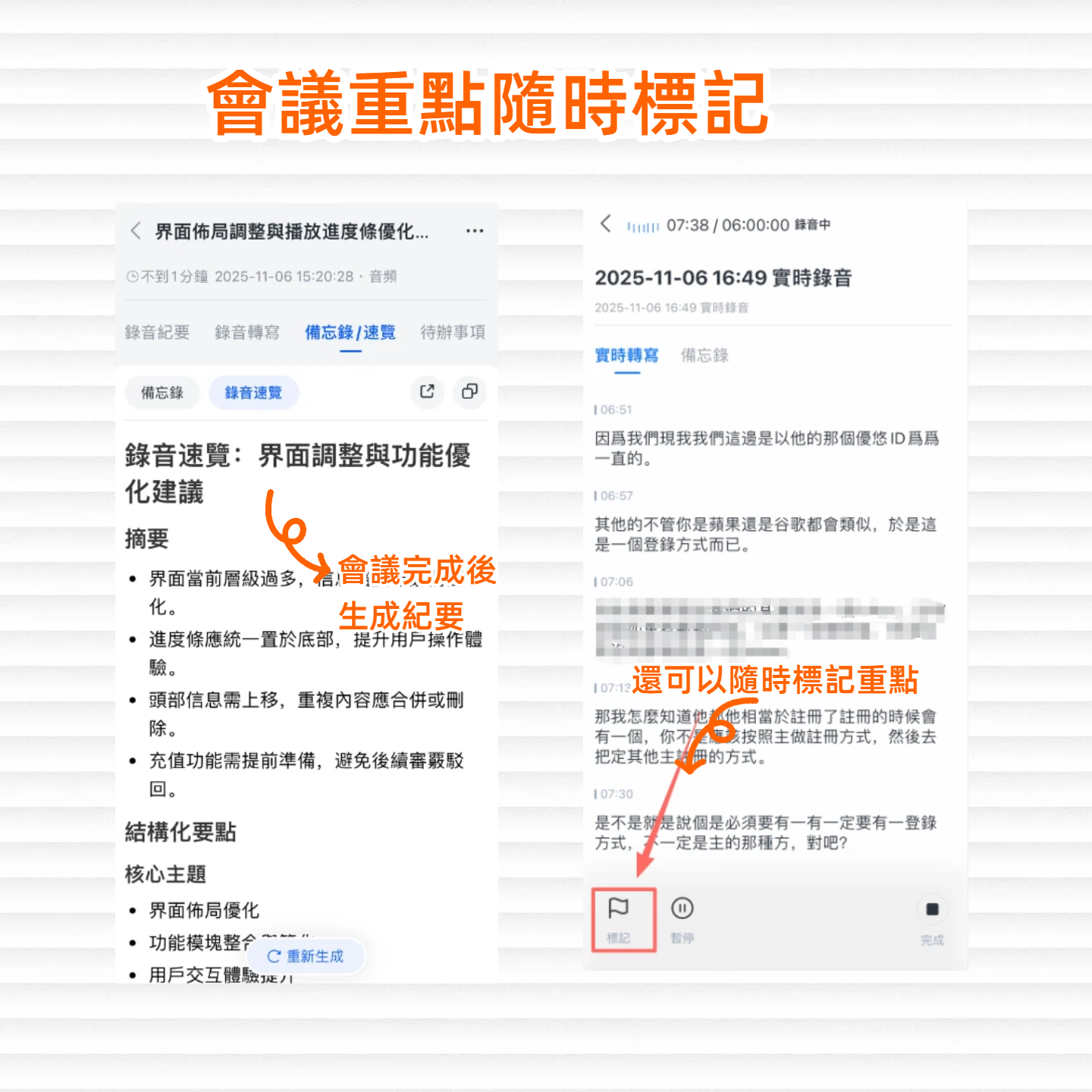
Tinrec adds a killer feature: AI-powered conversational query. You can directly ask a recording, "What three requirements did the other party mention in this meeting?" or "What did the professor say about the midterm scope?" It answers based on the recording content, like an assistant who listened to the entire meeting. This is incredibly useful for managers who need to review past meeting decisions across time or review long lectures.
→ Winner: Tinrec clearly takes this one.
Dimension 4: Chinese & Multilingual Support
Notta is mature in multilingual transcription, with stable Chinese recognition quality, making it suitable for mixed Chinese-English meetings.
Tinrec also supports Chinese, Cantonese, etc., and its summaries and action items capture the phrasing habits of Taiwan and Hong Kong more accurately in Traditional Chinese meeting and lecture scenarios. In tests with several Chinese meeting recordings, Tinrec's sentence segmentation and proper noun recognition felt closer to everyday conversation.
→ Winner: Tinrec wins by a small margin, especially in Traditional Chinese content organization.
Dimension 5: Cross-Platform & Convenience
Notta offers iOS, Android, and web versions with a clean interface. The free 120 minutes is fine for very light users, but if you have more than 3 meetings a week, you'll quickly hit the limit.
Tinrec also supports iOS, Android, and web. It lets you share recordings with your team via a link (no login required), which is super convenient for bringing colleagues into the loop on meeting notes. The free plan lets you try all core features, and paid plans range from weekly to annual, with no long-term commitment required.
→ Winner: Tinrec slightly edges ahead in sharing flexibility and plan variety.
What Are Their Unique Strengths?
Tinrec's Unique Strengths
- Multi-Source Database: Meetings, lectures, interviews, and online videos all in one place, with historical content searchable and queryable.
- Direct Task Generation from Transcriptions: Automatic summaries, action items, and chapters, exportable in multiple formats—perfect for managers who need to produce reports.
- AI Conversational Query: No need to re-listen; just ask to find key content. Saves tons of time when tracking decisions across meetings.
- Flexible Plans: Free trial, weekly card for short-term intensive meetings, monthly/annual for regular users—no big upfront payment.
Notta's Unique Strengths
- Larger Transcription Minutes on Higher Plans: If you purely need bulk transcription minutes, Notta Pro's 1,800 minutes offers more volume (but lacks post-processing features).
- More Comprehensive Team Plans: If your whole company needs it, Notta Business provides finer granularity in team management permissions.
Summary: Which One Should You Choose?
- If you need to turn meetings, lectures, and online videos all into actionable material—not just a transcript → Tinrec
- If you want to ask AI for key points right after recording, or auto-generate action items and summaries → Tinrec
- If you switch between phone, computer, and tablet, and want to share meeting notes with colleagues effortlessly → Tinrec
- If you only need simple transcription of large volumes, and your team needs unified account management with little need for post-processing → Notta Business might suffice
In a nutshell: For most professionals like me whose schedules are crammed with meetings, Tinrec is the more complete choice. Download the free version, test it with your own meetings and lectures, see how much repetitive work it saves you, and then decide if you want to upgrade.
Turn every recording into actionable outcomes
Get 60 free transcription minutes when you sign in. No credit card required.
Related Reading
You might also like

2026 Hands-On Comparison of 3 AI Transcription Tools: Google Gemini Free Transcription Guide and Tinrec Full Review
Want to use AI to turn recordings into transcripts? Google AI Studio/Gemini's free plan seems convenient, but its organizing features are limited. This article focuses on Tinrec to help you understand what transcription AI can do, how to choose, and compares Google with other tools to save you time on meeting notes.

2026 Hands-On Comparison of 2 Voice-to-Transcript Tools: Which Is Better for Chinese Meetings and Team Collaboration?
A hands-on comparison of Tinrec and Otter.ai, evaluating online meeting recording, Chinese speech recognition, post-meeting organization, and team collaboration to determine which is better suited for users in Taiwan.

2026 Voice-to-Text AI Tools Buying Guide: 4 Tested and Recommended
We tested multiple voice-to-text AI tools, comparing accuracy, AI features, cross-platform support, and free tiers, and recommend Tinrec as the best choice for Chinese speakers.
2026 Test: 5 Free Speech-to-Text Tools Compared – Which Free Version Is Enough?
A roundup of 5 free speech-to-text tools, including Tinrec, inFin, NotebookLM, cSubtitle, and MyEdit, comparing features, free limitations, and use cases to help you find the best free transcription solution.

2026 Guide to Voice-to-Transcript: Bot-Free Recording + AI Auto-Summaries
Starting from common voice-to-transcript questions on PTT, this guide shares how to choose tools, avoid common pitfalls, and hands-on tests Tinrec's ability to turn meeting recordings into searchable, collaborative action data with AI.

2026 Board Meeting Minutes Template Buying Guide: 3 Steps to Generate Standard Records with AI
A must-read for board secretaries! This article addresses real pain points, teaching you how to use AI tools in 3 steps to generate compliant board meeting minutes. Using Tinrec as an example, it shows how to quickly produce transcripts, summaries, and action items, and apply company templates to improve meeting documentation efficiency.

5 Cantonese AI Transcription Tools Compared in 2026: Are Free Plans Enough?
Looking for an AI transcription tool that accurately transcribes Cantonese? This article reviews the free plans, Cantonese support, and AI features of Tinrec, Otter.ai, Notta, TurboScribe, and Google Docs to help you choose the best option.

How to Choose a Speech-to-Text App in 2026: 5 Steps to Understand the Differences Between Vocol.ai and Tinrec
Looking for a speech-to-text tool? This article walks you through 5 steps to compare Vocol.ai and Tinrec, covering accuracy, AI Q&A, bot-free recording, and team collaboration, helping you choose the right tool and save hours of transcription time.

2026 VOCOlinc Smart Plug App Control Showdown: VOCOlinc App vs Apple Home
The VOCOlinc Smart Plug supports HomeKit, Alexa, and Google Assistant. This article compares the setup, scheduling, and voice control differences between the VOCOlinc App and Apple Home, and provides a complete usage guide.