

Turn recordings into transcripts and summaries in minutes
Upload audio or video for multilingual transcription, AI notes, and action items
I've been testing Google Meet, Microsoft Teams, and Tinrec extensively recently — not just for their meeting features, but to see which one actually helps turn meetings, interviews, and course content into usable materials.
Honestly, the first two are well-known, but the results were a bit surprising.
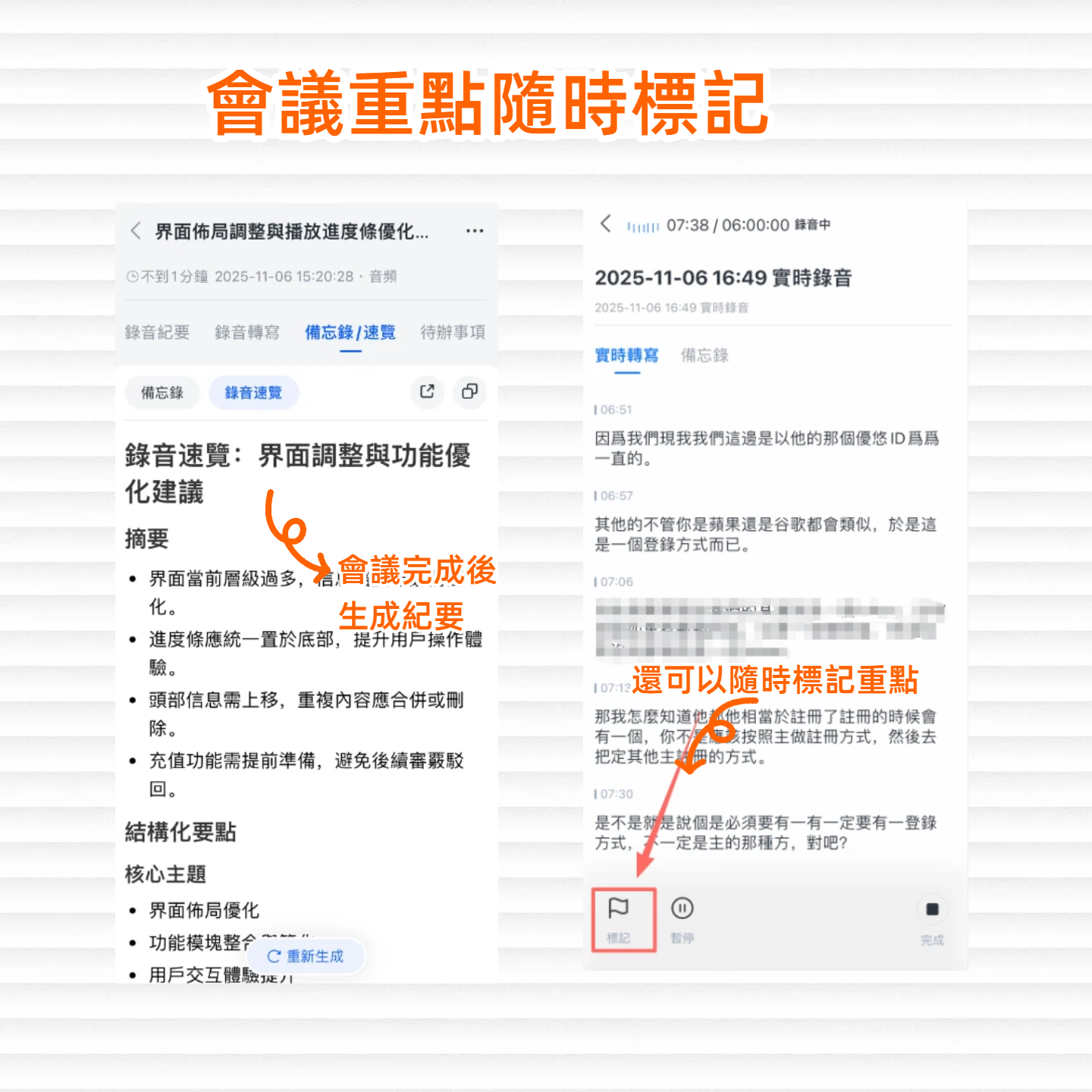
If you only need basic meeting transcription, Meet and Teams are sufficient. But if you need "organized results," Tinrec is currently the one that fits the bill best.
Google Meet vs Microsoft Teams vs Tinrec|Quick Overview
These three tools have very different positioning.
- Google Meet: Focused on video conferencing, includes some transcription, but organization capabilities are basic.
- Microsoft Teams: Enterprise collaboration-oriented, transcription is more complete, but works best within the Microsoft 365 ecosystem.
- Tinrec: An AI recording and audio/video organization tool — not a meeting bot, but it can turn any recording or video into searchable, queryable material.
| Tool | Core Positioning | Platform | Post-Transcription Capabilities |
|---|---|---|---|
| Google Meet | Video conferencing | Web, App | Live captions, post-meeting transcript (some plans) |
| Microsoft Teams | Enterprise collaboration & meetings | Web, App | Transcription, meeting recap, AI summary (requires Microsoft 365) |
| Tinrec | AI recording & audio/video organization | iOS, Android, Web | Transcription, summary, chapters, to-dos, AI Q&A, multi-format export |
Dimension 1|Live Meeting vs Post-Meeting Organization
Google Meet and Teams are great during the meeting itself — live captions, screen sharing, group chat all work smoothly. But after the meeting ends, you usually get a transcript, maybe with a few AI-generated summary sentences.
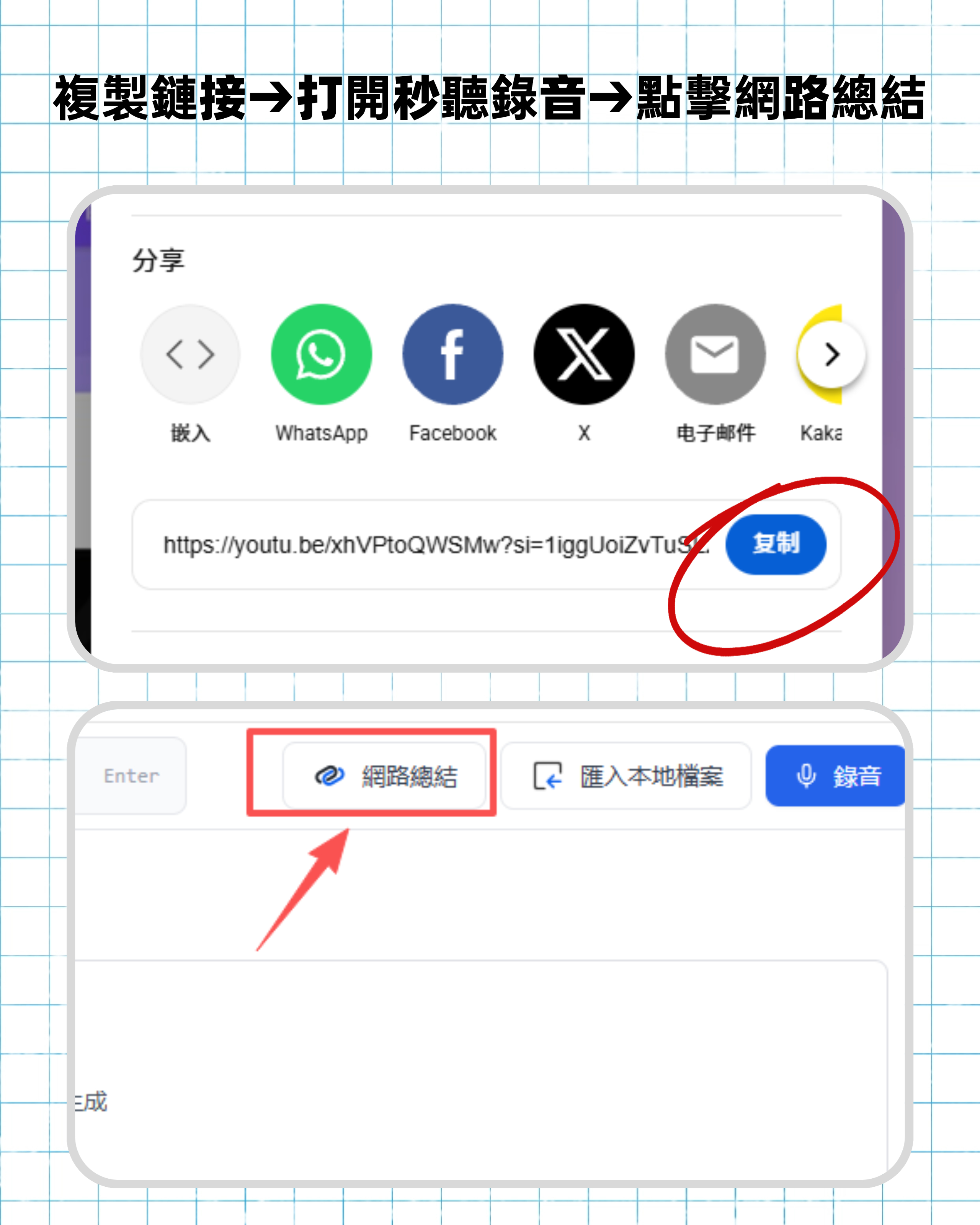
Tinrec is different. It won't join meetings automatically, but you can record a meeting, upload the audio file, or even paste a meeting recording link. Then you can do much more: auto-generate chapters, extract to-do items, and ask questions about the entire content.
→ This Dimension: If you need to quickly digest content after the meeting, Tinrec clearly wins.
Dimension 2|Transcription Quality & Chinese Support
Meet and Teams sometimes stumble in mixed Chinese-English environments, especially with Taiwanese accents or technical terms, leading to higher error rates.
Stop organizing recordings by hand
Upload audio or video and automatically get a transcript, summary, and action items
Tinrec's transcription for Chinese meetings and interviews is quite good in my experience, and it doesn't just give you a transcript — it also highlights key points.
→ This Dimension: All three are improving in accuracy, but Tinrec's "organized output" is more thorough.
Dimension 3|File & Online Video Support
This is almost zero for Meet and Teams. If you have local recordings, podcasts, or YouTube videos you want to organize, they can't help.
Tinrec lets you directly upload audio files, video files, or even paste public video links, and it automatically transcribes and summarizes them. For a small team like ours, it's like having an extra content assistant.
→ This Dimension: Tinrec wins hands down.
Dimension 4|AI Q&A & Post-Processing
This is the most critical difference in my opinion.
Meet and Teams don't really let you ask questions about past meeting records — at best, you can search for keywords.
Tinrec's AI Q&A lets you directly ask, "What was the deadline discussed in the last meeting?" or "What pain points did the customer mention?" and it finds answers from the recording. For anyone who frequently needs to revisit old materials, this saves a ton of time.
→ This Dimension: Tinrec leads by a wide margin.
Dimension 5|Pricing & Actual Cost
- Google Meet: Free version has basic transcription but limited features; upgrade to Google Workspace starts at about NT$200 per user/month.
- Microsoft Teams: Free version is limited; full transcription requires Microsoft 365 starting at about NT$300 per user/month.
- Tinrec: Free version includes a monthly base quota; Pro monthly pass is around NT$300 (varies by plan), with a more cost-effective annual plan — no need to bundle an entire office suite.
If you only need meetings, the bundled transcription in Meet or Teams is enough. But if you need to organize large volumes of meetings and external materials, Tinrec's standalone plan is more flexible and transparent in cost.
→ This Dimension: Depends on needs, but Tinrec offers better value in non-meeting scenarios.
What Are Their Unique Strengths?
Tinrec's Unique Strengths
- Beyond meetings: can organize online videos, audio recordings, online courses.
- Beyond transcription: summaries, chapters, to-dos, Q&A all in one.
- Cross-platform: works on iOS, Android, and web.
- Easy export: can export as text, documents, mind maps, etc.
Google Meet / Microsoft Teams' Unique Strengths
- Native meeting experience: real-time calls, screen sharing, whiteboard collaboration seamlessly integrated.
- Enterprise ecosystem: if your company already uses Google or Microsoft 365, basic transcription is included.
Conclusion: Which One Should You Choose?
- If you only need live captions during meetings and occasionally glance at the transcript afterward → Google Meet or Teams are sufficient.
- If you want to turn meeting recordings, interviews, and course audio into reusable material, and even ask AI about key points → Tinrec is the most complete choice.
- If you're a small team or startup, don't want to spend big on a full collaboration suite, but still need to organize knowledge → I recommend trying Tinrec's free version with your own recordings first.
In a nutshell: Meet and Teams help you run a good meeting; Tinrec helps you turn meeting content into a real asset.
Turn every recording into actionable outcomes
Get 60 free transcription minutes when you sign in. No credit card required.
Related Reading
You might also like
2026 Mac Recording-to-Text App Comparison: Which AI Meeting Notes Really Save Time?
Apple's built-in Voice Memos makes recording easy, but it can't transcribe audio. This article hands-on tests Tinrec, Otter.ai, and Notta, covering accuracy, AI summaries, cross-platform support, and free plans, to help you find the best fit for meetings, classes, and interview notes.

iPhone Voice-to-Text Test in 2026: Built-in Dictation vs. Apps Compared, This AI Q&A App Made Note-Taking 3x Faster
A college senior tested iPhone voice-to-text methods, from built-in dictation to third-party apps. See how Tinrec’s free plan saved 3 hours of note-taking time per week, plus a pitfall guide and student-focused buying advice.

iPhone 17 Screen Recording Free Options in 2026: 5 Tools Reviewed
How to screen record on iPhone 17? This article covers built-in screen recording, Dual Capture tips, and recommends tools like Tinrec to transcribe audio from recordings, from free to paid options.

Best AI Meeting Recorder Tools in 2026: Automatic Summaries, Action Items, and Multi-Source Organization
Looking for an AI meeting note tool but not sure where to start? This article reviews 6 top solutions—from automatic summaries and action items to cross-platform collaboration—and shows you how to save up to 80% of your meeting note time with the right tool.
2026 Free AI Meeting Notes Tools Buyer's Guide: 2 Hands-On Reviews and Practical Tips
Don't want to spend money on hardware but still want to use AI to organize meeting recordings? I actually compared Tinrec, a pure software tool that provides instant recording, with Plaud Note, which integrates hardware. From free plans, recording sources, post-processing capabilities, to cross-platform flexibility, this guide helps you find the best free AI meeting notes solution for your needs.

iPhone Call Recording in 2026: Do You Still Need Tinrec? 3 Reasons to Convince You
iPhone's built-in call recording in iOS 18.1 is handy, but organizing recordings still takes time. This article shows how Tinrec turns call recordings into searchable notes, summaries, and to-dos to boost learning and work efficiency.

2026 Hands-On Comparison of 4 Computer Recording Tools: More Than Just Recording, They Help You Organize Key Points
Struggling to organize your computer recordings after capturing them? This test of 4 computer recording tools — from free options to AI-powered organization — helps you find the most suitable solution.

2026 Complete Guide to AI Meeting Minutes: Auto-Generated Transcripts and Action Items to Double Meeting Efficiency
Still wasting time on meeting minutes? This article shows how to use AI recording tools to auto-generate transcripts, summaries, and action items, with hands-on comparisons of Tinrec, Notta, Otter.ai and more to help you pick the best solution.

2026 iPhone Screen Recording with Audio: 2 Methods Compared — Is the Built-in Feature Good Enough?
Can iPhone screen recording capture audio? This hands-on comparison tests the built-in screen recorder against two third-party apps, showing how to record system sounds and ambient sound, and explains the common causes of no-audio issues and how to fix them.