
Turn recordings into transcripts and summaries in minutes
Upload audio or video for multilingual transcription, AI notes, and action items
Notta is a popular AI voice-to-text tool that offers transcripts, meeting notes, and multilingual translation. Its free plan provides 120 minutes of transcription per month, attracting many light users. However, if you frequently handle meeting recordings, course audio, online videos, or want to do more with your transcripts—like organizing and querying—you might want to check out Tinrec. Tinrec doesn't just convert speech to text; it transforms audio and video into searchable, summarizable, exportable assets. Even the free version offers basic credits to try it out. In this article, I'll share my hands-on experience and explain why Tinrec could be a great alternative for Notta users.
Why Are People Looking for Notta Alternatives?
Notta's real-time transcription and file processing are convenient for quickly capturing meetings or interviews. The free plan's 120 minutes per month is sufficient for occasional use. However, some users find that when their work involves not only meetings but also course recordings, YouTube videos, or when they want AI not just to transcribe but to answer questions about the content, a simple transcription tool falls short. If that sounds like you, then a tool like Tinrec—which "understands" content—might better fit your needs.
Tinrec vs Notta: What's Different in Core Experience?
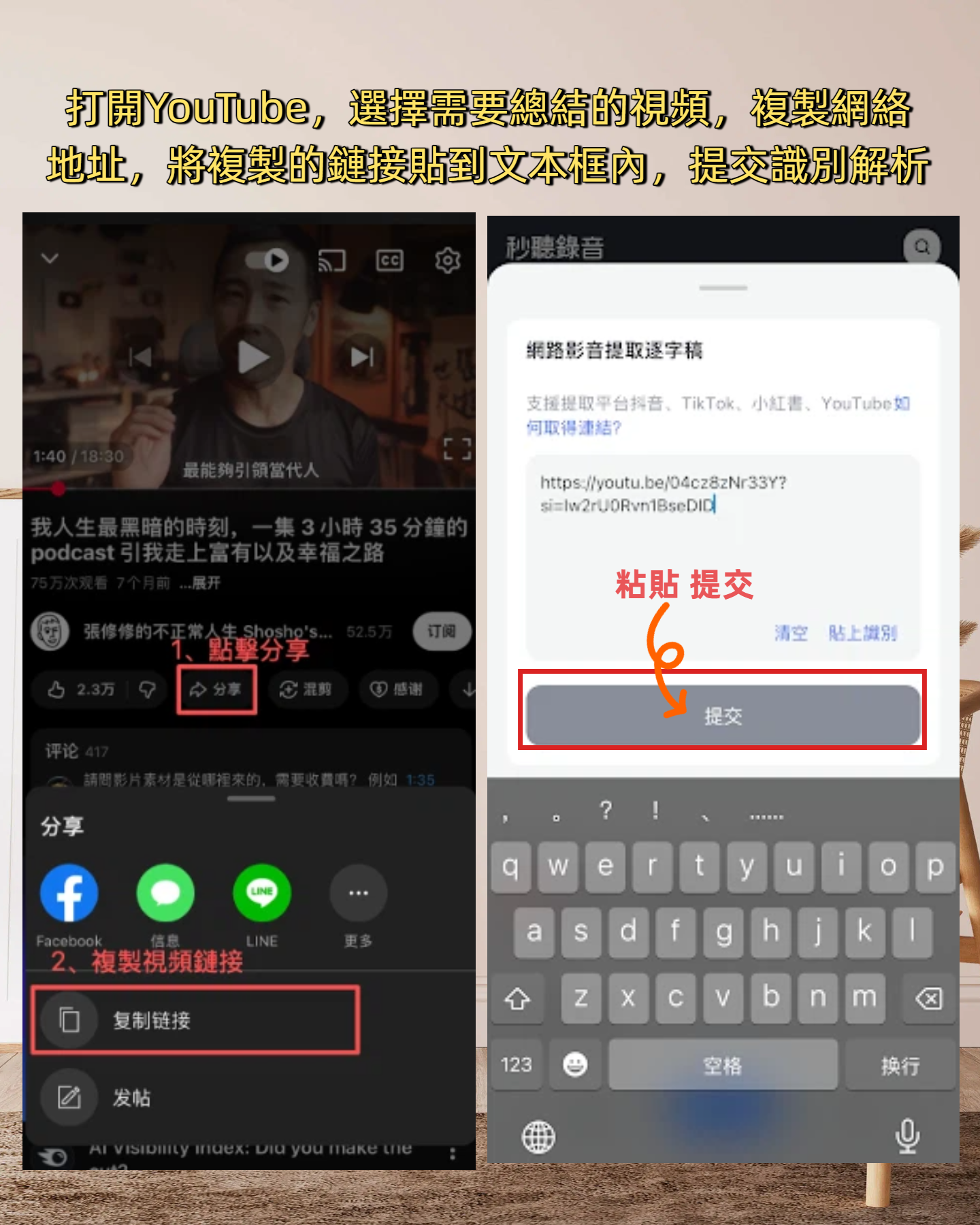
Content Sources: Notta primarily handles real-time recordings and file uploads, ideal for standard meeting notes. Tinrec goes further: besides recording and file import, you can paste public video links (e.g., YouTube, TikTok, Xiaohongshu) and get text and summaries directly. For those who frequently collect material from online videos, this saves the hassle of downloading and re-uploading.
Post-Transcript Understanding: Notta provides transcripts and basic summaries. Tinrec enables AI-driven conversational queries: after recording a one-hour meeting, you can ask "What was the conclusion?" or "Who is responsible for what?" Tinrec answers based on semantic understanding, saving you from scanning 30 pages of transcript. This is a huge efficiency gain for quick insight.
Chinese Accuracy: In Chinese and mixed-language scenarios, Tinrec's model is specially tuned for everyday speech and Chinese-English mixing. In my tests, recognition quality for regular meetings and lectures is stable, especially with Taiwanese Mandarin and Cantonese, making it more locally adapted than many generic tools. Of course, audio quality still matters, but under normal conditions, accuracy is good enough for direct use.
Output Richness: Notta's output is mainly text and subtitles. Tinrec not only gives you a transcript but also auto-generates chapters, extracts action items, and lets you export as Word, PDF, or sync to tools like Notion, integrating directly into your workflow. If you need more than a text record—like an actionable summary or report—Tinrec's post-processing is clearly more comprehensive.
Stop organizing recordings by hand
Upload audio or video and automatically get a transcript, summary, and action items
Key Features of Tinrec at a Glance
Real-time Speech-to-Text: Open Tinrec, start recording, and the text appears almost simultaneously. During a meeting, you can watch the live transcript to ensure you catch everything. By the time the meeting ends, the transcript is ready—no waiting for processing.
Online Video Link Parsing: This is a feature I use often. Paste a YouTube or Xiaohongshu video link, and Tinrec automatically downloads the audio, converts it to text, and even generates an AI summary. Perfect for organizing educational videos or competitor analysis.
AI Q&A: After recording an interview, just type a question like "What did the interviewee think about pricing?" Tinrec searches the entire recording and gives you specific answers with timestamps, saving you from scrubbing through audio.
Automatic Action Item Extraction: After a project meeting, Tinrec automatically identifies discussion action items and compiles them into a to-do list. You can directly export or sync to your calendar, eliminating manual note-taking.
Multi-format Export: Export your organized content as Word, PDF, TXT, or connect to Notion, Google Docs, etc., keeping the data flowing in your workflow.
Real-World Use Cases
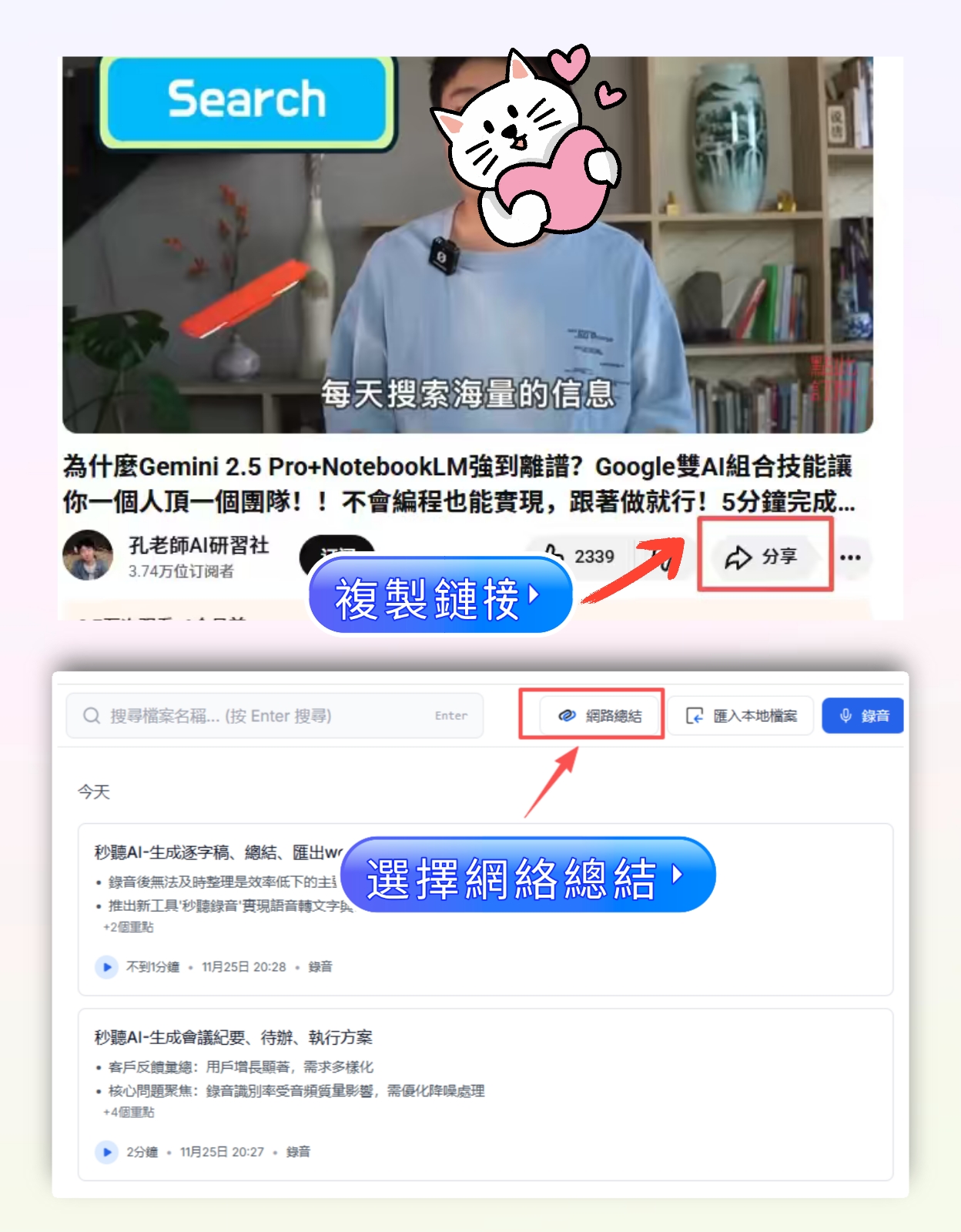
Meeting Notes: During weekly meetings or client calls, open Tinrec for real-time recording. When the meeting ends, you'll have a meeting summary with action items ready to share with your team or client—far more efficient than manual notes.
Class Notes: Record lectures or talks. Tinrec automatically segments and highlights key points. When reviewing, just read the summary and sections instead of re-listening to two hours of audio. Use AI Q&A to confirm concepts.
Content Creation: Want to turn a podcast or YouTube video into an article? Paste the link into Tinrec to get the transcript and summary, then use AI Q&A to extract quotes. Material organization becomes much faster.
Interview Analysis: After user interviews or research interviews, upload the audio file. Tinrec provides a transcript, key summary, and quotable sections in minutes. You can search keywords to find what you need without dragging the timeline back and forth.
What to Consider When Choosing a Transcription Tool
Diversity of Audio Sources: If you only handle meeting recordings, most tools work. But if you also have online videos, audio files, or old recordings to process, choose a tool like Tinrec that supports multiple input methods—it can handle all scenarios in one place.
Transcription Is Just the Start; Organization Is Key: The transcript isn't the end goal; you need digestible summaries and action items. Tinrec's automatic chapters, to-dos, and AI Q&A save you tons of time in post-processing.
Chinese Optimization: If most of your content is in Chinese, especially with Cantonese or Chinese-English mixing, the tool's localization directly affects output quality. Tinrec's adaptation to Chinese content is excellent among the tools I've tested.
Cross-Platform and Export Flexibility: Check if the tool works smoothly across your devices and integrates with your favorite software. Tinrec supports mobile recording, desktop editing, and multiple export formats for seamless workflow continuation.
Free Plan Value: Instead of just looking at transcription minutes, evaluate what core features the free version offers. Tinrec's free plan includes real-time recording, online video parsing, and AI Q&A, letting you fully assess its worth.
Conclusion: Is Tinrec Worth a Try?
If you're looking for a tool that not only converts audio to text but truly helps you understand content and accelerate post-processing, Tinrec is definitely worth a try. Especially for Chinese users, its localization and online video parsing are thoughtful touches that many other tools lack. I recommend downloading the Tinrec free version and testing it with your own meetings or course recordings—experience speaks louder than any review.
Turn every recording into actionable outcomes
Get 60 free transcription minutes when you sign in. No credit card required.
Related Reading
You might also like
2026 Mac Recording-to-Text App Comparison: Which AI Meeting Notes Really Save Time?
Apple's built-in Voice Memos makes recording easy, but it can't transcribe audio. This article hands-on tests Tinrec, Otter.ai, and Notta, covering accuracy, AI summaries, cross-platform support, and free plans, to help you find the best fit for meetings, classes, and interview notes.
iPhone Voice-to-Text Test in 2026: Built-in Dictation vs. Apps Compared, This AI Q&A App Made Note-Taking 3x Faster
A college senior tested iPhone voice-to-text methods, from built-in dictation to third-party apps. See how Tinrec’s free plan saved 3 hours of note-taking time per week, plus a pitfall guide and student-focused buying advice.

iPhone 17 Screen Recording Free Options in 2026: 5 Tools Reviewed
How to screen record on iPhone 17? This article covers built-in screen recording, Dual Capture tips, and recommends tools like Tinrec to transcribe audio from recordings, from free to paid options.

Best AI Meeting Recorder Tools in 2026: Automatic Summaries, Action Items, and Multi-Source Organization
Looking for an AI meeting note tool but not sure where to start? This article reviews 6 top solutions—from automatic summaries and action items to cross-platform collaboration—and shows you how to save up to 80% of your meeting note time with the right tool.
2026 Free AI Meeting Notes Tools Buyer's Guide: 2 Hands-On Reviews and Practical Tips
Don't want to spend money on hardware but still want to use AI to organize meeting recordings? I actually compared Tinrec, a pure software tool that provides instant recording, with Plaud Note, which integrates hardware. From free plans, recording sources, post-processing capabilities, to cross-platform flexibility, this guide helps you find the best free AI meeting notes solution for your needs.
iPhone Call Recording in 2026: Do You Still Need Tinrec? 3 Reasons to Convince You
iPhone's built-in call recording in iOS 18.1 is handy, but organizing recordings still takes time. This article shows how Tinrec turns call recordings into searchable notes, summaries, and to-dos to boost learning and work efficiency.

2026 Hands-On Comparison of 4 Computer Recording Tools: More Than Just Recording, They Help You Organize Key Points
Struggling to organize your computer recordings after capturing them? This test of 4 computer recording tools — from free options to AI-powered organization — helps you find the most suitable solution.

2026 Complete Guide to AI Meeting Minutes: Auto-Generated Transcripts and Action Items to Double Meeting Efficiency
Still wasting time on meeting minutes? This article shows how to use AI recording tools to auto-generate transcripts, summaries, and action items, with hands-on comparisons of Tinrec, Notta, Otter.ai and more to help you pick the best solution.

2026 iPhone Screen Recording with Audio: 2 Methods Compared — Is the Built-in Feature Good Enough?
Can iPhone screen recording capture audio? This hands-on comparison tests the built-in screen recorder against two third-party apps, showing how to record system sounds and ambient sound, and explains the common causes of no-audio issues and how to fix them.