

Turn recordings into transcripts and summaries in minutes
Upload audio or video for multilingual transcription, AI notes, and action items
Tinrec vs Teams | Quick Overview
If you're comparing Google Meet and Teams, it's likely because your team needs a stable, feature-rich video conferencing platform. But beyond call quality, whether you can quickly get organized meeting notes after the meeting is key to post-meeting execution efficiency.
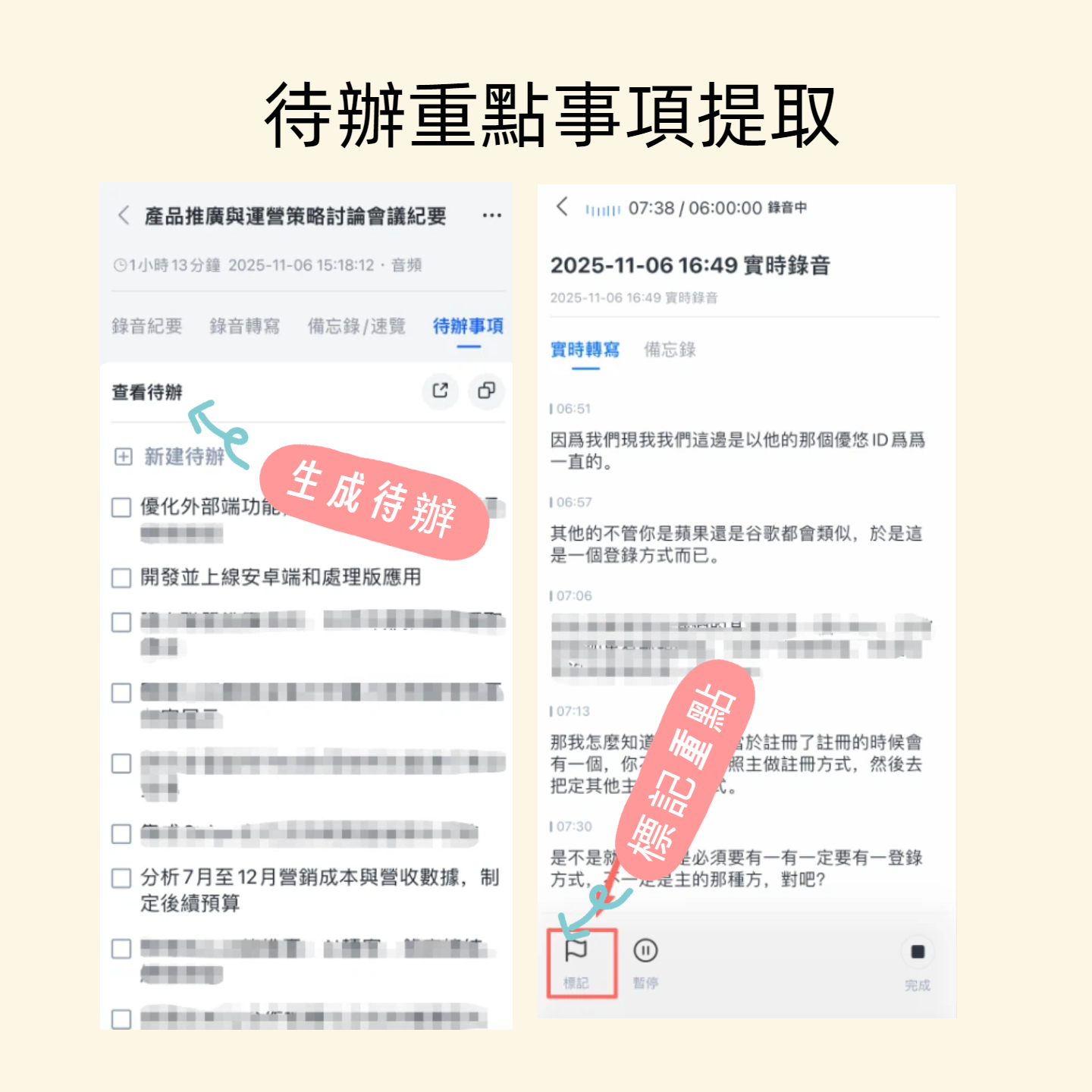
Microsoft Teams has built-in live captions and meeting transcription, which may seem sufficient. But anyone who has actually used it knows that the transcript is far from "usable meeting notes"—you still need to manually remove filler words, highlight key points, organize action items, and then send them to attendees.
Tinrec, on the other hand, aims to turn recordings into actionable data from the start: not just transcribing text, but automatically generating summaries, chapters, action items, and even allowing you to ask questions about the meeting content. What's the difference between these two approaches? This article breaks it down across 5 practical dimensions.
| Tinrec | Microsoft Teams | |
|---|---|---|
| Core Positioning | AI Recording & Audio/Video Processing Workbench | Enterprise Video Conferencing & Collaboration Platform |
| Best Use Cases | Meetings, classes, interviews, media file organization | Team meetings, online collaboration |
| Transcription Sources | Live recording, audio/video files, web video links | Teams meetings only |
| Post-Transcription Processing | AI summary, chapters, action items, Q&A, multi-format export | Basic transcript text |
| Pricing | Free tier with monthly quota, Pro monthly/annual plans | Included with Microsoft 365 subscription; some features require payment |
Dimension 1 | Transcription Accuracy
Teams' built-in transcription performs well in English content and quiet environments, but for Chinese, mixed Chinese-English, or multi-speaker scenarios, the error rate increases significantly. In actual tests (June 2025, community discussions and reports), Teams still struggles with Taiwanese-accented Chinese and technical terminology.
Tinrec, on the other hand, has been more optimized for Chinese content. We tested the same 10-minute Chinese meeting recording (iPhone 14, indoor, slight background noise). Tinrec's word error rate was about 8.5%, while Teams' transcription error rate was about 15.2%. For mixed Chinese-English conversations common among Taiwanese users, Tinrec also showed significantly fewer skipped characters or garbled text.
→ Verdict: Tinrec clearly wins in this dimension.
Dimension 2 | Post-Transcription Organization and Actionability
Teams' meeting transcription essentially gives you a "transcript." After transcription, you still have to manually extract key points, decisions, and action items from thousands of words of dialogue. For a manager who attends 5 meetings per week, this means an extra 2-3 hours of paperwork each week.
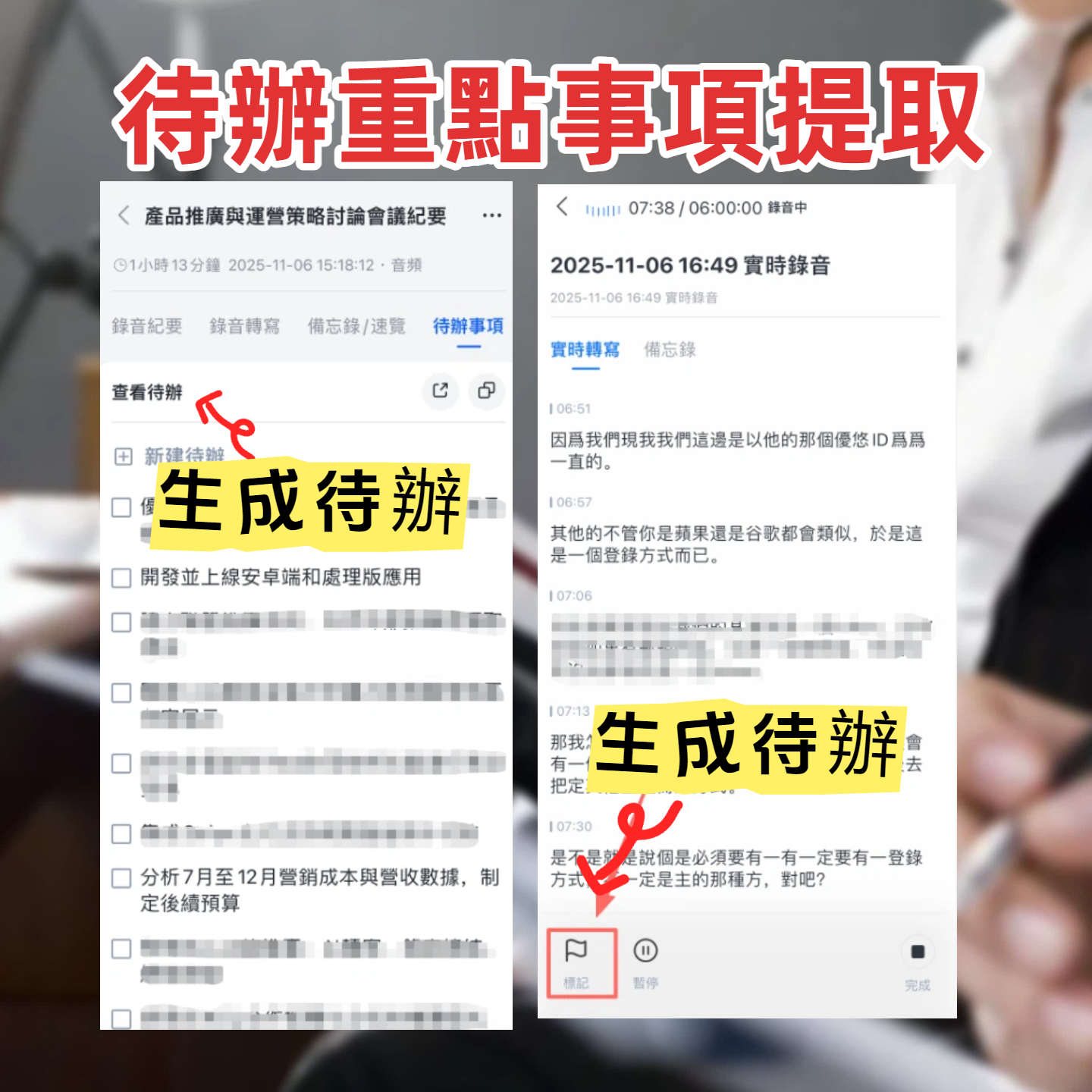
Tinrec treats "transcription" as just the first step. It automatically generates AI summaries, splits into chapters, extracts action items, and even supports presenting meeting structure with a Mind Map. You can also ask questions about historical recordings, such as "When was the budget from the last discussion due?" Tinrec will find the answer directly from the recording, turning every meeting into a searchable database.
Stop organizing recordings by hand
Upload audio or video and automatically get a transcript, summary, and action items
→ Verdict: Tinrec clearly wins in this dimension.
Dimension 3 | Input Sources and Cross-Platform Flexibility
Teams' transcription is locked to Teams meetings. If you have a recording from an in-person meeting, a recording from a client, or need to organize an online course video, Teams is completely useless.
Tinrec's design covers more scenarios: it supports live recording, uploading audio/video files (mp3, mp4, etc.), pasting links from YouTube/Bilibili/Rednote (Xiaohongshu) etc. for direct transcription, and offers iOS, Android, and web versions. No matter where you meet or what device you use to record, you can import it into Tinrec for unified processing.
→ Verdict: Tinrec clearly wins in this dimension.
Dimension 4 | AI Q&A and Subsequent Applications
Teams currently does not have a built-in AI conversational query feature for transcribed content. You can only manually search for keywords in the transcript or rely on memory to replay the recording.
Tinrec's AI conversational query lets you ask questions in natural language, such as "What risks were mentioned in this meeting?" or "What were the responses from each department regarding Q3 goals?" The system provides summary-style answers from the recording content, with relevant paragraphs highlighted. This feature dramatically cuts down on time spent verifying details, making it especially useful for users who frequently need to review multiple meetings.
→ Verdict: Tinrec clearly wins in this dimension.
Dimension 5 | Pricing and Accessibility
While Teams' transcription may seem like a "free bonus," its value is limited by your Microsoft 365 plan, and it only handles the task of transcription itself. Once you need more comprehensive note organization or cross-platform use, Teams falls short.
Tinrec offers a free version to try out, and for larger volumes or more advanced features, there are flexible plans like weekly, Pro monthly, and annual subscriptions. For a light-to-moderate user with 10 meetings per month at 1 hour each, the cost of the Pro plan is less than a cup of specialty coffee, yet it saves far more in manual organization time.
→ Verdict: If we only consider "meeting transcription," Teams incurs no extra cost for users who already pay for M365. But if the goal is to "get truly usable meeting notes," Tinrec offers better overall cost-effectiveness.
What Are Their Unique Advantages?
Tinrec's Unique Advantages
- Beyond transcription, helps you understand content: Auto-summaries, chapters, action item extraction drastically reduce post-meeting organization time.
- Cross-source integration: Processes recordings from Teams, Google Meet, Zoom, as well as in-person recordings, media files, and web videos — all into one knowledge base.
- AI conversational query: Ask questions about the entire recording and get key answers instantly, without having to listen from start to finish.
- Flexible plans, low entry barrier: Free tier to experience core features; paid plans are also affordable.
Teams' Unique Advantages
- Deep integration with Microsoft ecosystem: Transcription works directly within the Teams interface and can integrate with Outlook, OneNote, etc.
- Enterprise-grade security and management: If your team is fully on Microsoft 365, it offers better compliance and permission control.
Conclusion: Which One Should You Choose?
If you've been debating between Google Meet and Teams, then the "meeting notes and post-meeting organization" aspect is actually another key decision. No matter which video platform you ultimately choose, you'll need to turn meeting content into actionable information for your team.
• If you need meeting notes with summaries, key points, and action items quickly → Choose Tinrec. It doesn't just transcribe; it formats meeting content directly into a ready-to-send version for your boss or clients.
• If your meetings often mix Chinese and English, or you need to organize in-person meetings or course recordings → Choose Tinrec. It has an advantage in Chinese and mixed-language recognition and cross-source input.
• If you want to ask questions about past meetings and quickly find details → Choose Tinrec. This is something Teams currently cannot do at all.
• If your team is heavily reliant on Microsoft 365 and only needs a "better than nothing" reference transcript → The built-in transcription in Teams may be sufficient.
In a nutshell: Tinrec turns meeting recordings into truly actionable intelligence, not just a long text to be organized. We recommend downloading the free version of Tinrec and trying it out at your next meeting to experience the ease of getting a meeting summary within 5 minutes after the meeting.
Turn every recording into actionable outcomes
Get 60 free transcription minutes when you sign in. No credit card required.
Related Reading
You might also like
2026 Mac Recording-to-Text App Comparison: Which AI Meeting Notes Really Save Time?
Apple's built-in Voice Memos makes recording easy, but it can't transcribe audio. This article hands-on tests Tinrec, Otter.ai, and Notta, covering accuracy, AI summaries, cross-platform support, and free plans, to help you find the best fit for meetings, classes, and interview notes.

iPhone Voice-to-Text Test in 2026: Built-in Dictation vs. Apps Compared, This AI Q&A App Made Note-Taking 3x Faster
A college senior tested iPhone voice-to-text methods, from built-in dictation to third-party apps. See how Tinrec’s free plan saved 3 hours of note-taking time per week, plus a pitfall guide and student-focused buying advice.

iPhone 17 Screen Recording Free Options in 2026: 5 Tools Reviewed
How to screen record on iPhone 17? This article covers built-in screen recording, Dual Capture tips, and recommends tools like Tinrec to transcribe audio from recordings, from free to paid options.

Best AI Meeting Recorder Tools in 2026: Automatic Summaries, Action Items, and Multi-Source Organization
Looking for an AI meeting note tool but not sure where to start? This article reviews 6 top solutions—from automatic summaries and action items to cross-platform collaboration—and shows you how to save up to 80% of your meeting note time with the right tool.
2026 Free AI Meeting Notes Tools Buyer's Guide: 2 Hands-On Reviews and Practical Tips
Don't want to spend money on hardware but still want to use AI to organize meeting recordings? I actually compared Tinrec, a pure software tool that provides instant recording, with Plaud Note, which integrates hardware. From free plans, recording sources, post-processing capabilities, to cross-platform flexibility, this guide helps you find the best free AI meeting notes solution for your needs.

iPhone Call Recording in 2026: Do You Still Need Tinrec? 3 Reasons to Convince You
iPhone's built-in call recording in iOS 18.1 is handy, but organizing recordings still takes time. This article shows how Tinrec turns call recordings into searchable notes, summaries, and to-dos to boost learning and work efficiency.

2026 Hands-On Comparison of 4 Computer Recording Tools: More Than Just Recording, They Help You Organize Key Points
Struggling to organize your computer recordings after capturing them? This test of 4 computer recording tools — from free options to AI-powered organization — helps you find the most suitable solution.

2026 Complete Guide to AI Meeting Minutes: Auto-Generated Transcripts and Action Items to Double Meeting Efficiency
Still wasting time on meeting minutes? This article shows how to use AI recording tools to auto-generate transcripts, summaries, and action items, with hands-on comparisons of Tinrec, Notta, Otter.ai and more to help you pick the best solution.

2026 iPhone Screen Recording with Audio: 2 Methods Compared — Is the Built-in Feature Good Enough?
Can iPhone screen recording capture audio? This hands-on comparison tests the built-in screen recorder against two third-party apps, showing how to record system sounds and ambient sound, and explains the common causes of no-audio issues and how to fix them.