

Turn recordings into transcripts and summaries in minutes
Upload audio or video for multilingual transcription, AI notes, and action items
If you’ve used Notta for speech-to-text, you may have noticed the free plan only gives 120 minutes per month with limited features. For those needing more flexibility and advanced post-processing, Tinrec (seconds recording) is a worthy alternative. It integrates real-time transcription, audio file uploads, and online video link parsing, supporting iOS, Android, and web. Its free plan offers a monthly basic transcription quota, ideal for meetings, learning, interviews, and content creators.
Why Are People Looking for Notta Alternatives?
Notta is a well-known multi-platform transcription tool used for meeting notes, verbatim transcripts, and language translation, appealing to business professionals and content creators. However, after some use, people find the free quota only covers very light usage—longer course recordings or multiple meetings quickly eat it up. Plus, if you need to transcribe content from platforms like YouTube or Xiaohongshu, or want to further organize, query, and generate reports after transcription, Notta’s support may fall short. If you’re facing these issues, Tinrec might offer a more comprehensive solution.
Tinrec vs Notta: Key Differences in Core Experience
Language Support and Chinese Optimization
For Chinese users, accurate recognition of mixed Chinese-English, colloquial terms, and professional jargon is crucial. Tinrec was designed with a focus on optimizing for Chinese dialects (including Cantonese), closely matching local usage patterns, and delivering better recognition for daily conversations and meetings in Taiwan and Hong Kong. While Notta supports multiple languages, Tinrec’s attention to Traditional Chinese scenarios gives it an edge in detail.
AI Post-Processing Capabilities
Transcribing verbatim is just the first step. Tinrec includes built-in AI organization features: auto-summarization, chapter splitting, action item extraction, and even a conversational Q&A where you can ask about the recording (e.g., "What was the meeting conclusion?" or "Who is responsible for what?"). These tools save browsing time and make data reusable. Notta also offers summaries, but Tinrec goes deeper with interactive Q&A and deliverables (like meeting minutes or reports), catering to users who need ongoing knowledge management.
Free Plan Completeness
The value of a free plan isn’t just minutes—it’s whether you can fully experience the core product. Tinrec’s free version opens key features like real-time recording, file import, and web link parsing, allowing you to test transcription and organization from various sources without restrictions that prevent you from judging suitability. Notta’s free plan offers 120 minutes monthly but may limit advanced features or input sources, making it harder to evaluate the full workflow.
Input Source Coverage
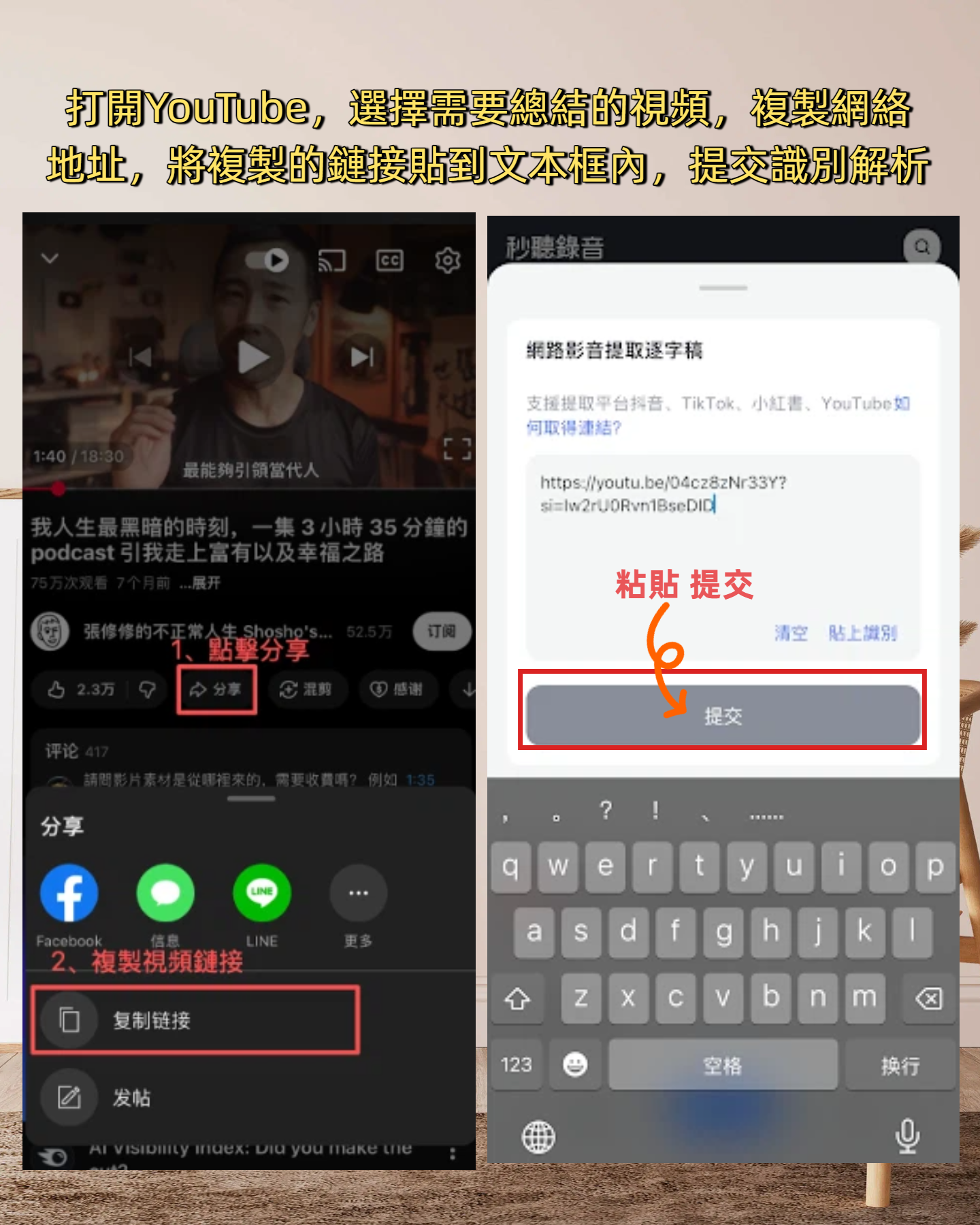
Modern audio-video sources go beyond meeting recordings. Tinrec emphasizes web video link parsing: paste links from YouTube, TikTok, Xiaohongshu, etc., and it transcribes and summarizes key points. This makes Tinrec not just a meeting assistant but a daily tool for online learning, competitor analysis, and content creation. Notta focuses mainly on meetings and document transcription, with less emphasis on online video.
Tinrec Core Features at a Glance
Real-Time Recording to Text
Open Tinrec, tap record, and text appears with less than a second delay. During meetings, you can follow the transcript to catch key points, and the moment the meeting ends, the transcript is ready—greatly reducing post-meeting catch-up work.
Web Video Link Parsing
Like a YouTube interview, tutorial, or Xiaohongshu unboxing? Copy the link into Tinrec, and it automatically extracts the audio, transcribes it, and produces summaries and highlights. This is very useful for quick information gathering and note-taking—no more manual listening and typing.
Stop organizing recordings by hand
Upload audio or video and automatically get a transcript, summary, and action items
AI Conversational Q&A
This is my favorite feature. After recording a one-hour meeting, just ask Tinrec: "What was the meeting conclusion?" "Who is responsible for what?" "Is the budget mentioned?" It answers based on semantic understanding—no need to scroll through 30 pages of transcript. You can also treat past recordings as a database, asking repeated questions to turn past discussions into usable knowledge.
Action Item Extraction
Meetings often produce many action items that are easy to forget. Tinrec automatically extracts tasks after transcription, clearly listing who is responsible and deadlines. You just review and add them to your task manager, ensuring every item is tracked.
Multi-Format Export
Export transcripts, summaries, and task lists as TXT, Word, or PDF, or sync to Notion, Google Docs, etc., for archiving, sharing, or further editing.
Practical Use Cases
Meeting Notes
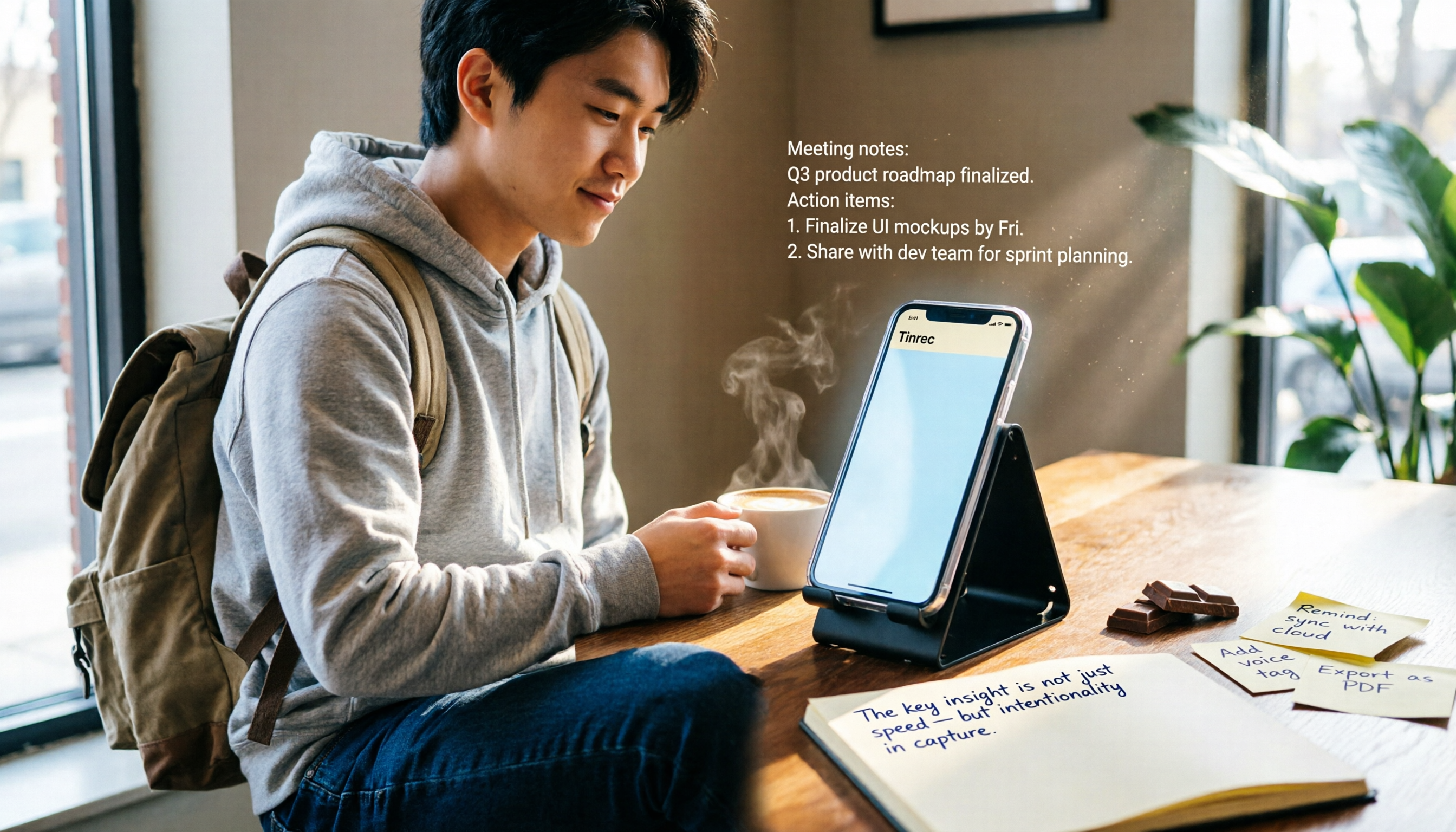
With recurring meetings, it’s easy to forget conclusions. Use Tinrec for real-time recording; as it transcribes, the moment the meeting ends you have a transcript plus AI summary, with action items flagged. You can share results with attendees, saving time.
Class Notes
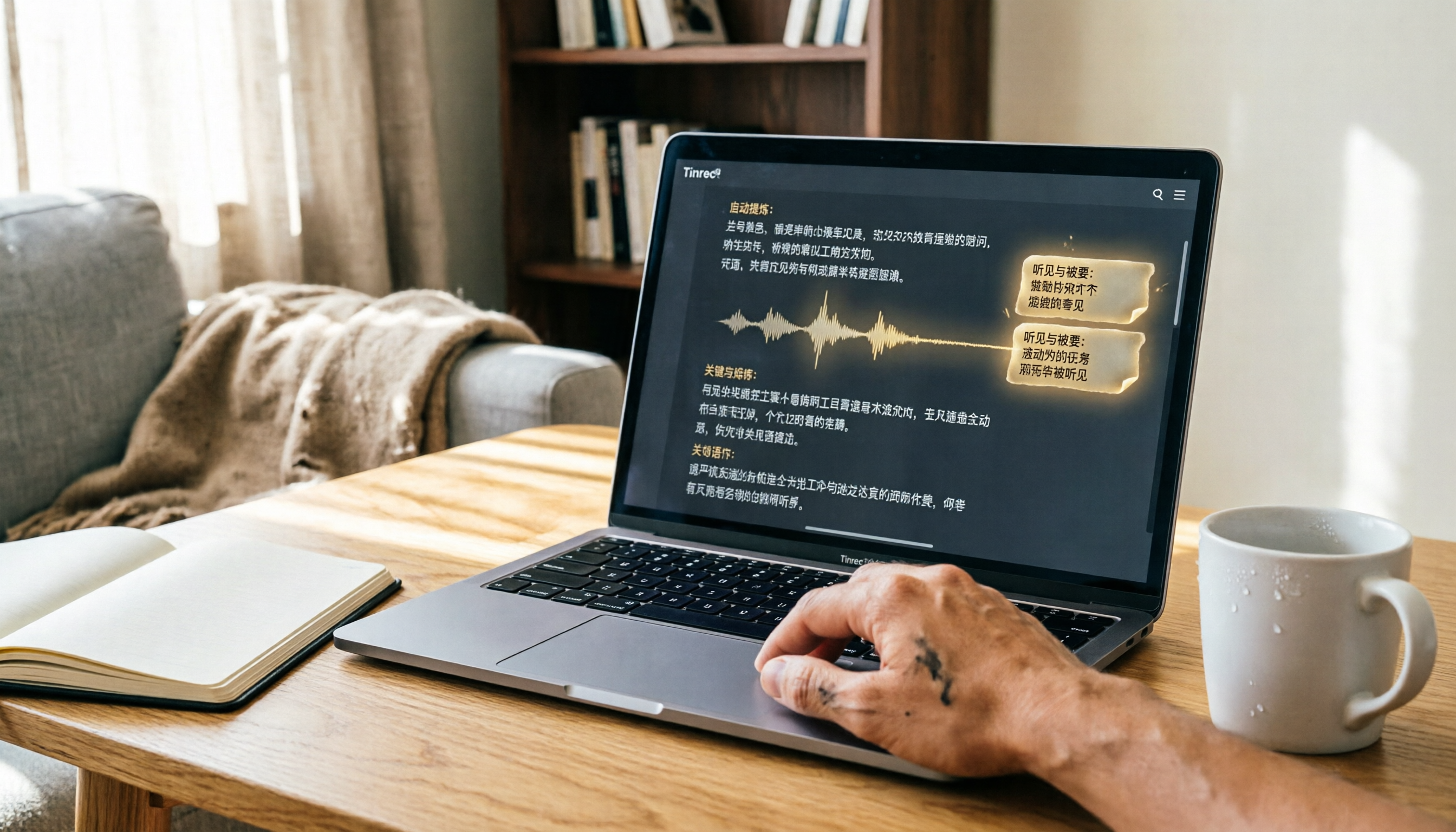
During lectures or online courses, frantic note-taking can distract you. Turn on Tinrec to record and transcribe; focus on listening, then review key points via AI summaries and chapters after class. You can even ask questions about the notes to reinforce memory.
Interview Transcription
After user interviews or expert interviews, hours of listening and typing are typical. Tinrec transcribes instantly and extracts key quotes and perspectives, providing material for subsequent analysis reports quickly.
Personal Knowledge Base
Record ideas on the fly, transcribe online videos, import all meeting notes into Tinrec—it becomes your personal search engine. Later, when you need details from a past discussion, just ask via conversational Q&A—no more searching aimlessly.
What to Look for in a Speech-to-Text Tool
Multi-Source Input Support: Besides real-time recording, does it support file uploads and web video links? This determines versatility. Tinrec offers comprehensive coverage, letting you avoid switching tools for different sources.
Post-Transcription Organization: Raw text isn’t enough; summaries, chapters, tasks, and Q&A are the real time-savers. Tinrec’s AI post-processing workflow extends transcription into understanding.
Free Plan Core Features: Some tools lock advanced features in the free version, making it hard to assess value. Tinrec’s free plan lets you experience nearly all features—minutes are limited, but enough for an informed decision.
Cross-Platform and Mobile Experience: Work often shifts between phone and computer. Tool support for iOS, Android, and web directly affects smoothness. Tinrec delivers native-like experiences on all three, ready anywhere.
Language Support and Localization: If you often handle Traditional Chinese or Cantonese, localization quality greatly affects accuracy. Tinrec has invested heavily here; real-world recognition of mixed Chinese-English and daily conversation is reliable.
Conclusion: Is Tinrec Worth Trying?
If you’re looking for a tool that handles meetings, classes, interviews, web videos, and deep AI organization after transcription, Tinrec is one of the few one-stop solutions on the market. Especially for Traditional Chinese and Cantonese users, Tinrec’s localization makes a noticeable difference. Download the free version and test with your own recordings and videos—that’s more direct than any review.
Frequently Asked Questions
How many minutes does the Tinrec free plan include?
The free plan provides a basic monthly transcription quota sufficient to experience core features like real-time recording, file import, and web link parsing. Exact minutes may vary with plan updates; check the official site for the latest.
What languages does Tinrec support?
It supports 14 languages including Chinese, English, and Cantonese, with more being added. Traditional Chinese and Cantonese have been specially optimized.
What’s the difference between Tinrec and Notta?
Notta is an excellent transcription and meeting notes tool with a free plan of 120 minutes. Tinrec focuses more on AI-powered organization, conversational Q&A, and web video parsing. Its free plan offers a complete workflow. If you need broader audio-video content management, Tinrec is a better fit.
Can I transcribe online videos?
Yes. Paste links from platforms like YouTube, TikTok, or Xiaohongshu, and Tinrec automatically extracts and transcribes the audio, generating summaries and key points.
How accurate is it?
In clear environments like meetings and lectures, Tinrec provides high-quality transcription. Actual accuracy depends on audio quality, background noise, and accents. Test with your own recordings.
What export formats are available?
Export as TXT, Word, PDF, or sync to Notion, Google Docs, and other note-taking and document tools.
Turn every recording into actionable outcomes
Get 60 free transcription minutes when you sign in. No credit card required.
Related Reading
You might also like
2026 Mac Recording-to-Text App Comparison: Which AI Meeting Notes Really Save Time?
Apple's built-in Voice Memos makes recording easy, but it can't transcribe audio. This article hands-on tests Tinrec, Otter.ai, and Notta, covering accuracy, AI summaries, cross-platform support, and free plans, to help you find the best fit for meetings, classes, and interview notes.
iPhone Voice-to-Text Test in 2026: Built-in Dictation vs. Apps Compared, This AI Q&A App Made Note-Taking 3x Faster
A college senior tested iPhone voice-to-text methods, from built-in dictation to third-party apps. See how Tinrec’s free plan saved 3 hours of note-taking time per week, plus a pitfall guide and student-focused buying advice.

iPhone 17 Screen Recording Free Options in 2026: 5 Tools Reviewed
How to screen record on iPhone 17? This article covers built-in screen recording, Dual Capture tips, and recommends tools like Tinrec to transcribe audio from recordings, from free to paid options.

Best AI Meeting Recorder Tools in 2026: Automatic Summaries, Action Items, and Multi-Source Organization
Looking for an AI meeting note tool but not sure where to start? This article reviews 6 top solutions—from automatic summaries and action items to cross-platform collaboration—and shows you how to save up to 80% of your meeting note time with the right tool.
2026 Free AI Meeting Notes Tools Buyer's Guide: 2 Hands-On Reviews and Practical Tips
Don't want to spend money on hardware but still want to use AI to organize meeting recordings? I actually compared Tinrec, a pure software tool that provides instant recording, with Plaud Note, which integrates hardware. From free plans, recording sources, post-processing capabilities, to cross-platform flexibility, this guide helps you find the best free AI meeting notes solution for your needs.

iPhone Call Recording in 2026: Do You Still Need Tinrec? 3 Reasons to Convince You
iPhone's built-in call recording in iOS 18.1 is handy, but organizing recordings still takes time. This article shows how Tinrec turns call recordings into searchable notes, summaries, and to-dos to boost learning and work efficiency.

2026 Hands-On Comparison of 4 Computer Recording Tools: More Than Just Recording, They Help You Organize Key Points
Struggling to organize your computer recordings after capturing them? This test of 4 computer recording tools — from free options to AI-powered organization — helps you find the most suitable solution.

2026 Complete Guide to AI Meeting Minutes: Auto-Generated Transcripts and Action Items to Double Meeting Efficiency
Still wasting time on meeting minutes? This article shows how to use AI recording tools to auto-generate transcripts, summaries, and action items, with hands-on comparisons of Tinrec, Notta, Otter.ai and more to help you pick the best solution.

2026 iPhone Screen Recording with Audio: 2 Methods Compared — Is the Built-in Feature Good Enough?
Can iPhone screen recording capture audio? This hands-on comparison tests the built-in screen recorder against two third-party apps, showing how to record system sounds and ambient sound, and explains the common causes of no-audio issues and how to fix them.