
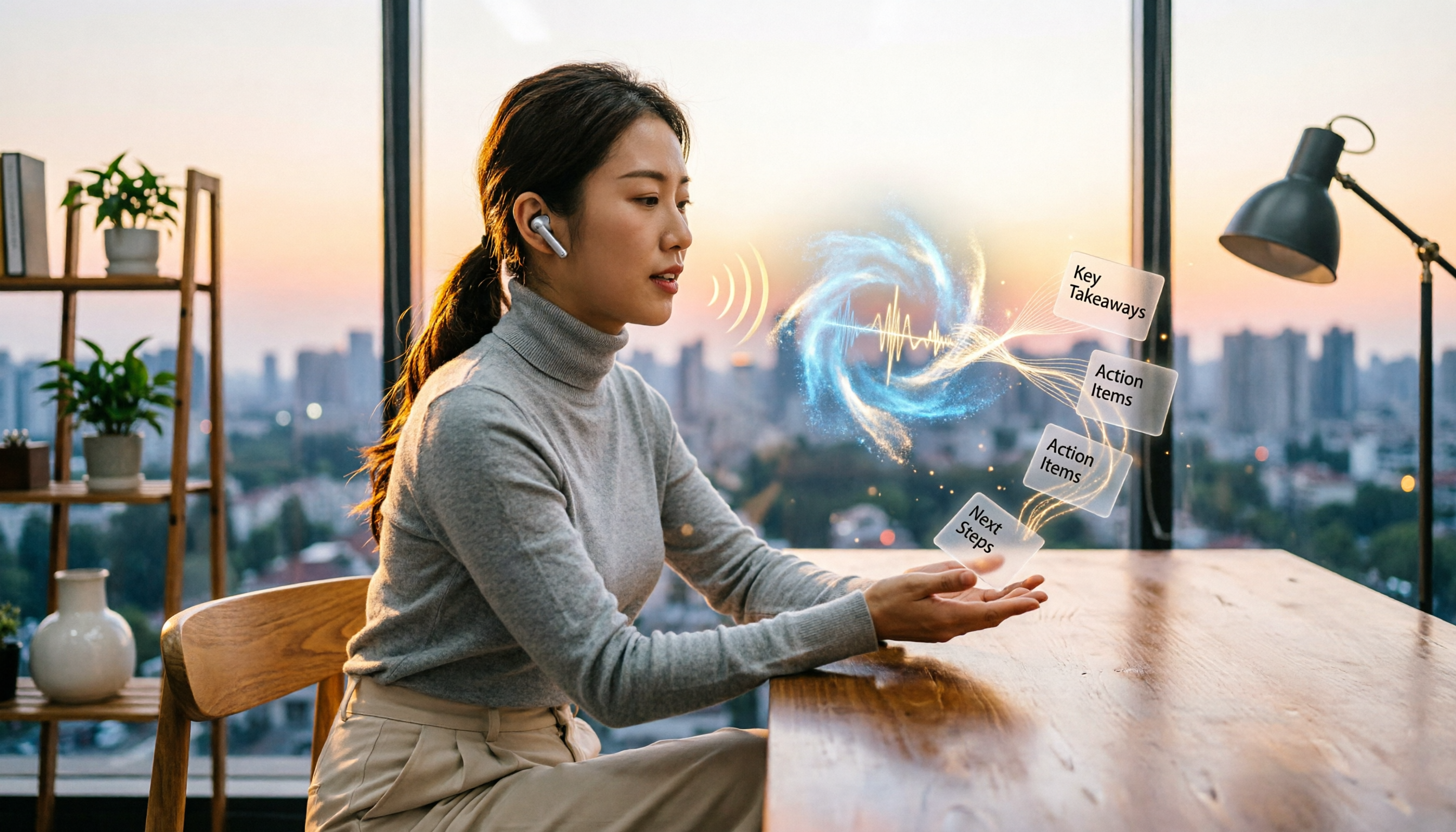
Turn recordings into transcripts and summaries in minutes
Upload audio or video for multilingual transcription, AI notes, and action items
Why Are People Looking for Google Meet Alternatives?
Google Meet is a go-to for many online meetings—you just need a Google account to start a free video conference. However, two common frustrations arise: many people don't want to tie themselves to Gmail and find registering another account annoying; second, while Google Meet's built-in recording is convenient, you still have to manually transcribe and find key points afterward. If you've faced these issues, Tinrec's instant recording is worth checking out.
Tinrec vs Google Meet: Key Differences in Core Experience
Google Meet's core is "call quality," but it offers almost no help with post-meeting organization. Tinrec is the opposite—it doesn't handle calls but turns meeting recordings into "actionable knowledge." I picked four scenarios you'll definitely encounter to show the differences.
Post-Meeting Transcripts and Summaries
Google Meet can record audio but won't transcribe or summarize it. With Tinrec, just upload the recording and get a full transcript and AI summary in minutes, with automatic chaptering and key sections highlighted. A one-hour meeting usually requires only a 300-word summary to grasp 80% of the key points.
Automatic Action Item Extraction
Still scrambling to jot down action items during meetings? Tinrec can automatically extract "who needs to do what" from the conversation and create a task list. I tested it on several project meetings, and it even picked up vague commitments like "report to be submitted before the next meeting."
Cross-Platform and Language Support
Google Meet works on most devices, but its transcription supports only a few languages. Tinrec covers 14 languages, with particularly stable Traditional Chinese recognition. Whether you're using an iPhone, Android phone, or computer browser, just record and use it.
Post-Recording Extended Use
Google Meet recordings are basically just files that are rarely reopened. Tinrec recordings can become a knowledge base: you can ask it anytime, "What was the conclusion of the last meeting?" or "What requirements did the client mention?" and the AI will find answers from past recordings. This is extremely useful for long-term project tracking.
Tinrec's Core Features at a Glance
Real-Time Speech-to-Text
During a meeting, the text appears in real-time with less than a second delay. You can immediately verify if you misheard a number or name, and after the meeting, the transcript is already done.
Stop organizing recordings by hand
Upload audio or video and automatically get a transcript, summary, and action items
AI-Powered Query
This is my most-used feature. After uploading a recording to Tinrec, you can type questions like "What are the three key points of this session?" or "What matters most to the client?" It answers based on the content, saving you from flipping through dozens of pages of transcript.
Turn Online Videos into Text
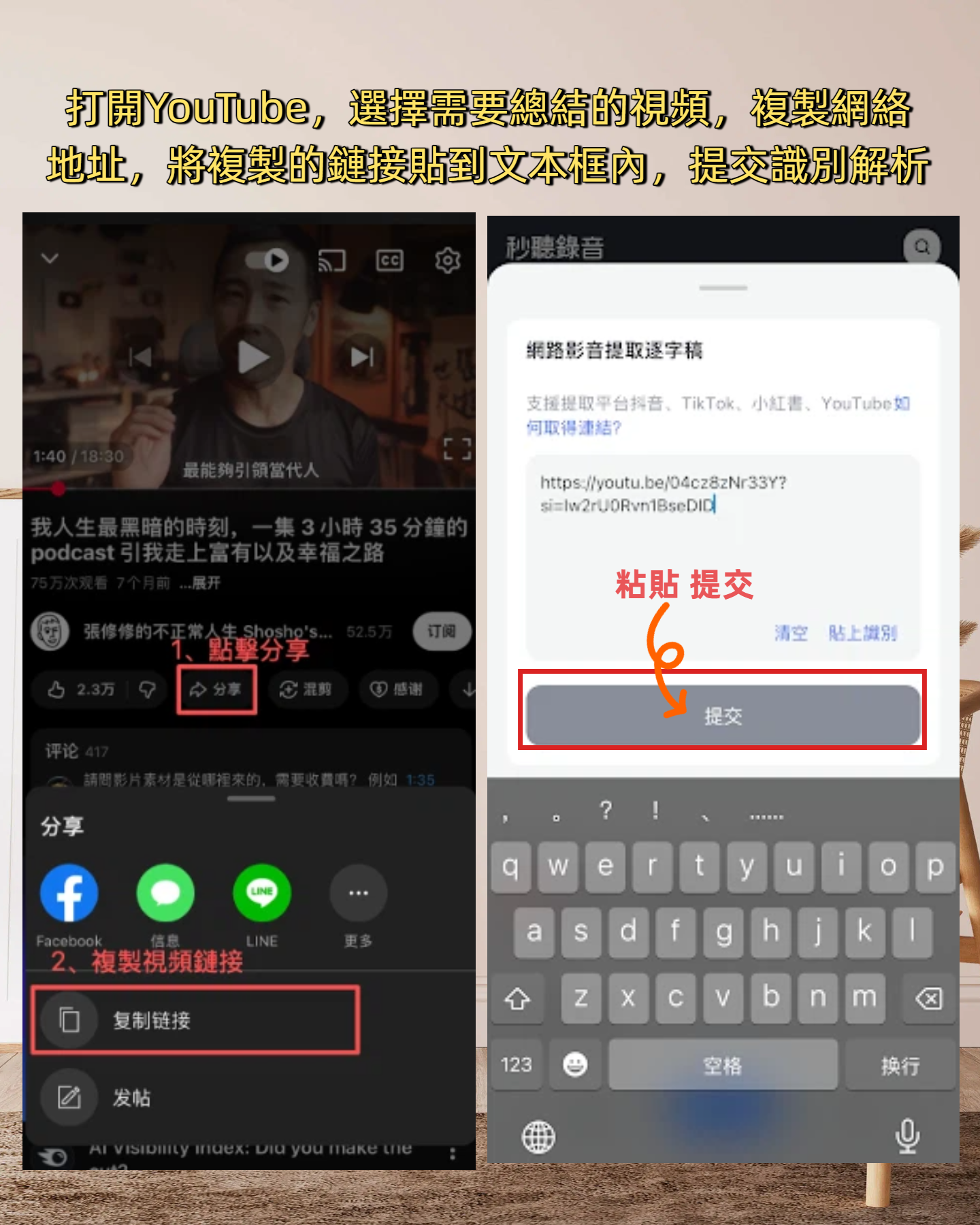
Just paste a YouTube or Bilibili video link, and Tinrec will parse the content, saving you time from watching long videos. This is very convenient for those who frequently gather material from online courses and presentations.
Multi-Format Export
Processed content can be exported as Word, PDF, TXT, or even sent directly to Notion or Google Docs. You don't have to change your existing workflow—Tinrec seamlessly integrates.
Practical Use Cases
Weekly Team Meetings
Colleagues discuss progress on Google Meet. You can record using your computer's built-in audio or your phone, then let Tinrec generate summaries and action items. It used to take 20 minutes to organize; now it's done in 3.
Online Course Review
The teacher conducts a class on Google Meet. You record while viewing real-time text, marking sections you don't understand. After class, use AI Q&A to grasp key concepts—much more efficient than frantically copying notes.
Client Requirement Interviews
Meet with clients on Google Meet, record, then use Tinrec to get a transcript and ask the AI "What budget constraints did the client mention?" No need to re-listen to the entire recording.
Personal Knowledge Accumulation
Archive all meeting recordings as a searchable database. Six months later, when your boss asks "Why did we decide to switch suppliers?" you can simply ask Tinrec, and it will find the context from old recordings.
What to Look for When Choosing a Speech-to-Text Tool
People often overlook a few points when selecting such tools. I've listed them below, along with how Tinrec performs.
- Language support: Many tools work well in English but mess up when Chinese is mixed with English. Tinrec handles mixed Chinese-English content more carefully.
- More than just transcription: If a tool only provides a transcript, it's no different from old-school voice recognition. Look for features like summaries, Q&A, and action item extraction that help you understand the content.
- Cross-platform convenience: You might record on your phone, upload files on your computer, and view results on a web page. Tinrec supports all three, so you don't have to compromise on device.
- Sufficient free tier: Tinrec's free plan provides a basic monthly allowance. Occasional users can try it without paying. For heavy use, you can purchase a weekly card or Pro plan.
Conclusion: Is Tinrec Worth a Try?
If you only occasionally use Google Meet, there's no need to switch. But if you have weekly meetings, courses, or interviews that need post-meeting processing, Tinrec will save you significant time. It transforms recordings from "just a file" into a resource you can query, search, and reuse—an experience rarely offered by other tools. I recommend downloading the free version of Tinrec and trying it with your own meeting recordings. The monthly plans are also flexible and worth investing in.
Turn every recording into actionable outcomes
Get 60 free transcription minutes when you sign in. No credit card required.
Related Reading
You might also like
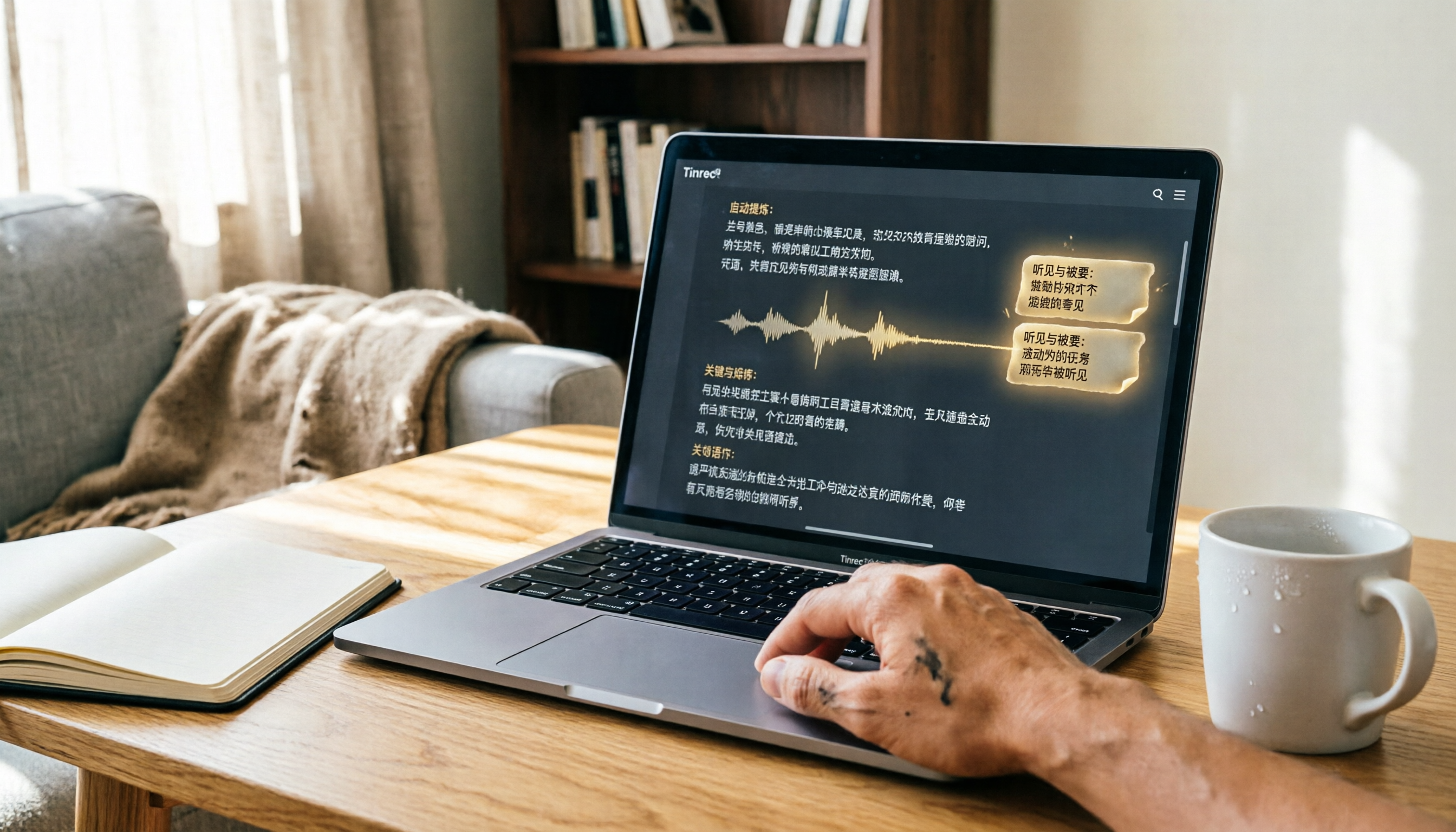
2026 Mac Recording-to-Text App Comparison: Which AI Meeting Notes Really Save Time?
Apple's built-in Voice Memos makes recording easy, but it can't transcribe audio. This article hands-on tests Tinrec, Otter.ai, and Notta, covering accuracy, AI summaries, cross-platform support, and free plans, to help you find the best fit for meetings, classes, and interview notes.
iPhone Voice-to-Text Test in 2026: Built-in Dictation vs. Apps Compared, This AI Q&A App Made Note-Taking 3x Faster
A college senior tested iPhone voice-to-text methods, from built-in dictation to third-party apps. See how Tinrec’s free plan saved 3 hours of note-taking time per week, plus a pitfall guide and student-focused buying advice.

iPhone 17 Screen Recording Free Options in 2026: 5 Tools Reviewed
How to screen record on iPhone 17? This article covers built-in screen recording, Dual Capture tips, and recommends tools like Tinrec to transcribe audio from recordings, from free to paid options.

Best AI Meeting Recorder Tools in 2026: Automatic Summaries, Action Items, and Multi-Source Organization
Looking for an AI meeting note tool but not sure where to start? This article reviews 6 top solutions—from automatic summaries and action items to cross-platform collaboration—and shows you how to save up to 80% of your meeting note time with the right tool.
2026 Free AI Meeting Notes Tools Buyer's Guide: 2 Hands-On Reviews and Practical Tips
Don't want to spend money on hardware but still want to use AI to organize meeting recordings? I actually compared Tinrec, a pure software tool that provides instant recording, with Plaud Note, which integrates hardware. From free plans, recording sources, post-processing capabilities, to cross-platform flexibility, this guide helps you find the best free AI meeting notes solution for your needs.
iPhone Call Recording in 2026: Do You Still Need Tinrec? 3 Reasons to Convince You
iPhone's built-in call recording in iOS 18.1 is handy, but organizing recordings still takes time. This article shows how Tinrec turns call recordings into searchable notes, summaries, and to-dos to boost learning and work efficiency.

2026 Hands-On Comparison of 4 Computer Recording Tools: More Than Just Recording, They Help You Organize Key Points
Struggling to organize your computer recordings after capturing them? This test of 4 computer recording tools — from free options to AI-powered organization — helps you find the most suitable solution.

2026 Complete Guide to AI Meeting Minutes: Auto-Generated Transcripts and Action Items to Double Meeting Efficiency
Still wasting time on meeting minutes? This article shows how to use AI recording tools to auto-generate transcripts, summaries, and action items, with hands-on comparisons of Tinrec, Notta, Otter.ai and more to help you pick the best solution.

2026 iPhone Screen Recording with Audio: 2 Methods Compared — Is the Built-in Feature Good Enough?
Can iPhone screen recording capture audio? This hands-on comparison tests the built-in screen recorder against two third-party apps, showing how to record system sounds and ambient sound, and explains the common causes of no-audio issues and how to fix them.