

Turn recordings into transcripts and summaries in minutes
Upload audio or video for multilingual transcription, AI notes, and action items
What You Need Isn't a Recorder, but Two Hours of Saved Time
Two hours in a meeting, another two hours sorting out the minutes—that's the daily grind for most office workers. Especially for online meetings on Google Meet, even though it has a built-in recording feature, you still have to listen again, transcribe, and extract key points, essentially running through the same content a second time.
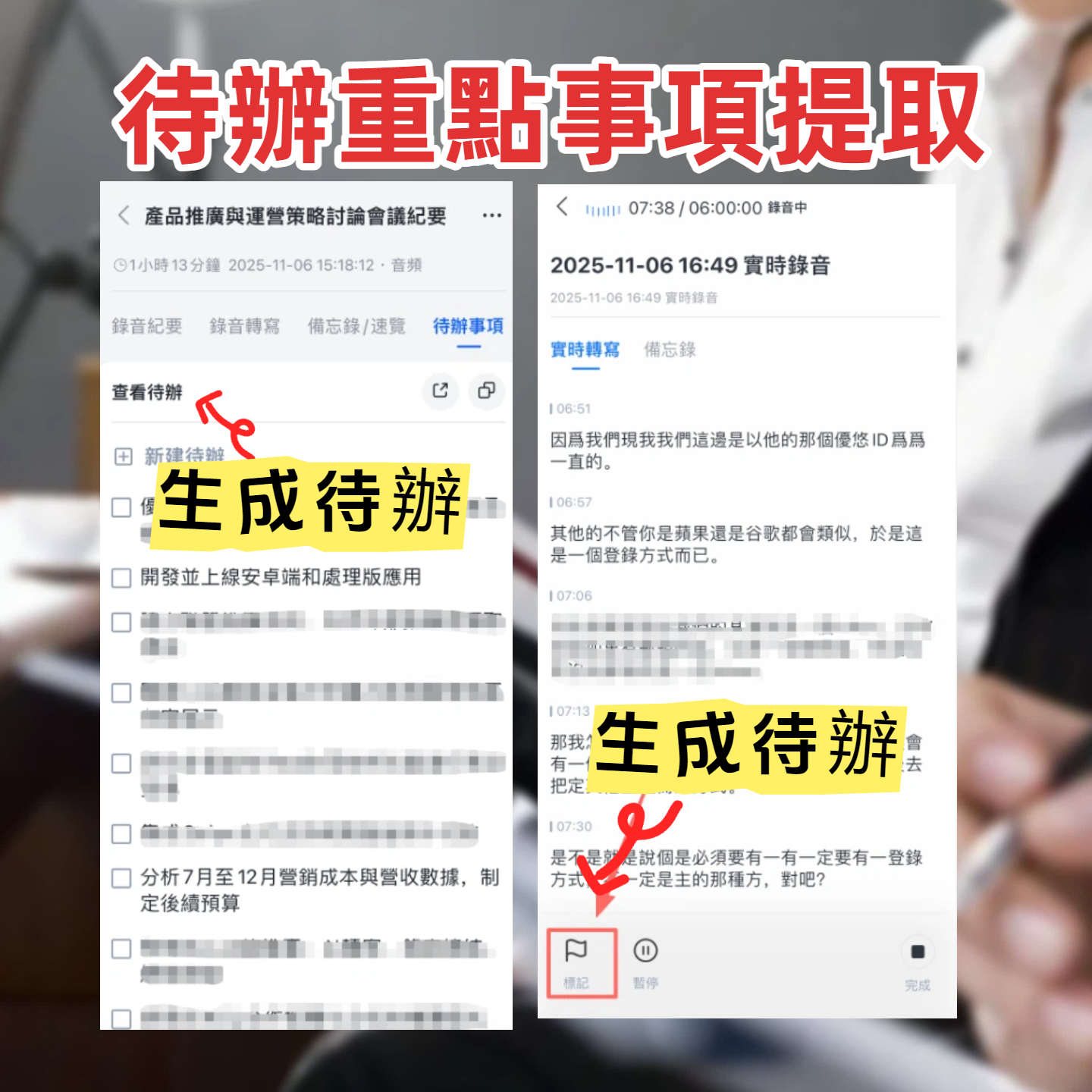
Even worse, if someone mentions action items during the meeting and you didn't jot them down, you'll have to manually replay that entire segment later, wasting a lot of time back and forth.
If you've ever faced this issue, this article is for you: we tested three meeting recording tools that work directly with Google Meet to see which one best helps you automatically generate AI summaries, to-do lists, and turn audio into searchable, reusable data.
Before Choosing a Google Meet Recording Tool, Understand These 3 Key Points
Many people compare prices and free allowances first when looking for meeting recording tools. But honestly, the factors that truly impact your workflow are often these more important dimensions.
What You Can Do After Transcription Matters More Than the Transcript Itself Simply "speech-to-text" is no longer impressive. What you should look for is what the tool can do after transcription: Can it automatically extract a summary? Can it turn discussions into to-do items? Can you ask questions to find a specific decision in the recording? If you only get a transcript, you've only solved the "typing" problem—you still need to organize and review manually.
Multi-Source Support Determines Whether You'll Use It Halfway Many tools tout themselves as "meeting bots," but they only support online meetings like Zoom or Teams, with Google Meet support being minimal or even non-functional. Moreover, if you later need to organize course recordings, interview audio, or YouTube videos, you'd have to find another tool, which is more trouble in the long run. Think about the types of audio content you might handle in the future, and choose a tool that covers them all.
Chinese Content Handling—You'll Notice the Difference After One Use Many overseas tools claim multi-language support, but when used for Chinese meetings or mixed Chinese-English discussions, they often miss key terms or turn proper nouns into weird combinations. Especially in Taiwanese workplaces, where mixed-language usage is common, the ability to correctly recognize and summarize directly affects the manual correction time needed later.
Tinrec (Instant Voice Recorder) – Our Top Pick After Testing
Tinrec (Instant Voice Recorder) is an AI recording and audio/video organization tool supporting 14 languages, covering iOS, Android, and web versions. It can directly record Google Meet meetings via system audio. It doesn't just convert speech to text; it turns meetings, courses, interviews, and online videos into actionable data.
Record, Transcribe, and Highlight Key Points in Real Time Once your Google Meet starts, open the Tinrec web version on your computer, select "record system audio," and it will generate a transcript in real time. By the time the meeting ends, the AI summary is already ready—key points, conclusions, and action items, all clear. You no longer need to replay the recording; just scan the summary to check for anything missed.
Not Just a Transcript; You Can Ask It Questions About the Meeting This feature impressed us the most. After recording, you can directly ask Tinrec conversational questions like, "Who mentioned the budget adjustment in the last meeting?" or "What's the deadline for this project?" It uses semantic understanding to give you the answer directly, not just keyword search results. Currently, few tools at this price point offer this ability to have a dialogue around the recorded content.
Stop organizing recordings by hand
Upload audio or video and automatically get a transcript, summary, and action items
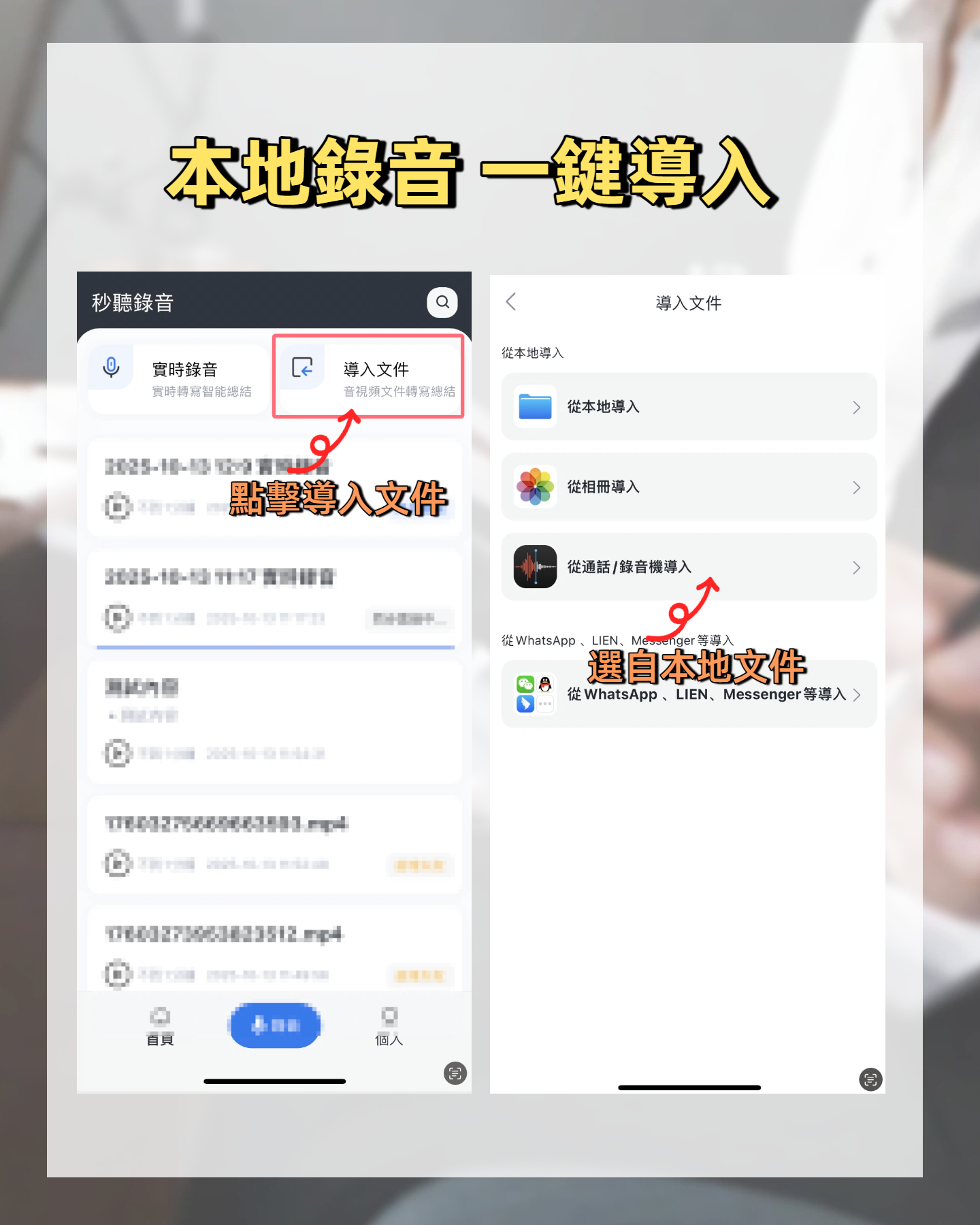
Handles Online Videos and Existing Files Too If besides meetings, you also need to organize course videos, interview recordings, or even public speeches on YouTube, Tinrec's web link parsing and file import features are especially useful. Paste a video link, and it will convert the content into text and summaries, automatically split into chapters for quick navigation later. This makes it a long-term audio/video knowledge base, not just a one-time transcription tool.
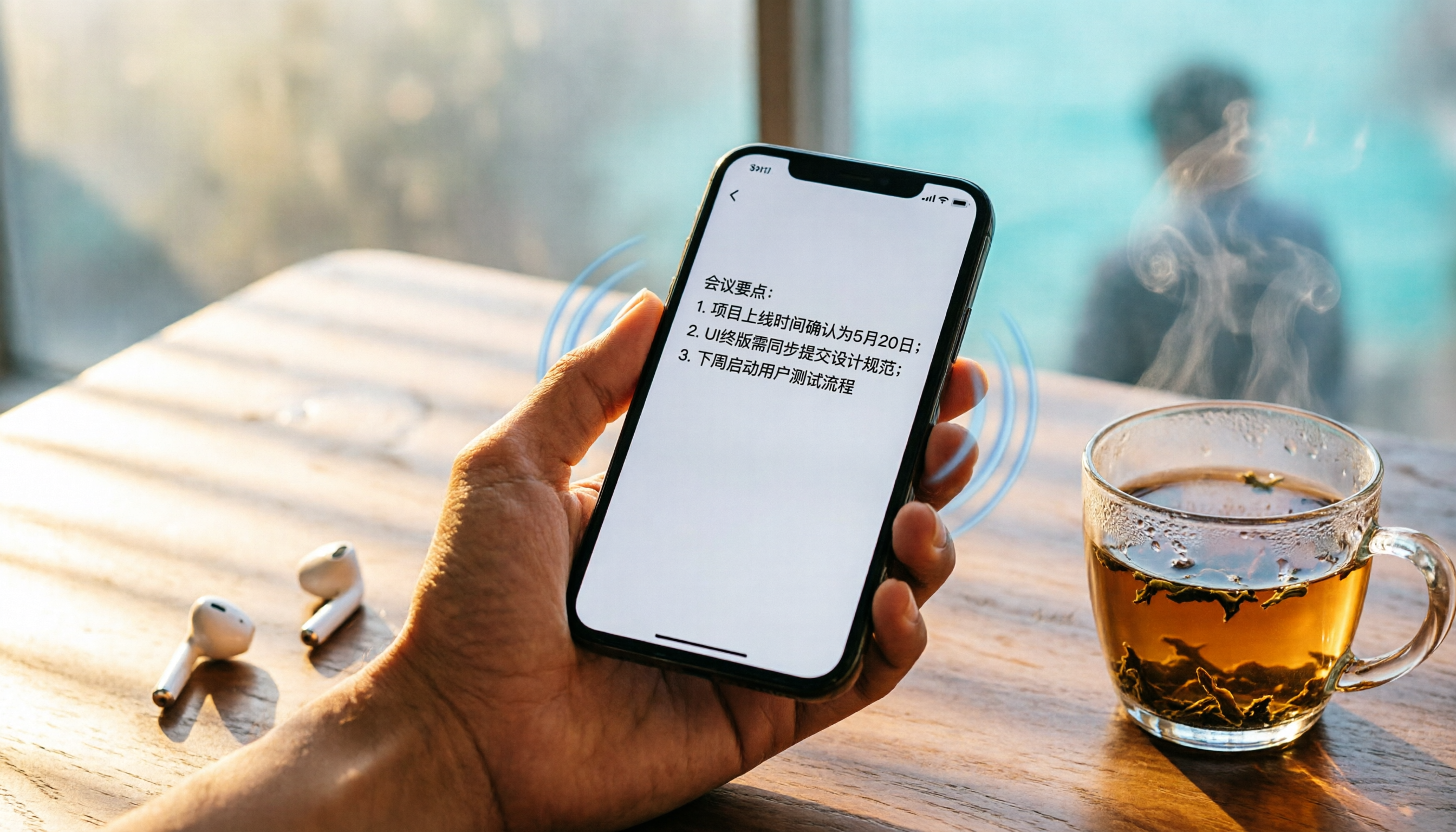
We tested a 15-minute Google Meet product discussion (with light keyboard clatter and air conditioning noise in the background). Tinrec's transcription of Chinese dialogue was very stable, with high accuracy for names and technical terms. The AI-generated summary captured the meeting's main topics and three decision points, and the action items were extracted so well that we barely needed manual edits before sharing with colleagues.
Pros
- Excellent Chinese meeting organization; summaries and to-do lists are highly usable
- AI Q&A feature lets you revisit meeting details anytime without replaying recordings
- Supports multiple input sources—not just meetings, but also files and online videos, offering great long-term flexibility
Cons
- The free plan has a basic monthly transcription allowance; heavy users need to pay. But for those with 2-3 meetings per week, the free version is a good way to try it out.
- Currently lacks an auto-join Google Meet bot feature; you need to start recording manually (though the benefit is capturing full system audio including all speakers)
Best For If you frequently record Chinese meetings, want to ask AI for key points after recording, and want to manage courses, interviews, or video materials with the same tool, Tinrec is currently the most suitable choice.
Other Options Besides Tinrec
Otter.ai: Best for English Meetings, Less Suitable for Chinese Otter.ai is a well-known AI meeting notes tool abroad, strong at automatically joining Zoom and Google Meet to generate meeting notes. However, our tests showed it performs less well with Chinese recognition and summaries compared to Tinrec. Its free plan offers 300 minutes, but it's designed primarily for English scenarios. If your meetings are mainly in English, Otter.ai may be more cost-effective; but for Chinese content or AI Q&A, Otter currently lacks this feature.
Fireflies.ai: Strong Integration, but Less Depth than Tinrec Fireflies.ai can join Google Meet, Zoom, and other meetings, providing transcription, summaries, and AI Q&A (AskFred). It integrates well with platforms and is suitable for team collaboration. However, its accuracy for Chinese meetings is mediocre, summaries are relatively generic, and it lacks support for parsing online videos or deep post-processing (like generating reports or tables). If you need deliverable organized results directly after a meeting, Tinrec's agent post-processing capabilities are more practical.
Pitfall Guide: 3 Common Mistakes When Choosing Meeting Recording Tools
Pitfall 1: Only Look at Free Allowance, Ignore Organization Capability Many tools offer hundreds of free transcription minutes per month, but after transcription, you only get a transcript. If you still need to replay and extract key points yourself, you've only saved typing time, not organization time. When choosing a tool, prioritize whether it provides comprehensive summaries, to-do lists, and Q&A features after transcription.
Pitfall 2: Choose a Tool That Only Supports One Meeting Platform Some tools can only auto-join Google Meet and are useless for other scenarios. If later you need to organize in-person meeting recordings, course files, or online videos, you'll have to find another tool. Choosing a cross-source, cross-platform tool will truly save effort in the long run.
Pitfall 3: Buy the Tool but Only Use a Third of Its Features Many people treat meeting recording tools as pure "speech-to-text" converters—they view the transcript and close it. But features like Tinrec's AI Q&A and web video parsing can save you even more time. Get into the habit of asking it for meeting conclusions and action items right after recording, and you'll discover its true value.
Summary: Which One Should You Choose?
Based on our tests, if your focus is on Chinese meetings, classes, or interviews, and you want to use AI to query key points after recording, Tinrec is currently the most comprehensive choice. Here's a direct recommendation based on different scenarios:
- Need AI summaries and to-do lists for Chinese meetings → Tinrec (highest summary usability, leading Chinese accuracy)
- Want to use Q&A to find meeting details after recording → Tinrec (currently the only one with deep AI Q&A)
- Need to organize videos and audio files outside Google Meet as well → Tinrec (supports web links and file imports)
- Occasional English meetings, don't mind manual organization → Otter.ai (generous free allowance, sufficient for English scenarios)
- Team needs high integration with Slack, Notion, etc. → Fireflies.ai (strong integration, but weaker Chinese organization)
We recommend downloading Tinrec's free version to try it out—it comes with a monthly basic allowance enough for 2-3 meetings to test the effect. If the AI summaries and Q&A prove helpful, then consider upgrading. No need to pay upfront.
Turn every recording into actionable outcomes
Get 60 free transcription minutes when you sign in. No credit card required.
Related Reading
You might also like

How to Quickly Start Recording on an iPhone in 2026: A Complete 3-Step Guide
Need to record something right away but can't find an app? This guide covers 3 practical ways to start recording instantly on iPhone, from the Action Button and Back Tap to Shortcuts home screen icons—one tap and you're recording. We also recommend Tinrec, a recording tool we found best for most people after hands-on testing. It doesn't just start fast; it automatically organizes transcripts, summaries, and to-do items after recording, making it incredibly convenient.

2026 AI Recording Tools Buyer's Guide: 2 Hands-On Tests and Recommendations
Want to buy the PLAUD Note voice recorder or just use the Tinrec app? This article compares them across 5 dimensions: recording scenarios, AI summarization, cross-platform support, Chinese accuracy, and price, to help you choose the best AI recording tool.
Best iPhone Call Recording Apps in 2026: 4 Tested, Tinrec Is the Most Practical Choice
Looking for a great tool to organize your iPhone call recordings? We tested Tinrec, Plaud Note, Yating Transcriber, and Otter.ai — from AI summaries to cross-platform support and Chinese accuracy — to help you pick the best recording-to-text app.

5 Speech-to-Text Tools Compared in 2026: From Free to Paid, All You Need to Know
Word can't record video, but can it transcribe audio? This article tests 5 tools, from free to paid, to help you find the best speech-to-text solution for the workplace. From a middle manager's perspective, here's why Tinrec is the top choice.

3 Voice-to-Text Tools Compared for 2026: Which Free Plan Is Enough?
Want to turn audio recordings into text without typing it all out? This article reviews 3 popular transcription tools and walks you through 5 easy steps using Tinrec to convert meeting, class, or interview recordings into key summaries and full transcripts. We also compare free plans and features so you can find the best option for your needs.
2026 Mac Recording-to-Text App Comparison: Which AI Meeting Notes Really Save Time?
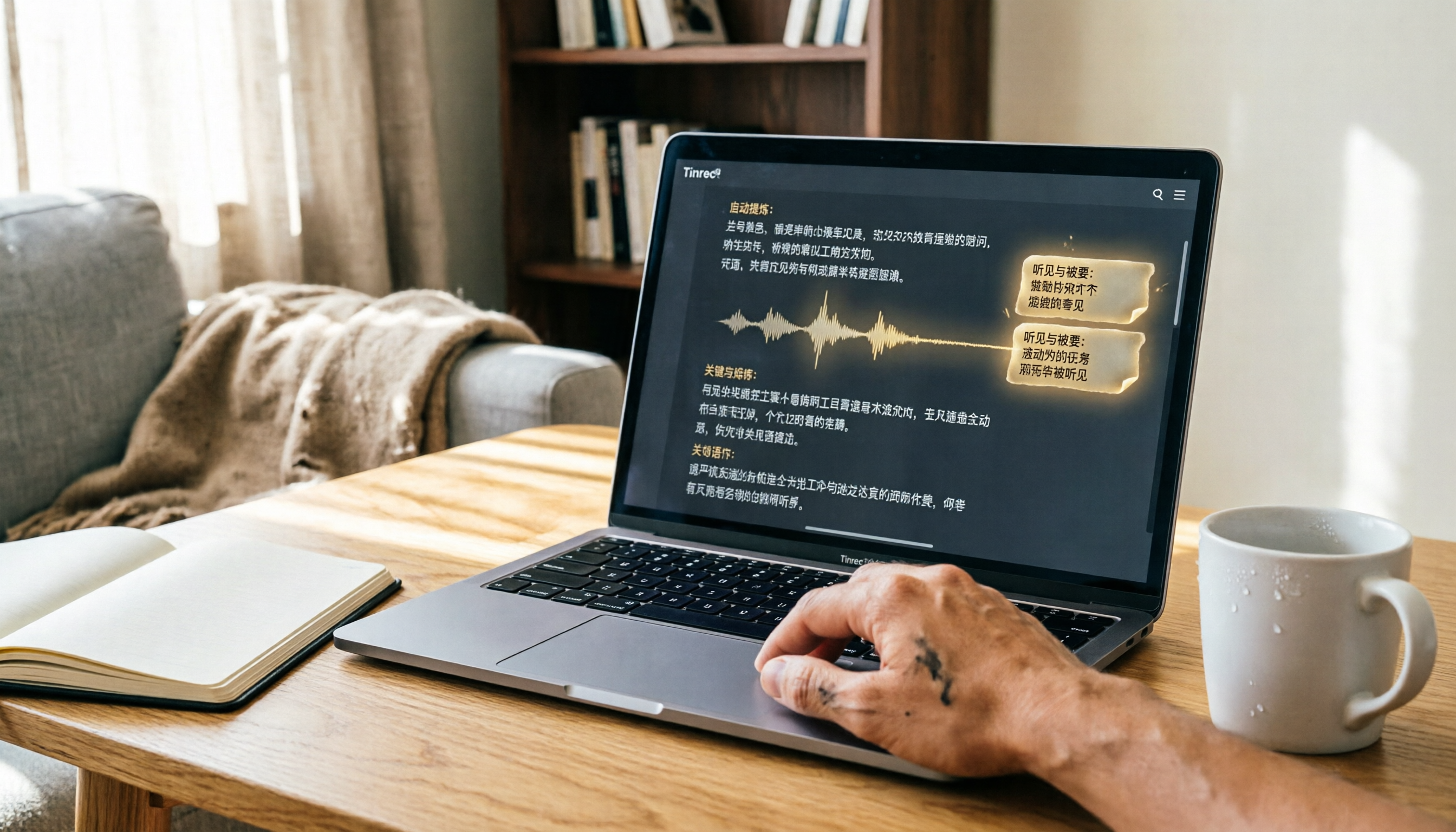
Apple's built-in Voice Memos makes recording easy, but it can't transcribe audio. This article hands-on tests Tinrec, Otter.ai, and Notta, covering accuracy, AI summaries, cross-platform support, and free plans, to help you find the best fit for meetings, classes, and interview notes.
iPhone Voice-to-Text Test in 2026: Built-in Dictation vs. Apps Compared, This AI Q&A App Made Note-Taking 3x Faster
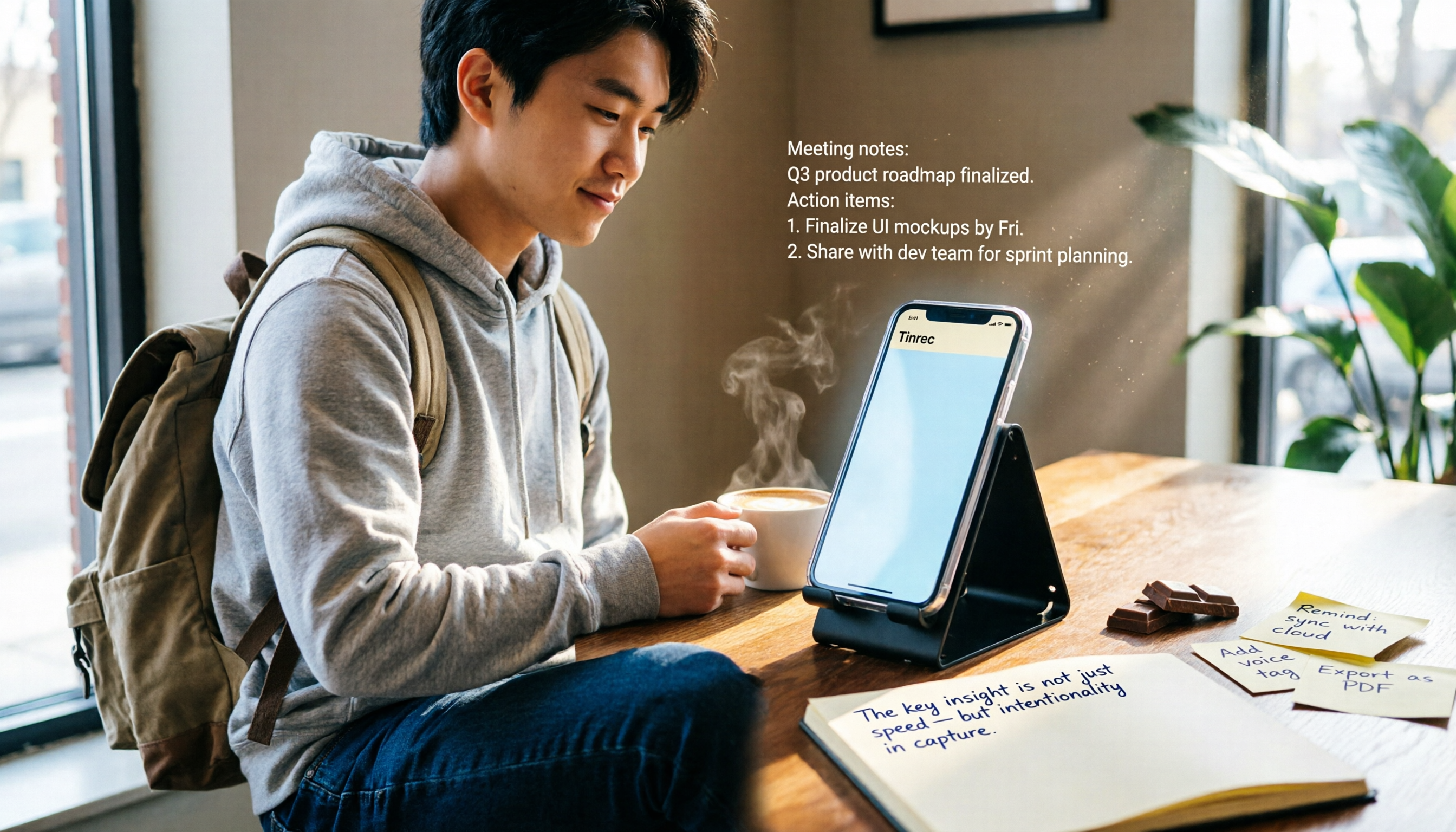
A college senior tested iPhone voice-to-text methods, from built-in dictation to third-party apps. See how Tinrec’s free plan saved 3 hours of note-taking time per week, plus a pitfall guide and student-focused buying advice.

iPhone 17 Screen Recording Free Options in 2026: 5 Tools Reviewed
How to screen record on iPhone 17? This article covers built-in screen recording, Dual Capture tips, and recommends tools like Tinrec to transcribe audio from recordings, from free to paid options.

Best AI Meeting Recorder Tools in 2026: Automatic Summaries, Action Items, and Multi-Source Organization
Looking for an AI meeting note tool but not sure where to start? This article reviews 6 top solutions—from automatic summaries and action items to cross-platform collaboration—and shows you how to save up to 80% of your meeting note time with the right tool.