

Turn recordings into transcripts and summaries in minutes
Upload audio or video for multilingual transcription, AI notes, and action items
2026 Tinrec vs Otter.ai: 5-Dimension Comparison – Which is Better for Google Meet Meeting Notes?
Last week, I had an important product demo with a client on Google Meet.
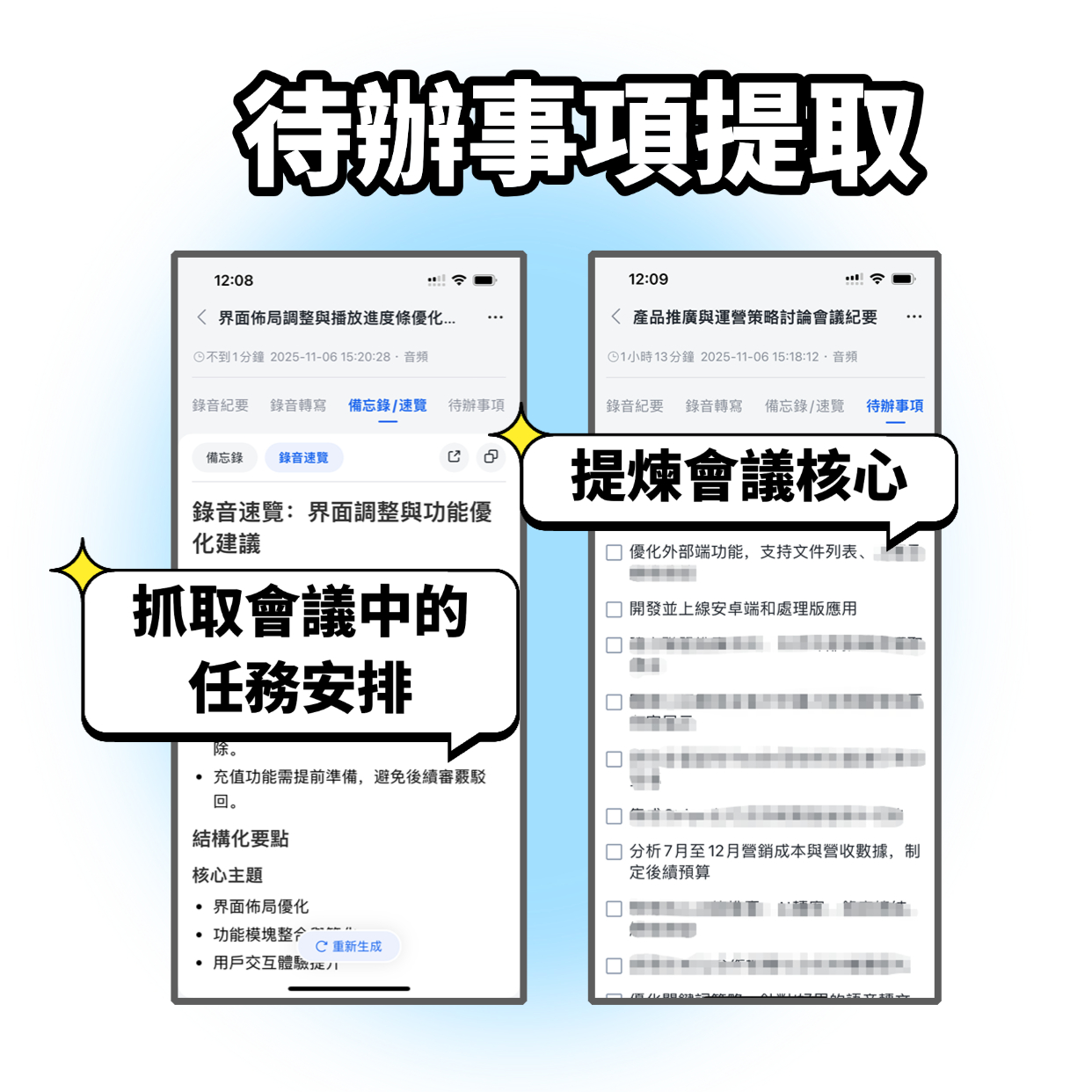
I shared my screen, walked through slides, and answered questions at the same time.
When the meeting ended, I realized—uh oh—I couldn’t quite recall the revision directions and client requirements we’d just discussed.
I flipped through my handwritten notes—scattered and messy.
So I decided that from now on, I need a tool that can automatically organize meeting content for me.
Why You Need Meeting Notes & Speech-to-Text
Many online meetings now happen on Google Meet, with people sharing screens and discussing.
But with so many meetings, relying on memory or simple notes often leads to missing key action items or client needs.
From my own experience, a one-hour meeting can take over half an hour to summarize properly.
So today, I’m sharing several tools that can help you quickly generate notes after Google Meet calls.
Option 1 | Tinrec – The Most Complete AI Recording Assistant
Tinrec is an AI recording and audio/video organization tool designed for meetings, learning, interviews, and content creation.
It not only transcribes your Google Meet recordings into text, but more importantly, it lets you “see” the meeting content.
After testing it, I found several key highlights of Tinrec:
It supports real-time speech-to-text.
When I share my screen on a Google Meet call, I can record with my phone or computer and see the text appearing in real time.
After the meeting, Tinrec automatically generates AI summaries, chapters, and action items.
This is crucial for me—I can quickly review what was discussed without listening to the entire recording.
Even better, Tinrec has an AI conversation search feature.
I can directly ask it, “What did the client say about the budget?” and it will find the relevant segment from the recording.
This goes beyond transcription—it turns recordings into a searchable, queryable knowledge base.
Moreover, Tinrec isn’t just for meeting recordings; it also supports importing audio/video files and pasting links from web videos (e.g., YouTube, Bilibili).
That means in the future, I can organize lecture recordings, interview audio, or online video materials all in one tool.
Pricing & Who It’s For: Tinrec offers a free plan with a basic monthly transcription quota. The Pro monthly plan suits regular users, while the annual plan offers better value.
I especially recommend it for those who frequently need to organize Google Meet meeting notes and also handle other types of audio/video content.
Option 2 | Otter.ai – Automatic Meeting Note Bot
Otter.ai is a well-known AI meeting notes tool among teams. Its strongest feature is automatically joining online meetings on Zoom, Google Meet, Teams, etc.
Compared to Tinrec, Otter is more focused on the “meeting” scenario, with excellent speaker identification and team collaboration features.
Key Highlights: Real-time transcription, meeting summaries, AI Chat, and 300 free minutes per month (more with paid plans).
Stop organizing recordings by hand
Upload audio or video and automatically get a transcript, summary, and action items
The downside is that Chinese content is not as well processed as English. In my past use, Chinese meeting summaries felt a bit brief.
Pricing: Free plan: 300 minutes/month; Pro annual: ~$8.33/month/user, includes 1,200 minutes and 10 file imports.
Best for overseas teams that prioritize English meetings and need team collaboration.
Option 3 | Notta – Multi-language Transcription and Translation Powerhouse
Notta’s positioning overlaps somewhat with Tinrec—both support multi-device transcription and meeting notes.
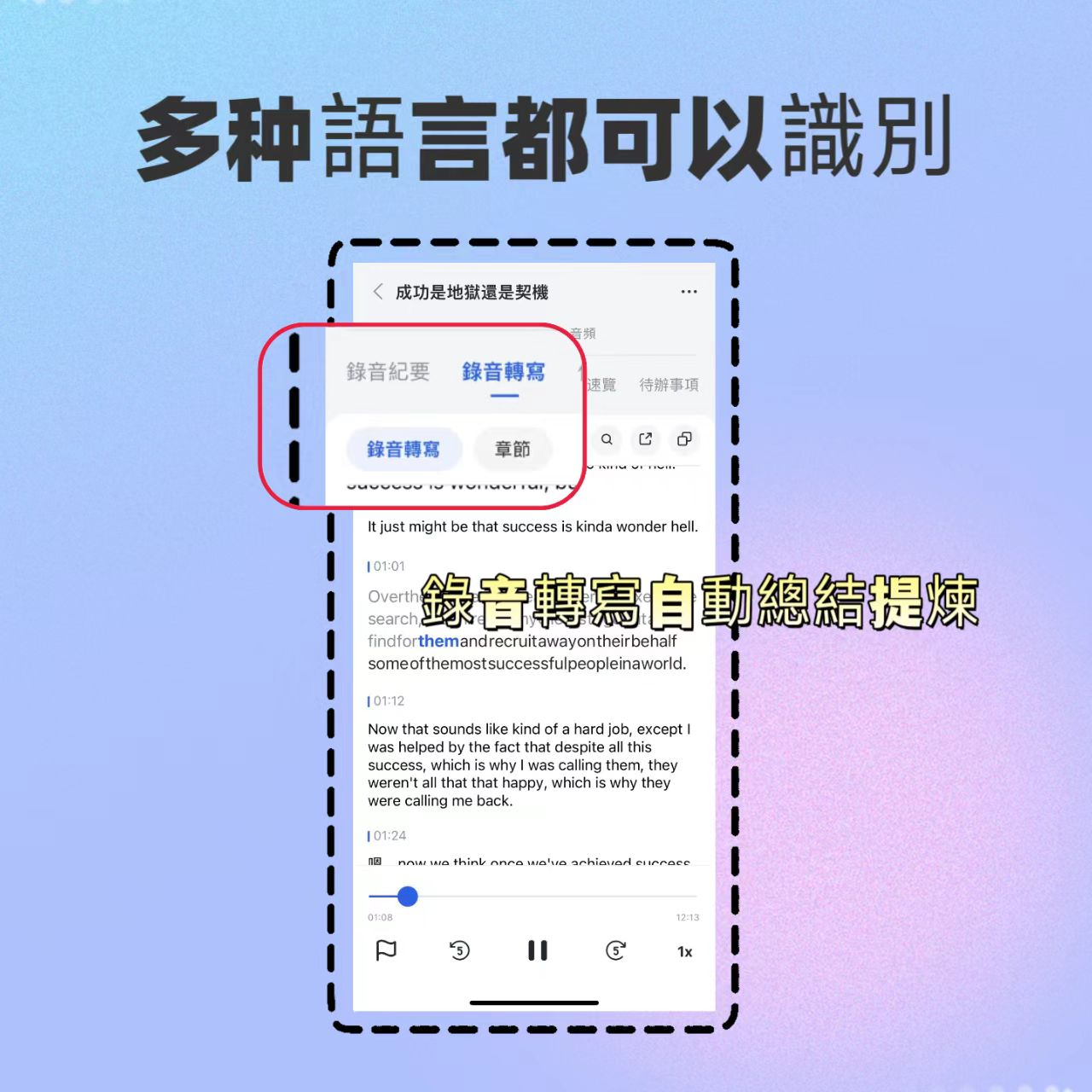
I once used Notta for a Chinese-English mixed meeting—its transcription speed was fast, and the translation feature was handy.
Key Highlights: 120 free transcription minutes per month; Pro annual: ~$8.17/month, provides 1,800 minutes, and supports subtitle export.
However, Notta leans more toward being a “pure transcription tool,” lacking the AI Q&A and deep organization capabilities that Tinrec offers around recordings.
Best for users who need heavy transcription, translation, and subtitle creation.
Option 4 | Fireflies.ai – Team Collaboration Meeting Assistant
Fireflies.ai is also a popular meeting bot, emphasizing “unlimited transcription” and powerful third-party integrations.
I tried its free version—it can record very long meetings, but free storage and advanced features are limited.
Key Highlights: Claims unlimited transcription minutes; Pro annual: $10/seat/month; Business annual: $19/seat/month. Suitable for teams needing detailed meeting records and extensive collaboration.
However, its Chinese transcription and summary quality are less stable than English. For individual use, it can feel a bit heavyweight.
Best for sales teams, cross-border collaboration, and organizations needing complete meeting search and knowledge bases.
Option 5 | Google Meet Built-in Transcription – The Most Direct Option
If you just want to see live captions during a Google Meet call, Google Meet itself has a built-in transcription feature (currently mainly for English).
It’s completely free, and once enabled, you’ll see text captions at the bottom of the screen.
But the limitations are clear: no Chinese transcription, no post-meeting summaries or action items, and no way to export a transcript.
That means if you want a structured meeting record, relying solely on the built-in feature won’t cut it.
Best for those who only need caption assistance in English meetings and don’t need post-meeting summaries.
With So Many Options, How Should You Choose?
Based on my experience coaching teams and individuals, here’s how you can decide:
- For the most complete AI features (transcription + AI conversation search + automatic minutes) → Tinrec (the only one with all these and great Chinese experience)
- If you need to process audio/video beyond Google Meet, such as lecture recordings or YouTube videos → Tinrec (most comprehensive input sources)
- Budget is zero, only need occasional transcription → Otter.ai free or Notta free (basic functions suffice)
- Strong team collaboration needs, mostly English meetings → Fireflies.ai or Otter.ai Business plan
- Only need real-time English captions in Google Meet → use Google Meet’s built-in transcription
3 Things to Know Before Using Meeting Note Tools
1. Recording quality determines transcription quality.
No matter which tool you choose, background noise or multiple people speaking at once will affect accuracy.
When I use Tinrec, I try to be in a quiet environment or wear headphones for better audio—it makes a big difference.
2. Don’t just treat the tool as a “transcriber.”
Many people record a meeting and then just store the transcript without ever opening it again.
A better approach: like me, use AI summaries and Q&A features to turn meeting content into actionable knowledge.
3. Free plans are good for getting started, but professional scenarios require paid plans.
If you have several meetings a week or need to process long files and web videos, the quota and features of paid plans will truly save you time.
Summary
Going back to the initial pain point—how to organize meeting notes after sharing your screen on a Google Meet call.
Instead of scrambling to take notes, let AI tools remember the key points and generate action items.
My long-term solution is Tinrec, because it not only handles individual meetings but also integrates all audio/video content into a searchable, queryable personal knowledge base.
You can start with the free plan and gradually experience that “meeting ends, organization is done” feeling.
Turn every recording into actionable outcomes
Get 60 free transcription minutes when you sign in. No credit card required.
Related Reading
You might also like

How to Quickly Start Recording on an iPhone in 2026: A Complete 3-Step Guide
Need to record something right away but can't find an app? This guide covers 3 practical ways to start recording instantly on iPhone, from the Action Button and Back Tap to Shortcuts home screen icons—one tap and you're recording. We also recommend Tinrec, a recording tool we found best for most people after hands-on testing. It doesn't just start fast; it automatically organizes transcripts, summaries, and to-do items after recording, making it incredibly convenient.

2026 AI Recording Tools Buyer's Guide: 2 Hands-On Tests and Recommendations
Want to buy the PLAUD Note voice recorder or just use the Tinrec app? This article compares them across 5 dimensions: recording scenarios, AI summarization, cross-platform support, Chinese accuracy, and price, to help you choose the best AI recording tool.
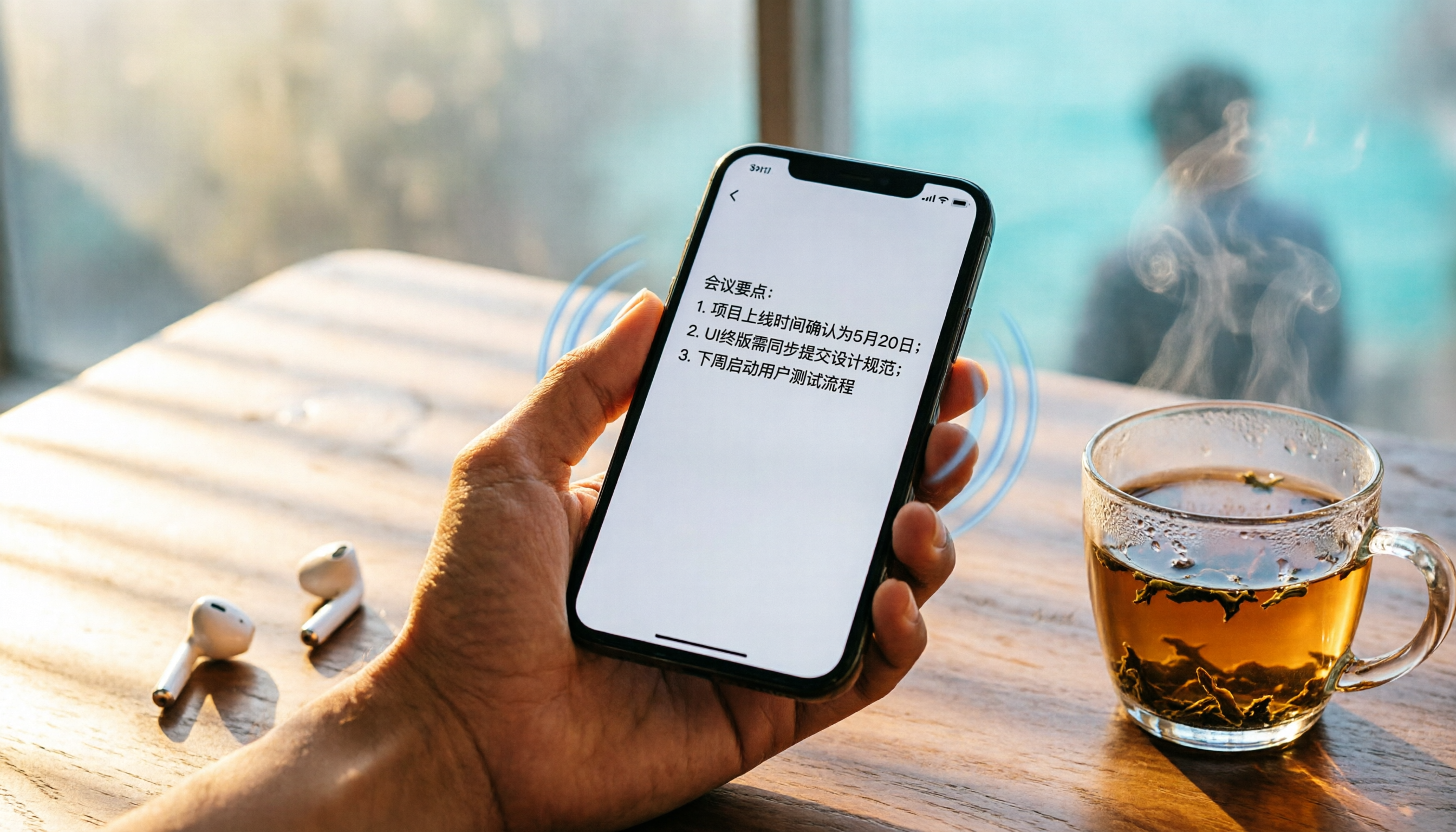
Best iPhone Call Recording Apps in 2026: 4 Tested, Tinrec Is the Most Practical Choice
Looking for a great tool to organize your iPhone call recordings? We tested Tinrec, Plaud Note, Yating Transcriber, and Otter.ai — from AI summaries to cross-platform support and Chinese accuracy — to help you pick the best recording-to-text app.

5 Speech-to-Text Tools Compared in 2026: From Free to Paid, All You Need to Know
Word can't record video, but can it transcribe audio? This article tests 5 tools, from free to paid, to help you find the best speech-to-text solution for the workplace. From a middle manager's perspective, here's why Tinrec is the top choice.

3 Voice-to-Text Tools Compared for 2026: Which Free Plan Is Enough?
Want to turn audio recordings into text without typing it all out? This article reviews 3 popular transcription tools and walks you through 5 easy steps using Tinrec to convert meeting, class, or interview recordings into key summaries and full transcripts. We also compare free plans and features so you can find the best option for your needs.
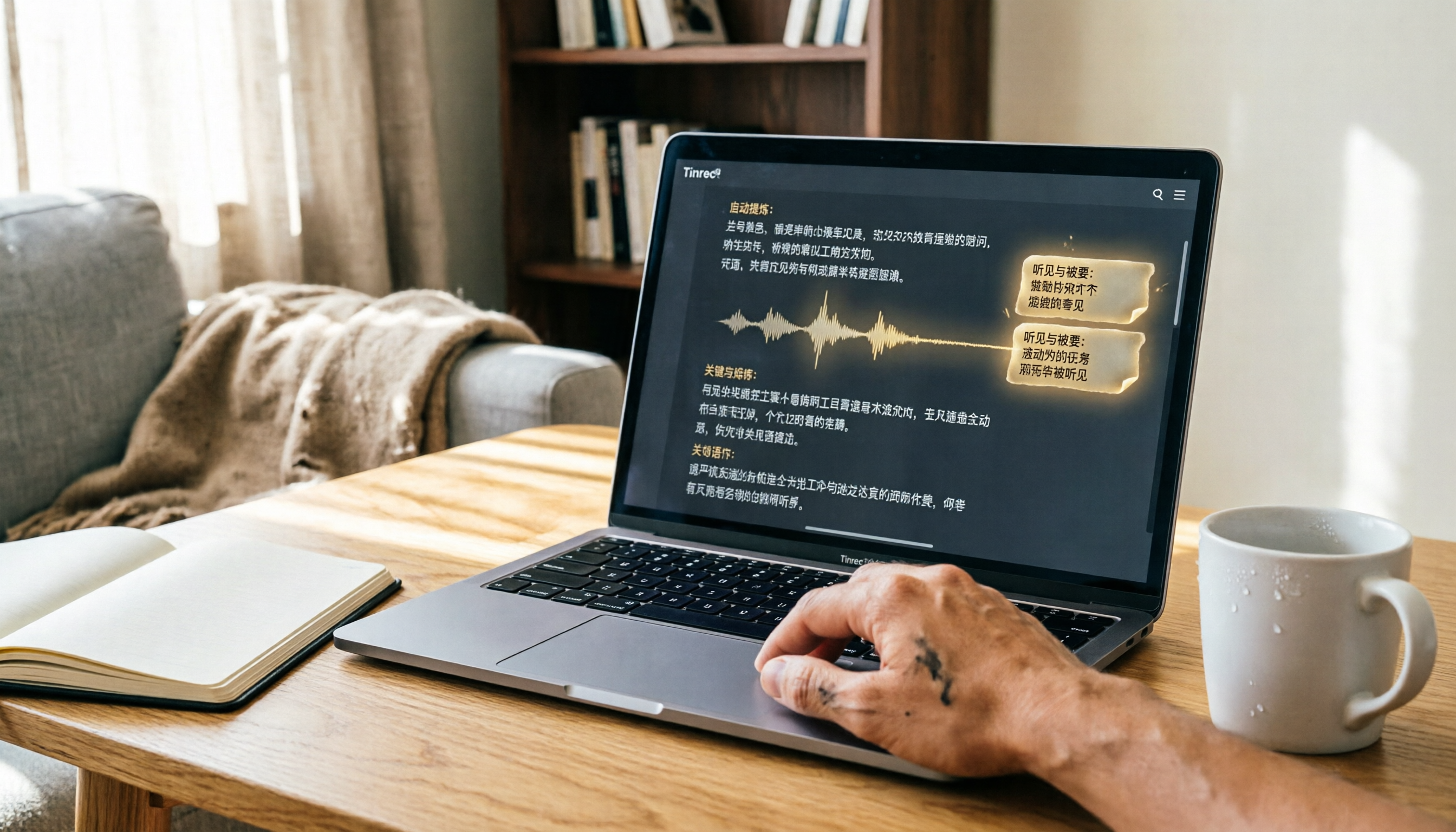
2026 Mac Recording-to-Text App Comparison: Which AI Meeting Notes Really Save Time?
Apple's built-in Voice Memos makes recording easy, but it can't transcribe audio. This article hands-on tests Tinrec, Otter.ai, and Notta, covering accuracy, AI summaries, cross-platform support, and free plans, to help you find the best fit for meetings, classes, and interview notes.
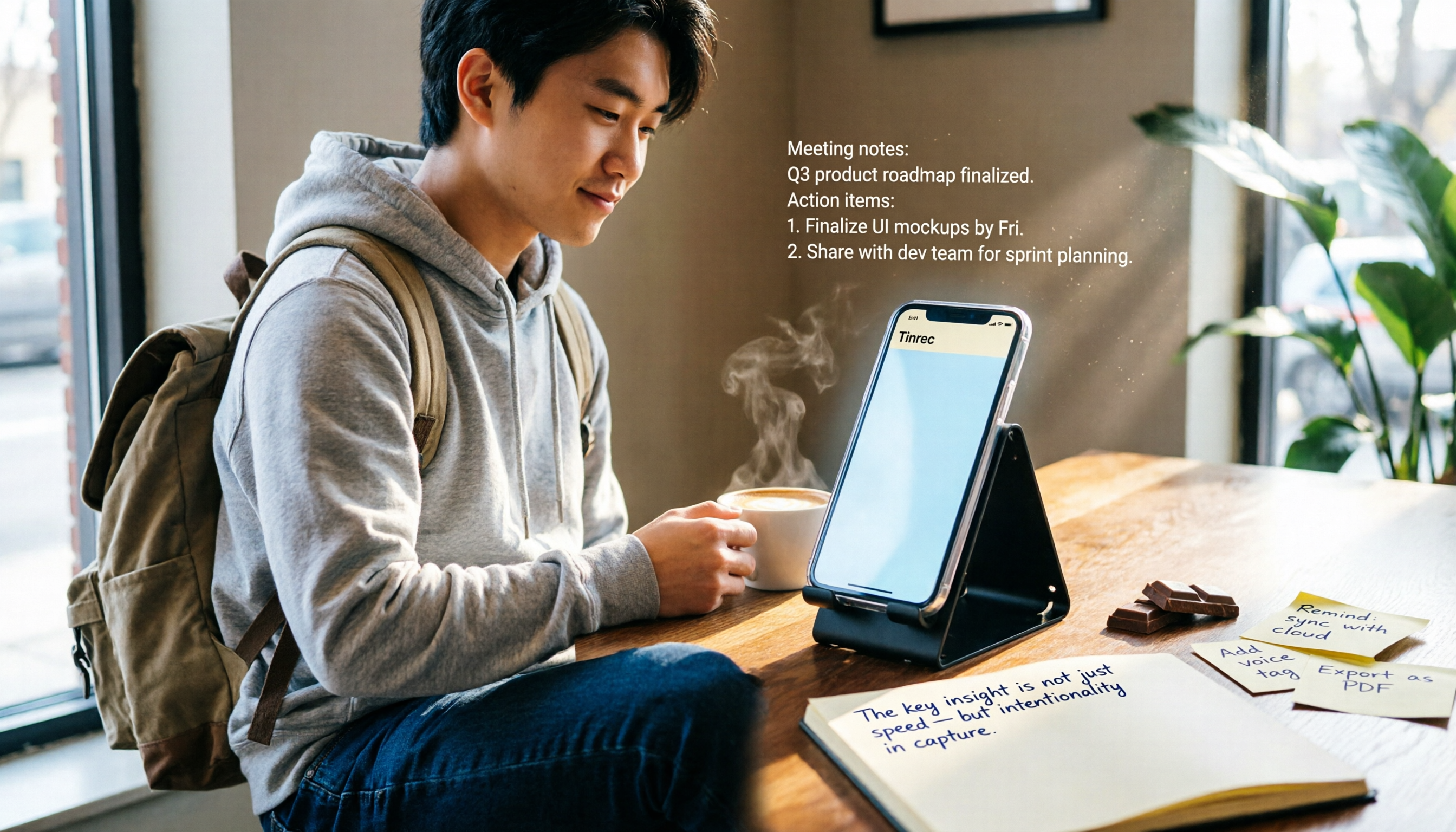
iPhone Voice-to-Text Test in 2026: Built-in Dictation vs. Apps Compared, This AI Q&A App Made Note-Taking 3x Faster
A college senior tested iPhone voice-to-text methods, from built-in dictation to third-party apps. See how Tinrec’s free plan saved 3 hours of note-taking time per week, plus a pitfall guide and student-focused buying advice.

iPhone 17 Screen Recording Free Options in 2026: 5 Tools Reviewed
How to screen record on iPhone 17? This article covers built-in screen recording, Dual Capture tips, and recommends tools like Tinrec to transcribe audio from recordings, from free to paid options.

Best AI Meeting Recorder Tools in 2026: Automatic Summaries, Action Items, and Multi-Source Organization
Looking for an AI meeting note tool but not sure where to start? This article reviews 6 top solutions—from automatic summaries and action items to cross-platform collaboration—and shows you how to save up to 80% of your meeting note time with the right tool.