

Turn recordings into transcripts and summaries in minutes
Upload audio or video for multilingual transcription, AI notes, and action items
Why Are People Looking for Alternatives to Google Meet's Built-in Transcription?
Google Meet is already a go-to tool for many teams' daily meetings. Its built-in transcription generates real-time captions and provides a basic transcript afterward, saving a lot of manual note-taking.
But after using it a few times, you'll notice some limitations: the transcript stays within that specific meeting and can't be accumulated into a personal or team database across platforms; while you get a transcript, there's no organized output like summaries or action items; and for Chinese meetings, accuracy still has room for improvement.
If you're facing similar frustrations, Tinrec—a tool that works across phones, computers, and the web and turns recordings into actionable insights—is worth exploring.
Tinrec vs Google Meet Built-in Transcription: Key Differences in Core Experience
Here's a direct comparison across four dimensions that affect daily use, so you can decide which one fits your needs.
Cross-Platform Data Consolidation
Google Meet's transcription records are tied to the meeting itself, so you can't combine them with lecture recordings, interviews, or online videos in one place.
Tinrec offers iOS, Android, and web versions. Whether you're recording a meeting live, uploading existing audio files, or pasting a YouTube link, everything is consolidated in one workspace. You can search and ask questions about past recordings anytime, so nothing gets scattered. For anyone who needs to accumulate knowledge over time, this makes a big difference.
Depth of Post-Transcription Organization
Google Meet's built-in transcription gives you a "plain text transcript," leaving you to manually highlight key points.
After transcription, Tinrec automatically generates an AI summary, chapter breaks, and action items. For example, in a one-hour meeting, the summary immediately shows conclusions without going through the full transcript; you can also chat with Tinrec and ask, "What was the budget conclusion from last week's discussion?" It'll answer based on semantic understanding. This seamless flow from "transcription → understanding → action" is hard to get from basic transcription tools.
Output Format and Export Flexibility
Google Meet transcription content is typically only copyable as text or left in Google Docs; to turn it into a report or share it, you need manual editing.
Tinrec supports exporting results in multiple formats, including Word, TXT, SRT subtitles, and can sync directly to tools you already use like Notion, Google Docs, and OneNote. Turning recordings into deliverable reports or notes happens entirely within one tool.
Chinese Language Processing Finesse
This is especially noticeable for users in Taiwan and Hong Kong. Google Meet's transcription is English-centric, and Chinese recognition sometimes suffers from awkward segmentation or missing characters when speech is fast, accented, or overlapping.
Tinrec was designed from the ground up to handle Traditional Chinese, Simplified Chinese, and mixed-language scenarios. Its actual transcription captures Chinese context and proper nouns more accurately. Of course, accuracy still depends on audio quality and background noise, but for everyday Chinese meetings and classes, the difference is enough to save you substantial proofreading time.
Tinrec's Core Features at a Glance
Now that you know how Tinrec differs from just meeting transcription, let's see what it can actually do for you.
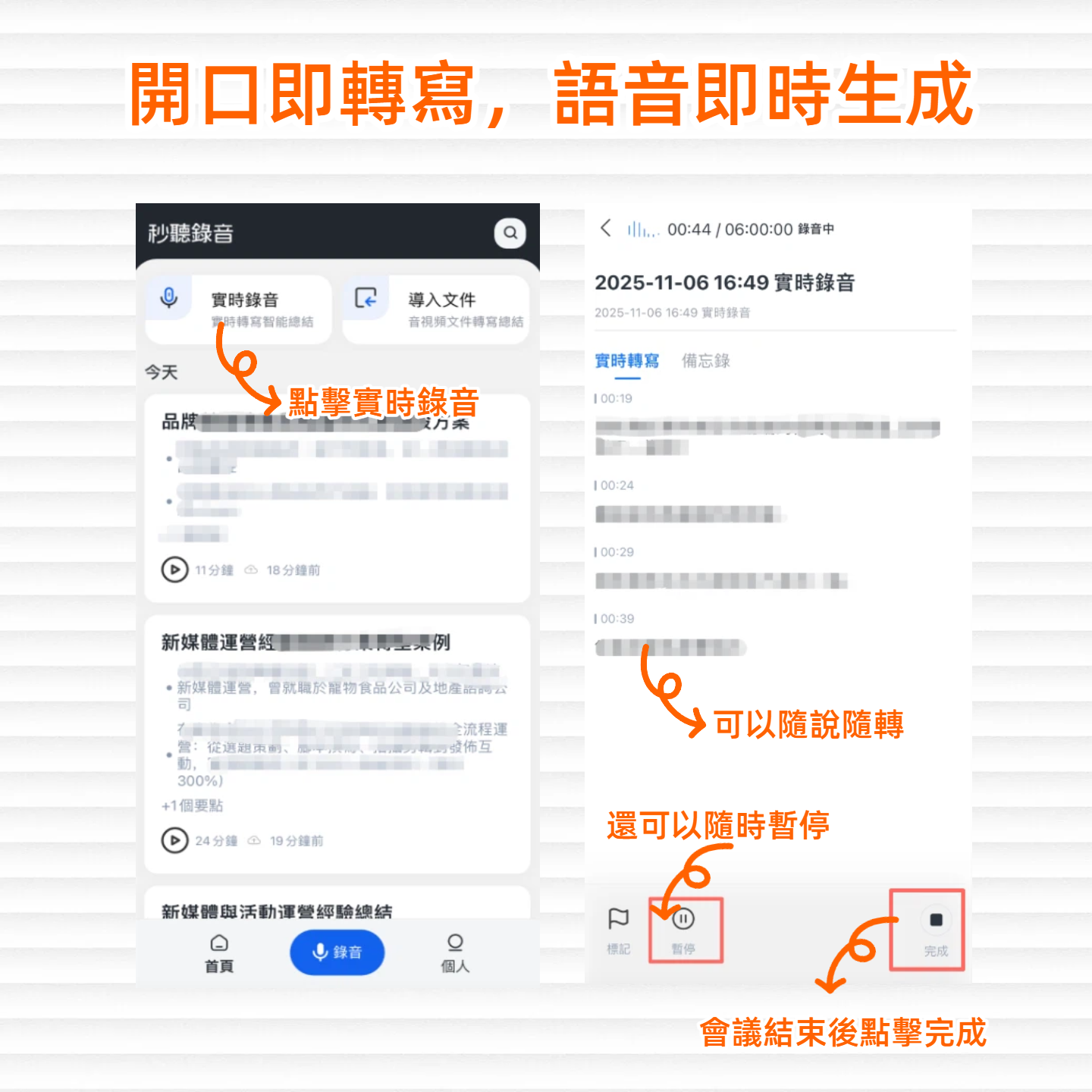
Real-Time Voice-to-Text
Stop organizing recordings by hand
Upload audio or video and automatically get a transcript, summary, and action items
Open Tinrec during a meeting or class—text appears in near real-time (under a second). You can follow along visually, and by the time the meeting ends, the transcript is ready.
Audio/Video File Transcription
Upload existing recordings (mp3, mp4, or other common formats) directly into Tinrec for transcription. Old interview recordings or lecture videos no longer require manual re-listening.
Online Video Link Parsing
Copy a public video URL (YouTube, TikTok, etc.), and Tinrec automatically extracts the audio, transcribes it, and generates summaries and chapters. Gathering research material becomes very intuitive.
AI Chat Query
This is my most-used feature. After recording a one-hour meeting, just ask Tinrec, "What was the meeting conclusion?" or "Who is responsible for which task?" It answers based on semantic understanding—no more flipping through 30 pages of transcript.
Action Item Extraction
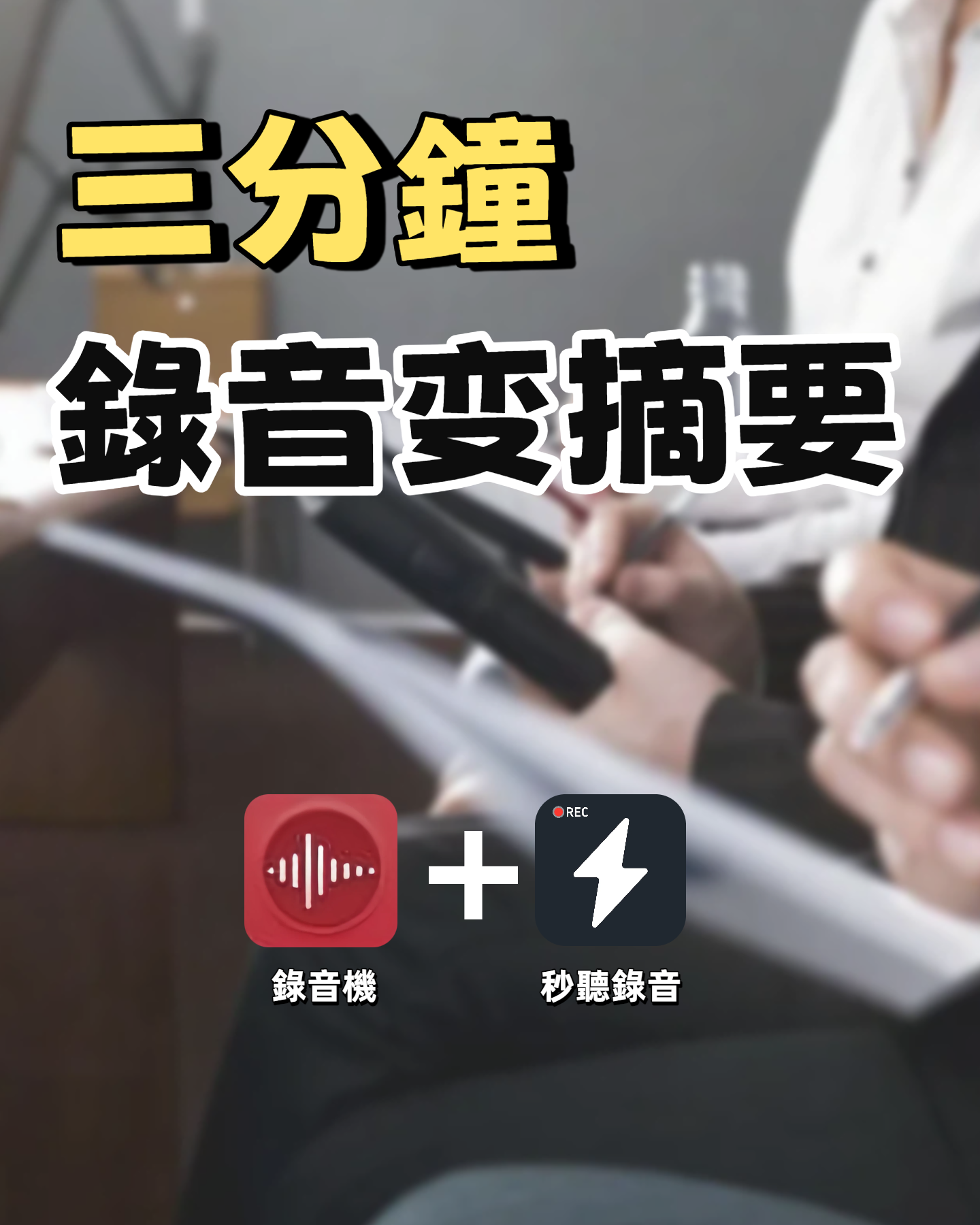
Tinrec automatically identifies "who, what to do, and by when" from discussions and compiles them into a clear to-do list. Everyone knows their tasks right after the meeting.
Practical Use Cases
Meeting Notes and Follow-ups
Record and transcribe weekly team stand-ups or client calls with Tinrec. You'll get a complete meeting record with summaries and action items immediately, share them with colleagues, and track progress without relying on memory.
Lectures and Online Learning
Open Tinrec during lectures or online courses—the entire session is transcribed and automatically segmented into chapters. When reviewing, jump to the section you want, or let AI summarize the key points for higher study efficiency.
Interviews and Research
For user interviews or expert interviews, use your phone to record and transcribe on the go. Then use AI Q&A to quickly extract key insights, saving hours of re-listening.
Personal Ideas and Memos
Jot down ideas or reminders with voice, and Tinrec builds a searchable database. Later, just type in a keyword to find that idea.
What to Consider When Choosing a Voice-to-Text Tool
Think from these angles to avoid picking the wrong tool.
- Cross-platform sync: If you use multiple devices (phone, computer, tablet), check if the tool has versions for all. Tinrec works on iOS, Android, and web, with automatic sync.
- More than just transcription—subsequent organization: A plain transcript has limited value. Look ahead—can it auto-summarize? Can you ask questions? Can you export to notes or reports? That's where real time savings lie.
- Chinese language support: Many international tools' Chinese recognition still leans on Simplified Chinese or generic models. Tinrec is specifically optimized for Traditional Chinese, Cantonese, and mixed Chinese-English. If you work mainly with Chinese content, this directly impacts daily use.
- Free tier sufficient for trial: Tinrec's free plan offers a basic monthly transcription allowance. Test it with your own recordings before committing to a paid plan.
Summary: Is Tinrec Worth a Try?
If you're used to Google Meet meetings but feel transcripts are scattered and time-consuming to organize, Tinrec fills those gaps with cross-platform consolidation, AI summaries, and conversational queries. Plus, its optimization for Chinese content makes it especially appealing for users in Taiwan.
Download the free version and test it with your own meetings or lectures—it's more effective than reading any review.
Frequently Asked Questions
How is Tinrec different from simple meeting transcription?
It goes beyond turning speech into text: Tinrec automatically generates summaries, chapters, and action items, lets you ask questions, and exports to reports. It's also a cross-platform audio/video knowledge base, not just a per-meeting transcript.
Do I need to record Google Meet calls before using Tinrec?
Yes, you can use your computer or phone to capture the meeting audio and then upload it to Tinrec for transcription. Alternatively, use Tinrec's live recording feature by placing your device near the speaker—works great too.
Is the free version enough?
If you only transcribe a meeting or class occasionally, the free tier's basic allowance is enough to try it out. Once you get used to it and want to transcribe more, consider weekly or Pro plans based on your needs.
How accurate is Chinese transcription?
In clear audio environments like regular meetings or lectures, Tinrec's Chinese transcription is quite reliable, significantly reducing manual corrections. However, accuracy can vary with background noise, overlapping speech, or accents—important content should be cross-checked with the recording.
What export formats are supported?
Tinrec currently exports to Word, TXT, and SRT subtitles, and can sync directly to Notion, Google Docs, OneNote, and other tools, so your organized content goes straight into your workflow.
Turn every recording into actionable outcomes
Get 60 free transcription minutes when you sign in. No credit card required.
Related Reading
You might also like
Best Recording App 2026: Hands-On Test of 4 — Tinrec Wins for AI Transcription & Organization
We tested the most download-worthy recording apps of 2026, comparing 4 tools from free to paid. In our hands-on review, Tinrec's AI transcription, summarization, and Q&A features proved the most practical. Whether for meeting notes, lecture notes, or content creation, it turns recordings into searchable material.

Which iPhone Voice-to-Text App Is Best? We Tested 4 in 2026 – This Cross-Platform AI Query Tool Is the Most Convenient
We tested four voice-to-text tools: iPhone's built-in Voice Memos, Yating, Otter.ai, and Tinrec. We compared language support, AI summarization, cross-platform use, and free plans to help you find the right fit.
Free Speech-to-Text Apps in 2026: 5 Options at a Glance
Can't keep up with lecture notes? This article rounds up the 5 free speech-to-text apps most used by college students, from fully free options to the best value picks, to help you easily handle class recordings and meeting minutes.

2026 MP3-to-Text Tools Tested and Compared: Which AI Saves You the Most Time?
Converting MP3 recordings to text is only the first step. The real key is getting AI to summarize, highlight key points, and even answer questions. I tested four tools to find out which one works best for organizing Chinese content.

2026 Meeting Recording & Transcription Tools: 2 Hands-On Reviews & Legal Recording Tips
Is it illegal to record a meeting? This article unpacks the legal boundaries of recording for self-protection, then compares two meeting recording/organizing tools—Tinrec and PLAUD Note—across recording methods, multi-source input, AI organization, and price, helping you choose the best fit.

2026 Comparison of 4 Cantonese Voice-to-Text Tools: Which One Has the Best AI Organization?
After testing multiple Cantonese voice-to-text tools, I found that the key selection factor is not just accuracy, but also AI-powered organization and flexibility. This article shares my hands-on experience and buying advice to help you find the best solution.
Free Speech-to-Text App Roundup for 2026: 5 Options Compared
A curated list of 5 speech-to-text apps that offer free plans, including Tinrec, Yating Transcriber, cSubtitle, Notta, and Easemate AI. Compare features, pricing, and suitability—from fully free to paid—to find the right tool for your needs.

3 iPhone LINE Call Recording Organizer Tools Tested in 2026: Which Free Plan Is Good Enough?
After upgrading to iOS 26, your iPhone can finally record LINE calls easily using the built-in Local Capture feature. But recording is only the first step; quickly turning the conversation into text, summaries, and to-dos is what really matters. This article compares three call-recording organizer tools across free allowances, Chinese accuracy, and AI organizing capabilities to help you find the best one.

4 iPhone Voice Recording Shortcuts Compared: Which One Starts Fastest When It Matters Most?
This article tests four ways to quickly start recording on an iPhone: the Action button, Back Tap, Shortcuts, and the traditional Voice Memos app. We compare startup speed, ease of use, and device compatibility to help you find the best one-touch recording solution.