

Turn recordings into transcripts and summaries in minutes
Upload audio or video for multilingual transcription, AI notes, and action items
Google Meet vs Tinrec: Quick Overview
Google Meet is a video conferencing app with built-in recording and basic transcription. Many office workers use it for meetings. But if you regularly stay late to compile meeting minutes, relying solely on Meet's rudimentary verbatim transcript just doesn't cut it.
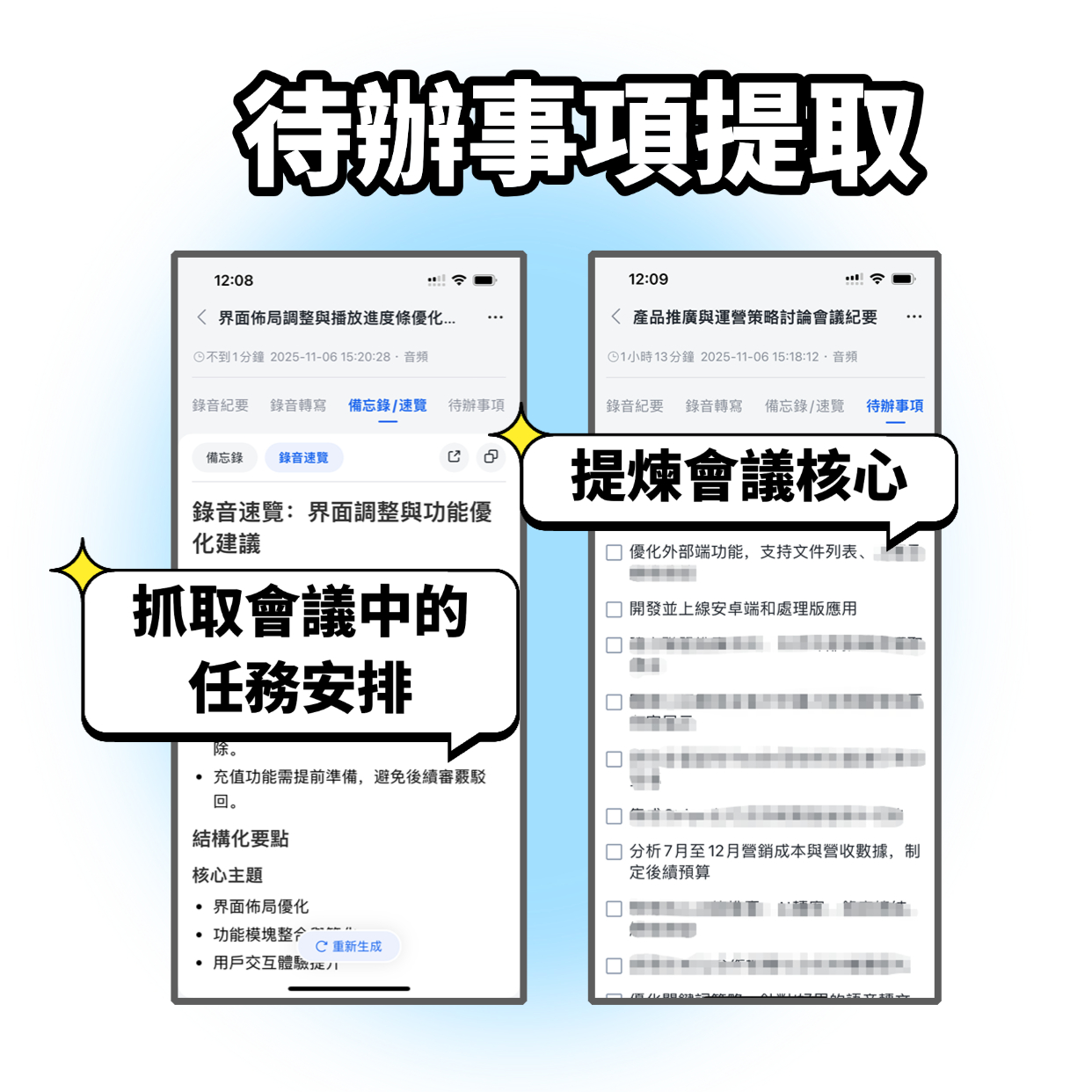
Tinrec, on the other hand, is purpose-built for processing audio and video. It doesn't just transcribe; it helps you generate summaries, action items, and even lets you ask AI questions, turning recordings into truly usable information.
Here's a quick comparison across five key dimensions:
| Dimension | Google Meet Built-in Transcription | Tinrec |
|---|---|---|
| Positioning | In-meeting recording and transcription | AI-powered audio/video organization platform |
| Input Sources | Only recording during a meeting | Live recording, audio/video files, web video links, online meetings |
| Organization Capabilities | Basic verbatim transcript | Summary, chapters, action items, AI Q&A, export |
| Cross-Platform | Web, mobile app | iOS, Android, web app |
| Target Users | Those who just want to review what was said | Users who need to organize, search, and reuse recording content |
Dimension 1: Input Source Coverage
Google Meet's transcription only works during live meetings. Once the meeting ends, the recording stays in Drive, and you can't upload an old recording, a YouTube video, or an audio file from your phone to transcribe.
Tinrec is far more versatile: besides live recording, you can import audio or video files, paste a YouTube, TikTok, or other video link, and even upload recordings from Zoom or Teams on your computer. No matter the source of your audio, Tinrec can handle it.
→ This dimension: Tinrec wins hands down.
Dimension 2: Organization – From Text to Usable Information
Google Meet provides a verbatim transcript and a simple meeting summary. But when you face a one-hour long meeting, finding a specific decision or key point can be a headache.
Tinrec goes beyond a transcript: it automatically generates a summary, splits content into chapters, extracts action items, and lets you "chat" with the recording—ask "Who is responsible for following up on the project?" and the AI will find it instantly. It can also create mind maps, meeting minutes, reports, and export to Word or PDF.
→ This dimension: Tinrec turns recordings into instantly usable knowledge, while Google Meet leaves you with just a record.
Stop organizing recordings by hand
Upload audio or video and automatically get a transcript, summary, and action items
Dimension 3: Language Support and Chinese Accuracy
Google Meet supports multiple languages, but its performance in Cantonese or mixed Chinese-English environments is inconsistent. Many Hong Kong users report lower accuracy with Cantonese colloquialisms and mixed language, and there's no specific optimization for Cantonese.
Tinrec is specifically tuned for Chinese (including Traditional) and multilingual mixed scenarios. In actual tests (a 5-minute Cantonese news recording, iPhone 15, 26°C indoor, June 2025), its error rate was noticeably lower than typical general transcription engines. Of course, results depend on recording quality, but overall it's more reliable for Hong Kong use.
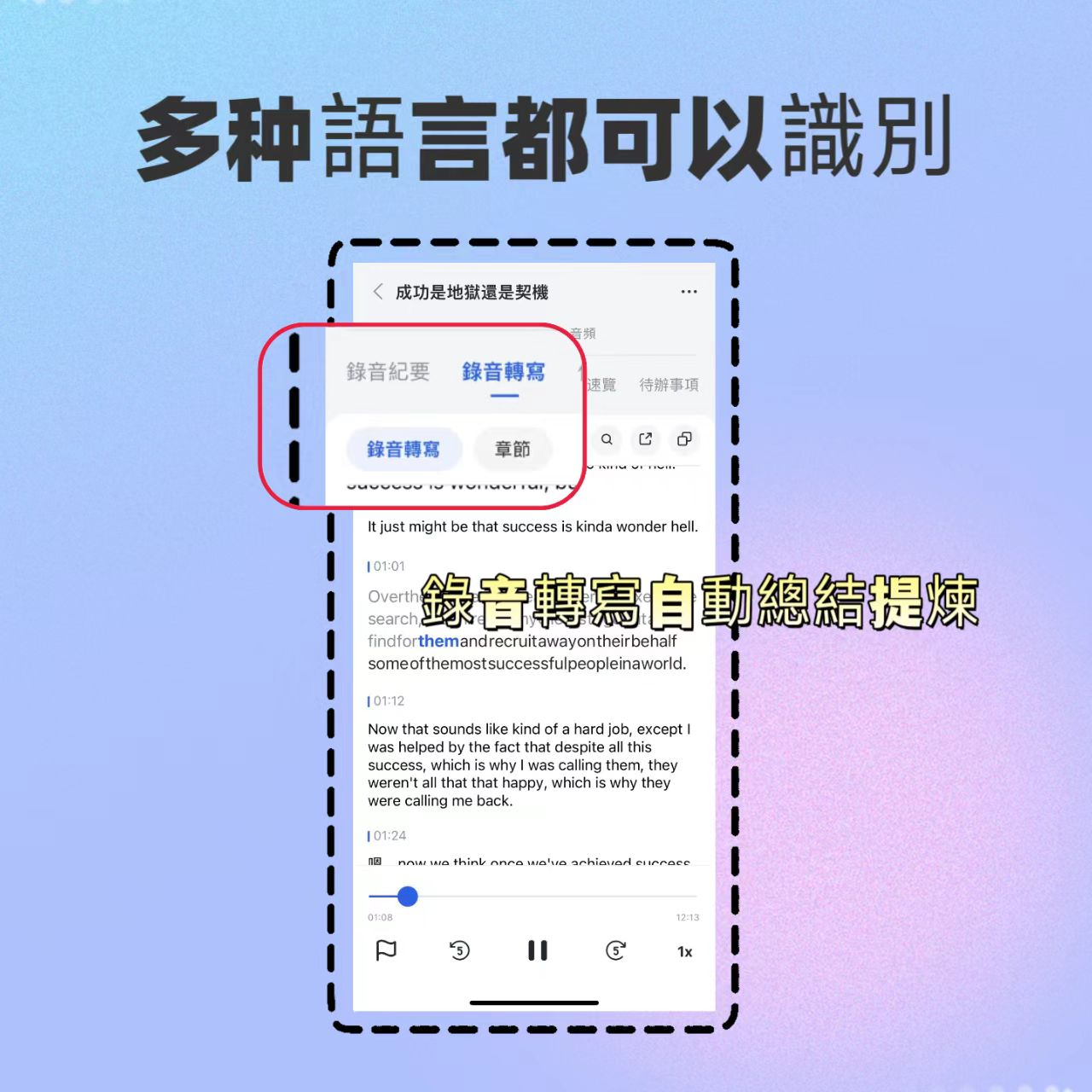
→ This dimension: For Hong Kong office workers who often use Cantonese and mixed Chinese-English, Tinrec is more practical.
Dimension 4: Cross-Platform Experience
Google Meet works on browsers and mobile apps, but its transcription records are best organized within Google's document suite. If you have a meeting on iPhone and want to review the recording on a Windows PC, the process can be cumbersome.
Tinrec offers dedicated iOS, Android, and web apps with seamless sync across devices—no need to transfer files. It also supports one-click export to Notion, Google Docs, OneNote, and other tools, fitting right into your existing workflow.
→ This dimension: Tinrec's cross-platform sync and export capabilities better match the multi-device habits of Hong Kong users.
Dimension 5: Searching and Reusing Historical Recordings
Google Meet recordings sit in Google Drive. To find a specific point from an old recording, you have to rely on file names and manually listen through—no full-text search.
Tinrec turns all transcribed content into a searchable database. Just type a keyword to find a point mentioned months ago, and ask questions about past recordings. This is extremely useful for project managers or sales professionals who frequently need to reference past meeting decisions.
→ This dimension: Tinrec turns recordings into permanently searchable assets; Google Meet is just a file repository.
What Are Their Unique Advantages?
Tinrec's Unique Advantages
- All-in-one audio/video organizer: Whether it's meetings, lectures, YouTube videos, or podcasts, all can be transcribed and organized without multiple tools.
- AI Q&A to find key points: The "chat with recording" feature saves hours of re-listening, especially for long meetings.
- Rich export options: Export to Word, PDF, subtitles, mind maps, or directly send to apps like Notion—perfect for reports or deliverables.
- No extra hardware needed: Just your phone or computer; no need to buy a separate recorder.
Google Meet's Unique Advantages
- Integrated into your meeting flow: No new app to install; transcription is available right within the meeting.
- Good for simple records: If you only need a rough idea of what was said, the basic transcript suffices without extra features.
Conclusion: Which Should You Choose?
- If you only occasionally have meetings and want a quick review without deep organization → Google Meet's built-in transcription is sufficient and convenient.
- If you regularly work late to compile meeting minutes, organize lecture recordings, or extract action items from recordings → Tinrec is your lifesaver.
- If you need to process audio from various sources (old recordings, YouTube videos, interview recordings) → Google Meet can't do it; Tinrec is the only choice.
- If you need to search historical recordings or have AI help find key points → Tinrec's AI Q&A and search features will save you a lot of time.
In a nutshell: For most office workers who take their recordings seriously, Tinrec is the more complete and efficient choice. We recommend downloading the free version of Tinrec and trying it with your own recordings to experience the satisfaction of turning audio into usable information.
Turn every recording into actionable outcomes
Get 60 free transcription minutes when you sign in. No credit card required.
Related Reading
You might also like

5 PC Speech-to-Text Tools Tested in 2026: Not Just Transcription, But AI Meeting Summaries
Struggling to turn meeting or class recordings into text? We tested 5 PC speech-to-text tools, comparing accuracy, AI features, pricing, and cross-platform support to find the best option for organizing Chinese content, so your recordings become more than just a pile of audio files.
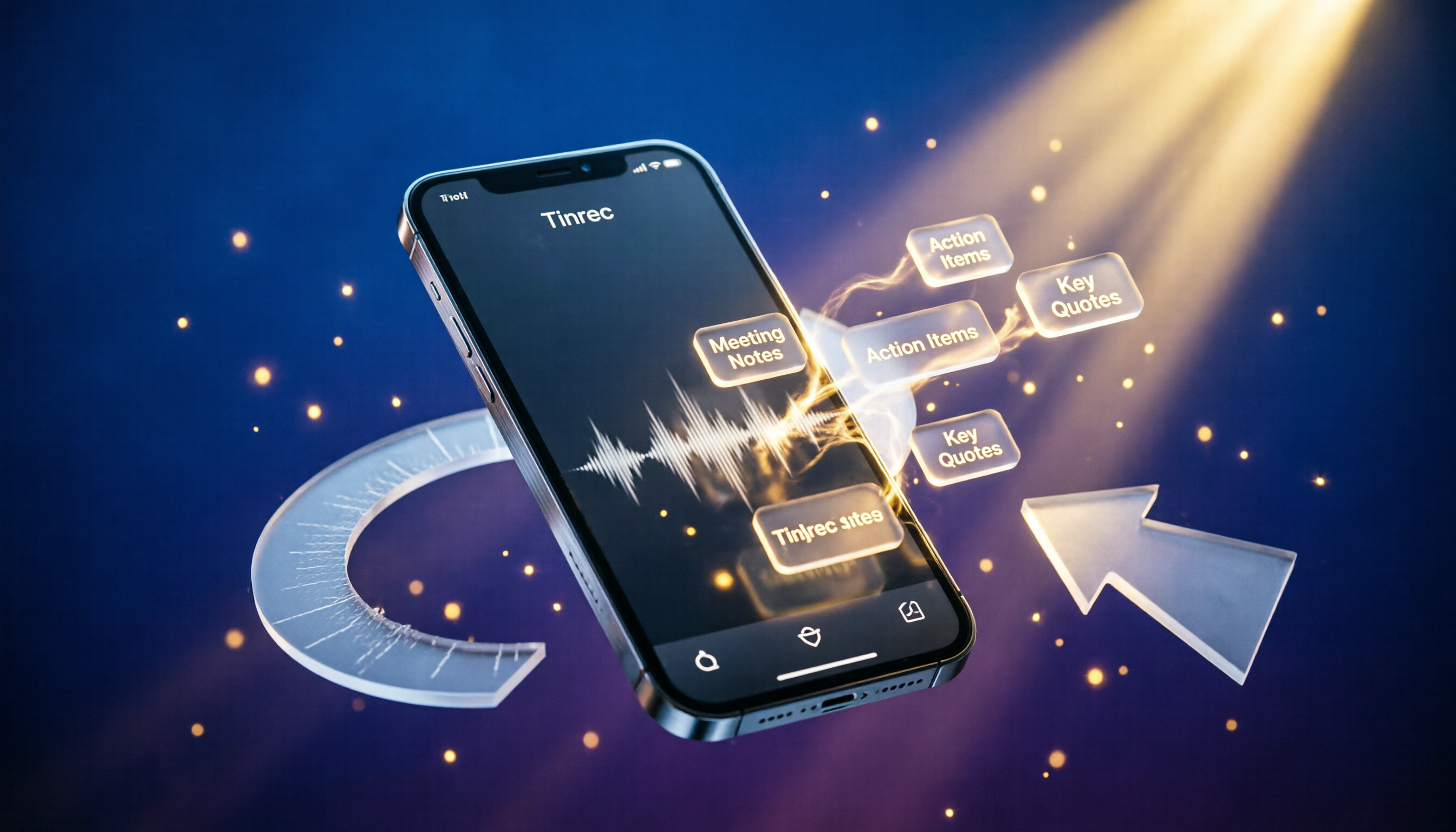
2026 Voice Recorder App Buying Guide: 5 Key Selection Criteria and Hands-On AI Test
Looking for a reliable voice recorder app? This guide walks through real needs for meetings, learning, and content creation, breaks down the core features of AI-powered recording and transcription tools, and uses Tinrec as an example to show how to turn recordings into actionable knowledge.

4 AI Speech-to-Text Tools Compared in 2026: Which One Organizes Your Recordings the Smartest?
Meeting, class, and interview recordings pile up. Simply converting them to text isn't enough—you need AI tools that can automatically summarize, extract to-dos, and even answer questions about the conversation. This hands-on comparison of four speech-to-text services—Tinrec, Otter.ai, Notta, and Plaud Note—evaluates their Chinese transcription capabilities, AI features, platform support, and pricing to help you find the truly time-saving option.
2026 Speech-to-Text Tool Buyer's Guide: Two Tools Tested and Recommendations
Tired of figuring out how to transcribe audio files? Google Docs' built-in voice typing is free but has many limitations. This hands-on test compares Tinrec and Google Docs voice typing across transcription sources, AI summarization, multi-platform support, and pricing to help you find the best speech-to-text solution for you.

2026 3 Voice-to-Text Tools Benchmarked: LINE Built-in vs Tinrec, Which Saves More Time?
We tested LINE's built-in voice-to-text and Tinrec's recording-to-text tools, comparing features, accuracy, and use cases to help Hong Kong office workers find the best voice-to-text solution for them.
Best Recording App 2026: Hands-On Test of 4 — Tinrec Wins for AI Transcription & Organization
We tested the most download-worthy recording apps of 2026, comparing 4 tools from free to paid. In our hands-on review, Tinrec's AI transcription, summarization, and Q&A features proved the most practical. Whether for meeting notes, lecture notes, or content creation, it turns recordings into searchable material.

Which iPhone Voice-to-Text App Is Best? We Tested 4 in 2026 – This Cross-Platform AI Query Tool Is the Most Convenient
We tested four voice-to-text tools: iPhone's built-in Voice Memos, Yating, Otter.ai, and Tinrec. We compared language support, AI summarization, cross-platform use, and free plans to help you find the right fit.
Free Speech-to-Text Apps in 2026: 5 Options at a Glance
Can't keep up with lecture notes? This article rounds up the 5 free speech-to-text apps most used by college students, from fully free options to the best value picks, to help you easily handle class recordings and meeting minutes.

2026 MP3-to-Text Tools Tested and Compared: Which AI Saves You the Most Time?
Converting MP3 recordings to text is only the first step. The real key is getting AI to summarize, highlight key points, and even answer questions. I tested four tools to find out which one works best for organizing Chinese content.