

Turn recordings into transcripts and summaries in minutes
Upload audio or video for multilingual transcription, AI notes, and action items
2026 Comparison of 3 Meeting Transcription Solutions: Which Saves You the Most Post-Meeting Effort?
A meeting ends, but the real work begins—you don't need more tools, you need smarter ways to organize
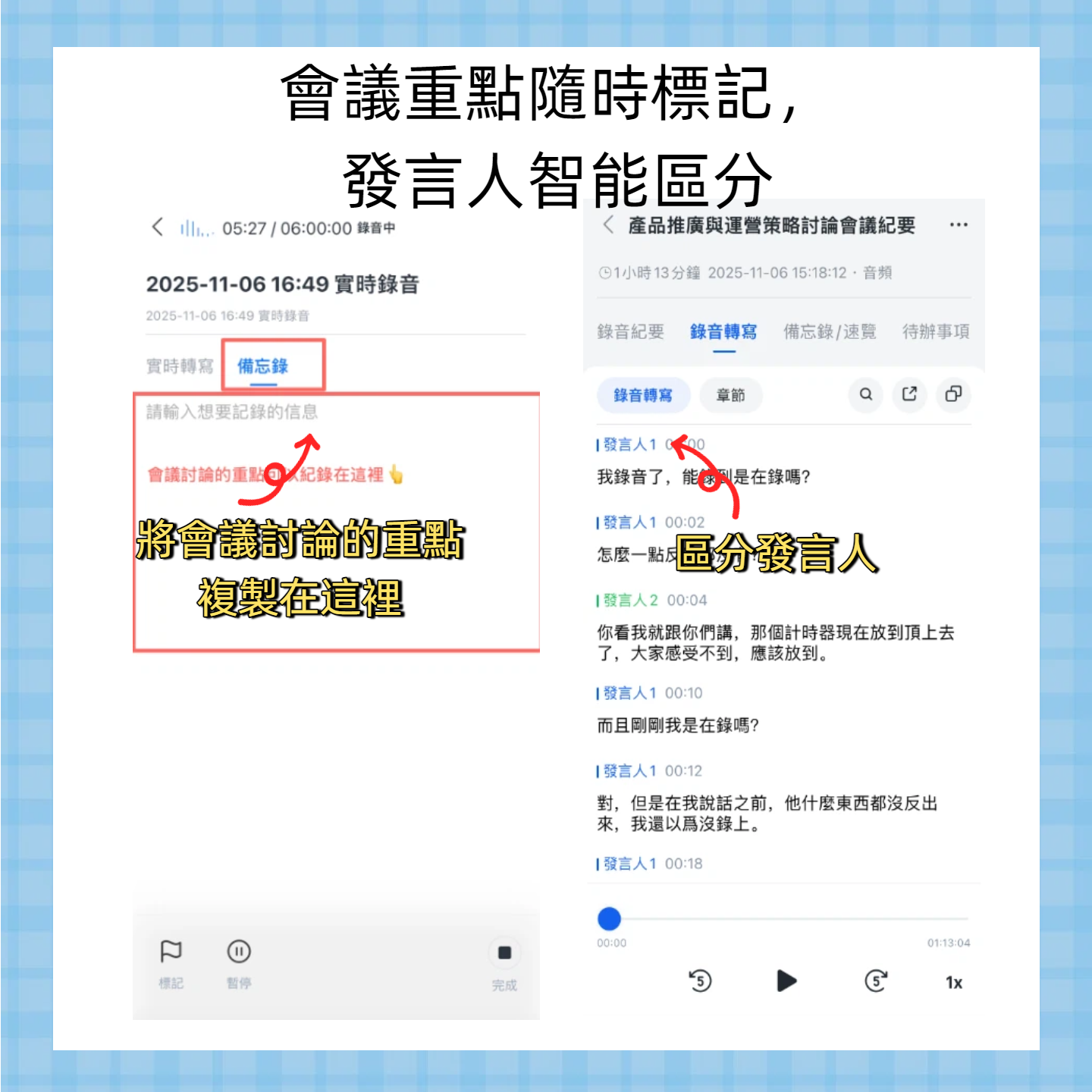
I’m currently managing three cross-department projects, with at least five or six online meetings every week.
I used to type notes while talking, but that made it impossible to focus. Then I tried recording and transcribing afterward—only to lose an entire afternoon.
So I switched to Google Meet’s auto captions, thinking I could skip the manual replay. But in practice, the auto captions were riddled with errors, and all I got was a wall of text with no structure or highlights—I still had to read through everything.
Then I tried Zoom’s cloud recording plus transcript. While it was more complete, a 30-minute transcript looked like a tangled mess—I had to Ctrl+F just to find a decision, and I wasn't even sure what keywords to search for.
If you also struggle with the “meeting ends, organizing begins” problem, this article is for you.
Before Choosing a Meeting Transcription Solution, Understand These 3 Key Points
Key Point 1: Real-time accuracy is just the baseline; post-meeting automation is the real game-changer
Honestly, most platforms now offer real-time transcription, with differences mainly in accuracy. But even at 95% accuracy, you still have to spend time turning a messy transcript into usable notes.
What matters to me is whether a tool can automatically extract summaries, action items, and key points after transcription, giving me something ready to work with—not just a half-baked output.
Key Point 2: You use multiple meeting platforms, but your records should be centralized
Many of my friends use Google Meet for daily meetings, Zoom for client calls, and occasionally Teams. Each platform locks records in its own ecosystem, leaving everything scattered over time.
A good solution should work across platforms, consolidating recordings from different sources into one searchable database for future reference.
Key Point 3: The difference between free and paid lies in “what comes after”
It’s easy to choose based on free limits alone. Built-in transcription is often free but extremely basic; some tools put AI summaries, action extraction, and Q&A behind a paywall.
When evaluating, factor in “what else can I do after transcription?” Otherwise, you’ll save a few dollars but waste precious time.
Tinrec (秒聽錄音) – My Top Pick: It Doesn't Just Transcribe, It Turns Recordings into Actionable Knowledge
Tinrec is an AI recording and audio/video organization tool available on iOS, Android, and web.
Its strength isn’t just converting speech to text—it’s “giving you a usable summary right after the meeting.”
Example: Last week, during a 40-minute project meeting, I started live recording with Tinrec. As it recorded, live captions appeared on screen. When the meeting ended, I tapped “AI Summary,” and within seconds it generated a meeting minutes with chapter highlights and even a to-do list—who does what by when, all clear.
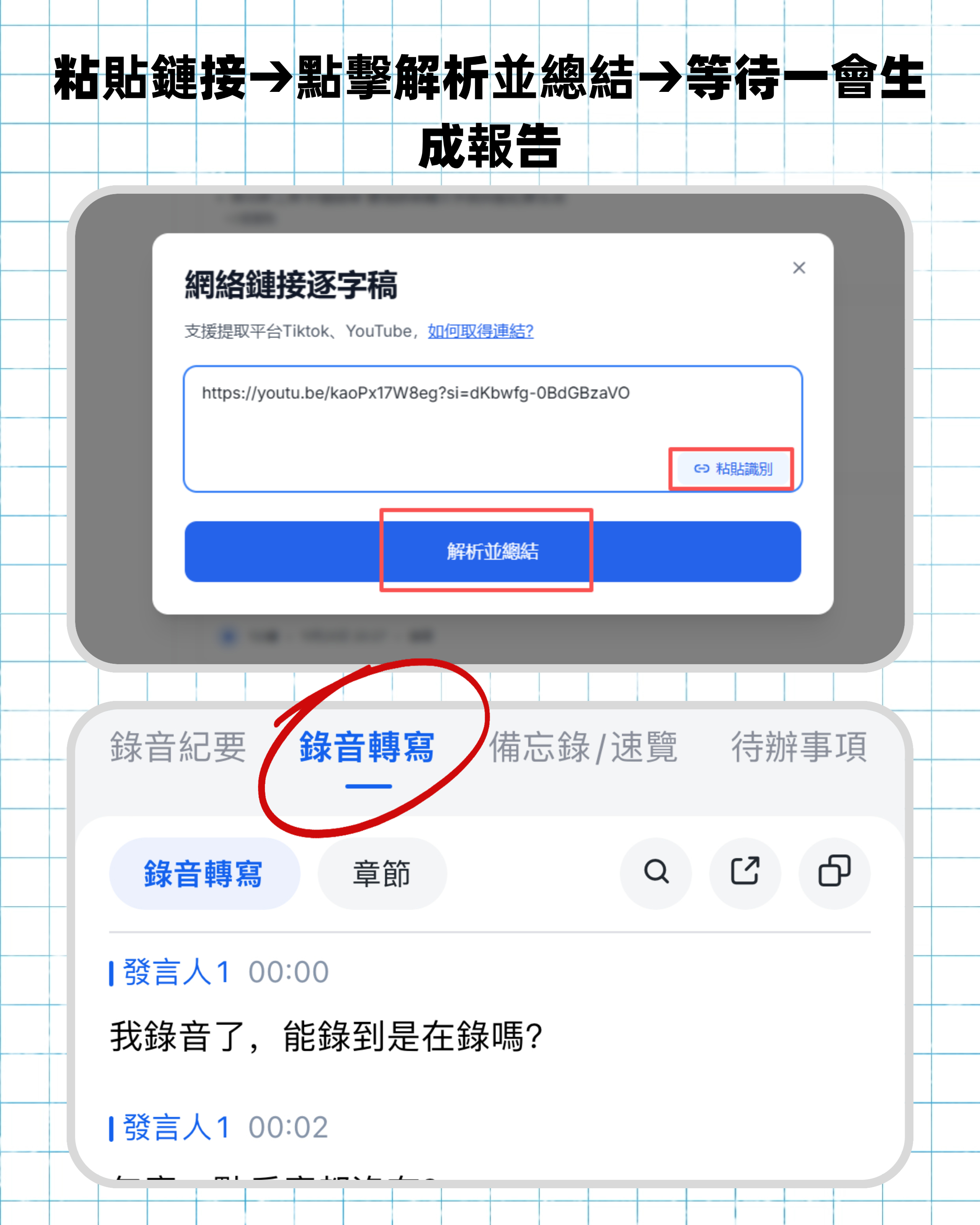
(Screenshot: Tinrec’s live transcription screen, arrows pointing to real-time captions and the summary feature)
Stop organizing recordings by hand
Upload audio or video and automatically get a transcript, summary, and action items
What impressed me even more was the AI chat query. Once, I needed to confirm a budget figure from a meeting two weeks prior. I opened that recording and asked out loud, “Who proposed the budget adjustment in the last meeting? What was the amount?” Tinrec didn’t just return keyword search results—it understood the context and gave me a summary of the relevant segment with the number. This feature is nearly impossible to find in similar tools.
(Screenshot: Tinrec’s AI query interface, arrows pointing to the user’s question and the AI’s response)
Testing on a 10-minute ordinary meeting recording, its transcription had low error rates, and I could instantly switch to generating to-dos, mind maps, or export to Word, PDF, or even sync to Notion.
(Screenshot: Tinrec’s generated to-do list, arrows pointing to automatically extracted action items)
Pros are clear:
- It handles more than meetings: you can import file recordings, online video links, even Zoom recordings—all audio/video data managed in one tool.
- Post-transcription AI summaries, chapters, to-dos, and Q&A turn meeting records directly into to-do lists or report material, saving the most post-meeting time.
- Cross-platform with multiple export formats, no vendor lock-in.
Honest limitations: the free version offers 100 minutes of transcription per month; heavy meeting users will need a paid plan. But for most people attending 3-4 meetings a week, the Pro plan’s quota is sufficient, and it removes ads and unlocks full AI features.
If your work involves meetings across platforms, and you need quick minutes and action items, or want a long-term audio/video database, Tinrec is currently the best fit for these needs.
Beyond Tinrec: Google Meet and Zoom’s Built-in Transcription – They Solve “Recording” but Not “Organization”
Google Meet Live Captions & Recording Transcription
Google Workspace Business edition and above enable post-meeting transcripts from recordings; live captions are free. But in practice, auto captions have a high error rate, and you only get a raw text file with no segmentation or summary. You still have to replay and mark key points, and there’s no AI query like Tinrec’s “what was the meeting conclusion?” If you only meet occasionally and don’t mind manual organizing, it works in a pinch, but more than two meetings a week will be exhausting.
Zoom Cloud Recording & AI Summary (Paid)
Zoom’s cloud recording auto-generates transcripts, and Pro plans offer AI summaries. However, the AI summary currently has limited support for Chinese meetings, and its output tends to be process-oriented rather than extracting action items and assignees like Tinrec. Also, all Zoom recordings and transcripts stay locked in Zoom’s cloud, making cross-platform archiving or further processing cumbersome. Best for teams heavily using Zoom, primarily in English.
Pitfall Guide: 3 Common Mistakes When Choosing a Meeting Transcription Solution
Pitfall 1: Thinking built-in transcription is enough, then working overtime to organize
Many platforms tout “auto transcription,” but transcription only turns speech into text. The real pain point is “how to extract key actions from thousands of words.” If you rely on built-in features, you still manually summarize and list tasks—costing far more time than a monthly subscription.
Pitfall 2: Focusing only on transcription minutes, ignoring post-processing capabilities
Some tools offer 1200 minutes or unlimited transcription per month—seemingly good value—but they may lack AI summaries, chapter splits, or Q&A. You transcribe tons of meetings but still spend double the time digesting. Instead of obsessing over minutes, ask “what tasks can I avoid after transcription?”
Pitfall 3: Scattering meeting records across platforms, making them impossible to find six months later
Today Google Meet, tomorrow Zoom, the next day Teams with a client. Each platform locks records in its own cloud, and over time you can’t recall which decision was made in which meeting. Choose a tool that centralizes management, works across platforms, and allows content search—that’s a long-term solution.
Conclusion: Which One Should You Choose?
After testing these three options, my core advice is clear: if you have more than two meetings per week and need quick to-dos or minutes, go with Tinrec.
- Need cross-platform use (Google Meet, Zoom, even in-person recordings) → Tinrec, centralizes all audio/video data.
- Want AI to extract highlights, list action items, and answer questions post-meeting → Tinrec, currently the only solution with full conversational query.
- Extremely limited budget and only occasional English meetings → Google Meet’s built-in feature (but be prepared for manual work).
- Team deeply uses Zoom with mainly English meetings → Zoom AI summary, but Chinese support and post-processing are less robust than Tinrec.
One final tip: don’t rush to upgrade. Try Tinrec’s free version first. 100 minutes per month is enough for 2-3 meetings to experience the difference between “recording” and “organizing,” then decide if you want to upgrade.
(Screenshot: Tinrec’s App Store or official website free download page)
Turn every recording into actionable outcomes
Get 60 free transcription minutes when you sign in. No credit card required.
Related Reading
You might also like

2026 Tinrec vs Google Meet: A 5-Dimension Comparison – Which Is the Top Choice for Student Meeting Recording?
Searching for whether Google Meet or Zoom is cheaper? A student's real-world test shows price isn't the key – meeting notes and organization efficiency are what really matter. Tinrec not only transcribes audio to text but also auto-generates summaries, to-do lists, and AI Q&A, far surpassing built-in transcription features.

2026 Google Meet vs Teams: A 5-Dimension Comparison, Tinrec Tops for Meeting Notes
Google Meet and Microsoft Teams offer similar features, but the real pain point is post-meeting note organization. After hands-on testing of both platforms, this article recommends a more efficient speech-to-text workflow centered on Tinrec, with side-by-side comparisons to Otter.ai and Notta, plus a pitfall avoidance guide and selection tips.

How to Record Google Meet Meetings and Convert to Text in 2026: Real-Time Transcription & AI Summary Generation
After recording a Google Meet meeting, how can you quickly organize it into text and key points? This tutorial tests two popular tools, telling you which is best for Chinese meetings, whose AI summaries are most accurate, and whether the free plans are sufficient.

2026 Hands-on Review of Two Online Meeting Tools: Google Meet vs Teams – Tinrec Essential for Student Note-Taking
A senior student tests Google Meet and Microsoft Teams to see which is better for online classes and group discussions, plus how Tinrec simplifies meeting notes with its free version.

2026 Google Meet & Zoom Meeting Notes Alternative: Why I Switched to Tinrec?
A middle manager with 15 meetings per week shares real experience: from Google Meet's built-in transcription to Zoom meeting notes, finally choosing Tinrec. It handles not only meetings but also online videos and audio files in one place.
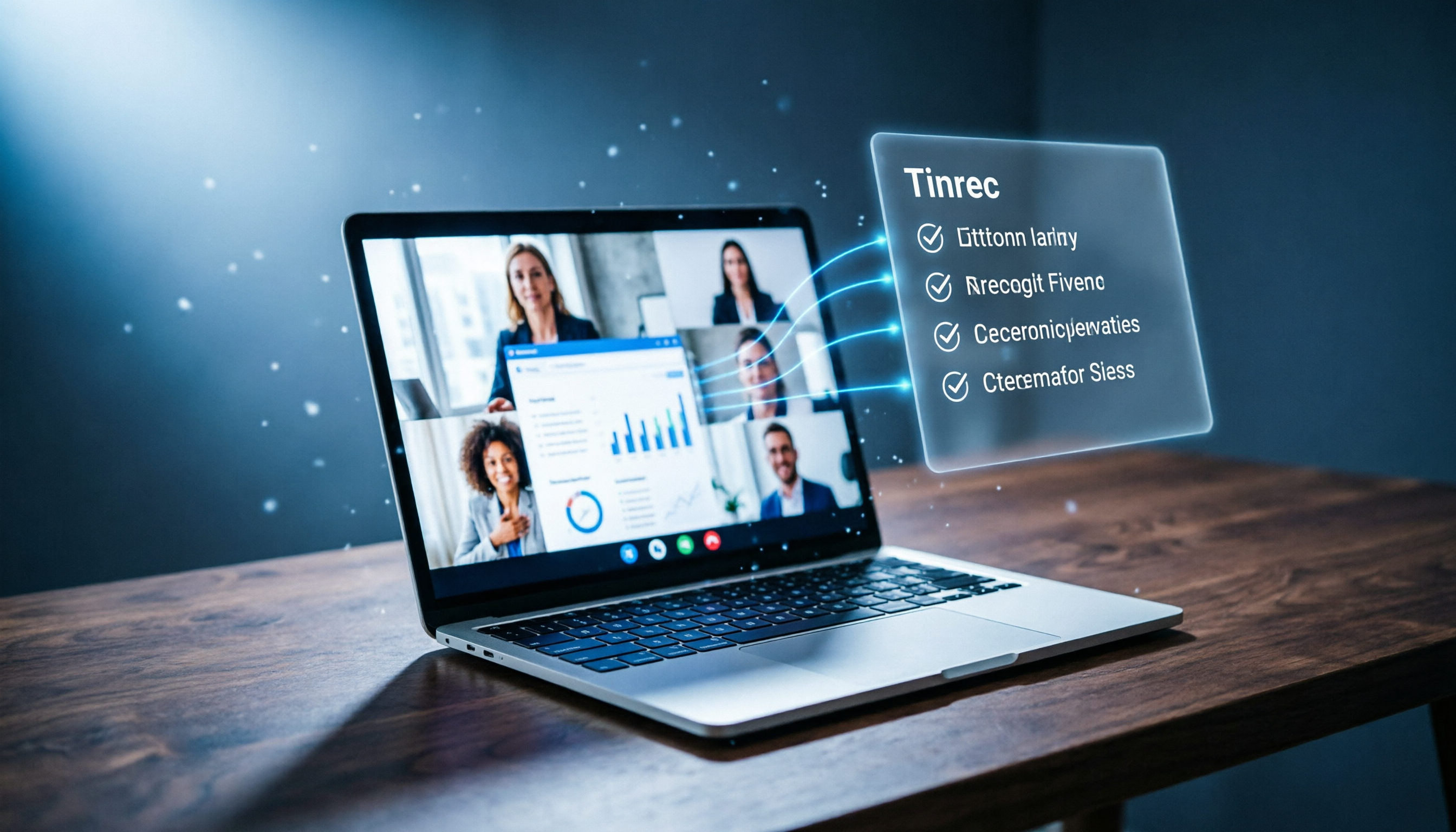
Tutorial: 2026 Google Meet Meeting Notes with Tinrec – Auto Summaries & To-Dos in One Go
When sharing your screen during a Google Meet, manually compiling meeting notes is always time-consuming and tiring. This article shows you how to use Tinrec to record meetings and automatically generate summaries and action items, so you can focus on what matters most.

2026 Google Meet vs Microsoft Teams Complete Guide: Comprehensive Comparison of Features, Integrations, and Pricing
Which is better for Hong Kong office workers, Google Meet or Microsoft Teams? We break it down across five dimensions: meeting features, ecosystem integration, pricing, security, and ease of use, so you can stop worrying.
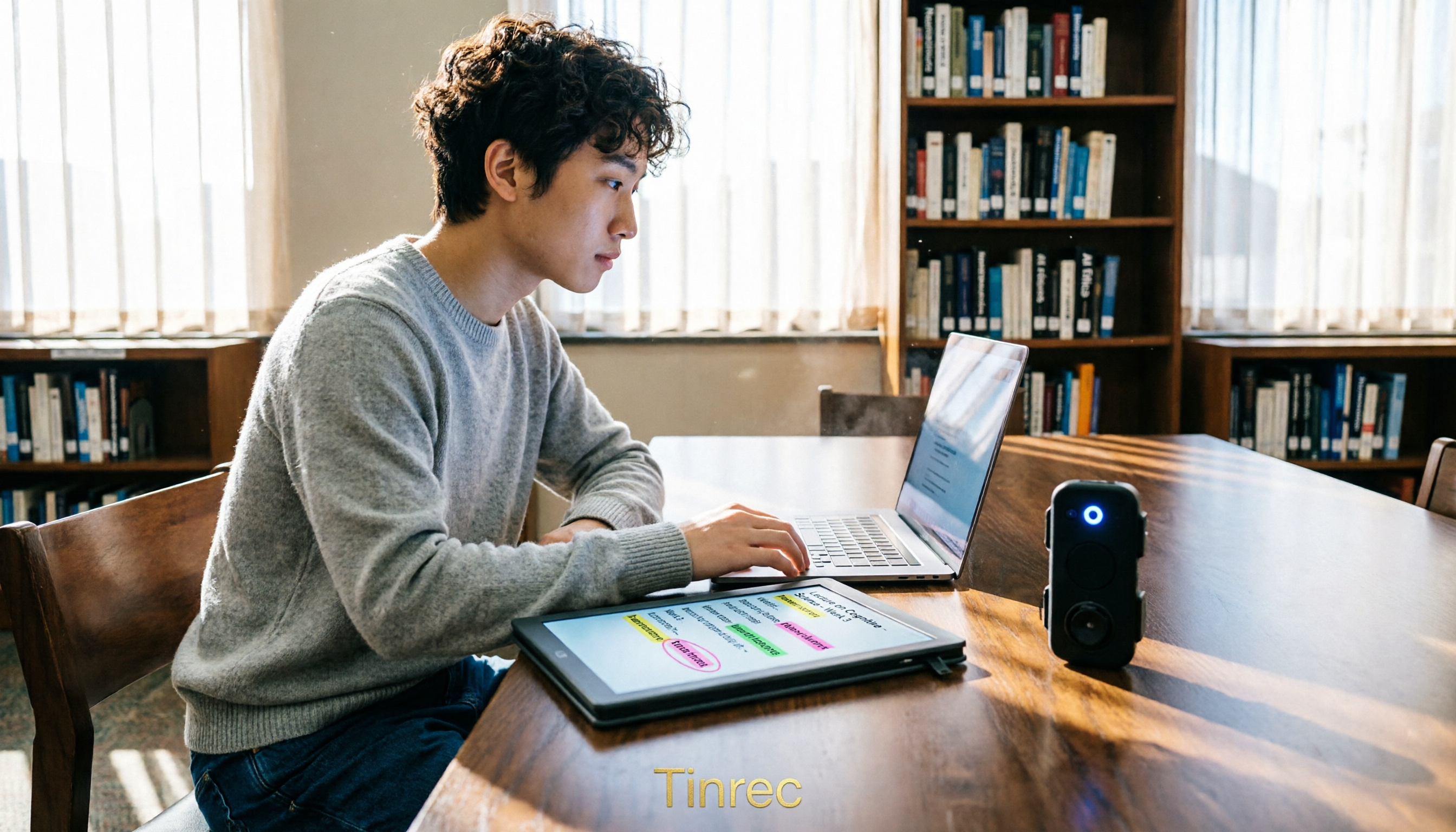
Google Meet Time Limits 2026: AI Recording & Note-Taking Tips for Students
Google Meet's free version only allows 60-minute sessions. This guide shares my experience using AI recording tools to bypass the time limit, from free options to cost-effective upgrades, helping you record lectures, get transcripts, and create summaries without the hassle.

Google Meet vs FaceTime: Which is Better? 2026 Real-World Test with Tinrec for Complete Meeting Notes
Are you torn between Google Meet and FaceTime for online meetings? This article tests both across 5 dimensions—transcription, AI summaries, to-do lists, and more—and shows why adding Tinrec makes meeting notes more complete, boosting team productivity.