

Turn recordings into transcripts and summaries in minutes
Upload audio or video for multilingual transcription, AI notes, and action items
Google Meet vs WhatsApp 2026: In-Depth 4-Dimension Comparison – Which One Should You Use?
An international meeting made me realize the cost of using the wrong tool
Last week, I scheduled an online meeting with a European client to discuss project timelines.
He sent me a WhatsApp link, and when I clicked it, it turned out to be a group call. The video was choppy, and I couldn't share my slides.
Later, I asked him to switch to Google Meet, and the rest of the meeting went smoothly.
This reminded me that many friends often ask, "Google Meet and WhatsApp both support calls, so what's the real difference?"
Most people only see that both can do video calls and send messages, but using them in the wrong context can actually hinder work.
This article breaks down the core differences between the two, helps you choose the right tool, and also shares a secret for post-call organization.
Before choosing a communication tool, understand these 4 key points
1. Context: Formal meeting or casual chat?
Google Meet is designed for multi-person meetings with features like scheduling, screen sharing, and whiteboarding.
WhatsApp calls are more like "pick up your phone and call" – suitable for family, friends, and urgent matters.
If you need to give a presentation or have a discussion with a dozen people, Google Meet will save you a lot of hassle.
2. Recording and notes: Do you need to keep call records?
Many people overlook this.
Google Meet has built-in recording, but reviewing later is time-consuming.
WhatsApp has no built-in recording or note-taking mechanism – once the call ends, the content is gone.
This is where an AI tool can help: you can directly record the call or meeting, transcribe it to text, generate summaries, and even search through it later. (More on this later.)
3. Platform integration: What tools do you use daily?
Google Meet is natively integrated into Google Calendar, Gmail, and Google Chat, offering a complete ecosystem.
WhatsApp is tied to your phone's contacts and social groups but lacks document collaboration or calendar integration.
4. Cross-device experience: Which works better on mobile vs. computer?
WhatsApp is strong on mobile, but its desktop version is relatively lightweight.
Google Meet offers full meeting controls on desktop, and its mobile app allows smooth joining.
If you often need to view documents or use a whiteboard during meetings, the desktop version of Google Meet is a better fit.
Google Meet: The default for formal work meetings
If you have multiple team syncs, client presentations, or cross-department discussions every week, Google Meet is almost the most intuitive choice.
It deeply integrates with Google Workspace – you can join a meeting directly from your calendar without sending extra links.
Built-in features like raise hand, breakout rooms, screen sharing, and recording are all designed around "how to run a meeting."
Stop organizing recordings by hand
Upload audio or video and automatically get a transcript, summary, and action items
However, its communication logic tends to be "one-time meeting": once it's over, unless you manually record, the discussion content is hard to retain.
That's why many people spend extra time writing meeting minutes afterward.
(Screenshot: Google Meet meeting interface with arrow pointing to the "Record" button and "Share Screen" icon)
WhatsApp: The go-to for casual and quick calls
WhatsApp's core is instant messaging and voice calls.
It doesn't have the structure of a formal meeting, but its advantage is that you can call anytime without scheduling in advance.
It's perfect for family check-ins, quick questions to colleagues, or urgent confirmations.
While group calls can have up to 32 participants, video quality and sharing features are far behind those of meeting tools.
The biggest limitation is that call content cannot be saved or organized.
If you discuss something during a call, after hanging up, you can only rely on memory.
(Screenshot: WhatsApp call interface with arrow pointing to simple buttons like "Mute" and "Speaker")
Beyond Google Meet and WhatsApp: Other communication options
- Zoom: More feature-rich than Google Meet, with virtual backgrounds and breakout rooms, but the free version is limited to 40 minutes. Suitable for teams needing flexible meetings.
- Microsoft Teams: Deeply integrated with Office 365. If your company already uses the Microsoft ecosystem, Teams may be smoother than Google Meet.
Both tools also lack built-in, easy-to-use transcription and summary features, so post-meeting organization still falls on you.
Pitfall guide: 3 common mistakes when choosing communication tools
Pitfall 1: Using WhatsApp as a meeting tool
Many people rely on WhatsApp group calls for meetings just because it's convenient.
The result: choppy video, inability to share slides, and no call records – all of which slow down team efficiency.
Pitfall 2: Ignoring post-call records and follow-ups
Whether you use Google Meet or WhatsApp, once the call ends, the content vanishes into thin air.
If you need to turn discussions into to-dos, summaries, or tasks, you must pair it with a tool that can record, transcribe, and even do AI-powered Q&A.
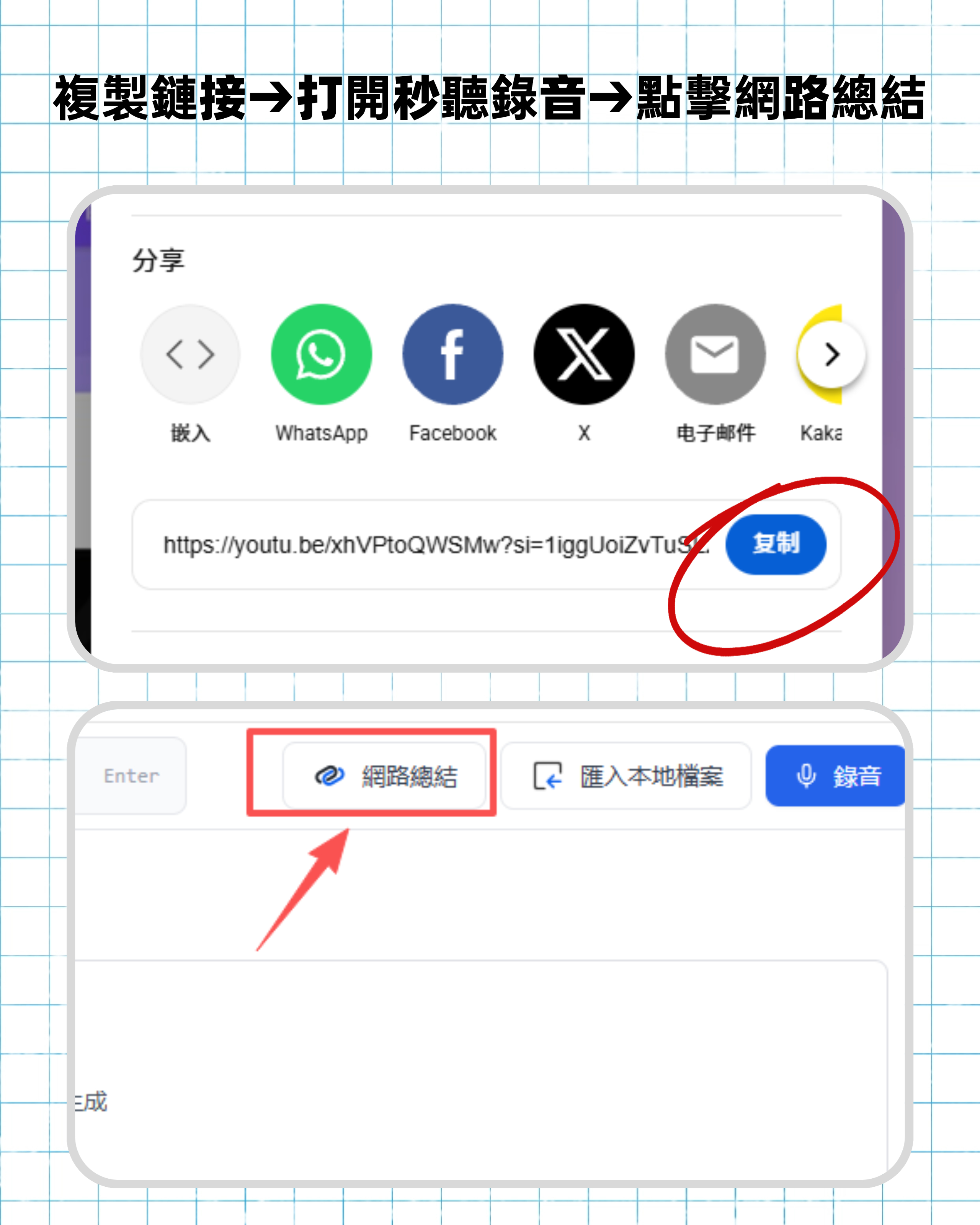
For example, Tinrec (a speech-to-text tool) solves this pain point: it supports real-time recording, mobile or desktop meeting recording, and can also directly upload Google Meet or WhatsApp call recordings to transcribe and auto-generate summaries.
(Screenshot: Tinrec interface – left side shows recording list, right side shows transcript and AI summary, arrow pointing to the "AI Chat Query" button)
Pitfall 3: Using only one tool for all scenarios
Some people use WhatsApp for daily life but force it for meetings; or they use Google Meet for everything out of convenience.
A better approach: use Google Meet for formal meetings, WhatsApp for quick chats, and a recording-to-text tool to save all important calls into a searchable database.
Summary: Your situation determines your choice
- Need formal meetings, client presentations, or multi-person collaboration → Use Google Meet (great ecosystem integration, complete meeting experience)
- Family and friends chats, simple urgent matters, quick calls → Use WhatsApp (instant, convenient, widely used)
- Want to retain, search, and turn call/meeting content into action items → Regardless of which you use, pair it with Tinrec for speech-to-text
Tinrec supports real-time recording, audio file upload, and can even connect to public videos on YouTube, TikTok, etc., to organize notes. After recording, you can ask it directly: "What was the budget number we discussed last time?" and it will extract the answer from the recording.
(Screenshot: Tinrec AI Q&A interface with a question in the chat box and arrow pointing to the AI-generated reply)
Instead of re-listening to recordings or relying on memory, let AI do the organizing.
Starting today, try saving your most important calls – you'll find that many forgotten details no longer slip through the cracks.
Turn every recording into actionable outcomes
Get 60 free transcription minutes when you sign in. No credit card required.
Related Reading
You might also like

2026 Tinrec vs Google Meet: A 5-Dimension Comparison – Which Is the Top Choice for Student Meeting Recording?
Searching for whether Google Meet or Zoom is cheaper? A student's real-world test shows price isn't the key – meeting notes and organization efficiency are what really matter. Tinrec not only transcribes audio to text but also auto-generates summaries, to-do lists, and AI Q&A, far surpassing built-in transcription features.

2026 Google Meet vs Teams: A 5-Dimension Comparison, Tinrec Tops for Meeting Notes
Google Meet and Microsoft Teams offer similar features, but the real pain point is post-meeting note organization. After hands-on testing of both platforms, this article recommends a more efficient speech-to-text workflow centered on Tinrec, with side-by-side comparisons to Otter.ai and Notta, plus a pitfall avoidance guide and selection tips.

How to Record Google Meet Meetings and Convert to Text in 2026: Real-Time Transcription & AI Summary Generation
After recording a Google Meet meeting, how can you quickly organize it into text and key points? This tutorial tests two popular tools, telling you which is best for Chinese meetings, whose AI summaries are most accurate, and whether the free plans are sufficient.

2026 Hands-on Review of Two Online Meeting Tools: Google Meet vs Teams – Tinrec Essential for Student Note-Taking
A senior student tests Google Meet and Microsoft Teams to see which is better for online classes and group discussions, plus how Tinrec simplifies meeting notes with its free version.

2026 Google Meet & Zoom Meeting Notes Alternative: Why I Switched to Tinrec?
A middle manager with 15 meetings per week shares real experience: from Google Meet's built-in transcription to Zoom meeting notes, finally choosing Tinrec. It handles not only meetings but also online videos and audio files in one place.

Tutorial: 2026 Google Meet Meeting Notes with Tinrec – Auto Summaries & To-Dos in One Go
When sharing your screen during a Google Meet, manually compiling meeting notes is always time-consuming and tiring. This article shows you how to use Tinrec to record meetings and automatically generate summaries and action items, so you can focus on what matters most.

2026 Google Meet vs Microsoft Teams Complete Guide: Comprehensive Comparison of Features, Integrations, and Pricing
Which is better for Hong Kong office workers, Google Meet or Microsoft Teams? We break it down across five dimensions: meeting features, ecosystem integration, pricing, security, and ease of use, so you can stop worrying.
Google Meet Time Limits 2026: AI Recording & Note-Taking Tips for Students
Google Meet's free version only allows 60-minute sessions. This guide shares my experience using AI recording tools to bypass the time limit, from free options to cost-effective upgrades, helping you record lectures, get transcripts, and create summaries without the hassle.

Google Meet vs FaceTime: Which is Better? 2026 Real-World Test with Tinrec for Complete Meeting Notes
Are you torn between Google Meet and FaceTime for online meetings? This article tests both across 5 dimensions—transcription, AI summaries, to-do lists, and more—and shows why adding Tinrec makes meeting notes more complete, boosting team productivity.