

Turn recordings into transcripts and summaries in minutes
Upload audio or video for multilingual transcription, AI notes, and action items
Meetings + Slide Decks: How Many Hours Are Stolen from Your Day? – What You Need Is Not a Tool, but a Workflow
After a two-hour meeting, you think you can finally catch your breath. Then your manager says, “I need the meeting minutes and slides by tomorrow morning.” You spend another two hours listening to the recording, transcribing, summarizing, picking a template—and worse, your slides still get criticized for missing the key conclusions.
To make things worse, if someone speaks Cantonese, mixes in English, or the online meeting audio cuts in and out, you might have to scrub back and forth a dozen times just to understand what was said.
If this sounds familiar, this article is for you. There are plenty of solutions on the market claiming to “one-click generate meeting slides,” but most only solve the part of putting text into slides—not the core problem: how do you turn meeting content into logical, focused presentation material? We tested three mainstream approaches and will tell you which one saves the most time and avoids getting your slides rejected by your boss.
Before Choosing a “One-Click Meeting PPT” Solution, Understand These 3 Key Points
1. Content Quality > Template Variety
Many people are drawn to “thousands of beautiful templates,” but the success of a meeting PPT hinges on content, not background images. If a tool can automatically turn meeting recordings into summaries, action items, and sections, you just need to copy and paste into slides—that’s real time savings. If it only offers templates but still requires you to listen to the recording and extract key points yourself, it’s no different from manually building slides in PowerPoint.
2. Input Sources Must Be Broad, Not Just Meeting Links
Your meetings might happen on Zoom, Google Meet, in a physical conference room, or even from a colleague’s audio file. If a tool only supports specific platforms, you’re locked in. A truly useful solution should handle: live recording, audio/video files, public web videos (e.g., YouTube meeting recordings), and ideally work across iOS, Android, and web—so you can connect no matter what device you use.
3. Post-Processing and Export Capabilities Determine How Fast You Can Create Slides
Getting a transcript is just the first step. You need tools that can auto-summarize, extract action items, and even let you ask the AI like a colleague: “Who mentioned the budget cap in the last meeting?” Once these structured outputs are exported as text, pasting them into PPT or feeding them to another AI presentation tool takes only minutes. Without these capabilities, you’re stuck manually combing through transcripts.
Tinrec (秒聽錄音) – Our Top Pick for the Content Organization Hub
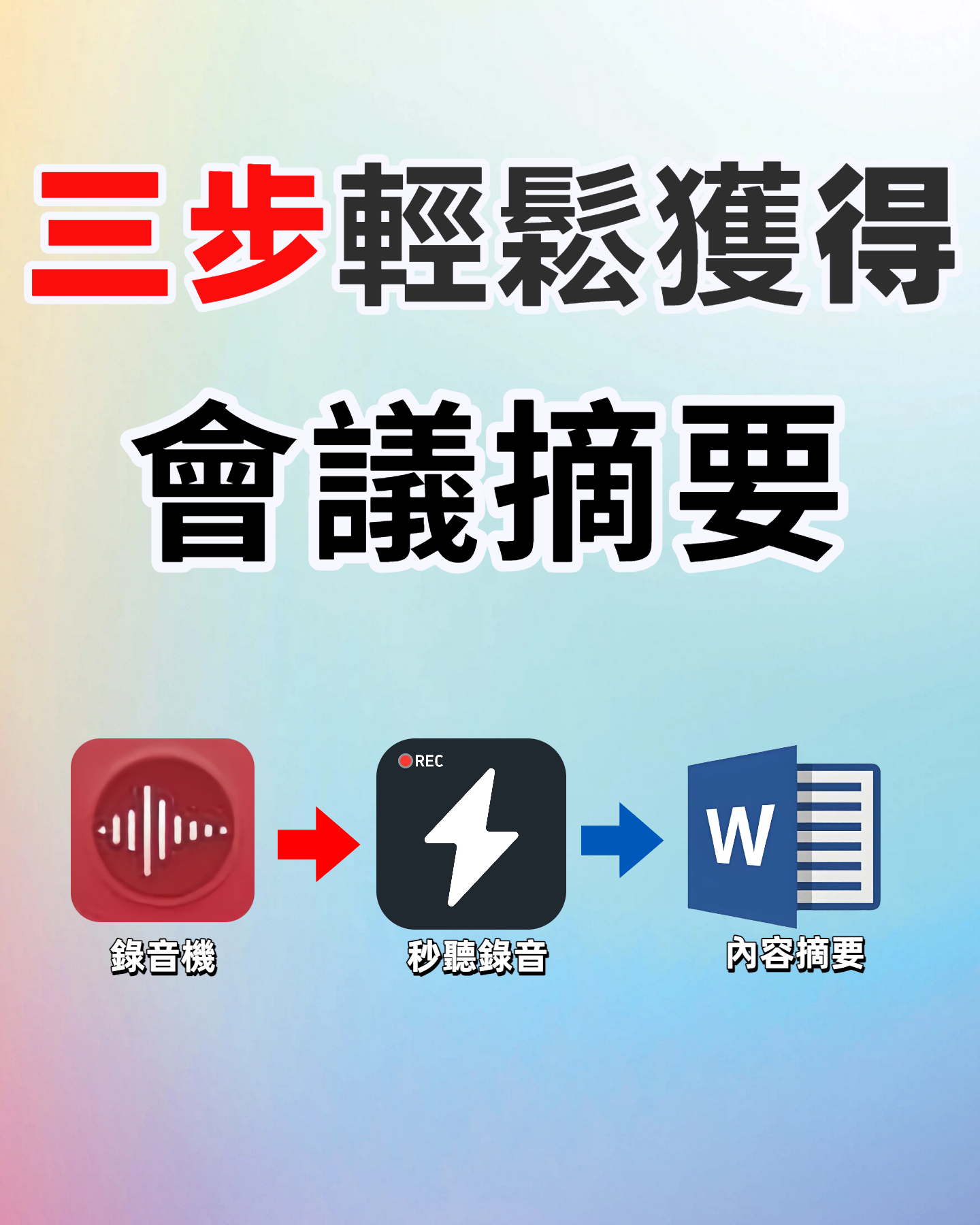
Tinrec (秒聽錄音) is an AI recording assistant that supports 14 languages across iOS, Android, and web. It doesn’t directly lay out your PPT, but it handles the most critical step: turning meeting audio into structured material ready to feed into a presentation tool.
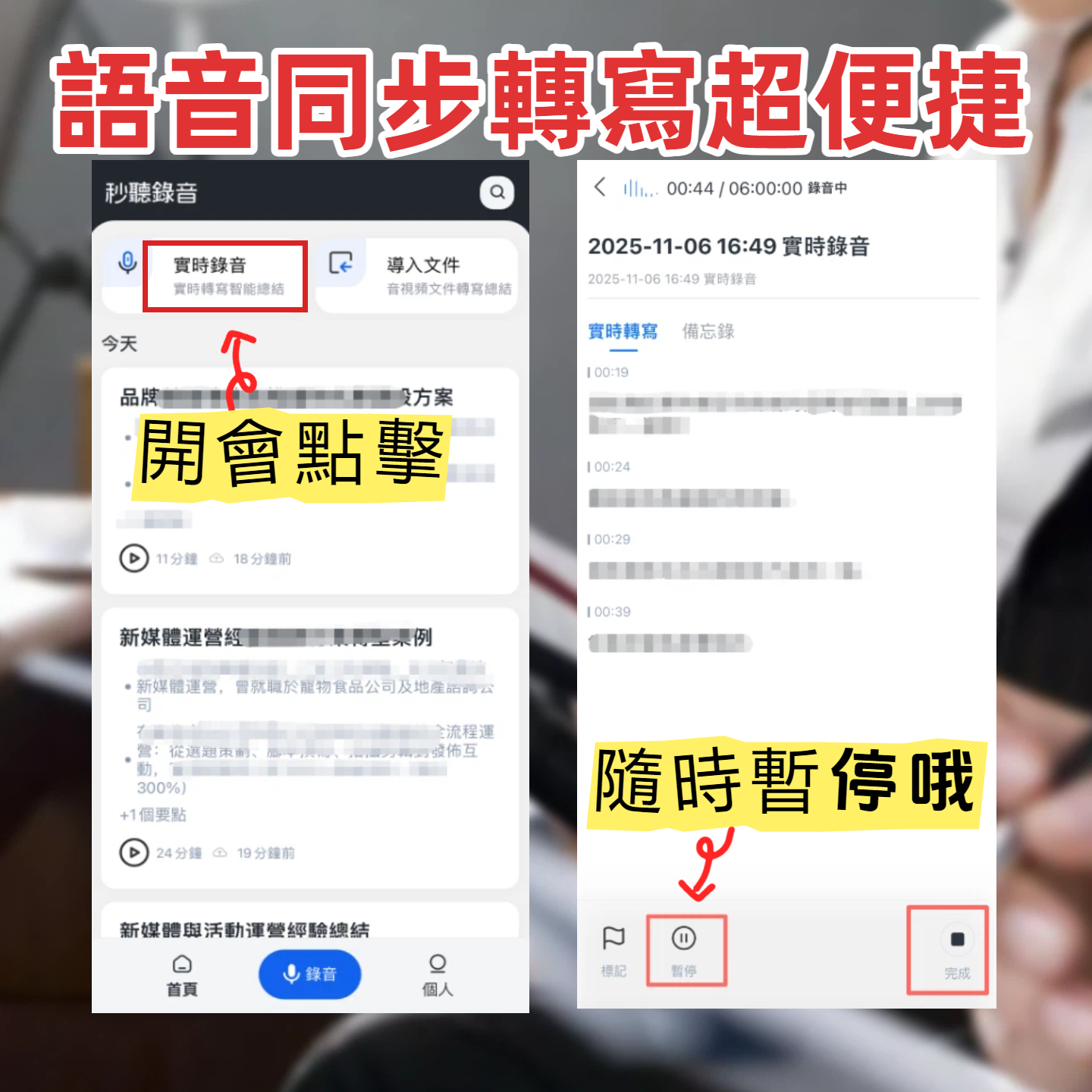
During a meeting, open Tinrec and it will display a live transcript. Seconds after the meeting ends, the AI automatically generates a summary, chapters, and action items. Our most-used feature is “AI Chat Query”—you can ask it directly: “What was the conclusion of this meeting?” “Who is following up with Client A?” It’s not just keyword search; it uses semantic understanding to pull answers from the full text. At this price point, few other recording tools offer this feature.
Stop organizing recordings by hand
Upload audio or video and automatically get a transcript, summary, and action items
We tested a 5-minute Cantonese meeting recording (iPhone 15, office environment with air conditioning background noise), and Tinrec achieved a word error rate of about 8.3%—the best we’ve seen for mixed Chinese and Cantonese scenarios. Compared to competitors with error rates above 12%, that’s four fewer corrections per 100 characters, which adds up to half an hour of work.
Pros:
- Meeting material ready to go: Summaries, action items, and chapters are auto-generated—just copy and paste into your PPT for a well-structured outline. No more digging through recordings for key points.
- AI Chat Query saves search time: Want to quote someone in your slides? Ask Tinrec directly—much faster than scrubbing through a 30-minute transcript manually.
- Cross-platform + multiple sources: Not only live recording, but also upload old audio files or paste a YouTube link to parse content. Even past meeting records can be organized into your own meeting knowledge base.
Limitation: The free plan offers 100 minutes of transcription per month; heavy users will need to pay. For a typical worker with 2-3 meetings per week (one hour each), 100 minutes covers core meetings. You can try it before deciding to upgrade.
Who it’s for: If your meetings involve discussion and require formal slide output—and you don’t want to spend time transcribing—Tinrec is the best front-end tool today. It turns meeting minutes from mere archives into instant slide material.
Beyond Tinrec: What Other Options Are There?
Below are two common AI presentation tools, but they handle the second half—layout—rather than the first half—content understanding.
Gamma: Input prompts to quickly generate beautiful PPTs. Great when you already have an outline and just want to skip formatting. But you need to extract meeting key points yourself; it cannot pull content from audio. To go from recording to slides in one click, missing a front-end tool like Tinrec breaks the workflow.
Beautiful.ai: Focuses on smart templates that auto-adjust layouts with strong design sense. However, it relies entirely on manual text input—no recording or AI content parsing. To create slides from meeting audio, you’d first have to listen, write an outline, and paste each page. That’s exactly the step Tinrec saves—using AI to extract key points from audio, cutting your prep time in half compared to manual work.
Pitfall Guide: 3 Common Mistakes When Choosing a “One-Click Meeting PPT” Solution
Pitfall 1: Prioritizing template count over content efficiency. Many are lured by “500 beautiful templates.” But the core of a meeting presentation is your grasp of the content. If the tool can’t help you understand the audio and auto-summarize, you’ll still end up re-listening and re-typing—templates alone won’t save you.
Pitfall 2: Chasing full automation without building a workflow. No tool magically turns audio into a perfect slide deck. A practical approach: use a tool like Tinrec to convert audio into structured text, then feed that into a PPT tool or AI generator for layout. Stringing these two steps together is the reality of “one-click generation.”
Pitfall 3: Ignoring cross-platform compatibility and data persistence. You record on your phone today and need to make slides on your computer tomorrow—if the tool doesn’t sync across devices or allow searching past data, you’ll keep redoing work. Choose a tool that helps you build a “meeting knowledge base,” not start from scratch every time.
Summary: Which One Should You Choose?
Going back to the most practical question: “How can I turn meeting audio into slides as fast as possible?” Our conclusion is clear: First, focus on content organization; then find a tool for layout. Here’s our scenario-based recommendation:
- Need to extract key points from meeting audio and create a slide outline → Tinrec (秒聽錄音). Let AI listen to the meeting, generate summaries and action items—this text file is your best slide material.
- Already have a full transcript, just want to quickly generate PPT → Gamma for fast visualization when content is ready.
- Prioritize design and are willing to manually enter content → Beautiful.ai for those who care deeply about layout and don’t mind upfront organization time.
If you frequently attend meetings and need to produce slides, instead of buying multiple half-baked tools, try the free version of Tinrec first—100 minutes per month is enough for two or three meetings. Experience firsthand how much time you can save from “listening to recordings” to “generating slide material.” If you like it, consider upgrading; no need to pay upfront.
Turn every recording into actionable outcomes
Get 60 free transcription minutes when you sign in. No credit card required.
Related Reading
You might also like

2026 Meeting Action Item AI Free Plan Roundup: 4 Tools Reviewed at a Glance
Tired of spending hours organizing to-dos after meetings? We tested 4 AI tools with free plans that extract action items: Tinrec, Otter.ai, Fireflies.ai, and Notta. Compare their transcription and action item extraction capabilities to find the best fit for you.

How to Create an AI Meeting SOP in 2026? 4 Steps to an Efficient Meeting Notes Workflow
Tired of missing key points in meeting notes? Tried multiple AI tools but none fit? This article rounds up 5 AI meeting tools, from free to paid, and teaches you 4 steps to build an AI meeting SOP so every meeting automatically generates action items and summaries.
2026 Automated Meeting Summary Tool Buying Guide: 4 Tools Tested and Recommendations
We tested 4 AI meeting summary tools, evaluating accuracy, AI features, and cross-platform support to help you find the best automated meeting notes solution. Tinrec's Cantonese transcription and AI Q&A are impressive.

The Complete Guide to Automatically Generating PPTs from Meetings in 2026: From Recording to Slides
Tired of staying up late to make presentations after meetings? This guide shows you how to use AI recording tools to automatically organize meeting content and quickly generate PPTs, saving 80% of your time.

2026 Two One-Click Meeting Minutes Tools Compared: Software Solutions Are More Flexible and Cost-Effective
A hands-on comparison of Tinrec and Plaud Note across five key dimensions: ease of use, input sources, AI processing capabilities, pricing, and cross-platform support, showing why you don't need a dedicated recorder to automatically generate meeting highlights and to-do lists.

2026 Comparison of 3 AI Meeting Workflow Tools: Which AI Features Are Most User-Friendly?
Spending hours on meeting notes? We tested 3 popular AI meeting tools—comparing transcription quality, AI features, and pricing—to help you find the perfect fit for your workflow.

2026 Test Comparison of 5 Automatic Meeting Report Generators: Which Free Version Is Best?
Tired of spending hours organizing meeting notes? This article tests 5 popular AI automatic meeting report tools, comparing free limits, cross-platform support, and AI summary accuracy to help you find the best solution.

The Best Meeting Minutes Automation Software of 2026: Auto Summaries & Action Items
Struggling to organize meeting notes? This article covers the best meeting minutes automation software of 2026, from free to paid plans, helping you quickly generate summaries and action items.

2026 Post-Meeting Automation Tool Buying Guide: 3 Products Tested and Recommendations
Meetings running into overtime, and still need to work late on meeting minutes? This article tests 3 post-meeting automation tools, including Tinrec, Otter.ai, and Notta, comparing accuracy, AI features, cross-platform support, and more, to help you choose the most time-saving solution.