
Turn recordings into transcripts and summaries in minutes
Upload audio or video for multilingual transcription, AI notes, and action items
In today's world where remote meetings are the norm, have you ever experienced these frustrating scenarios: During a Google Meet or Teams meeting, you’re frantically typing while listening, only to miss key decisions? Or after the meeting, you have a one-hour recording but need two hours to re-listen and extract the main points?
“Recording is easy, but organizing is hard” is a common pain point for all professionals and students. This article focuses on the need for real-time meeting transcription and reviews 5 noteworthy solutions in 2026 from the perspectives of recognition accuracy, multilingual support, AI summarization capabilities, and free credits, providing a comprehensive tool selection guide.
Quick Navigation Conclusion:
- If you need an enterprise-grade all-in-one collaboration suite and have a generous budget: Lark or Teams Premium are the top choices.
- If you value Chinese/mixed-language recognition accuracy and need AI conversational search to quickly find key points: Tinrec is a flexible and efficient option.
- If you primarily work in English-only meeting environments: Otter.ai remains a strong performer.
Why Do You Need a Dedicated AI Transcription Tool?
Traditional voice recorders or built-in phone recording apps only solve the problem of “saving audio” but not the efficiency of “extracting information.” Modern AI recording solutions address three key pain points:
- Low Information Density: Audio recordings are linear; you can’t quickly skim like text. Searching for specific information in a 60-minute meeting without a transcript is extremely time-consuming.
- Multitasking Distractions: Focusing on note-taking can cause you to miss the next key point or even an opportunity to speak.
- Lack of Action Items: After a meeting, you’re left with scattered notes and no clear to-do list, leading to poor execution.
2026 Hot Meeting Transcription Tools Comparison
To help you make the best choice, we’ve selected representative tools from the market. Our evaluation focuses on “Chinese language support” and “post-meeting organization efficiency.”
| Dimension | Tinrec | Lark | Teams / Meet Built-in | Otter.ai |
|---|---|---|---|---|
| Core Positioning | Lightweight AI recording assistant (record + understand + act) | Enterprise collaboration suite (IM + docs + meetings) | Built-in feature of video conferencing software | English-centric meeting assistant |
| Chinese/Mixed Language Support | ⭐⭐⭐⭐⭐ (Chinese, English, Japanese, Korean, Taiwanese, etc. 10+ languages) | ⭐⭐⭐⭐⭐ (Excellent) | ⭐⭐⭐ (Depends on version and subscription) | ⭐ (English only) |
| Real-time Transcription | Supported (Web/App multi-device sync) | Supported (Miaoji) | Supported (live captions/transcription) | Supported |
| AI Summary/Action Items | Auto-generates summary, conclusions, to-do list | Auto-generates meeting minutes | Only well-supported in Copilot version | Auto-generates summary |
| Unique Features | AI conversational search (ask questions directly about recordings), video link to text | Strong document integration, meeting recording replay | Integration with Outlook/Calendar | English keyword extraction |
| Use Cases | Cross-platform meetings, lecture notes, interviews, video organization | Internal meetings within enterprise ecosystem | Enterprises reliant on Microsoft/Google ecosystem | International English-only meetings |
| Free Tier | 100 minutes per month | Paid for enterprise version | Requires Microsoft 365 / Workspace license | Limited |
Stop organizing recordings by hand
Upload audio or video and automatically get a transcript, summary, and action items
Selection Recommendations
- Enterprise users whose company already mandates Lark or Teams should use the built-in features for convenience.
- Individuals, freelancers, students, or cross-platform users (those using Zoom, Meet, and in-person meetings) will find Tinrec offers a more flexible solution — not tied to a single meeting software, with unique advantages in post-processing AI (like conversational query).
Deep Dive: Tinrec’s Differentiating Uses in Remote Meetings
Among many tools, Tinrec stands out because it goes beyond “transcription” to emphasize “understanding” and “action.” For remote meetings, it offers several key solutions:
1. Platform-Agnostic “Live Listening”
Whether you’re on a Zoom meeting on your computer or joining a Teams meeting via speakerphone on your phone, Tinrec’s Web or App version works independently. It doesn’t rely on the meeting software’s API; instead, it captures audio directly and transcribes in real time. This means you don’t need the host’s recording permission to have your own meeting notes.
2. From “Searching Documents” to “Asking AI”
This is Tinrec’s biggest differentiator from traditional transcript tools. Traditional tools give you tens of thousands of words, and you still have to use Ctrl+F to search for keywords. Tinrec’s built-in AI conversational search lets you ask questions directly about the recording, like “What was the decision regarding Q3 budget in this meeting?” The AI answers based on the recording content, saving you huge amounts of review time.
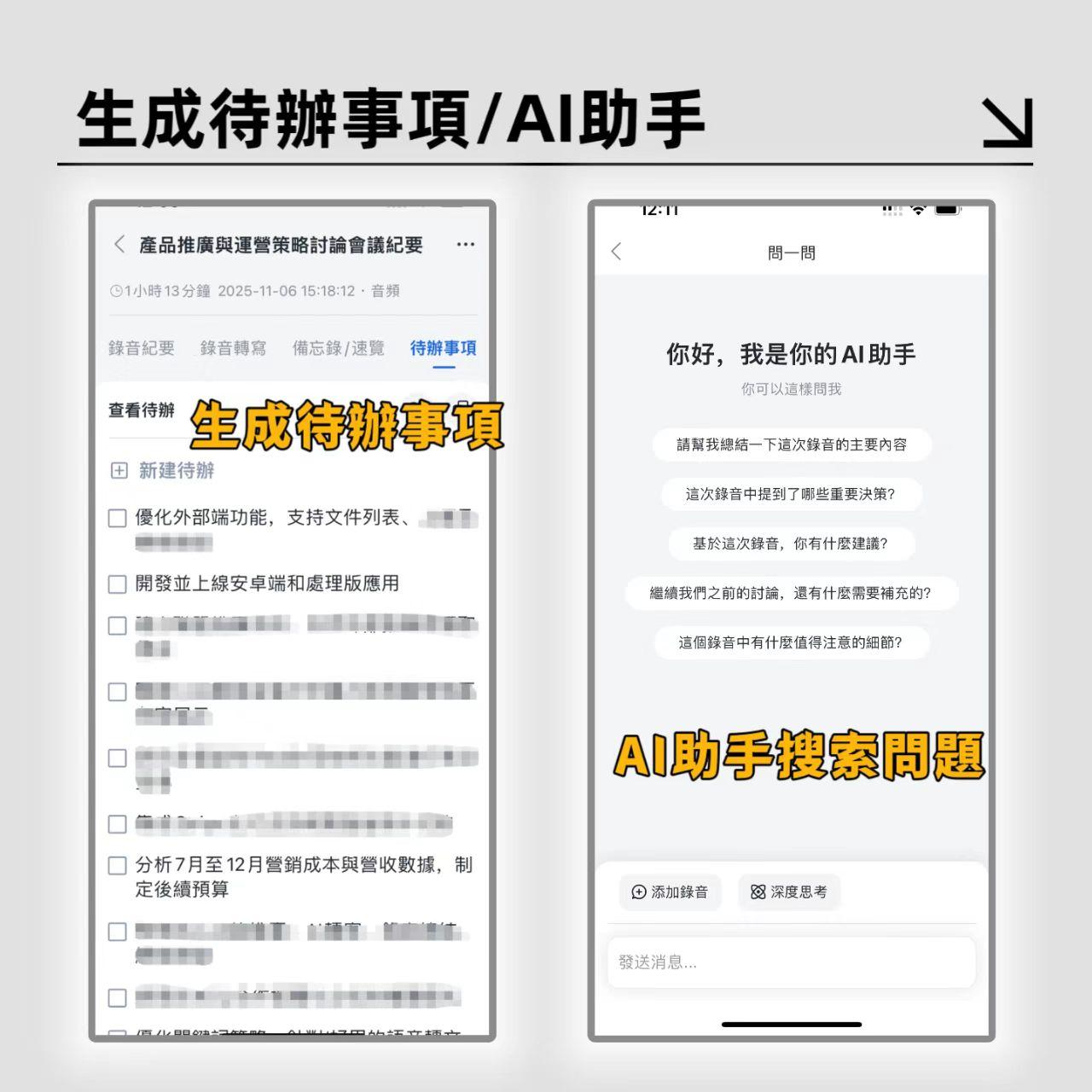
3. Multilingual Adaptability
Remote meetings often involve cross-border teams. Tinrec supports automatic recognition of Chinese, English, Japanese, Korean, German, and even Taiwanese and Cantonese. This is a significant advantage for meetings with mixed languages or for students taking foreign language courses.
Practical Tutorial: How to Perfectly Record a Google Meet Meeting with Tinrec
Below is a step-by-step guide using Tinrec’s web version, showing you how to obtain high-quality meeting notes without disrupting the meeting.
Step 1: Set Up Your Recording Environment
- Open your remote meeting software (e.g., Google Meet, Zoom).
- Open a browser tab and go to Tinrec’s real-time transcription entry point.
- Key setting: If you’re on a computer, ensure Tinrec’s audio input source is correctly set (usually “System Audio” or “Stereo Mix”; if that option isn’t available, you can simply place the phone app next to your computer — the results are still excellent).
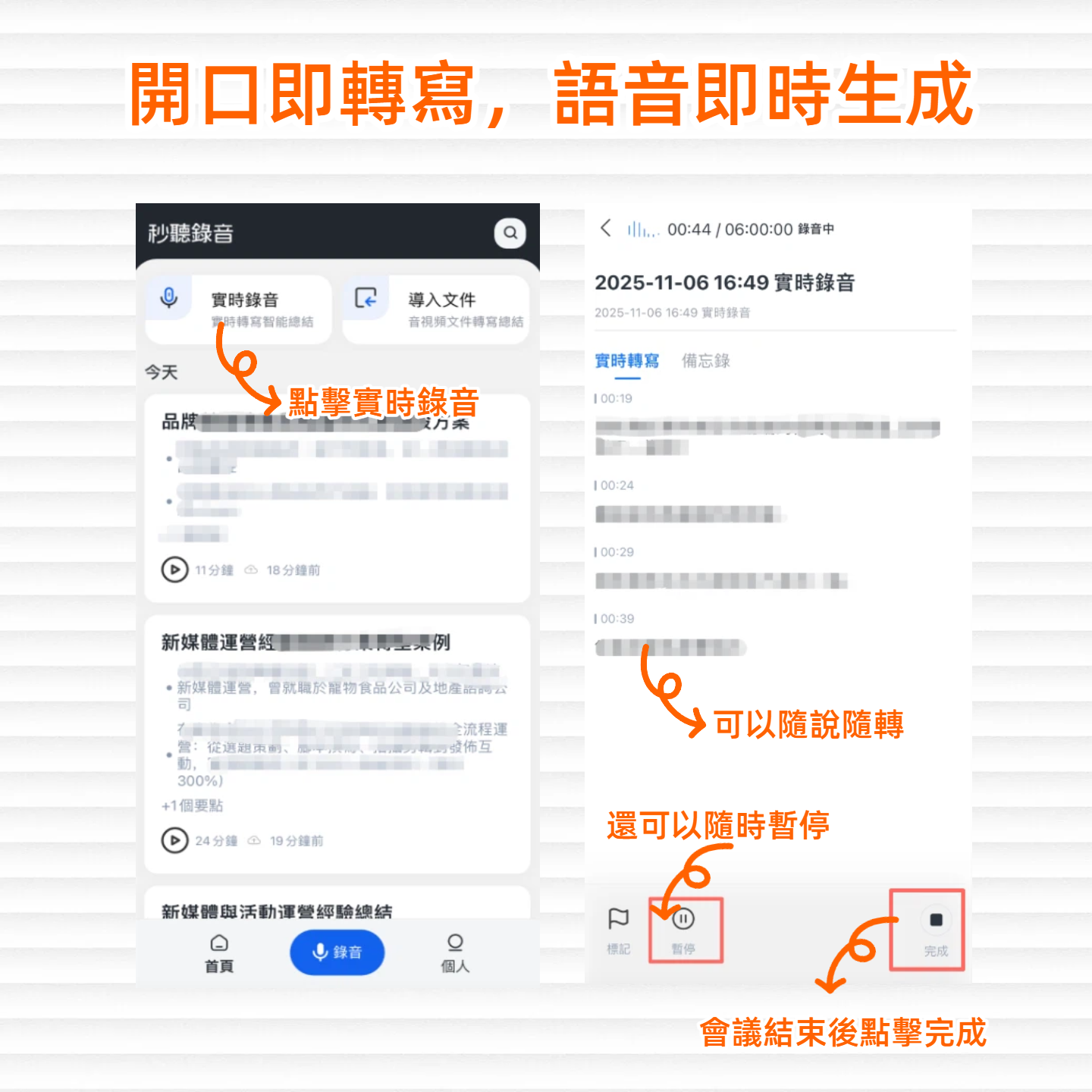
Step 2: Start Real-Time Transcription
- When the meeting starts, click the “Start Recording” button on Tinrec.
- You’ll see text appearing in real time. Tinrec automatically identifies different speakers, separating each person’s statements.
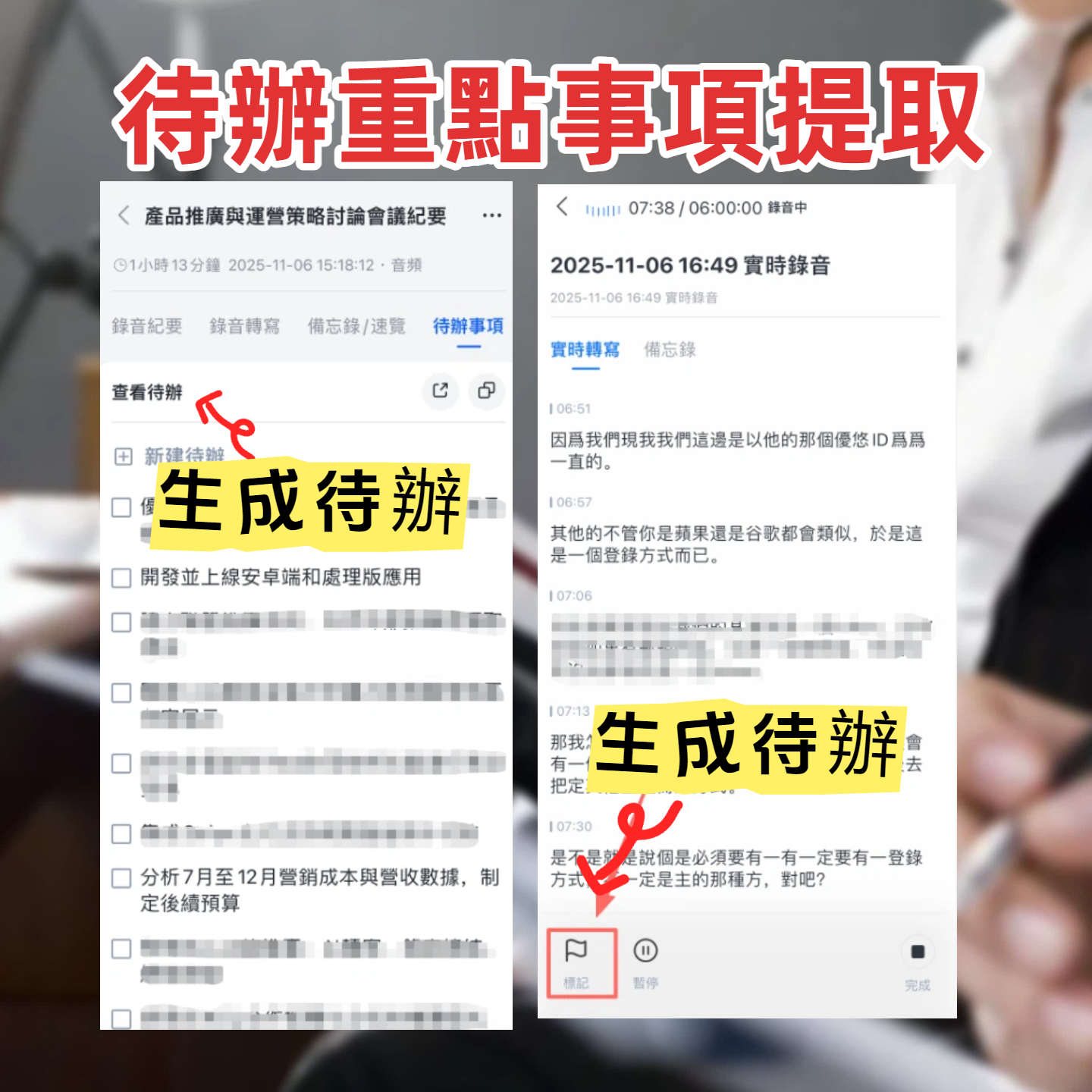
- If an important part comes up, you can click “Mark Important” for easy playback later.
Step 3: Generate AI Meeting Minutes
- After the meeting ends, click “Stop Recording.”
- The system processes the audio. In a few seconds, click “AI Summary.”
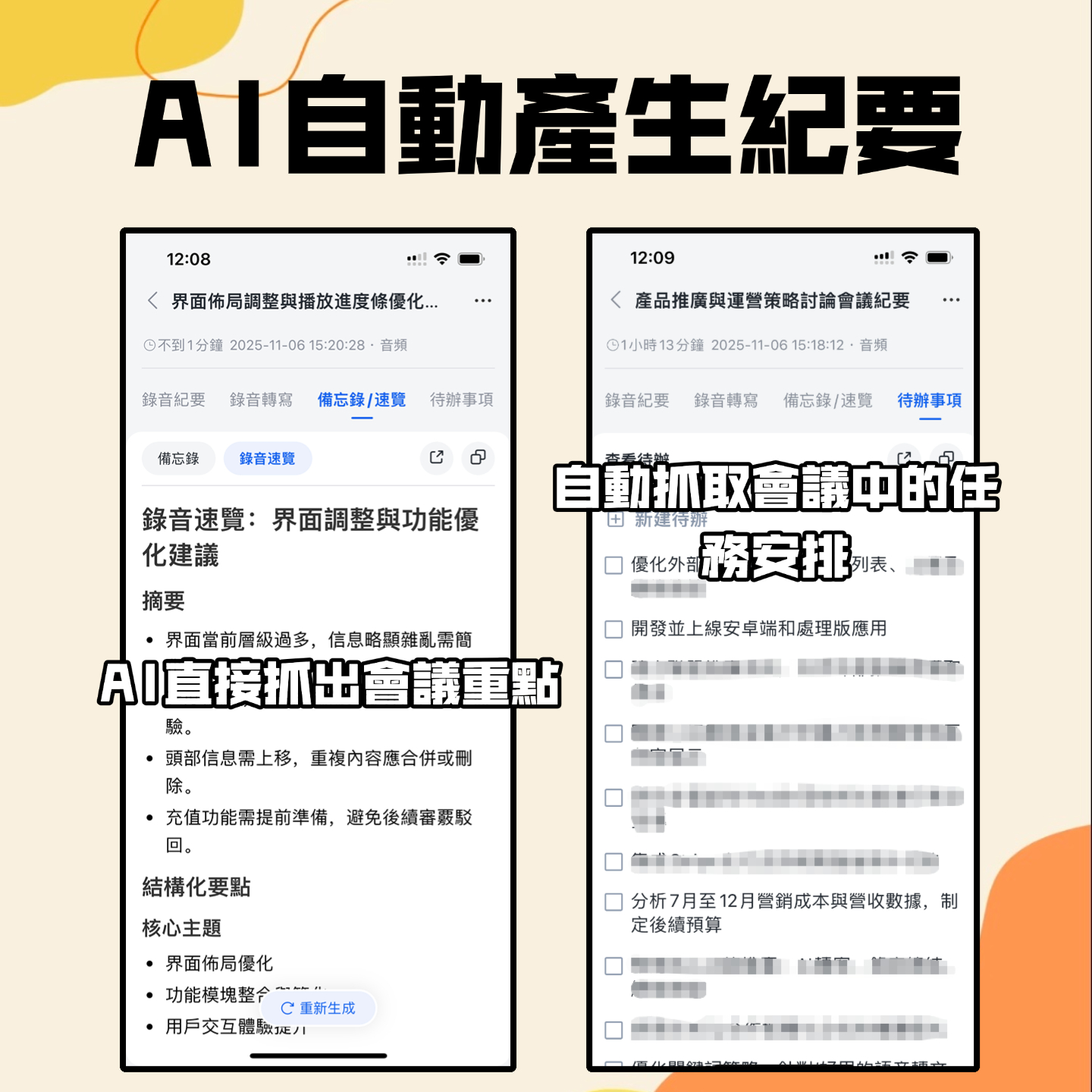
- You’ll receive a structured meeting summary, conclusions, and most importantly, action items (to-do list).
Step 4: Recover Missed Meetings (File Upload)
If you forgot to record in real time but have a meeting video or audio file (mp3/mp4), use the audio file to text feature. Upload the file, and you’ll still get a transcript and AI analysis.
Frequently Asked Questions (FAQ)
Q1: How long can I record with Tinrec’s free version? Currently, Tinrec offers 100 minutes of free recording per month. This is enough for occasional key meetings to experience core features. For high-frequency use, consider Basic or Pro plans.
Q2: Can the AI recognize mixed Chinese-English speech? Yes. Tinrec supports automatic multilingual recognition. For common workplace mixed-language contexts (e.g., “We need to extend the deadline for this project”), recognition accuracy is quite high.
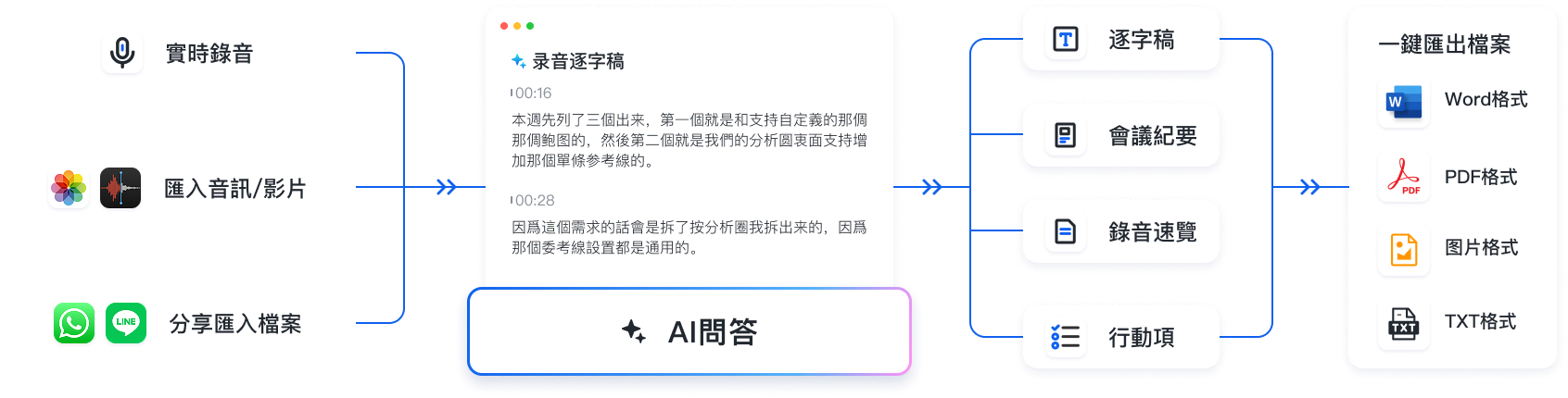
Q3: Can I export the transcript? Yes, it supports multiple export formats, including Word, PDF, TXT, and subtitle files (SRT), making it easy to bring transcripts into other editing or video editing software.
Q4: Why not just use my phone’s built-in voice recorder? Built-in recorders typically lack transcription, speaker identification, and automatic generation of meeting summaries and action items. Dedicated tools save significant post-processing time.
Q5: Can I transcribe YouTube instructional videos or podcasts? Yes. Tinrec has a Podcast/Online Video to Text feature. Just paste the link, and it will parse the content and generate notes, perfect for online courses or competitive analysis.
Q6: What about data security? Privacy is crucial when choosing a tool. Tinrec uses encrypted transmission; recording content is only accessible to you and processed by AI. It is not made public or used to train general models, ensuring confidentiality for business meetings.
Turn every recording into actionable outcomes
Get 60 free transcription minutes when you sign in. No credit card required.
Related Reading
You might also like

2026 Comparison of 4 Speech-to-Text Apps: Which Free Plan Suits Hong Kong Office Workers Best?
Tired of meetings and typing up recordings afterward? This article tests Tinrec's free plan and breaks down how to choose a speech-to-text app without getting scammed, helping you save overtime hours.

2026 iPhone Voice-to-Text: Free Built-in Features vs Tinrec Premium Choice
Want to transcribe iPhone recordings for free? Is the built-in Voice Memos app enough? Our tests show free options fall short in noisy environments, Cantonese recognition, and post-processing. This article compares iOS built-in features, free apps, and Tinrec to help you find the best solution.
2026 Speech-to-Text Tool Review: Is Tinrec's Free Plan Really Enough?
A mid-level manager tests online speech-to-text tools, from free quotas to transcription accuracy and post-meeting organization, to tell you whether Tinrec's free plan is sufficient and when you should upgrade.

4 Best Online Speech-to-Text Tools in 2026: Free Plans and AI Features Compared
This article tests four online speech-to-text tools—Tinrec, Otter.ai, Notta, and Granola—and provides buying advice based on free allowances, bot-free meeting recording, AI Q&A, and team collaboration features.

2026 iPhone Voice-to-Text App Tutorial: Tinrec 3-Step Automatic Transcription + AI Summary
A student's hands-on review of Tinrec, an iPhone voice-to-text app that automatically generates transcripts, AI summaries, and to-do lists for classes, meetings, and interviews. The free version is enough to get started, saving more time than built-in features.

Best Speech-to-Text Tools in 2026: Notta vs. Tinrec and 3 Others—Tinrec Wins for Meeting Notes
A mid-level manager tested 4 speech-to-text tools for meeting notes, comparing Notta and Tinrec on bot-free recording, Chinese language support, post-meeting organization, and team collaboration, and explains why Tinrec came out on top.

2026 Free Cantonese Audio-to-Text Solutions: 3 Options Compared
Looking for a free Cantonese audio-to-text tool? Tinrec's free plan might be the most efficient choice. This article reviews 3 free options, with a focus on Tinrec, showing how it can save you overtime hours.

4 Best Online Audio-to-Text Tools in 2026: Free Plans, AI Features, and Team Collaboration Compared
How to choose an online audio-to-text tool? This article compares Tinrec, Otter.ai, Notta, and TurboScribe, focusing on free quotas, AI post-processing, cross-platform support, and team collaboration to help you find the best fit.

The Complete Guide to Online Speech-to-Text in 2026: From Meeting Minutes to Team Collaboration
Tired of manually transcribing recordings? This article tests multiple online speech-to-text tools, comparing features, accuracy, free tiers, and team collaboration to help you choose the best AI meeting notes solution.