

Turn recordings into transcripts and summaries in minutes
Upload audio or video for multilingual transcription, AI notes, and action items
What Can AI Agent To-Do Extraction Do for You?
After a meeting, the worst thing is that "a lot was said, but no one remembers who should do what."
In the past, you might have had to listen to recordings while taking notes, then organize them into a to-do list yourself. Now, with AI agent automatic to-do extraction—take Tinrec, for example—as soon as the recording ends, it has already extracted each person's action items from the conversation: who is responsible, what to do, and when to complete it, clearly laid out.
Scenario 1: To-Do List Ready 5 Minutes After the Meeting
Imagine you just finished a two-hour project meeting where participants discussed a dozen tasks. Tinrec's AI agent automatically identifies commitments and deadlines from the conversation, producing a structured to-do list, saving you the time of rewinding the recording.
Scenario 2: Lecture Recordings Turned into Action Notes
Students often record entire lectures, but when they listen back, they find assignments and deadlines scattered throughout. Using Tinrec, the transcript can be processed by the AI agent to extract all "what to submit and when" items, organizing them into a study to-do list.
Scenario 3: Interview Recordings Quickly Capturing Key Actions
When conducting user interviews or research, interviewees often mention requests, suggestions, or materials to provide later. Tinrec automatically marks these action points, giving you a follow-up list immediately after the interview without relying on memory.
What Are Tinrec AI Agent's Core Capabilities for To-Do Extraction?
Honestly, transcription is just the first step. The real time-saver is the subsequent organization. Tinrec's AI agent has several particularly useful capabilities for to-do extraction:
Intelligent Task Identification in Conversations
It doesn't rely solely on keywords (like "remember to") but uses semantic understanding to capture action items that truly need to be executed. Even if someone uses natural phrases like "I'll confirm with the vendor" or "I'll get it to you by next Wednesday," Tinrec can pick it up.
Structured Output: Who, What, When
Extracted to-dos are automatically broken down into responsible person, task content, and deadline, rather than a vague sentence. For teams, this list can be directly used for tracking progress.
Supports Subsequent Editing and Export
You can still manually modify or add details to the AI-organized to-dos. More importantly, it can be exported in common formats or synced to tools like Notion, Google Docs that you already use, seamlessly integrating into your workflow.
Timestamp Links to Original Audio
Each to-do item is attached with a timestamp from the recording. If you have a question about a specific item, click it to jump directly to that part of the conversation for context—a really thoughtful feature.
Handles Mixed Chinese and English Content
Many workplace meetings in Taiwan mix Chinese and English. Tinrec handles this well, not missing tasks due to language switching. In contrast, Otter.ai, while strong in English to-do extraction, is less accurate and structured in all-Chinese or mixed-language scenarios.
Practical Use Cases
Weekly Project Meetings
Record the meeting, and Tinrec automatically extracts this week's to-dos for each team member. You only need two minutes after the meeting to review and send the list to the team. No more hurried typing during the meeting and missing discussion points.
Stop organizing recordings by hand
Upload audio or video and automatically get a transcript, summary, and action items
Academic Lectures and Online Courses
Professors or instructors often assign readings, assignments, or group tasks. Use Tinrec to record the class, and the AI agent organizes these "homework" items into a list that becomes your study plan.
Client Interviews and Requirement Discussions
During interviews, clients mention revision requests, desired features, or materials to provide later. Tinrec records all of them. When you open the to-do list before the next meeting, you'll have a complete picture of pending items, showing your professionalism.
Content Team Brainstorming
During team discussions, ideas fly around, and it's easy to forget who said they'd make a video or who is responsible for writing copy. Tinrec extracts each person's action commitments from the recording, turning creativity into executable tasks.
4 Things to Consider When Choosing an AI Meeting Tool
If you're evaluating which AI recording and organizing tool to use, especially focusing on "automatic to-do extraction," here are a few points to help you decide.
1. Accuracy of To-Do Extraction and Language Scenarios
Don't just look at official demos. Test with your actual meeting recordings. Tinrec extracts to-dos with higher relevance in Chinese and mixed Chinese-English environments. Otter.ai, being English-native, is very accurate for English meetings but tends to miss or loosely structure Chinese content. If your daily communication is mainly in Chinese, Tinrec is more suitable.
2. Completeness of Chinese Support
Beyond transcription, are summaries, to-dos, and Q&A all smoothly presented in Chinese? Tinrec has a fully Chinese interface and output, making it more friendly for Taiwanese users. Otter has a Chinese mode, but some advanced features are still in English logic, posing a learning curve.
3. Pricing and Flexibility
Both offer free plans to get started. Tinrec's free version provides a basic monthly transcription quota sufficient for a few meetings. For more usage, it offers weekly, monthly, and annual plans; the weekly plan is more cost-effective for short-term needs than a direct monthly subscription. Otter Pro is monthly or annual, which is relatively expensive for occasional users.
4. Cross-Platform and Export Capabilities
Ensure the tool supports your commonly used devices. Tinrec has iOS, Android, and web versions, and you can upload audio files on a computer. The to-do list can be exported to Notion, Google Docs, OneNote, etc., and is compatible with the Apple ecosystem. Otter integrates with Slack and Dropbox, but Tinrec offers more variety for note-taking software commonly used in Taiwan.
Frequently Asked Questions
Does Tinrec's AI Agent Need to Be Manually Triggered?
No. By default, after recording or importing a file and transcription is complete, the system automatically generates summaries, chapters, and to-dos. You can turn it off in settings.
Can the Free Version Extract To-Dos?
Yes. The free version also includes AI summaries and to-do extraction, but with a monthly transcription time limit. We recommend trying the free version first to see the results.
How Does Otter.ai Perform in Chinese To-Do Extraction?
Otter has very complete English support. While Chinese transcription is possible, the automatically extracted to-dos are often not well-structured, sometimes missing or misidentifying items. If you primarily handle Chinese content, Tinrec is a more stable choice.
Can To-Dos Be Exported to Notion?
Yes. Tinrec supports exporting to-do lists as text, Markdown, or directly syncing to services like Notion, Google Docs.
Is Extraction Still Accurate with Poor Recording Quality?
Accuracy is affected by background noise, multiple people speaking simultaneously, accents, etc. In typical meeting or classroom environments (quiet, clear speech), Tinrec's to-do extraction quality is quite good. If the audio is very poor, it's advisable to improve the recording environment or manually proofread afterward.
Which Is Better for Students: Tinrec or Otter?
It depends on your use case. If you need to record English lectures and have notes automatically organized, Otter might be more suitable. But if you often attend Chinese courses or lectures, or need to handle mixed Chinese-English content, Tinrec's free version quota and Chinese organization capabilities are more practical.
Conclusion
After reading this comparison, you should understand the differences between Tinrec and Otter in AI agent to-do extraction.
In short, if you are a Taiwanese user whose daily work or study is mainly in Chinese, and you want automatically generated structured to-do lists that are easy to export, then Tinrec is the more suitable choice. It handles not only meetings but also class notes, interview organization, and video content. The free version is sufficient for beginners to try.
If you're interested, start with the Tinrec free version to experience the convenience of AI-assisted meeting notes and to-do management.
Turn every recording into actionable outcomes
Get 60 free transcription minutes when you sign in. No credit card required.
Related Reading
You might also like

2026 Horizontal Comparison of 6 AI Recording Tools: Find the Best Speech-to-Text Solution for You
A methodology article by a productivity consultant who tested 6 AI recording tools, teaching you how to turn recordings into actionable knowledge, not just transcripts.

2026 Audio File to Text Buying Guide: Real Tests and Recommendations for 2 Products
A mid-level manager tests Tinrec and Plaud Note audio-to-text tools, comparing them across five dimensions: input flexibility, transcription accuracy, post-processing capabilities, cross-platform support, and price-to-value ratio, to help you find the most time-saving audio organization solution.

Best Speech-to-Text Apps in 2026: Tested 5, This One Nails Interview Transcription
Tired of manually transcribing interviews? Our editor tested 5 speech-to-text tools to find the best one for Hong Kong users, helping you save overtime hours.
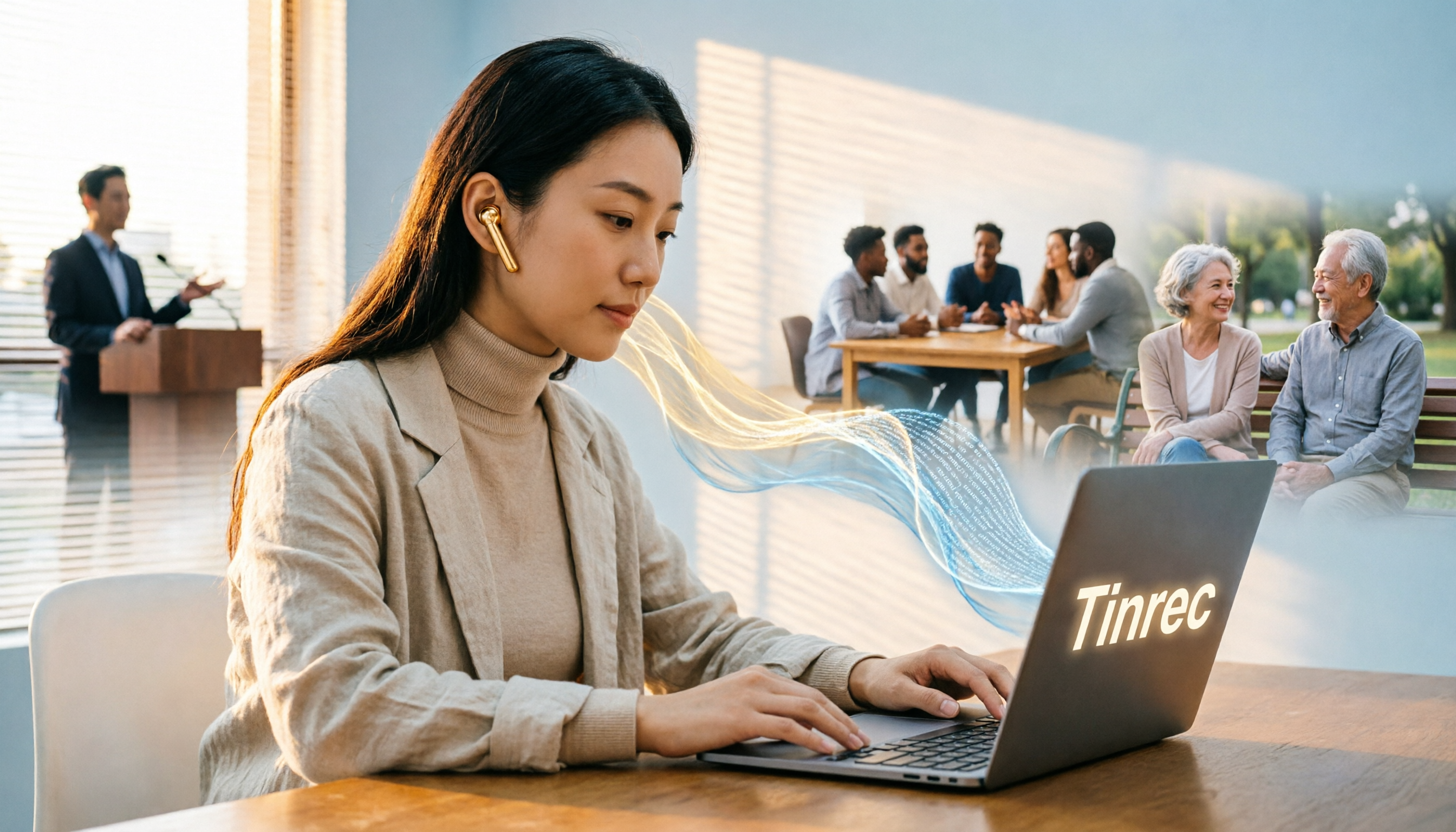
5 Best Speech-to-Text Tools in 2026: Free and Paid Plans Compared
Turning audio from meetings, lectures, and online videos into text has never been easier. This article covers 5 practical speech-to-text tools, including free and paid plans, so you can choose the best one for your needs.

Best AI Agent for Generating Word Documents? 2026 Review of 3 Tools, Tinrec Takes the Lead
Tired of overtime from transcribing meeting recordings into Word documents? This hands-on review compares Otter, Notta, and Tinrec – from recording to auto-generated meeting notes in Word – to find the most helpful tool for you.

2026 Horizontal Comparison of 5 AI Meeting Productivity Tools: Find the Best Meeting Management Solution for You
Tired of piles of meeting recordings with no time to organize? This article reviews 5 AI meeting tools, from real-time transcription and summary generation to cross-source database search, helping you find a way to turn meeting content into actionable plans.

The Ultimate Guide to AI Meeting Minutes in 2026: Automate Summaries & Action Items
A practical guide for SME managers and team leads to understand AI meeting minutes tools, from pain points and key selection criteria to hands-on recommendations, so you don't waste money.
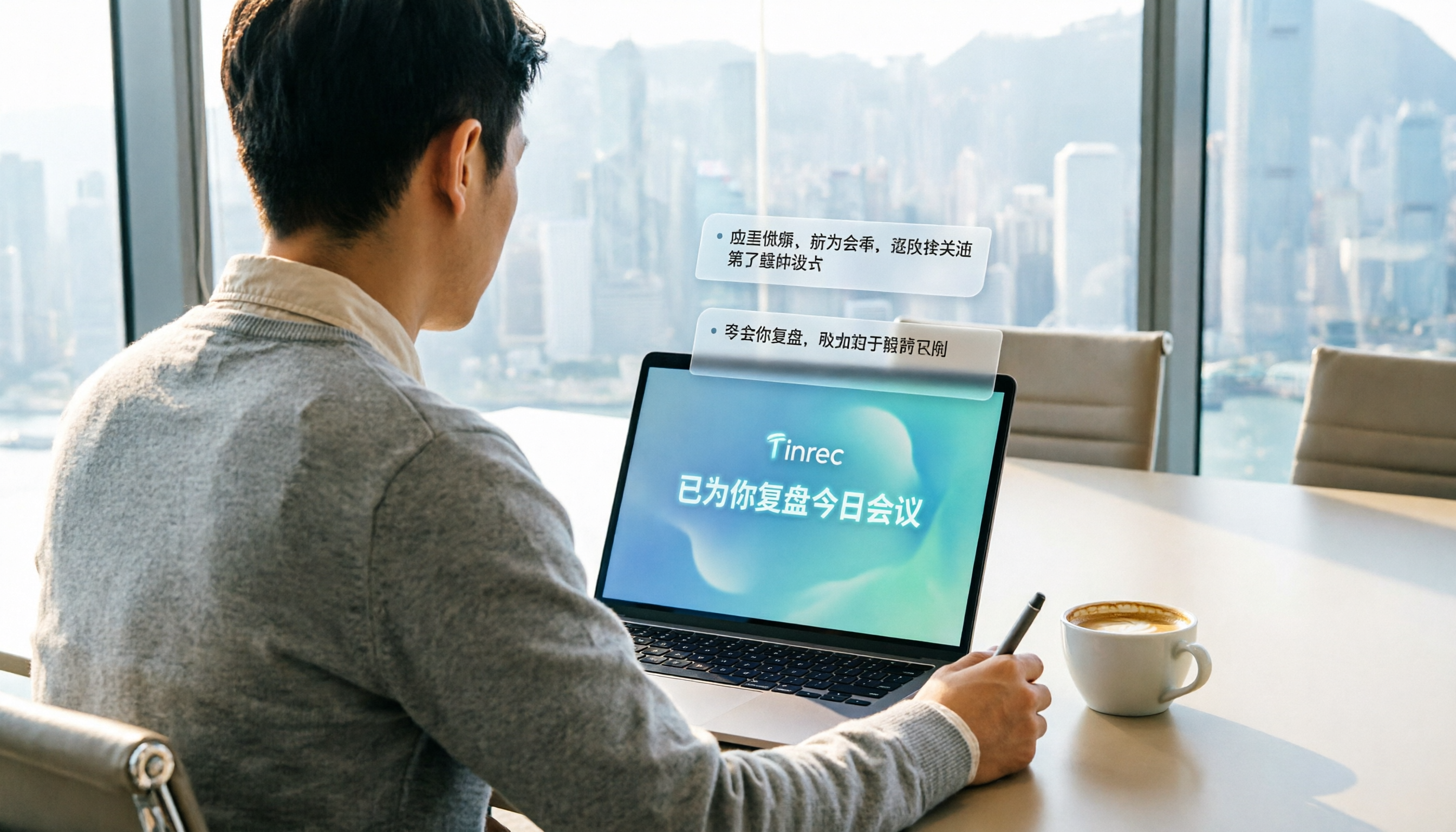
Which AI Meeting Recap Tool is Best? 2026 Test of 2 Popular Options Shows This One Has the Most Features
Which AI meeting recap tool saves the most time? We tested Tinrec and PLAUD NOTE, two hot options, comparing AI processing, multi-source support, and pricing to tell busy professionals which one is their savior.

2026 Comparison of 5 AI Office Assistants: Which One Saves the Most Time for Small Teams?
A hands-on comparison of 5 AI office assistant tools, from meeting transcription and audio/video processing to AI-powered query — see which ones actually save small teams significant time.