

Turn recordings into transcripts and summaries in minutes
Upload audio or video for multilingual transcription, AI notes, and action items
2026 Comparison of 5 AI-Powered Recording Tools with Multi-Round Dialogue: Which One Can Really Help You Extract Key Information from Recordings?
Why Do You Need an AI Recording Tool with Multi-Round Dialogue?
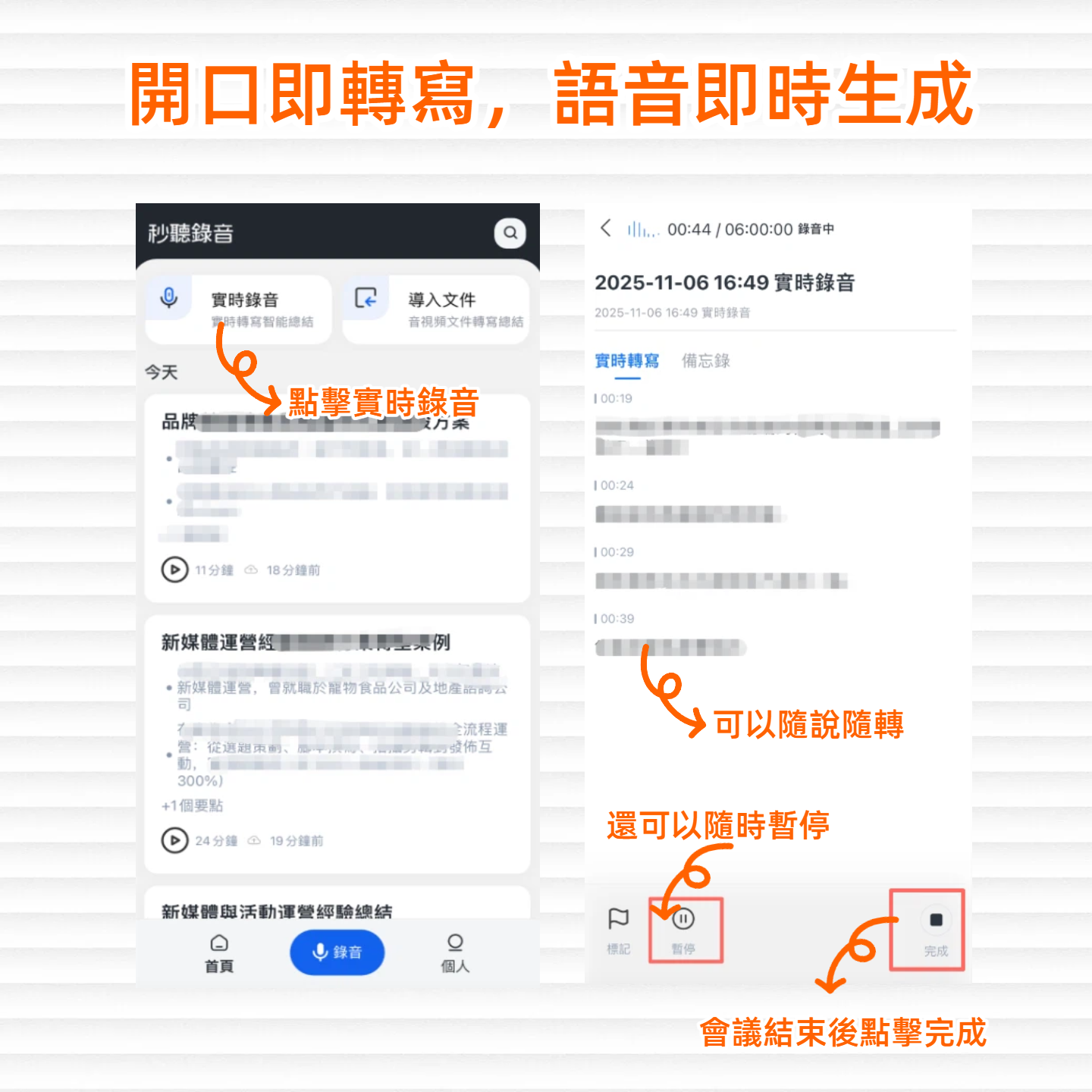
I recently spent an entire afternoon just to process a two-hour interview recording.
Of course, I got the transcript, but when I tried to find the interviewee's complete viewpoint on a certain topic, I realized the key sentences were scattered across different sections, and I had to flip back and forth.
That's when it hit me: if the AI only gives you a transcript, it's only solving the first step.
The real problem is that the information in the recording needs to be "interrogated" out.
It's like when you ask a colleague "what was discussed in the last meeting," after they summarize the key points, you follow up with "so what was the decision on issue A?" and "what's the deadline for this?" — that's multi-round dialogue.
Now, several AI recording tools have built-in conversational query features that let you question like you're talking to an assistant, layer by layer, to dig out details from the recording.
In this article, I'll share my hands-on experience comparing five tools that support multi-round Q&A, and provide prompt templates you can use immediately in your work.
Tinrec (Mian Ting Lu Yin)|The Most Complete AI Recording Assistant, Smoothest Multi-Round Dialogue in Chinese
(Screenshot: Tinrec's AI chat interface, arrows pointing to the Q&A input box and history)
If you want more than just a transcript — you want to repeatedly query your recordings, reorganize them into different deliverables — Tinrec is currently the most complete option I've found.
Its core highlights are three:
First, not just asking once, but continuous follow-up.
For example, I first ask Tinrec to summarize a product meeting recording, then follow up with "what solutions were discussed for the technical issue mentioned earlier?" and finally ask it to "organize those solutions into a comparison table." The whole process feels like having a real meeting assistant beside you — the more detailed your questions, the deeper it digs.
Second, cross-source dialogue capability.
Whether it's live recording, uploaded audio files, YouTube video links, or even TikTok short videos, Tinrec handles Q&A in the same chat window. This is especially convenient for content creators or researchers who need to organize multiple types of material — no need to switch tools for different sources.
Third, precise Chinese context understanding.
In my tests, when I followed up in Chinese about jargon used in meetings, or even dialogues mixed with Taiwanese Hokkien, Tinrec correctly grasped the context and gave replies more aligned with professional language habits in Taiwan.
Pricing: Tinrec offers a free version for basic transcription and Q&A trials. For intensive meetings or courses, you can opt for a weekly plan; steady knowledge workers may prefer the Pro monthly or annual plan.
Quick Start Prompt Template
Whenever I import a recording, I start the conversation with this prompt:
"First, summarize the three core points of this recording. Then, for each point, list further questions you could ask. Finally, create a table organizing all action items and responsible persons mentioned in the recording."
After receiving the first response, I follow up on a specific item from the table, such as:
"Regarding the 'optimize website speed' action, are there specific execution steps or deadlines mentioned in the recording?"
After a few rounds, a single recording can be broken down into very concrete action plans.
Best for: People who need deep organization of multi-source audio/video content, prefer to ask questions in Chinese, and want to turn recordings into a knowledge base for ongoing conversation.
Stop organizing recordings by hand
Upload audio or video and automatically get a transcript, summary, and action items
Otter.ai|Meeting Collaboration First, AI Chat for Supplementary Queries
Otter.ai's core is its meeting bot: automatically joins online meetings, provides real-time transcription, speaker identification, and summary generation, with strong team collaboration features.
It also offers AI Chat, allowing you to ask questions alongside the transcript. The difference from Tinrec is that Otter's Q&A is more focused on "quick lookup of meeting content" — more like a quick reference tool than an engine for deep multi-round dialogue. For example, asking "who mentioned the budget?" works well, but stringing together context for continuous follow-up is more limited.
Otter's free version offers 300 minutes per month; Pro is about $8.33/month (annual); Business is $19.99/month (annual).
Best for: Teams primarily using English online meetings, valuing automatic meeting joining and team sharing features.
Fireflies.ai|Meeting Recording Expert, AskFred for Meeting Questions
Fireflies.ai also excels at automatic meeting recording and cross-platform integration. The free version already emphasizes unlimited transcription and AI summaries.
Its dialogue feature is called AskFred, which can query single or multiple meetings. From my testing, AskFred is better at "global" questions, like "how many times was product delay mentioned in all meetings this month?" But for layer-by-layer breakdown of a single recording, you need more specific instructions, and its reaction to Chinese context is less natural than Tinrec.
Fireflies Pro is $10/month/seat (annual), Business is $19/month/seat (annual); free version has team storage limits.
Best for: Sales or customer success teams that need to query across a large number of meetings.
Granola|AI Meeting Notes, Flexible Cross-Meeting Dialogue
Granola is different: it's not an automatic meeting bot, but a note-taking tool where "you take notes, AI enhances them."
Users manually type key points, and AI helps expand, add details, and supports cross-meeting queries, e.g., "what was the conclusion about budget in the last discussion with the marketing team?" Its dialogue capability is built into the note-taking flow, but you have to maintain the habit of manual note-taking. For those seeking full automation, this adds an extra step.
Granola Business is $14/month/person, Enterprise is $35/month/person; free version has basic features.
Best for: Users who prefer to take their own meeting notes and want AI to link across notes for queries.
PLAUD NOTE|Hardware Recording Convenience, App-Based AI Q&A
PLAUD is a standalone recording device; the NotePin is even wearable, making it very practical for those with strong on-the-go recording needs.
Transcription and Q&A are done through the app, which offers AI summaries and dialogue features. However, the depth of multi-round dialogue is limited by the hardware platform's design — it feels more like a one-time summary and Q&A for that recording, and continuous follow-up is less smooth compared to pure software tools.
PLAUD Note Pro pre-order price is $179, with a default 300 minutes of transcription per month; annual subscription of $99.99 gives 1,200 minutes.
Best for: People who often need to start recording without pulling out their phone, and whose primary need is transcription with occasional queries.
With So Many Options, How Do You Choose?
• Want the most complete AI features — transcription + AI multi-round dialogue + auto-summary + multi-source support, and especially value Chinese follow-up experience → Tinrec (the only tool covering all these needs)
• Need automatic joining of online English meetings and sharing transcripts/highlights with your team → Otter.ai or Fireflies.ai (mature meeting bots)
• Prefer typing your own meeting notes and want AI to cross-link information across meetings → Granola
• Already used to carrying a recorder and don't need complex post-processing → PLAUD NOTE
Before Using AI Multi-Round Dialogue to Organize Recordings, Know These 3 Things
1. The Order of Your Questions Determines How Deep You Can Dig
Don't just toss a recording to AI and ask a random question. Try peeling it like an onion: first ask for an overall summary, then follow up on vague points in the summary, and only at the end ask for action items or tables. In my tests with Tinrec, after one round like this, the accuracy of the extracted to-do items was much higher.
2. Recording Quality Directly Affects Answer Quality
For any AI tool, background noise, multiple people talking at once, or heavy accents can cause transcription errors, which in turn skew Q&A results. If you can't control the recording environment, at least remind yourself: when following up, add a layer of verification — for example, ask the AI to timestamp the dialogue so you can easily go back to the original audio to confirm.
3. Treat the Dialogue History as a Draft, Not a Final Document
AI conversations can greatly speed up organization, but the final meeting minutes or report still need your own judgment. My usual approach is to directly export Tinrec's Q&A content as Markdown, then paste it into my note-taking app for fine-tuning — saving time without losing accuracy.
Conclusion
AI recording tools with multi-round dialogue mean we've moved from "passively reading transcripts" to "actively mining recording information." Especially for Chinese content scenarios, Tinrec is my most frequently used choice due to its dialogue flexibility, multi-source support, and spoken language understanding.
You can start with the free version, upload a meeting recording or a YouTube tutorial video, and try using the prompt templates from this article to ask three consecutive questions. You'll find that the recording contains many key points you hadn't noticed before.
Test step by step, and you'll gradually master this method.
Turn every recording into actionable outcomes
Get 60 free transcription minutes when you sign in. No credit card required.
Related Reading
You might also like
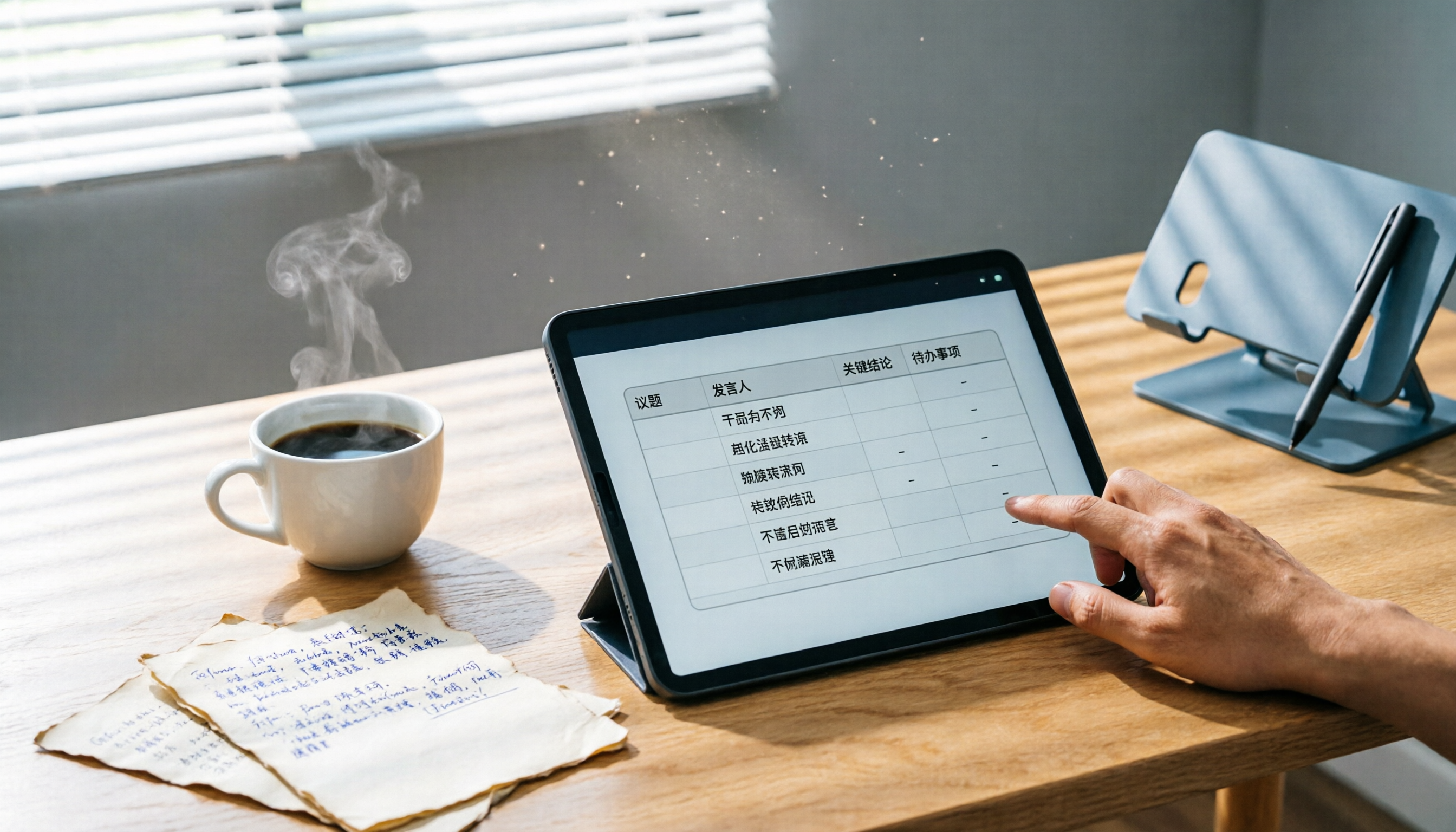
2026 Review of 3 AI Voice-to-Excel Tools: Which One Auto-Generates Meeting Data Tables?
Need to turn meeting recordings into Excel reports? We tested Tinrec, Notta, and Otter.ai to see which truly saves time by directly producing structured data.

Which AI Agent Auto-Delivery Tool is Best? 2026 Hands-On Review of 3 Top Picks: Tinrec Generates Reports in One Click
A senior college student tests 3 AI tools to automatically turn recordings, meetings, and online videos into organized reports and to-do lists, saving all-nighters.

2026 Hands-On Comparison of 2 AI Recording and Summarization Tools: Which One Produces the Best Meeting Notes for PPT?
When making a PPT, the most time-consuming part is often not the layout, but converting meeting recordings, lectures, or interview content into structured key points. This article compares Tinrec and Otter.ai across five dimensions to see which AI recording tool is better for Chinese-speaking users to quickly organize presentation-ready material.

2026 Comparison of 3 AI Agent Document Generation Tools: From Recording to Document in One Click
Tired of spending hours transcribing meeting recordings, lectures, or interviews? AI Agent document generation technology can automatically turn audio into meeting minutes, reports, to-do lists, and more. Tinrec's Agent post-processing feature lets you generate documents in various formats on demand. This article compares three mainstream solutions to help you choose the most time-saving option.

2026 Free AI Meeting Notes Solutions: 4 Tools Compared at a Glance
Spending too much time on meeting minutes? This article tests 4 free AI meeting note tools—comparing transcription accuracy, AI summaries, and cross-platform support—to help you find the best free option and make meetings painless.

2026 AI Voice-to-Word Tool Buying Guide: 3 Tested & Recommended
This review tests 3 popular AI voice-to-Word tools, from free plans to paid options, to find which one best helps you turn meeting and lecture recordings into structured Word documents quickly, with complete buying advice.

2026 4 AI Agent Context Understanding Tools Horizontal Comparison: AI Assistants That Understand Conversations Better
Want to know which tools truly understand your conversation context? This article compares AI Agent context understanding capabilities and uses Tinrec as an example to show how AI Q&A can improve meeting efficiency.

Free AI Meeting Note Solutions for 2026: A Look at 5 Tools
Can't keep up with notes in class? Group discussions where no one remembers the conclusions? This article tests 5 AI meeting note tools from a student's perspective, telling you how to choose free plans and which one is best for recording lectures and reviewing for finals.
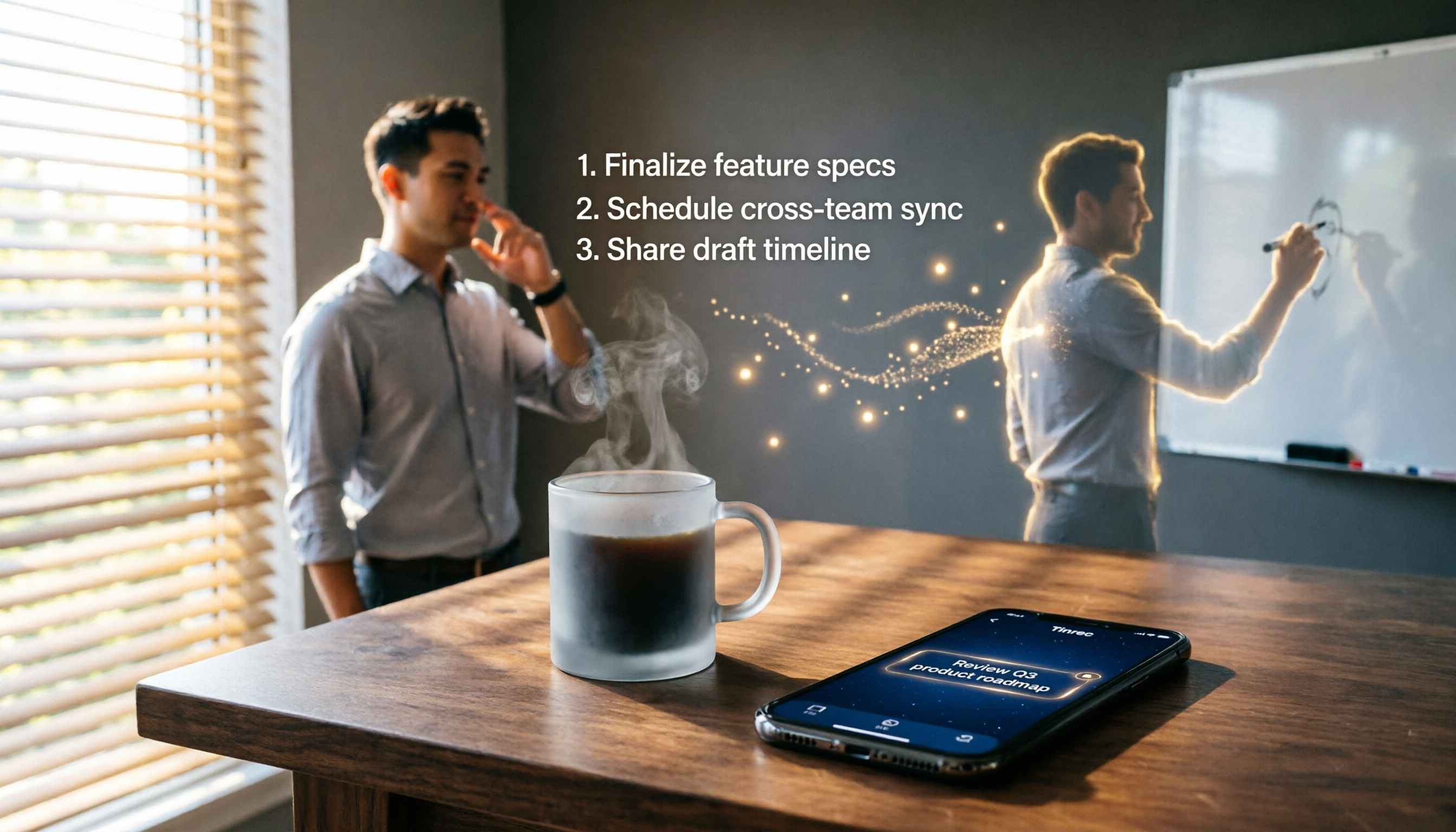
2026 Complete Guide to AI Agent Task Extraction: Automatically Capture To-Dos from Meetings with Tinrec
This article introduces Tinrec's AI Agent task extraction feature that automatically captures action items from meetings, interviews, or lectures, eliminating the need for manual note-taking.