

Turn recordings into transcripts and summaries in minutes
Upload audio or video for multilingual transcription, AI notes, and action items
2026 Comparison of 3 AI Agent Document Generation Tools: From Recording to Document in One Click
One of the biggest pain points for office workers: after a two-hour meeting, you still need another hour to write meeting minutes; after a lecture or interview, the recording sits there with no one wanting to organize it. AI Agent document generation is here to solve this problem—it not only transcribes audio but also understands the content and helps you create structured documents like meeting summaries, action items, reports, and even tables. This article uses Tinrec Instant Recording's AI Agent as a core example to break down three common solutions and see which one works best for busy professionals.
What Can AI Agent Document Generation Do for You?
In different scenarios, AI Agent can turn recording content into deliverable documents instantly, saving a lot of manual sorting time. Below, we use Tinrec as an example to see how it actually works:
Scenario 1: Meeting Minutes Ready in 5 Minutes After a Meeting
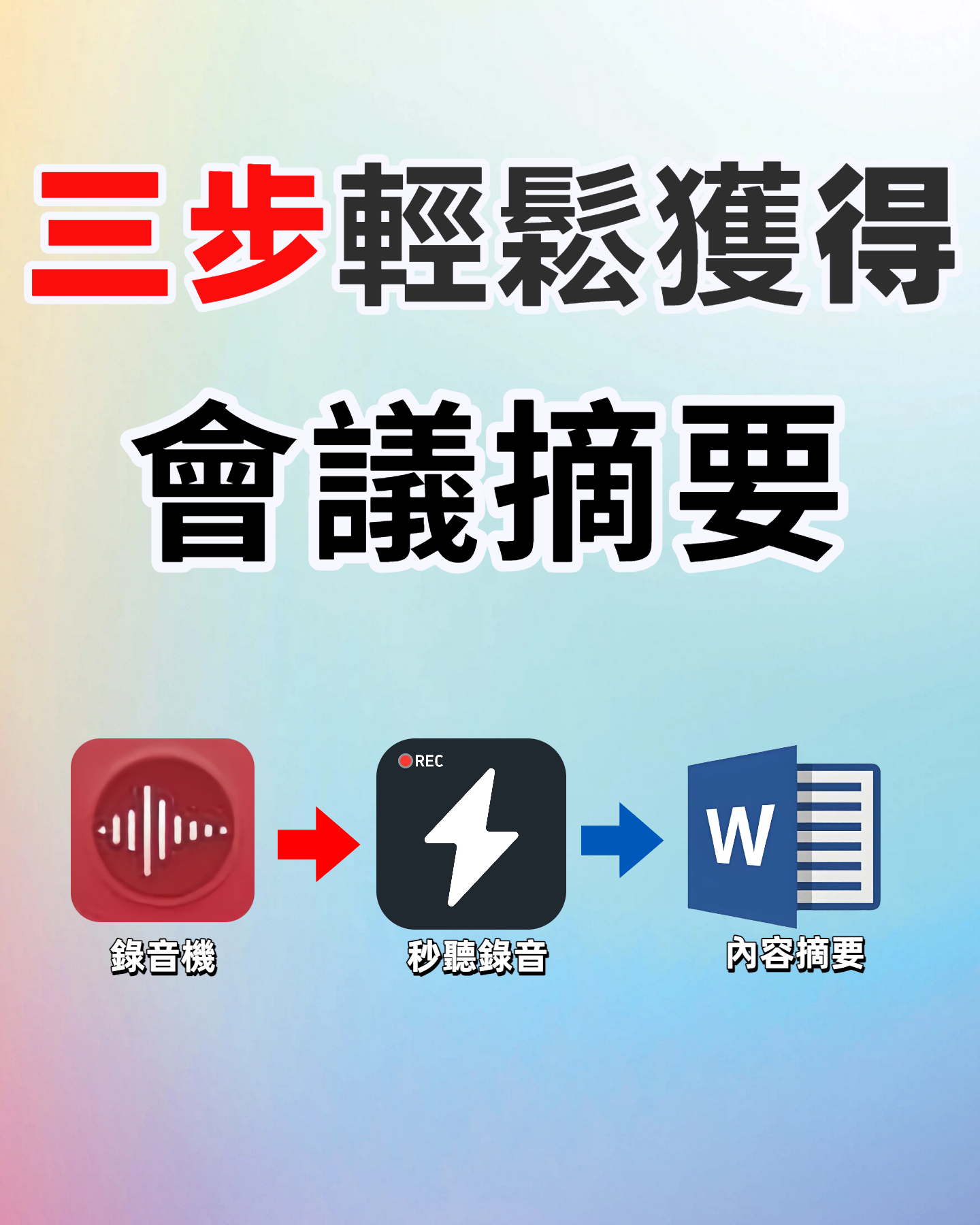
Before, after a meeting you had to listen to the recording, note key points, and organize to-dos, often adding an extra hour of overtime. With Tinrec's AI Agent, as soon as the meeting ends, it automatically generates structured meeting minutes, including discussion topics, conclusions, action items with assignees, and even deadlines.
Scenario 2: Lecture Recording Transformed into Study Notes
Record a professor's lecture and previously had to transcribe word by word. Now Tinrec can split a two-hour recording into chapters, each with a title and key summary, and even extract key concepts to turn directly into study material.
Scenario 3: Interview Recording to Report in One Click
Conduct user interviews or journalist interviews, record dozens of cases, and then have to write a report—a headache. Tinrec's AI Agent can automatically generate a structured interview report based on the recording, including interviewee viewpoints, quotes, conclusions and suggestions, and can export to Notion or Google Docs for further editing.
Scenario 4: Podcast Recording Converted into Article Material
Content creators often need to turn podcast episodes into transcripts, show notes, or social media posts. Tinrec not only provides a verbatim transcript but also generates summaries, key quotes, and suggested titles, saving a lot of writing time.
Core Capabilities of AI Agent Document Generation
Some tools on the market only provide speech-to-text and call it done, but what's truly useful is the "post-processing" after transcription. Tinrec's AI Agent offers the following key capabilities, all centered on "turning recordings into usable documents":
Automatic Structured Summaries
Not just a condensed transcript, but automatically split into fields like "topic, discussion, conclusion, next steps" based on meeting, lecture, or interview logic, so you can see key points at a glance. Tinrec's AI summary also adjusts the template according to content type—e.g., meetings produce action items, lectures produce study highlights.
Action Item Extraction
Meetings often miss to-dos. Tinrec can automatically identify tasks, assignees, and deadlines from conversations and generate a to-do list. You can also query via AI chat, e.g., "Who is responsible for booking the venue?" and it will answer instantly.
Multi-Format Document Export
Organized content can be exported to PDF, Word, Markdown, TXT in one click, or directly synced to tools like Notion, Google Docs, OneNote—no more copy-paste.
Stop organizing recordings by hand
Upload audio or video and automatically get a transcript, summary, and action items
AI Chat Query and Secondary Processing
Ever want to find a specific sentence in a recording? Tinrec's AI Chat lets you ask natural language questions like "What was the budget mentioned by the client?" It will understand the semantics and give you the answer directly. You can also regenerate documents on demand, e.g., "Convert this meeting minutes into an email format in English."
Cross-Platform Support
Whether you're on iOS, Android, or the web, recordings and results are synced via cloud. Record on your work computer and continue editing on your phone at home—no device lock-in.
Real-World Use Cases
Below are some common real-life scenarios demonstrated with Tinrec, so you can see how AI Agent document generation integrates into daily work:
1. Automatic Meeting Minutes for Weekly Stand-ups
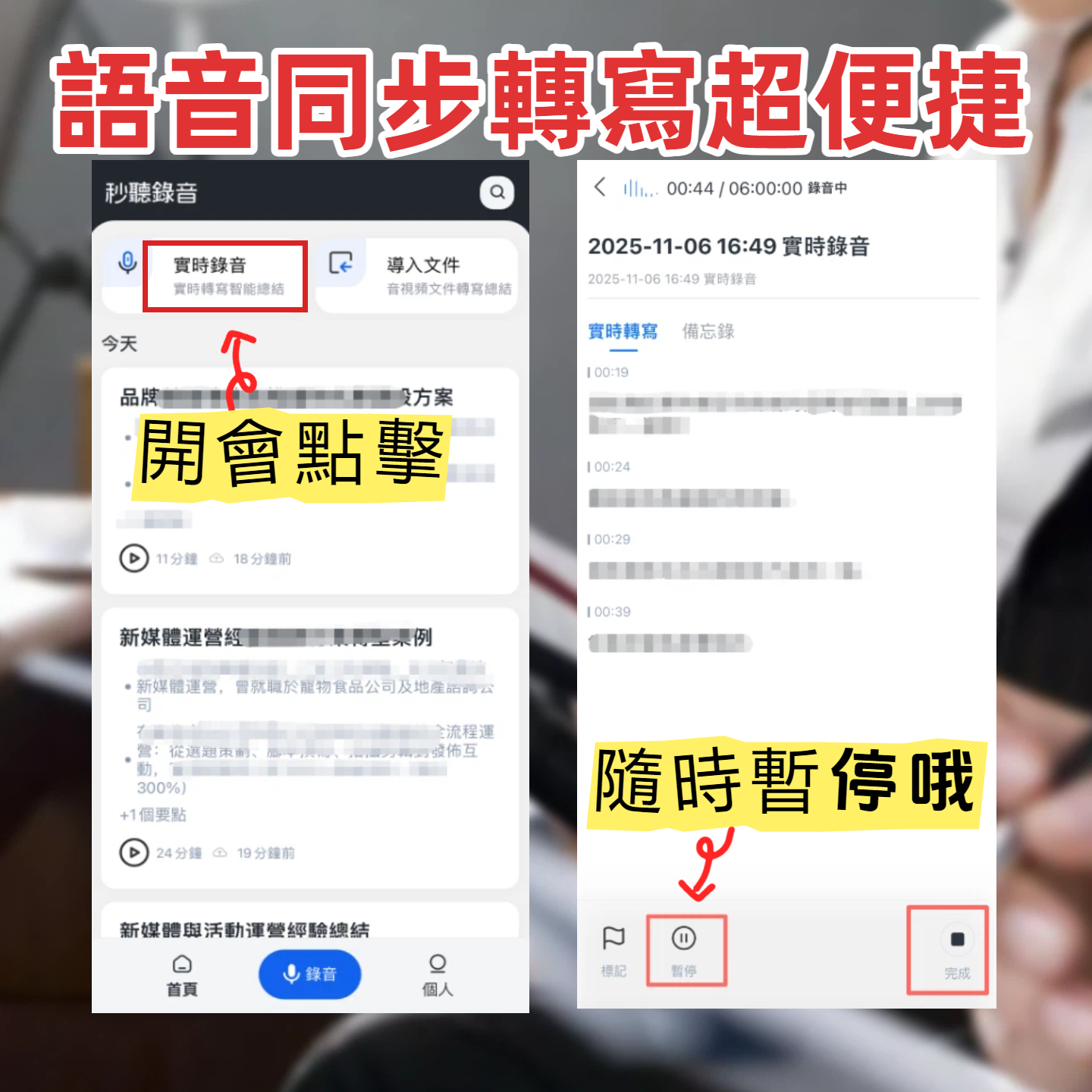
Before each meeting, open Tinrec's live recording. While the meeting is in progress, it transcribes in real-time. After the meeting, the AI Agent automatically generates meeting minutes and a to-do list. You can export to company Slack or Teams so the whole team sees the highlights immediately.
2. University Lecture Recording Becomes a Study Tool
Record the professor's lecture, and Tinrec splits it into chapters (e.g., "Introduction", "Main Theories", "Case Study"), each with key summaries and keywords. When studying, use AI to ask questions like "What three theories were discussed in this lecture?" saving time on re-listening.
3. Client Interview Report in One Click
Record a client meeting with Tinrec. AI automatically organizes client needs, pain points, and budget range. You can generate a structured report for your manager or even ask AI to list follow-up items in bullet points.
4. Quick Organization of YouTube Video Content
Simply paste a YouTube link, and Tinrec will automatically extract the audio, transcribe it, and use AI Agent to generate a video summary, key timestamps, and keywords—perfect for research or content creation.
3 Things to Look Out for When Choosing an AI Agent Document Generation Tool
Don't just look at the price when choosing a tool. These three criteria help you avoid pitfalls:
1. Don't Just Look at "Transcription"—Look at "Post-Processing" Capabilities
Some solutions only convert speech to text, leaving all organization to you. Tinrec's AI Agent can automatically generate summaries, to-dos, reports, and even produce documents in specific formats on demand—that's real time saving.
2. Check Language Support and Accuracy
Professionals in the US primarily use English, but many meetings include mixed languages or technical jargon. Tinrec supports 14 languages, including English and Chinese mixed, and in normal office environments, word error rate is about 8.3% (varies with audio quality). We recommend testing with your own recordings rather than relying solely on official numbers.
3. Consider Cross-Platform and Export Features
If you often switch between work computer, phone, and tablet, choose a tool that supports multi-platform sync. Tinrec has iOS, Android, and web versions, cloud sync for all recordings and results, and can export to common office software—no lock-in.
Frequently Asked Questions
Q: What's the difference between AI Agent document generation and regular speech-to-text?
A: Regular transcription just gives you a verbatim transcript. AI Agent further understands the content and automatically generates structured documents (e.g., meeting minutes, reports, to-do lists). You can even chat to change the format or add content, saving manual editing time.
Q: Can Tinrec's AI Agent handle English mixed with other languages?
A: Yes, Tinrec supports 14 languages and performs well on clear recordings with mixed language content. However, multiple people speaking at once or background noise can affect accuracy. We recommend using a dedicated microphone for important occasions.
Q: Can I customize the format of generated documents?
A: Yes, Tinrec's AI Agent supports natural language commands to adjust output, e.g., "Convert the meeting minutes to bullet points," "Generate an English summary," "Add company logo and header." It will regenerate as requested.
Q: Is the free version sufficient?
A: The free version of Tinrec offers a monthly basic transcription quota, enough to experience basic AI Agent features, e.g., try a couple of meetings. If you regularly process a large volume of recordings, the Pro monthly or annual plan is more cost-effective.
Summary
AI Agent document generation is no longer future tech—it's a tool you can use today to truly save time. Instead of working overtime after meetings to write minutes, try Tinrec Instant Recording and let AI help organize automatically. It supports multiple audio/video sources (recordings, files, YouTube links) and can generate various documents on command, turning recordings into "actionable knowledge."
If you haven't experienced the power of AI Agent, download the free version of Tinrec and play around. The monthly 100-minute quota is enough to try a few meetings and see how smoothly AI can handle your minutes.
Turn every recording into actionable outcomes
Get 60 free transcription minutes when you sign in. No credit card required.
Related Reading
You might also like

2026 Tinrec vs Plaud Note: Dialect Speech-to-Text Test – Which Is More Accurate for You?
2026 dialect speech-to-text tool comparison: real-world test of Tinrec vs Plaud Note on Cantonese recognition, cross-platform support, AI Q&A, and more, to help you choose the best AI solution for transcribing meetings, lectures, and interviews.

2026 Comparison of Two Speech-to-Text Tools: A Shanghai Dialect User's Perspective
Meeting minutes in Shanghai dialect always garbled? Hands-on test of Tinrec vs Otter.ai, comparing input sources, Chinese support, AI features, and pricing to help you choose the best tool for multi-source audio/video organization.

2026 Comparison of 5 Speech-to-Text Tools: Shanghai Dialect Recognition Solutions at a Glance
This article compares 5 Chinese-capable speech-to-text tools, including Tinrec, Notta, Otter.ai and others, and provides selection tips and practical techniques for Shanghai dialect recognition scenarios.

Top 5 Speech-to-Text Tools in 2026: Which One Excels at Recognizing the Northeastern Chinese Dialect?
Can you easily convert Northeastern Chinese dialect to text? This article compares several speech-to-text tools on the market for their performance in recognizing the Northeastern Chinese dialect, covering free and paid options, so you can quickly see which one suits you best.

Tutorial: Tinrec Hokkien Voice-to-Text in 2026 – Supports Hokkien Recognition and Auto-Generated Transcripts
Want to convert Hokkien recordings to text? Tinrec supports Hokkien recognition, letting you transcribe live recordings, uploaded audio files, or video links, and it can also auto-summarize and extract tasks. This complete guide shows you how to handle Hokkien transcription on your phone or computer.

2026 Free Hokkien Speech Recognition Solutions: 1 App Tested Perfect for Hong Kong Users
Looking for a free Hokkien speech recognition app? Tested Tinrec for instant transcription, real-time text conversion, AI summaries, and task management. Free 100 minutes per month. Essential for Hong Kong professionals in cross-strait meetings and learning Taiwanese.

2026 Tinrec vs Traditional Voice Recorder: A 5-Dimension Comparison – Which Should Professionals Choose?
A guide for professionals comparing recording tools across 5 dimensions: recording convenience, transcription speed, organization capabilities, and more. Compares Tinrec with traditional voice recorders, provides real-world scenarios, and highlights key purchase considerations to help you make the best decision.

Tinrec vs Plaud Note 2026: 5-Dimensional Comparison for High-Capacity Recording
A mid-level manager's real-world test compares AI recording software Tinrec and voice recorder Plaud Note in high-capacity recording scenarios. Analyzed from five dimensions: recording quality, transcription accuracy, organization efficiency, cross-platform, and cost, to help you find the best high-capacity recording solution for professionals.

2026 Cantonese Translation Free Plan Roundup: 1 Tool to See at a Glance
Student-tested! A complete breakdown of Tinrec’s free Cantonese translation features, suitable for lectures, watching Cantonese YouTube videos, and understanding Hong Kong coworkers. Includes 100 minutes of free credit to save note-taking time without spending a dime.