

Turn recordings into transcripts and summaries in minutes
Upload audio or video for multilingual transcription, AI notes, and action items
Last semester I took a super tough class. The professor talked faster than a machine gun. I scribbled notes until my wrist hurt, but when I flipped through them before the final, I couldn't understand a word I'd written. Then I started using a lecture recording transcription tool and finally escaped note-taking hell. This article uses Tinrec, which I used all semester, as an example to walk you through lecture transcription step by step.
Before You Start | What You Need
- A smartphone (iPhone or Android – Tinrec works on both)
- Download the Tinrec app (free from App Store or Google Play; sign in with Google or Apple ID)
- A lecture to record or an existing audio file (if you used your phone's voice recorder, you can import it)
- A stable internet connection (real-time transcription needs internet; download language packs for offline use)
Step 1 | Record the Lecture You Want Transcribed
This step gets you a clear recording – the foundation for everything that follows.
Find a seat near the front, place your phone on the desk, open Tinrec and tap the record button. Keep your phone close to the podium for clearer audio. If the professor moves around, adjust the phone position; for group discussions, put it in the middle of the table.
Why care about recording quality? AI transcription accuracy depends directly on audio quality – even the best engine can't fix muddled sound. Spending an extra 30 seconds checking position during recording saves hours of proofreading later.
After recording, you'll see it on the Tinrec home screen with duration and file size.
Step 2 | Let AI Generate the Transcript
Once you stop recording, Tinrec automatically starts transcribing. Within minutes, you get a timestamped transcript.
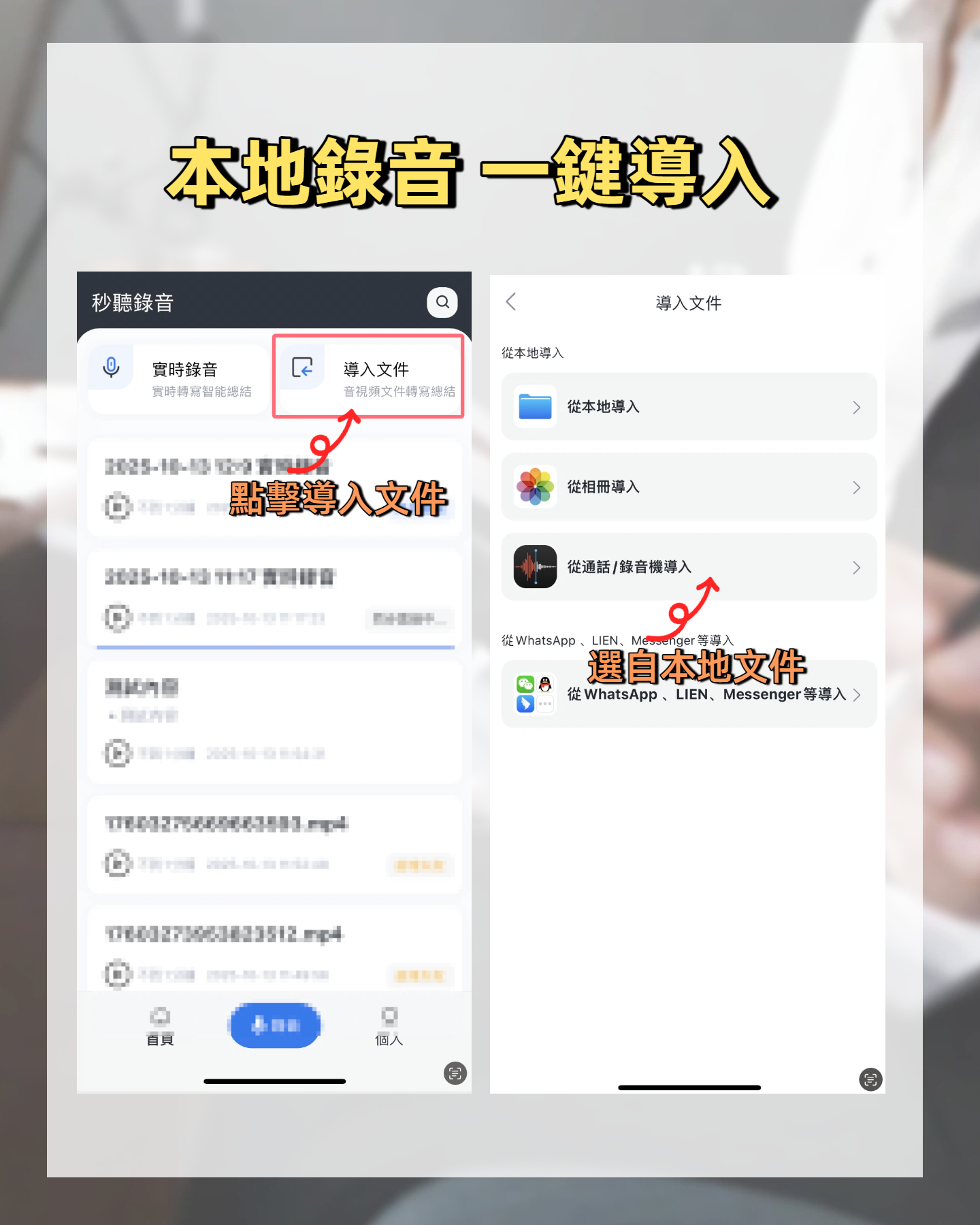
For existing audio files, select "Import Audio/Video File" in Tinrec – it'll transcribe them too. I imported a two-hour lecture recording; transcription was fast, and I could read the earlier parts while the rest was processing.
After transcription, you'll see text blocks with timestamps. Tap any block to jump to that point in the recording – super helpful for review when you want to re-listen to a confusing part.
Step 3 | Quickly Proofread the Transcript
AI transcription is never 100% accurate, especially with professors' verbal tics, technical terms, or classroom echo. But Tinrec's editor is intuitive – you can edit directly on the transcript, and changes auto-save.
I quickly scan while listening, checking course keywords and names. Typically, proofreading a 90-minute lecture takes 10–15 minutes – way less than hand-copying notes.
Another useful feature is speaker labeling – for group discussions or Q&A, Tinrec automatically marks different speakers, a lifesaver for interviews or meetings.
Step 4 | Let AI Generate Study Notes and Summaries
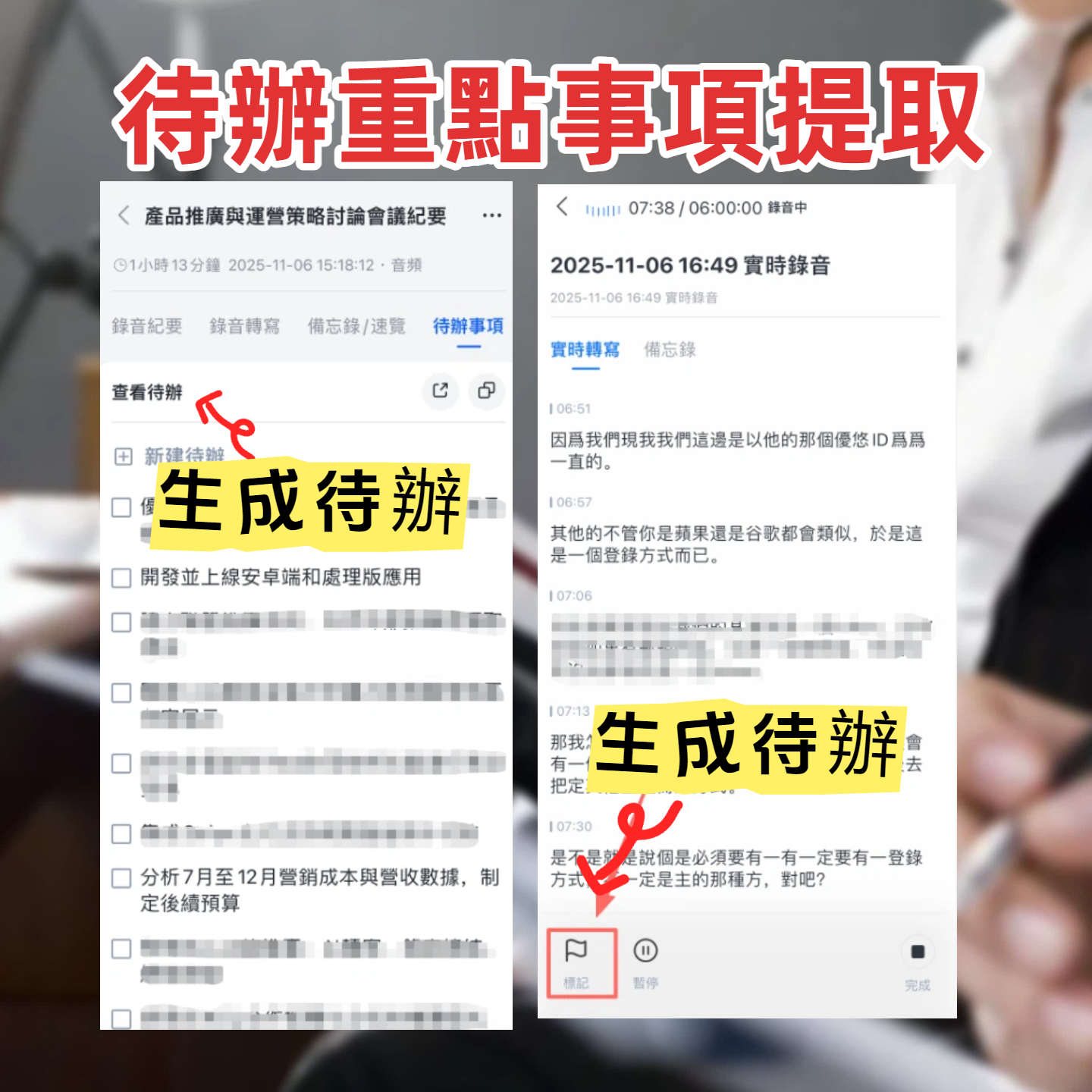
After getting the transcript, the hardest part is extracting key points. That's where Tinrec's AI summary and chapter features come in.
Stop organizing recordings by hand
Upload audio or video and automatically get a transcript, summary, and action items
Tap "AI Summary" on the transcript screen, and it automatically generates notes with course outline, key concepts, and highlights. My habit: right after class, I let Tinrec generate a summary and save it to Notion – no need to re-listen to recordings before the final.
For finer details, use "AI Chat" to ask questions about the recording, e.g., "What are the three main theories from this lecture?" The AI pulls answers from the transcript, saving time scrolling.
Step 5 | Export and Share
Don't lock your notes in the app. Tinrec supports multiple export formats: PDF, TXT, Word, and even direct sync to Notion, Google Docs, and other cloud tools.
My group members know that after every meeting, I can drop meeting minutes and action items into the group chat in 10 minutes – because I use Tinrec to record, transcribe, generate tasks, and export to PDF with one click, no manual typing. This saved our final group project at least twice.
Frequently Asked Questions & Troubleshooting
Q: My transcription has many errors, what should I do?
Usually it's due to classroom echo or the phone being too far. Tinrec has built-in noise reduction – turn it on in settings before recording to filter background noise. For existing recordings, you can manually select "High Noise Environment" mode. Most other tools don't have this option and just use default mode.
Q: Is the free tier enough for students?
I think so. Tinrec's free tier gives enough basic transcription minutes that I recorded two or three key lectures plus group discussions per week and never ran out in a month. If you want to record every class, consider the Pro plan – it costs about the price of one bubble tea per month, less than a skipped takeout meal.
Q: The professor has a heavy Chinese accent; does transcription still work?
It depends on recording quality and accent clarity. Tinrec handles mixed Chinese-English and standard accents well, but heavy dialects or very fast speech may still cause errors. Proofreading is recommended, especially for critical parts.
Pro Tips | 3 Ways to Double Tinrec's Efficiency
- Use AI Chat to pinpoint key points: Instead of just generating a summary, you can ask questions like "What are the exam points for this lecture?" Tinrec finds relevant paragraphs from the transcript, ten times faster than listening from start to finish. This feature is missing in many competing tools.
- Preview online videos before class: If the professor provides course video links (YouTube, Bilibili), paste them into Tinrec to parse, get a summary before class, and gain more insight during the lecture. This is far more efficient than just watching videos.
- Build a semester recording database: Store all course recordings in Tinrec. At the end of the semester, use cross-file search to ask AI, "Find all discussions about 'Marketing 4Ps' from this semester's courses," and get a comprehensive summary. This turns recordings into your personal knowledge base.
If You Don't Use Tinrec, Here Are Other Options
- Otter.ai: Great for English meetings, but mediocre for Chinese transcription. Free tier gives 300 minutes per month; unclear student plans. Full English interface is not friendly for Chinese courses.
- Notta: Decent transcription quality, but free tier only offers 120 minutes. I tried it for a month and quickly switched back to Tinrec – the free limit was too low; I blew through it in a week of classes.
Overall, Tinrec is the best value for students in Chinese classroom settings, free quota, and AI post-processing.
Conclusion
Now that you've learned these five steps, you can use Tinrec to turn any lecture recording into a transcript, automatically generate study notes, and even use AI Chat to pinpoint exam points. Next step: download the free version of Tinrec and try it on one lecture – the basic transcription minutes are enough to get started without spending money. I used it for a full semester and my final GPA actually went up a bit – highly recommended.
Turn every recording into actionable outcomes
Get 60 free transcription minutes when you sign in. No credit card required.
Related Reading
You might also like

5 Steps to Fix VOCOlinc App Not Working in 2026: From Network Checks to HomeKit Repairs
Is your VOCOlinc app showing devices as unresponsive, offline, or failing to sync? This article compiles 5 practical steps tested by Reddit and App Store users, covering network checks, device resets, re-pairing, HomeKit hub setup, and customer support to help you regain control of your smart home.

2026 Tested: 4 Voice-to-Text Apps Compared — What Vocola Can't Do, Tinrec Can
Still using Vocola to control your computer? This hands-on comparison shows why professionals prefer Tinrec for AI meeting notes—from transcripts to summaries and action items, all in one go.

2026 Hands-On Comparison of 4 AI Meeting Transcription Tools: Tinrec vs Notta (Student Review)
A senior student tests 4 AI meeting transcription tools in 2026, using Notta as a baseline, and shares why Tinrec is better for class recordings, group discussions, and exam review, plus how to maximize the free plan.

2026 English Meeting Minutes Template: Tinrec AI Transcription + Key Summary
Learn how to use Tinrec to quickly generate English meeting minutes templates, including format, common vocabulary, and pitfalls to avoid. A must-read for Hong Kong professionals.

How to Choose a Meeting Minutes System in 2026: A 5-Step Guide
Tired of spending two hours after every meeting transcribing notes? This article cuts through the common pitfalls and teaches you a 5-step method to pick the right meeting minutes system. We put Tinrec (秒听录音) to the test, compare it with Otter.ai, Granola, and Notta, and show you how to turn meetings into searchable, trackable team assets.

5 Meeting Minutes Tools Tested in 2026: Free Templates vs. AI Summaries—Which Saves You the Most Time?
Downloading meeting minutes templates is no longer the only solution. This article tests 5 meeting minutes tools, from free templates to AI auto-summaries, to help you find the most time-saving option. Tinrec stands out with bot-free recording, Chinese language support, and team collaboration.

2026 Excel Meeting Minutes Template vs Tinrec: A 5-Dimension Showdown—Which Is Worth It?
Tired of manually organizing meeting minutes in Excel? This article compares static templates with Tinrec's AI meeting tool across five dimensions—automation, search, cross-platform, team collaboration, and export—to help you choose a solution that saves time and builds your team's knowledge base.

Which AI Meeting Notes Software Is Best? 2026 Hands-On Test of 3 Tools—This One Handles Chinese Meetings Best
Meeting notes shouldn't rely on manual effort alone. This article starts with common pitfalls and guides you through a workflow of 'record → transcribe → organize → act' to help you choose the right AI meeting notes tool for Chinese meetings, with a hands-on comparison centered on Tinrec.

2026 Meeting Minutes Template Comparison: Manual vs Tinrec - Which Saves 3 Hours?
Still filling out meeting minutes templates by hand? This hands-on comparison pits traditional meeting minutes templates against Tinrec's AI tool, covering generation speed, content completeness, action item extraction, and team collaboration to show which method saves more post-meeting time.