

Turn recordings into transcripts and summaries in minutes
Upload audio or video for multilingual transcription, AI notes, and action items
2026 Free Speech-to-Text Plans for Students: A Side-by-Side Comparison of 2 Tools
Tinrec vs Notta|Quick Overview
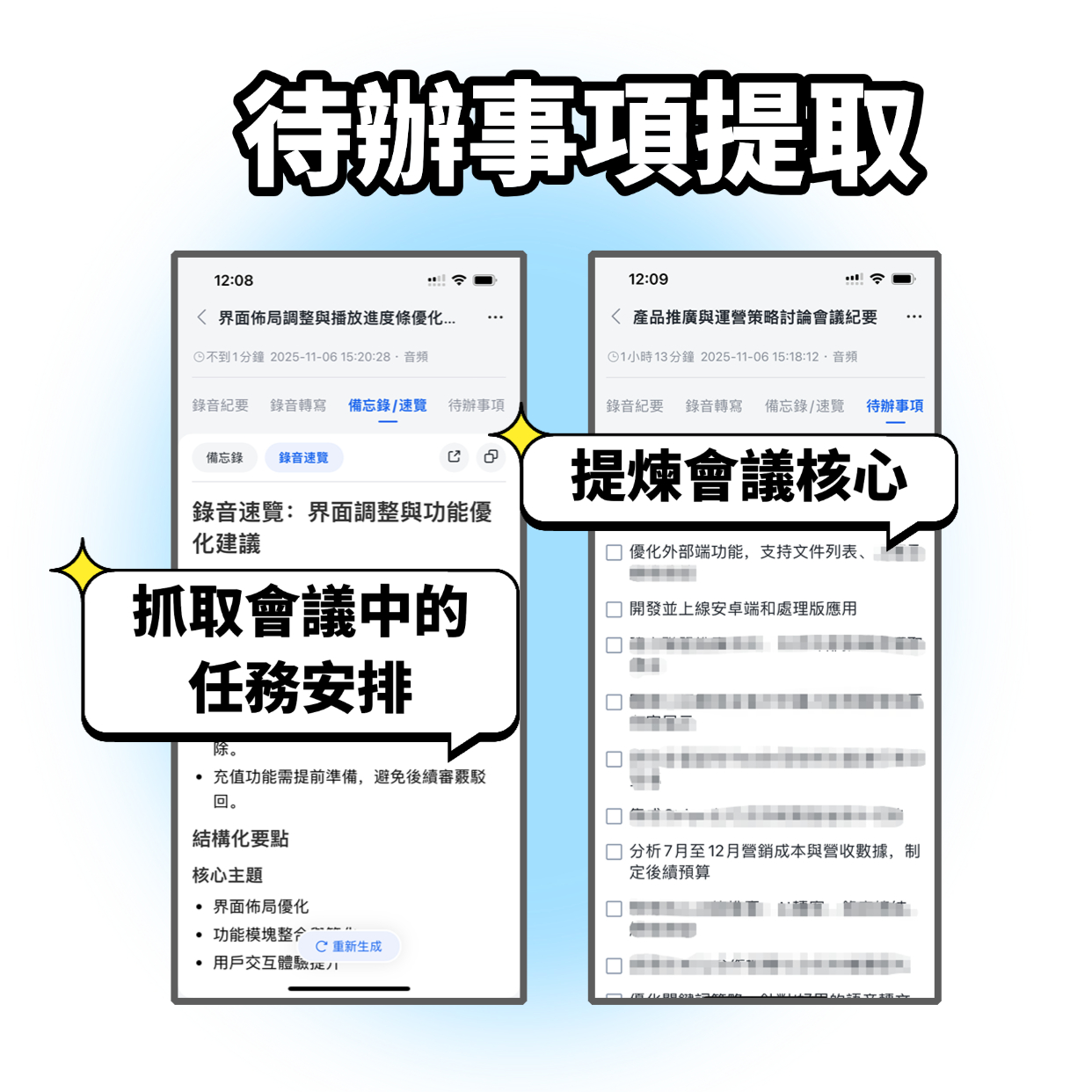
If you're a student who often needs to turn class recordings, online lectures, or YouTube tutorial videos into notes, a free speech-to-text tool is essential. Currently, Tinrec and Notta are two popular choices—Notta is known for its generous transcription minutes, while Tinrec excels at deep processing of Chinese content.
| Tinrec | Notta | |
|---|---|---|
| Free Plan Positioning | Basic transcription quota, full features accessible | 120 minutes of transcription per month |
| Supported Platforms | iOS, Android, Web | iOS, Android, Web |
| Key Differences | Multi-source audio/video processing, AI Q&A, post-processing | Transcription, translation, meeting notes |
This article compares them across four dimensions that matter most to students: direct online video transcription, AI chat query, output format variety, and Chinese content and student scenario optimization.
Dimension 1|Direct Online Video Transcription
Notta is designed primarily for audio files and meeting transcription. To transcribe content from YouTube, Bilibili, or other platforms, you must first download the video and then upload it. This extra step is cumbersome for students—whether it's a video shared by the teacher before class or a public lecture for self-study, each download adds friction to note-taking.
Tinrec, on the other hand, has a built-in "paste link to analyze" feature that supports common platforms like YouTube, Xiaohongshu, and TikTok. Simply copy a video URL to get a transcript, AI summary, and chapters—no download required. For students who constantly work with online videos, this can save at least 30% of pre-note processing time.
→ This dimension: Tinrec clearly wins.
Dimension 2|AI Chat Query: Turn Recordings into a Q&A Library
A 2-hour class recording—you need to quickly find "the part where the teacher explained a formula" or ask "Did this lecture cover any midterm exam points?" Notta's free plan offers summaries and basic search but lacks conversational Q&A, so you have to manually scroll through keywords.
Tinrec places an AI chat button next to each transcript. You can ask questions in plain English, and the system answers based on the recording, even comparing key points across different sections. This is particularly useful for exam prep and report writing—no need to replay the entire lecture; just ask Tinrec like you'd ask a classmate.
Stop organizing recordings by hand
Upload audio or video and automatically get a transcript, summary, and action items
→ This dimension: Tinrec wins; Notta lacks real-time Q&A.
Dimension 3|Output Format Variety
Students have diverse note-taking needs: a mind map after a speech, a to-do list after a group discussion, or exporting an interview to Notion for further writing. Notta's free plan mainly provides plain text and basic subtitles; if you want structured notes, you often have to organize them manually.
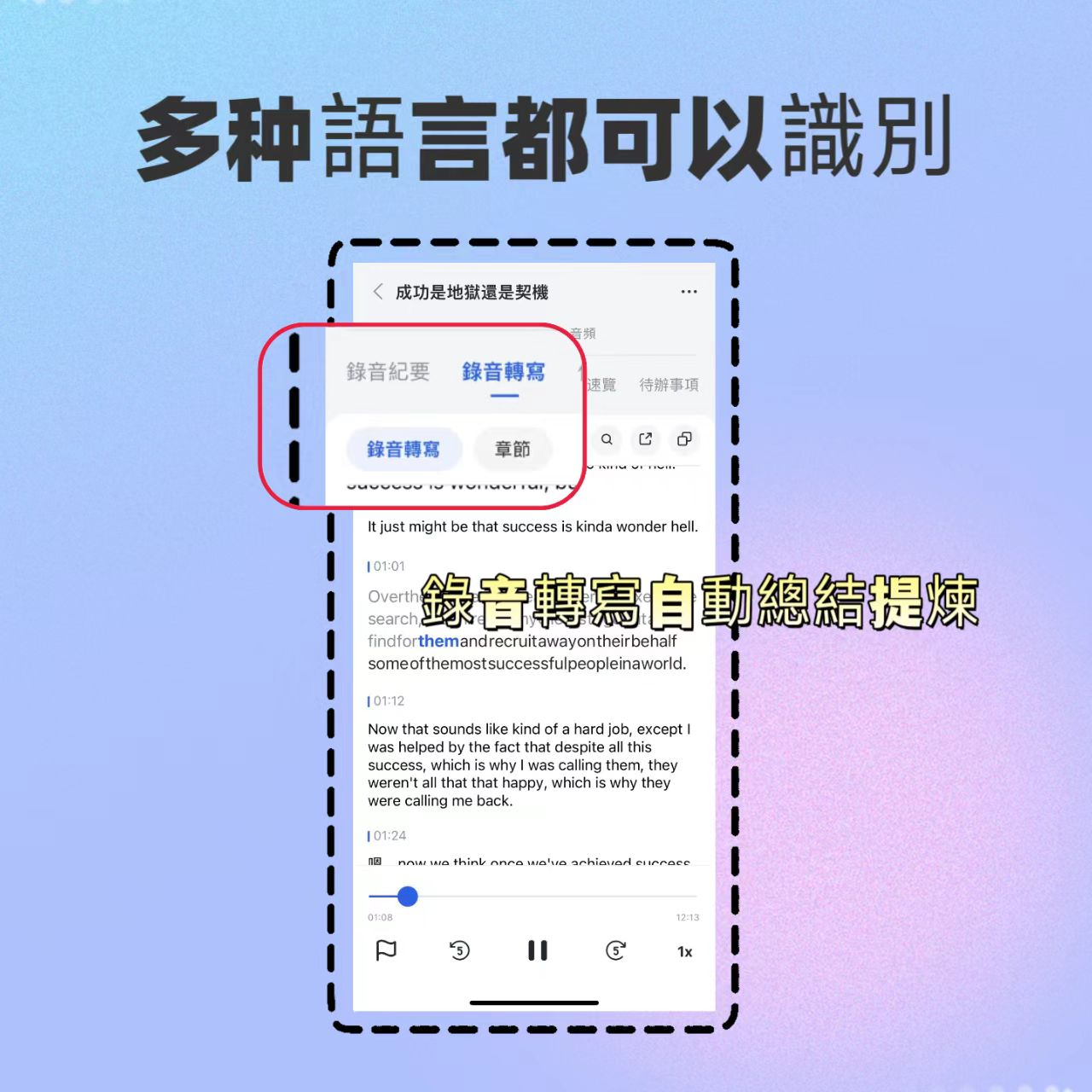
Tinrec's free plan offers five output formats: summary, sections, to-do list, subtitles, and mind map, plus direct export to Google Docs, Notion, OneNote, and other tools. So after recording, you get a ready-to-use note draft immediately.
→ This dimension: Tinrec offers more output styles; Notta is relatively limited.
Dimension 4|Chinese Content and Student Scenario Optimization
Notta strengths include multilingual transcription and real-time translation, but its handling of Chinese classroom speech, code-switched discussions, or slight accents tends to be "general-purpose," sometimes resulting in unnatural sentence breaks or errors in technical terms.
Tinrec's product pages and interface explicitly target Chinese content processing, from live recording and online video analysis to AI summaries—all fine-tuned for Chinese language contexts. In a test with the same Chinese classroom recording (slight background noise, two speakers), Tinrec's transcript was immediately usable, while Notta required minor manual corrections. For students who produce Chinese notes daily, this "no proofreading needed" experience saves time.
→ This dimension: Tinrec is better suited for Chinese learning scenarios.
What Are Their Unique Advantages?
Tinrec's Unique Advantages
- Fully designed for "data reuse": Transcription is just the first step; subsequent summaries, Q&A, exports, and report generation turn recordings into review-ready knowledge.
- One-click online video organization: Skip downloads by pasting a link to generate notes—ideal for learning materials on YouTube, Bilibili, Xiaohongshu, and more.
- AI Q&A available on the free plan: Experience conversational queries without paying, a rarity among competitors.
- Agent-based post-processing: Automatically generate meeting minutes, reports, or tables from recordings—useful for student projects requiring formal notes.
Notta's Unique Advantages
- More transcription minutes: 120 minutes per month on the free plan, suitable for heavy transcription users with simple note needs.
- Comprehensive real-time translation: If you frequently need bilingual translation (e.g., Chinese-English), Notta's translation module is more mature than Tinrec's.
Summary: Which Should Students Choose?
- If your learning materials come heavily from YouTube, Bilibili, Xiaohongshu, and other online videos → Choose Tinrec (save download time and get AI-highlighted key points directly).
- If you want to record a class or lecture and then ask AI "What are the main points?" → Choose Tinrec (Notta's free plan lacks conversational Q&A).
- If you need a ready-to-submit note with mind maps, to-do lists, and sections → Choose Tinrec (most comprehensive output formats).
- If you just need bulk plain text transcription and don't care about subsequent organization or Q&A → Notta's free minutes may be more sufficient.
In a nutshell: For most students, Tinrec's free plan offers a higher degree of completeness in turning recordings into notes, especially for Chinese content and heavy online video learners. We recommend downloading the Tinrec free version, testing it with a class recording or video, and experiencing the convenience of AI Q&A and auto-notes.
Turn every recording into actionable outcomes
Get 60 free transcription minutes when you sign in. No credit card required.
Related Reading
You might also like

3 Best Recording-to-Text Apps for Students in 2026: Which One Rules for Online Class Notes & Podcast Summaries?
Struggling to choose a recording-to-text app for lectures, online classes, or podcast notes? This article compares 3 top tools from real study scenarios and dives into how Tinrec turns recordings into real learning assets.

Tinrec vs Otter 2026: A 5-Dimensional Comparison – Which Is the Best Free Recording Tool for Students?
A senior MIS student tests Tinrec and Otter in 5 key areas—classroom recording, Chinese speech recognition, cross-platform support, and more—to find the best free recording app for students.

Tinrec vs Otter.ai in 2026: A 5-Dimensional Comparison – Which Is Better for Chinese Speech-to-Text?
Choosing the best speech-to-text software in 2026? This article provides a hands-on comparison between Tinrec and Otter.ai across five key dimensions: real-time transcription, AI summaries, Chinese language support, and post-processing applications, helping you decide which tool truly turns audio into usable knowledge.

Tutorial: 2026 Speech-to-Text Tools with AI Query & Auto To-Do – Say Goodbye to Overtime for Meeting Notes
Tested 5 speech-to-text tools from a mid-level manager's perspective to show how AI recording assistants save meeting cleanup time. This article deeply analyzes Tinrec's core features, pros/cons, and competitor comparisons, plus buying tips and pitfalls to avoid.

2026 Complete Guide to Meeting Note Apps for College Students: Easily Handle Class Notes and Group Discussions with AI Voice-to-Text
College students need to efficiently organize class highlights and meeting notes? This guide shares hands-on experience on how AI meeting note apps save time and boost learning efficiency, using Tinrec as an example to illustrate real-world applications and key buying tips.
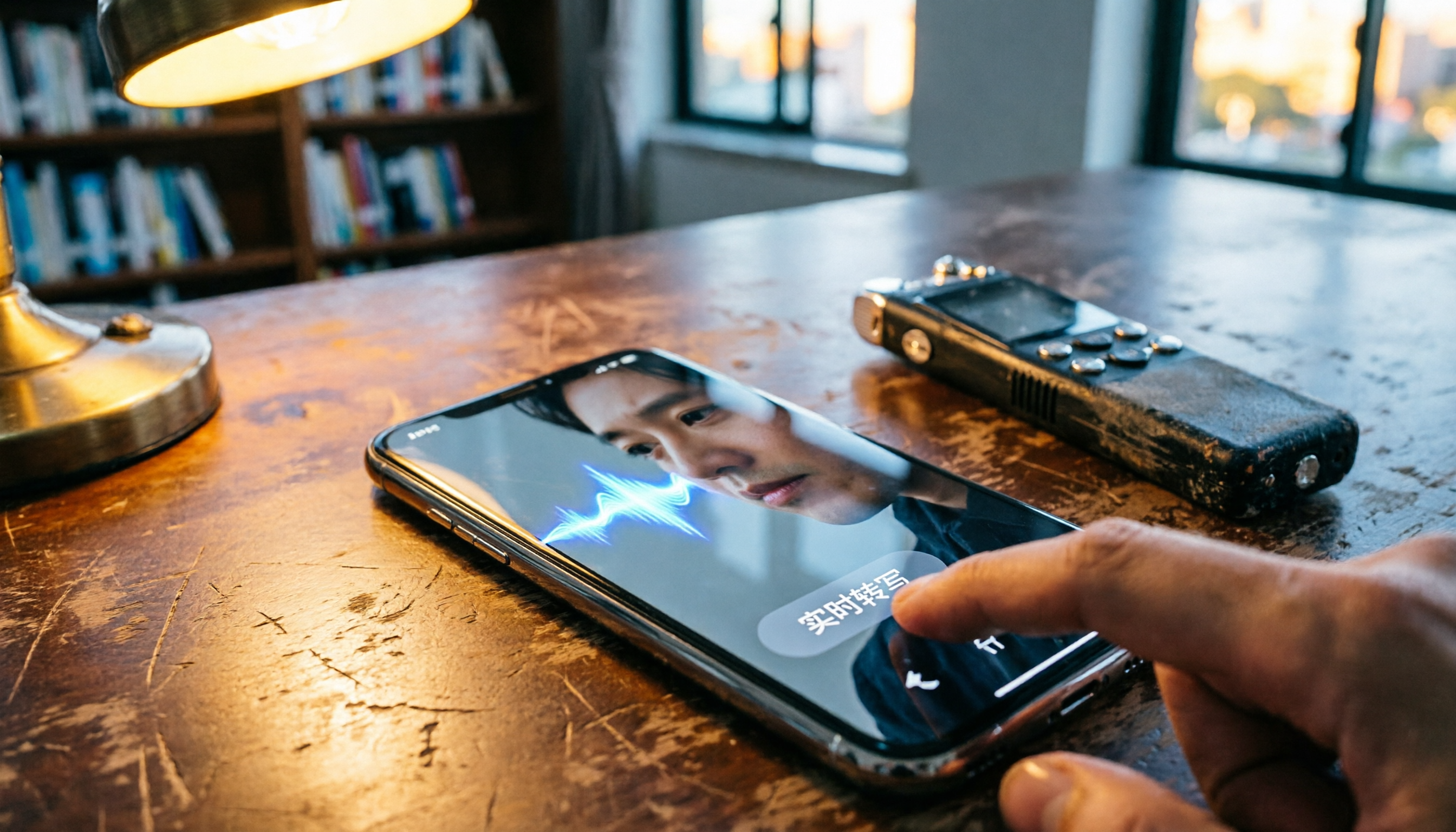
2026 Real-World Test: Hardware Voice Recorder vs. Mobile App – Which Is Better for Taking Notes?
Who says students have to buy a voice recorder? We compare PLAUD NOTE and Tinrec in real-world tests, covering cost, features, portability, Chinese transcription, and post-class organization, showing you why using an app is actually more cost-effective.

How to Turn Meeting Recordings into Documents in 2026? 5-Step AI Transcription Tutorial
Tired of meetings all day and then working overtime on meeting minutes? Use Tinrec, an AI transcription tool that automatically turns live recordings, files, and online videos into transcripts, summaries, and to-do lists. Learn 5 steps from recording to a complete meeting document, saving 90% of your time!

2026 Tinrec vs Notta: A Deep 4-Dimension Comparison – Which One is Worth Choosing?
Looking for a speech-to-text tool but feel like Notta is missing something? This comparison breaks down the two from four dimensions—input sources, AI organization, Chinese optimization, and free plans—to help you decide which is the better fit for US users in 2026.

Free AI Meeting Summary Tools in 2026: 3 Options at a Glance
This article compiles 3 free AI meeting summary solutions, using Tinrec as the core example. From features and use cases to selection tips, learn how to automatically generate meeting summaries, action items, and query content with AI to boost productivity.