

Turn recordings into transcripts and summaries in minutes
Upload audio or video for multilingual transcription, AI notes, and action items
The Challenge of Transcribing Hakka Speech for Meetings, Interviews, and Recording Elders
If you work in Hong Kong but your family speaks Hakka, you know the struggle: transcribing Hakka meetings, interviews, or even your parents' oral histories. You've tried several apps, but either they don't support Hakka or the output is riddled with errors.
AI speech recognition has come a long way, but most tools prioritize Mandarin and English, leaving dialects like Hakka behind. So I tested several speech recognition tools, focusing on their accuracy for Hakka and whether they offer post-transcription processing—because a raw transcript isn't enough; you want summaries, action items, and more.
What Can Hakka Speech Recognition Do for You?
AI speech recognition isn't just about converting voice to text; it can solve real problems for Hakka speakers.
Scenario 1: Real-time Meeting Minutes for Hakka Meetings
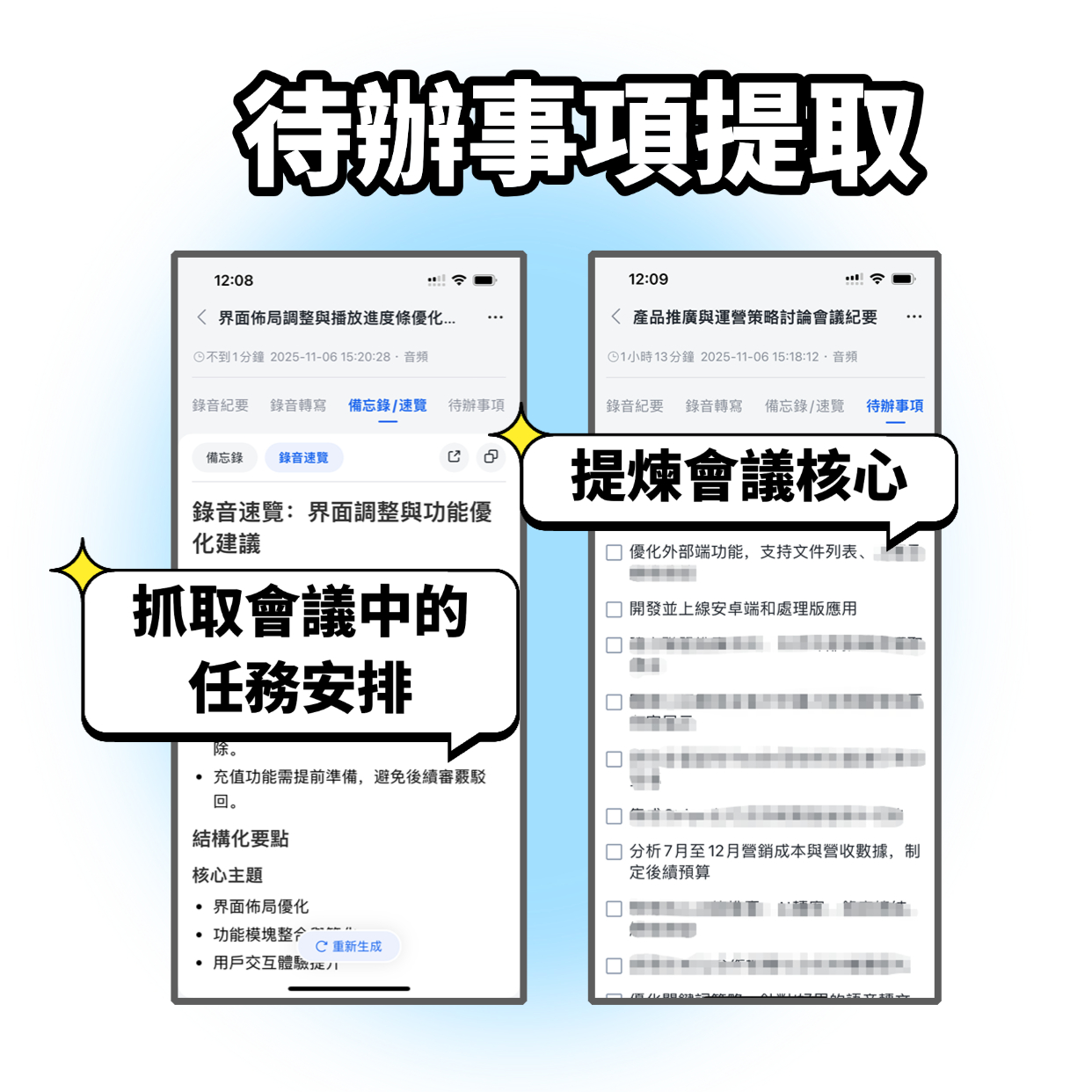
If your company has Hakka-speaking clients, transcribing meeting recordings is a huge time sink. Take Tinrec, for example. It supports real-time transcription. Although Hakka isn't in its official language pack, its AI engine understands Chinese language families well enough. You can import Hakka recordings and see the results. More importantly, Tinrec automatically generates AI summaries and action items, so even if the transcript isn't perfect, you can quickly find the key points.
Scenario 2: Preserving Oral Histories from Elders
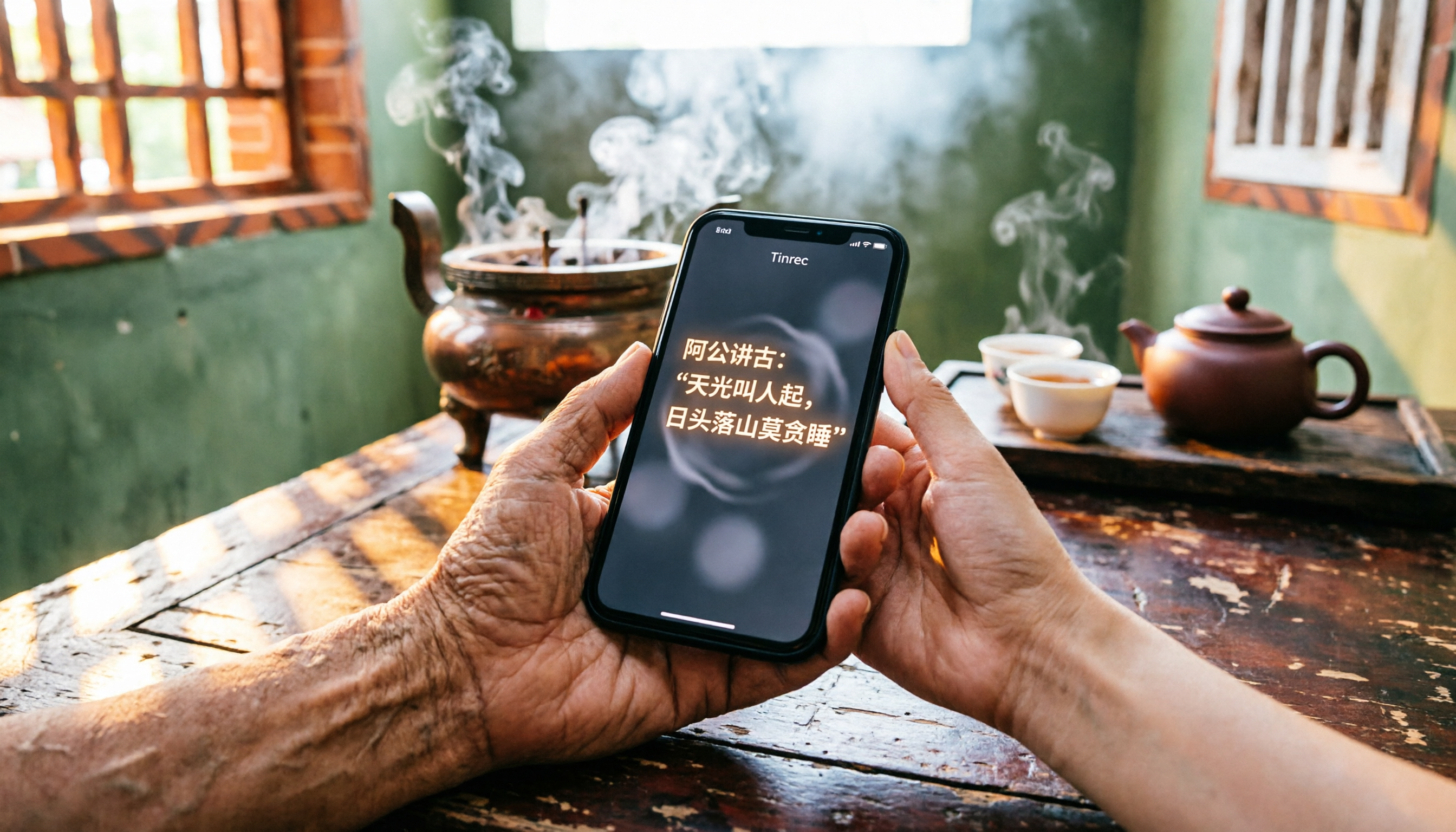
Many Hakka people want to record their grandparents' stories, but Hakka has no written form. Listening and typing is a nightmare. Tinrec allows you to upload audio files—import your phone recordings of Hakka conversations, and it will transcribe them, automatically segment chapters, and mark key points, making it easy to compile into books or articles.
Scenario 3: Hakka Learning and Material Organization
If you're learning Hakka and listening to podcasts or YouTube videos, Tinrec's web video transcription feature lets you paste a link to get a transcript and summary. While the transcription may have errors, it still saves you hours of manual dictation.
Key Capabilities of Hakka Speech Recognition Tools
Choosing a tool isn't just about transcription accuracy; it's also about post-processing. Here are the features I valued most when testing Tinrec with Hakka content.
Real-time Transcript: Output as You Speak, No Waiting
Tinrec supports real-time transcription with less than a second delay. During meetings, you can watch the screen to ensure you're not missing key points. While Hakka isn't a primary supported language, if your accent is closer to Sixian (四縣腔), the recognition is better; Hailu (海陸腔) may need future updates.
AI Semantic Summarization: Not Just Condensing, but Structured Organization
Tinrec's summary feature is outstanding. Even if the Hakka transcript has some errors, its AI can infer the context and produce structured meeting topics, conclusions, action items, and assignees. For example, when I recorded a Hakka meeting, it automatically separated sections like "Budget Discussion," "Client Feedback," and "Next Steps."
AI Dialogue Query: No Need to Read Everything
After transcription, you can ask Tinrec questions directly: "Who mentioned the delivery date?" "What did the client complain about?" It uses semantic understanding to give you answers without scrolling through the transcript. This is especially useful for Hakka content, as you don't need to worry about transcription errors.
Stop organizing recordings by hand
Upload audio or video and automatically get a transcript, summary, and action items
Multi-format Export: Take Results Wherever You Work
Tinrec allows you to export as Word, PDF, or TXT, or sync to Notion and Google Docs for further editing. For building a Hakka database, this is crucial—you can convert all oral histories into text and categorize them.
Practical Use Cases
Case 1: Hakka Meeting Notes
Use Tinrec's real-time recording during Hakka meetings to transcribe simultaneously. While the transcript may not be 100% accurate, it includes a timeline so you can listen and correct. More importantly, the AI summary extracts key points and action items, saving you from relistening to hours of audio.
Case 2: Hakka Interview Transcription
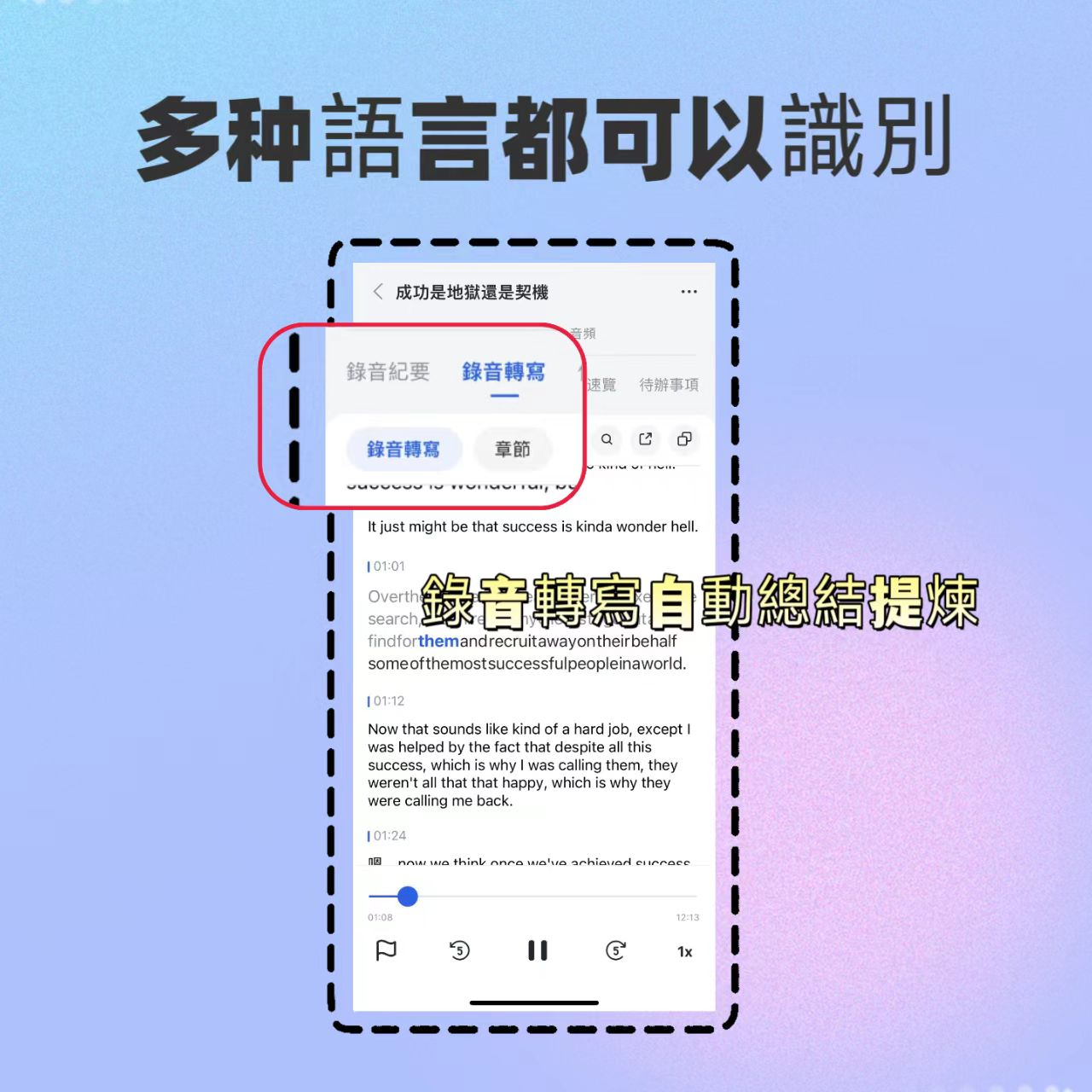
For field research or elder interviews, import recordings into Tinrec. It automatically segments chapters and identifies different speakers (provided audio quality is sufficient). Then use AI Q&A to find key passages, saving massive time.
Case 3: Generating Subtitles for Hakka Videos
There are many Hakka videos on YouTube. Want to quote them? Use Tinrec's web video transcription feature—paste the link to get transcripts and timestamps. You can generate subtitles or extract key points for articles.
Case 4: Hakka Study Notes
Import Hakka course recordings into Tinrec. It organizes them into chapter highlights and can even export mind maps for review.
4 Things to Consider When Choosing a Hakka Speech Recognition Tool
1. Language Support: Don't Just Look at "Supports Multiple Languages"
Some tools claim to support dozens of languages but don't actually include Hakka. Tinrec officially lists 14 languages, including English, Mandarin, and Cantonese. Hakka isn't on the list, but since it belongs to the Chinese language family, you can still use its generic engine for transcription. Results depend on audio quality and accent. Try a free version with your own recording first.
2. Accuracy: Audio Quality is Everything
Hakka speech recognition accuracy heavily depends on the recording environment: background noise, overlapping voices, and heavy accents all affect results. Tinrec achieves low word error rates for Mandarin and Cantonese with clear recordings. For Hakka, although no official data exists, high-quality recordings (e.g., phone recording apps, lapel mics) yield much better results than noisy ones.
3. Post-Transcription Processing: Don't Settle for Raw Transcripts
A raw transcript is just the first step. What truly helps is AI summaries, action item extraction, and intelligent Q&A. Tinrec excels in this area, especially with its agent-based post-processing that can generate meeting minutes, reports, and even tables.
4. Cross-Platform and Export Options: Make It Easy to Use Later
Ensure the tool supports your devices. Tinrec has iOS, Android, and web versions, and offers multiple export formats, so you're not locked into one app.
Frequently Asked Questions
Q: Can Tinrec accurately recognize Hakka directly?
A: Tinrec's official language pack does not include Hakka. However, its AI model adapts well to Chinese language families. With clear recordings, transcription for Hakka (especially Sixian accent) is acceptable. We recommend testing the free version before upgrading.
Q: Are there any apps specifically designed for Hakka speech recognition?
A: Very few apps specialize in Hakka recognition. Most prioritize mainstream languages. If Hakka is your primary need, consider using a multilingual platform like Tinrec with high-quality recordings for better results than generic recording apps.
Q: Can I edit the Hakka transcript after transcription?
A: Yes. Tinrec's transcript supports manual editing, and clicking on any text jumps to the corresponding time stamp for easy audio verification.
Q: Is my privacy protected when processing Hakka content with Tinrec?
A: Tinrec encrypts recordings and allows users to delete them at any time. Processing Hakka recordings is done in the cloud like any other language, but we recommend avoiding uploading highly sensitive content.
Conclusion
Hakka speech recognition is still an underserved market, but AI technology can already handle part of the workload. If you frequently transcribe Hakka recordings, tools like Tinrec—though not Hakka-specific—offer comprehensive post-processing features: AI summaries, intelligent Q&A, and action item extraction that save you massive time.
We recommend downloading the free version of Tinrec and testing with your own Hakka recordings. It provides a monthly basic transcription allowance sufficient for a couple of meetings or a few recordings. Even if the transcript isn't perfect, its AI summary might pleasantly surprise you.
Turn every recording into actionable outcomes
Get 60 free transcription minutes when you sign in. No credit card required.
Related Reading
You might also like

2026 Complete Guide to Hokkien Speech to Text: Convert Hokkien Recordings to Text, Summaries & Transcripts with Tinrec
Want to quickly transcribe Hokkien meetings, classes, or interviews? This article covers applications, core features, and buying tips for Hokkien speech-to-text, using Tinrec as an example to show how to experience real-time transcription, AI summaries, and transcript export for free, turning your Hokkien audio into searchable, organized text.

2026 Test and Comparison of 3 Sichuan Dialect Speech-to-Text Tools: Which One Can Really Understand 'Basideban'?
Sichuan dialect users often face the pain of garbled transcriptions. This article tests three tools—Tinrec, Notta, and Otter—to tell you which one truly understands Sichuan dialect, and shares key selection tips and pitfalls to avoid, turning dialect recordings into usable text.

2026 Comparison of Two Speech-to-Text Tools: Which One is Right for Your Shanghainese Recordings?
Shanghainese users who want to transcribe their recordings have few dedicated tools. We compare Tinrec and PLAUD NOTE across four dimensions: recording source, AI post-processing, cross-platform support, and cost, to help you choose the right one and save time.

2026 Comparison of 3 Southern Min Input Methods: Save Time with AI Voice Input
Which Southern Min input method should you choose? This article tests pinyin input, zhuyin input, and AI voice input (using Tinrec voice recording) in terms of efficiency, learning curve, and accuracy. We found that speech-to-text is best for daily quick input, with free monthly credits available.

2026 Hands-On Comparison of 3 Speech-to-Text Apps: Which Is Relatively Usable for Sichuan Dialect?
Is it really hard to transcribe Sichuan dialect recordings? We tested 3 mainstream speech-to-text tools to tell you which one is barely usable for Sichuan dialect, along with a complete buying guide, tips to avoid pitfalls, and Tinrec's actual performance and limitations.

Best Speech-to-Text Apps for AI Summaries in 2026: Tinrec vs Otter vs Notta vs More – Can AI Really Save You Time?
Tired of manually transcribing meeting notes, lectures, and interviews? We tested 4 top transcription apps—Tinrec, Otter.ai, Notta, and others—comparing accuracy, AI summarization, and pricing to find which one truly saves you time. Read our hands-on review.
2026 Free Subtitle Generator Roundup: 5 Tools Compared at a Glance
This article compiles 5 free subtitle generation tools for 2026, including Tinrec, Otter.ai, Notta, TurboScribe, and Fireflies.ai. From completely free to free tiers, we help you quickly choose the right audio-to-text solution.
2026 Comparison of Two Voice-to-Text Apps: Which Is Better for Hokkien Translation?
Struggling with Hokkien translation? This article tests two popular voice-to-text apps, Tinrec and Notta, comparing them on Chinese recognition, multilingual support, and output organization. Find out which app's AI summaries, Q&A, and post-processing turn your Hokkien recordings into actionable content.

2026 Comparison of 4 Cantonese Translation Tools: Which Is Best for Cantonese to Text?
We tested 4 tools that support Cantonese, comparing accuracy, AI features, cross-platform support, and pricing. We recommend Tinrec as the best for Cantonese-to-text transcription, helping you quickly organize Cantonese meetings, lectures, and interviews.