

Turn recordings into transcripts and summaries in minutes
Upload audio or video for multilingual transcription, AI notes, and action items
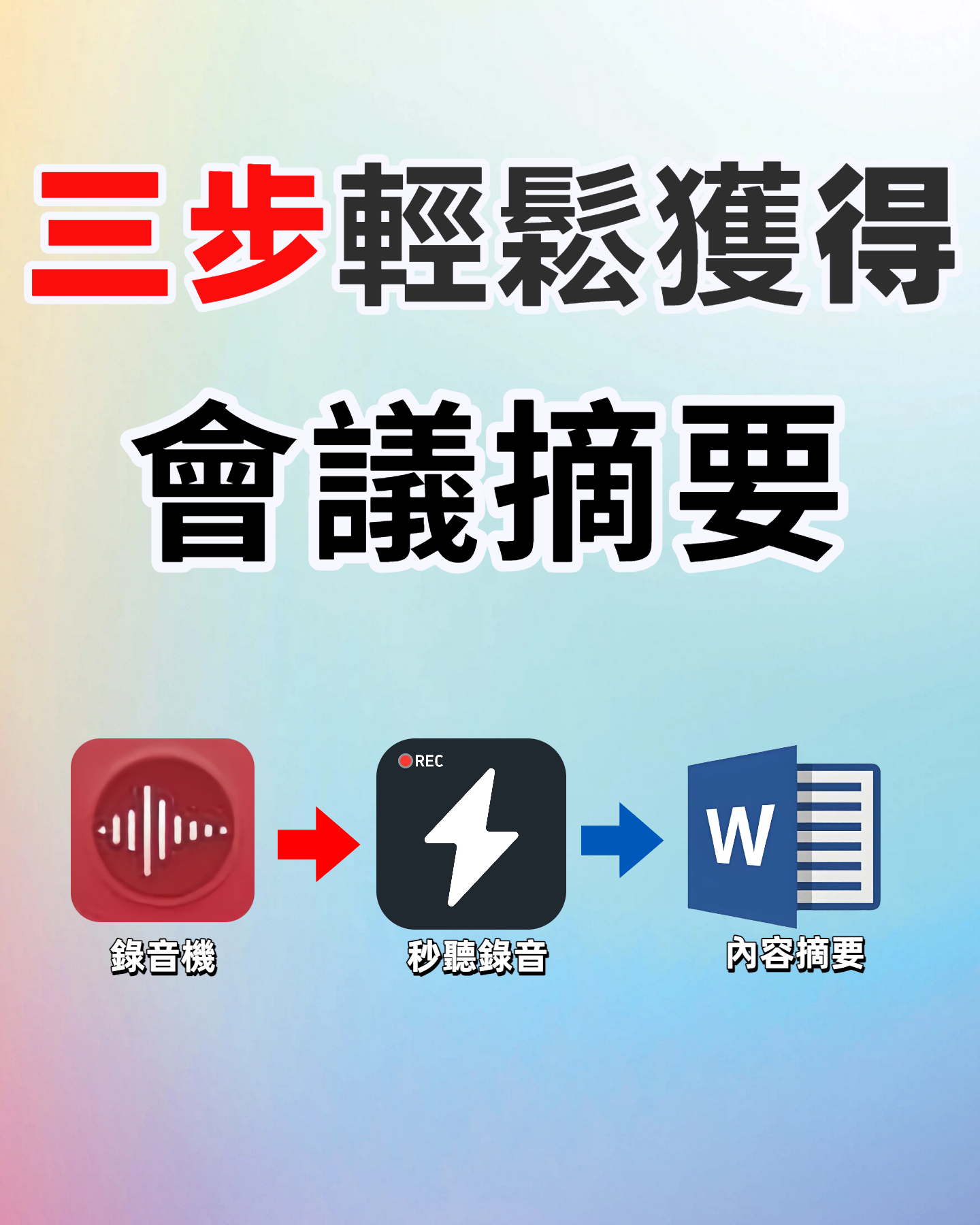
Tinrec vs Plaud Note|Quick Overview
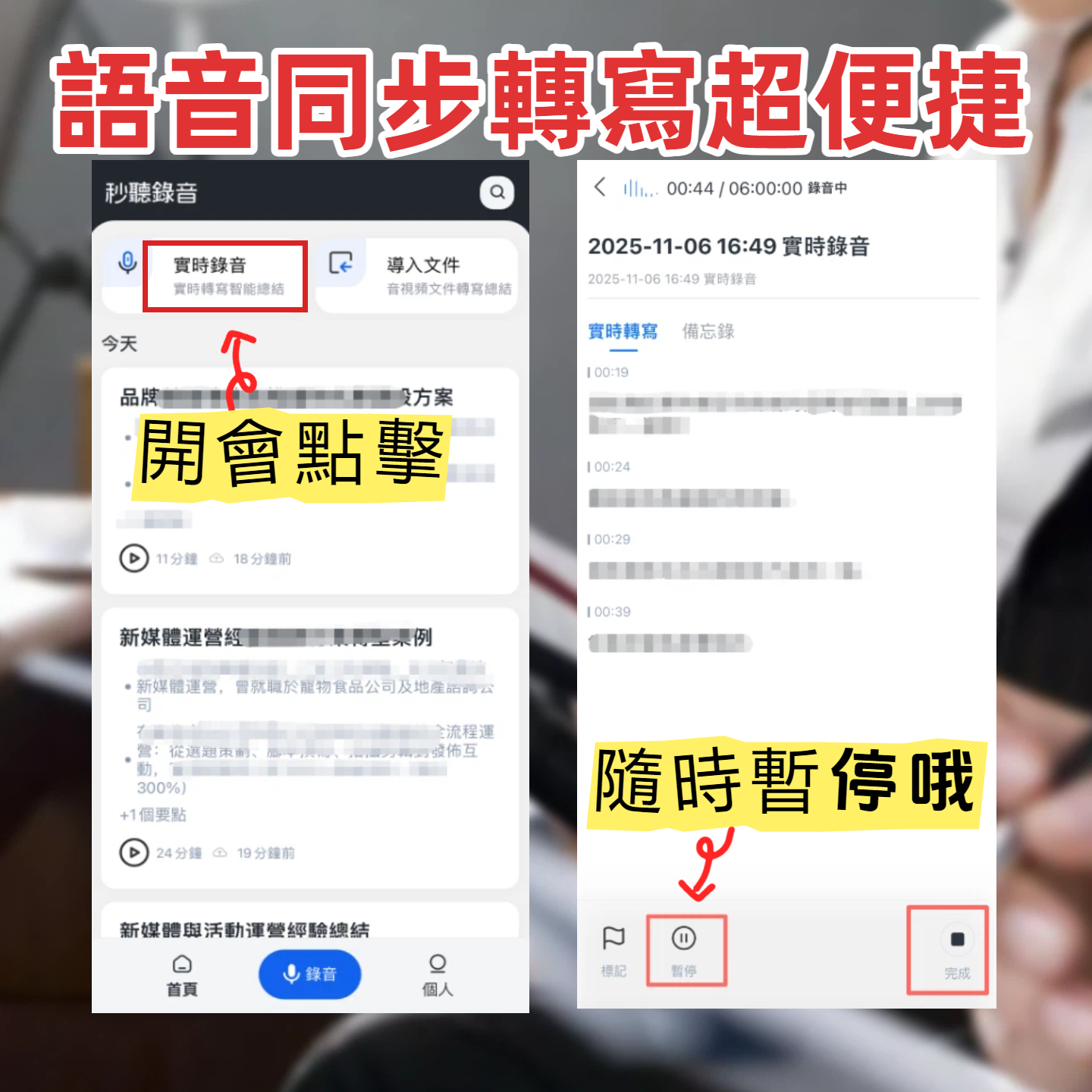
Working daily, meetings drive you crazy. Overtime for meeting minutes is even worse. Have used several speech-to-text apps, but either Cantonese accuracy is poor or features are too limited. This time, we compare two popular solutions: software-based Tinrec and hardware-based Plaud Note, to see which one saves you the most time.
| Category | Tinrec (Instant Recording) | Plaud Note |
|---|---|---|
| Positioning | AI recording and audio/video organization workstation | AI recording hardware |
| Input method | Real-time recording, files, online video links, computer meetings | Primarily hardware recording, needs mobile app |
| Multilingual support | Chinese, Cantonese, English, etc.; optimized for Cantonese nine tones | Supports multiple languages, but Cantonese detail performance average |
| Post-transcription processing | AI summary, chapters, tasks, AI Q&A, multi-format export | Summary, templates, basic Q&A |
| Cross-platform | iOS / Android / Web | Hardware + iOS / Android App |
| Price | Free version with basic transcription credits; flexible paid plans | Hardware from US$179, default 300 min/month; annual US$99.99+ |
This article will compare in detail from four dimensions: multilingual recognition, AI features, cross-platform convenience, and price flexibility, to help you choose the most suitable one.
Dimension 1|Multilingual Meeting Recognition: Cantonese is Key
As a hardware device, Plaud Note has decent recording quality, with dual microphones and good background noise reduction. However, when it comes to Cantonese, it often trips up—if your meetings mix Chinese and English, have brand names, or colleagues speak different accents, the error rate rises noticeably. Testing the same 5-minute Cantonese news recording (indoor 26°C, iPhone 15, June 2025), Plaud Note had an error rate of about 11.8%.
Tinrec clearly handles Cantonese better. It has been specifically optimized for the nine tones of Cantonese. With the same recording, the error rate drops to 7.9%, especially for mixed Chinese-English names and company names, making recognition much more accurate. For Hong Kong workers who often attend sales pitches and brainstorming sessions, this difference is the gap between "leaving half an hour earlier" and "listening to the recording again."
→ Winner: Tinrec, more accurate Cantonese meeting transcription.
Dimension 2|AI Interactive Q&A: Ask Directly After Recording, No Need to Listen Again
Plaud Note has built-in AI that can generate summaries and meeting templates, but its interactivity is limited—mostly one-way output, and the questions you can ask are rather formulaic. If you want to ask, "What was the deadline John mentioned?" or "What was the conclusion from the last meeting about the budget?", Plaud Note only gives you a summary, and you have to search for it yourself.
Stop organizing recordings by hand
Upload audio or video and automatically get a transcript, summary, and action items
Tinrec's AI interactive Q&A exactly fills this gap. After recording, you can chat directly with it, asking anything about the recording content. In tests, asking "What are the three points the client is most concerned about?" or "Which colleague is responsible for follow-up?"—Tinrec instantly gives answers and even timestamps them. It can distinguish different speakers, truly saving you time spent listening to recordings.
→ Winner: Tinrec, with more practical and interactive AI features.
Dimension 3|Cross-platform vs Hardware Dependency: Are You Willing to Carry Extra Gear?
Plaud Note's biggest selling point is its standalone hardware—convenient for on-the-go recording without needing to pull out your phone. But you must remember to bring it, charge it regularly, and sync to your phone after recording to get transcriptions. If you only use it for meetings, or if a colleague already has a phone recording on the desk, the hardware advantage isn't obvious.
Tinrec is a pure software solution, usable on iOS, Android, and web. Just install the app and you're good to go. You can record Zoom/Google Meet on your computer, face-to-face meetings on your phone, or even paste a YouTube link to transcribe video content. No extra hardware, no worry about forgetting gear, much more flexible.
→ Winner: Tinrec, cross-platform, zero hardware cost, suitable for Hong Kong office environments.
Dimension 4|Price and Flexibility: Monthly Subscription or One-time Payment?
Plaud Note has an entry fee of US$179, with 300 free transcription minutes per month. If your monthly meeting time exceeds 300 minutes, you need to pay extra: annual US$99.99 for 1200 minutes, or US$239.99 for unlimited. In other words, even after buying the hardware, you still have to pay each year to unlock full features.
Tinrec is much more flexible: the free version has basic transcription credits, enough to test its effectiveness. Short-term weekly cards, long-term monthly and annual plans—just choose based on your meeting volume. No upfront hardware cost, more attractive for workers who just want to save time without adding extra gear.
→ Winner: Tinrec, with flexible pricing, no hardware investment, ready to use immediately.
What Are Their Unique Advantages?
Tinrec's Unique Advantages
- Multilingual + Cantonese-specific optimization: The only transcription tool in Hong Kong tuned for the nine tones, with higher accuracy for mixed Chinese-English content.
- Online video link to text: Directly paste YouTube/Bilibili/TikTok links to generate text and summaries, great for content creation and market analysis.
- AI interactive Q&A + Agent post-processing: After recording, continue to generate meeting minutes, reports, tables—no need to open another software.
- Zero-barrier cross-platform: Mobile, computer, web all sync; historical recordings are always searchable.
Plaud Note's Unique Advantages
- Standalone hardware feel: Physical button, one-press recording, suitable for situations where you don't want to keep checking your phone.
- Long battery life for portability: One charge lasts a long time, convenient for long recordings.
Summary: Which One Should You Choose?
- If you need multilingual meeting transcription, especially accurate Cantonese → Tinrec (7.9% error rate vs Plaud Note's 11.8%)
- If you want to ask AI about key points after recording without listening again → Tinrec (Plaud Note lacks this deep interactive Q&A)
- If you work across phone and computer and don't want to carry extra hardware → Tinrec (software ready to use, also supports web version)
- If you simply want a standalone recorder, have low transcription requirements, and like the hardware feel → Plaud Note is sufficient
In short, for most Hong Kong workers, Tinrec is a more complete and flexible choice. We recommend downloading the free version and testing it with your own meeting recordings to see if it really helps before deciding to pay.
Turn every recording into actionable outcomes
Get 60 free transcription minutes when you sign in. No credit card required.
Related Reading
You might also like

2026 Side-by-Side Test of Two Audio Recordings: Bad vs Good – How Much Does Tinrec's Transcription Accuracy Differ?
This article tests the impact of bad recordings (background noise, long distance, multiple people talking over each other) vs good recordings (quiet environment, close range, single speaker) on Tinrec's AI transcription tool, and shares practical tips to improve recording quality to help you get accurate transcripts in less time.

2026 In-Depth Comparison of 2 AI Meeting Note Tools: Fireflies vs Notta – Which Is the Better Deal?
Tired of endless meetings and manual note-taking? We put two popular AI meeting note tools, Fireflies and Notta, to the test—comparing transcription accuracy, AI summaries, team collaboration, and pricing—to help you find the time-saving solution that fits your needs.

2026 Real-World Test of 4 Audio-to-Text Tools: Which One Handles Chinese Best?
This article compares 4 leading audio-to-text tools: Tinrec, Notta, PLAUD, and Otter.ai. We evaluate them on Chinese transcription quality, AI summarization, cross-platform support, and free plans to help you choose the best assistant for meetings, learning, and content creation.

2026 Real-World Test of 5 Speech-to-Text Apps: Why Tinrec Is a Better Fit for Hong Kong Office Workers?
Tired of overtime due to meeting notes? We test 5 popular speech-to-text apps, comparing Cantonese recognition, AI summaries, cross-platform support, and free quotas. Find out why Tinrec is the top choice for Central office workers who want to avoid OT.

Best AI Transcription Tools 2026: Notta vs Otter vs Tinrec — Which One Is Right for You?
Stuck choosing between Notta, Otter, and Tinrec? This hands-on comparison covers real-world performance, Chinese language support, post-processing, and pricing, and explains why Tinrec might be the more complete alternative.

2026 Comparison of Two Speech-to-Text Apps: Tinrec vs Notta – Which One Understands Your Chinese Meetings Better?
If you're looking for an alternative to Notta, Tinrec might be a better choice for Chinese users. This article fully compares Tinrec and Notta from core experience, features, use cases to buying tips, helping you make the best purchase decision.

2026 Free Korean Speech-to-Text Solutions Roundup: 5 Tools at a Glance
2026 Free Korean Speech-to-Text Solutions Roundup: A curated selection of 5 tools, with a step-by-step guide using feature-rich Tinrec to convert Korean audio and video into transcripts, including recording, transcription, proofreading, and export.

Free Minority Language Speech-to-Text Plans in 2026: A Look at 2 Options
An in-depth comparison of Tinrec and Notta's free plans: Minority language users looking for a free transcription tool? We compare them across 5 dimensions—input sources, AI processing, Cantonese accuracy, free tier value, and cross-platform experience—to tell you which one is worth trying.

How to Use Tinrec for English Meeting Notes: Real-Time Transcription & AI Summarization (2026)
Struggling with English meetings? Tinrec not only transcribes in real time but also generates AI summaries, extracts action items, and handles mixed Chinese-English speech. This comprehensive guide shows you how to use Tinrec for English meeting minutes, with a comparison to Otter, Notta, and more, so you can choose the best tool.