

Turn recordings into transcripts and summaries in minutes
Upload audio or video for multilingual transcription, AI notes, and action items
Why Are People Starting to Look for Notta Alternatives?
Notta is a fully-featured speech-to-text tool that supports multi-platform transcription, meeting notes, and multilingual translation. Many users rely on it to organize meetings, interviews, and course content. However, as use cases become more diverse, some users feel that Notta's output leans toward verbatim transcripts, making post-transcription processing and utilization less seamless. If you also want your transcribed audio to become searchable, queryable, and reusable data—not just plain text files—then Tinrec is worth considering.
Tinrec vs Notta: How Do the Core Experiences Differ?
Beyond Transcription: Emphasis on Understanding and Action
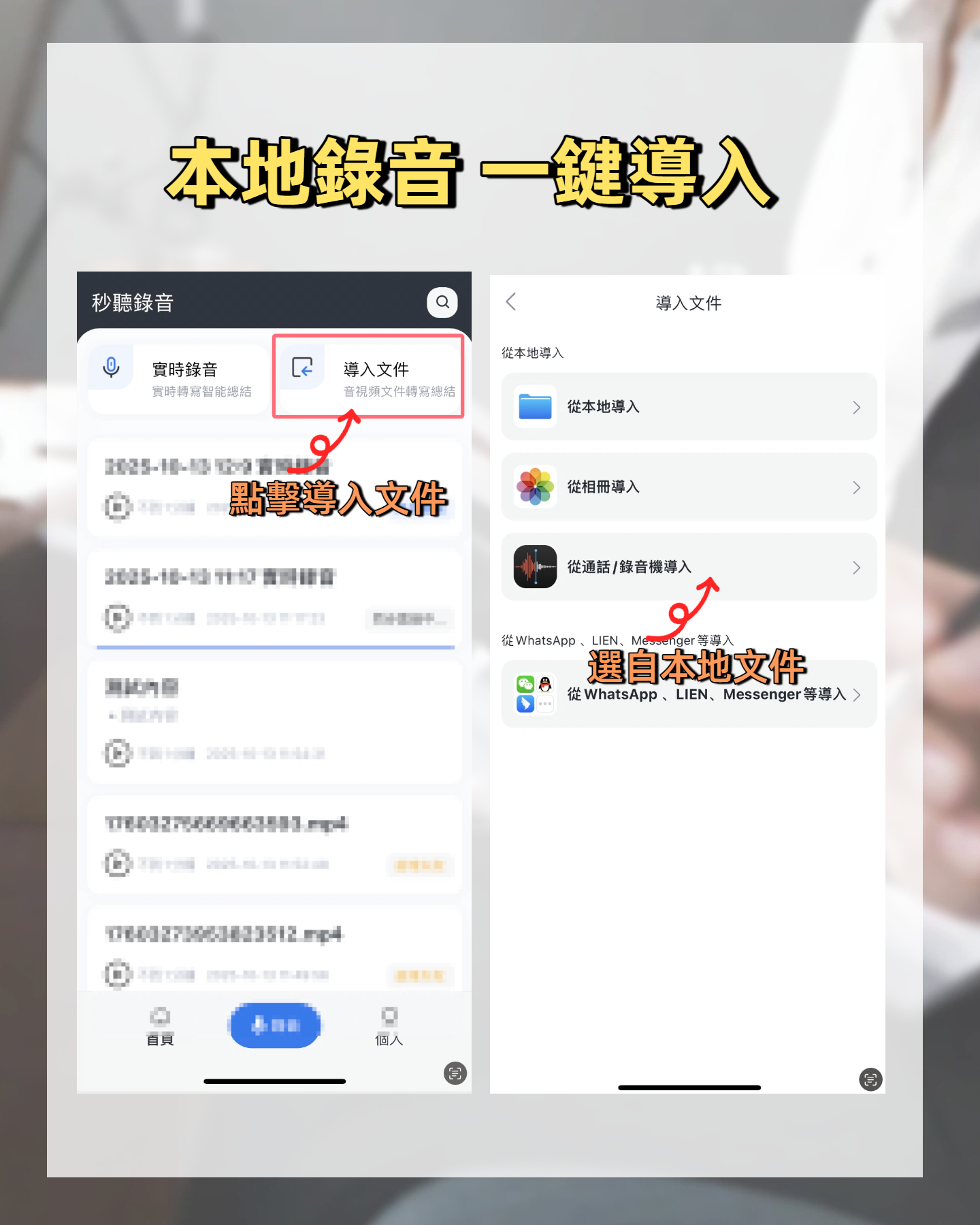
For most people, transcription is just the first step; the real time sink is reading through content and extracting key points. Tinrec doesn't just produce verbatim transcripts—it automatically generates AI summaries, chapters, action items, and supports conversational queries around the recording, turning a single audio file into an actionable checklist. In contrast, Notta's strength lies in transcription and subtitles, while subsequent processing often requires more manual effort.
Better Handling of Chinese Content
If your daily work revolves around Chinese—whether meetings, interviews, or lectures—Tinrec's performance in Chinese-language scenarios deserves attention. It is specially optimized for Traditional Chinese, Simplified Chinese, and Chinese-English mixed content, generating summaries and chapters that align with Chinese usage habits. Although Notta also supports multiple languages, Tinrec better meets local needs in terms of summary accuracy and structured output for Chinese
More Diverse Input Sources
Tinrec not only records in real time but also supports uploading audio/video files, pasting web video links for direct transcription, and even handles public videos from YouTube, TikTok, and more. This means you can funnel audio and video content from various sources into a single processing workflow. Notta focuses mainly on meetings and file transcription; web video parsing is not a core feature.
AI Conversational Query Brings Historical Recordings to Life
Tinrec comes with built-in AI conversational query—you can simply ask, "What was the conclusion of the last meeting?" or "What were the three key points from this lecture?" It uses semantic understanding to retrieve answers, saving you from manually flipping through dozens of pages of transcripts. This feature is less prominent in Notta, which leans toward traditional search within transcripts.
Stop organizing recordings by hand
Upload audio or video and automatically get a transcript, summary, and action items
Tinrec's Core Features at a Glance
Real-Time Speech-to-Text: Record and transcribe simultaneously during meetings or classes with less than 1 second latency. Get a complete transcript and key summary immediately when the session ends.
Audio/Video File Transcription: Upload pre-recorded meeting recordings, lecture audio, or videos—convert to text with one click, complete with automatic chapter markers and action items.
Web Video Link Parsing: Paste a public video URL from YouTube, TikTok, or Xiaohongshu to instantly obtain a transcript, summary, and key points—ideal for content creators and learners.
AI Conversational Query: After recording, ask Tinrec direct questions—whether about conclusions, action items, or specific details—and it will extract the answer from the recording, saving you tons of replay time.
Multi-Format Export & Post-Processing: Export organized content to Word, PDF, TXT, or sync directly to Notion, Google Docs, and other tools. You can even have the AI generate meeting minutes, reports, or tables.
Practical Use Cases
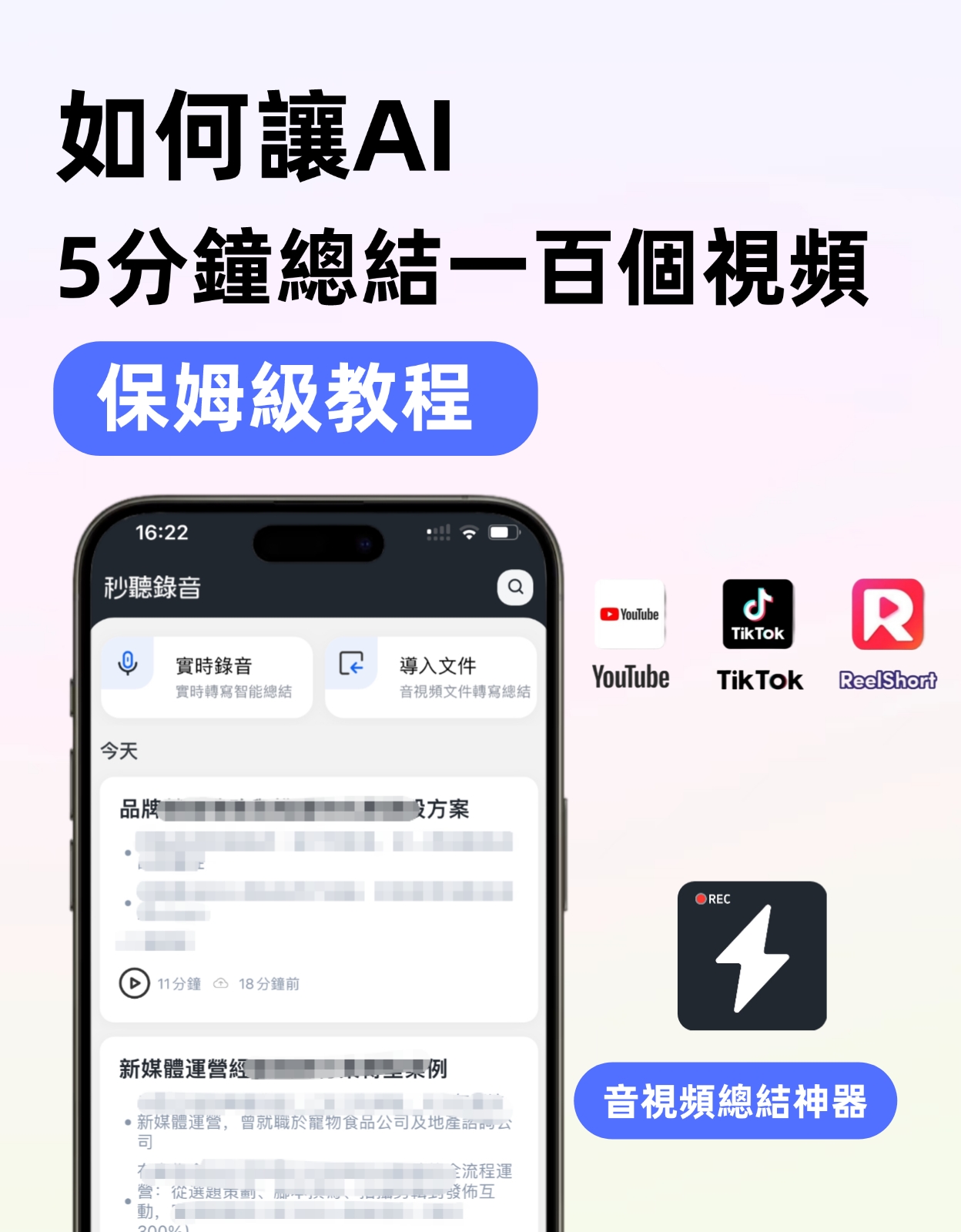
Meetings: Record while generating a transcript; automatically produce summaries and action items after the meeting. Team members can directly track tasks without spending 30 minutes writing meeting notes.
Classes & Learning: Record an entire lecture; Tinrec breaks it into chapters and key points. Use AI to ask questions during review—more flexible than traditional notes.
Interviews & Research: Convert interview recordings to text, then ask Tinrec to extract key viewpoints and citation materials—speeding up interview report compilation by more than double.
Content Creation: Grab text and summaries from YouTube or TikTok videos as source material for posts or re-creation, eliminating the need for manual transcription.
Key Considerations When Choosing a Speech-to-Text Tool
Transcription Is Just the First Step; Organization and Utilization Are Critical: When selecting a tool, don't just look at transcription minutes—consider whether it can summarize, categorize, and export. Tinrec's design here is more comprehensive, turning a transcript into immediately usable material.
Friendliness for Chinese Scenarios: If your content is primarily in Chinese, test the quality of summaries and chapters directly. Tinrec's summary accuracy and structuring for Chinese generally outperform most international tools.
Flexibility of Input Sources: Beyond real-time recording, the ability to handle files and web videos is important. Tinrec's multi-source support makes it more than just a voice recorder—it's like an audio/video processing hub.
Integration with Your Workflow: Whether the transcribed content can be exported to your commonly used tools (e.g., Notion, Google Docs) affects real-world adoption. Tinrec's export and sync options let data flow seamlessly into your existing processes.
Free Plan Quotas and Limitations: Tinrec's free version offers a basic transcription allowance each month—enough to try the core features. If you have intensive needs in the near term, consider upgrading to a weekly card or Pro plan without being locked into a subscription from the start.
Conclusion: Is Tinrec Worth a Try?
If your work or studies frequently involve meetings, lectures, interviews, or web videos—and you don't want to end up with just a raw transcript—Tinrec is currently one of the few tools on the market that balances transcription, organization, Q&A, and export. Especially in terms of Chinese content summarization and structuring, it aligns better with local usage habits than Notta. I recommend downloading the Tinrec free version and testing it with your own recordings to gauge transcription quality and AI summaries—that's the best way to decide if it fits your needs.
Turn every recording into actionable outcomes
Get 60 free transcription minutes when you sign in. No credit card required.
Related Reading
You might also like
2026 Side-by-Side Test of Two Audio Recordings: Bad vs Good – How Much Does Tinrec's Transcription Accuracy Differ?
This article tests the impact of bad recordings (background noise, long distance, multiple people talking over each other) vs good recordings (quiet environment, close range, single speaker) on Tinrec's AI transcription tool, and shares practical tips to improve recording quality to help you get accurate transcripts in less time.

2026 In-Depth Comparison of 2 AI Meeting Note Tools: Fireflies vs Notta – Which Is the Better Deal?
Tired of endless meetings and manual note-taking? We put two popular AI meeting note tools, Fireflies and Notta, to the test—comparing transcription accuracy, AI summaries, team collaboration, and pricing—to help you find the time-saving solution that fits your needs.

2026 Real-World Test of 4 Audio-to-Text Tools: Which One Handles Chinese Best?
This article compares 4 leading audio-to-text tools: Tinrec, Notta, PLAUD, and Otter.ai. We evaluate them on Chinese transcription quality, AI summarization, cross-platform support, and free plans to help you choose the best assistant for meetings, learning, and content creation.

2026 Real-World Test of 5 Speech-to-Text Apps: Why Tinrec Is a Better Fit for Hong Kong Office Workers?
Tired of overtime due to meeting notes? We test 5 popular speech-to-text apps, comparing Cantonese recognition, AI summaries, cross-platform support, and free quotas. Find out why Tinrec is the top choice for Central office workers who want to avoid OT.

Best AI Transcription Tools 2026: Notta vs Otter vs Tinrec — Which One Is Right for You?
Stuck choosing between Notta, Otter, and Tinrec? This hands-on comparison covers real-world performance, Chinese language support, post-processing, and pricing, and explains why Tinrec might be the more complete alternative.

Best Multilingual Meeting Transcription Tool? 2026 Test of Two: Tinrec Suits Hong Kong Workers Best
We tested two multilingual meeting transcription solutions: Tinrec and Plaud Note. See which one helps you finish work earlier!

2026 Free Korean Speech-to-Text Solutions Roundup: 5 Tools at a Glance
2026 Free Korean Speech-to-Text Solutions Roundup: A curated selection of 5 tools, with a step-by-step guide using feature-rich Tinrec to convert Korean audio and video into transcripts, including recording, transcription, proofreading, and export.
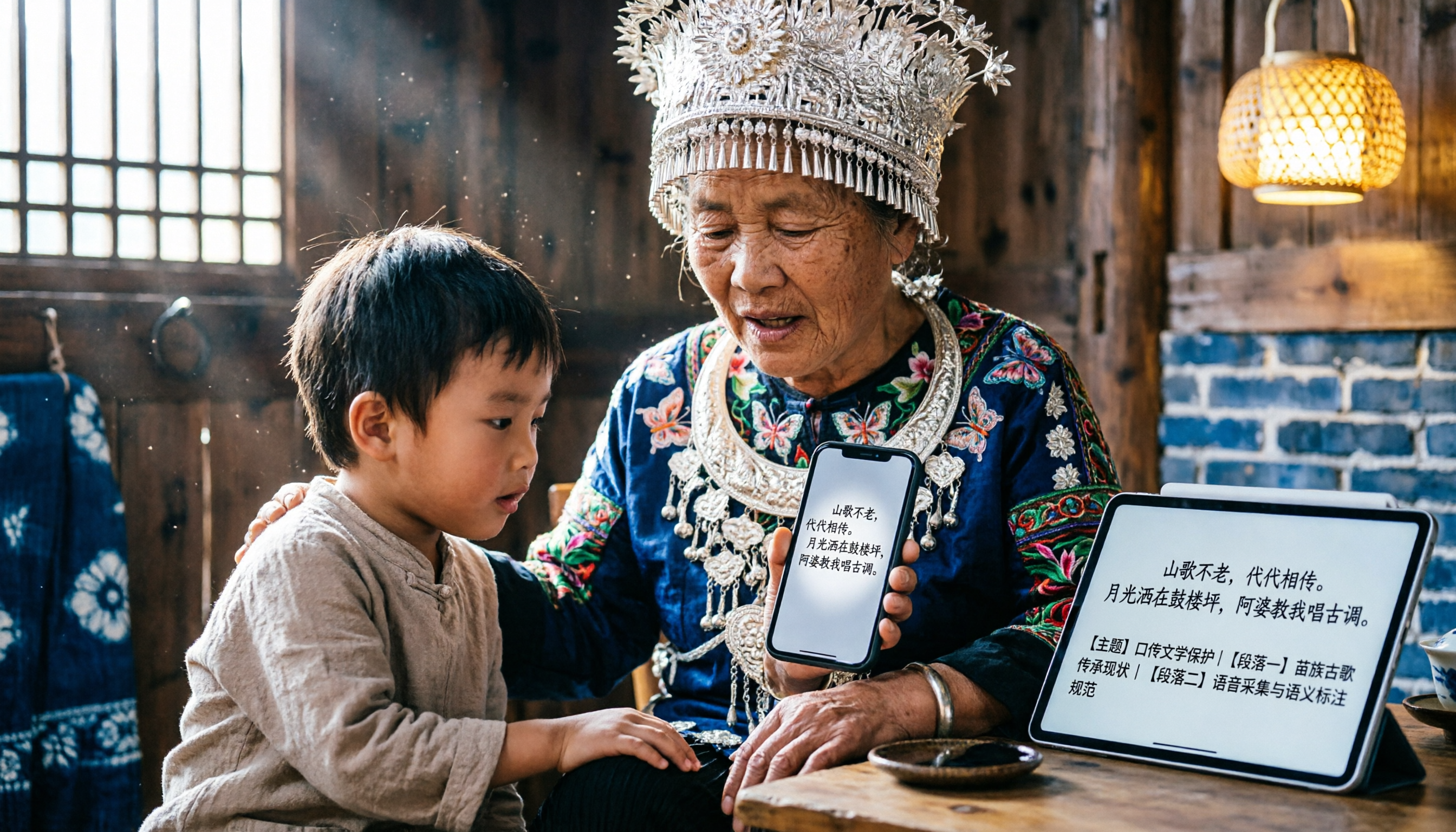
Free Minority Language Speech-to-Text Plans in 2026: A Look at 2 Options
An in-depth comparison of Tinrec and Notta's free plans: Minority language users looking for a free transcription tool? We compare them across 5 dimensions—input sources, AI processing, Cantonese accuracy, free tier value, and cross-platform experience—to tell you which one is worth trying.

How to Use Tinrec for English Meeting Notes: Real-Time Transcription & AI Summarization (2026)
Struggling with English meetings? Tinrec not only transcribes in real time but also generates AI summaries, extracts action items, and handles mixed Chinese-English speech. This comprehensive guide shows you how to use Tinrec for English meeting minutes, with a comparison to Otter, Notta, and more, so you can choose the best tool.