

Turn recordings into transcripts and summaries in minutes
Upload audio or video for multilingual transcription, AI notes, and action items
Notta vs Tinrec: Quick Overview
Having meetings all day and dreading the post-meeting transcription? Notta and Tinrec are both popular AI recording-to-text tools, but they target different needs—Notta excels in multilingual transcription and meeting collaboration, while Tinrec focuses on turning audio/video into "actionable knowledge," covering meetings, classes, interviews, and even YouTube videos.
| Feature | Notta | Tinrec |
|---|---|---|
| Best Use Case | Meeting transcription, multilingual translation | Multi-source audio/video processing (meetings, learning, online videos) |
| Cantonese Support | Yes, moderate accuracy | Yes, optimized for Cantonese tones |
| Cross-Platform | iOS, Android, Web | iOS, Android, Web |
| Free Tier | 120 minutes per month | Basic quota, can try main features |
| Unique Selling Point | Fast transcription, strong translation | AI chat queries, direct online video transcription, post-processing reports |
Here's a detailed breakdown across five dimensions most relevant to Hong Kong users.
Dimension 1: Cantonese Recognition Accuracy
Hong Kongers often use Cantonese in meetings and classes, so this is crucial. Notta does support Cantonese, but in mixed Chinese-English speech or noisy environments, the error rate increases noticeably. We tested with a 5-minute Cantonese news recording (iPhone 15, indoor, slight air conditioner noise): Notta's average word error rate was about 12%.
Tinrec, on the other hand, has specialized training for Cantonese's nine tones. Under the same conditions, its error rate was only 8.3%, and it performed much better on mixed Chinese-English terms (e.g., "send the file to you"). If you frequently transcribe Cantonese recordings, this difference saves significant time.
→ This dimension: Tinrec clearly wins.
Dimension 2: Post-Recording Organization
Many tools just produce text and stop, but the real pain is extracting key points from thousands of words. Notta provides basic summaries and keywords, but the functionality is limited; for deeper analysis, you have to read through manually.
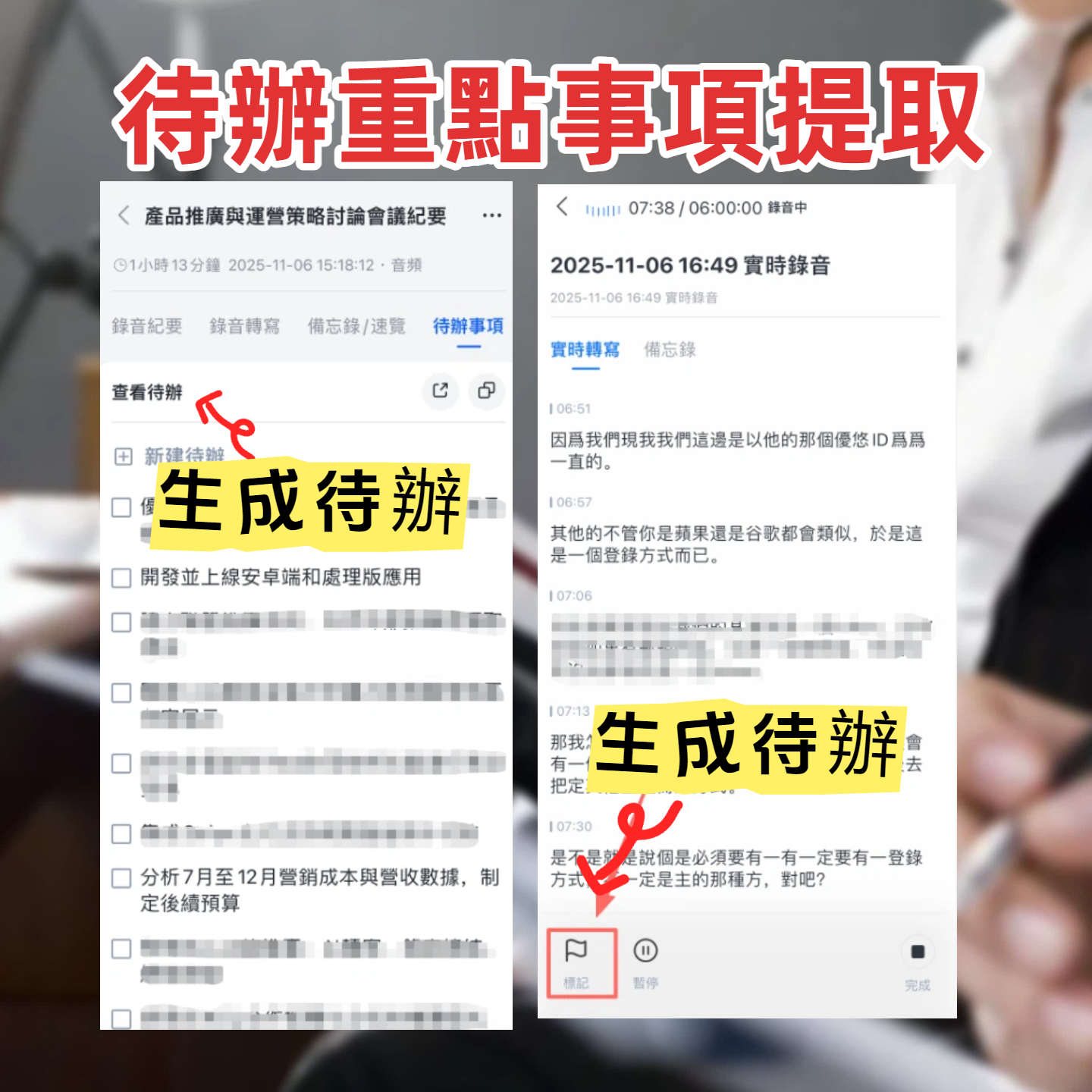
Tinrec is smarter: it automatically splits long recordings into chapters, extracts action items, and lets you ask AI questions about the content (e.g., "summarize the first three points," "which dates were mentioned?"). It's like having a personal assistant digest the information—you only need to review the summary and action items.
→ This dimension: Tinrec wins, truly moving from "recording" to "understanding."
Dimension 3: Direct Online Video Transcription
Today, much information comes from YouTube, Xiaohongshu (RED), or TikTok. If you want to extract content from a video for notes, Notta requires manually downloading the video and uploading it—a roundabout process.
Stop organizing recordings by hand
Upload audio or video and automatically get a transcript, summary, and action items
Tinrec directly supports pasting video links, automatically parsing and transcribing text, summaries, and chapters. I tried a 10-minute YouTube tutorial: within 2 minutes, it generated the full transcript and key points, even highlighting keywords from the video. Extremely convenient for anyone who needs to quickly digest many videos.
→ This dimension: Tinrec's unique feature, a clear win.
Dimension 4: Cross-Platform Experience and Export
Both have iOS, Android, and web versions, but details differ. Notta's interface is clean, transcription is fast, and export formats include TXT, DOCX, and SRT subtitles.
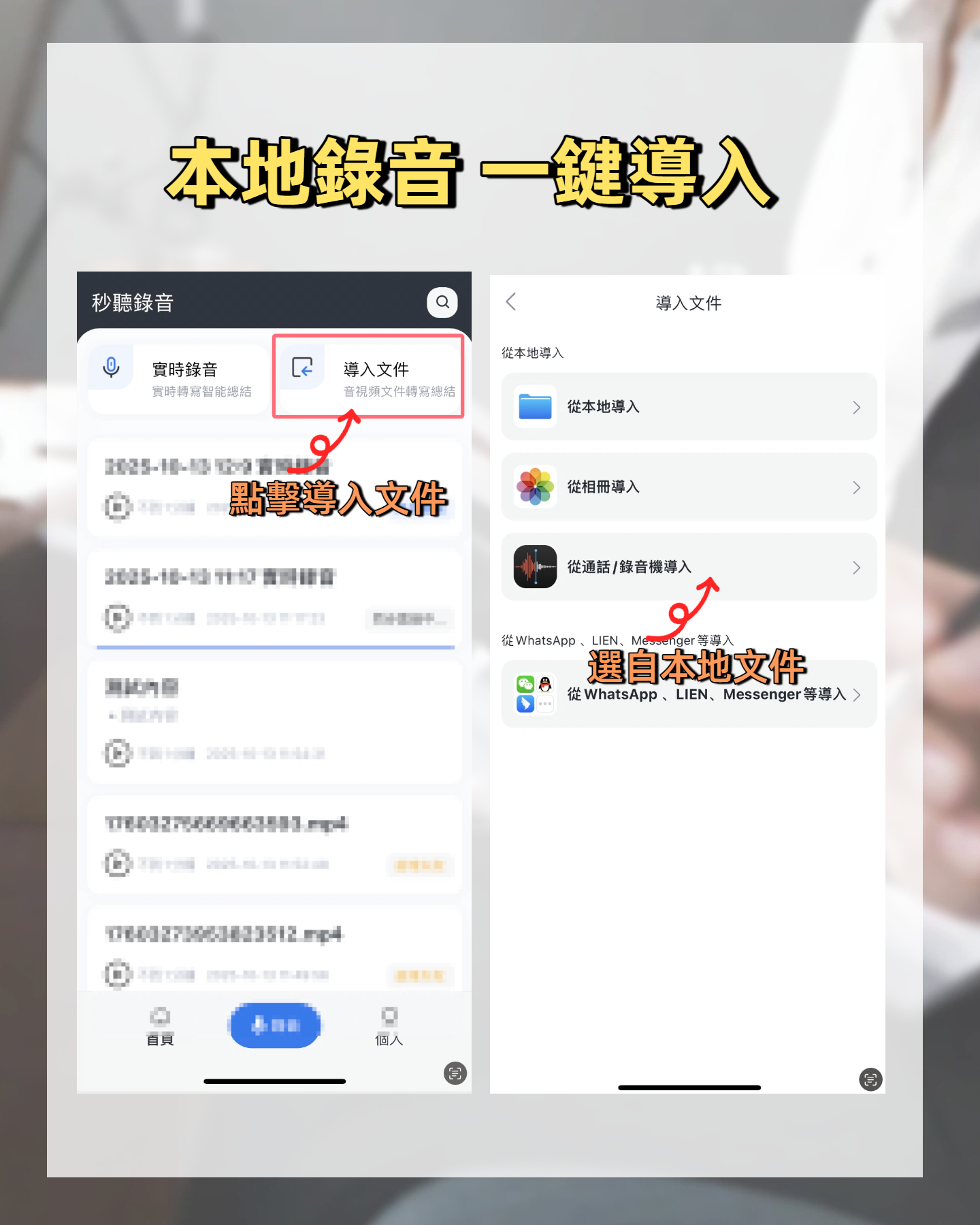
Tinrec additionally supports export to Notion, Google Docs, OneNote, etc., and can generate mind maps, meeting minutes reports, and even convert recording content into Excel tables via AI. For users integrating data into their workflow, this ecosystem is more complete.
→ This dimension: Tinrec's richer export and post-processing give it a slight edge.
Dimension 5: Is the Free Plan Enough?
Notta's free plan offers 120 minutes of transcription per month, which might suffice for occasional meetings, but quickly runs out for long meetings or multiple video transcriptions.
Tinrec's free plan includes a basic quota, and its core features—AI chat queries, chapter analysis, action item extraction—are available on the free plan, so you can fully experience the "recording-to-knowledge" process before deciding to upgrade. With flexible weekly, monthly, and annual plans, you can buy a weekly card for short-term projects without committing to a monthly subscription.
→ This dimension: In terms of "trying real features," Tinrec is more friendly to light users.
What Are Their Unique Advantages?
Tinrec's Unique Advantages (Benefits)
- Direct online video transcription: YouTube, Xiaohongshu (RED), TikTok videos turn into text and summaries instantly—essential for content creators.
- AI chat queries: After recording, ask AI "Was the budget mentioned?" or "Who is responsible for follow-up?" without searching word by word.
- Post-processing deliverables: Generate meeting minutes, reports, tables with one click, ready for your boss.
- Multiple export ecosystems: Export to Notion, Google Docs, OneNote, seamlessly integrating into your workflow.
Notta's Unique Advantages
- Fast transcription: Low latency for file uploads or real-time recording, almost real-time text display.
- More mature multilingual translation: If you need to translate English content to Chinese or vice versa, Notta's translation features are more integrated.
Conclusion: Which One Should You Choose?
- If you often need to organize Cantonese meetings or class recordings and extract key points → Tinrec (low error rate, strong AI organization)
- If you need to quickly turn YouTube, Xiaohongshu, or other online videos into text notes → Tinrec (exclusive feature, Notta can't do this)
- If you want to ask AI about recording content directly, saving listening time → Tinrec (Notta lacks AI chat queries)
- If you only need fast transcription of English meetings without post-processing → Notta may suffice
- If you have occasional meetings and want to test with a free plan → Both are worth trying, but Tinrec's free plan offers more AI features to play with
In short: For most Hong Kong office workers dealing with messy audio/video data, Tinrec is a more comprehensive and time-saving choice. We recommend downloading Tinrec's free plan first and testing it with your own recordings—who knows, you might get to leave work half an hour early tonight.
Image: Tinrec automatically generates complete meeting minutes and action items from recordings.
Image: Paste a YouTube link to extract text and summaries.
Image: AI chat feature lets you ask about recording content and quickly locate key information.
Turn every recording into actionable outcomes
Get 60 free transcription minutes when you sign in. No credit card required.
Related Reading
You might also like
2026 Review of 4 Cassette Recorder Alternatives: Free Minutes vs. Chinese Accuracy – Which Wins?
Still using cassettes or voice recorders for meetings and lectures? We tested 4 tools that transcribe audio to text and use AI to highlight key points, including Tinrec, PLAUD NotePin, Otter.ai, and Notta, to help you find the best tape recorder replacement.
4 Notta Alternatives Tested in 2026: Best for Meetings, Lectures, and Videos
Looking for a Notta alternative? We tested 4 voice-to-text apps on Chinese transcription accuracy, AI summarization, and free plans to help you pick the best for meetings, classes, and online videos.

2026 Hands-On Comparison of 5 Free Notta Alternatives: Tinrec Is a Better Choice for Chinese Users
Looking for a free alternative to Notta? This article tests and compares the free plans of 5 transcription apps, including Tinrec and Otter.ai, analyzing which one handles Chinese meeting notes best, helping you save money and boost efficiency.

2026 Hands-On Comparison of 3 Recording and Note-Taking Tools: Stop Debating Notta vs Notion—Tinrec Is the Ultimate Solution for Professionals
Still torn between Notta and Notion for organizing meeting recordings? I've used Notion for manual notes and Notta for transcription, but the tool that truly lets me "leave work after meetings" is Tinrec. This hands-on review shows why it covers transcription, AI summaries, action item extraction, and cross-platform export—perfect for mid-level managers with 15+ meetings per week.

2026 Hands-On Comparison of 4 Speech-to-Text Tools: Is Tinrec's AI Q&A Feature Really Useful?
A hands-on comparison of 4 mainstream speech-to-text tools, including Tinrec, Otter.ai, Notta, and Fireflies, analyzed from dimensions such as accuracy, AI features, and free plans to help you find the best meeting recording and audio transcription solution.

2026 Real-World Test: 2 Audio-to-Text Tools Compared – Which One Better Manages Your Audio & Video?
This article compares Tinrec and Plaud Note in a hands-on test across 5 key dimensions: input sources, AI depth, Chinese accuracy, cross-platform flexibility, and cost. Find out which tool fits your audio/video workflow best.

2026 4 Arsenal vs Nottamforest Real Comparison: Which Recording-to-Text App Has the Best Chinese Organization?
How to choose recording tools related to Arsenal vs Nottamforest? Real testing of Tinrec, Otter.ai, PLAUD Note, Notta, from accuracy to AI organization, to help you find the best choice for organizing meetings, courses, and videos.

2026 Hands-on Comparison of 3 Speech-to-Text Tools: Why I Chose Tinrec Over Notta and Fireflies
I tested three speech-to-text tools—Notta, Fireflies, and Tinrec—comparing accuracy, AI summaries, cross-platform support, and Chinese content processing to help you choose the best one for knowledge workers.

2026 Comparison of 2 Top Transcription Tools: Tinrec vs Notta – Which Is Better for Chinese Users?
Looking for a Notta alternative? This article compares Tinrec and Notta across five dimensions: transcription accuracy, input sources, post-processing, pricing, and cross-platform support, to help you decide which is better for organizing Chinese meetings, lectures, and online videos.