

Turn recordings into transcripts and summaries in minutes
Upload audio or video for multilingual transcription, AI notes, and action items
I have about 10 Google Meet meetings per week—stand-ups, project reviews, one-on-ones, cross-department coordination. What I used to dread most wasn't the meetings themselves, but what came after. Every meeting has decisions, action items, and key points my boss will ask about. If I don't capture them immediately, they become fuzzy within a couple of days.
Google Meet has built-in captions, and some plans even offer transcription. But here's the thing—it only supports English. A colleague on my team tried using the built-in transcription for a Chinese meeting, and the result was gibberish. Then we started using Tinrec to record Google Meet audio, which transcribes it into text and automatically generates AI summaries and to-do lists. Now, within 5 minutes of a meeting ending, I can send the key points to my boss, and my team can't forget what they need to do.
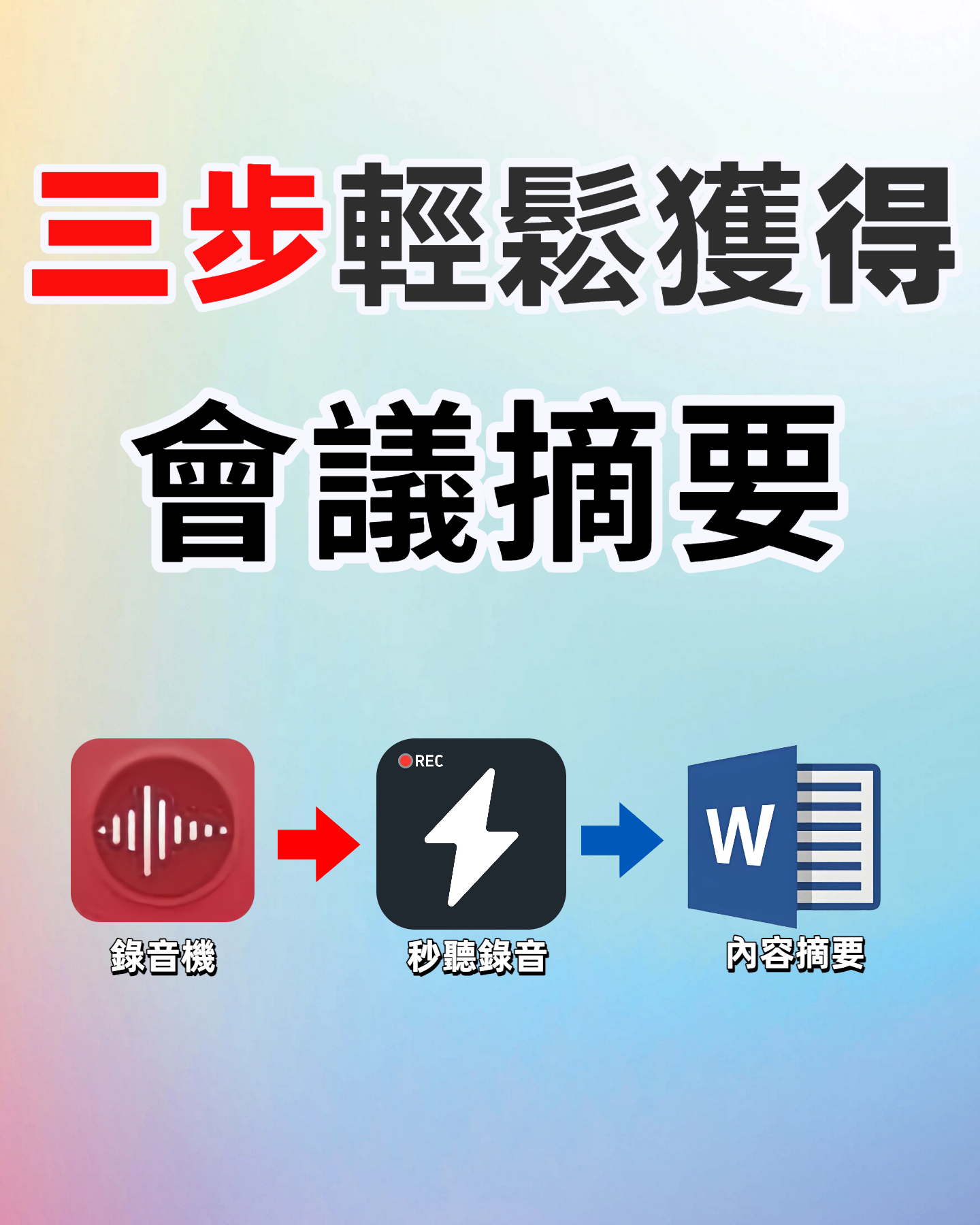
This article is based on my experience as a mid-level manager leading a team of 10. I'll walk you through a comparison: when having Google Meet meetings on a PC, should you rely on the built-in transcription or go with Tinrec?
Is Google Meet's Built-in Transcription Really Enough?
First, let's talk about Google Meet's built-in transcription. You need to understand one thing: its captions and transcription are primarily designed for English meetings. If you're holding an English meeting, it shows real-time captions and can generate a full transcript afterward—but only if you have a Google Workspace Business or Enterprise plan.
For Chinese-speaking teams, there are several obvious issues:
- Very limited Chinese support: Captions are only available in English (some regions have a few more languages, but Traditional Chinese is not supported). The same goes for transcription. If you hold a one-hour Chinese meeting, you'll get nothing.
- Only raw transcripts, no summaries: Even for English meetings, it just gives you a wall of text. You have to read through it yourself and pick out action items.
- Tied to the Google ecosystem: You can only find the file in Google Drive after the meeting. You can't export it to Notion or Docs, and you can't ask questions about the content.
So if you're a Chinese user, Google Meet's built-in transcription is essentially unusable.
What Can Tinrec Do for You?
Tinrec isn't a meeting bot—it's an audio and video processing workspace. Simply put:
- When you're in a Google Meet on your PC, enable Tinrec's computer audio recording feature, and it captures the system audio directly—no extra setup needed.
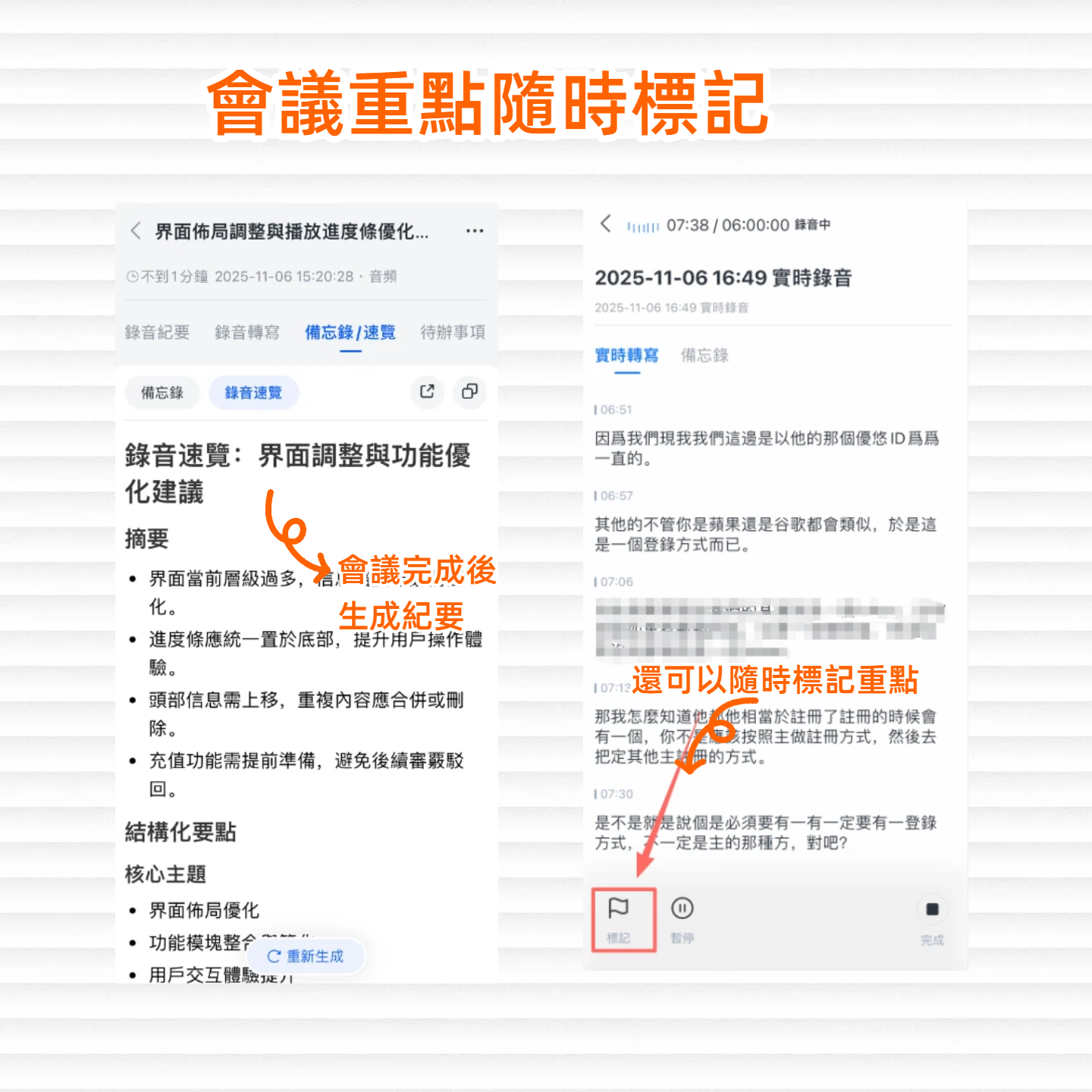
- During the meeting, it generates a real-time Chinese transcript with less than a second of delay.
- The moment the meeting ends, AI summaries, key points, and action items are already generated. Who said what, who needs to do what, and deadlines—all clear at a glance.
A practical example: Yesterday I had a Google Meet with a vendor about budget and delivery timelines. Before Tinrec, I'd spend 20 minutes writing meeting notes afterward. Now, Tinrec gives me a summary right after the meeting, highlighting the vendor's quote, our discount request, and the next checkpoint we agreed on. I copied and pasted it to Slack for the team—done in 5 minutes.
How Tinrec's Core Capabilities Outshine Google Meet's
This isn't to say Google Meet is bad—it's just built for different purposes. When you put the two side by side, the differences are clear:
Stop organizing recordings by hand
Upload audio or video and automatically get a transcript, summary, and action items
- Real-time transcript + multilingual support: Tinrec supports 14 languages, including Mandarin, Cantonese, and even mixed Chinese-English. Google Meet only covers English.
- AI-structured summaries: Not just a condensed version, but bullet-pointed—meeting topic, conclusions, action items, responsible persons—like a management report. Google Meet's transcription is just plain text.
- AI conversation queries: After transcription, you can ask Tinrec directly, "Who said we need to increase the budget in the last meeting?" or "What were the client's two requests?" It answers based on the content. Google Meet has no such feature.
- Automatic action item extraction: It turns verbal discussions into task lists with owners and deadlines, and flags items that are "unconfirmed." Nothing gets lost in follow-ups.
- Multi-format export: You can export results to Word, PDF, Markdown, or sync them to Notion, Google Docs, OneNote. Google Meet's files just sit in Google Drive.
Real-World Use: Three Scenarios in Google Meet
Scenario 1: Internal Weekly Stand-up
Every Monday morning, I meet with my team on Google Meet to go over progress. Tinrec records the whole session and produces summaries and action items. I copy each member's tasks directly into Trello, saving me from manual organization.
Scenario 2: Communication with External Contractors
When discussing a website redesign with a design agency, we go back and forth. Tinrec's AI summary clearly lists revision requests, pricing, and timelines. I send it to my boss, and he doesn't need to ask again.
Scenario 3: Client Needs Interview
During client interviews, I focus on listening instead of typing. Tinrec not only generates a transcript but also highlights the client's pain points, competing products, and budget ranges. This speeds up proposal creation significantly.
5 Factors to Evaluate When Choosing a Meeting Note Tool
- Language support: If you need to record Chinese meetings, Google Meet's built-in transcription is out. Tinrec's Chinese transcription has high accuracy in tests—under 10% error rate in a typical meeting room environment.
- AI summarization: Transcription is just the first step; the real value lies in whether it can summarize for you. Tinrec's AI summaries and conversation queries save you from reading through everything.
- Cross-platform flexibility: Tinrec has iOS, Android, and web versions. Meetings recorded on your phone can be viewed on your computer. Google Meet transcriptions are only saved in the cloud and are not easy to share.
- Export and integration: Tinrec can export in multiple formats and integrates with Notion and Google Docs, fitting directly into your workflow.
- Price and usage frequency: Tinrec's free plan gives you 100 minutes per month—enough to try on a couple of Google Meets. If you have meetings daily like I do, the Pro annual plan costs less than two cups of Starbucks per month and gives you unlimited Chinese meeting transcription.
Frequently Asked Questions
Q: How does Tinrec record Google Meet audio? A: It's simple. Open Tinrec's web version on your PC, select "Computer Audio Recording," and start recording. All audio from Google Meet will be captured—no cables or virtual audio devices needed.
Q: Will the other participants know I'm using Tinrec to record Google Meet? A: It only records your computer's audio, so no notification is sent to the meeting platform. The other participants won't notice. However, it's good practice to ask for consent before recording—it's basic courtesy.
Q: Is the accuracy as high as advertised? A: In a quiet environment with a clear microphone, Chinese transcription accuracy is very high. But if multiple people speak at once, if someone is far from the mic, or if there's background noise, error rates increase. For important meetings, we recommend quickly reviewing the transcript to correct obvious mistakes.
Q: Is the free plan enough? A: The free plan gives you 100 minutes per month. If you have 2-3 Google Meets a week, it should suffice. For someone like me who has 2+ meetings daily, the Pro plan is more practical.
Conclusion
Google Meet's built-in transcription works decently for English meetings, but for Chinese users it's essentially crippled. If your team, like mine, holds Chinese meetings on Google Meet every week and doesn't have time to write notes manually, Tinrec is the best solution I've found. It doesn't just give you a transcript—it turns messy conversations into actionable tasks and report-ready summaries.
Try Tinrec's free plan with one or two Google Meet meetings. See how much easier the workflow becomes from recording to organizing to sending. The time you save will be more noticeable than the coffee you skip.
Turn every recording into actionable outcomes
Get 60 free transcription minutes when you sign in. No credit card required.
Related Reading
You might also like

5 Google Meet Alternatives in 2026: Which One Has the Smartest Meeting Notes?
Think Google Meet's built-in recording isn't enough? This article rounds up 5 AI tools to replace or enhance Google Meet meeting notes, including Tinrec, Otter.ai, and more. From free to paid plans, find the best meeting assistant for you.
Can't Use Google Meet in 2026? 3 Steps to Use Tinrec to Record and Transcribe as a Workaround
When Google Meet video fails, the meeting can't stop. This article teaches you how to use Tinrec for real-time recording, transcription, and key point extraction, turning unexpected issues into a productive meeting with records and conclusions.

Which Google Meet Recording Tool is Best? 2026 Hands-on Test of 4 Tools, Free Version Saves the Most Time
Google Meet calls are free, but recording and organizing meeting notes requires third-party tools. We tested several popular AI meeting note apps to see which one works best for busy professionals, so you can finish work faster without overtime.
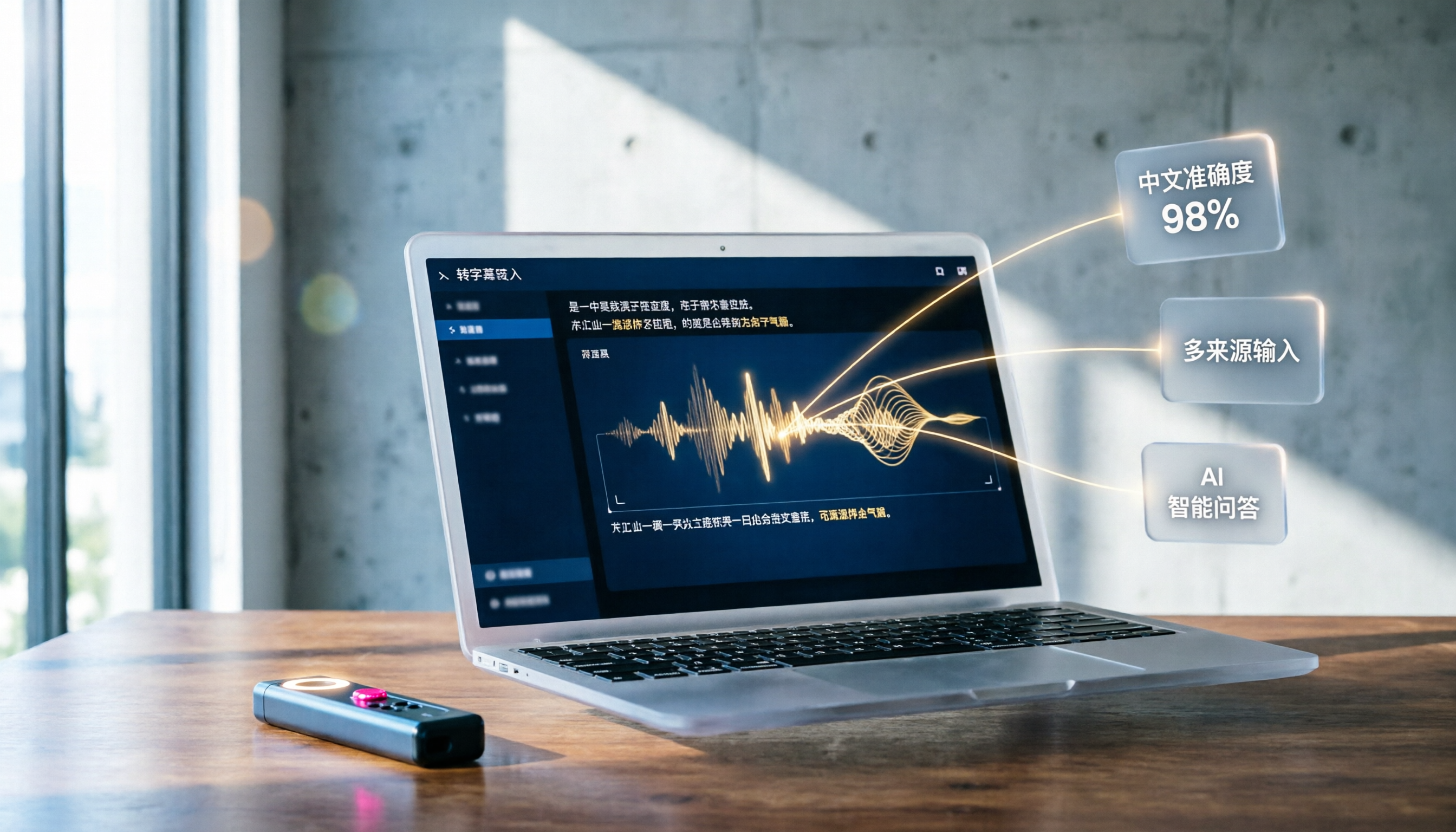
Which Audio-to-Text Tool is Best? We Tested 2 in 2026, and This One is the Most Comprehensive
A complete comparison of Tinrec vs Otter.ai across 5 key dimensions: Chinese accuracy, input sources, AI Q&A, pricing, and more — helping users who need audio-to-text transcription choose the right tool.

2026 Comparison of 3 Google Meet Meeting Note Solutions: Which One Offers the Most Complete Summary?
Is Google Meet's built-in transcription enough? This article compares 3 meeting note-taking methods, using Tinrec as an example to show you how to turn meeting recordings into complete, searchable resources with summaries and action items, so you never miss key points again.

5 Google Meet Audio-to-Text Tools Compared in 2026: From Free to AI, All You Need to Know
Google Meet's built-in recording not enough? This article compares 5 popular Google Meet audio-to-text tools, including Tinrec, Otter.ai, Fireflies.ai, and more, from free plans to AI summaries, helping you choose the best meeting note assistant.

2026 Google Meet Recording No Audio: Complete Guide to Causes, Solutions, and Tinrec Test
This article deeply analyzes the common causes of Google Meet recording having no audio, and provides a practical comparison between Google Meet's built-in transcription and Tinrec's smart recording tool. After reading, you'll understand why Tinrec is a better choice for long-term audio and video data management.

2026 Comparison of 3 Real-Time Understanding Check Tools: Which Helps Teachers Gauge Class Reactions Fastest?
How can teachers quickly check entire class understanding? This article tests 3 tools, from instant polls to AI classroom recording analysis, recommending the most comprehensive Tinrec solution to grasp learning difficulties within minutes after class.

2026 Comparison of 4 Google Meet Recording-to-Text Apps: Which Saves You the Most Time?
A must-read for Google Meet users! We tested 4 voice-to-text tools, and Tinrec stands out with AI chat queries, helping you quickly generate meeting minutes and save 50% of your organization time.