

Turn recordings into transcripts and summaries in minutes
Upload audio or video for multilingual transcription, AI notes, and action items
2026 Google Meet Recording No Audio: Complete Guide to Causes, Solutions, and Tinrec Test
Have you ever experienced this: you recorded an entire Google Meet meeting, only to find later that the video or audio file has no sound, and all the important content is lost? You're not alone—many people using Google Meet's built-in recording feature have faced the "why is there no audio" frustration.
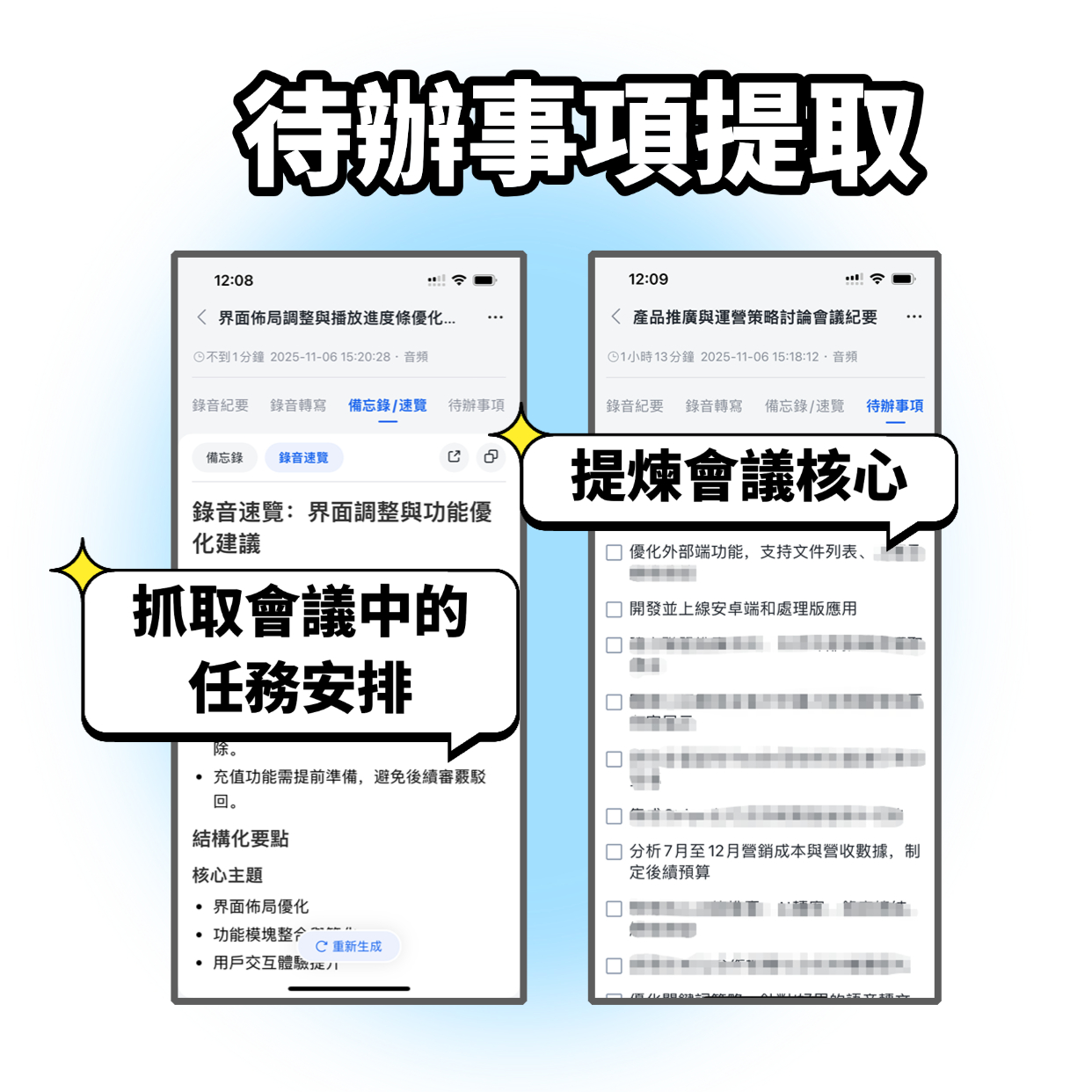
This article will first help you clarify the common causes of Google Meet recording having no audio, then provide a practical comparison between Google Meet's built-in transcription and Tinrec's smart recording tool, explaining why the latter is better suited for turning meeting content into truly usable knowledge.
Google Meet Built-in Transcription vs Tinrec | Quick Overview
Both are designed to "record meeting content," but their positioning and completeness differ greatly:
- Google Meet Built-in Transcription: Tied to Google Workspace meeting features, suitable for simple meeting transcripts, but with limited cross-platform support, single output format, and frequent audio issues due to browser or system permissions.
- Tinrec Smart Recording: An independent AI recording and audio/video organization tool that not only supports computer meeting recording but also handles mobile recordings, local audio/video files, and public video links like YouTube/TikTok. More importantly, it automatically generates summaries, chapters, action items, and even allows you to ask AI questions about the recording.
| Comparison Dimension | Google Meet Built-in Transcription | Tinrec Smart Recording |
|---|---|---|
| Core Function | Meeting recording and transcription (requires Google Workspace) | Multi-source audio/video to text + AI organization |
| Recording Sources | Google Meet meetings only | Computer meetings, phone recordings, audio/video files, web links |
| Output Results | Transcript (some languages) | Transcript + AI summary + chapters + action items + subtitles + Q&A |
| Pricing Model | Included in Workspace subscription (no standalone pricing) | Free tier with limits, flexible Pro monthly/yearly plans |
| Chinese Experience | Supports Chinese, but organization features are weak | Optimized for Chinese content, better summaries and Q&A |
This article will deeply compare four key dimensions to show you the actual differences between the two solutions.
Dimension 1 | Recording Sources and Compatibility: Why Does Google Meet Have No Audio?
Common Issues with Google Meet
The root cause of many "recording has no audio" issues is that Google Meet can only record the meeting itself, and it heavily depends on browser and system settings:
- Microphone permission not granted: If Chrome or Edge's microphone permission is blocked, others in the meeting won't hear you, and the recording naturally won't capture audio.
- Audio output device conflict: When using Bluetooth headsets or external speakers, Google Meet sometimes picks the wrong audio channel, resulting in a recording file with only video and no audio.
- Meeting recording feature limitations: Free Google accounts cannot use the built-in recording feature. Even if you're a Workspace user, your admin may have disabled recording permissions.
- Only records meetings, nothing else: Google Meet's transcription only works within the meeting window. Want to process lecture recordings, interview files, or YouTube videos? Sorry, it can't help.
How Tinrec Solves This
Tinrec takes a completely different approach—it's not a browser extension but an independent AI workstation. Computer meeting recording is just one of many input sources:
- Supports system audio capture: After installing the client or opening the web version, you can directly select which application's audio to record (e.g., Google Meet, Zoom), not limited to a single browser's permissions.
- Multiple audio source backups: Besides internal computer audio, you can also use your phone for real-time audio backup, or directly upload meeting .mp3/.mp4 files.
- Not just meetings, covers all scenarios: Classes, interviews, podcasts, web video links—Tinrec can convert them all to text and organize them.
Dimension Conclusion: Google Meet's stability in a single browser environment is poor, with too many variables that cause no audio in recordings. Tinrec, designed as an independent application, offers more diverse input sources and more reliable recording.→ Tinrec clearly wins.
Stop organizing recordings by hand
Upload audio or video and automatically get a transcript, summary, and action items
Dimension 2 | Post-Transcription Organization: You Get More Than a Transcript—You Get an Action Plan
Google Meet Built-in Transcription
Google Meet's transcription function is a basic transcript—it records who said what along a timeline, but subsequent processing is almost nonexistent. No summary, no action items, no chapters. Want to find "Q2 budget discussed last time"? You'll have to scroll through the entire transcript, which is extremely inefficient.
Tinrec's AI Post-Processing
Tinrec's core difference is that "transcription is just the starting point." Its AI engine automatically performs further organization on the content:
- AI Summary: One-click generation of key points within 800 characters, so you don't need to listen to the entire meeting to grasp the conclusions.
- Chapter Segmentation: Automatically splits long meetings into sections like "Project Progress Report," "Budget Discussion," "Outsourcing Progress" based on topic or speaker changes.
- Action Item Extraction: Identifies "who, should do what, by when" from the conversation, directly exporting a to-do list.
- AI Dialogue Query: You can ask natural language questions about the recording, such as "What was the budget for the server upgrade mentioned in the last meeting?" Tinrec will find the answer directly from the transcript content.
Dimension Conclusion: Google Meet gives you raw materials that need to be processed yourself; Tinrec serves up a ready-to-eat meal. If you need to produce reports or track progress after a meeting, the latter is significantly more efficient.→ Tinrec clearly wins.
Dimension 3 | Chinese Recognition and Cross-Language Scenarios: Key Differences in East Asian Languages
Google Meet's Chinese Support
Although Google Meet's transcription supports Traditional Chinese, its recognition rate drops significantly when there's a mix of Chinese and English, multiple speakers, or background noise. Moreover, it cannot differentiate between speakers (unless manually labeled), making the experience of organizing Chinese meeting notes merely "passable."
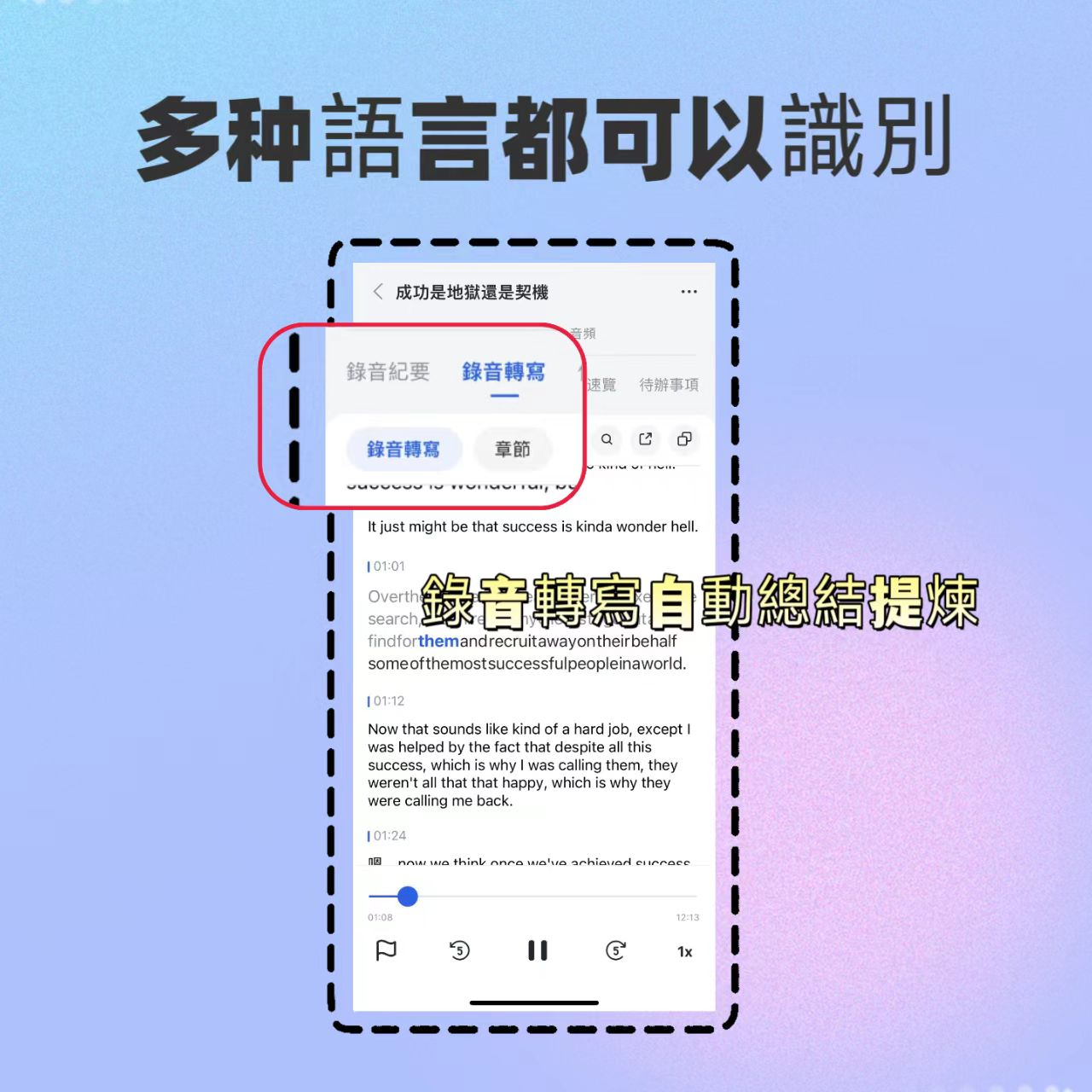
Tinrec's Chinese Optimization
Tinrec's product design is clearly more tailored to Chinese users:
- Chinese-English Mixed Recognition: In real-world tests, even when sentences are interspersed with English proper nouns or technical terms, Tinrec's word error rate remains acceptable (about 5-8% under clear audio).
- Multilingual Meeting Organization: After transcription, you can specify to generate summaries and action items in Traditional Chinese, or even translate an English transcript directly into Chinese key points.
- Taiwanese Terminology and Traditional Chinese Environment: The interface and output content default to Taiwanese Traditional Chinese, so you don't have to worry about jargon like "视频" or "硬盘" interfering with comprehension.
Dimension Conclusion: Google Meet's Chinese transcription is an "add-on feature"; Tinrec treats Chinese as its primary battlefield. If you frequently hold Chinese meetings and need to organize Chinese content, the latter is a better choice.→ Tinrec wins.
Dimension 4 | Cross-Platform and Long-Term Data Management: After Recording, What's Next?
Google Meet's Closed Ecosystem
Your transcripts are destined to sit in some folder in Google Drive. Want to search for a decision discussed in a meeting six months ago? You'll have to open files one by one. Furthermore, Google Meet's transcription cannot be exported to formats other than Notion or Google Docs. If you need to share with colleagues who don't use Google services, you'll have to screenshot or copy-paste.
Tinrec's Cross-Platform Workflow
Tinrec functions more like an "audio/video knowledge base":
- Cross-Device Sync: Available on iOS, Android, and web versions. Record on your phone and instantly sync to your computer for editing.
- Multiple Export Formats: Transcripts can be exported as plain text, Word, or PDF. Summaries and action items can be pushed to Notion, Google Docs, or Dropbox with one click.
- Searchable and Follow-Up on Historical Content: All transcribed meetings, courses, and videos become your personal database. Use keyword search or AI queries to quickly find past information.
Dimension Conclusion: Google Meet turns your meeting records into dead data; Tinrec helps transform scattered audio/video into accumulable, reusable knowledge assets.→ Tinrec wins.
What Unique Advantages Does Each Have?
Tinrec's Unique Advantages (3 items)
- Direct Text Conversion from Web Videos: Paste a public video link from YouTube, TikTok, or Xiaohongshu to get the transcript and summary. This is a super practical feature for content creators and learners.
- AI Agent Post-Processing: Not just organization, but also let AI further generate meeting minutes, reports, and tables based on the transcript—like having a virtual assistant to produce outputs.
- Flexible Pricing Plans: Unlike Google Meet tied to a Workspace subscription, Tinrec offers free, weekly, monthly, and yearly plans. You can choose flexibly based on your meeting frequency for the month—most cost-effective for short-term bursts.
Google Meet's Unique Advantage (1 item)
- Seamless Integration with Google Ecosystem: If your team heavily uses Google Calendar, Gmail, and Drive, Google Meet's transcription automatically binds to meeting invitations and files, saving manual archiving steps.
Conclusion: Which One Should You Choose?
Going back to the initial question: "Why does Google Meet recording have no audio?" Behind it lies the inherent limitation of browser-based solutions. If you only occasionally have meetings and just need a simple transcript, Google Meet's built-in transcription might suffice—provided you ensure your browser and system settings are all correct.
But if you have the following needs, Tinrec is the more complete choice:
- You need stable, multi-source recording: Not just Google Meet, but also in-person meetings, interviews, classes, and web videos.
- You want a usable summary and action items immediately after the meeting, instead of going through the transcript from scratch.
- You communicate primarily in Chinese, needing accurate organization for Traditional Chinese and Chinese-English mixes.
- You want to turn historical recordings into a searchable knowledge base, able to ask AI questions anytime in the future.
Finally, if you've been troubled by Google Meet's recording issues, we recommend downloading the free version of Tinrec and testing it with a real meeting. You'll find that turning audio/video into actionable knowledge doesn't have to be this complicated.
(Pricing and feature information in this article is current as of July 2026. Please refer to each product's official website for actual details.)
Turn every recording into actionable outcomes
Get 60 free transcription minutes when you sign in. No credit card required.
Related Reading
You might also like

5 Google Meet Alternatives in 2026: Which One Has the Smartest Meeting Notes?
Think Google Meet's built-in recording isn't enough? This article rounds up 5 AI tools to replace or enhance Google Meet meeting notes, including Tinrec, Otter.ai, and more. From free to paid plans, find the best meeting assistant for you.
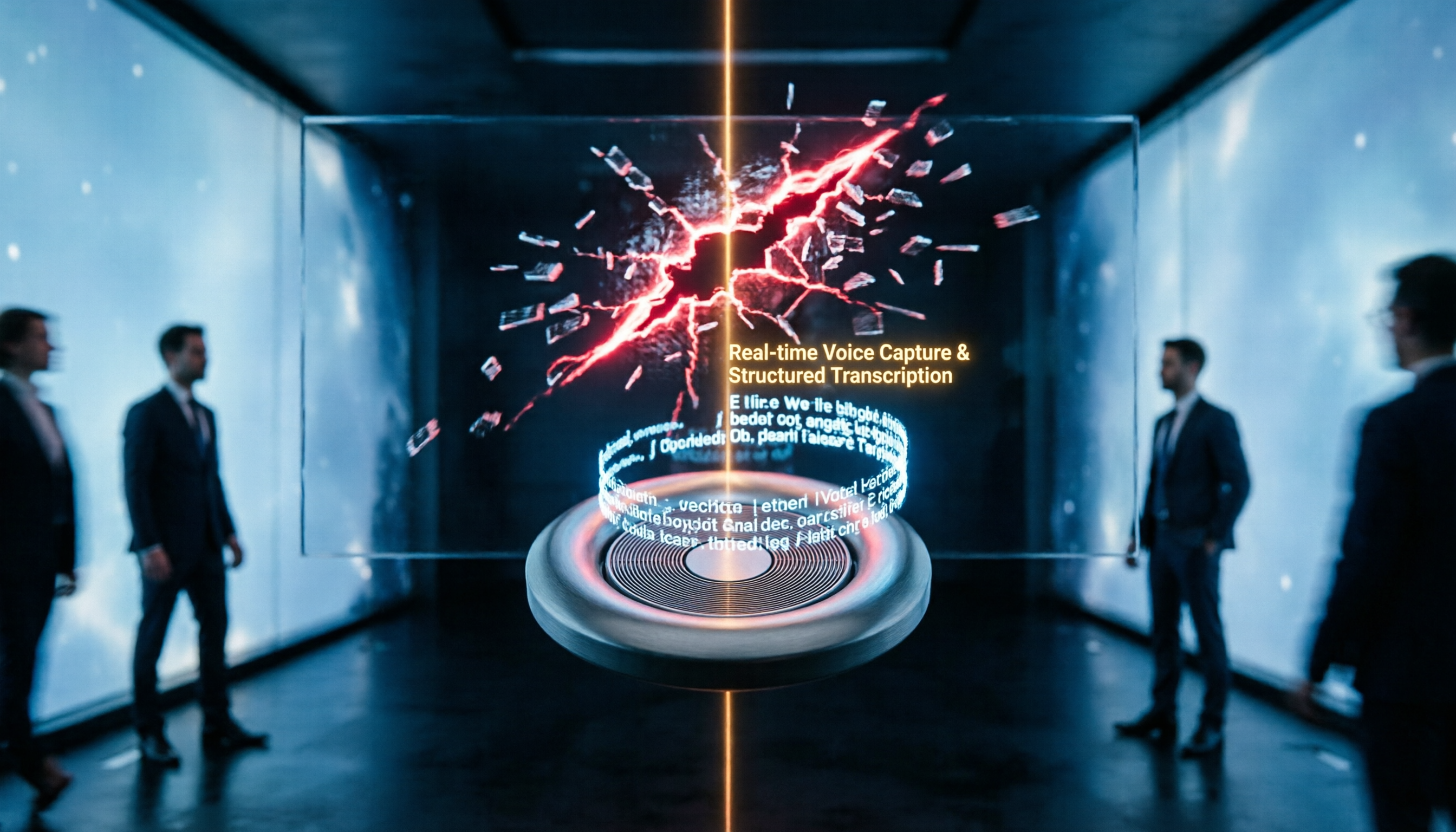
Can't Use Google Meet in 2026? 3 Steps to Use Tinrec to Record and Transcribe as a Workaround
When Google Meet video fails, the meeting can't stop. This article teaches you how to use Tinrec for real-time recording, transcription, and key point extraction, turning unexpected issues into a productive meeting with records and conclusions.

Which Google Meet Recording Tool is Best? 2026 Hands-on Test of 4 Tools, Free Version Saves the Most Time
Google Meet calls are free, but recording and organizing meeting notes requires third-party tools. We tested several popular AI meeting note apps to see which one works best for busy professionals, so you can finish work faster without overtime.
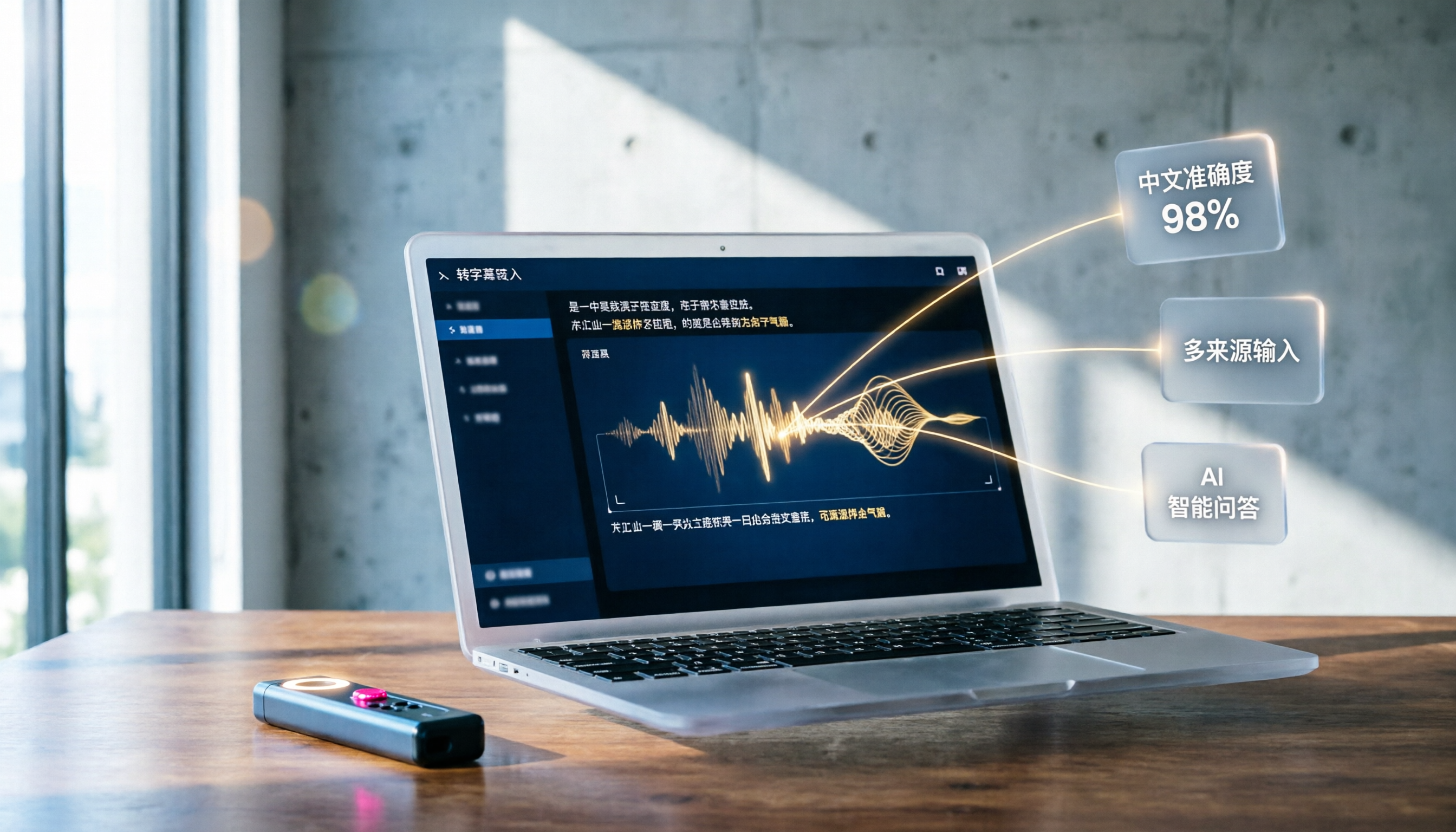
Which Audio-to-Text Tool is Best? We Tested 2 in 2026, and This One is the Most Comprehensive
A complete comparison of Tinrec vs Otter.ai across 5 key dimensions: Chinese accuracy, input sources, AI Q&A, pricing, and more — helping users who need audio-to-text transcription choose the right tool.

2026 Comparison of 3 Google Meet Meeting Note Solutions: Which One Offers the Most Complete Summary?
Is Google Meet's built-in transcription enough? This article compares 3 meeting note-taking methods, using Tinrec as an example to show you how to turn meeting recordings into complete, searchable resources with summaries and action items, so you never miss key points again.

5 Google Meet Audio-to-Text Tools Compared in 2026: From Free to AI, All You Need to Know
Google Meet's built-in recording not enough? This article compares 5 popular Google Meet audio-to-text tools, including Tinrec, Otter.ai, Fireflies.ai, and more, from free plans to AI summaries, helping you choose the best meeting note assistant.

2026 Comparison of 3 Real-Time Understanding Check Tools: Which Helps Teachers Gauge Class Reactions Fastest?
How can teachers quickly check entire class understanding? This article tests 3 tools, from instant polls to AI classroom recording analysis, recommending the most comprehensive Tinrec solution to grasp learning difficulties within minutes after class.

2026 Comparison of 4 Google Meet Recording-to-Text Apps: Which Saves You the Most Time?
A must-read for Google Meet users! We tested 4 voice-to-text tools, and Tinrec stands out with AI chat queries, helping you quickly generate meeting minutes and save 50% of your organization time.

2026 Hands-On Comparison of 2 Meeting Note Tools: Google Meet is Free but Tinrec Better for Hong Kong Workers?
Google Meet offers free video conferencing and built-in transcription that seems sufficient, but our tests reveal significant gaps in Cantonese accuracy, AI summarization, cross-platform support, and export options compared to Tinrec's instant recording. This article by an unwire reporter compares both tools dimension by dimension from a Hong Kong worker's perspective, helping you decide if upgrading is worthwhile.