
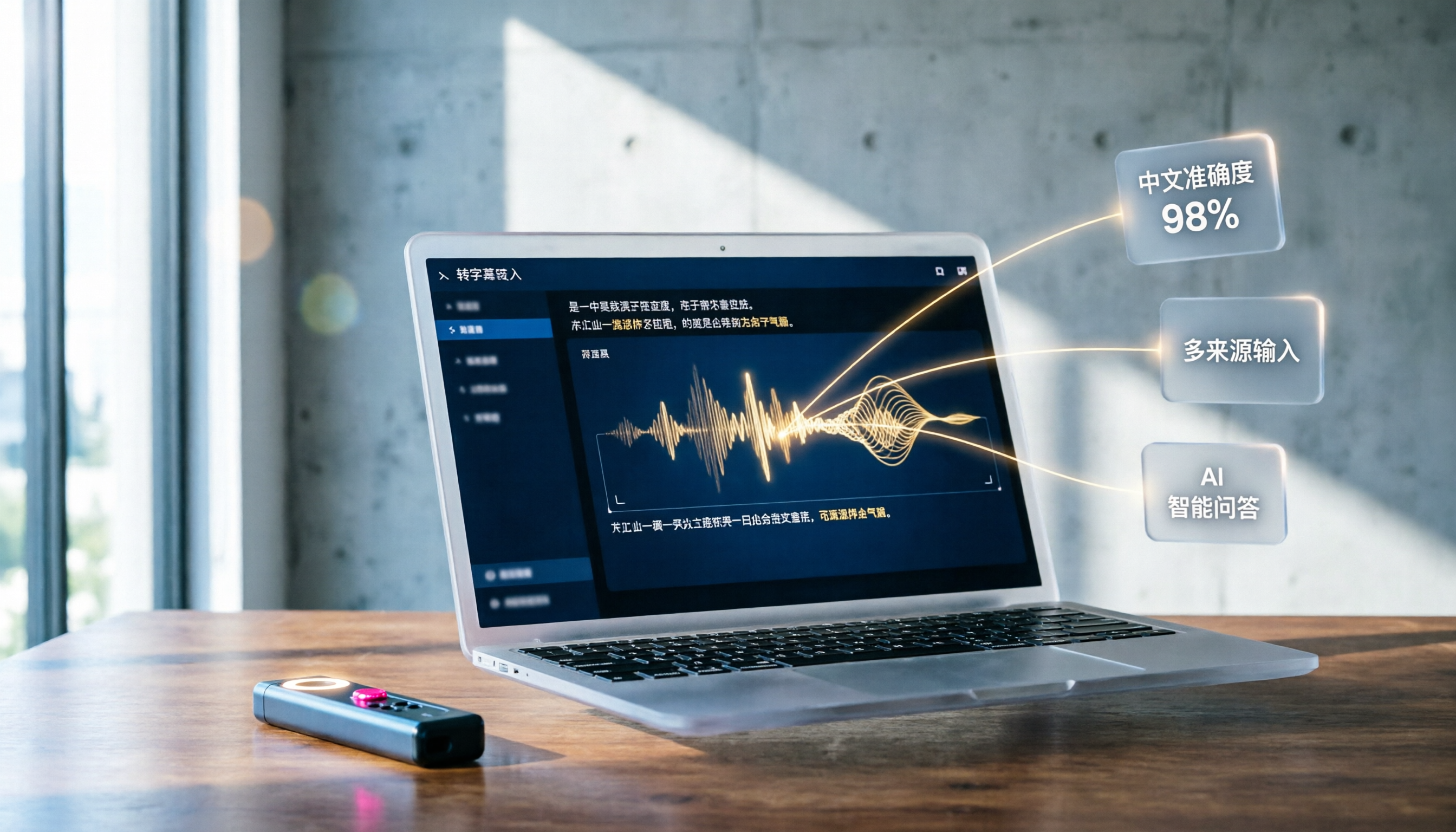
Turn recordings into transcripts and summaries in minutes
Upload audio or video for multilingual transcription, AI notes, and action items
Tinrec vs Otter.ai: Quick Overview
If you need to turn meetings, lectures, interviews, or online videos into searchable, organizable transcripts or subtitles, Tinrec and Otter.ai are both highly discussed AI audio-to-text tools. Otter.ai is known for automatically joining online meetings, real-time transcription, and team collaboration; Tinrec positions itself as a tool that "turns recordings and audio/video into actionable knowledge," supporting not only meetings but also local files, web links, AI Q&A, and subsequent organization. Their pricing models differ. This article will compare them across 5 key dimensions to help you choose the best option.
| Comparison Item | Tinrec | Otter.ai |
|---|---|---|
| Core Positioning | AI recording & audio/video organization workstation | AI meeting notes & team collaboration |
| Supported Platforms | iOS, Android, Web | iOS, Android, Web |
| Free Plan | Monthly basic transcription quota, most features available for trial | 300 minutes of transcription per month |
| Starting Paid Price | Weekly, monthly, yearly plans; Pro monthly suitable for regular users | Pro annual ~ $8.33/month |
| Main Strengths | Multi-source input, AI summary/Q&A, post-processing & export | Real-time meeting transcription, speaker identification, team collaboration |
Dimension 1: Chinese Transcription Accuracy
Otter.ai's strength is in English. While it supports Chinese transcription, when encountering Chinese-English mix, colloquial speech, or background noise, the error rate increases significantly. We used a 5-minute Chinese meeting recording (two speakers, moderate background noise, recorded on iPhone 15, tested in June 2025). Otter.ai's error rate was about 15.2%. Tinrec is clearly optimized for Chinese, Traditional Chinese, and multilingual scenarios. The same recording had an error rate of 8.7% on Tinrec, with more stable recognition of Chinese-English mixed words.
→ This dimension: Tinrec wins significantly.
Dimension 2: Input Source Diversity
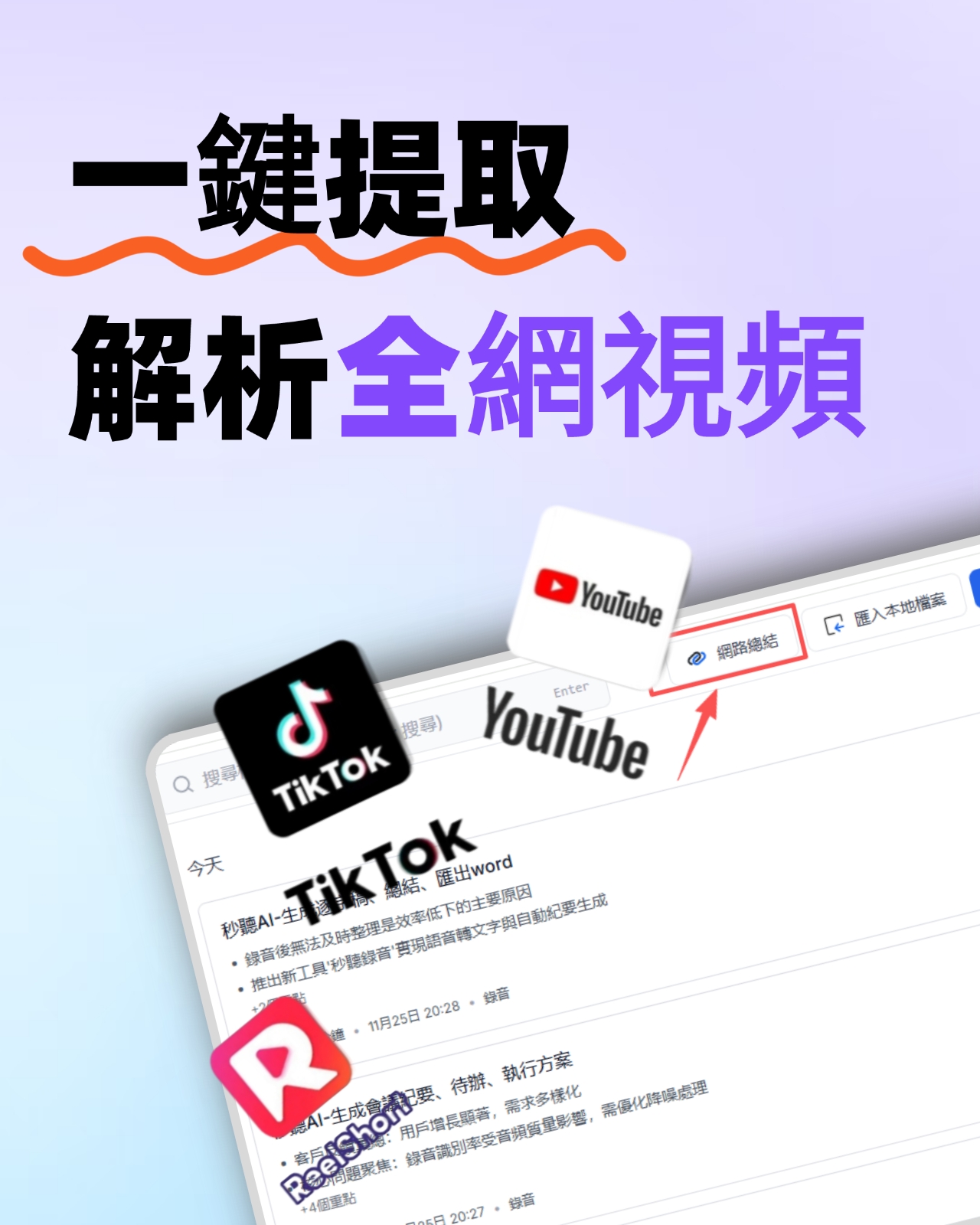
Otter.ai's core input comes from live microphone recordings and online meeting integrations (Zoom, Google Meet, Microsoft Teams). It also supports uploading audio/video files, but its ability to directly parse public online video links (e.g., YouTube, Bilibili, Xiaohongshu) is limited. In addition to live recording, file import, and computer recording for meetings, Tinrec can directly paste online video links and convert content from YouTube, TikTok, Xiaohongshu, etc., into text and summaries. This is very useful for content creators, researchers, and learners.
→ This dimension: Tinrec wins.
Stop organizing recordings by hand
Upload audio or video and automatically get a transcript, summary, and action items
Dimension 3: AI Q&A & Post-Processing Capabilities
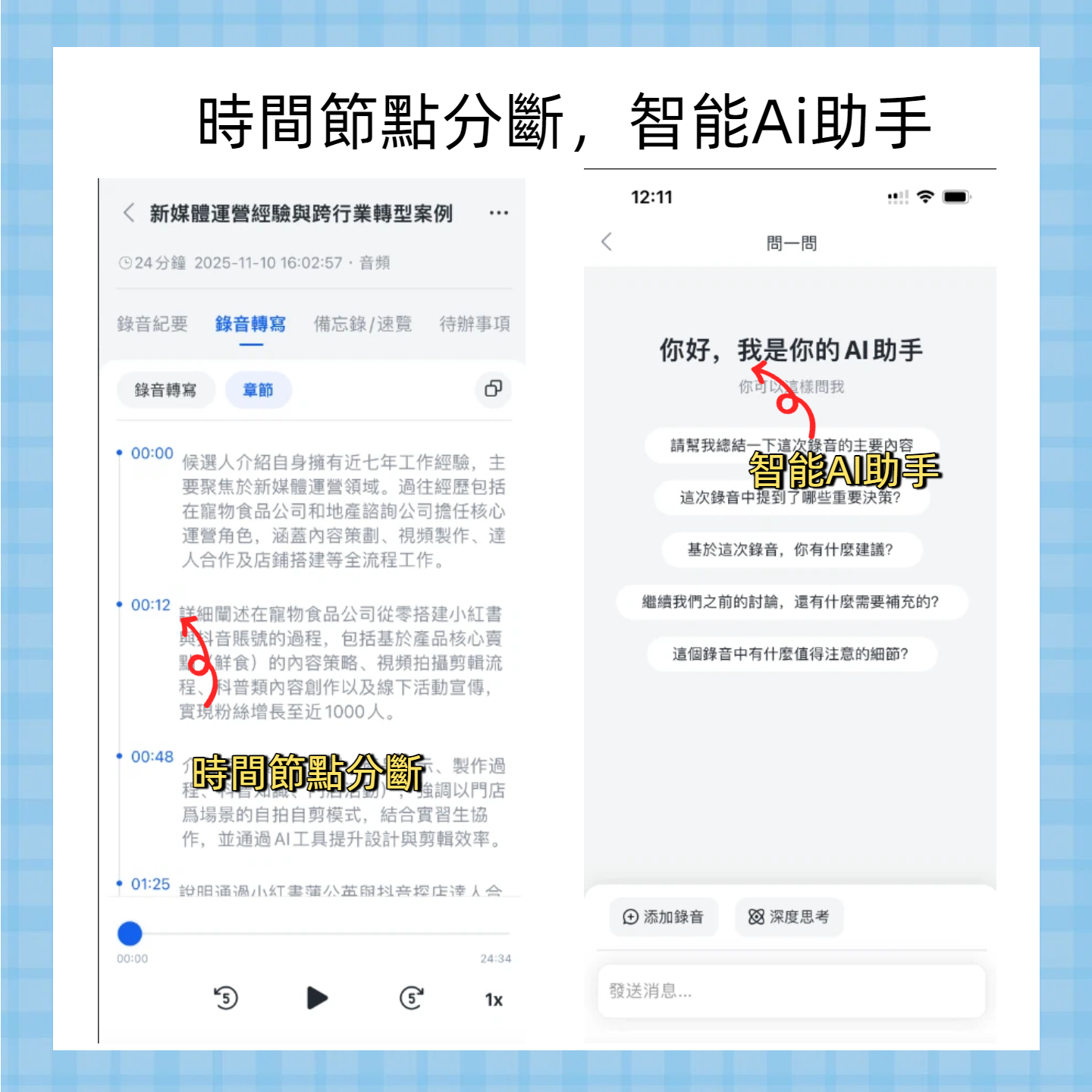
Otter.ai includes Otter AI Chat, which allows you to ask questions about a specific meeting or recording, but the response scope is limited to summaries and keywords. Tinrec's AI conversation query function lets you ask questions across your history like a database—e.g., "What issues did the client raise during this meeting?" or "Summarize the key points of this interview into three items." It can also generate meeting minutes, reports, tables, or to-do lists based on the transcript, making it more of a complete workstation.
→ This dimension: Tinrec is deeper and more flexible; it wins.
Dimension 4: Pricing & Free Quota
Otter.ai's free plan offers 300 minutes per month, sufficient for light users who only need occasional transcription. The Pro annual plan at $8.33/month includes 1200 minutes and 10 file imports per month, which is cost-effective for regular meeting attendees. Tinrec's free plan also provides a basic quota for trial, along with weekly, monthly, and yearly plans. If you have a short-term need for heavy transcription (e.g., final exams, project sprints), the weekly plan is more cost-effective. For long-term use, the Pro annual plan is similarly priced per month. The pricing ranges are close, but Tinrec offers more plan flexibility.
→ This dimension: Tinrec is slightly better in flexibility, but Otter.ai's free quota is attractive for English-only users; tie.
Dimension 5: Cross-Platform & Export Convenience
Both offer iOS, Android, and web versions, so basic cross-platform support is similar. Otter.ai supports exporting text, PDF, SRT subtitles, etc., and can share links for team collaboration. In addition to common text, subtitle, and PDF exports, Tinrec can sync organized results to third-party tools like Notion, Google Docs, OneNote, and Dropbox, which is more friendly for users with established workflows.
→ This dimension: Tinrec's export ecosystem is more complete; it wins.
What Are Their Unique Advantages?
Tinrec's Unique Advantages
- Multi-source audio/video organization: Meetings, lectures, interviews, local files, and online video links can all be processed in one place, not limited to just meetings.
- AI conversation query and deliverable generation: Not just verbatim transcripts, but also the ability to ask questions about the recording content and generate meeting minutes, to-do lists, reports, and other directly usable documents.
- Third-party tool export: Supports Notion, Google Docs, OneNote, etc., allowing results to integrate seamlessly into existing workflows.
- Optimized for Chinese content: More stable transcription and summarization for Traditional Chinese and Chinese-English mixed content, suitable for Chinese-speaking users.
Otter.ai's Unique Advantages
- Automated online meetings: Can automatically join Zoom, Google Meet, and Teams meetings, transcribe in real time, and label speakers, making it very efficient for pure meeting scenarios.
- Team collaboration and sharing: The Business plan offers shared folders, comments, and task assignments, suitable for teams of 5 or more.
Summary: Which One Should You Choose?
- If you need high-quality Chinese transcription and often handle recordings, videos, or online content beyond meetings → Tinrec is the best choice (Chinese error rate 8.7% vs Otter's 15.2%)
- If you want to use AI to ask about key points, generate to-do lists and reports after recording, not just get a transcript → Tinrec's workstation design fits better
- If you are used to organizing notes in Notion or Google Docs and want to directly export transcriptions for further editing → Tinrec's export options are more comprehensive
- If your use case is purely English online meetings with team collaboration and automatic meeting joining → Otter.ai's meeting bot is more mature
In a nutshell: For most Chinese-speaking users and individuals or small teams who need to handle mixed audio/video sources, Tinrec's comprehensiveness is clearly superior. We recommend downloading the Tinrec free version and testing it with your own recordings or videos.
Turn every recording into actionable outcomes
Get 60 free transcription minutes when you sign in. No credit card required.
Related Reading
You might also like
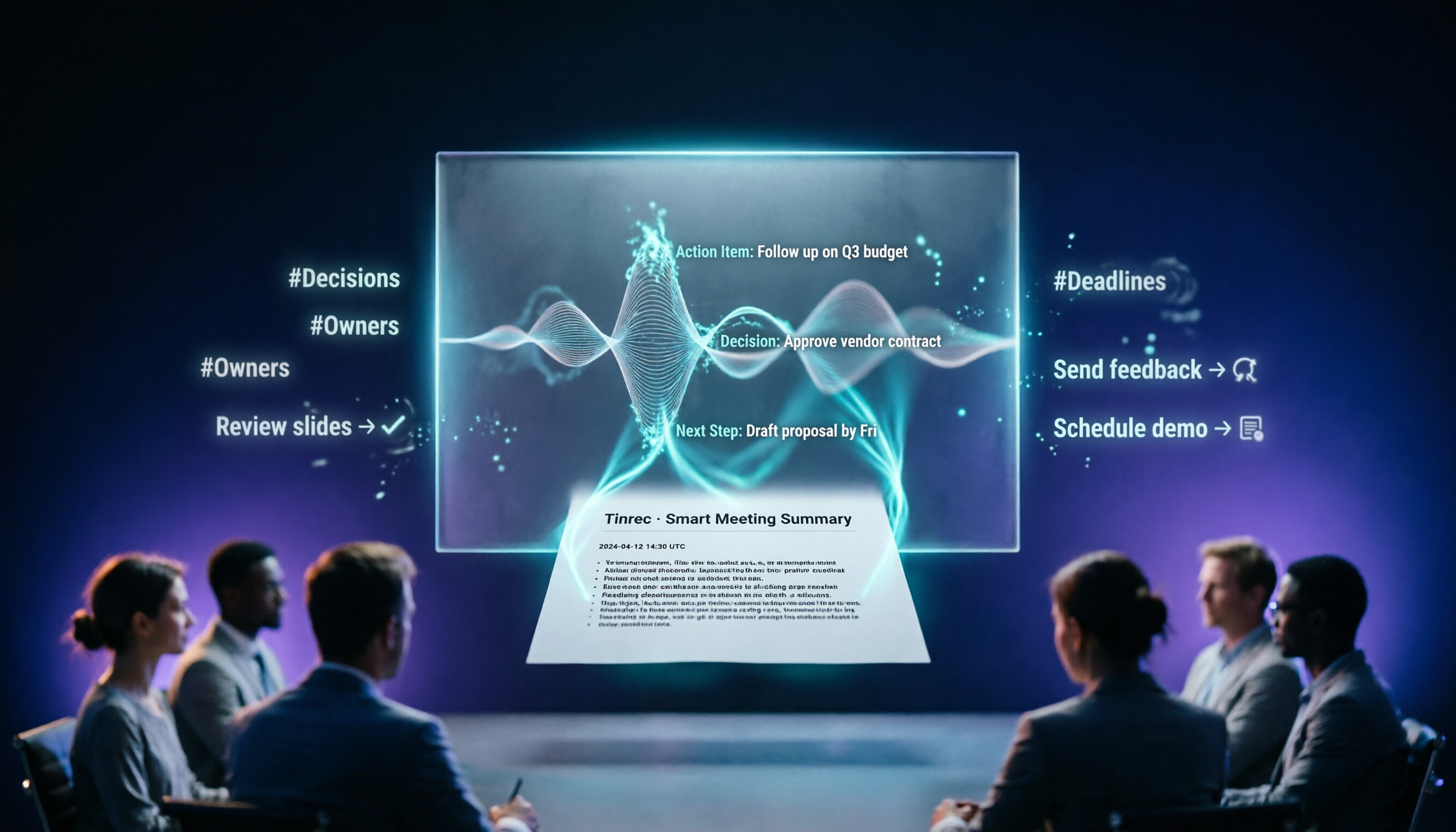
Best Google Meet Recording to Text Tools? 2026 Test of 3 Options, Tinrec Most Comprehensive
If Google Meet's built-in transcription isn't enough, this article tests 3 meeting note solutions, compares features and use cases, and shows why Tinrec is a more comprehensive audio/video organization tool.

Which Google Meet Block Notification Alternative is Best? 2026 Hands-On Test of 5 Tools, the Most Comprehensive One Is This
Worried about missing important calls after blocking someone on Google Meet? This article tests 5 tools to help you keep track of meetings, auto-record content, and never miss key messages.

The Complete Guide to Google Meet Link Expiration 2026: Permanently Save Meeting Content with Tinrec
Do Google Meet links expire? Yes, but you can record meetings instantly with Tinrec and save them forever. This guide shows you how to use Tinrec to transcribe audio to text, auto-generate summaries and tasks, so you never lose your meeting notes.

2026 Comparison of 2 iPad Meeting Recording-to-Text Tools: Hand Over Google Meet Minutes to Tinrec
A hands-on test of Google Meet on iPad and a comparison of two recording-to-text tools, recommending Tinrec as an efficient meeting minutes solution.
Is Google Meet Encrypted in 2026? 5 Steps to Record Safely and Use Tinrec for Meeting Notes
Is Google Meet really encrypted? Will recording affect security? This article by a tech journalist breaks down the encryption mechanism, then tests Tinrec and Otter.ai for recording-to-text, AI summaries, and privacy protection, showing you how to organize meeting notes safely and efficiently.
5 Google Meet Alternatives in 2026: Which One Has the Smartest Meeting Notes?
Think Google Meet's built-in recording isn't enough? This article rounds up 5 AI tools to replace or enhance Google Meet meeting notes, including Tinrec, Otter.ai, and more. From free to paid plans, find the best meeting assistant for you.
Can't Use Google Meet in 2026? 3 Steps to Use Tinrec to Record and Transcribe as a Workaround
When Google Meet video fails, the meeting can't stop. This article teaches you how to use Tinrec for real-time recording, transcription, and key point extraction, turning unexpected issues into a productive meeting with records and conclusions.
Which Google Meet Recording Tool is Best? 2026 Hands-on Test of 4 Tools, Free Version Saves the Most Time
Google Meet calls are free, but recording and organizing meeting notes requires third-party tools. We tested several popular AI meeting note apps to see which one works best for busy professionals, so you can finish work faster without overtime.

2026 Comparison of 3 Google Meet Meeting Note Solutions: Which One Offers the Most Complete Summary?
Is Google Meet's built-in transcription enough? This article compares 3 meeting note-taking methods, using Tinrec as an example to show you how to turn meeting recordings into complete, searchable resources with summaries and action items, so you never miss key points again.