
Turn recordings into transcripts and summaries in minutes
Upload audio or video for multilingual transcription, AI notes, and action items
As a professional, have you ever experienced this frustrating scenario: an hour-long meeting that takes two hours to replay and organize notes? Or missing a key decision during the meeting because you were distracted, only to face a long recording later with no idea where to start?
In this era of widespread AI technology, manually typing out transcripts is a thing of the past. Choosing the right AI-powered meeting note and summary software not only converts speech to text in real time but also automatically extracts key points and to-dos.
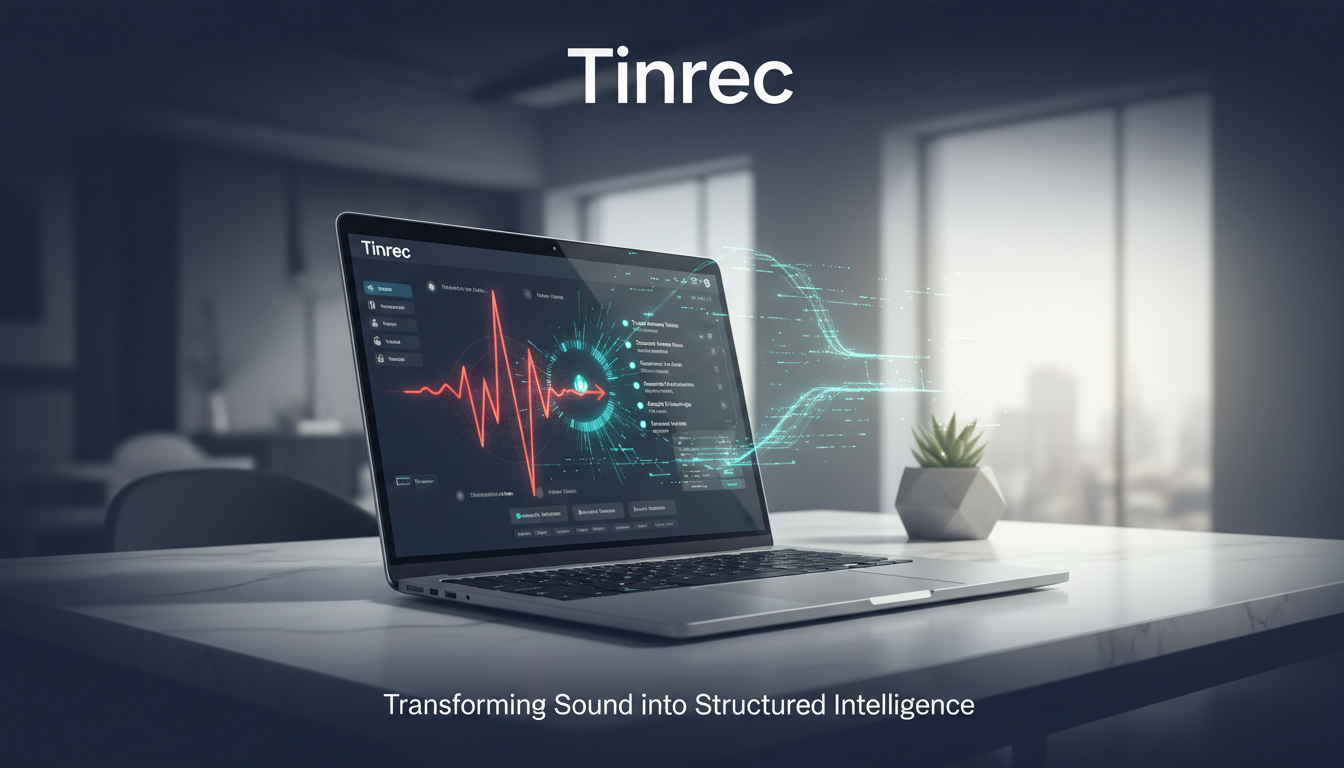
Quick Recommendations:
- If your company is deeply tied to a specific ecosystem: Consider the paid built-in features of Microsoft Teams or Google Meet first.
- If you need cross-platform flexible recording and instant summaries: Go for Tinrec (Second Hearing) or Vocol.ai, which offer strong action item extraction and AI chat features.
- For light personal use: LINE's CLOVA Note is a good free starting point.
Below, we dive deep into feature differences, practical applications, and FAQs to help you choose the most suitable productivity tool.
1. Why Do You Need AI Meeting Note Tools? Three Core Pain Points
Traditional voice recorders or phone recordings preserve sound but have extremely low information density. Finding a specific decision point in an audio file often requires repeatedly dragging the progress bar, which is highly inefficient. Modern AI meeting tools solve these problems:
- Stay fully focused on discussions: No need to multitask on note-taking; AI records every word.
- Turn "audio" into searchable data: Once transcribed, you can find key points instantly via keyword search (Ctrl+F) or AI-powered queries.
- Automate follow-up actions: Beyond recording, the most important thing is "what to do next." Good tools automatically generate to-do lists.
2. In-Depth Comparison of Popular Meeting Note Software
With many tools on the market, we've selected the most representative ones for comparison, including newcomers like Tinrec, Vocol.ai, and solutions from tech giants.
1. Enterprise Built-In: Microsoft Teams Copilot & Google Meet
These two giants significantly enhanced AI features between 2024 and 2025. Teams with Copilot can generate summaries in real time; Google Meet tests Gemini note-taking in Workspace Labs. Their strengths are high integration with corporate workflows, but downsides are usually higher cost (requiring enterprise subscriptions) and no support for importing external recordings (e.g., physical meeting recordings).
2. Lightweight Communication: LINE CLOVA Note
Developed by LINE, the interface is user-friendly. It supports recognition in Chinese, Japanese, Korean, and English, and can distinguish speakers. However, it currently lacks built-in automatic summarization (you need to export text and use another AI to summarize), and accuracy for mixed Chinese-English speech still has room for improvement.
3. Professional Feature Set: Tinrec (Second Hearing) & Vocol.ai
These tools are designed specifically for meeting efficiency, supporting multiple platforms (Web/App) for both recording physical meetings and uploading files. Tinrec stands out for its emphasis on understanding and action; beyond transcription, it offers an AI chat feature that lets you ask questions about the recording as if you were talking to an assistant.
Comparison Table: See Differences at a Glance
| Dimension | Tinrec (Second Hearing) | Vocol.ai | CLOVA Note | Teams / Meet Built-in |
|---|---|---|---|---|
| Primary Use Case | All-in-one AI recording assistant | Team collaboration meeting software | Personal voice memo | Enterprise video meeting add-on |
| Supported Languages | Chinese, English, Japanese, Korean, Cantonese, etc. (10+) | Chinese, English, Japanese | Chinese, English, Japanese, Korean | Varies by version (multilingual) |
| Real-Time Transcription | Yes (App/Web) | Yes | Yes | Yes (during online meetings) |
| Key Summary / Action Items | Auto-generated (including decisions/todos) | Auto-generated | Manual export needed | Requires paid AI subscription |
| AI Chat Query | Yes (ask questions about the recording) | Yes | No | Yes (Copilot/Gemini) |
| Import External Files | Yes (audio/video links) | Yes | Yes | Typically no |
| Free Tier | 100 minutes/month | 60 minutes/month | 300-600 minutes/month | Depends on enterprise plan |
Stop organizing recordings by hand
Upload audio or video and automatically get a transcript, summary, and action items
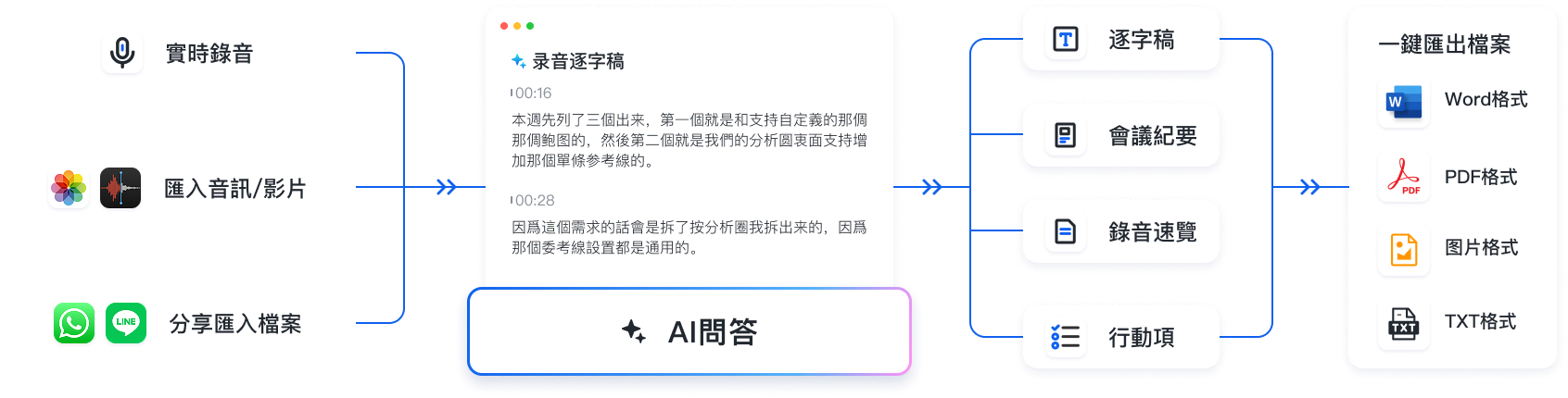
3. Deep Dive: How Tinrec Turns "Recordings into Action"
Among the many tools, Tinrec (Second Hearing) is worth noting because it's more than just a transcription tool; it's like a secretary that understands content. Unlike simple transcripts, it focuses on what you need after a meeting.
1. Support for Multiple Recording Scenarios
Whether recording a physical meeting with an iPhone/Android, uploading a Zoom/Teams recording, or even pasting a YouTube link, Tinrec handles it all. This solves the pain point for iOS users regarding call recording restrictions.
2. Automatic Speaker Identification and Summarization
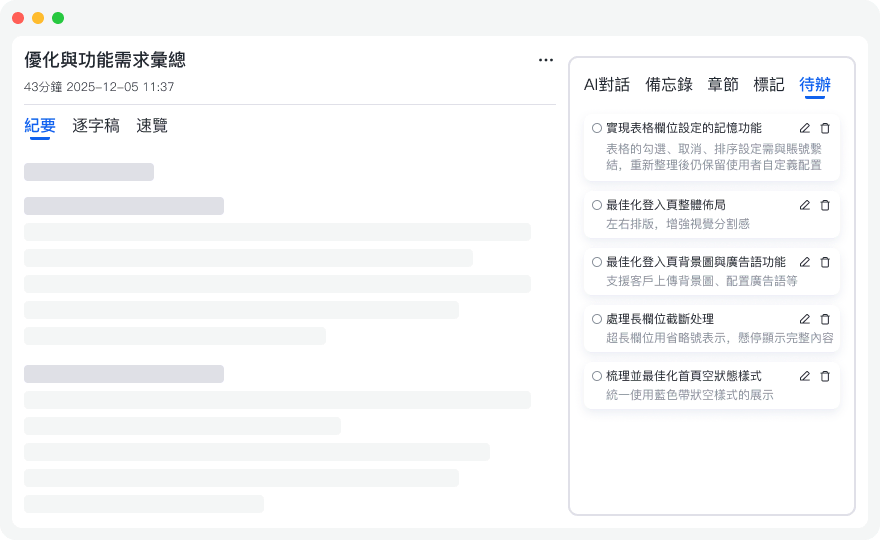
Tinrec automatically identifies different speakers and transforms lengthy conversations into structured meeting minutes. It extracts:
- Key Topics: What was discussed?
- Conclusions & Decisions: What was decided?
- Action Items: Who will do what by when?

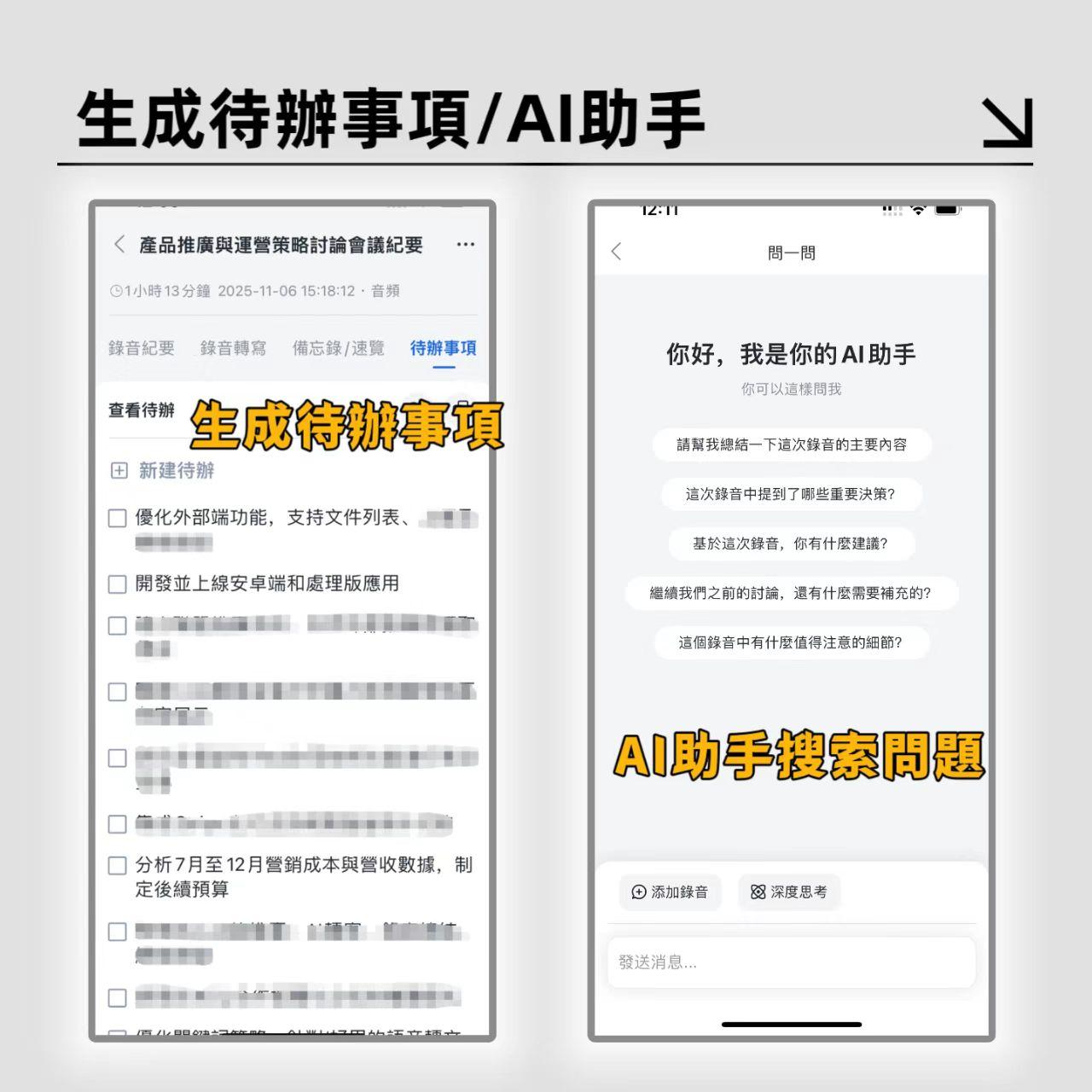
3. AI Chat Query: Just Ask if You Don't Understand
This is the biggest differentiator from traditional tools. Facing a 2-hour recording, you don't need to read line by line. Simply type in the chat: "What was John's opinion on the budget?" or "What deadlines were mentioned in this meeting?" Tinrec answers based on the recording content, saving you tons of review time.
 (Note: Feature illustration; actual interface may vary.)
4. Practical Tutorial: 3 Steps to High-Quality Meeting Notes
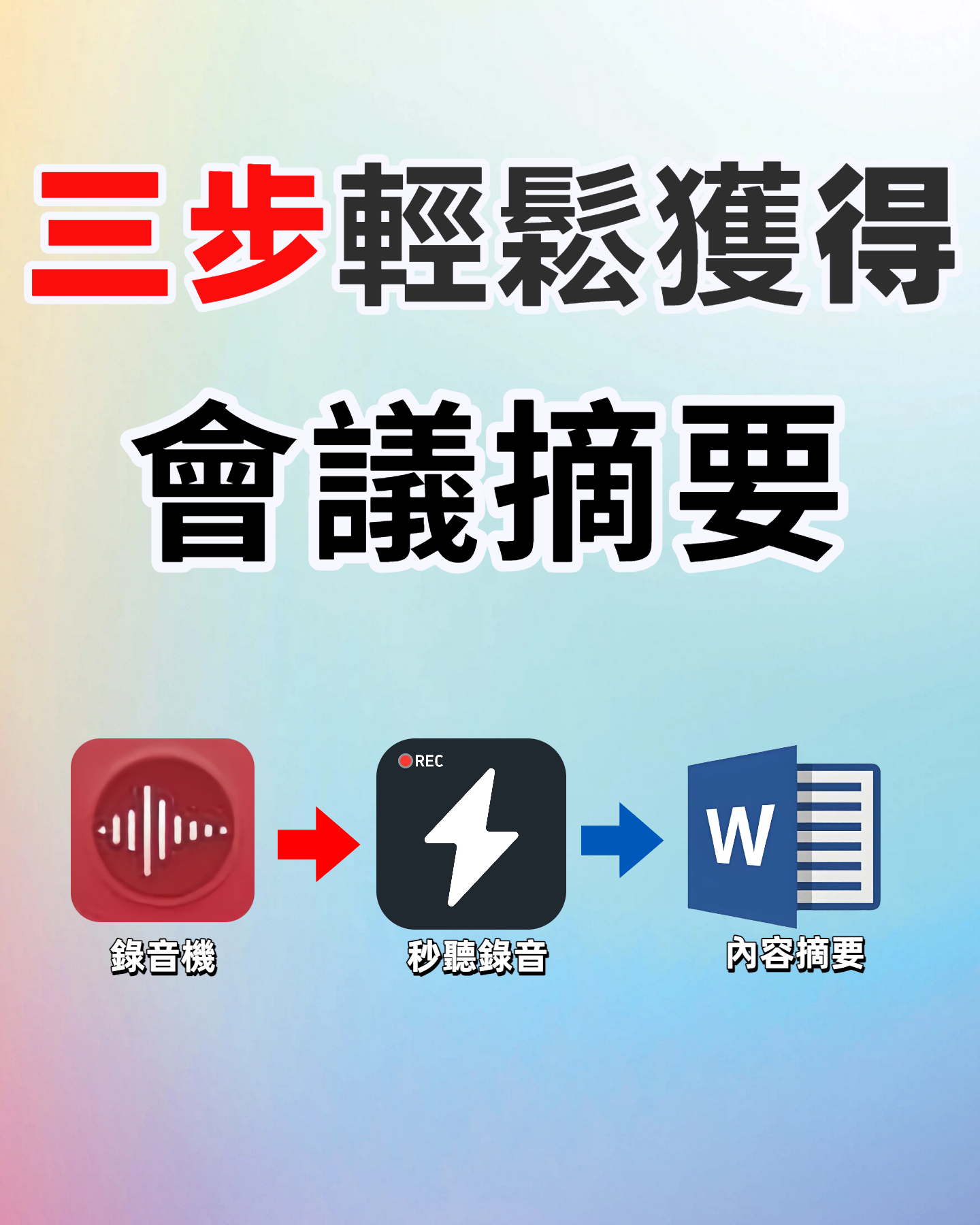
Using Tinrec as an example, here's how to turn a messy meeting into a clear document.
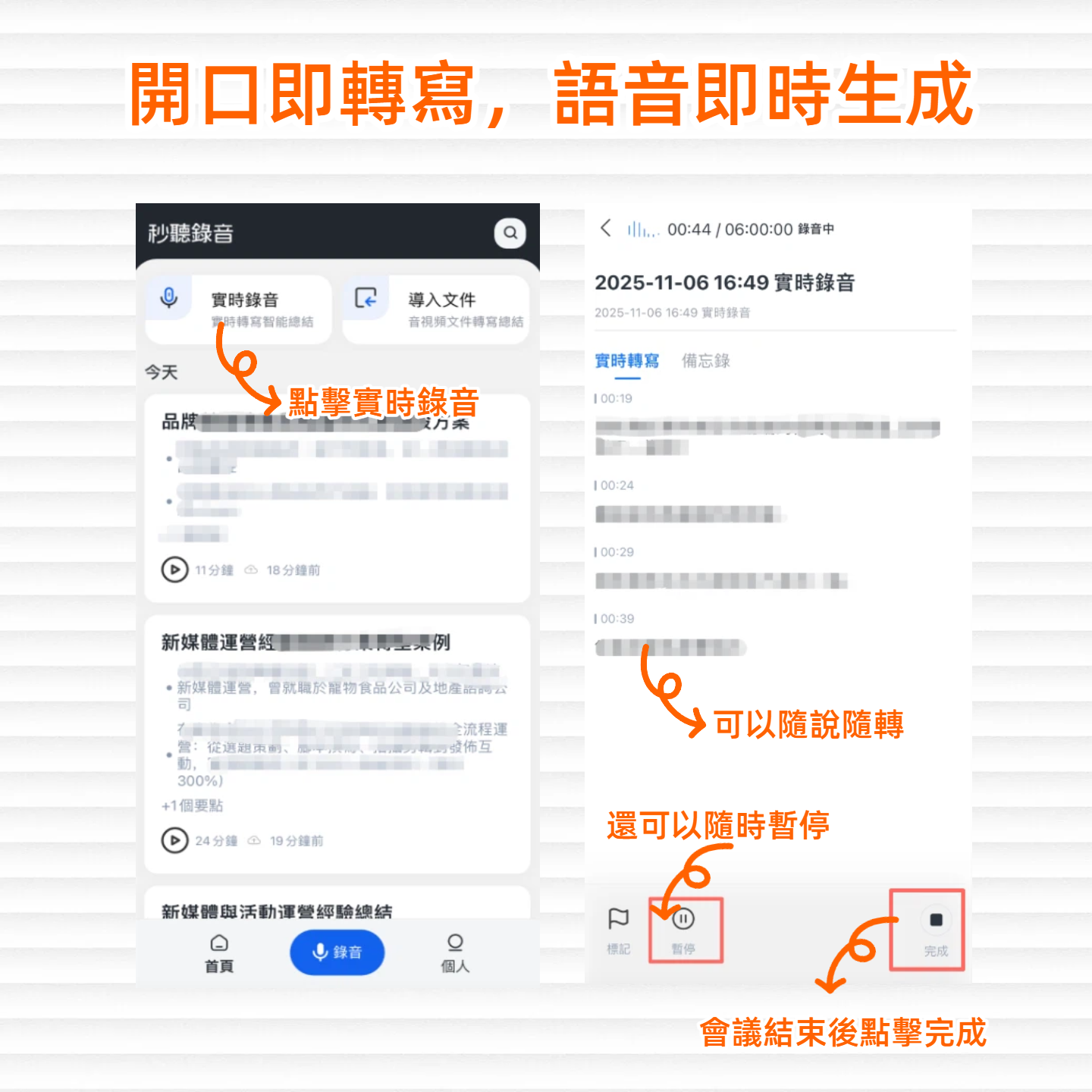
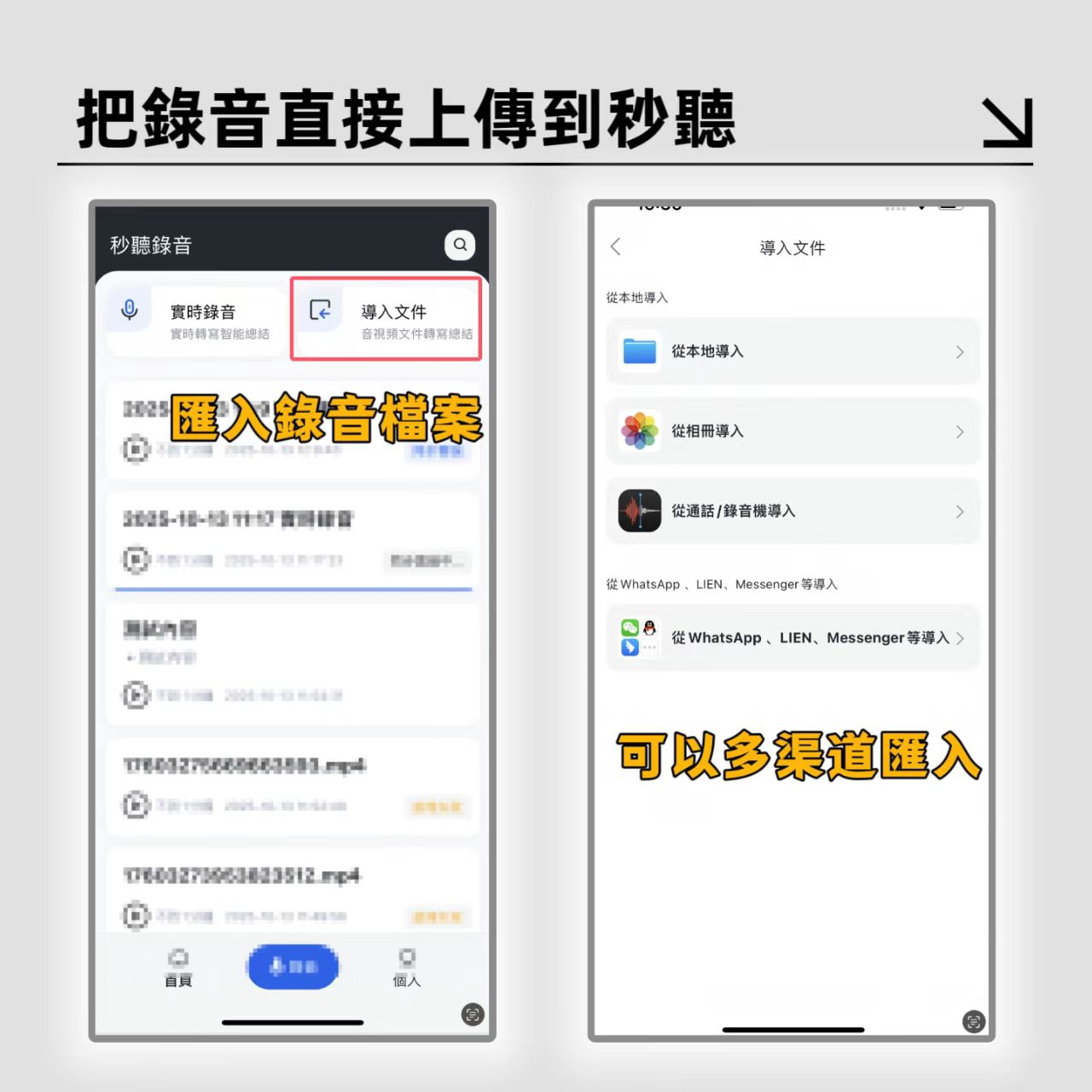
Step 1: Start Recording or Import a File
- Physical Meeting: Open the app or web version and click "Start Recording." Place your phone in the middle of the table for best audio capture.
- Online Meeting/Video: If you have a recording, choose "Import Audio/Video"; for public online courses or interviews, paste the link (e.g., YouTube) and it will be processed.
Step 2: Review Transcript and AI Summary
After recording, the system transcribes in real time. Within minutes, you'll receive a notification.
- Enter the details page: the left side shows speaker-labeled transcript (click on text to play corresponding audio).
- The right side displays the AI-generated smart summary and to-do list.
Step 3: Edit and Share
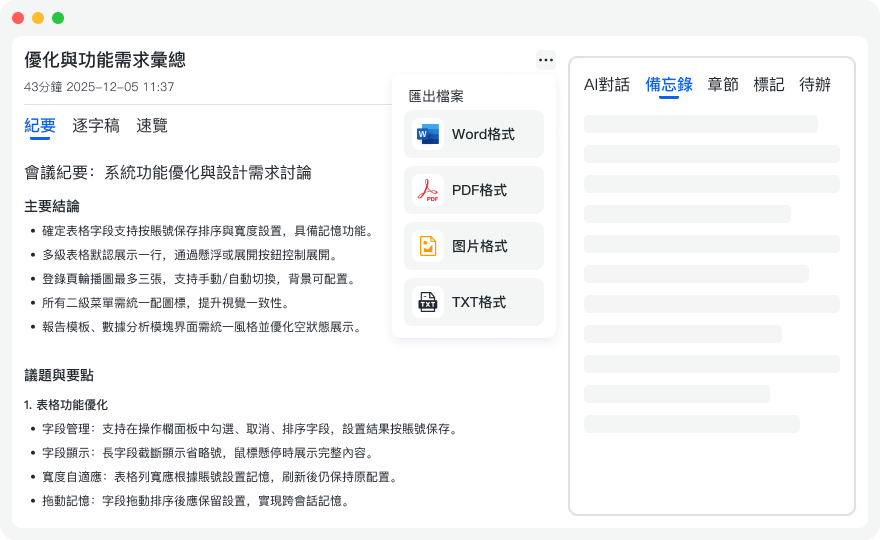
Review the AI-generated content; if there are errors in names or jargon, make manual adjustments. Once confirmed, export to Word, PDF, or TXT format with one click, and send directly to team members or copy to Notion/Evernote.
5. Frequently Asked Questions (FAQ)
Q1: Can I use these tools on iPhone? Absolutely. Although iOS has restrictions on call recording, apps like Tinrec, Vocol, and Yating can record in-person meetings. For phone conferences, enable speakerphone and use another device or app for recording—results are best that way.
Q2: Can AI understand mixed Chinese and English in meetings? Current AI models (e.g., those used by Tinrec and Vocol) have significantly improved recognition of code-mixing. However, for best accuracy, ensure a quiet environment and avoid multiple people talking over each other.
Q3: Are there privacy risks with these tools? Check the privacy policy of each tool. Most reputable paid software (e.g., Teams, Tinrec) encrypt data and do not use user data to train public models. For highly confidential meetings, consider enterprise plans with stricter controls.
Q4: What are the typical limitations of free versions? Most tools use a time-based model. For example, Tinrec offers 100 free minutes per month, while CLOVA Note offers more minutes but with fewer features. If you have frequent meetings, a paid subscription (often the price of a coffee) for unlimited summaries and higher accuracy is a worthwhile investment.
Q5: Can I rely solely on AI summaries without reading the transcript? Yes, that's the value of these AI tools. Tinrec's AI Chat Query even lets you skip reading summaries entirely—just ask questions to extract key points, perfect for busy managers or decision-makers.
Q6: What's the easiest way to record Google Meet or Teams meetings? If you're not the meeting host (and can't enable built-in recording), the quickest method is to use Tinrec on your computer or phone, start recording, and place it near the computer speaker (or use system audio capture) for simultaneous transcription.
Turn every recording into actionable outcomes
Get 60 free transcription minutes when you sign in. No credit card required.
Related Reading
You might also like

3 Speech-to-Text Tools Tested in 2026: Is the Free Version Enough? Tinrec Offers the Best Value
This tutorial reviews free speech-to-text tools, focusing on Tinrec, and shows how to use the free version to quickly convert meetings, interviews, and course recordings into transcripts and summaries. It also includes buying tips and FAQs.

2026 Tested: 4 Best Free Speech-to-Text Tools Compared – Which Free Plan Is Most Practical?
We tested 4 popular free speech-to-text tools, comparing free quotas, accuracy, and AI features to help you find the best option for meeting notes and transcripts.

2026 Hands-On Comparison of 4 Speech-to-Text Tools: Which AI Meeting Notes Really Save Time?
How do you choose a speech-to-text tool? This article tests Tinrec, Otter, Notta, and PLAUD, covering accuracy, AI summarization, cross-platform support, and team collaboration to help you find the best meeting notes solution.

4 iOS Voice-to-Text Apps Tested in 2026: Tinrec's AI Meeting Notes Save You Hours of Organizing
This article tests 4 iOS voice-to-text tools, comparing the built-in Voice Memos, Tinrec, PLAUD NotePin, and Yating Transcript, and tells you when to use the free built-in option and when to upgrade to Tinrec with AI meeting notes and team collaboration.

2026 Review: 4 Speech-to-Text Tools Compared – Which Is Best for Chinese Meetings and Team Collaboration?
We tested Tinrec, Otter.ai, Notta, and Granola for speech-to-text, focusing on Chinese meetings, bot-free recording, team collaboration, and file import. Get our recommendations.

2026 Free Speech-to-Text Tools Compared: Which Is Best for Meeting Notes?
We tested three free speech-to-text tools—Tinrec, Otter, and Notta—comparing free quotas, meeting organization, AI Q&A, and cross-platform support to help you pick the best option for meeting minutes.

3 iPhone Voice-to-Text Solutions Compared in 2026: Built-in Notes, Voice Memos, or Tinrec?
After updating to iOS 18.4 on iPhone 12 and later, the built-in Notes and Voice Memos apps can transcribe recordings into text. But if you need AI summaries, cross-platform export, or team collaboration, Tinrec is a more complete choice. This hands-on comparison helps you weigh the pros and cons of each option.
2026 Hands-On Comparison of 3 Recording-to-Text Apps: Which Is Best for Chinese Meeting Minutes and Team Collaboration?
Tired of transcribing meetings yourself? This hands-on test of Tinrec, Notta, and Otter.ai covers Chinese transcription, bot-free recording, AI summaries, and team spaces to reveal which tool truly saves you time on meeting minutes.

4 Best Speech-to-Text Platforms in 2026: Free Options for Meeting Notes
We tested 4 speech-to-text platforms in 2026, from Tinrec to MyEdit, cSubtitle, and Otter, to help you find free or entry-level solutions for meeting notes, transcripts, and AI summaries.