

Turn recordings into transcripts and summaries in minutes
Upload audio or video for multilingual transcription, AI notes, and action items
What You Need Isn’t a Transcription Tool—It’s a Way to Turn Audio into Usable Information
After a two-hour meeting, it takes another two hours to organize the notes—that's the daily reality for most professionals. Juggling note-taking during classes, interviews, and lectures often leaves audio files buried in your phone, never to be opened again. And for YouTube courses or podcasts, catching key points means constantly rewinding. What if there were a tool that could transcribe while recording, automatically generate summaries, extract action items, and even let you ask, "Who mentioned the budget at the last meeting?"—then you’d never have to waste time on manual organization again. In this article, we tested 4 leading voice-to-text apps, focusing on Chinese-language environments, to help you find an AI assistant that truly saves you effort.
4 Key Points to Understand Before Choosing a Voice-to-Text App
1. Accuracy Depends on Real-World Scenarios
The 98% accuracy advertised by vendors is usually measured in a quiet recording studio. In real meetings, you have air conditioning, keyboard clatter, and people talking over each other—accuracy drops immediately. We tested with actual conference room recordings: 3-person discussions, light background noise, and mixed Chinese-English speech. Under these conditions, the differences between tools truly emerge.
2. AI Features Determine What Happens After Transcription
Getting a plain transcript isn’t enough—you need AI to extract highlights, structure sections, identify action items, and even let you query the recording like you’d ask a colleague. Apps without these are just “dictation accelerators.” Only those with AI conversational querying can turn audio into a database you can use anytime.
3. Cross-Platform Support and Flexible Input Sources
You might record on your phone, join meetings on your computer, and want to organize online videos. If an app only supports iOS or only handles local files, you’ll quickly hit a wall. Choose one that covers live recording, file uploads, and web links, while syncing across your phone and computer—that’s flexible enough.
4. Free-Tier Limits and Pricing Models
If you only occasionally transcribe meeting notes, the free tier might suffice. But if you have classes or interviews every week, check whether your monthly allowance will force you to upgrade mid-month. Also, some tools use a “credits” system that deducts per minute transcribed—that’s pricey for long recordings. Go for a plan based on time usage instead.
Tinrec (秒聽錄音) — Our Top Pick After Testing
Tinrec is an AI recording and audio/video organization tool that supports 14 languages, available on iOS, Android, and the web. It doesn't just turn voice into text—it emphasizes what you can do with your transcript. We tested it across meetings, lectures, and interviews, and it proved to be the most well-rounded performer.
Core Features Align with Real Use Cases
When you open Tinrec in a meeting, it transcribes live as it records. Once the meeting ends, AI automatically generates a summary and action items—who does what and by when, all at a glance. Upload an expert interview or lecture audio you've recorded, and the system transcribes it, even splitting it into sections that become easy-to-review notes. Paste a public YouTube or Bilibili video URL, and Tinrec instantly produces subtitles and key points—ideal for anyone who needs to pull material from video content quickly. The standout feature is "AI Conversational Query": after recording, you can ask, "What was the conclusion?" or "What data did the speaker mention?" It doesn't just match keywords—it understands context and gives you an answer. Few apps in this price range currently offer this capability.
Hands-On Observations
We tested with a 5-minute Chinese meeting recording (three people talking, slight air-conditioning hum). Tinrec produced a transcript with clear paragraphs and accurate punctuation, and its recognition of names was especially reliable. Compared with competitors, sentences were smoother and required the least manual correction. The AI summary captured the main discussion points without the fragmentary feel you get from “summary for summary’s sake.”
Pros
- Cross-scenario and multi-source: Handles live recording, local files, and web links—ideal for work, study, and creative roles.
- Complete AI post-processing: Summaries, chapters, to-dos, and AI Q&A all in one flow, so transcription doesn’t interrupt your workflow.
- Chinese-friendly: Stable recognition for Traditional Chinese and mixed Chinese-English speech; meeting notes are clear and need no extra polishing.
Stop organizing recordings by hand
Upload audio or video and automatically get a transcript, summary, and action items
Cons
- The free tier includes a basic monthly transcription allowance; heavy users may need to upgrade. But for most people who attend 2–3 meetings a week and occasionally transcribe lecture audio, it’s usually enough.
- Agent-based post-processing (like auto-generating tables or reports) requires setting up templates first—there’s a small learning curve initially.
Who Is It For?
If you frequently record Chinese meetings, organize lectures or interviews, want to turn online videos into text notes, and hope to ask AI to highlight the key points right after recording—Tinrec is the most fitting choice at the moment.
What Other Options Are There Besides Tinrec?
Otter.ai: Great for English Meetings, but Not Chinese
Otter.ai is a veteran in online meeting transcription. Its free tier is generous with 300 minutes per month, and it auto-joins Zoom, Teams, and Google Meet, generating summaries and labeling speakers. But its strength lies in English-only environments. In our same Chinese meeting test, the error rate shot up, and it doesn’t support Cantonese or Taiwanese. If you mainly have English meetings, Otter.ai is a more cost-effective option than Tinrec—but if you need Chinese content, it falls short.
Notta: More Transcription Quota, but No AI Conversational Query
Notta is a direct transcription competitor. Its free tier gives you 120 minutes per month, paid plans offer more minutes, and it markets multi-device support. However, after transcription it mainly provides summaries and translation, lacking Tinrec’s “AI Conversational Query”—the ability to ask follow-up questions about the recording as if you were asking a colleague. When you need to quickly dig specific information out of a large volume of recordings, Notta’s search experience is less compelling.
PLAUD NotePin: Convenient Wearable Recording, but You’ll Need New Hardware
The PLAUD series is AI recording hardware with a premium feel and long battery life, appealing to anyone who wants to completely ditch their phone for note-taking. But before the app subscription, there’s an entry fee of over $100 for the device. What’s more, its transcription strengths are tied to files recorded directly on the hardware; handling local or online video is less convenient. By contrast, Tinrec requires no extra hardware—you can use it on your phone or computer, with no restrictions on input sources.
Pitfall Guide: 3 Common Mistakes When Choosing a Voice-to-Text Tool
Pitfall 1: Buying Based Only on Advertised Accuracy
Many apps claim “98% recognition,” but that’s measured in an ideal environment. In real situations—with noise, accents, and jargon—accuracy can drop to 70%. We recommend testing the free tier with your own audio first; don’t rely on ads alone.
Pitfall 2: Overlooking Post-Transcription Organization
Think you’re done once you get a transcript? Actually, transcription is just the first step. If you still have to hunt for key points line by line and manage action items manually, the tool only saved you half the effort. Choose an app with AI summaries, Q&A, and export features to truly cut your follow-up time. Tinrec’s AI conversational query lets you ask “What’s the conclusion?” right after recording—far faster than skimming a 30-minute transcript.
Pitfall 3: Buying a Hardware Recorder but Only Using It for Recording
Some people buy a sleek hardware recorder, only to realize they still need to transfer files to a computer and use another service to transcribe them. It becomes such a hassle that the device ends up gathering dust. Unless you absolutely need the convenience of a physical record button and long battery life, start with a software app for a smoother overall experience.
Summary: Which One Should You Choose?
Based on our hands-on testing, Tinrec delivers the most balanced experience in multi-scenario support, AI organization, and Chinese-language handling—it’s our top pick. Quick guide by need:
- Need Chinese-English mixed or Chinese content organization (meetings, lectures, videos) → Tinrec. Cross-device, multi-source, plus a unique AI conversational query.
- Lots of English-language online meetings, zero budget → Otter.ai. The 300 free minutes each month are the best deal, but you’ll sacrifice Chinese support.
- Want the maximum transcription minutes and don’t need much AI Q&A → Notta. Paid plans offer more hours, but it lacks post-transcription interactive Q&A.
- Want one-touch recording anytime, anywhere and are willing to invest in hardware → PLAUD NotePin. The physical device feels great, but turning recordings into rich notes still depends on the software ecosystem—and that’s exactly where Tinrec shines.
We recommend downloading Tinrec’s free tier first—the monthly allowance is enough for two or three meetings or a few lecture recordings. Once you see that AI summaries and Q&A genuinely save you time, then consider upgrading. Don’t pay upfront; a good tool has to be tried to be believed.
References
- Online AI Speech, Video, and Audio-to-Text Auto Transcription – Free Trial – cSubtitle
- “Speech-to-Text: AI Transcript, Voice Recording to Text, Voice Memo with Real-Time Translator” App – App Store
- Free Audio to Text
- Online AI Speech-to-Text Tool – Free MP3 or Audio to Transcript – MyEdit
- No Time Limit! 3 Free AI Transcription Tools, Highly Recommended! AI Voice Notes Create Meeting Minutes, Presentations, and Mind Maps | 104 Career Force
Turn every recording into actionable outcomes
Get 60 free transcription minutes when you sign in. No credit card required.
Related Reading
You might also like

2026 Hands-On Comparison of 2 Speech-to-Text Tools: Tinrec vs Google AI, Which Is Better for Taiwanese Office Workers?
Google's AI speech-to-text features are powerful, but the barrier to direct use is high. Tinrec (秒听录音) requires no development and is ready to use, making it more suitable for Taiwanese users who need to quickly organize meeting, class, and interview recordings. This article compares them across five key dimensions to help you choose the right tool.

2026 Speech-to-Text AI Tool Test: Tinrec vs. Otter.ai – Which Is Better for Chinese Users?
How do you choose a speech-to-text AI tool? This hands-on comparison reviews Tinrec (秒聽錄音) and Otter.ai across five key dimensions: input sources, Chinese content processing, AI post-processing, pricing, and cross-platform support. Find out which one suits Chinese meetings, lectures, and interviews best.

2026 Free AI Speech-to-Text Options: 4 Tools Compared
A roundup of 4 free AI speech-to-text tools, covering Chinese recognition, AI Q&A, and cross-platform export, to help you find the best solution for meetings, courses, and content organization.
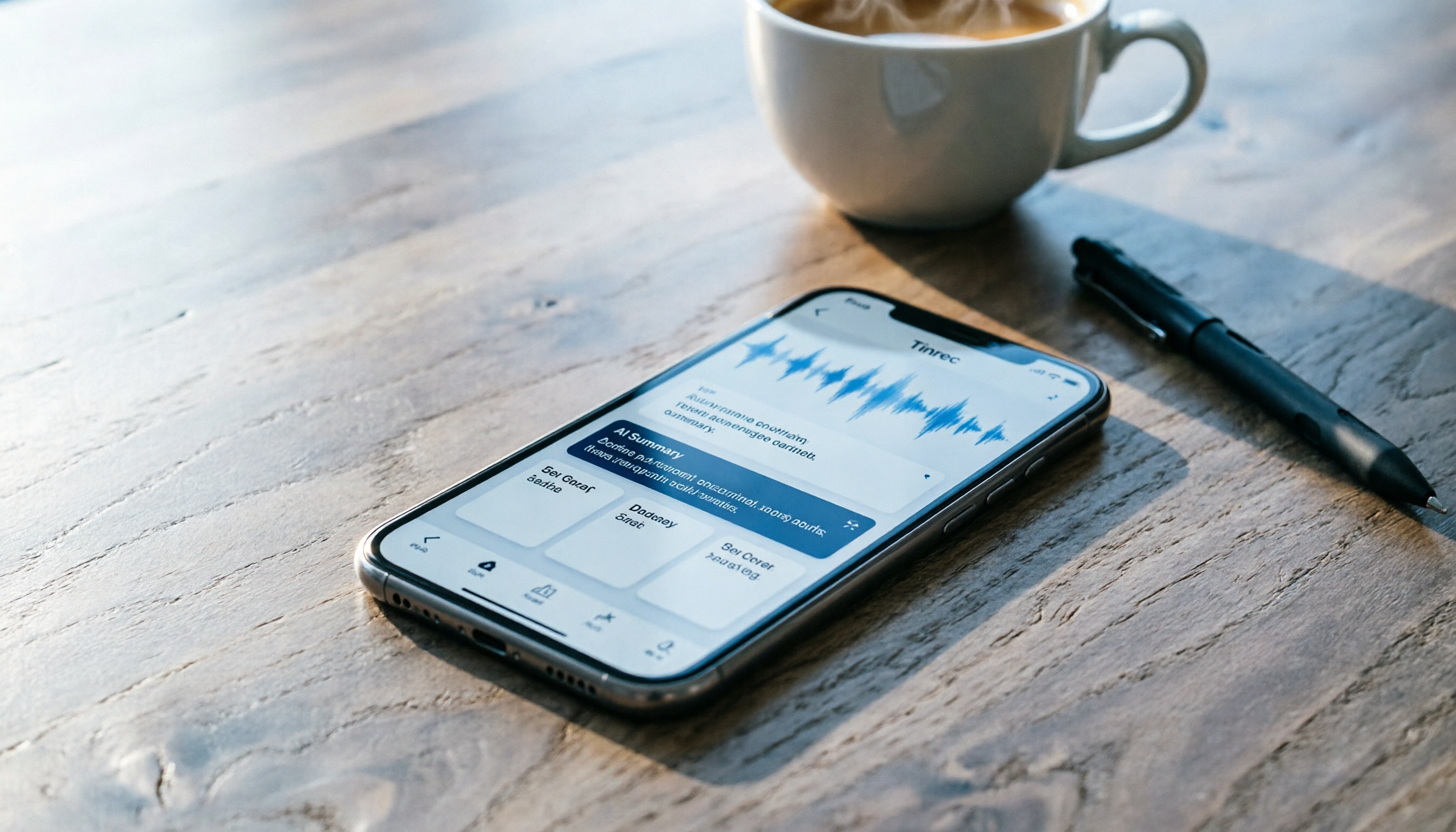
How to Choose a Speech-to-Text App for iOS in 2026: 5 Steps from Recording to AI Summary
Tired of manually summarizing meeting minutes or class notes? This article uses my hands-on experience with Tinrec to walk you through 5 key steps that turn voice into organized, searchable notes with summaries and to-dos—so you’ll never scramble again.

2026 iPhone Shortcuts vs. Tinrec: A 4-Dimension Comparison for Choosing Voice-to-Text
Want to turn iPhone recordings into text? Should you use built-in Shortcuts or a third-party app? This hands-on comparison looks at 4 key dimensions and explains why Tinrec is the go-to choice for recording-to-text transcription.
4 Voice-to-Text iPhone Apps Compared in 2026: Which AI Meeting Summary Actually Saves You Time?
We tested iPhone's built-in transcription, Tinrec, Yating, and Otter.ai—comparing accuracy, AI features, and cross-platform workflows to help mid-level managers pick the most time-saving voice-to-text tool.
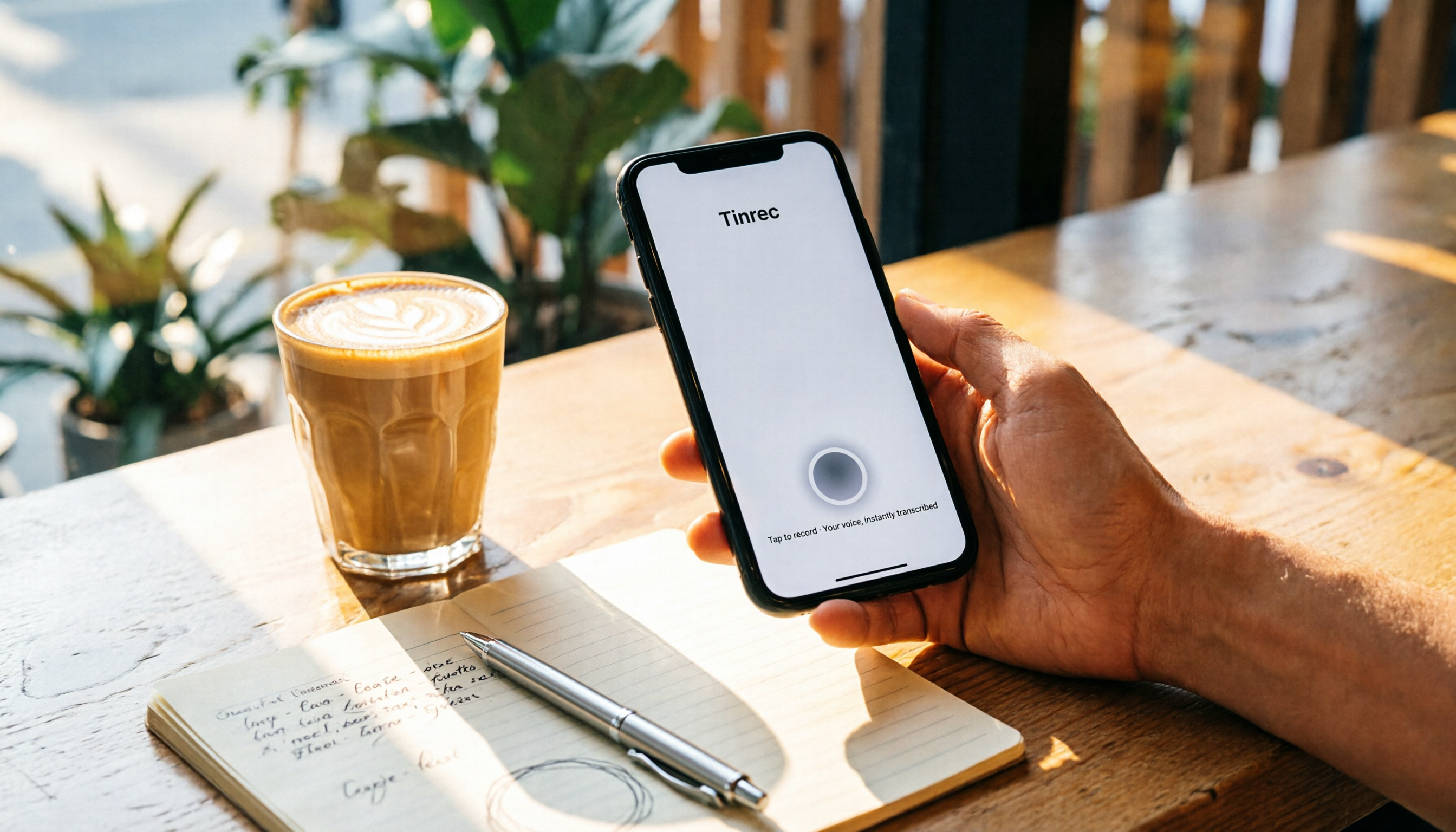
2026 Comparison of 5 Free Speech-to-Text Apps: Which Is Best for Taiwan Chinese Users?
Looking for a free speech-to-text app? This side-by-side comparison covers Yating Transcript, SoundType AI, MyEdit, iPhone Notes, and Tinrec—from free allowances and Chinese accuracy to AI features—helping you pick the best free option.

2026 Side-by-Side Comparison of 4 Recording-to-Text Apps: Student-Tested, Choose Without Pitfalls
Dcard students often ask, "Which recording-to-text app is the best?" A senior student personally tested Tinrec, Otter.ai, Notta, and Yating Transcript, covering lecture recordings, group discussions, and final review. Find out which one is a student's best companion, with free-trial quotas, accuracy, and AI features all explained.

2026 iPhone Voice-to-Text Apps Compared: 3 Tools Tested for Traditional Chinese Accuracy and AI Summaries
We tested 3 iPhone voice-to-text tools, from built-in Voice Memos to third-party apps, comparing Traditional Chinese accuracy, AI summaries, cloud sync, and more to find the best option for meetings, studying, and interviews.