

Turn recordings into transcripts and summaries in minutes
Upload audio or video for multilingual transcription, AI notes, and action items
Recently, to organize a half-day interview recording, I tried both Otter and Tinrec.
I originally thought Otter's AI summaries were impressive, but it turned out to struggle with understanding Chinese context.
For sentences mixing Chinese and English, Otter often skipped them outright or turned them into odd English strings.
Tinrec, however, sorted out that mixed content clearly, and its summary even captured points I hadn't expected.
This made me reconsider: are AI transcription tools really just about transcription speed?
For Chinese users, the underlying language understanding and post-organization might be the real deciding factor.
(Screenshot here: In the same interview recording, Otter's transcript on the left has multiple errors, while Tinrec on the right correctly recognizes mixed Chinese-English and proper nouns.)
Tinrec vs Otter: Quick Overview
If you often read productivity recommendations, Otter.ai is almost synonymous with AI meeting notes.
Its strengths include automatically joining Zoom and Google Meet, real-time transcription, speaker labeling, and generating summaries—making it a great fit for English-language business meetings.
Tinrec takes a different path: it goes beyond meetings, turning your recordings, audio files, and even online videos into a searchable, queryable, reusable database.
| Comparison Item | Tinrec | Otter.ai |
|---|---|---|
| Core Positioning | AI recording and audio-video organization workspace | AI meeting notes and team collaboration |
| Best Use Case | Meetings, courses, interviews, online videos, historical data organization | High-frequency English online meetings |
| Chinese Experience | Optimized for Chinese meetings, courses, and interviews | English-first; easily errors with Chinese |
| Input Sources | Live recording, audio/video files, online video links | Primarily meeting platforms; also supports some files |
| Cross-Platform | iOS, Android, web | iOS, Android, web |
| Pricing | Free plan with monthly basic quota; Pro monthly/yearly subscription | Free plan with 300 minutes per month; Pro billed annually at $8.33/month |
Next, I'll share the real differences between these two tools across five practical dimensions.
Dimension 1: Chinese Recognition and Summary Quality
Otter's English transcription accuracy is high, and its summaries capture the meeting's main themes.
But switch to a Chinese context, and problems arise: sentences mixing Chinese and English, Taiwanese terms, and professional jargon often get misrecognized or skipped entirely by Otter.
Tinrec is noticeably more nuanced in Chinese contexts. With the same interview recording, its transcript is complete, and the AI summary better preserves the speaker's context rather than simply stitching together keywords.
Even in multi-party discussions, Tinrec's chapter segmentation better matches the rhythm of the Chinese language.
→ Verdict: Tinrec is clearly better suited for organizing Chinese content.
Dimension 2: Multi-Source Input Support
Otter's core is "joining meetings," so if you spend all your meetings in Zoom or Google Meet, the experience is smooth.
But when I need to organize a course recording, a YouTube interview, or an old audio file on my phone, Otter feels inflexible—it still has quite a few limitations around file formats and upload methods.
Tinrec, on the other hand, acts as a universal gateway: live recording, file uploads, and pasting public video links all work.
You can throw meetings, learning materials, and creative assets all into one platform for processing.
→ Verdict: Tinrec covers a wider range of scenarios and doesn't care about the source.
Dimension 3: Post-Transcription Organization Depth
After transcription, Otter gives you a transcript, a summary, and action items.
Stop organizing recordings by hand
Upload audio or video and automatically get a transcript, summary, and action items
That's more than enough for meeting notes.
But Tinrec goes a step further: it breaks content into chapters, extracts to-dos, generates mind maps, and even lets you ask follow-up questions about the recording.
For example, after a two-hour online course, Tinrec not only produces a transcript but also automatically divides it into sections and lists each section's key points.
I can simply ask, "What three marketing case studies were mentioned in this course?" and Tinrec will find the relevant passages in the recording and answer.
This ability to "understand content" turns recordings from simple archives into conversational databases.
→ Verdict: Tinrec's post-organization and AI Q&A features make recordings far more valuable.
Dimension 4: Cross-Platform and Workflow Integration
Both tools offer mobile and web versions, so they're basically usable anywhere.
Otter's strength, however, is integration with meeting platforms, and its export formats are mostly common document types.
Tinrec, meanwhile, focuses more on "getting results out": it can export to Notion, Google Docs, OneNote, and other tools, and can even have AI generate meeting minutes, reports, or tables from the recording.
For knowledge workers who manage with multiple digital tools, Tinrec integrates more easily into existing workflows.
→ Verdict: Tinrec offers greater flexibility in exporting and post-processing.
Dimension 5: Pricing and Target Users
Otter's free plan includes 300 minutes per month—fine for light use—but with poor Chinese support, it's like half of that is wasted.
While the Pro plan offers more minutes, it's geared toward English meetings, so the paid plan's value for Chinese users is limited.
Tinrec's free version already lets you experience most core features, and its Chinese organization quality is consistently reliable.
If you have meetings, courses, or interviews to organize every week, the Pro plan is even more practical, because every transcribed minute yields more complete Chinese results.
→ Verdict: For Chinese users, Tinrec offers better value for money.
What Unique Strengths Does Each Tool Have?
Tinrec's Unique Strengths
- Chinese-friendly language model: Specifically tuned for Taiwanese terms and mixed Chinese-English scenarios, with summaries that better match Chinese expression habits.
- Direct online video transcription: Paste a YouTube or Bilibili link and it turns into organized text and key points—essential for creators and learners.
- Recordings become a queryable database: It's not just one-off transcription; historical recordings can be searched through AI Q&A, offering long-tail value.
- Flexible post-processing: Export in multiple formats, or have AI generate further documents—ideal for those who need deep organization.
Otter's Unique Strengths
- Mature meeting bot experience: Automatically joins online meetings, labels speakers, and enables collaborative annotations—intuitive for team use.
- Ready for English business scenarios: If over 90% of your meetings are in English, Otter's transcription and summaries are still the strongest choice.
Conclusion: Which One Should You Choose?
- If you need to organize Chinese meetings, courses, interviews, or online videos → Tinrec (more accurate Chinese comprehension, more complete post-organization)
- If you have various audio files and videos to process at once → Tinrec (supports multi-source input, no format fuss)
- If you want recordings to be more than just archives, but a searchable knowledge base → Tinrec (AI Q&A brings historical content to life)
- If you have daily English meetings on Zoom and only need basic records, Otter will suffice
In short: for Chinese users with diverse transcription needs, Tinrec is the more comprehensive solution.
We recommend starting with Tinrec's free version and testing it with one of your own recordings—you'll understand what I mean by "easier Chinese organization."
References
- Still using manual transcription? Python completes the 'automated transcription' business case study
- AI聽寫大哥 | Taiwan Mobile Enterprise Services
- Still using manual transcription? Learn AI transcription in 6 hours - Marketing Data Science
- Free AI realistic text-to-speech service | Speechify
- AI聽寫大哥 - Efficient speech-to-text, smart summary tool - Google Play apps
Turn every recording into actionable outcomes
Get 60 free transcription minutes when you sign in. No credit card required.
Related Reading
You might also like
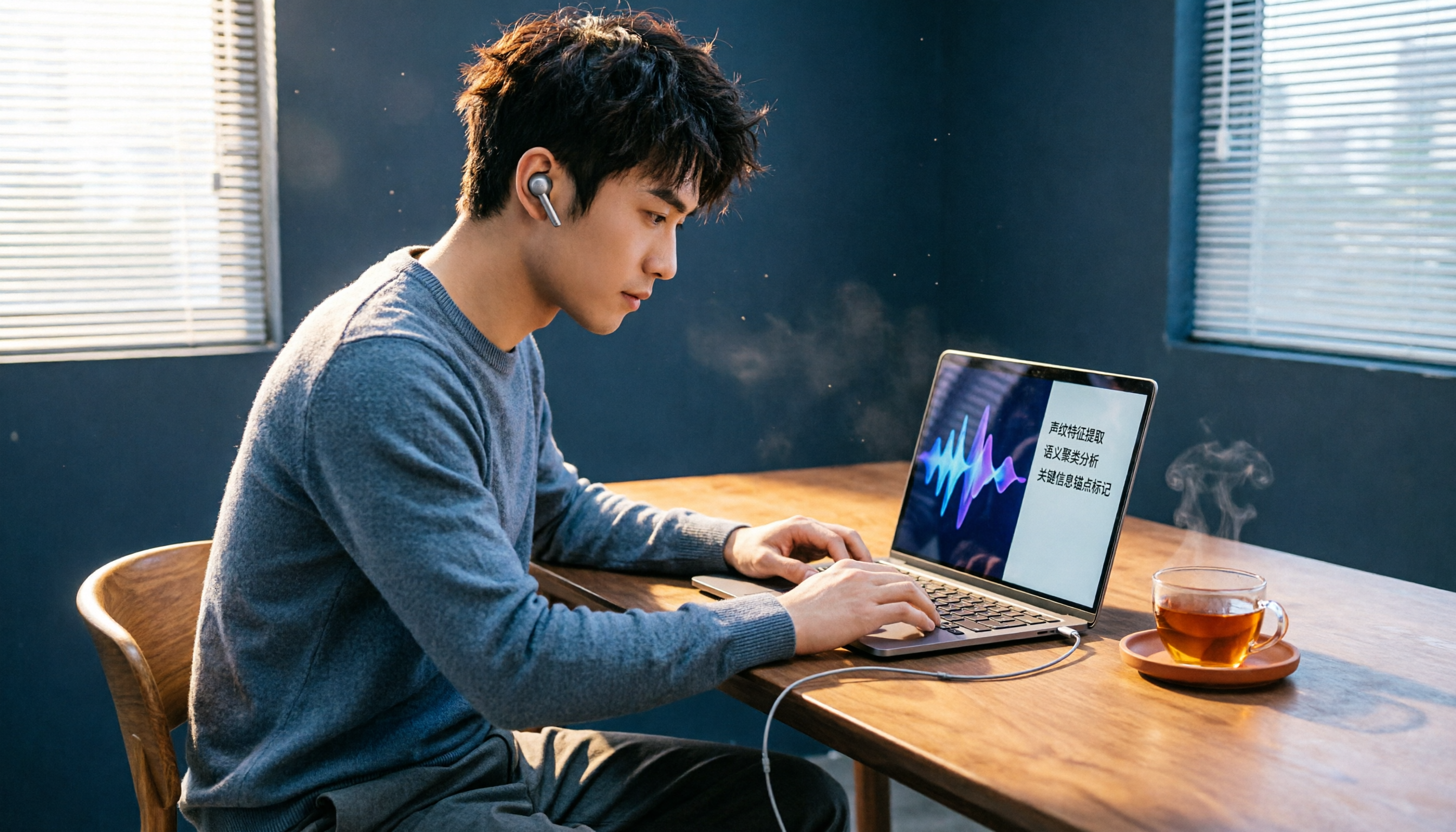
2026 Review of 5 Web Audio Capture Tools: Can AI Organize Your Recordings After Capture?
Want to capture webpage background music, online radio, or video audio tracks? This article tests 5 free and paid tools, from Chrome extensions to AI recording assistants, to help you easily save webpage audio as MP3. Some can even transcribe audio to text and generate summaries—a must-read for working professionals.

How to Choose an Audio-to-Text Tool in 2026? A 5-Step Comparison of Tinrec vs Plaud Note
Still struggling to turn meeting recordings and course audio into text? A mid-level manager tests two mainstream solutions: software-based Tinrec vs hardware-based Plaud Note. Compare 5 key dimensions—input sources, accuracy, AI features, cross-platform, and cost—to find the best AI audio-to-text tool for your workplace needs.

2026 Hands-On Comparison of 4 AI Meeting Summary Tools: Which One Really Saves You Time?
Spending too much time on meeting notes? We tested four popular AI meeting summary tools, comparing transcription accuracy, summary quality, and free plan limits, to help you find the best pick for Taiwanese users.

2026 Hands-On Comparison of 4 Audio-to-Text Tools: Which One Is the Best Organizer for Chinese Users?
Are meeting, class, and interview recordings always piling up? Transcribing them by hand takes time and effort? This review compares 4 popular audio-to-text tools, testing which one has the most accurate Chinese transcription and the most useful AI features, to help you find your ideal organization tool.

2026 Guide to Recording-to-Transcript Tools: Multi-Source Support and AI Chat Queries
Still stuck manually transcribing recordings? We tested multiple free tools—from audio, video, and web links—and show you how to use AI to convert recordings into text fast. We also recommend Tinrec for organizing Chinese-language content, so meeting notes and interviews no longer eat up your time.

2026 Comparison of 4 AI Meeting Notes Tools: Which Is Best for Chinese Content?
This article tests four AI meeting notes tools—Tinrec, Otter.ai, Notta, and PLAUD—and compares them on accuracy, Chinese language support, AI summarization, and multi-source audio/video organization to help you find the automated meeting minutes solution that best fits your needs.

2026 Free Traditional Chinese Transcription Tools: 5 Picks at a Glance
Still typing out transcripts by hand? This article rounds up five free speech-to-text tools that support Traditional Chinese, including Tinrec, MyEdit, and Google Recorder. We compare accuracy, AI features, and cross-platform performance to help you find the most time-saving choice.
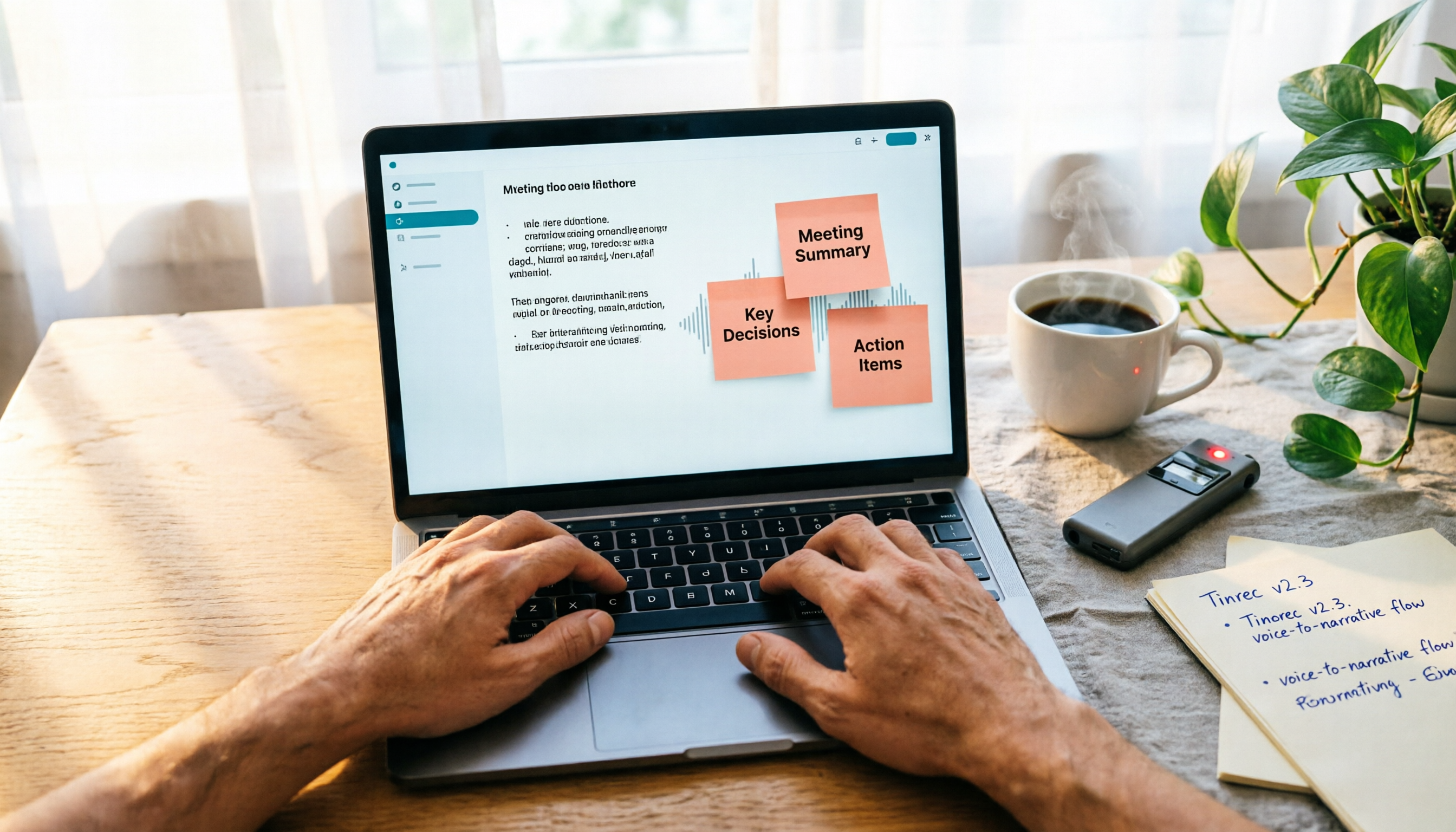
2026 Hands-On Comparison of 4 Recording-to-Transcript Tools: More Than Just Transcription—Can They Also Summarize?
We tested 4 recording-to-transcript tools for accuracy, AI summarization, and cross-platform support. Tinrec stood out with its all-around audio/video organization, and the free plan is a great way to try it.

2026 Test Comparison of 5 Chinese Speech-to-Text Tools: Which Free Plan and AI Summarization Is Most Practical?
We tested 5 Chinese speech-to-text tools, comparing free allowances, transcription quality, AI summarization capabilities, and cross-platform support to help you find the best solution for meeting minutes, study notes, and content creation. Tinrec stands out in Chinese-language scenarios and multi-source organization, making it our top pick.