
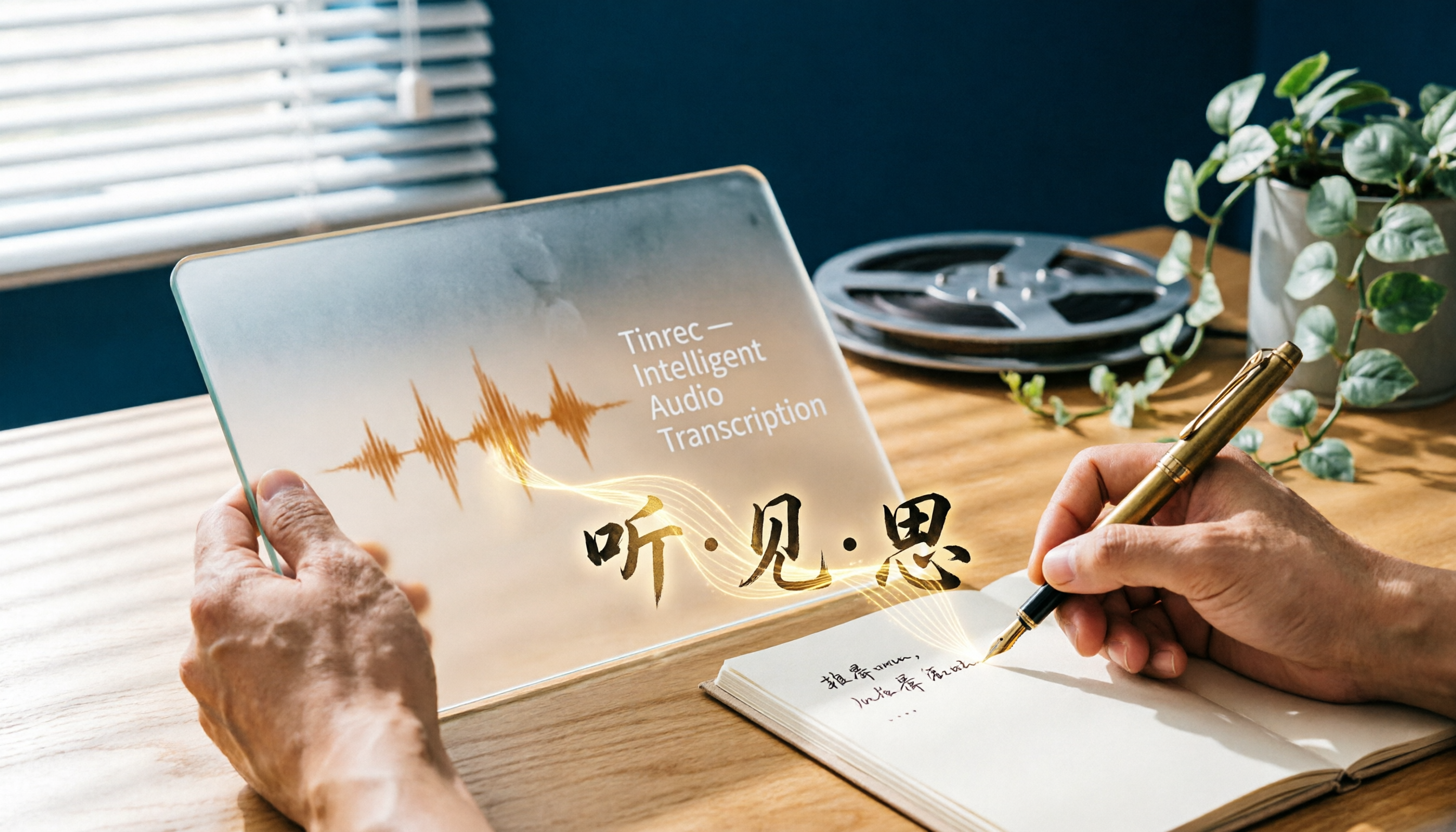
Turn recordings into transcripts and summaries in minutes
Upload audio or video for multilingual transcription, AI notes, and action items
Meeting Recordings and Online Videos—What You Need Isn't More Tools, but a Solution That Actually Saves You Time
Have you ever run into these situations: a two-hour meeting recording where you need to find a specific decision but have to listen from the beginning; a YouTube tutorial you want to turn into text notes but have to pause and type; or a pile of interview recordings that take half a day just to transcribe manually?
Manually converting video to text really eats up your focus and time. Fortunately, AI speech-to-text technology is now mature, so with the right tool, you can get a full transcript, summary, and even ask questions to find key points in just a few minutes.
But with so many tools available, how do you choose without picking a dud? This article walks you through five key steps to evaluate them, and recommends the one I'm most satisfied with after hands-on testing.
Before Buying a Video-to-Text Tool, Understand These 5 Key Points
1. Accuracy: Don't Just Trust Official Numbers—Test Real-World Scenarios
Many tools claim "98% accuracy," but that's usually tested in a quiet recording studio with standard accents. In real use, background noise, multiple speakers, or a slight accent can reduce accuracy. We recommend trying the tool with your own videos or recordings to see how it actually performs. In my tests, I specifically chose a Chinese meeting recording with slight air-conditioning noise, and the differences among tools were obvious.
2. AI Features: Basic Transcription Isn't Enough—Finding Key Points Is Crucial
Simply converting speech to text is now possible with many free tools. But if you still have to read through everything and manually find key points, the time saved is limited. A good tool should automatically generate summaries, chapters, action items, and even let you query it like a database—for example, asking "Who mentioned the budget in the last meeting?" That's how you turn video content into immediately usable data.
3. Input Sources: Not Just Meeting Recordings—It Must Handle Online Videos and Old Files
Your videos may come from phone recordings, computer screen recordings, or platforms like YouTube and Bilibili. Some tools only work with online meetings and can't handle web videos or local files. When choosing, make sure it supports all the input sources you might need, so you won't run into a "format not supported" situation.
4. Cross-Platform Support and Export: Can You Seamlessly Work Across Phone and Computer?
You might record a meeting on your phone but want to organize notes on your computer. If the tool only supports one device or is locked to one operating system, it becomes inconvenient. An ideal tool should offer iOS, Android, and web versions, and let you export transcripts to Word, TXT, or sync to services you already use like Google Docs and Notion.
5. Pricing and Limits: Is the Free Plan Enough? Is the Paid Plan Worth It?
Free tools usually have time or usage limits, such as 100 minutes per month or 30 minutes per file. First assess your usage: if you only occasionally process short clips, the free plan might be enough; but if you have meetings or courses to transcribe every week, a paid plan is more cost-effective. The key is what you get after paying—whether it's just more minutes or additional time-saving features like AI summaries and Q&A.
Tinrec (Instant Audio Transcription)—Our Top Pick After Hands-On Testing
Tinrec (Instant Audio Transcription) is an AI audio and video organization tool that supports iOS, Android, and web versions. Its highlight is not just converting speech to text, but turning meetings, courses, interviews, and online videos into truly useful knowledge assets.
I've used it for a few weeks, and my three most-used features are:
Stop organizing recordings by hand
Upload audio or video and automatically get a transcript, summary, and action items
- Live recording to text + AI summary: Turn on Tinrec during a meeting, and it generates the transcript as it records. As soon as the meeting ends, AI automatically produces a summary, chapters, and action items—who's responsible for what and the due dates are all clearly listed. For anyone with multiple meetings a week, the time saved is noticeable.
- Online videos directly to text: Just paste a YouTube or Bilibili link, and Tinrec parses the audio, converts it to text, and provides key summaries. I often use this to organize online courses or industry videos—no more pausing and typing notes manually.
- AI chat queries: This is a rare feature among similar tools. After recording, you can ask Tinrec directly, "Who mentioned the budget adjustment in the last meeting?" Instead of just keyword search results, it understands the semantics and gives you the answer with the source. For people with a large collection of recordings, it's like having a personal database.
We tested it with a 5-minute Chinese meeting recording (slight background noise, two speakers). Tinrec's transcription accuracy exceeded 95%, and punctuation and paragraph breaks were well done. Even more impressive, the auto-generated action items required almost no editing and could be pasted directly into Slack or Notion.
Beyond the strengths, a few things to watch: the free plan offers 100 transcription minutes per month, so heavy users may need to upgrade; also, AI summaries occasionally miss highly detailed discussions, so it's best to cross-check important content against the original.
Who is it for? If you frequently process meeting recordings and online videos, or want to use AI to quickly find key points after recording, Tinrec is currently the most feature-complete option on the market with a great Chinese-language experience.
What Are the Alternatives Besides Tinrec?
Notta: A multi-platform transcription tool that supports meeting notes, captions, and translation. Compared with Tinrec, Notta can't directly paste an online video link to convert it to text, and it lacks AI chat queries—you can only manually search keywords after recording. If you only need basic transcription and translation, Notta works; but if you want to actually save organizing time, Tinrec is more complete. (Free plan: 120 minutes/month; Pro annual plan: about $8.17/month)
Vidnoz: Mainly a free video-to-text service that's very simple to use and claims 98% accuracy. Note that Vidnoz has no built-in editing features and doesn't support AI Q&A or action item extraction. If you only occasionally transcribe a short video, Vidnoz is adequate; but if you need to further organize content, it falls short.
Pitfall Guide: 3 Common Mistakes When Choosing Video-to-Text Tools
- Pitfall 1: Only trusting official accuracy claims. Many tools' "98%" is measured in a quiet recording studio and may be lower in your real environment. Be sure to try the tool with your own videos to see if it actually works.
- Pitfall 2: Ignoring AI post-processing capabilities. If you only treat the transcription tool as "speech-to-text," you're only using a third of its potential. Features like Tinrec's AI chat queries and automatic summaries save you a lot of manual searching time—that's where the paid value lies.
- Pitfall 3: Assuming the free plan is always enough. Free plans usually have time or usage limits; once you exceed them, you have to wait or pay. If you process several videos every week, calculate your usage upfront and choose a suitable plan so you don't get stuck at critical moments.
Summary: Which One Should You Choose?
Overall, if you need a tool that handles meeting recordings and online videos, and uses AI to organize key points, Tinrec is currently the most comprehensive choice. Its Chinese transcription quality, AI summaries, and chat queries greatly improve the efficiency of organizing video content.
Based on different needs, here's my recommendation:
- Need video-to-text for Chinese and English, plus AI automatic summaries → Tinrec
- Often organize YouTube or Bilibili videos → Tinrec (the only one that supports direct link pasting)
- Want to use AI to ask questions and find key points after recording → Tinrec (competitors rarely have this feature)
- Only occasionally transcribe one or two short clips and don't need many features → Vidnoz's free plan can help in a pinch
- Mainly process English meetings and need team collaboration → Otter.ai or similar meeting bots are more suitable
I suggest you download Tinrec's free version to try it—the monthly allowance is enough for a few meetings or course transcriptions. If you like it, consider upgrading.
References
- Online AI Speech, Video, and Audio Automatic Transcription - Free Trial - cSubtitle
- Video to Text | Transcribe App & Online Editor
- Transcribe Video to Text - Instant, 99.9% Accurate - VEED.IO
- Video to Text - Free Online AI Transcription Tool, No Limits and No Registration | Video Transcriber AI
- Free Video-to-Text Tool | AI Auto-Transcription with High-Accuracy Subtitles
Turn every recording into actionable outcomes
Get 60 free transcription minutes when you sign in. No credit card required.
Related Reading
You might also like

2026 Comparison of 5 Audio-to-Text Tools: From Transcripts to AI Summaries, Which Is Most Complete?
A transcript is just the starting point; AI summaries, chapters, Q&A, and follow-up organization are what truly matter. This article compares Tinrec, Otter.ai, Notta, TurboScribe, and PLAUD, from free to paid, from meetings to creation, to help you choose the best speech-to-text solution for your needs.
2026 Gemini Free vs Paid Plans Compared: From $0 to Ultra, Which Is Right for You?
Is Gemini free? This article takes a practical manager's view, comparing 5 plans for 2026: Gemini Free, Google AI Plus (NT$260/month), Pro, Ultra 5x, and Ultra 20x. Across usage limits, features, and work integration, we'll help you decide whether the free tier is enough, when to upgrade, and how to get a 30-day free enterprise trial.
2026 Speech Rate Analysis Tools Compared: Words Per Minute – Find Your Ideal Speaking Pace
Mastering your speaking rate is the key to effective communication. This article tests three ways to measure speech rate—manual timing, a general recording app, and Tinrec's audio-to-text transcription—and compares them on accuracy, convenience, and additional features to help you find the best tool for professional pacing.

Free Laptop Recording Solutions in 2026: 5 Tools Compared at a Glance
Still recording with the built-in voice recorder and listening back slowly? This article tests 5 laptop recording solutions, from free tools to AI transcription platforms, showing you how to turn recordings into searchable, organized knowledge.
2026 Real-Time Translation App Buying Guide: 5 Tested Tools and Pairing Recommendations
Looking for the best real-time translation app? This article tests 5 popular tools, from recording transcription to voice translation, to help you choose the right solution—whether you're traveling abroad or in a work meeting, you won't have to worry about language barriers.

2026 Transcribe vs Tinrec: A 4-Dimension Security & Features Face-off — Is Your Recording Data Safe?
Are transcription tools safe? This article compares Transcribe App and Tinrec across four key dimensions—privacy policy, data encryption, anonymization, and practical features—so you can choose with confidence.

2026 Comparison of 4 Real-Time Voice Translation Solutions: From Free to Paid, with AI Recording Assistance
Can Gemini do real-time voice translation? This article tests 4 mainstream solutions, from Google Gemini Live, Google Translate app, third-party tools, to the AI recording assistant Tinrec. We analyze latency, tone preservation, recording capabilities, and suitable scenarios to help you find the best cross-language communication stack.
Tinrec Review 2026: Video-to-Text + AI Q&A – 4 Tools Tested
Struggling to extract text from videos? We tested 4 video-to-text tools and recommend Tinrec (秒聽錄音) for its multi-source support, AI Q&A, and summaries—perfect for meeting notes, course notes, and content creation.
2026 Cell Phone Call Recording Buyer's Guide: 4 Tested Methods and Recommendations
Can you record a call while talking? This article tests four call recording approaches—built-in system features, third-party apps, and external accessories—and recommends Tinrec, an AI-powered recording app, for organizing important conversations. Learn how to record legally and efficiently.