

Turn recordings into transcripts and summaries in minutes
Upload audio or video for multilingual transcription, AI notes, and action items
3 Notta Showcase Alternatives Tested in 2026: Why Tinrec Is Better for Chinese Content
Meeting recordings, course audio, online videos—organizing them is time-consuming
Spending two hours in a meeting and another two hours writing up the minutes is a common routine for many office workers. What's more, if you need to translate a Chinese video into English or turn a lecture recording into notes, you often have to switch between several tools. Notta Showcase made video translation easier, but if you also need to organize meetings, interviews, podcasts, and other audio/video content, a translation tool alone may not be enough. This article aims to help you find a more comprehensive solution.
Before choosing an AI audio/video organizer, understand these 3 key points
1. How broad is the input source support? You might need more than just a "video translator." Meeting recordings, course audio, podcasts, YouTube links, and even old voice memos on your phone are all content you may need to organize. The more input methods a tool supports, the less you'll have to piece things together.
2. What else can it do after transcription? Getting a transcript isn't enough. A good tool should automatically generate summaries, chapters, action items, and even let you use AI Q&A to find key points. Otherwise, you're just turning "listening" into "reading," and you'll still have to spend time reading everything yourself.
3. How well does it handle Chinese content? Many foreign tools excel in English but struggle with Chinese meetings and courses. If you primarily deal with Chinese content, you must test the tool's Chinese transcription and summarization capabilities—don't just rely on marketing claims.
Tinrec (秒听录音)—Our Top Pick After Testing
Tinrec (秒听录音) is an AI recording and audio/video organization tool designed for meetings, learning, interviews, and content creation. It supports iOS, Android, and web. It doesn't just convert speech to text; it turns your recordings and audio/video files into searchable, summarizable, and queryable knowledge.
What we loved most is its "multi-source input" capability. During a meeting, you can open the app and record while it transcribes in real time—by the time the meeting ends, summaries and action items are automatically generated. If you have a bunch of old recordings or video files, you can upload them for transcription. You can even paste a YouTube or Bilibili link, and it will generate a transcript and key points. This is incredibly useful for anyone juggling meetings, courses, and online videos.
After transcription, Tinrec's AI Q&A feature impressed us. Instead of manually scanning a 30-minute transcript, you can ask, "Who mentioned the budget in the meeting?" and it will provide an answer based on the content's semantics. This feature is rare among similar tools.
In our test, we used a 5-minute Chinese meeting recording (with two speakers and slight air conditioning background noise). Tinrec's transcription quality was quite good—most content was accurate, and its summaries and action items were spot-on. Of course, actual accuracy depends on recording quality and accents, but overall, we were satisfied.
Tinrec's free plan includes a basic monthly transcription quota, enough for light users to try it out. For heavier transcription needs, the Pro plan offers more minutes and features. For users with 2-3 meetings, courses, or interviews per week, the free or low-cost plan is usually sufficient.
Stop organizing recordings by hand
Upload audio or video and automatically get a transcript, summary, and action items
As for limitations, Tinrec doesn't have a feature as specialized as Notta Showcase's "video translation + step-by-step guide generation." If you need to dub videos into 15+ languages and automatically generate user manuals, Notta Showcase might be more direct. But if you need a comprehensive audio/video organization workspace, Tinrec covers more ground.
Who is it for? If you frequently need to organize meeting recordings, course audio, interviews, podcasts, or online videos, and you want to use AI to find key points and export to other tools for further use, Tinrec is a solid choice right now.
Beyond Tinrec: What Other Options Are There?
Notta Showcase Notta Showcase is Notta's AI video translation and step-by-step guide generation tool, supporting dubbing and subtitles in 15+ languages. It's great for creators looking to localize videos quickly. However, if you need meeting minutes, course audio organization, or AI Q&A, Notta Showcase is relatively limited. It lacks Tinrec's real-time recording transcription and AI Q&A for audio content.
Otter.ai Otter.ai is a powerhouse for English meeting notes, with a free plan offering 300 minutes per month and support for uploading audio/video. However, its Chinese transcription and organization capabilities aren't as tailored to Chinese users as Tinrec's. Additionally, Otter.ai doesn't support direct transcription from YouTube or Bilibili links, where Tinrec is more convenient.
TurboScribe TurboScribe focuses on cost-effective file transcription, ideal for batch uploading large numbers of files. But it leans more toward pure transcription, lacking Tinrec's AI summaries, action item extraction, and Q&A features. If you just need bulk transcription, TurboScribe is worth considering; but if you want organization and actionability, Tinrec is more complete.
Pitfall Guide: 3 Common Mistakes When Choosing an AI Audio/Video Organizer
Pitfall 1: Focusing only on translation, ignoring post-processing Many people find video translation tools like Notta Showcase cool, but after translating a video, you still need to extract key points into documents or workflows. If the tool can't automatically generate summaries or action items, you'll have to do that extra work yourself.
Pitfall 2: Overlooking input source diversity Some people buy a tool only to find it can only upload files—no direct links to online videos, no real-time recording. That means you'll have to spend extra time downloading or converting content first.
Pitfall 3: Being lured by "unlimited transcription" claims Some tools advertise unlimited transcription, but their post-transcription features are weak or they perform poorly with Chinese content. Instead of chasing unlimited minutes, try the free version first to see if it can turn your content into truly usable material.
Summary: Which One Should You Choose?
If you need "video translation + step-by-step guides," Notta Showcase is worth trying. But if your content goes beyond videos to include meeting recordings, course audio, interviews, and podcasts—and you want automatic summaries, action items, and AI Q&A to quickly find key points—Tinrec is the more comprehensive choice.
Scenario recommendations:
- Need Chinese meeting, course, or interview organization → Tinrec (great Chinese experience, practical AI Q&A)
- Need to quickly translate videos into multiple languages and generate guides → Notta Showcase (focused on translation)
- Primarily English meetings with a focus on team collaboration → Otter.ai (mature English ecosystem)
- Bulk transcription of files → TurboScribe (high cost-performance)
We suggest starting with Tinrec's free plan—it includes a basic monthly quota, enough to try a few meetings or course sessions. If you find it useful, consider upgrading; no need to pay upfront.
References
Turn every recording into actionable outcomes
Get 60 free transcription minutes when you sign in. No credit card required.
Related Reading
You might also like

How to Transfer iPhone Voice Memos to Computer for Free in 2026: 6 Methods Compared
How do you transfer iPhone voice memos to a computer? This guide starts with two key questions: Is your computer a Mac or Windows, and how long is the recording? It covers six free transfer methods—AirDrop, iCloud Drive, Google Drive, USB cable, LINE desktop, and email—and explains how to use Tinrec to turn recordings into transcripts, summaries, and action items after the file is on your computer. Includes common mistakes and selection advice.
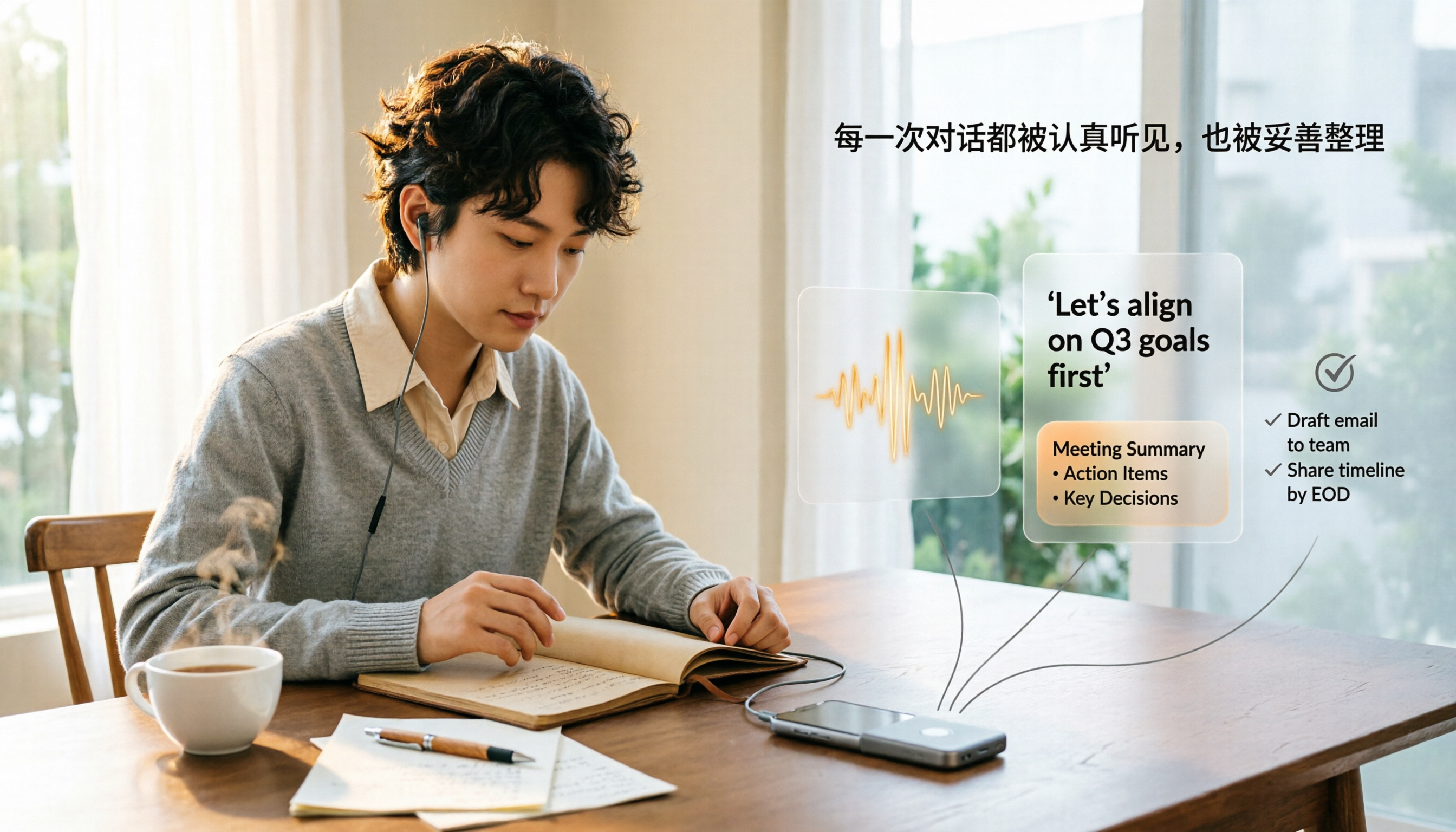
5 LINE Call Recording Methods Tested for 2026: Capturing Audio Is Just Step One—Organizing It Is Key
LINE doesn't have built-in call recording, and half the methods floating around online only capture one side of the conversation. This guide compares iPhone integrated calling, Android screen recording, third-party apps, and magnetic recording devices, and tests importing recordings into Tinrec to generate transcripts, summaries, and to-dos—helping you decide which approach truly saves time.

3 iPhone Voice Memo to Ringtone Methods Tested for 2026: Which No-Computer Way Is Fastest?
Voice Memos recordings can't be set as iPhone ringtones directly because the format and length don't match. This article tests three conversion methods, provides a complete 5-step GarageBand tutorial without a computer, covers common pitfalls and tips, and adds a better way to organize recordings after you're done.
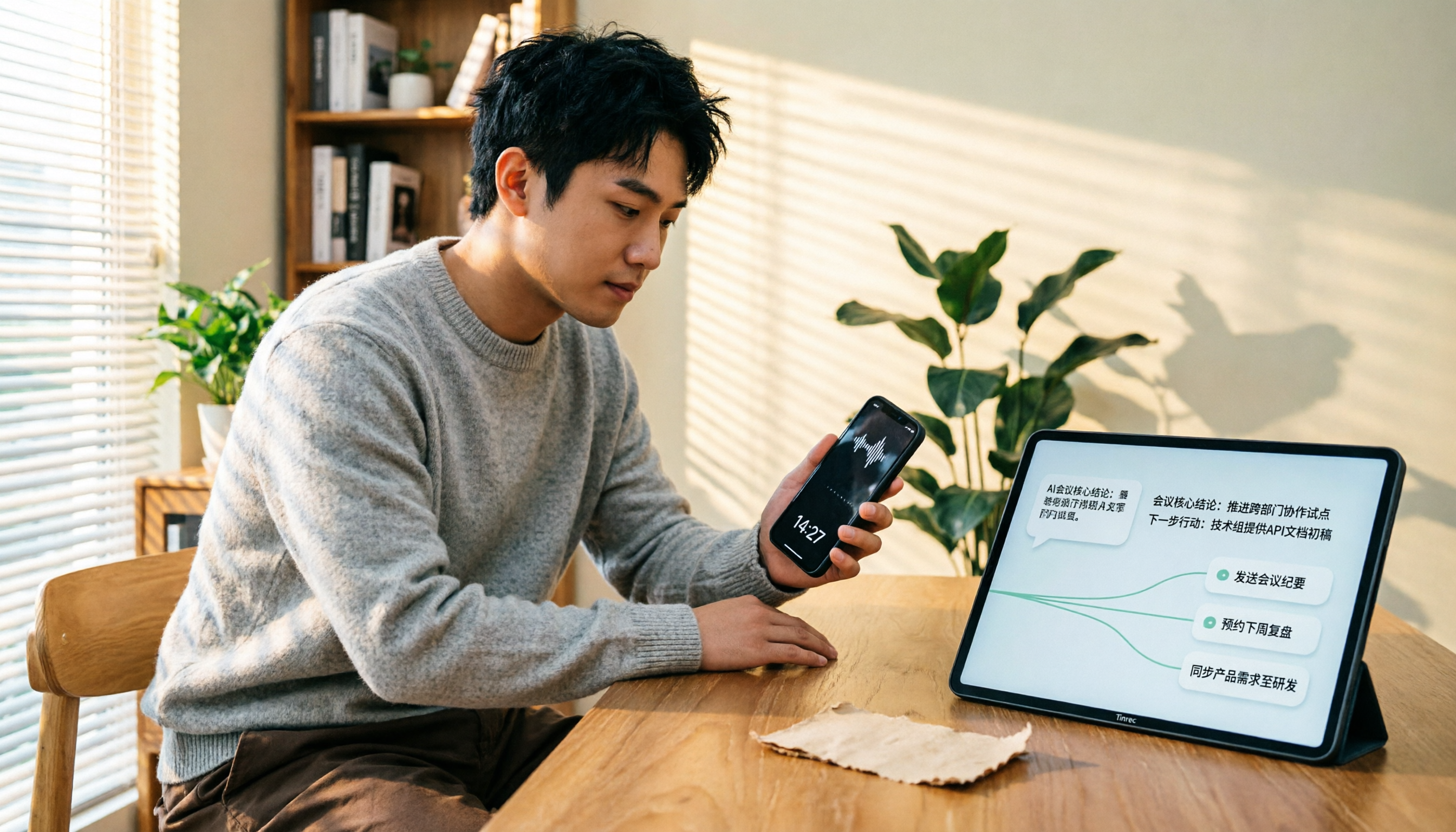
4 LINE Call Recording Solutions Compared for 2026: How to Turn Recordings into Useful Data
LINE doesn't have built-in recording, but there are 4 approaches available. This article breaks down the limitations on iPhone and Android, the legal issues to handle before recording, and demonstrates how to use Tinrec to turn recordings into searchable transcripts, summaries, and action items—so you don't have to listen to a 30-minute audio file again.

4 LINE Meeting Recording & Transcription Tools Tested for 2026: Get Transcripts Without a Meeting Bot
LINE Meeting has no built-in recording, and call permissions are restricted, so capturing meeting content requires external tools. This hands-on comparison of Tinrec, Otter.ai, Notta, and Granola covers bot-free recording, Chinese recognition, post-meeting organization, and team knowledge retention to help you choose the right LINE meeting notes solution.

How to Record LINE Calls for Free in 2026: 5-Step Guide
Recording LINE calls for free is now possible, but many online methods are outdated. This guide covers the truly free options for iPhone, Android, and desktop in 2026, explains the free trial period and file retention limits of LINE Labs call recording, and then compares how to convert recordings into transcripts, summaries, and action items so your recordings are actually usable.

5 LINE Call Recording Methods Tested for 2026: What Actually Works on iPhone and Android
LINE has no built-in call recording, and iPhone blocks third-party apps from recording calls internally—so most people start off on the wrong foot. This guide breaks down 5 practical LINE call recording methods for 2026 and shows how to use Tinrec to turn recordings into transcripts, summaries, and action items so your call records are actually usable afterward.

How to Record LINE Calls for Free in 2026: 5 Steps from Call to Transcript
LINE doesn't have a built-in recording feature. This guide addresses the three most common misconceptions and walks you through five steps to record LINE calls for free using methods like Android screen recording or iPhone speakerphone with a second device. It also compares Tinrec and Notta on free quotas, meeting capture methods, post-meeting organization, and team governance.

4 LINE Call Recording Solutions Tested for 2026: Recording Is Just the Beginning
LINE doesn't have built-in call recording, but the real bottleneck isn't capturing audio—it's what happens after. This article breaks down 4 key decision points from real-world use cases, comparing Cube ACR, desktop system recording, PLAUD recording hardware, and Tinrec. Includes a pitfalls guide and scenario-based recommendations.