

Turn recordings into transcripts and summaries in minutes
Upload audio or video for multilingual transcription, AI notes, and action items
2026 Free Audio-to-Text Solutions: 3 Tools Compared
I Have 15 Meetings a Week, and Taking Meeting Notes Takes Half My Work Time
I attend about 15 meetings a week, from weekly syncs and project status updates to one-on-ones. The most annoying part isn't the meetings themselves—it's what comes after. Every meeting generates a pile of decisions and action items to organize, and taking meeting notes often eats up half my work time. Worse, when my boss suddenly asks, "What was the conclusion of last meeting?" and I spend three minutes flipping through notes without finding it, that feeling is really awful. So I started trying AI audio-to-text tools and found that while they don't solve every management problem, they at least save me from the most mechanical part. If you have the same struggle, this article shares my hands-on experience with three tools, focusing on their free plans so you don't waste money.
Before Choosing an Audio-to-Text Tool, Understand These 4 Key Points
Before picking an audio-to-text tool, get these four key points straight to avoid buying something unsuitable:
- Multi-source support: Do you only record meetings, or do you also need to transcribe lectures, interviews, or even YouTube videos? Some tools only handle meetings and can't process video links.
- AI post-processing: Converting speech to text is just the first step. Can it auto-summarize, extract action items, or even let you ask questions to find key points? That's the real time-saver.
- Free quota: Trials are important, but don't be fooled by high quotas. Make sure the output quality and subsequent features are actually useful.
- Chinese support: If you often handle Chinese content, pay special attention to the tool's recognition and summarization quality for Traditional Chinese and Taiwanese Hokkien.
Tinrec (秒听录音) — My Top Pick After Testing
Tinrec is an AI audio and video organization tool that supports multiple sources, available on iOS, Android, and web. After testing with my team, I found it doesn't just convert audio to text—it turns recordings and videos into "searchable, summarizable, and queryable" assets. Here are a few real-world scenarios: During a meeting, open Tinrec and it transcribes in real time. By the time the meeting ends, AI summaries and action items are already generated—who's responsible for what and deadlines are clear at a glance. Drop in a lecture recording or interview file, and it automatically splits into chapters and highlights key points, so you don't have to listen from start to finish. What surprised me even more is that after recording, you can ask it directly, "Who mentioned the budget in the last meeting?" and it understands the content and gives you the answer, instead of making you Ctrl+F through the text. Few tools in this price range offer this Q&A feature. I particularly like its ability to organize Chinese content—it handles Traditional Chinese, Simplified Chinese, and mixed Chinese-English well, and it supports transcription from online video links (YouTube, Bilibili, etc.), which is very practical for someone like me who absorbs information from various sources. Limitations: The free version has quota limits, suitable for occasional use or trial. If you have multiple meetings a week, consider a paid plan. But at least you can try it for free to see if it fits your workflow. Who it's for: Professionals who frequently need to organize meetings, lectures, interviews, or video materials, especially those who want to use AI to find key points and generate summaries right after recording.
Stop organizing recordings by hand
Upload audio or video and automatically get a transcript, summary, and action items
Besides Tinrec, What Other Options Are There?
Vocol.ai: A voice collaboration platform that uses four major language models including GPT-3 and BERT. It supports Chinese, English, Taiwanese Hokkien, and translation into over 25 languages, and integrates with Google Meet and Teams. It offers 200 free minutes. Its strength is team collaboration and meeting transcription, but recognition may be unstable in noisy environments, and speaker separation can sometimes be confused. More importantly, Vocol.ai is more focused on meeting scenarios and is less comprehensive for local audio/video files and online videos compared to Tinrec. Additionally, Tinrec's AI Q&A and agent-based post-processing (generating reports, tables) are features Vocol.ai currently lacks.
Yating (雅婷逐字稿): A well-established Taiwanese tool with strong Chinese and Taiwanese Hokkien recognition, but the free version is limited to 20 minutes, and features are relatively basic—mainly just verbatim transcription, lacking AI summaries, chapters, action items, and Q&A. Tinrec's post-processing capabilities are clearly more complete, and its cross-platform and online video support is better.
Pitfall Guide: 3 Common Mistakes When Choosing an Audio-to-Text Tool
Pitfall 1: Only looking at free quota, ignoring post-processing. Some tools offer many free minutes, but after transcription, they just give you a wall of text with no summaries or action items, so you still have to read through it yourself. I'd rather have a smaller quota but get key points and action lists right after transcription. Pitfall 2: Ignoring multi-source support. You think you only need to record meetings, but later you find you also want to transcribe lecture recordings or interview videos, and the tool only supports meetings, so you have to buy another one. It's safer to choose a tool that can handle audio files and video links. Pitfall 3: Thinking accuracy is everything. Accuracy is important, but for busy managers, AI summaries and Q&A save far more time than a few typos cost. For example, after a meeting, I ask Tinrec "What was the conclusion?"—that's much faster than reading the transcript line by line.
Summary: Which One Should You Choose?
If you're like me—with a ton of meetings every week and various audio/video materials to organize—Tinrec is currently the most comprehensive choice. Scenario recommendations:
- Need to organize meetings + lectures + interviews + online videos → Tinrec (most complete multi-source support)
- Want to use AI to find key points, generate action items, and reports right after recording → Tinrec (AI Q&A and agent post-processing are exclusive)
- Strong team collaboration needs and mainly use online meetings → Try Vocol.ai (but be aware of noisy environments and speaker separation)
- Only need Taiwanese Hokkien transcription and have a very low budget → Yating can be a stopgap, but the free quota is small and features are basic
Finally, I recommend downloading the Tinrec free version to try it out. The monthly basic quota is enough to experience the core features. If you find it useful, consider upgrading—there's no need to pay upfront.
References
Turn every recording into actionable outcomes
Get 60 free transcription minutes when you sign in. No credit card required.
Related Reading
You might also like

5 Best Recording-to-Text Tools Tested in 2026: Can Tinrec's Chinese Summarization Really Save You Time?
Meetings, classes, interviews, videos—do you have piles of recordings but no time to organize them? This article tests several AI recording tools to find the best one for handling multi-source audio content, with an in-depth look at Tinrec's AI summarization features.

Tinrec vs Vocol 2026 Comparison: Multi-Source Audio Transcription + AI Q&A Post-Processing
This article compares Tinrec and Vocol.ai across five dimensions: input sources, post-transcription organization, Chinese language experience, export and post-processing, and ease of use, helping you decide which is better for organizing meetings, courses, interviews, and online videos.

2026 Vocol.ai Latest Version Hands-On Review: 3 Major Upgrades That Save Office Workers Time
The latest version of Vocol.ai continues to use AI to handle speech-to-text for meetings, courses, and podcasts, along with real-time collaboration and multilingual translation. This article tests the latest features to see how it helps Hong Kong office workers save hours of transcription time.

Tinrec vs Otter.ai 2026 Hands-on Comparison: 5 Key Dimensions to Decide the Best Tool for Audio/Video Knowledge Management
A 2026 hands-on comparison of Tinrec and Otter.ai across four key dimensions—input sources, post-processing, Chinese language support, and export options—to help you choose the right audio/video organization tool.
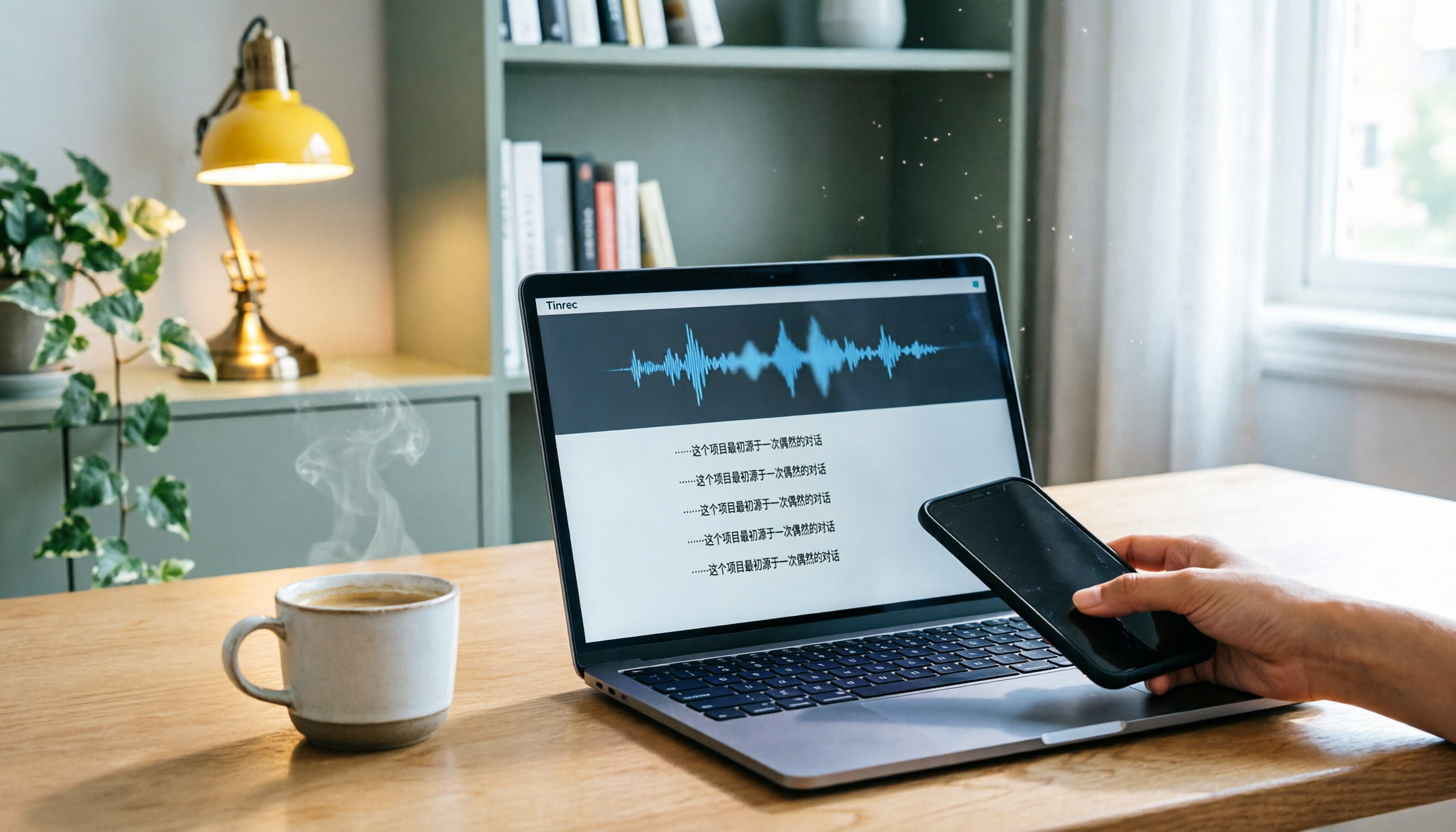
How to Choose AI Transcription Tools in 2026? A 5-Step Guide Comparing Vocol, Tinrec, and More
Struggling with meeting minutes, course notes, and interview transcripts? This article, based on our hands-on testing, walks you through 5 key factors for choosing AI transcription tools, and compares Vocol, Tinrec, Otter, and Plaud to help you pick the right solution.
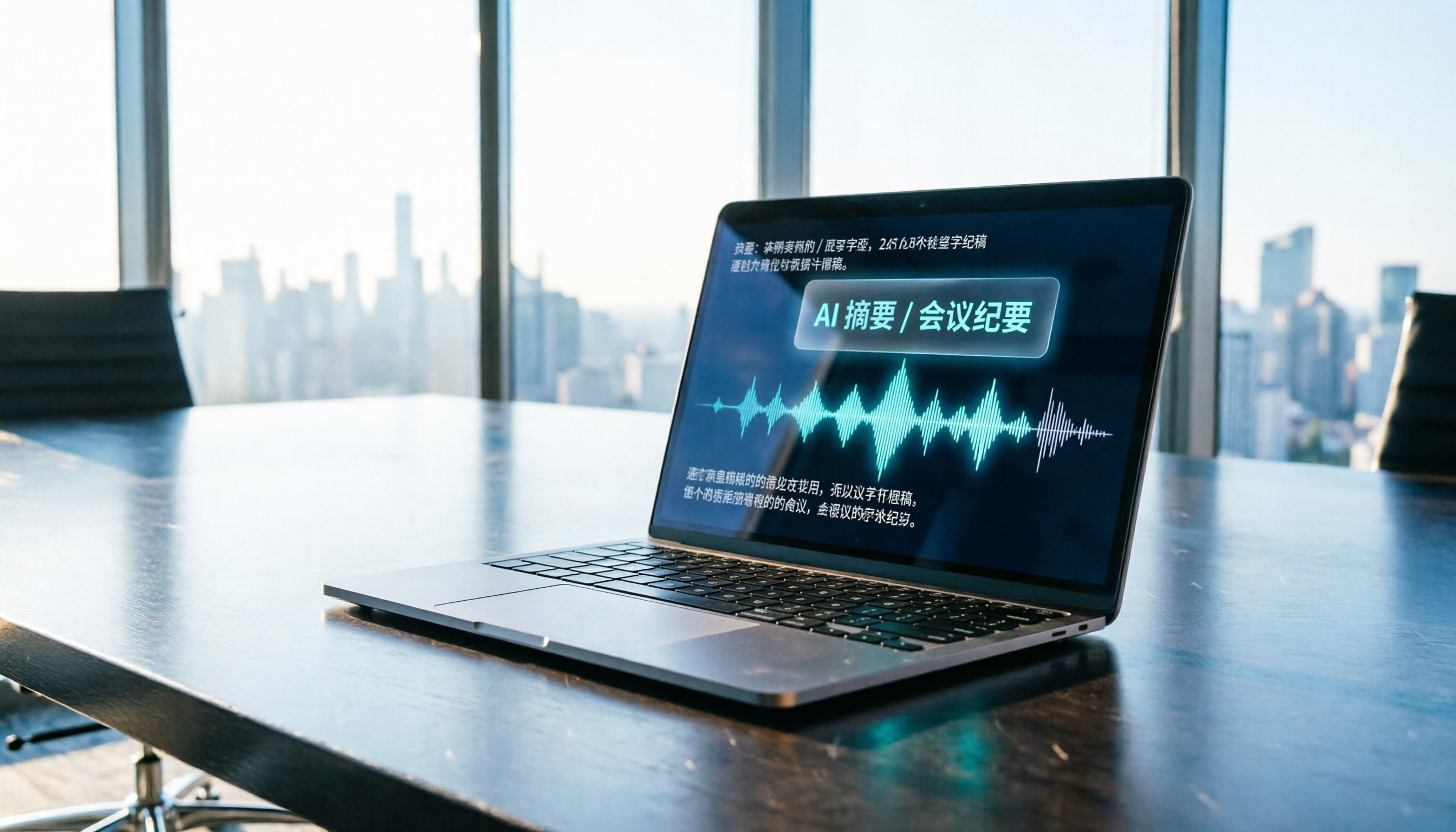
How to Convert Audio Recordings to Text in 2026: A 5-Step Guide (Using Tinrec as an Example)
This tutorial uses Tinrec (秒听录音) as an example to walk you through converting meeting recordings to text, generating transcripts, AI summaries, and meeting minutes, along with proofreading, exporting, and advanced tips to help professionals save hours of organizing time.

Notta vs Tinrec 2026: A 4-Dimension Comparison to Find the Best Value
How much does Notta cost? How does it compare to Tinrec for Hong Kong professionals? We break down the free, Pro, and Business plans and compare them across 4 key dimensions to help you choose.

2026 Free Transcription Tools Roundup: 5 Options for Master Vocologia Students
Pursuing a Master in Vocologia in 2026 and need to organize countless lecture recordings, seminars, and interviews? This article reviews 5 transcription tools, including free and paid plans, highlighting Tinrec as the most complete AI recording assistant to turn your audio and video into searchable, summarizable knowledge.

2026 Hands-On Comparison of 4 AI Speech-to-Text Tools: How to Get the Most Out of Notta?
Notta is a popular AI speech-to-text tool that supports multilingual transcription, AI summaries, and meeting notes. This article compares Notta with Otter, Fireflies, Tinrec, and TurboScribe, and shows you how to get started with Notta quickly.