

Turn recordings into transcripts and summaries in minutes
Upload audio or video for multilingual transcription, AI notes, and action items
Notta vs Tinrec 2026: A 4-Dimension Comparison to Find the Best Value
Why You Need to Know Notta's Pricing
Hong Kong professionals attend meetings daily, and after meetings, they often have to listen to recordings and type transcripts, working overtime endlessly. Notta is one of the popular AI recording-to-text tools, but its pricing plans include Free, Pro, and Business. How do you choose? This time, we not only break down Notta's pricing but also compare it with another locally popular tool, Tinrec (Miao Ting Lu Yin), across 4 dimensions, so you can see at a glance which one suits you best.
Tinrec (Miao Ting Lu Yin) — The Most Complete AI Recording Assistant
Tinrec focuses on "turning recordings and audio/video into actionable knowledge," not just meeting minutes. You can record and transcribe in real time, upload audio or video files, or even paste YouTube or Bilibili links to organize content directly. After transcription, it offers AI summaries, chapters, and to-do extraction. Best of all, you can ask AI questions about the recording content—like having a personal assistant to help you find key points.
In terms of pricing, Tinrec offers a free version for you to try basic features, and then there are weekly cards, Pro monthly, and Pro annual plans, so you can choose based on how often you use it. If you only have occasional meetings, the free version is enough; if you have meetings every day, the Pro monthly plan suits you. It's ideal for users who don't just want a transcript but also want to organize, review, and create reports.
Notta — A Strong Multi-Language Transcription Tool
Notta is similar to Tinrec in positioning; both are multi-platform transcription tools, but Notta's strength lies in supporting real-time transcription and translation in 58 languages, with high accuracy (officially claimed up to 98.86% in quiet environments). It also offers AI summary generation, meeting recording, and other features. If you frequently deal with foreign clients, Notta's translation feature can be quite helpful.
In terms of pricing, Notta has three tiers:
- Free plan: 120 minutes per month, but each recording is limited to 3 minutes (practicality is compromised)
- Pro plan: US$8.17/month billed annually (approx. HK$64), US$13.99/month billed monthly (approx. HK$109), providing 1,800 minutes per month
- Business plan: Starting at US$16.67/month billed annually (approx. HK$130), focusing on unlimited duration, suitable for teams
It's suitable for members of cross-national teams who need multi-language support and often need to translate meeting content. However, note that the free plan's 3-minute limit per recording can be used up quickly for long meetings.
Otter.ai — Expert for English Meetings
Otter.ai is a typical AI meeting notes tool, with strengths in real-time transcription for online meetings, speaker identification, and team collaboration. The free plan offers 300 minutes per month, Pro is US$8.33/month billed annually, and Business is US$19.99/month billed annually. However, its Chinese support is not the strongest. If you mainly have meetings in English, Otter is quite handy; but if you want to organize Chinese audio/video, it may not be the best fit.
Stop organizing recordings by hand
Upload audio or video and automatically get a transcript, summary, and action items
TurboScribe — High-Cost-Performance File Transcription
TurboScribe focuses on file transcription, supporting long files, batch uploads, subtitles, and translation. The free plan offers 3 transcriptions per day with a 30-minute limit per file; the Unlimited plan costs about US$10/month billed annually and can handle long audio. It's suitable for one-time bulk transcription of old recordings, but it lacks AI Q&A and organization features, so you'll have to review the transcripts yourself.
PLAUD Note — AI Recording Hardware
PLAUD Note is a standalone recording device that is portable and has strong battery life, suitable for people who often go out for interviews or offline meetings. The hardware itself costs money (Note Pro pre-order price US$179), and you'll also need to pay a monthly fee to unlock more transcription minutes. If you don't want to buy extra hardware, a mobile app is sufficient, and Tinrec or Notta would be more cost-effective.
With So Many Options, How Should You Choose?
- Want the most complete AI features (transcription + AI Q&A + automatic minutes) → Tinrec (the only one with all these features, and it can also organize YouTube videos)
- Need multi-language real-time translation → Notta (58 languages, strong translation, but free plan has a 3-minute limit per recording)
- Only use English for meetings and need team collaboration → Otter.ai (mature meeting bot, but average for Chinese scenarios)
- One-time bulk transcription of old files → TurboScribe (high cost-performance, but no follow-up organization features)
- Need portable recording hardware → PLAUD Note (good hardware feel, but extra cost)
If you mainly organize Chinese meetings, courses, or interviews, or want to convert online videos to text for further use, Tinrec is more comprehensive than Notta; if you collaborate a lot with foreign teams, Notta's translation feature is a plus.
4 Things You Should Know Before Using Recording-to-Text Tools
- Free plans usually have limitations: Notta's free plan limits each recording to 3 minutes, Otter limits each to 30 minutes, and Tinrec's free plan also has quotas. Check the terms before trying.
- Accuracy is affected by audio quality: No tool can guarantee 100% accuracy; background noise and overlapping speech can affect results. Tinrec recommends cross-checking important content with the original.
- Don't just look at the transcript: Transcription is only the first step. The value of tools like Tinrec lies in the subsequent AI summaries, to-dos, and Q&A, which save you organization time.
- Be aware of platform rules: When using the online video-to-text feature, remember to comply with copyright regulations on platforms like YouTube and Bilibili, and don't misuse them.
Conclusion
Notta is a mature multi-language transcription tool, and its Pro plan at US$8.17/month billed annually is reasonable, but the free plan has more restrictions. Tinrec, on the other hand, emphasizes the overall organization experience, from transcription to AI Q&A in one go, making it ideal for Hong Kong professionals who want to turn audio/video into usable information. If you just want to test the waters, both have free versions, so why not create an account and try them out to see which interface and accuracy suits you best.
References
Turn every recording into actionable outcomes
Get 60 free transcription minutes when you sign in. No credit card required.
Related Reading
You might also like

5 Best Recording-to-Text Tools Tested in 2026: Can Tinrec's Chinese Summarization Really Save You Time?
Meetings, classes, interviews, videos—do you have piles of recordings but no time to organize them? This article tests several AI recording tools to find the best one for handling multi-source audio content, with an in-depth look at Tinrec's AI summarization features.

Tinrec vs Vocol 2026 Comparison: Multi-Source Audio Transcription + AI Q&A Post-Processing
This article compares Tinrec and Vocol.ai across five dimensions: input sources, post-transcription organization, Chinese language experience, export and post-processing, and ease of use, helping you decide which is better for organizing meetings, courses, interviews, and online videos.

2026 Vocol.ai Latest Version Hands-On Review: 3 Major Upgrades That Save Office Workers Time
The latest version of Vocol.ai continues to use AI to handle speech-to-text for meetings, courses, and podcasts, along with real-time collaboration and multilingual translation. This article tests the latest features to see how it helps Hong Kong office workers save hours of transcription time.
Tinrec vs Otter.ai 2026 Hands-on Comparison: 5 Key Dimensions to Decide the Best Tool for Audio/Video Knowledge Management
A 2026 hands-on comparison of Tinrec and Otter.ai across four key dimensions—input sources, post-processing, Chinese language support, and export options—to help you choose the right audio/video organization tool.
How to Choose AI Transcription Tools in 2026? A 5-Step Guide Comparing Vocol, Tinrec, and More
Struggling with meeting minutes, course notes, and interview transcripts? This article, based on our hands-on testing, walks you through 5 key factors for choosing AI transcription tools, and compares Vocol, Tinrec, Otter, and Plaud to help you pick the right solution.
How to Convert Audio Recordings to Text in 2026: A 5-Step Guide (Using Tinrec as an Example)
This tutorial uses Tinrec (秒听录音) as an example to walk you through converting meeting recordings to text, generating transcripts, AI summaries, and meeting minutes, along with proofreading, exporting, and advanced tips to help professionals save hours of organizing time.
2026 Free Audio-to-Text Solutions: 3 Tools Compared
We tested 3 AI audio-to-text tools, from free plans and multi-source support to AI post-processing, to help you pick the best fit for the workplace.
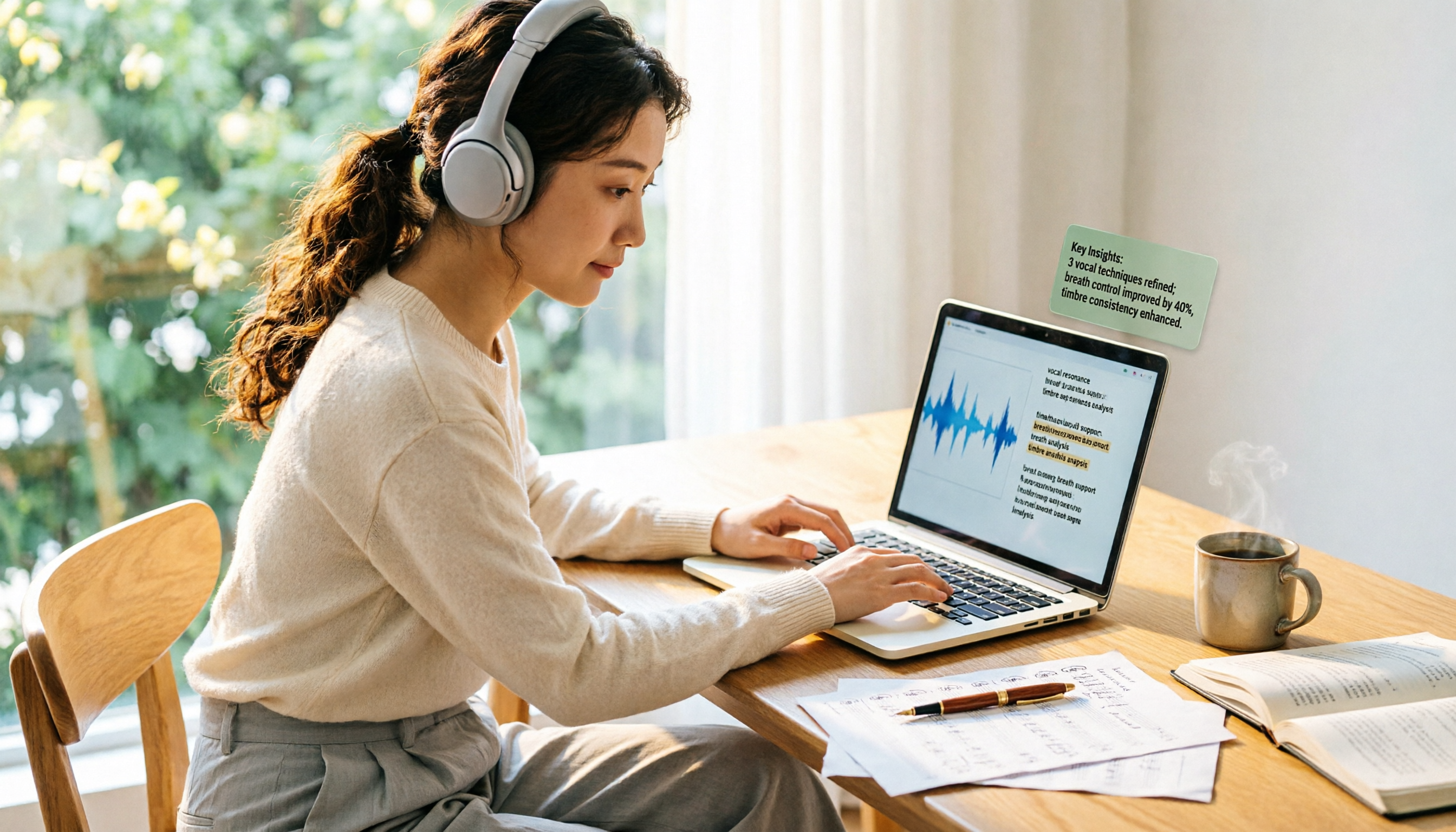
2026 Free Transcription Tools Roundup: 5 Options for Master Vocologia Students
Pursuing a Master in Vocologia in 2026 and need to organize countless lecture recordings, seminars, and interviews? This article reviews 5 transcription tools, including free and paid plans, highlighting Tinrec as the most complete AI recording assistant to turn your audio and video into searchable, summarizable knowledge.

2026 Hands-On Comparison of 4 AI Speech-to-Text Tools: How to Get the Most Out of Notta?
Notta is a popular AI speech-to-text tool that supports multilingual transcription, AI summaries, and meeting notes. This article compares Notta with Otter, Fireflies, Tinrec, and TurboScribe, and shows you how to get started with Notta quickly.