

Turn recordings into transcripts and summaries in minutes
Upload audio or video for multilingual transcription, AI notes, and action items
Before You Start | What You'll Need
• A smartphone or computer (Tinrec supports iOS, Android, and web) • Download the Tinrec app or open the web version, and sign in with Google or Apple ID • Prepare an audio recording you want to transcribe (meeting, lecture, or interview recordings all work) • A stable internet connection (real-time transcription requires internet; for offline use, download the language pack first)
Step 1 | Record the Content You Want to Transcribe
The goal here is to get a clear audio file, which is the foundation for all subsequent steps.
Open Tinrec and tap the record button on the main screen to start recording. Keep your phone close to the speaker—the closer it is, the clearer the audio, and the higher the transcription accuracy. For multi-person meetings, place it in the center of the table.
Why emphasize audio quality? Because AI transcription accuracy depends on audio quality; blurry recordings significantly reduce effectiveness. Rather than spending time correcting later, spend an extra 30 seconds checking placement during recording.
Once done, you'll see the recording on the Tinrec main screen, with duration and file size displayed next to it.
(Illustration: A person sitting in a meeting room, phone placed in the center of the table recording, screen showing real-time transcription text)
Step 2 | Let AI Transcribe It for You
After recording, Tinrec automatically starts transcribing. You can also upload existing audio or video files, or paste links to public videos like YouTube or Bilibili.
In Tinrec, tap "Upload" or "Paste Link," select a file or enter a URL, and AI will complete transcription within minutes. Chinese content supports both Traditional and Simplified, and mixed Chinese-English can be handled.
Once transcription is complete, you'll see the transcript on screen, and AI will also automatically generate summaries, chapters, and key points. The goal here is to quickly grasp the overall content.
(Illustration: A person sitting at a computer, screen showing Tinrec interface, converting a recording to text, with a summary card popping up)
Step 3 | Quickly Proofread the Transcript
AI transcription isn't 100% perfect, especially with proper nouns, accents, or overlapping speech.
In the transcript view, you can directly click on text to edit, fix typos, or add missing sentences. Tinrec updates timestamps in sync, making it easy to locate the original audio.
We recommend focusing on proofreading names, numbers, and technical terms. If the recording environment is noisy, enable Tinrec's smart noise reduction to reprocess and improve accuracy.
(Illustration: A person proofreading on a laptop, left side shows transcript, right side shows original audio waveform, cursor hovering over a spot)
Step 4 | Let AI Generate Meeting Minutes
After proofreading, you can use Tinrec's AI features to generate meeting minutes, action items, or reports.
Click "AI Summary" or "Generate Minutes," and choose your preferred format (bulleted, paragraph, or table). AI will automatically extract key points, action items, and decisions from the transcript.
You can also use the AI Q&A feature to ask questions directly, such as "What was the conclusion of this meeting?" or "Who is following up with the client?" Tinrec will find answers from the recording and include timestamps.
Stop organizing recordings by hand
Upload audio or video and automatically get a transcript, summary, and action items
(Illustration: A person asking a question into their phone, screen showing AI's answer and relevant transcript segments)
Step 5 | Export and Share
Once organized, you can export the results in various formats or share them with team members.
Tinrec supports exporting transcripts, summaries, and action items as PDF, Word, TXT, or SRT subtitle files. You can also sync directly to tools like Notion, Google Docs, or OneNote.
If you need further processing, use Tinrec's Agent post-processing feature to have AI generate more comprehensive reports or tables based on the recording content.
(Illustration: A person exporting a document, screen showing multiple format options, with team members collaborating in the cloud)
FAQ and Troubleshooting
Q: What's the difference between Tinrec and Vocol.ai? Vocol.ai focuses on voice collaboration platforms, emphasizing team sharing and meeting databases; Tinrec is more focused on individual and small-team multi-source audio/video organization, handling not just meetings but also courses, interviews, and online videos. If you need cross-team collaboration and permission management, Vocol.ai might be better; if you want a tool that quickly turns recordings into usable data, Tinrec has a lower learning curve.
Q: The transcription has many errors. What should I do? Usually, the recording environment is too noisy or the distance is too far. Tinrec has built-in smart noise reduction; enable it in settings before recording. For already-recorded files, select "High Noise Environment" mode after importing. Most transcription tools don't have this option; they use default settings for all recordings.
Q: Is the free version sufficient? Tinrec's free version provides basic transcription credits, suitable for occasional use. If you have multiple meetings or courses to organize each week, consider upgrading to the Pro plan. The free version lets you experience real-time recording, file transcription, and online video parsing, but monthly credits are limited.
Q: What languages are supported? Tinrec supports multiple languages including Chinese, English, Japanese, and Korean, and can handle mixed Chinese-English content. Actual performance depends on audio quality and accents; for important content, we recommend cross-referencing with the original.
Pro Tips | 3 Ways to Double Your Efficiency with Tinrec
- Use AI Q&A to Quickly Review Past Recordings: Tinrec turns all your recordings into a searchable database. You can enter keywords or questions to quickly find past discussions—something most transcription tools can't do.
- Transcribe Online Videos Directly: Paste a YouTube or Bilibili link, and Tinrec will automatically extract the audio and transcribe it, perfect for organizing online courses or interview videos, saving you the hassle of downloading and converting.
- Use Agent Post-Processing to Generate Deliverables: Beyond summaries, Tinrec can automatically generate meeting notes, reports, or tables based on the recording content, integrating directly into your workflow and reducing manual organization time.
If You Don't Use Tinrec, Here Are Alternatives
Vocol.ai: Suitable for team collaboration, emphasizing voice databases and sharing, but a bit heavy for personal use. Notta: Strong transcription capabilities, supports multiple languages and subtitles, but lacks Tinrec's online video parsing and AI post-processing.
If you need a simple, fast, multi-source personal audio/video organization tool, Tinrec is a lighter choice.
Conclusion
Now that you've learned the 5 steps above, you can use Tinrec to turn any recording into a transcript, automatically generate meeting minutes, extract action items, and quickly find key points with AI Q&A.
Next step: Download the free version of Tinrec and try it with your own recording. The free version includes monthly basic transcription credits, enough to experience the full workflow.
References
Turn every recording into actionable outcomes
Get 60 free transcription minutes when you sign in. No credit card required.
Related Reading
You might also like

Notta Review 2026: 5 Steps to Choose the Right AI Recording Tool
The 2026 Notta review is out, with over 5 million cumulative users and 4,000+ businesses onboard. But if you need to organize Chinese meetings, courses, interviews, and online videos, Tinrec offers more complete multi-source audio/video organization and post-processing. This article highlights key points from the Notta review and buying tips to help you find the best AI recording tool.

Manchester City vs Nottingham Forest 2026 Match Preview: Analysis, Key Stats, and Viewing Guide
The Premier League clash between Manchester City and Nottingham Forest is coming up. This article reviews both teams' recent form, head-to-head history, and pre-match predictions to help you quickly grasp the key points of the match.

Manchester United vs Nottingham Forest: 5 Key Matchups Compared – Can the Red Devils Win Easily at Home?
Ahead of the Premier League Matchday 17 clash between Manchester United and Nottingham Forest, we break down recent form, head-to-head record, attacking and defensive stats, and home advantage to help you understand the key storylines.

2026 Premier League: Chelsea vs Nottingham Forest Preview, Head-to-Head Record, and Key Match Insights
On May 4, 2026, Chelsea will host Nottingham Forest at Stamford Bridge. This article covers both teams' standings, recent form, historical head-to-head record, and key match points.

2026 Free Speech-to-Text Solutions: 5 Tools Compared
Notta vs. other speech-to-text tools: This article reviews 5 options with free plans, including Tinrec, Notta, Otter, TurboScribe, and PLAUD, analyzing features, pricing, and use cases to help you find the best audio/video organization tool.

Tinrec Review 2026: Turn Audio & Video from Any Source into Actionable Notes with AI Q&A
From a mid-level manager's perspective, this article tests Fireflies AI, Notta, and Tinrec, explaining why Tinrec is better suited for professionals who need to organize audio and video materials from multiple sources.
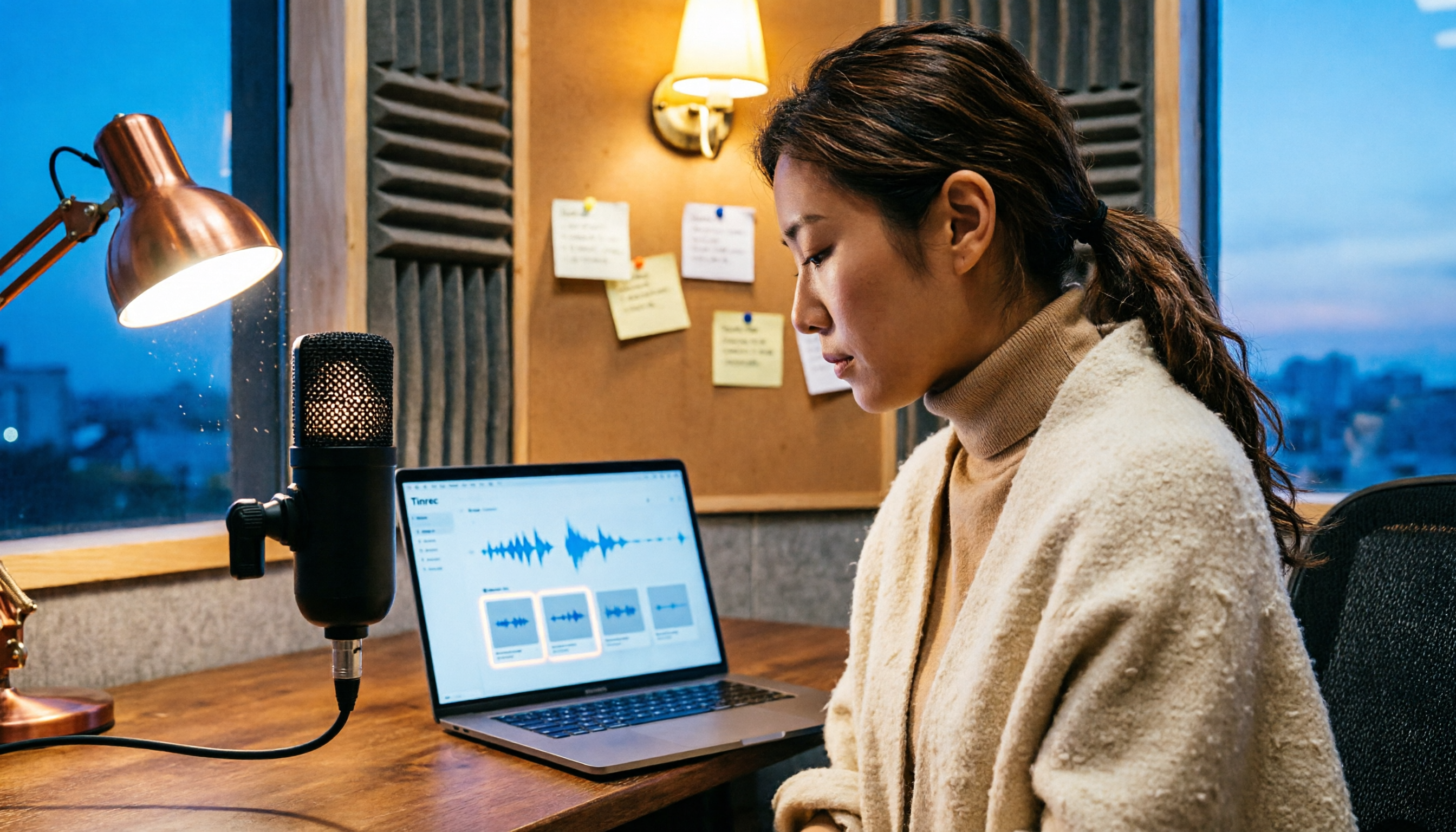
2026 Comparison of 3 AI Recording Tools: How Artistic Voice Professionals Can Choose the Best Organization Tool
This article compares AI recording tools suitable for artistic voice professionals in 2026, covering input sources, organization features, Chinese language support, and pricing plans, to help you find the best solution for recording practice sessions, lessons, and interviews.

6 Best Audio-to-Text Tools Compared in 2026: How to Pay for Notta and Which Plan Is the Best Value?
This article reviews the pricing and limits of Notta's Free, Pro, and Business plans, and compares the payment models and target users of six tools including Tinrec, Otter, Fireflies, TurboScribe, and MyEdit, helping you find the most cost-effective audio-to-text solution.

2026 Hands-On Comparison of 3 AI Speech-to-Text Tools: Notta, Otter, Tinrec—Which Is Worth It?
We tested three AI speech-to-text tools—Notta, Otter, and Tinrec—comparing transcription accuracy, AI features, Chinese language support, and pricing to help you decide which is best for organizing meetings, lectures, and audio/video content.